Developer Landing Page Template for Urban Projects
Infill is a split-screen landing page template built for urban infill developers. It combines a moody aerial search header, alternating project panels with site plans and program data, and a two-step booking modal for site walks. The dark charcoal and amber palette makes every project feel inevitable, pulling in municipal planners, investors, and community stakeholders alike.
by Rocket studio
Quick summary
Infill is a single-page landing page template for property developers who build in the gaps cities leave behind. It opens with an immersive aerial search header, moves through alternating split-screen project sections, and closes with a firm scheduling call to action. The dark asphalt palette and amber accents give every section the weight of real urban work.
Who this template is for
This template is purpose-built for urban infill developers who need to speak to three very different audiences at once. It holds the attention of skeptical planners, cautious neighborhood groups, and yield-focused investors without losing any of them.
- Municipal planning directors reviewing entitlement packages and neighborhood fit
- Institutional investors scanning overlooked corridors for viable yield
- Neighborhood associations and community stakeholders evaluating project scale and context
What problem this template solves
Most property developer landing pages present finished renderings and skip the harder story. Infill projects need to earn trust before a single permit is filed. This template bridges that gap by making the case visually and structurally, before a visitor clicks anything.
- Skeptical audiences need context before they will engage, and a generic page fails them
- Developers lose potential site walk requests because there is no clear, low-friction booking path
- Pipeline and under-construction projects get buried instead of building forward momentum
What you get with this template
The template delivers a complete single-page layout with distinct, purpose-built sections. Every element is aligned to the goal of moving visitors from curiosity to a scheduled site walk or a portfolio download.
- A full split-screen (50/50) layout with alternating panel rhythm across project sections
- A two-step booking modal with project selection, calendar widget, and a short qualification form
- A secondary conversion path gated behind a single email field for portfolio downloads
Feature list
This template ships with a focused set of built-in components. Each one serves the developer's specific conversion and credibility goals.
Aerial Search Header
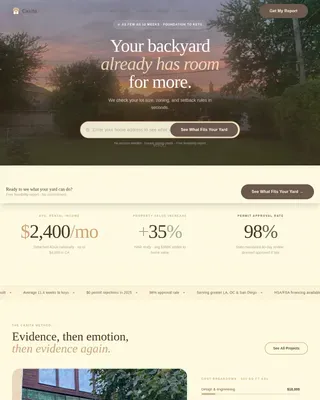
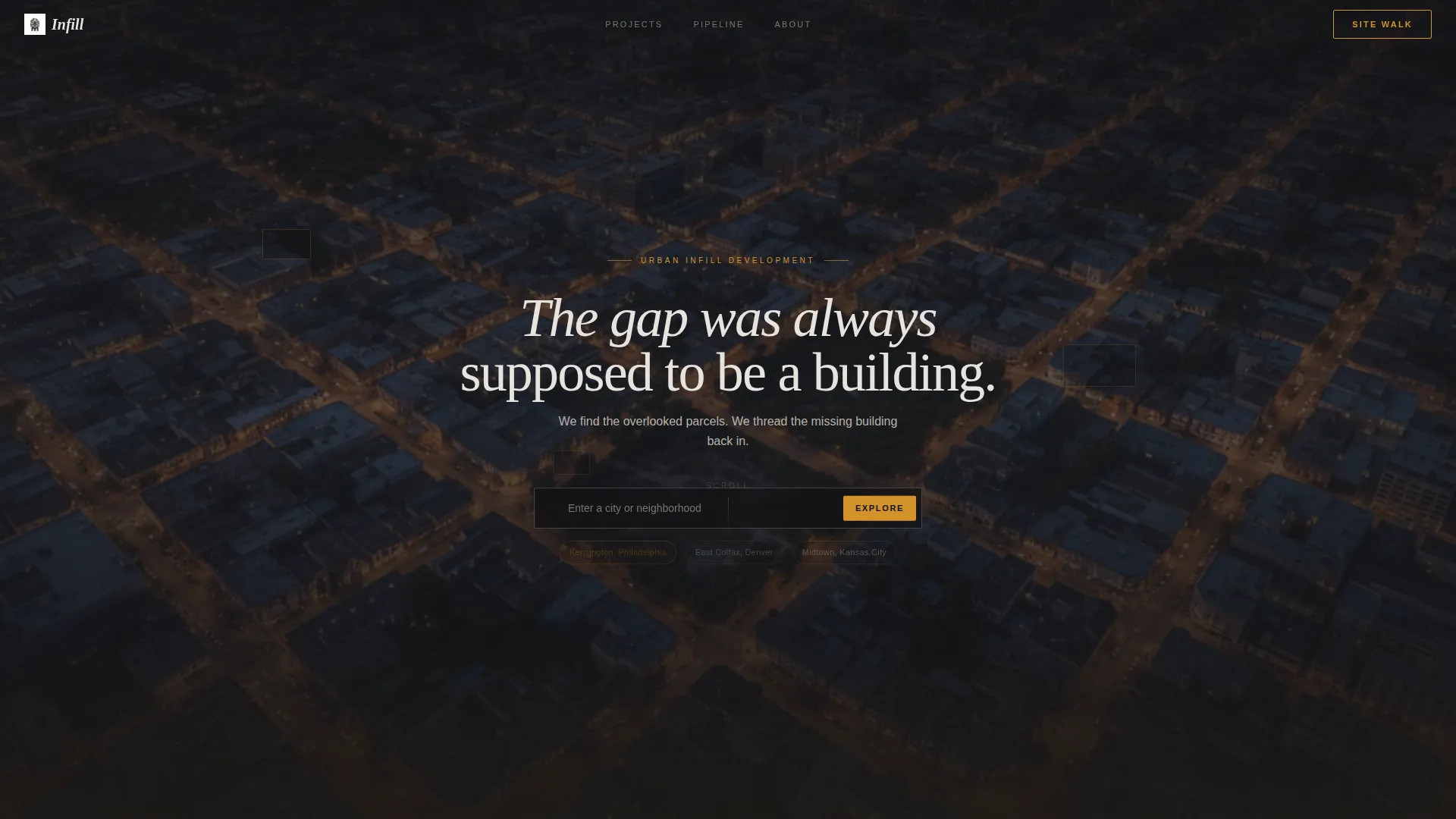
The header centers a search input over a moody twilight photograph of a real urban grid. Ghost-text suggestions pulse beneath the field, naming specific neighborhoods and cities. The effect makes the page feel like a discovery tool rather than a corporate brochure.
Alternating Split-Screen Panels
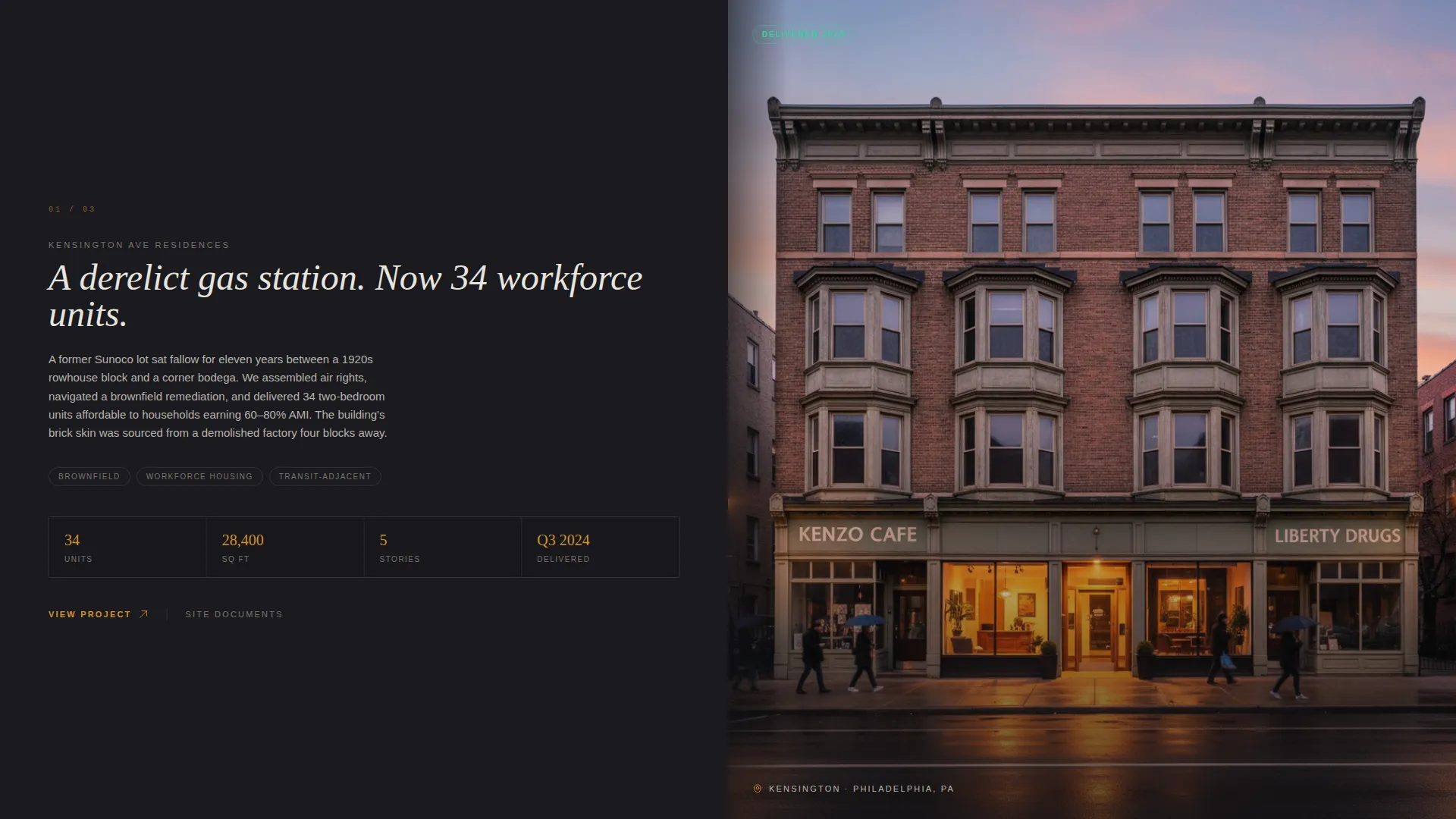
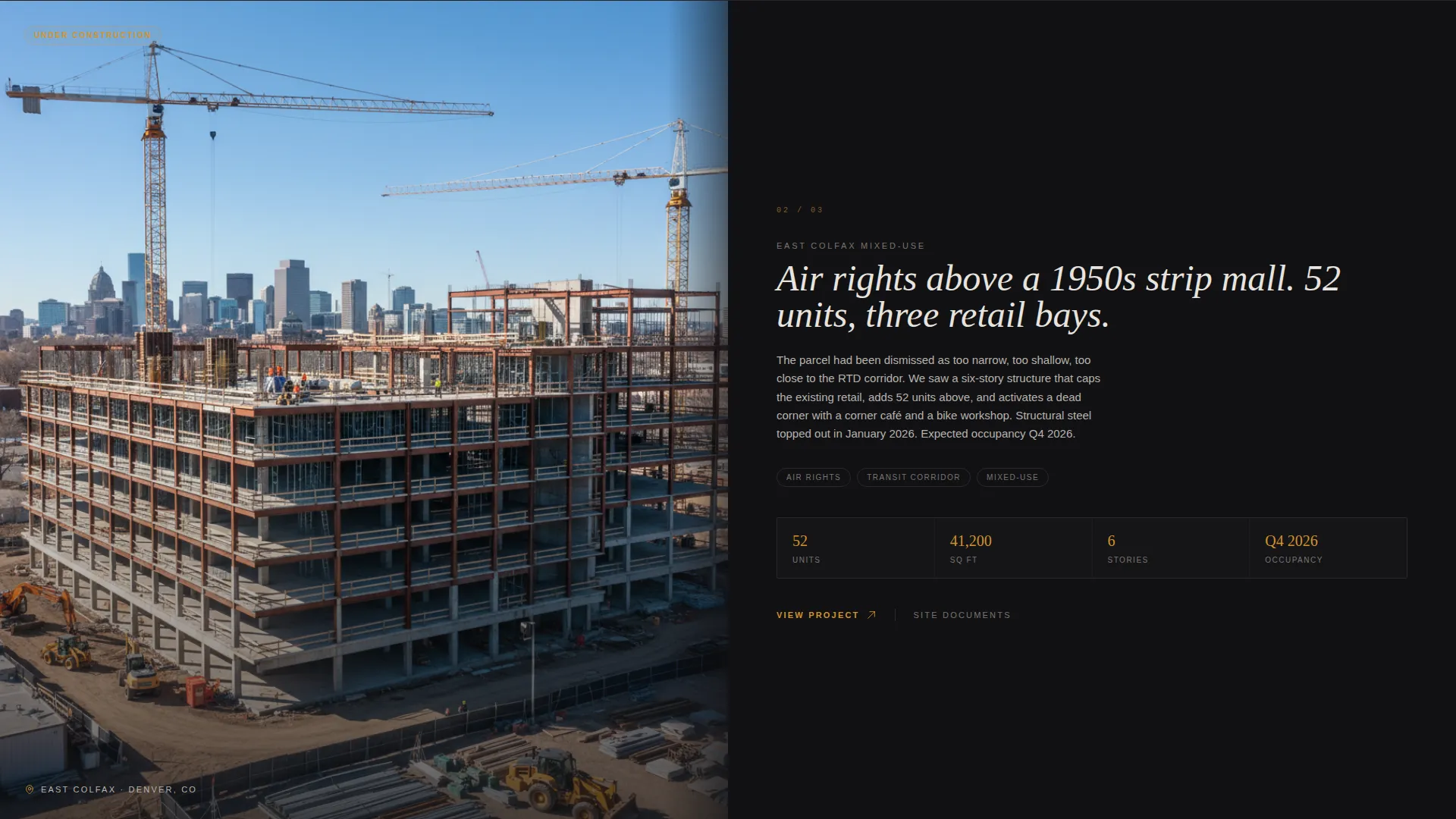
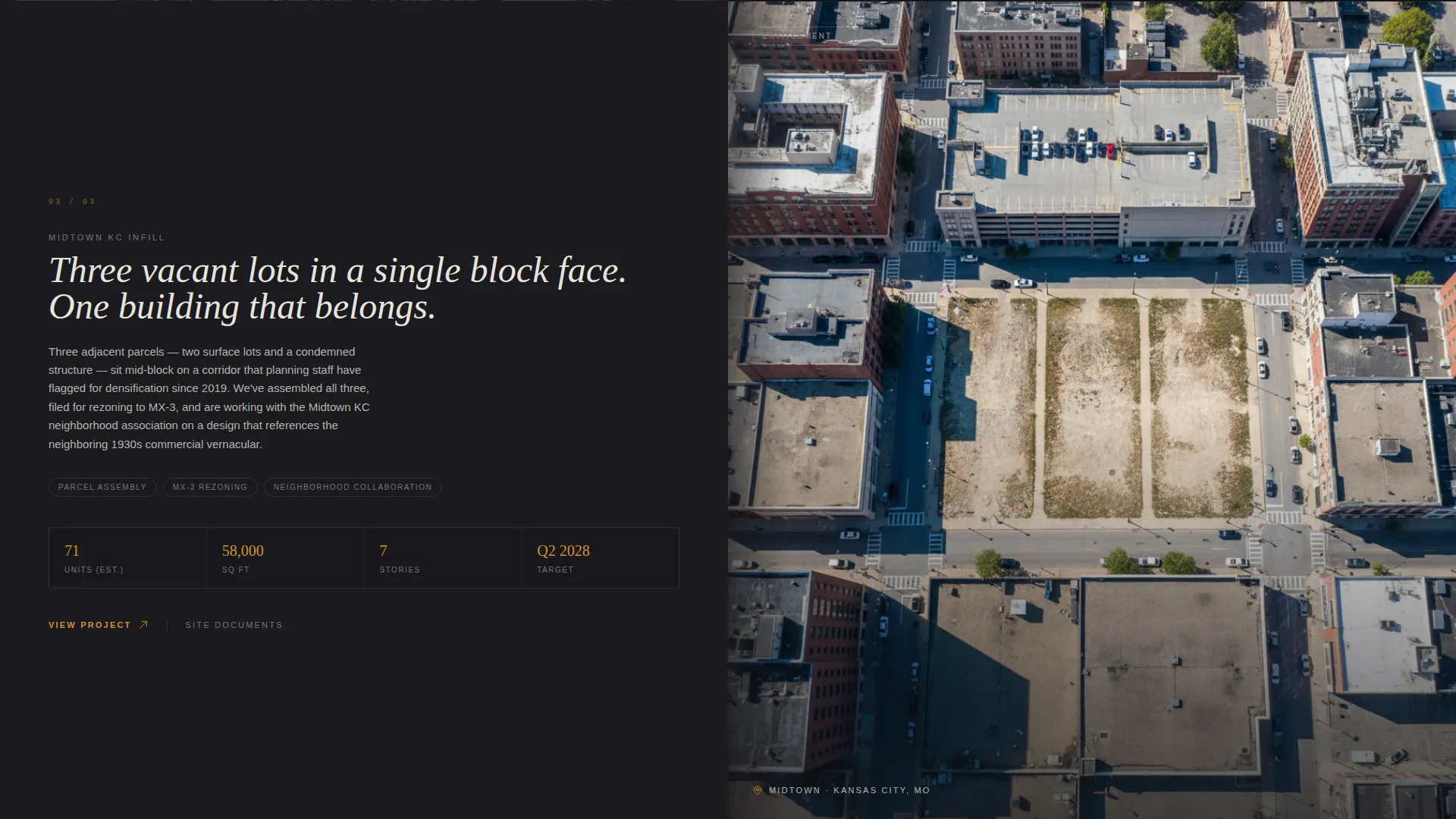
Each project section locks an architectural drawing or site plan on one side while the opposite side scrolls through program details, unit mixes, and neighborhood context. Panels alternate sides across sections, creating a rhythm that mimics moving through a real building.
Parallax Depth Transitions
Section transitions use subtle parallax movement and ambient shadow gradients at panel edges. This reinforces a sense of physical depth and spatial progression as the visitor scrolls from completed projects through construction sites to pipeline parcels.
Two-Step Booking Modal
The primary call to action opens a modal that guides visitors through two clear steps. Step one presents a thumbnail grid for project selection. Step two shows a calendar with available walk dates and a short form asking for name, organization, and visitor type.
Floating and Anchored Call-to-Action Buttons
The "Schedule a Site Walk" button appears first as a floating amber button after the second project section. It reappears as an anchored element at the page bottom, ensuring the primary action stays visible throughout the scroll.
Portfolio Download Gate
A secondary conversion path lets hesitant visitors download the developer's portfolio by entering only an email address. This lower-commitment option captures leads who are not yet ready to commit to an in-person visit.
Page sections overview
| Section | Purpose |
|---|---|
| Aerial Search Header | Draws visitors in with neighborhood discovery framing |
| Project Panel One | Showcases a completed project with drawing and program data |
| Project Panel Two | Rotates panel sides; introduces floating booking button |
| Project Panel Three | Highlights an under-construction site and its timeline |
| Pipeline Parcels Section | Presents future sites to build forward momentum |
| Portfolio Download Bar | Offers a low-commitment secondary conversion path |
| Anchored Booking Footer | Closes the page with a firm scheduling call to action |
Design & branding system
The visual identity follows a dark immersive direction built around a charcoal and amber palette. Every color choice has a specific role, so the page reads like a city block after sunset rather than a standard property website.
- Deep asphalt (#1A1A1E) and exposed-aggregate gray (#3B3B40) anchor all backgrounds
- Warm amber (#D4922A) appears only on interactive elements and key data points, reading like lit windows in a dark facade
- Pale concrete (#E8E4DF) keeps body text legible on dark fields without feeling white or clinical
Mobile & speed optimization
The split-screen layout is designed to reflow cleanly on smaller screens, stacking panels vertically so drawings and program data remain readable. The page avoids heavy visual clutter by keeping amber accents sparse and purposeful.
- Split panels stack into single-column scrolls on mobile viewports
- The two-step modal is sized and structured to work on touch screens without requiring a desktop session
- Ghost-text animations in the header are subtle and do not depend on high frame rates to communicate the discovery concept
How this template helps you convert
The page is structured as a progressive funnel. Each scroll step builds credibility and reduces friction before asking for a commitment.
- The search header creates immediate participation, pulling visitors into the developer's site inventory before they have read a single word of copy.
- Alternating project panels escalate stakes from completed buildings to active construction to pipeline parcels, building urgency and forward momentum naturally.
- The two-step booking modal and the email-gated portfolio download give visitors two clearly different commitment levels, so neither a cautious planner nor a ready investor hits a dead end.
Other information about this template
This template sits at the intersection of real estate development and urban planning credibility. It is designed to serve a niche that rarely gets purpose-built tools.
- The template category is Real Estate and Property, with a subcategory focus on property developer and builder use cases
- The infill niche covers vacant lot development, air rights projects, transit corridor redevelopment, and derelict site transformation
- The booking and scheduling direction makes this template especially useful for developers who run regular site walk programs as part of their investor and planner outreach
- The page type is a single landing page, not a multi-page website, so all content and conversion paths live within one scrollable experience
- The template can support a range of urban markets, as suggested by the neighborhood search concept built into the header
Theme
Corporate Precision
Creative direction
Interactive Explorer
Color system
Sunset Mesa
Style
Full-Width Immersive
Direction
Booking/Scheduling
Page Sections
Aerial Neighborhood Search Header
Alternating Split-screen Project Panels
Parallax Depth and Shadow Transitions
Two-step Site Walk Booking Modal
Floating and Anchored Call to Action Buttons
Email-gated Portfolio Download
Related questions
Who is this landing page template designed for?
What is the primary call to action on this template?
Can visitors download materials without booking a site walk?
How does the two-step booking modal work?
What makes this template different from a standard real estate landing page?