Pipefitter Landing Page Template | Stats-First Design
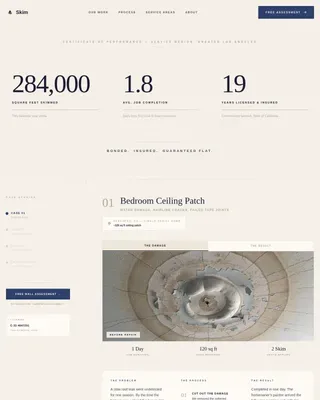
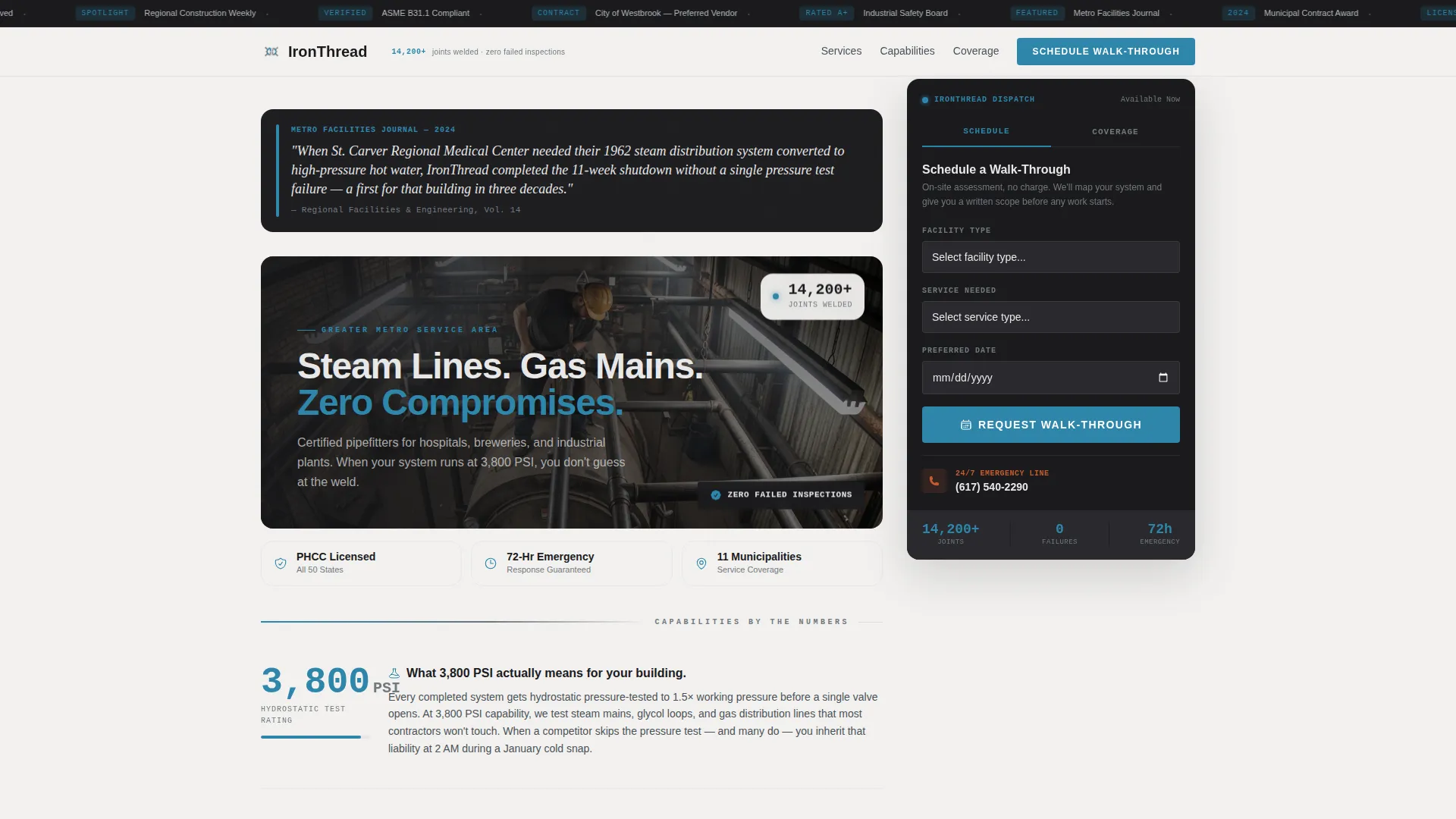
Ironthread is a single-column landing page template built for pipefitting businesses that serve facility managers, general contractors, and plant engineers. It pairs a stat-driven main column with a persistent sidebar holding a service-area map and booking widget. The result is a page that proves technical competence first and earns the scheduling click second.
by Rocket studio
Quick summary
Ironthread is a pipefitter service area landing page template designed around verified numbers, editorial credibility, and a persistent sidebar booking flow. It opens with a press-mentions bar and a bold project-specific pull-quote, then walks visitors through hydrostatic testing specs, emergency turnaround times, and municipal service coverage before asking them to schedule anything.
Who this template is for
This template is built for pipefitting contractors and mechanical service companies that work on commercial, industrial, and institutional projects. If your clients ask for certifications before they open a door, this page structure speaks their language.
- Pipefitting businesses serving facility managers with steam, gas, or process piping systems
- Mechanical contractors needing a credible service area page before inspection season
- Pipefitter operators targeting plant engineers and general contractors who schedule around production shutdowns
What problem this template solves
Most pipefitter service pages look like a business card with a phone number. They fail to answer the questions a facility manager or plant engineer actually asks before hiring a contractor for critical infrastructure work.
- Visitors leave without understanding scope, certifications, or service footprint
- Booking friction is high when there is no clear next step visible on screen
- Credibility gaps let competitors with weaker track records win on price alone
What you get with this template
You get a fully structured landing page layout that leads with proof and ends with a low-friction booking path. Every section is purpose-built for a technical services audience that reads carefully before it acts.
- A stats-first main column with press mentions, project pull-quotes, and numbered performance figures
- A persistent sidebar with a service-area map placeholder, a three-field scheduling form, and a secondary email-capture path
- A Monochrome Steel visual system using mill-finish silver, torch-blue, weld-shadow black, and pipe-dope white
Feature list
A paragraph introduces each feature below. Together they give this template its distinct combination of editorial authority and practical conversion design.
Stats-First Impact Sections
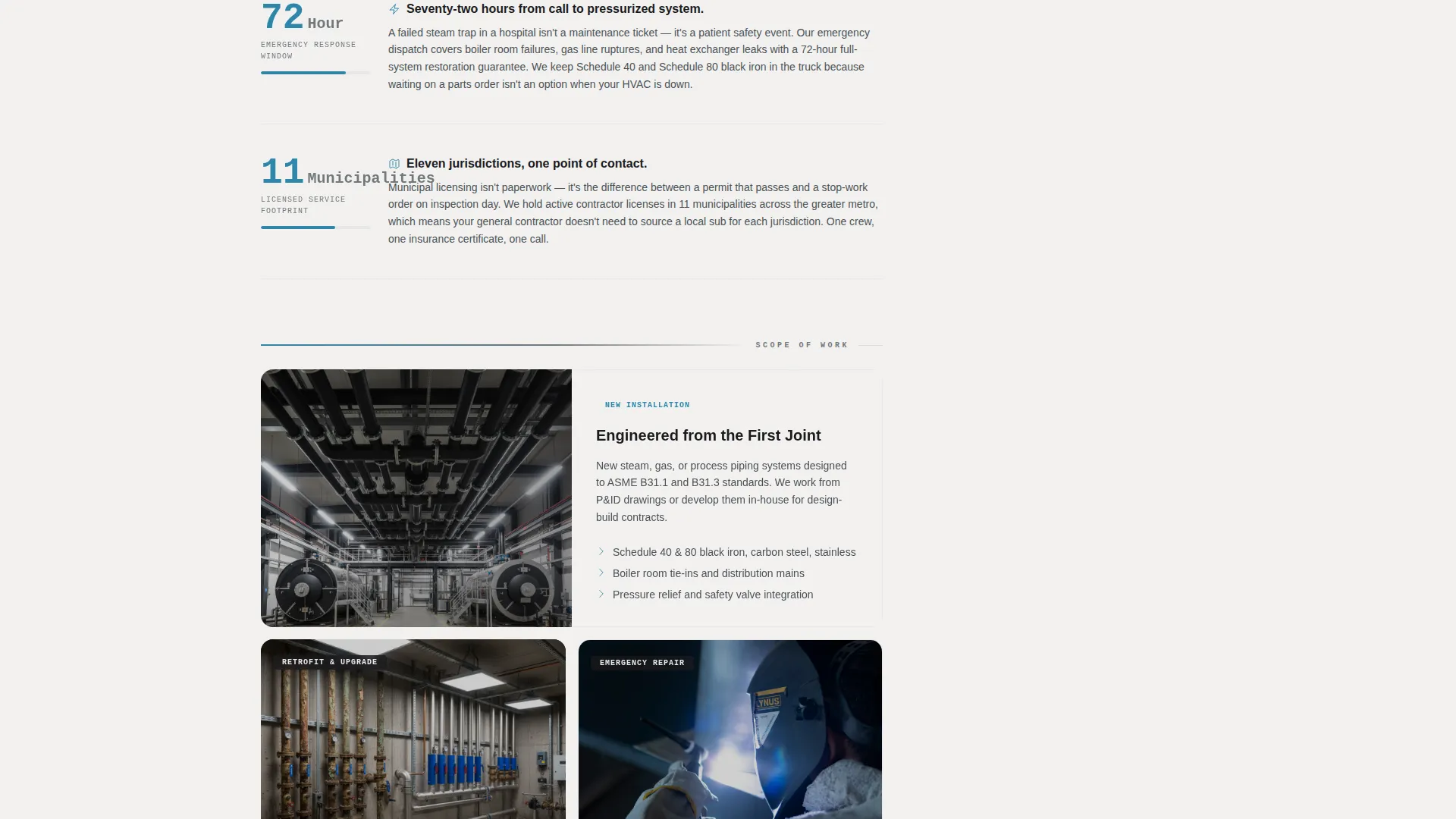
Every scroll-stop in the main column opens with a bold performance number before any explanation. Figures like "3,800 PSI," "72-Hour," and "11 Municipalities" act as visual anchors. Body text beneath each stat explains what the number means for the visitor's specific building type.
Press Mentions and Certification Bar
A quiet scrolling ticker at the top of the page carries logos from local trade publications, municipal contract awards, and licensing board certifications. This component frames authority before the visitor reads a single paragraph, reducing early-stage skepticism from technically literate buyers.
Editorial Pull-Quote Block
A single pull-quote from a regional facilities publication names the company alongside a specific completed project. Grounding the quote in a real, physical job, a hospital steam conversion or a brewery glycol loop, makes the credibility claim tangible rather than generic.
Persistent Sidebar Booking Widget
The sidebar travels with the reader as they scroll. It holds a three-field scheduling form with a facility-type dropdown, a service-category selector, and a preferred date picker. The widget stays visible in torch-blue against weld-shadow black so the booking path is never more than a glance away.
Secondary Lead Capture Path
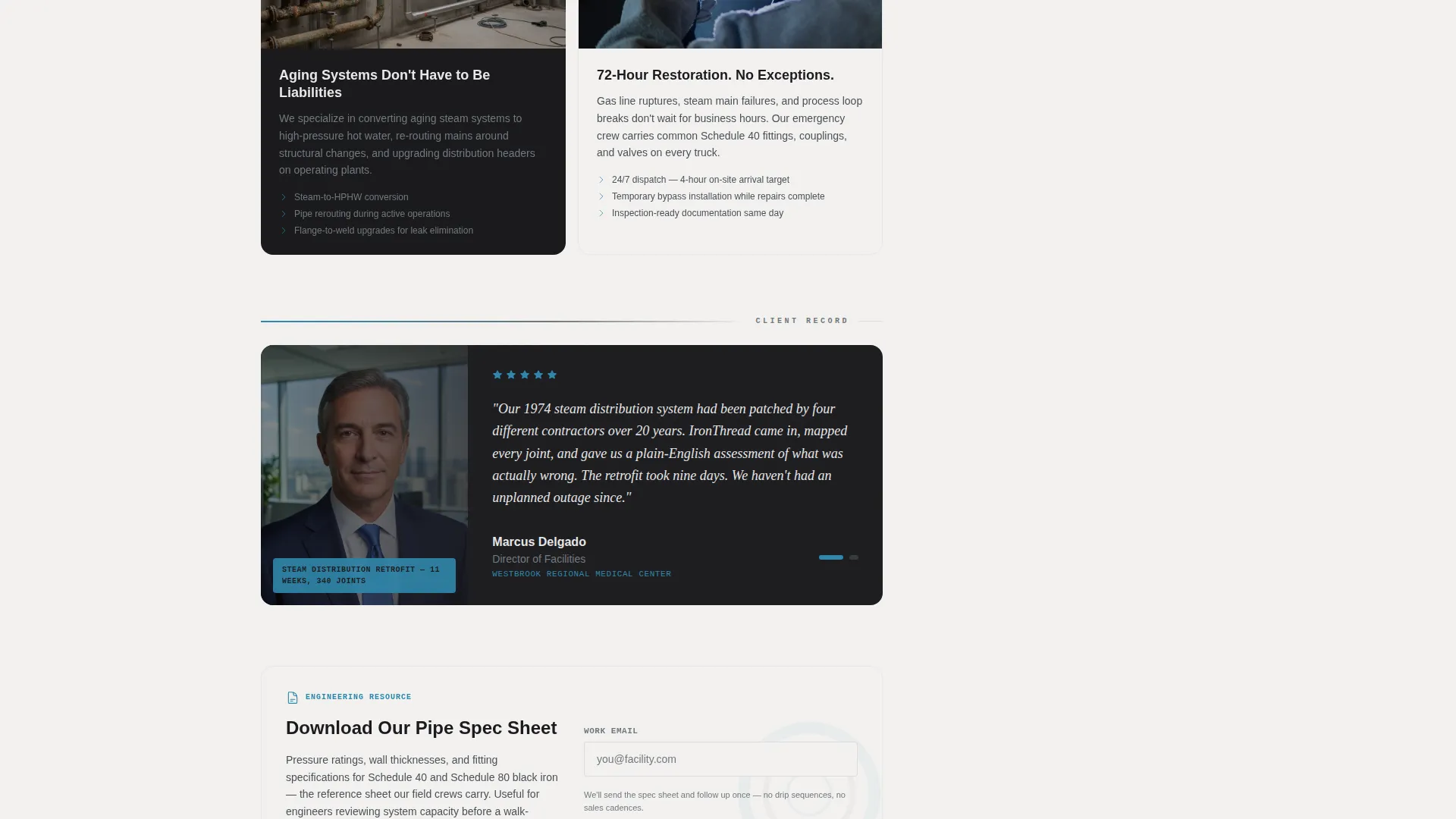
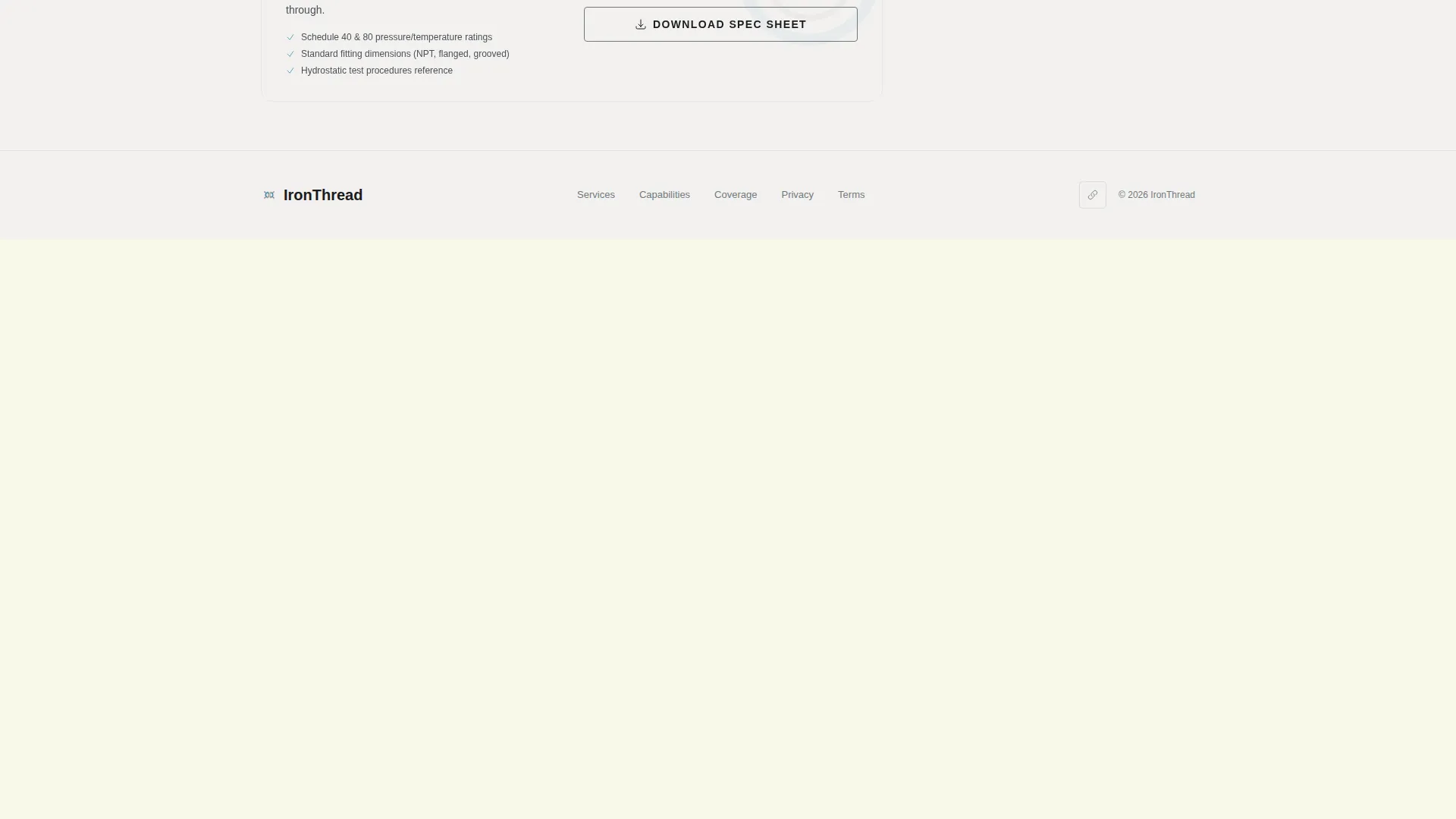
Below the primary booking form, a "Download Our Pipe Spec Sheet" prompt captures email addresses from engineers who are researching but not yet ready to schedule a walk-through. This gives the template two distinct conversion lanes running in parallel.
Dynamic Service-Area Map
The sidebar includes a service-area map placeholder that can be updated to highlight whichever service zone the main column is currently discussing. This visual connection reinforces geographic coverage and helps facility managers confirm service availability without hunting for a separate contact page.
Page sections overview
| Section | Purpose |
|---|---|
| Press Mentions Bar | Scrolling ticker for trade logos, certifications, and contract awards |
| Headline Stat Block | "14,200+ joints welded. Zero failed inspections." bold opener |
| Editorial Pull-Quote | Named project quote from a regional facilities publication |
| Hydrostatic Testing Stat | "3,800 PSI" scroll-stop with supporting body explanation |
| Emergency Turnaround Stat | "72-Hour" guarantee frame with context and competitor contrast |
| Service Footprint Stat | "11 Municipalities" coverage map anchor in main column |
| Sidebar Map Widget | Persistent service-area map that highlights active zone |
| Sidebar Booking Form | Three-field scheduling form pinned in the sidebar |
| Spec Sheet Download | Secondary email-capture for engineers in research phase |
Design & branding system
The visual identity follows an Educational Guide theme rendered in a Monochrome Steel color system. The palette is described in the brief as a cross-section of Schedule 40 pipe under fluorescent shop light: industrial without being cold, technical without being sterile.
- Primary tones: mill-finish silver (#71797E) for the main column, pipe-dope white (#E8E8E8) for open space, and deep weld-shadow black (#1B1B1E) for depth
- Accent and interactive elements: torch-blue (#2E86AB) used exclusively for the sidebar widget, call-to-action buttons, and highlight markers
- Typography and layout: Editorial/Magazine template style with clean grid separation between the stat-heavy main column and the utility-focused sidebar
Mobile & speed optimization
The sidebar-and-main-column layout is structured to adapt across screen sizes without losing the booking widget's visibility. The persistent sidebar behavior is defined in the brief as a core conversion requirement.
- On smaller screens, the booking widget remains accessible without requiring the visitor to return to the page top
- The stats-first layout keeps the most persuasive content visible early in the scroll, reducing drop-off before the call to action appears
- Lightweight ticker and pull-quote components avoid heavy media dependencies in the credibility bar
How this template helps you convert
The page earns trust through proof before it asks for anything. Every layout decision in the brief points toward a visitor who reads critically and books deliberately.
- The press mentions bar and editorial pull-quote remove skepticism at first glance, so technically literate visitors stay on the page long enough to read the stat sections.
- The stats-first scroll structure answers the buyer's implicit questions in order: can this contractor handle my pressure requirements, will they show up when I need them, and do they cover my location.
- The persistent sidebar booking form with its three-field structure keeps the scheduling path visible and low-friction at every stage of the page, while the spec sheet download captures leads who are not yet ready to commit.
Other information about this template
This template is a companion sidebar landing page, meaning it is designed to sit alongside a broader service area page rather than function as a standalone homepage. The layout works well as part of a multi-page pipefitter business website where individual service zone pages share a consistent sidebar module.
- The sidebar companion format makes this template reusable across multiple service area pages within the same site
- The three-field booking form covers the three primary visitor types named in the brief: commercial facility managers, industrial plant engineers, and general contractors
- The "Download Our Pipe Spec Sheet" secondary path is particularly suited to the plant engineer audience, who typically want documentation before a procurement conversation
Theme
Educational Guide
Creative direction
Logo Wall Authority
Color system
Navy Authority
Style
Editorial/Magazine
Direction
Lead Generation
Page Sections
Stats-first Scroll Structure
Press Mentions and Certifications Bar
Editorial Project Pull-quote
Persistent Sidebar Booking Widget
Secondary Email-capture Path
Service-area Map Placeholder
Related questions
Who is this landing page template designed for?
What makes the sidebar companion format different from a standard layout?
Can the template support two different types of leads at once?
Do I need to replace the stat figures with my own numbers?
Is this template suited for a single service area or multiple zones?