Colonial Architecture Specialist Professional Website Template
Joinery is a masonry-layout landing page for a colonial furniture designer who rebuilds 18th-century silhouettes with unexpected geometry. Nine shoppable gallery clusters, a photo grid mosaic header, and a commission intake form give design-obsessed homeowners, set decorators, and boutique hoteliers a rich visual experience that moves naturally from browsing to buying.
by Rocket studio
Quick summary
Joinery is a single-page, masonry-style landing page built for a bespoke colonial furniture studio. It opens with a nine-tile photo grid mosaic and flows through four room-themed gallery clusters, each shoppable and visually immersive. The page closes with a short commission intake form, making it equally effective for direct one-of-one sales and custom order inquiries.
Who this template is for
This template was designed for independent furniture makers and bespoke studios whose work lives at the intersection of historical craft and contemporary design thinking. If your pieces are one-of-one and your audience makes considered purchases, this layout gives your work the visual weight it deserves.
- Colonial and period furniture designers selling directly to collectors and homeowners
- Bespoke studio owners capturing custom commission inquiries from design professionals
- Makers whose clients include set decorators, boutique hoteliers, and renovation-focused homeowners
What problem this template solves
Most furniture studio websites present work in flat, catalog-style grids that strip away context and slow the emotional pull toward purchase. Joinery solves this by letting the photography do the selling. The browsing experience feels curatorial, not transactional, so visitors build desire before they ever see a price.
- Generic portfolio layouts fail to communicate craft, material quality, or scarcity
- Standard contact forms do not capture the specific details needed to scope a custom commission
- Separate shop and inquiry pages break the visitor's momentum at exactly the wrong moment
What you get with this template
You get a fully structured, single-page layout that handles both direct sales and commission capture without splitting the visitor's attention. Every section is purposeful, and the visual rhythm is designed to deepen engagement with every scroll.
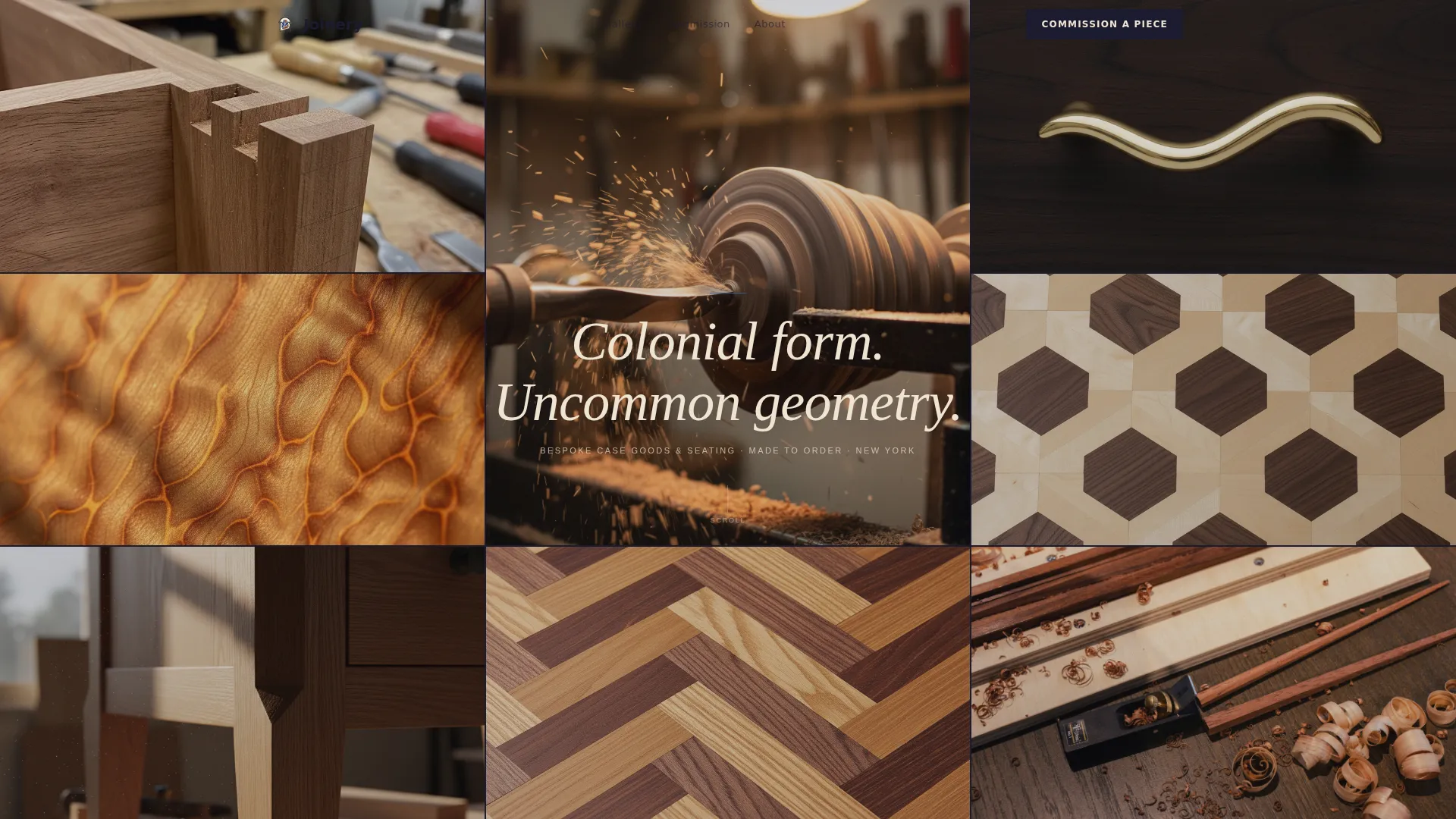
- A nine-tile asymmetric photo grid mosaic header with a centered typographic overlay
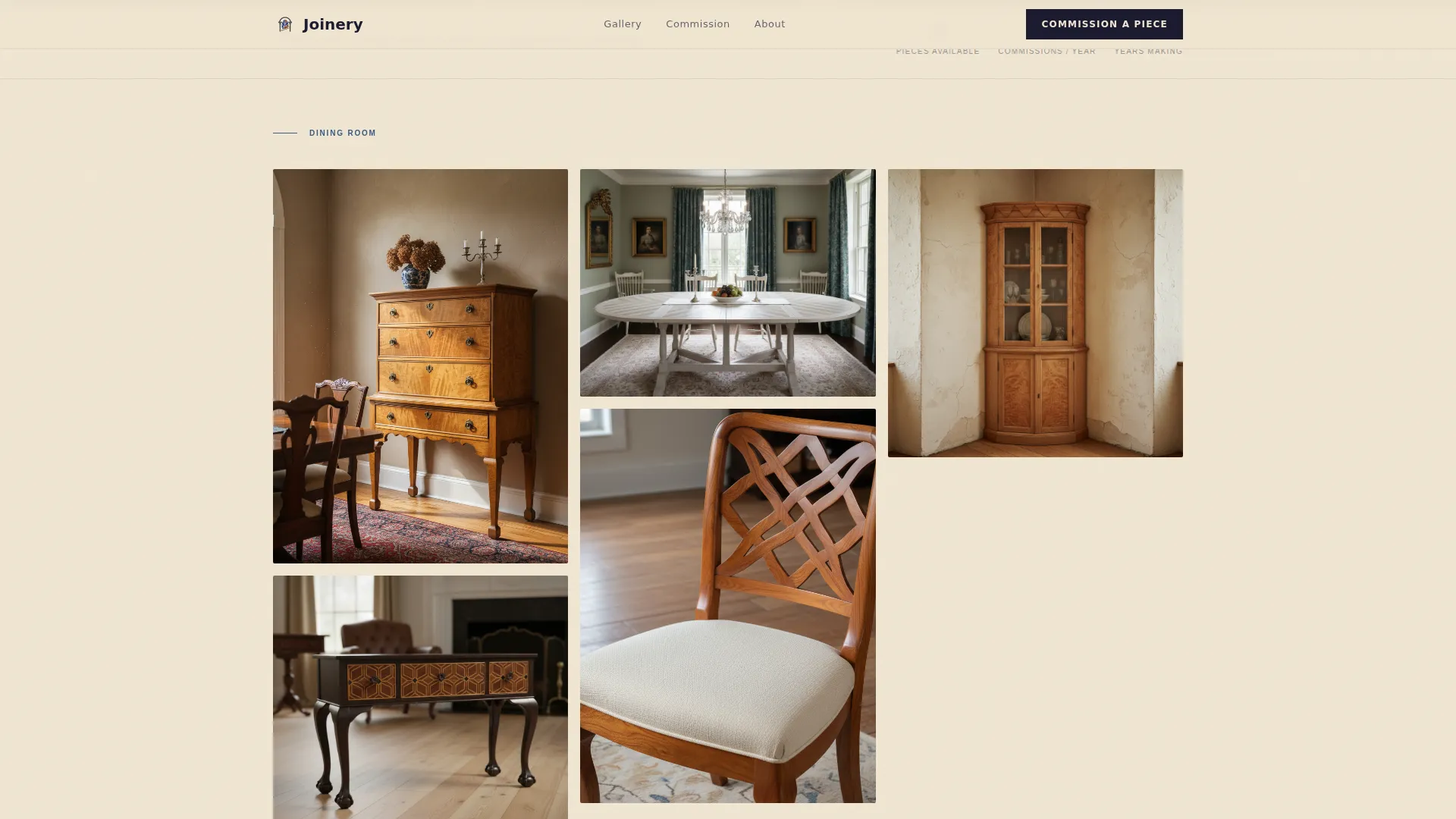
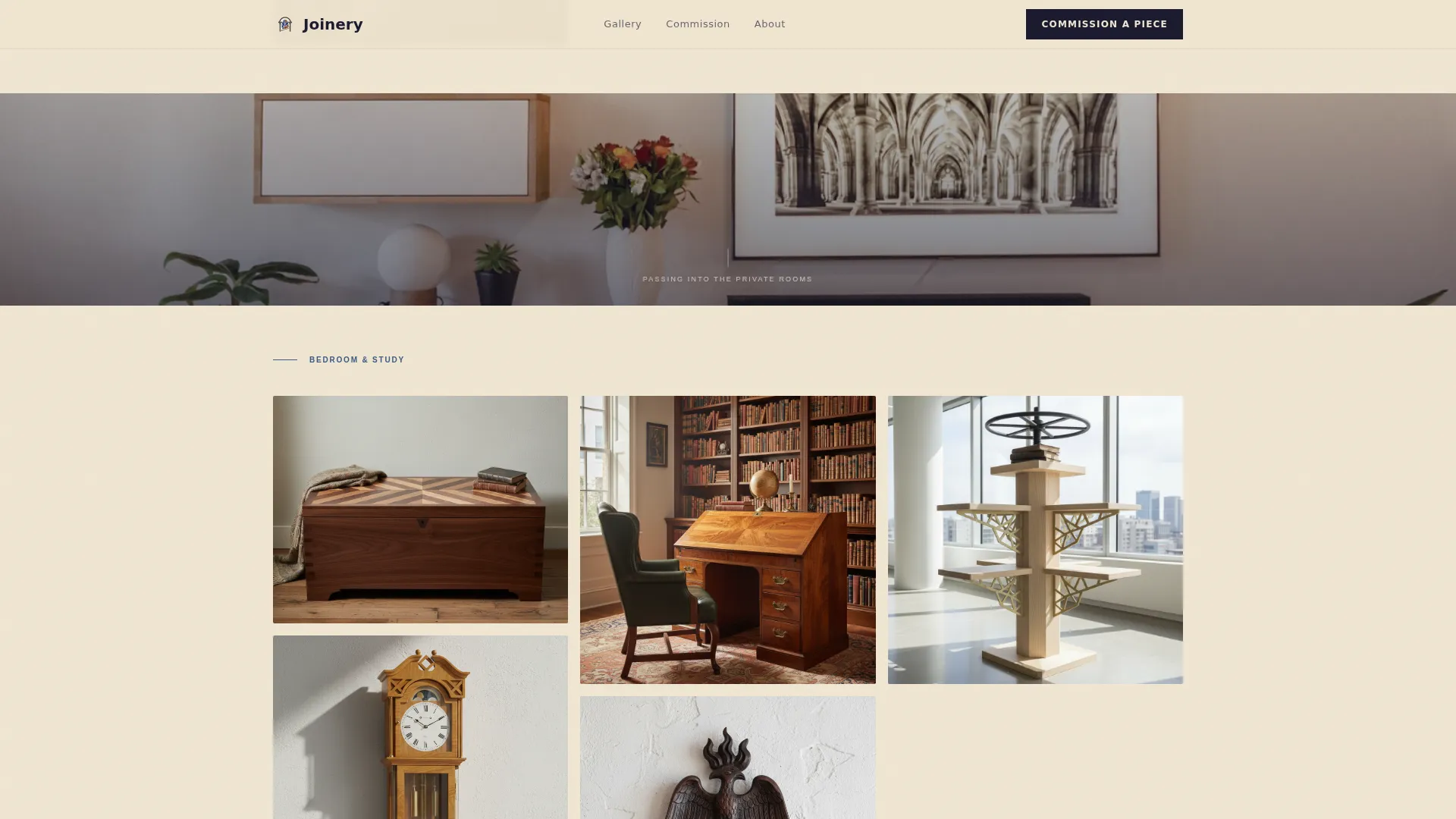
- Four room-themed masonry gallery clusters, each with shoppable hover states and threshold dividers
- A structured commission intake form collecting piece type, wood species, room dimensions, and a freeform geometry description
Feature list
This template includes a focused set of interactive and visual features drawn directly from the brief.
Nine-Tile Photo Grid Mosaic Header
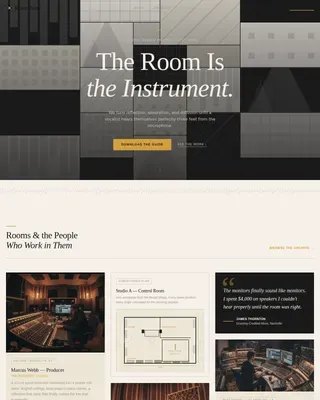
The header fills the full viewport with nine asymmetric tiles, each showing a tightly cropped craft detail. No tile reveals a complete piece. A single line of type appears across the center tile, drawing the eye before the scroll begins.
Shoppable Masonry Gallery Tiles
Every tile in the four gallery clusters supports a hover state that slides up a price, wood species label, and a "Claim This Piece" button from the bottom of the tile. A subtle "1 Available" counter in indigo reinforces the one-of-one nature of each piece.
Room-Themed Gallery Clusters
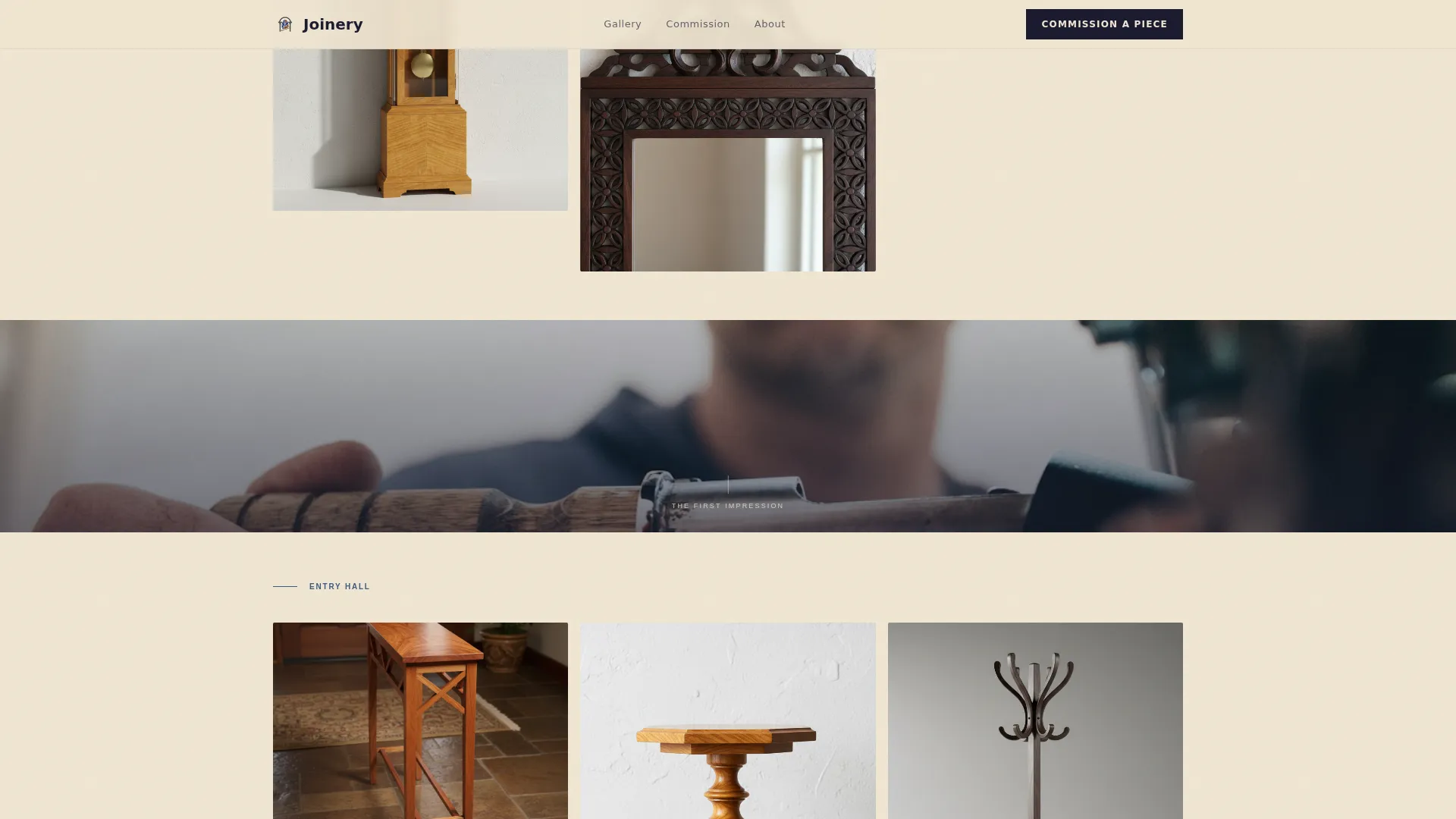
The masonry grid is organized into four named rooms: Dining, Bedroom and Study, and Entryway. Each cluster is separated by a full-width threshold image, creating a browsing rhythm that feels like moving through a connected showroom.
Commission a Piece Intake Form
A short, structured form collects the four details most useful for scoping a custom order: piece type, preferred wood species, room dimensions, and a free-text field labeled "Describe the geometry you're drawn to." The form is pinned via a persistent navigation call to action.
Scroll-Linked Animation System
The template uses scroll-linked mosaic blur, staggered masonry reveals driven by IntersectionObserver, and GPU-accelerated hover transitions to keep motion purposeful and performance-conscious.
Persistent Navigation Call to Action
The primary "Commission a Piece" button is pinned to the navigation bar throughout the page, so the commission path is always one click away regardless of where the visitor is browsing.
Page sections overview
| Section | Purpose |
|---|---|
| Hero Mosaic Grid | Opens with nine cropped craft-detail tiles and centered tagline overlay |
| Dining Room Gallery | First shoppable masonry cluster with threshold divider |
| Bedroom and Study Gallery | Second shoppable masonry cluster with threshold divider |
| Entryway Gallery | Final shoppable masonry cluster |
| Commission a Piece | Short intake form for custom order inquiries |
| Footer | Horizontal flow footer with studio context |
Design & branding system
The visual identity follows a Playful Geometric theme rendered through an Ink and Paper color system. The palette is built to evoke a cabinetmaker's sketchbook: cream pages, precise graphite elevations, and one confident ink annotation circling the detail that matters. Typography pairs Fraunces as the display serif with DM Sans for body text.
- Writing-desk black (#1A1A2E), linen parchment (#F0E6D3), and quill-stroke walnut (#5C3D2E) form the base palette
- Indigo ink (#3D5A80) appears as an accent on hover states, price tags, and section dividers
- Fraunces display serif handles headings; DM Sans handles all body and user interface text
Mobile & speed optimization
The template is built desktop-first, reflecting the reality that its primary audience, design professionals and set decorators, typically browses on large screens. The layout adapts responsively for mobile visitors without losing the masonry rhythm.
- Images are lazy-loaded to defer off-screen assets until they are needed
- Animations use GPU-accelerated transforms only, keeping motion smooth without layout thrashing
- Masonry reflows gracefully on smaller viewports so shoppable tiles remain tappable and legible
How this template helps you convert
The page is structured so that desire builds before any purchase decision is presented. By the time a visitor reaches the commission form, the furniture has already sold itself visually across four room-length scroll experiences.
- The photo grid mosaic and threshold dividers slow the scroll intentionally, giving each piece time to register before the next cluster begins.
- Hover states surface price and scarcity information only when a visitor is already engaged with a specific tile, reducing friction and increasing the relevance of the "Claim This Piece" prompt.
- The commission form's freeform geometry field invites visitors to articulate their taste, which lowers the barrier to inquiry and pre-qualifies the conversation.
Other information about this template
This template sits within the Architecture and Design category, specifically the Colonial Architecture subcategory and Colonial Furniture Designer niche. It is localized for English-language audiences with pricing in United States dollars.
- The template style is Masonry and Pinterest layout, with a Gallery Walk creative direction and a Photo Grid Mosaic header concept
- The linen parchment and walnut color system is inspired by period cabinetmaking references and works well for studios with a historically grounded visual identity
- The layout supports a direct sales model alongside commission capture, making it suitable for studios that sell finished inventory and also take custom orders simultaneously
Theme
Playful Geometric
Creative direction
Gallery Walk
Color system
Ink & Paper
Style
Masonry/Pinterest
Direction
Direct Sales
Page Sections
Nine-tile Photo Grid Mosaic Header
Shoppable Masonry Gallery Tiles
Room-themed Gallery Clusters
Commission a Piece Intake Form
Scroll-linked Animation System
Persistent Navigation Call to Action
Related questions
Can I use this template to sell furniture directly, not just take inquiries?
How does the commission intake form work?
Can studios with styles other than colonial furniture use this template?
How does the template communicate that each piece is one of a kind?
What fonts are included in this template?