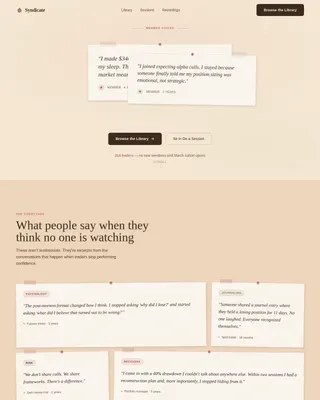
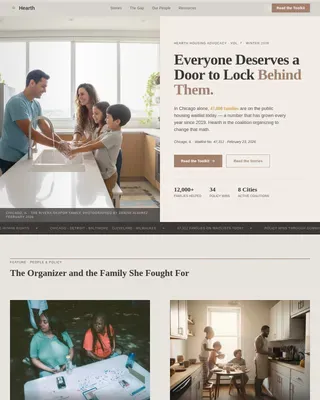
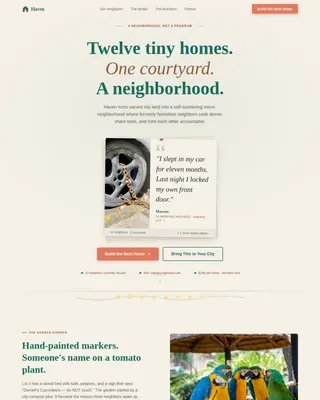
Specialist Advocacy & Social Campaign Reviews & Social Proof Website Template
Justice is a fierce, tender environmental justice landing page template built for grassroots coalitions fighting industrial pollution in fenceline communities. It uses a Hero's Journey scroll structure, flippable evidence cards, a mid-page video testimonial, and a sticky coral call-to-action bar to carry visitors from witness to participant, driving emotional click-through to a partner action page.
by Rocket studio
Quick summary
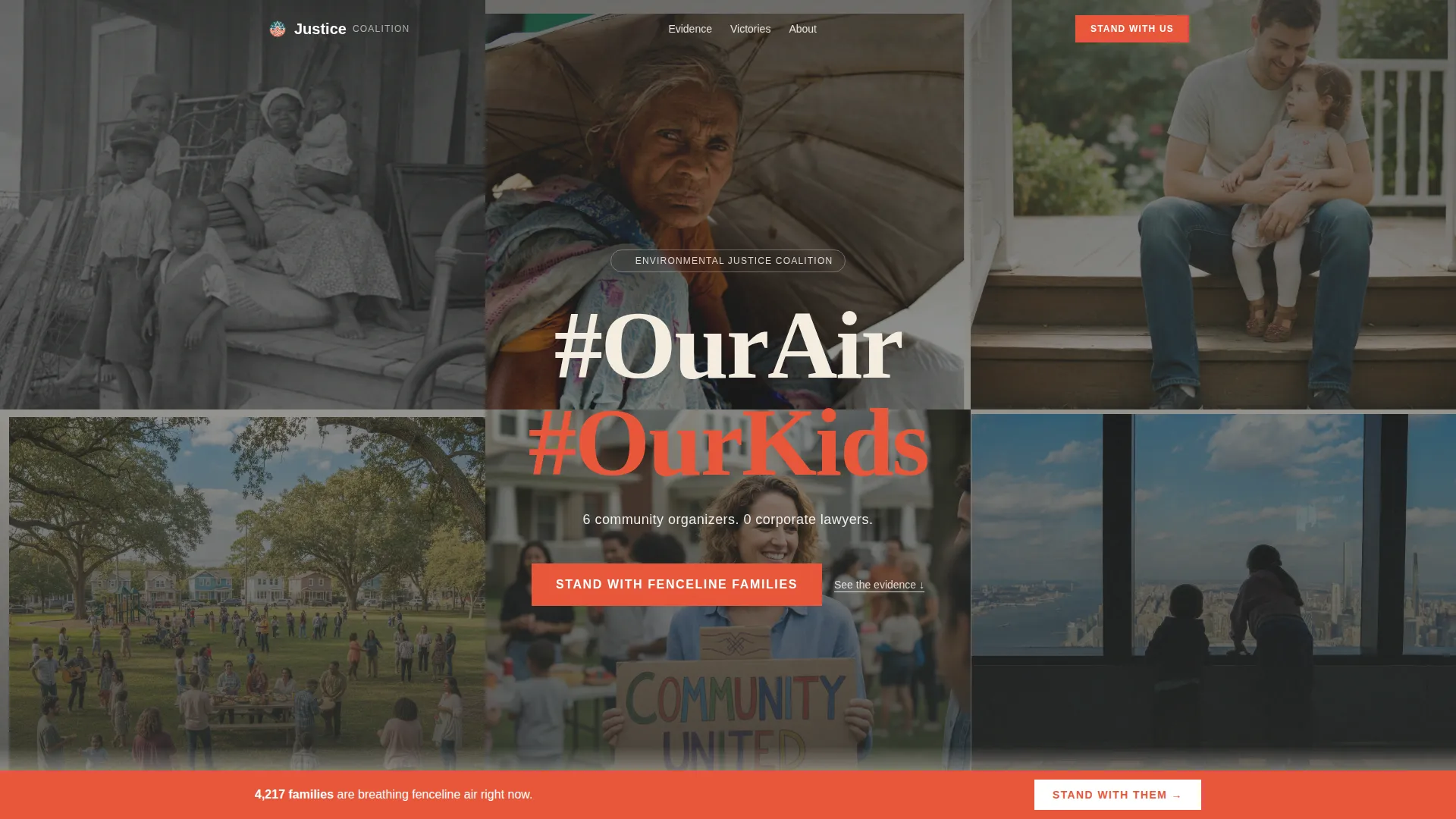
Justice is a single-page, click-through landing page template for environmental justice coalitions. It opens with a full-viewport hashtag lockup over a Ken Burns photo mosaic, then guides visitors through community evidence, a parent testimonial, and a victories grid. Every design choice, from the warm white card backgrounds to the catalyst coral call-to-action, is built to earn an emotional click, not fill a form.
Who this template is for
This template is made for people doing real community organizing work. It suits groups that lead with human stories and documented evidence rather than polished fundraising copy.
- Grassroots environmental justice coalitions and fenceline community organizations
- Advocacy nonprofits running public-awareness or petition campaigns
- Local organizers who need a mobile-ready page to share at doorsteps and city council meetings
What problem this template solves
Most advocacy pages either drown visitors in data or ask for a donation before building any trust. Fenceline communities need a page that introduces real families first, then opens the door to action. This template solves exactly that tension.
- Visitors leave before feeling connected because the emotional stakes are never made visible
- Evidence exists, such as air quality readings and health maps, but it sits in PDFs nobody clicks
- Organizations lose potential allies who need a story, not a sign-up form, to take the first step
What you get with this template
You get a fully structured, modular card-grid landing page with a clear Hero's Journey narrative arc. Every section is purpose-built for advocacy momentum.
- A full-viewport header with bold stacked hashtag typography, a Ken Burns photo mosaic, and a rolling data counter
- A flippable evidence card grid, a mid-page video testimonial block, a victories grid, and a sticky call-to-action bar
- A linear footer and a complete Teal Catalyst color system with Fraunces and DM Sans typography pre-applied
Feature list
This template is built around deliberate features that serve grassroots storytelling and click-through conversion.
Ken Burns Photo Mosaic Header
The header fills the full viewport with a mosaic of tightly cropped family photographs. A slow Ken Burns drift animates the images, giving stillness a sense of breath. Bold stacked typography overlays a campaign hashtag, and a rolling marquee counter displays real community data beneath it.
Flippable Community Evidence Cards
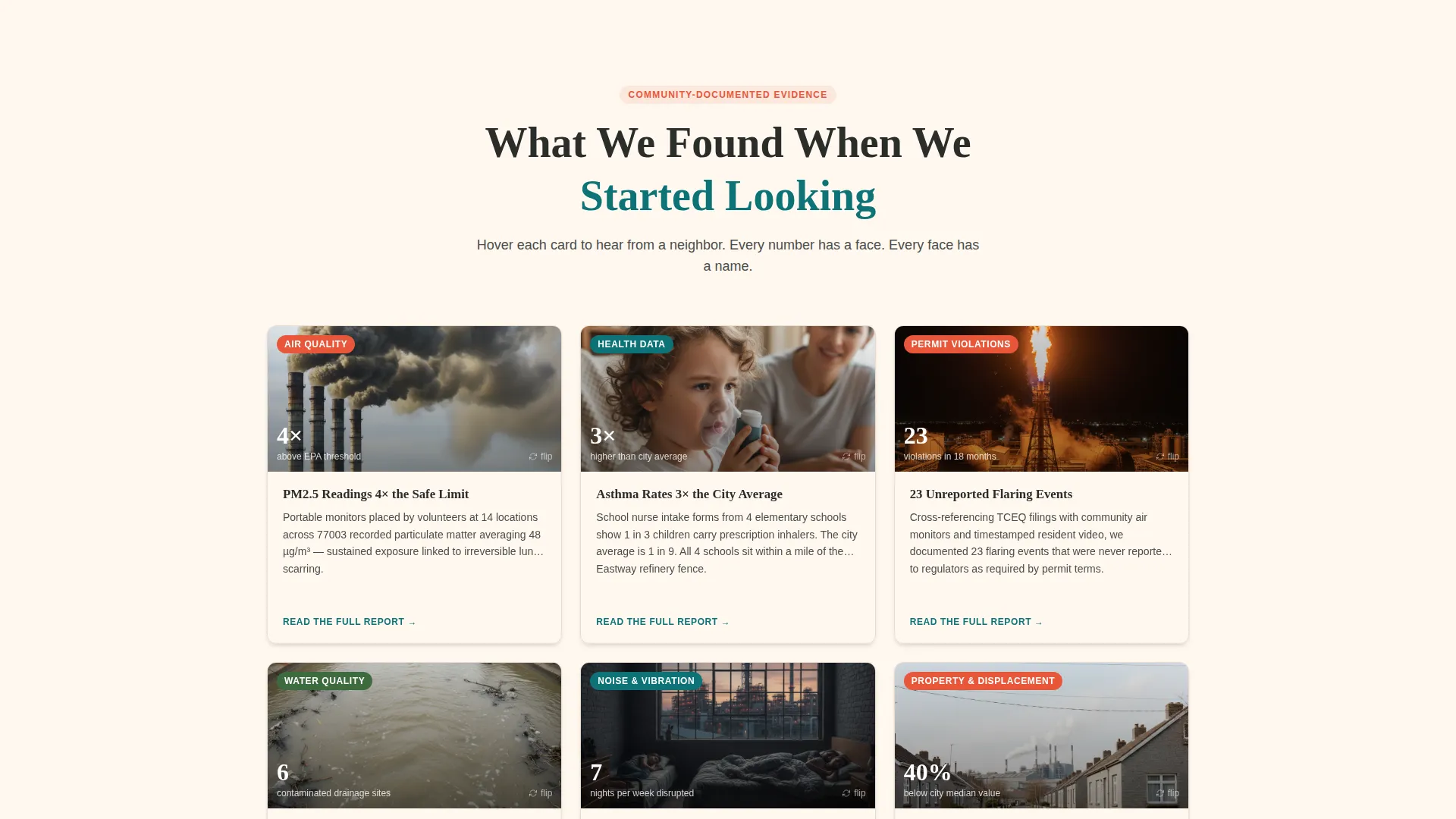
The evidence grid uses modular cards that flip on hover to reveal a family's one-sentence story on the back. Each card front displays community-documented data, such as air quality readings, health maps, or permit violations. A teal text link on each card points visitors toward the full report for those who need data before they commit.
Mid-Page Video Testimonial Block
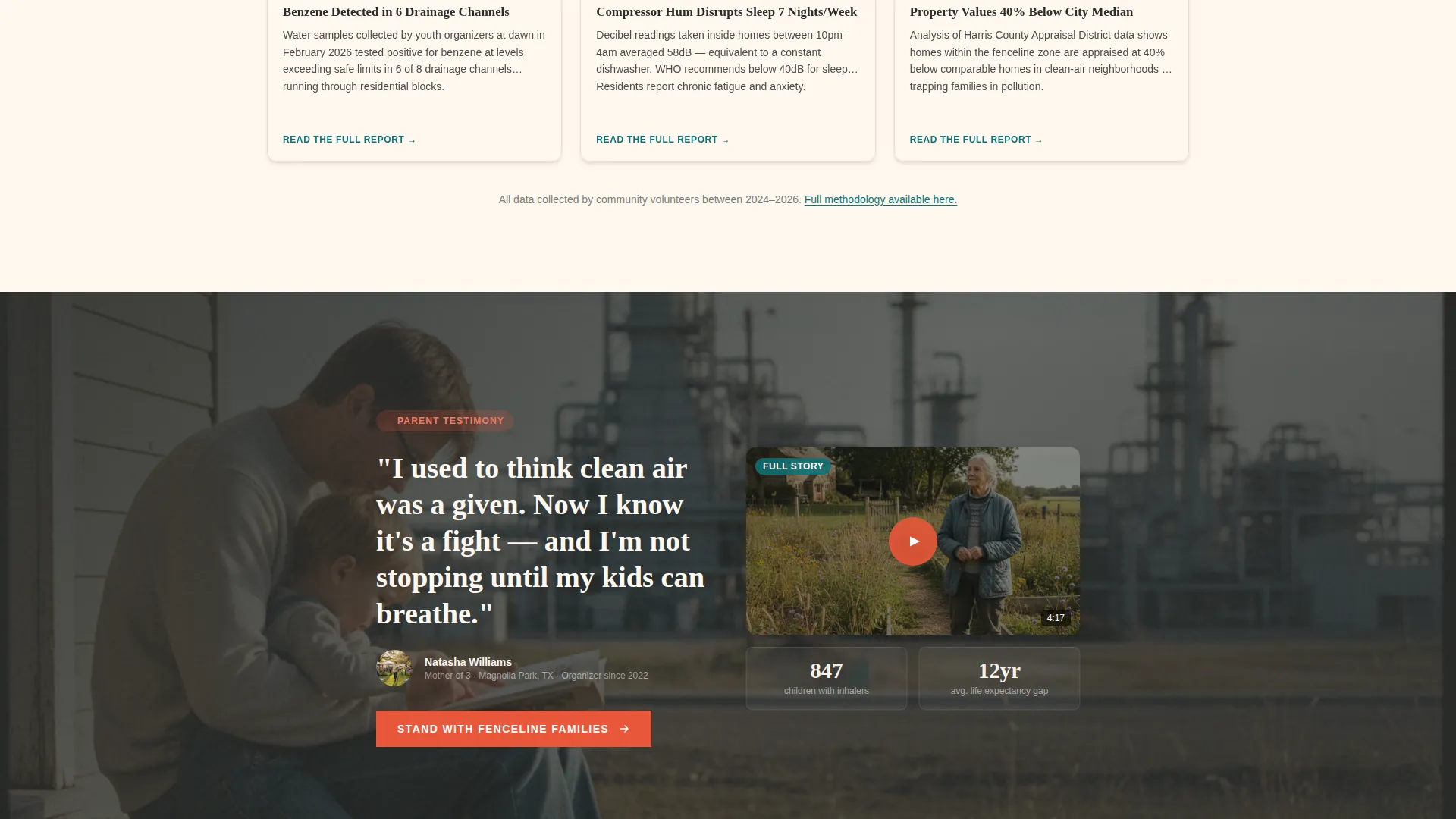
A single parent testimonial video sits at the narrative midpoint of the page. It acts as the threshold moment in the Hero's Journey structure, shifting the visitor from passive witness to active participant. The block is designed to carry maximum emotional weight before the primary call-to-action reappears.
Victories Grid
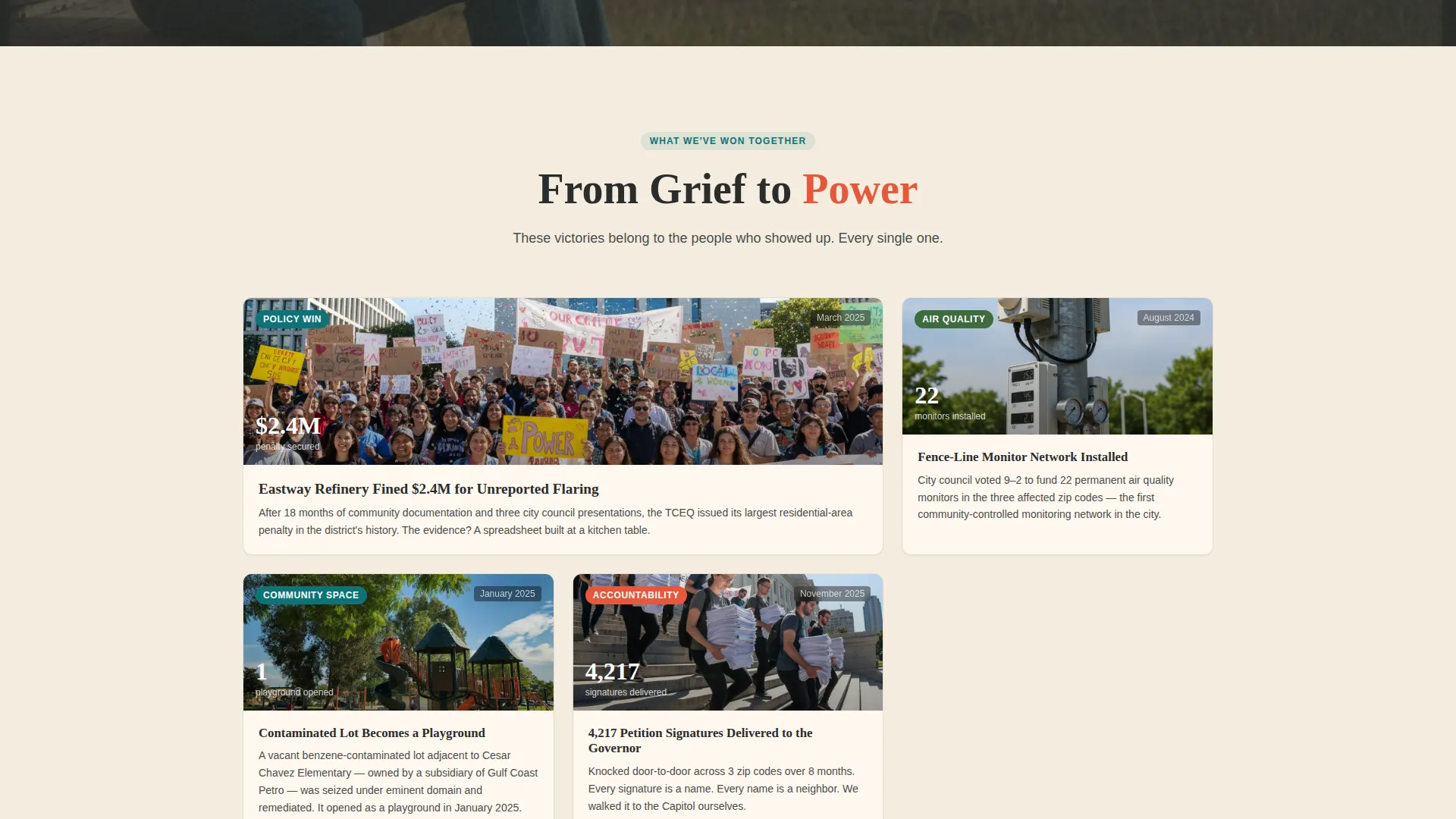
A second card grid follows the testimonial, showing concrete wins already achieved by the coalition, including policy changes, shuttered facilities, and new playground openings. Each card includes space for a date or milestone marker. This section lifts the emotional arc from grief to collective power.
Sticky Coral Call-to-Action Bar
After the testimonial midpoint, a sticky bottom bar appears and stays visible as the visitor scrolls. It displays the primary call-to-action, "Stand With Fenceline Families," in catalyst coral. The bar disappears on the upper half of the page to respect the narrative build and only activates once the emotional foundation has been laid.
Staggered Scroll Reveal Animation
Cards in every grid stagger into view as the visitor scrolls, as if neighbors are arriving one by one. The animation is minimal and deliberate, using Intersection Observer logic to trigger each card individually. This pacing reinforces the community-made tone without overwhelming the content.
Page sections overview
| Section | Purpose |
|---|---|
| Hero Hashtag Header | Campaign hashtag lockup over Ken Burns photo mosaic with rolling data counter and primary coral call-to-action |
| Evidence Card Grid | Flippable cards showing air quality readings, health maps, and permit violations with teal report links |
| Parent Video Testimonial | Mid-page threshold moment featuring a parent's story to shift visitor from witness to participant |
| Victories Card Grid | Policy wins, shuttered facilities, and playground openings showing real progress already made |
| Sticky call to action Bar | Coral call-to-action bar that activates after the testimonial midpoint and persists through the lower page |
| Linear Footer | Clean footer closing the page with coalition contact and navigation |
Design & branding system
The visual identity follows a Family First theme expressed through the Teal Catalyst color system. Every color choice carries a specific emotional job, like a hand-painted yard sign that is community-made and impossible to ignore.
- Deep action teal (#0D7377) on primary buttons and section anchors, soft porch-light warm white (#FFF8F0) on card backgrounds, and charcoal soil (#2B2D2B) for body text
- Catalyst coral (#E8573A) reserved exclusively for the primary call-to-action and urgent callouts, ensuring it commands full attention when it appears
- Fraunces serif for headlines and emotional weight, paired with DM Sans for body text clarity across all card and paragraph content
Mobile & speed optimization
This template is built mobile-first because organizers share the link from phones at doorsteps, not from desktops in offices. Every layout decision prioritizes small-screen readability and tap-friendly interactions.
- The card grid reflows cleanly on mobile, and the sticky call-to-action bar is sized for thumb reach at the bottom of the screen
- Images across the mosaic and card grids are lazy-loaded, and card flip interactions are handled with CSS only to keep the experience light
- Staggered scroll reveals use Intersection Observer so animations trigger only when cards enter the viewport, keeping scroll smooth on low-power devices
How this template helps you convert
This template earns the click by building emotional trust across every scroll section before the call-to-action ever becomes insistent. The conversion path is click-through only, with no form on the page.
- The header mosaic and rolling data counter establish immediate credibility, grounding the visitor in real families and specific numbers before any ask is made.
- The flippable evidence cards and parent testimonial deepen personal investment, so by the time the sticky coral bar appears, the visitor already feels the weight of the decision.
- The victories grid reframes the click not as a sacrifice but as joining something already working, making "Stand With Fenceline Families" feel like an open door rather than a cold request.
Other information about this template
This template is part of a broader library of advocacy and nonprofit landing page templates built around intersection-matched design systems. A few additional details are worth noting before you build.
- The template is categorized under Community & Nonprofit, with a specific focus on the Environmental Justice niche and the Advocacy & Social Campaign subcategory
- The creative direction follows a Hero's Journey arc, paired with a Hashtag/Movement header concept and a Click-Through landing page direction, all of which are pre-structured in the layout
- The Teal Catalyst color system, Family First theme, and Card Grid modular template style are all pre-applied and ready to be customized with your coalition's real photographs, data, and hashtag
Theme
Family First
Creative direction
Hero's Journey
Color system
Teal Catalyst
Style
Card Grid (Modular)
Direction
Click-Through
Page Sections
Ken Burns Photo Mosaic Header
Flippable Community Evidence Cards
Mid-page Video Testimonial Block
Victories Card Grid
Sticky Coral Call-to-action Bar
Staggered Scroll Reveal Animation
Related questions
Does this template include a donation form or email sign-up?
Can I replace the placeholder hashtag and data counter with my own campaign details?
How does the evidence card flip interaction work?
Is this template a good fit for a campaign that already has documented wins?
Can this template represent multiple zip codes or community areas?