Translation & Localization Booking Website Template
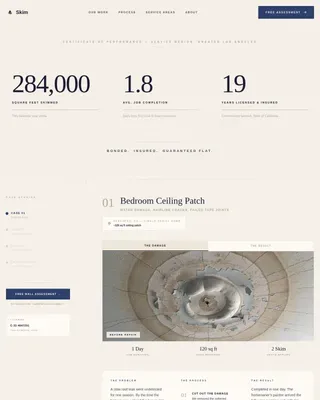
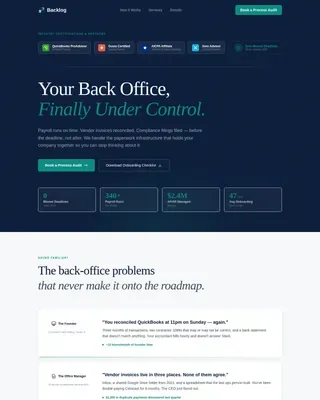
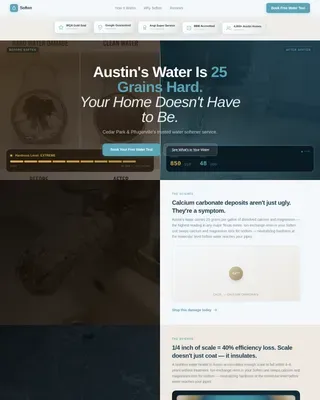
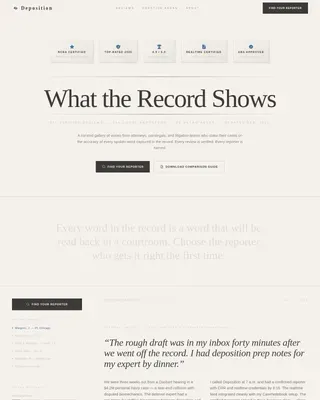
The Locale Executive Suite Localization Service Comparison Landing Page Template is a single-page, typographically authoritative layout built for premium localization firms. It leads with a bold serif headline, delivers metric-first proof through a structured comparison table, and drives VP-level decision-makers toward booking a scoping call or downloading a rate card. Every design choice signals expertise before a word is read.
by Rocket studio
Quick summary
This landing page template is designed for a premium localization firm targeting product leaders at SaaS companies and e-commerce directors planning international rollouts. The layout opens with a giant centered headline, moves into a data-driven comparison table, and closes with a direct booking flow. The visual system uses an Ink and Paper palette that radiates typographic authority and measured restraint.
Who this template is for
This template suits service providers who need a landing page that performs like a due-diligence brief. It is built for decision-driven audiences who respond to evidence before conversation.
- VP Product and Product Directors at SaaS companies preparing cross-border launches
- E-commerce directors expanding their service area into APAC or multiple cities
- Series B startup founders who need localized content delivered fast, for multiple locations and language pairs
What problem this template solves
International product teams struggle to justify their localization vendor choice to stakeholders. They need proof, not promises. Generic agency pages bury the numbers. This landing page leads with the numbers.
- No clear benchmark: most service pages hide performance data, making it hard for local customers and enterprise buyers alike to compare options fairly
- Weak calls to action: landing page examples in professional services often bury the booking step, losing potential customers who wanted to act fast
- Missing localized content depth: pages built for a broad service area rarely show the cultural and linguistic specificity that VP-level buyers require
What you get with this template
You get a complete, single-page layout built around proof and conversion. Every section is purposeful. Every element earns its space. The layout is structured so site visitors immediately understand what the firm does and why the numbers matter.
- A hero section with a giant tracked serif headline and a one-second delayed stat drawn from CSA Research 2024
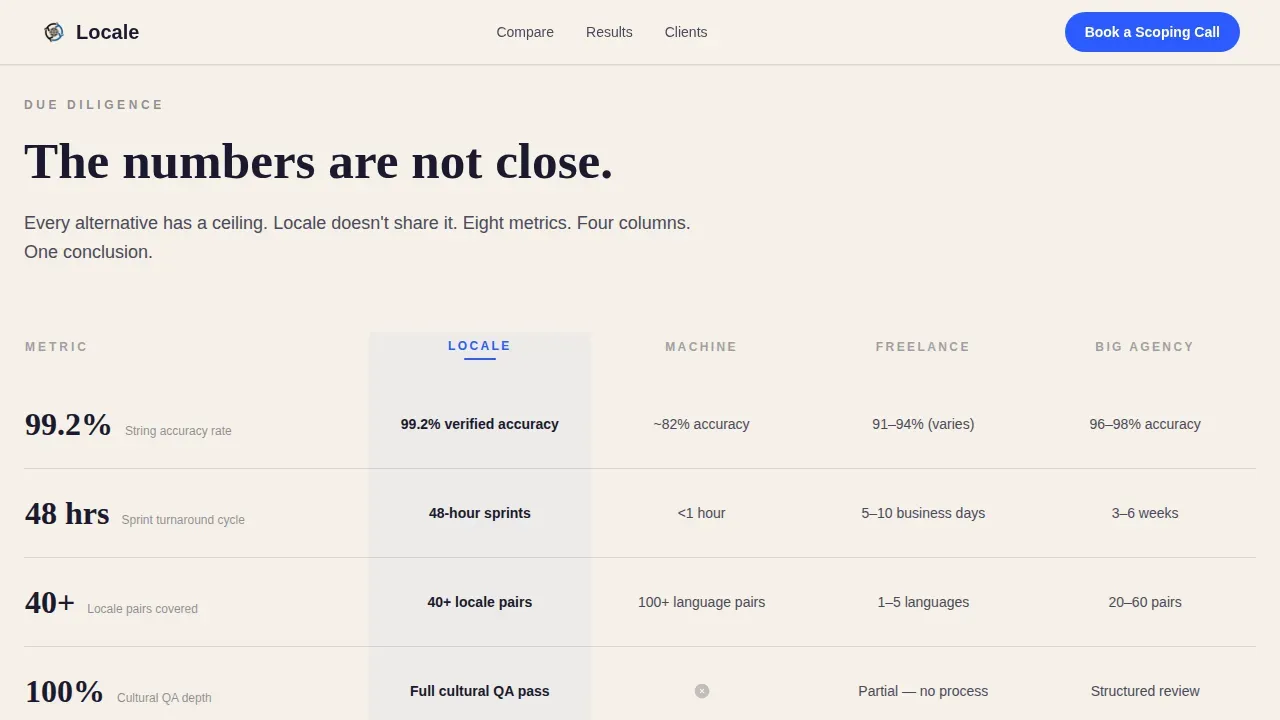
- A structured comparison table benchmarking your firm against machine translation, freelance translators, and big-agency localization across eight performance metrics
- An inline booking flow with multi-select chips for target languages, word volume range, and preferred time slot, plus a secondary email-gate path for rate card downloads
Feature list
This template ships with a tightly defined set of components. Each one serves the conversion goal directly.
Giant Headline Hero Section
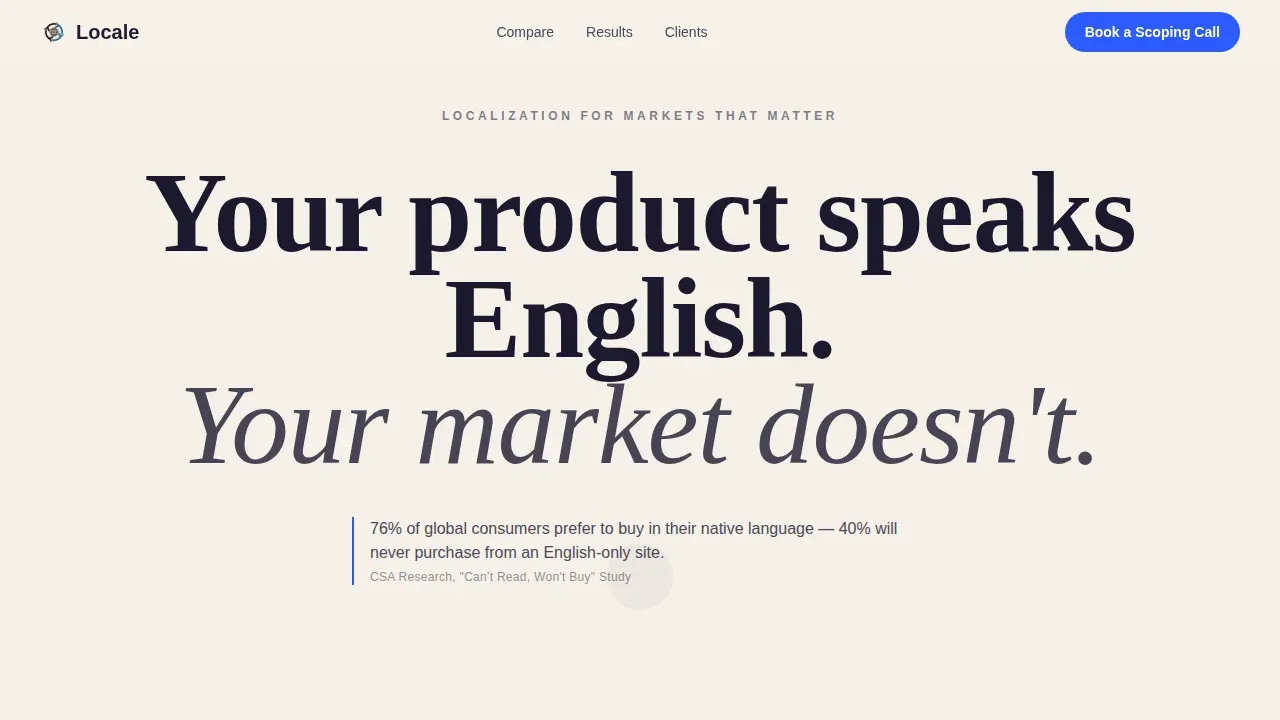
The hero is a parchment-field layout with no images, gradients, or animations. A single enormous serif headline sets the tone immediately. Below it, a delayed stat cue surfaces after one second, giving site visitors a data point before they scroll. The restraint of this section is its strength.
Structured Comparison Table
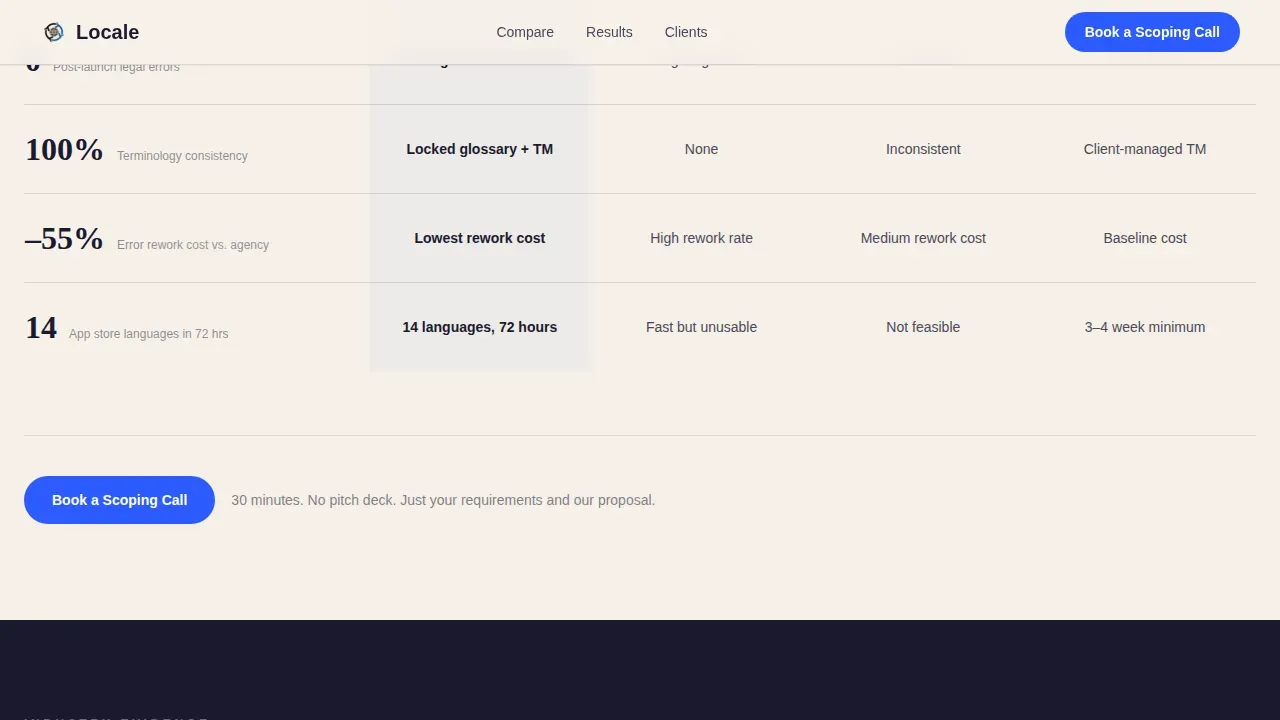
The comparison table is the spine of this landing page. It benchmarks the localization firm across columns covering turnaround speed, cultural quality assurance depth, terminology consistency rate, and post-launch error cost. Each row leads with a bold metric: 99.2% string accuracy, 48-hour sprint cycles, and coverage across 40-plus locale pairs. This format helps decision-makers scan like they are reading a due-diligence report, not a brochure.
Stats-First Impact Scroll Flow
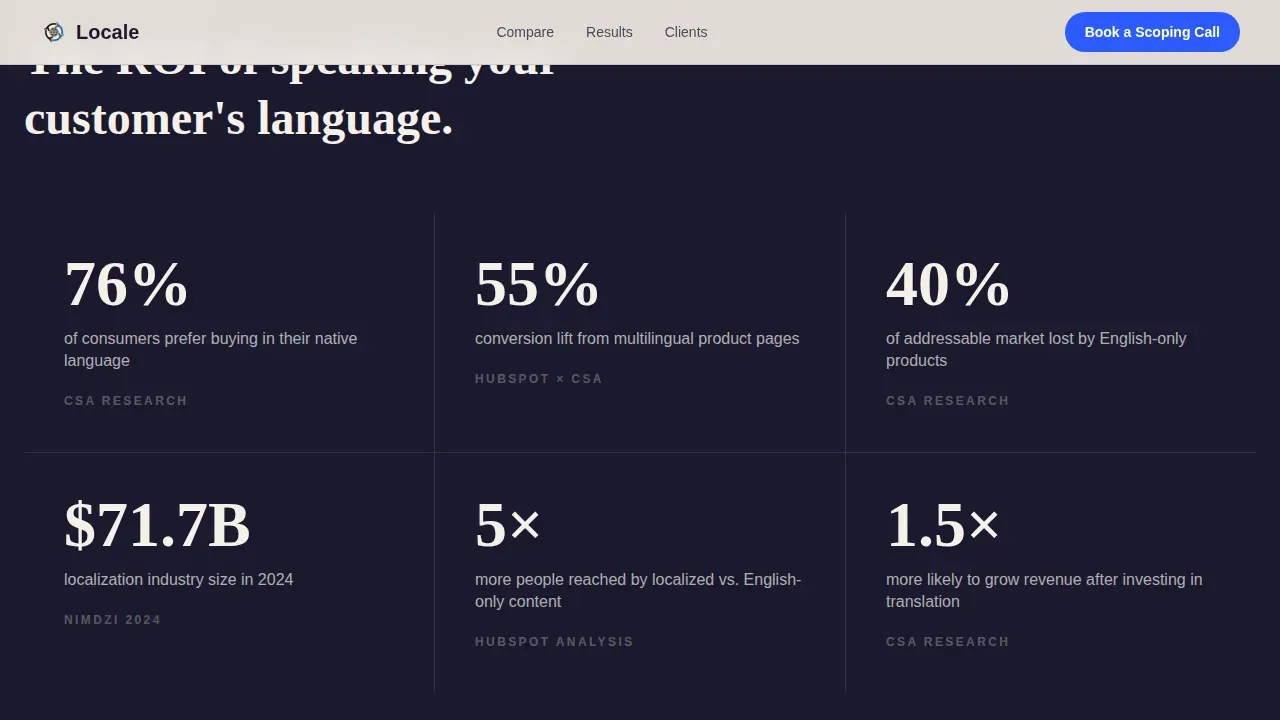
Every scroll increment introduces a number before qualitative context. The page is structured so that data lands first, explanation follows. A full-width data wall reinforces industry proof points, including conversion research and localization efficiency benchmarks. This approach mirrors how VP-level buyers actually evaluate vendors.
Inline Booking Scheduler
The primary call to action drives users toward scheduling a 30-minute scoping call. The inline scheduler collects company name, target languages via multi-select chips, estimated word volume range, and a preferred time slot. The flow is low-friction and immediate. There is no redirect, no separate page load, and no confusion about the next step.
Email-Gate Rate Card Path
A secondary conversion path captures leads not yet ready to book. Visitors can request a downloadable rate card by submitting their email address. The gated PDF itself closes with a booking link, extending the conversion opportunity beyond the first visit. This supports local traffic capture and warms leads through localized content before the sales conversation begins.
Sticky Navigation with Persistent call to action
The navigation bar stays pinned as users scroll. The primary booking call to action appears in the nav, after the comparison table, and again at the page floor. This triple repetition ensures that calls to action are always within reach, no matter how deep a visitor reads. The signing-pen blue color is reserved exclusively for these interactive states.
Page sections overview
| Section | Purpose |
|---|---|
| Hero Headline | Establishes authority with a giant serif statement and one-second delayed stat |
| Comparison Table | Benchmarks firm metrics against three competitor types across eight criteria |
| Stats Impact Wall | Reinforces proof with industry data points and localization research figures |
| Social Proof | Displays three client testimonials with role titles, company names, and specific outcomes |
| Booking Call to Action | Delivers inline scheduler plus secondary rate card email-gate path |
| Footer | Minimal horizontal flow with contact details and navigation links |
Design & branding system
The visual identity follows the Executive Suite theme with an Ink and Paper color system. The palette feels like a freshly printed contract: weighty, intentional, and designed for people who read everything carefully before signing.
- Color roles: manuscript black (#1A1A2E) dominates headers, warm parchment (#F5F0E8) holds the body canvas, muted graphite (#4A4A5A) carries supporting data and secondary text, and signing-pen blue (#2D5BFF) appears only on interactive elements and call-to-action states
- Typography: Fraunces serif is used for display and headline levels; DM Sans handles body copy and interface elements, creating a clear hierarchy that guides the eye from statement to action
- Layout philosophy: whitespace is structural, not decorative; margins are intentional; no gradients, no animations beyond the one-second stat delay, and no decorative imagery
Mobile & speed optimization
The template is designed desktop-first to match how VP-level buyers review vendor pages during the workday. However, the layout is fully responsive for mobile devices. Localized design ensures that fast loading and readable hierarchy hold on smaller screens.
- The comparison table reflows cleanly for mobile devices, keeping metric rows readable without horizontal scrolling
- CSS-driven scroll reveals replace heavy JavaScript libraries, keeping the page light and responsive across all screen sizes
- The inline booking form and multi-select chips are touch-friendly, so users on mobile devices can complete the scheduling flow without friction
How this template helps you convert
This landing page is built to earn the click before it asks for the click. The sequence is deliberate: data first, trust second, action third.
- The comparison table does the persuasion work early. By the time a visitor reaches the booking call to action, they have already seen that the numbers are not close. The conversion ask feels like a logical next step, not a sales push.
- Customer testimonials with specific outcomes, role titles, and company names add local social proof that resonates with buyers at the same seniority level. Including customer testimonials on a landing page significantly boosts credibility for potential customers evaluating premium services.
- The dual-path conversion model captures both ready buyers and exploratory leads. The booking scheduler serves those ready to act, while the rate card email gate retains those who need more time. Neither visitor leaves empty-handed.
Other information about this template
This template is built for localization service providers who compete on quality, not price. It is particularly effective for firms serving local businesses expanding globally, multi location businesses standardizing their brand voice across business locations, and enterprise SaaS teams managing localized content across multiple cities and market tiers.
- The landing page structure supports local SEO landing pages goals when deployed with proper URL conventions. Using a clearly defined URL structure helps enhance local visibility in search engines. Local SEO landing pages that follow consistent URL patterns help search engines understand the geographic areas a business serves.
- Location page best practices apply here too. A location page built on this structure can include contact details, a service area map, and localized content that resonates with a local audience in a specific location. Incorporating local landmarks and references in a location landing page can strengthen local relevance for local searches.
- The template can serve as a city page framework for firms operating across multiple cities. Each city page variant can feature unique local content, local customer testimonials, and location based promotions relevant to that market. Individual location pages built this way help search engines understand geographic service scope.
- Local SEO fundamentals apply when deploying location landing pages: Name, Address, and Phone Number consistency is critical for local SEO; adding local keywords to URLs is a ranking factor; and schema markup for local businesses can improve how search engines understand and display business information in local search results.
- Building location-specific landing pages starts with the right keyword research. Tools like Google Keyword Planner support local keyword discovery for each target location. A Google Business Profile, combined with a Google Map embed, reinforces credibility and helps local users find a physical location more easily. Map highlighting on a location page improves usability for local queries.
- Local landing pages are designed to attract customers in a specific geographic area. Local landing pages improve local search authority by increasing the chances of appearing in local search results. Local SEO landing pages are a vital asset for local businesses that want to stand out in local searches. Studies show 80% of local searches on mobile phones convert, meaning local searchers are highly motivated to act.
- Local landing pages can attract links from reputable local sources, local news outlets, local blogs, and local partners. Internal linking between a local landing page and relevant pages strengthens site structure and helps search engines navigate the site. Local partnerships and local events can also be featured on local pages to build local community trust.
- The Locale Executive Suite Localization Service Comparison Landing Page Template is particularly suited for professional services firms that want to position as the leading service in their niche. The template supports localized content at the service landing pages level, with dedicated pages for each locale pair or service area.
- Quality assurance principles referenced in the template content align with ISO 17100 and ISO 18587 standards for sensitive document translation. Document translation services covered include leasing agreements, GDPR compliance documents, and legal disclaimers. Multilingual support elements such as virtual remote interpreting and telephone interpreting services can be referenced in supplementary landing page content.
- AI technology can increase localization efficiency by 30 to 60 percent while maintaining quality, a fact worth featuring in the stats wall section of this template. Cultural adaptation, including modifying imagery, branding, and color palettes to align with regional cultural norms, is a core service differentiator that the comparison table highlights effectively.
- This template works as a landing page builder foundation. Users can adapt it as a location page for each market they serve, creating specialized pages that speak directly to local customers in each target location. Each local landing page built from this template should carry a unique headline, localized contact details, and calls to action calibrated to the local audience.
- Local reviews, local awards, and local photos can be added to each location landing page variant to increase local relevance. Local SEO strategy benefits from having dedicated pages per service area rather than a single broad service area page that tries to cover everything. How many landing pages a firm needs depends on how many distinct local markets and locale pairs they serve.
- A well-structured local landing page should always include clear calls to action, customer testimonials, and contact details. Website visitors who arrive from local searches are often ready to act; providing immediate assistance through an inline booking form keeps them engaged. The local traffic generated by well-optimized local SEO landing pages can be substantial when each page targets a specific location with unique, high-quality localized content.
Theme
Executive Suite
Creative direction
Stats-First Impact
Color system
Ink & Paper
Style
Comparison Table
Direction
Booking/Scheduling
Page Sections
Giant Headline Hero with Delayed Stat
Eight-metric Comparison Table
Stats-first Full-width Data Wall
Inline Booking Scheduler
Email-gate Rate Card Download
Sticky Navigation with Triple Call to Action
Related questions
What kind of business is this landing page template designed for?
Can I adapt this template as a location page for different markets?
What conversion paths does the template include?
Does the template include social proof elements?
How does the comparison table support the buying decision?