Fijian Cuisine Booking Website Template
Lovo is a hero-dominant landing page template built for a Fijian agrarian restaurant. It opens with a full-viewport hand-drawn lovo pit illustration, then guides visitors through a sensory scroll that covers sight, sound, touch, and taste. A sticky "Reserve Your Mat" call to action and an inline booking flow convert that hunger into a confirmed reservation before the visitor leaves.
by Rocket studio
Quick summary
Lovo is a single-page template designed for an authentic Fijian restaurant rooted in agrarian tradition. The hero illustration commands ninety percent of the viewport. Below it, sensory sections deepen the craving course by course. The sticky reservation button and a full inline booking flow mean every scroll brings the visitor closer to committing to a table.
Who this template is for
This template serves food and beverage businesses that lead with cultural story before they lead with menu price. It is built for restaurateurs who want visitors to feel the ceremony of the lovo before they ever pick up a fork.
- Fijian restaurant owners who want to honour island cooking traditions online
- Independent dining venues that host family feasts, milestone gatherings, and group occasions
- Food entrepreneurs ready to share Pacific heritage cuisine with a wider regional and global audience
What problem this template solves
Most restaurant landing pages show a menu PDF and a phone number. That approach does not work for a kitchen where the food is the ceremony. Visitors who find a Fijian restaurant through an Instagram story need to taste the experience before they commit to a booking.
- Generic templates cannot carry the sensory weight of lovo cooking, palusami, and kokoda
- A plain menu list cannot communicate ingredient provenance or the cultural facts behind each dish
- Without a clear call to action pinned to the screen, potential diners scroll away before they find the reservation form
What you get with this template
You get a fully structured, visually rich landing page that moves from illustration to sensation to booking in one unbroken flow. Every section is built to support the story of Fiji's agrarian cooking tradition while driving a single conversion goal.
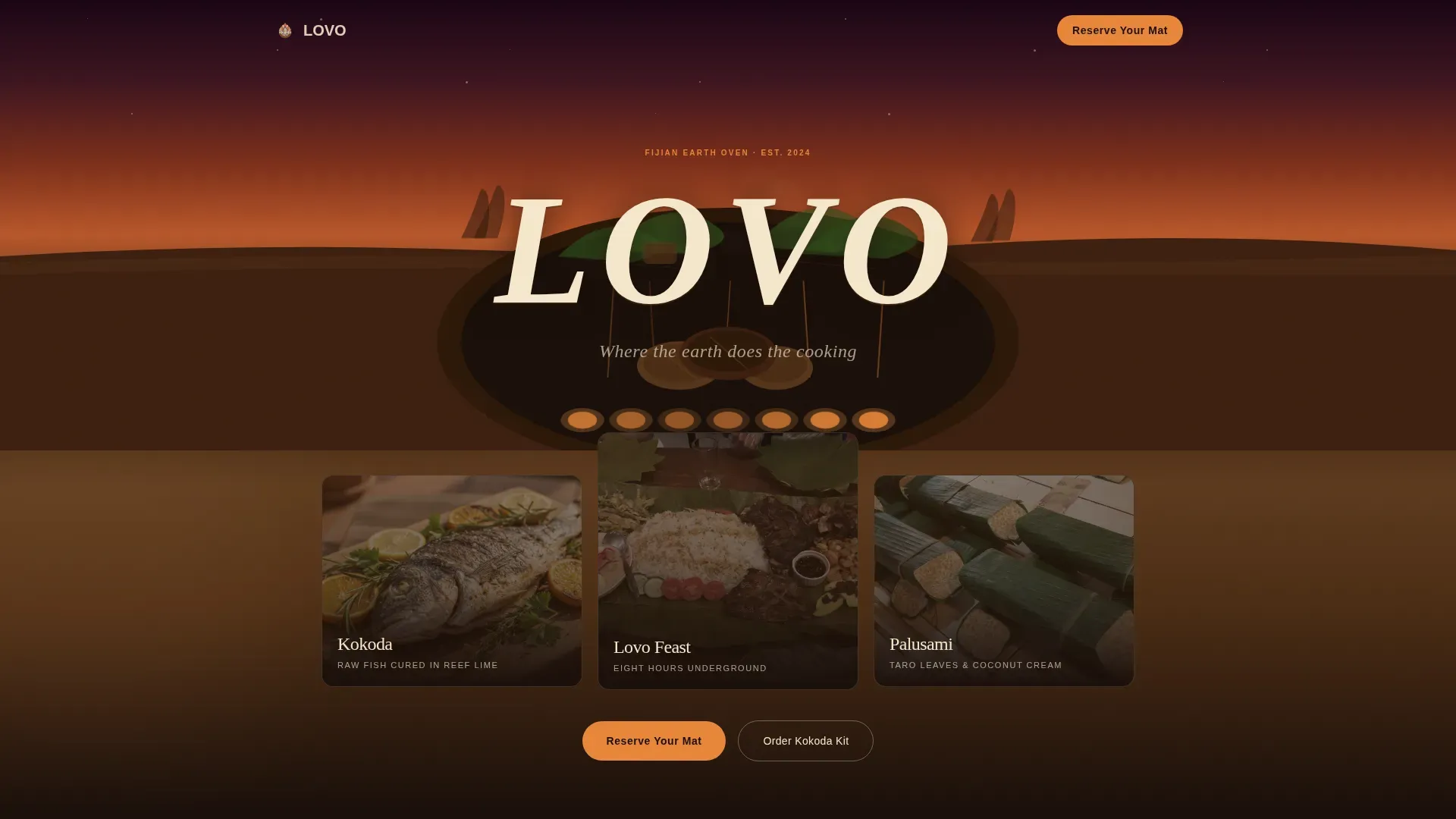
- A ninety-percent-viewport hero with a custom lovo pit cross-section illustration and the LOVO wordmark
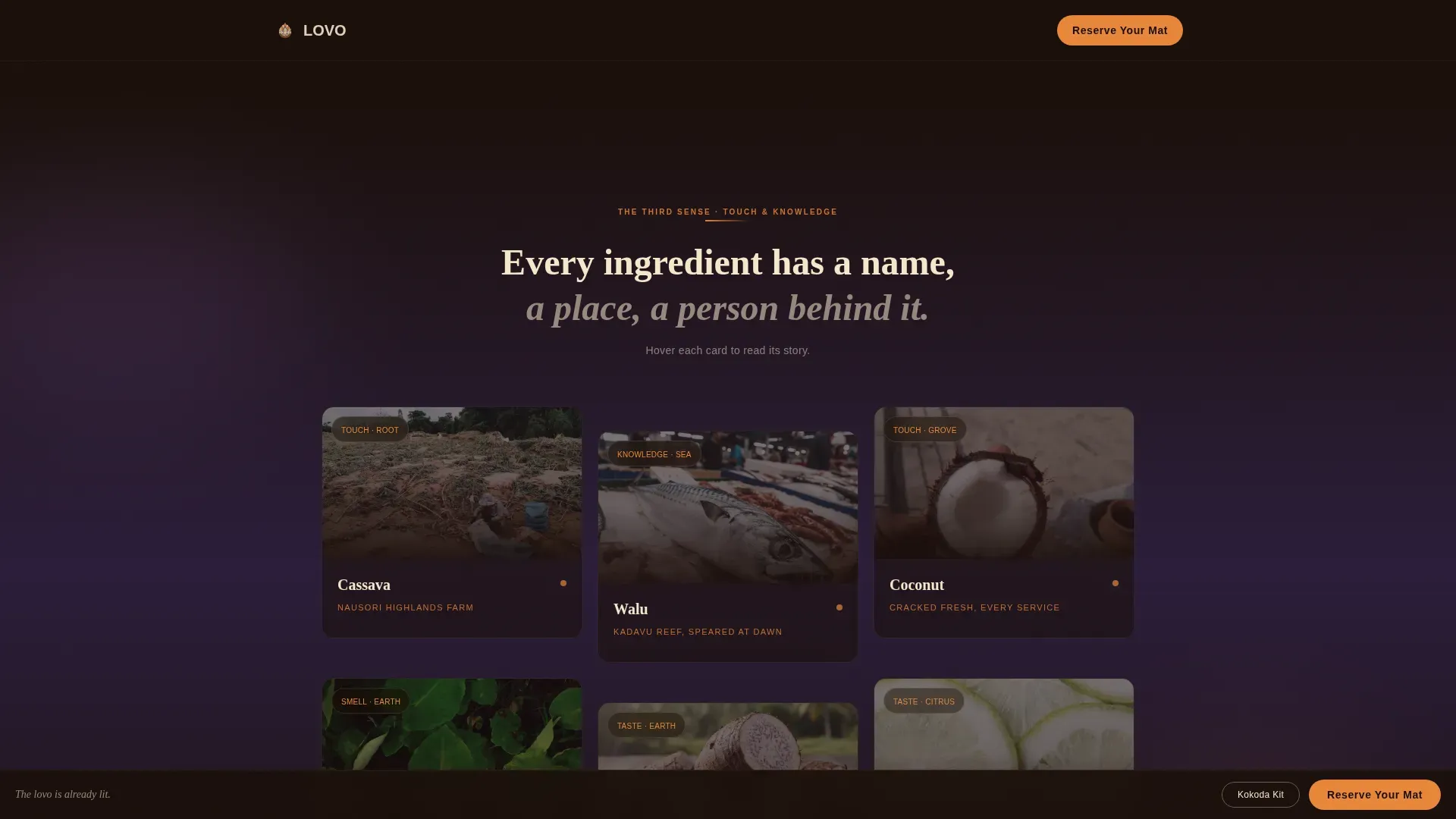
- Interactive ingredient hover cards that reveal farm and reef provenance stories for each dish
- A full inline reservation form with party-size selector, date and time fields, dietary toggles, and a secondary "Order Kokoda Kit" path
Feature list
The template is purpose-built to support the full sensory and commercial arc of a Fijian agrarian restaurant page. Below are the core functional and design features included in the build.
Hero Illustration Block
The opening section fills ninety percent of the viewport with a hand-drawn, woodblock-print-style cross-section of a lovo pit. Above the ground line, banana leaves, woven baskets, smoke, and reaching hands fill a coral-pink sky. Below it, river stones glow orange around wrapped parcels of meat and root vegetables. The single wordmark LOVO sits letterpressed into the sky in tapa-cloth white. This hero creates immediate cultural authority and visual weight that no stock photography can replicate.
Sensory Scroll Sections
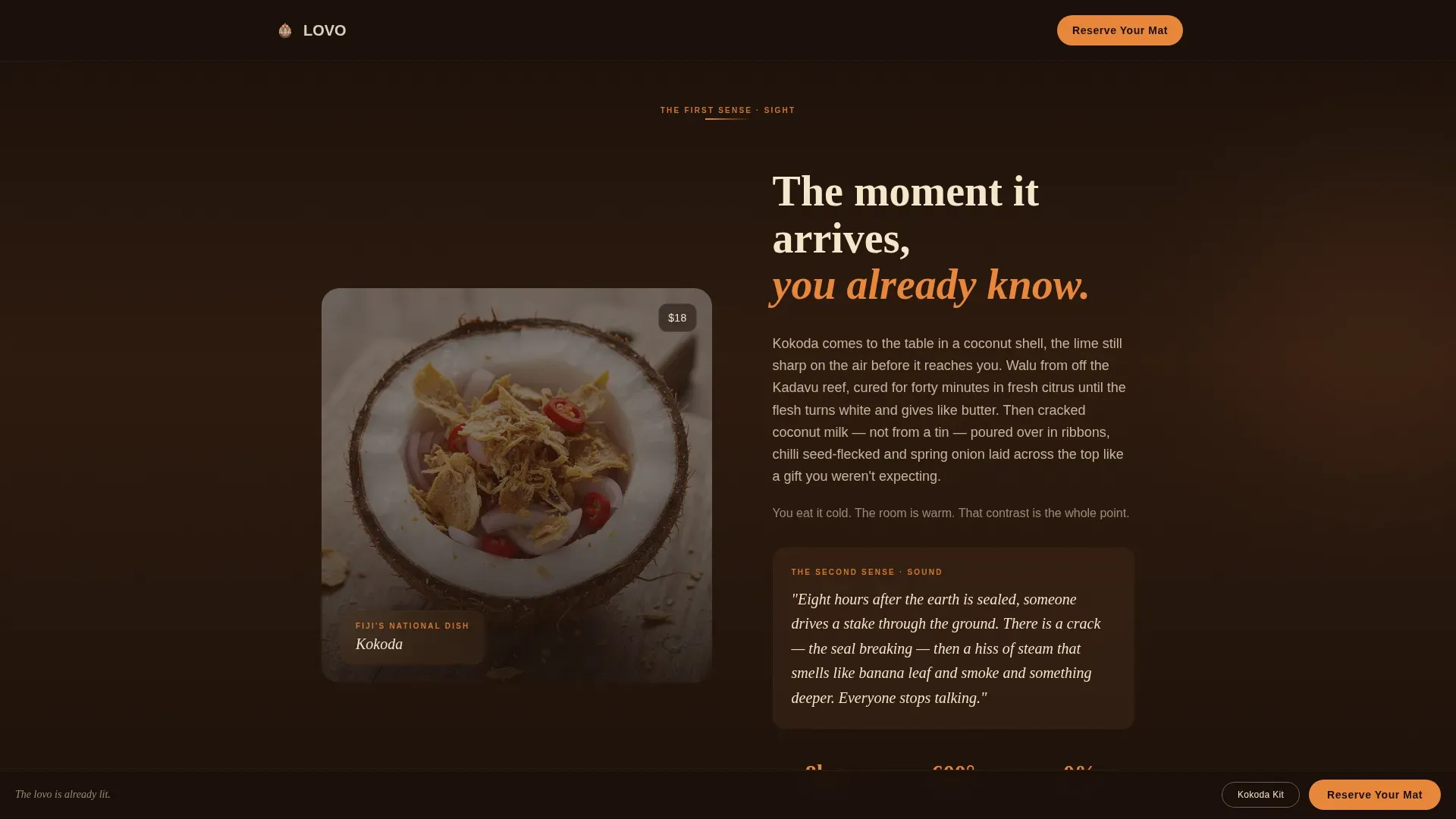
Below the hero, five sequential sections guide the visitor through sight, sound, touch, taste, and knowledge. A close-crop photograph of kokoda glistening in a coconut shell opens the sensory line. A paragraph then describes the crack and hiss of a lovo being unsealed after eight hours of cooking. Language is physical and specific, so the visitor's appetite is engaged long before the reservation form appears.
Ingredient Provenance Hover Cards
Each ingredient card names the dish component and, on hover, reveals its origin story. This cassava comes from a Nausori farm. This walu was speared off the Kadavu reef. These cards support the agrarian identity of the restaurant and give food-curious visitors and homesick Fijians alike a reason to stay on the page and learn more about what makes each plate meaningful.
Sticky Reservation Call to Action
After the first scroll, the "Reserve Your Mat" button pins to the bottom of the viewport in papaya orange. It stays visible across every subsequent section. Tapping it opens the full booking flow without leaving the page. The result is a frictionless path from craving to confirmed booking, which is important for mobile visitors who discover the restaurant through social media.
Inline Booking and Kokoda Kit Flow
The reservation form handles party size, including a dedicated "Lovo Feast, 10 or more guests" option for group occasions. Visitors select date, time, and dietary needs, with traditional options such as vegetarian lovo and raw fish only available as toggles. A secondary call to action, "Order Kokoda Kit," gives visitors who live too far away a meaningful way to participate in the food experience from home.
Occasions Section
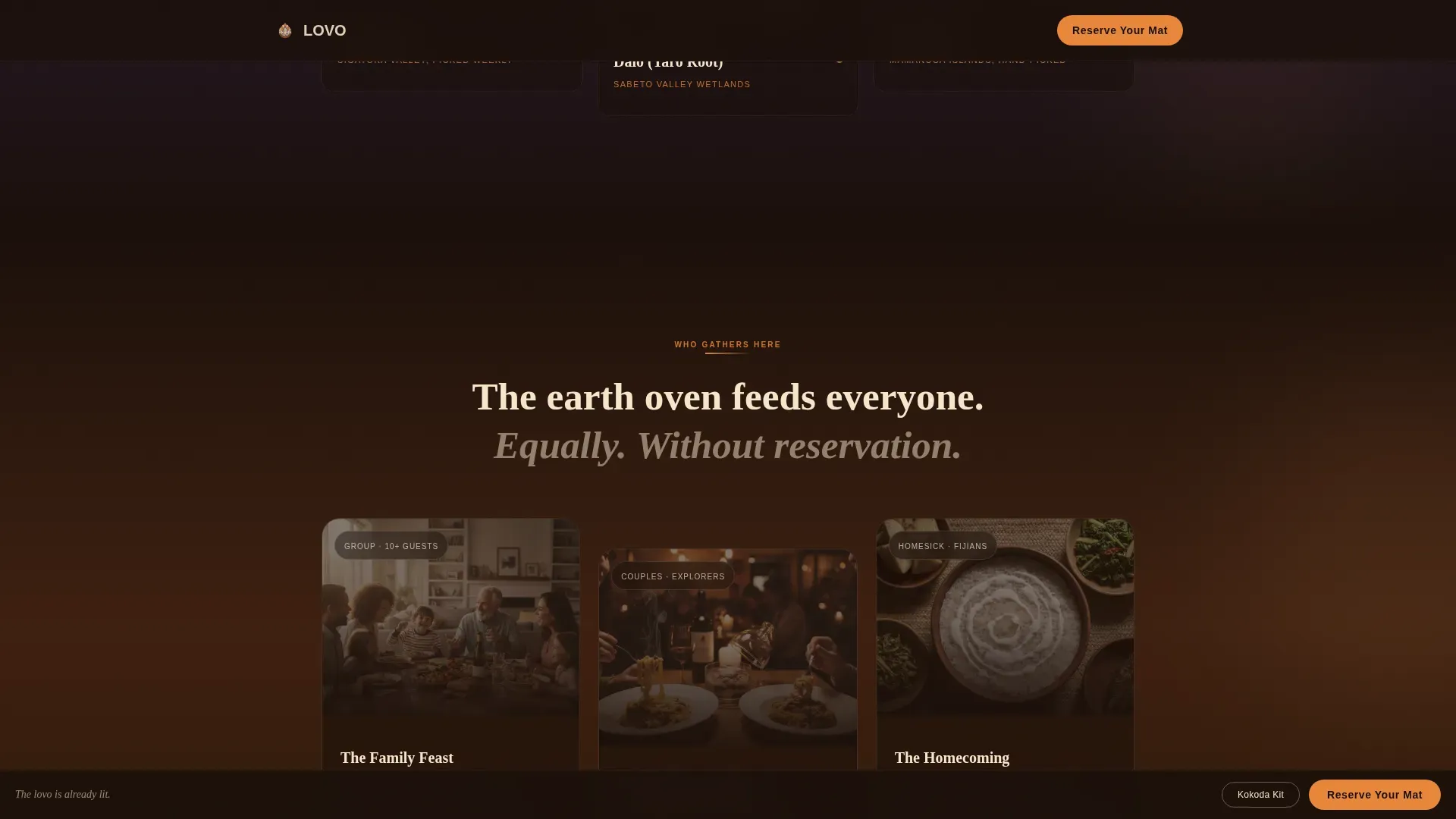
A dedicated section frames the three types of people who gather at Lovo: Pacific Islander families celebrating birthdays and funerals with equal reverence, adventurous couples who found the place through a friend's story, and homesick Fijians who need a plate of cassava that tastes like their grandmother's hands. This section builds emotional trust and broadens the appeal of the reservation prompt.
Page sections overview
| Section | Purpose |
|---|---|
| Hero Pit Illustration | Fills the viewport with the lovo ceremony cross-section and wordmark |
| Kokoda Sight Section | Opens sensory scroll with close-crop food photography and taste writing |
| Ingredient Hover Cards | Reveals farm and reef provenance for each key dish component |
| Occasions and Guests | Frames the three core audiences and builds emotional resonance |
| Reservation and Booking | Hosts the full booking form and secondary Kokoda Kit order path |
| Minimal Footer | Displays social icons and copyright in a clean, low-distraction layout |
Design & branding system
The visual identity follows an Agrarian Root theme built on the Sunset Mesa color system. Every color is pulled from something physical: volcanic soil, ripe papaya, sun-bleached tapa cloth, and the deep Pacific sky at dusk. The result feels like a Viti Levu hillside at six in the evening.
- Volcanic soil brown (#5C3A1E) grounds the typography and anchors the layout
- Ripe papaya orange (#E8863A) lives on buttons, garnish details, and active states
- Tapa cloth (#F5E6CC) warms section backgrounds, and deep Pacific dusk (#2B1D3A) frames the page like nightfall arriving slowly
- Display type uses Fraunces, a weighted earthy serif; body copy uses DM Sans for clean readability
Mobile & speed optimization
This template is built mobile-first because Pacific Islander families and food-curious couples most often find the restaurant through Instagram stories on their phones. Every section reflows cleanly at small screen sizes. High-resolution food photography is handled with compressed assets so fast load times are maintained and potential diners do not leave before the page finishes rendering.
- The sticky "Reserve Your Mat" button remains pinned and tappable on all screen sizes
- Ingredient hover cards translate to tap-reveal interactions on touch devices
- The booking form inputs are sized and spaced for comfortable mobile use without zooming
How this template helps you convert
The page is designed so that every scroll deepens the visitor's commitment before the reservation form appears. Storytelling, sensory language, and provenance details work together to create a craving that the booking button then satisfies.
- The hero illustration establishes cultural legitimacy and emotional atmosphere in under three seconds, giving visitors a reason to keep scrolling rather than bouncing back to a search result
- The sensory sections and ingredient cards build appetite and trust, so by the time visitors reach the sticky "Reserve Your Mat" button they are not deciding whether to book, they are deciding which date to choose
- The secondary "Order Kokoda Kit" path means visitors who cannot dine in person still have a clear, meaningful action to take, which extends the conversion line beyond the dining room
Other information about this template
This template is relevant beyond a single restaurant. The structure and sensory-first approach can support any food and beverage business that relies on cultural story and ingredient provenance to earn the booking. Below are additional facts and context that help situate this template in a broader world of digital tools and small business needs.
- AI-powered website development tools mean restaurateurs can go from idea to live page without extensive coding knowledge; no-code platforms handle backend integrations and deployment automatically, and subscription-based platforms often offer free trials so teams can learn the tool before committing
- The lovo agrarian fijian restaurant landing page template is a strong reference point for any food business that needs sensory-led design combined with a frictionless booking flow
- Small island nations across the Pacific and Caribbean, including Fiji, Samoa, Tonga, Vanuatu, and others such as Barbados, Dominica, Antigua and Barbuda, Maldives, Seychelles, Saint Vincent and the Grenadines, Jamaica, Haiti, Marshall Islands, Timor-Leste, Guinea-Bissau, and New Zealand's Pacific diaspora communities, all share a rich tradition of agrarian cooking that this template is built to represent with cultural accuracy
- Restaurants in these communities often work within tight finance constraints; a template-based landing page means a professional result without the cost of a full bespoke build
- Climate and geography shape Fijian cuisine directly: the republic of Fiji's tropical island climate produces taro, cassava, duruka, and reef fish that are central to every lovo ceremony; climate change increasingly affects the regional availability of these ingredients, which makes sourcing stories on the page both culturally meaningful and timely
- Non-governmental organisations, non profit organisations, and regional ministry bodies that aim to document and support Pacific food heritage can also find the template's provenance card structure useful for educational contexts
- The template's collaboration between illustration, sensory copy, and interactive booking means a result that goes well beyond a standard site; it is a digital experience that aims to share the world of Fijian cooking with people who have never visited the republic but are ready to find out what they have been missing
- Republic of Fiji cuisine facts worth sharing on the page: palusami is made from taro leaves filled with thick coconut cream, onions, and salt; kokoda is a raw fish salad cured in lime and coconut milk; the lovo pit is fashioned by digging a hole lined with coconut husks and covered with stones that radiate heat through the food for hours; most traditional cooking in Fiji relies on steaming and boiling rather than deep frying, which means the food is as clean and direct as the island landscape it comes from
Theme
Agrarian Root
Creative direction
Sensory Appeal
Color system
Sunset Mesa
Style
Hero-Dominant (90/10)
Direction
Booking/Scheduling
Page Sections
Hero Lovo Pit Illustration
Five-stage Sensory Scroll
Ingredient Provenance Hover Cards
Sticky Reserve Your Mat Button
Inline Booking and Kokoda Kit Flow
Occasions and Audience Section
Related questions
Can I customise the color palette and typography in this template?
Does the reservation form support large group bookings?
Is this template suitable for a Fijian restaurant that also offers takeaway experiences?
How do the ingredient hover cards work on mobile devices?
What makes this different from a generic restaurant landing page template?