Couples & Family Therapy Landing Page Template
Mend is a couples and family therapy landing page built on a warm, split-screen layout. It walks anxious visitors through the therapy process step by step, from first contact to meaningful change. Soft organic visuals, emotionally grounded copy, and a clear booking flow make it easy for people to take that first, often difficult step.
by Rocket studio
Quick summary
Mend is a single-page therapy landing page designed for couples and family practices. It uses a 50/50 split-screen structure to guide emotionally overwhelmed visitors through the process of starting therapy. Every section is built to reduce hesitation and make booking a first session feel like the obvious next step.
Who this template is for
This template is built for therapy practices that serve people at a turning point. It works especially well for counselors and therapists who want their website to feel warm and human before a visitor ever picks up the phone.
- Couples therapists and relationship counselors working with partners considering separation
- Family therapists supporting parents, teenagers, and households navigating grief or major transitions
- Solo practitioners or small practices that want a polished, emotionally intelligent online presence
What problem this template solves
Most therapy practice pages feel clinical, cold, or overwhelming. People searching for help at midnight are already anxious. A page that leads with jargon or buried contact forms does not help them take action.
- Visitors often leave before booking because the process feels unclear or intimidating
- Generic health-and-wellness layouts do not reflect the warmth a therapy practice actually offers
- First-time therapy seekers need reassurance, not a wall of credentials and intake forms
What you get with this template
You get a fully structured, single-page layout with five distinct content sections, a fixed mobile call-to-action bar, and a visual rhythm designed to carry visitors from doubt to decision. Everything follows a step-by-step narrative arc.
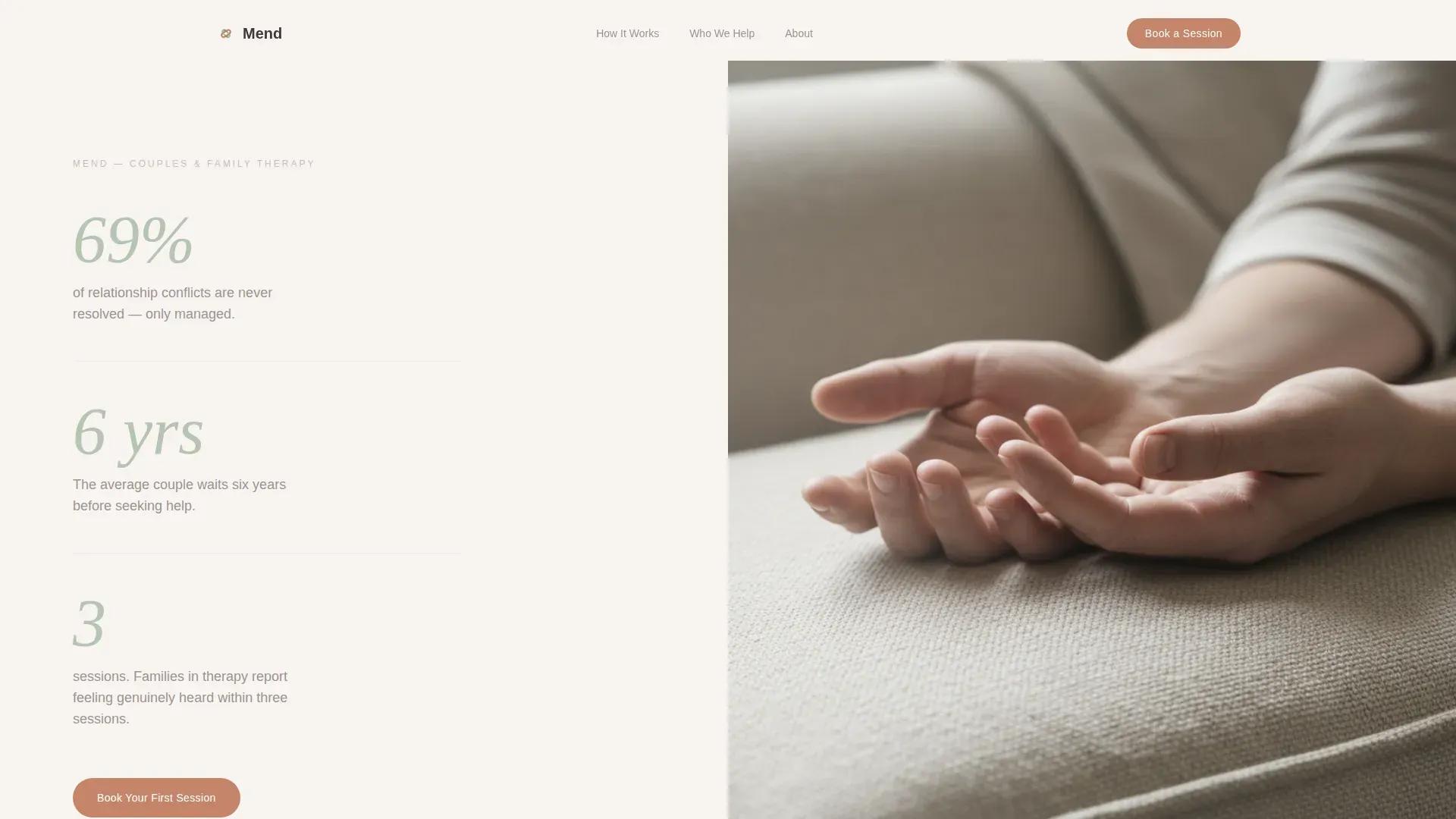
- A stats-led hero section with a split-screen layout and a primary booking call to action
- Four sequential story sections that walk visitors through the therapy journey from first contact to lasting change
- A minimal horizontal-flow footer and a secondary text link under every call to action for visitors who are not yet ready to book
Feature list
A paragraph introduces the features below. Each component in this template serves the emotional journey of someone who has never tried therapy before and needs to feel safe before they commit.
Stats-Driven Hero Panel
The left side of the hero displays three quietly powerful statistics in large sage type. These numbers do the emotional work of establishing urgency and relevance without feeling pushy. The right panel holds a warm, softly blurred photograph of two hands resting near each other.
Step-by-Step Section Flow
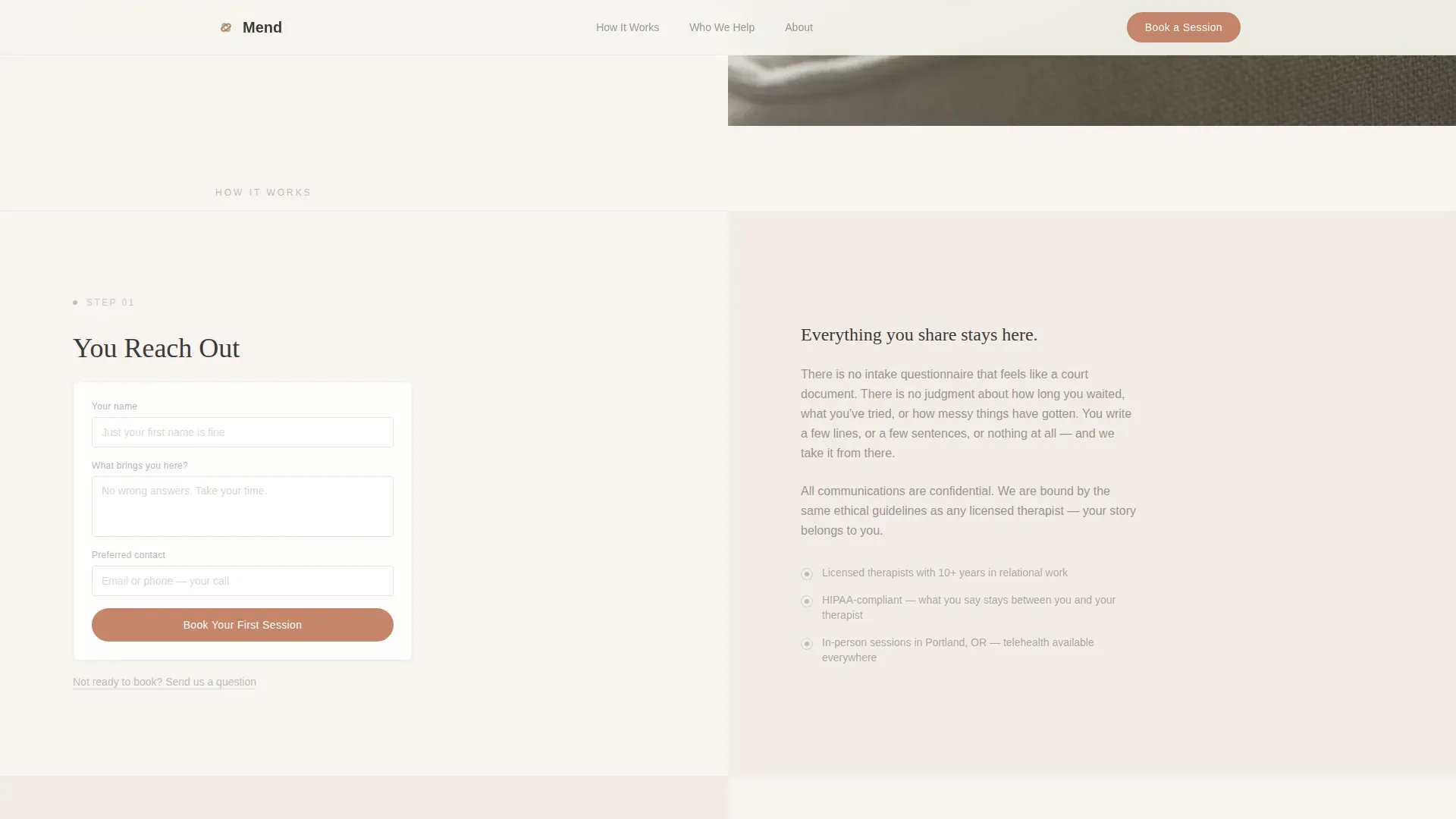
Four named sections guide visitors through the process: "You Reach Out," "We Listen," "Patterns Surface," and "Things Shift." Each section alternates which side carries the visual weight, creating a natural reading rhythm that mirrors a real conversation.
Split-Screen Layout
Every section uses a 50/50 split between a visual or diagram element and supporting copy. This structure gives each idea room to breathe and keeps the page from feeling crowded or overwhelming.
Primary and Secondary Call-to-Action System
The primary "Book Your First Session" call to action appears in terracotta beneath the hero and anchors the mobile sticky bar. A secondary text link, "Not ready to book? Send us a question," appears below each call to action to catch visitors who are still circling.
Therapist Pull-Quote Block
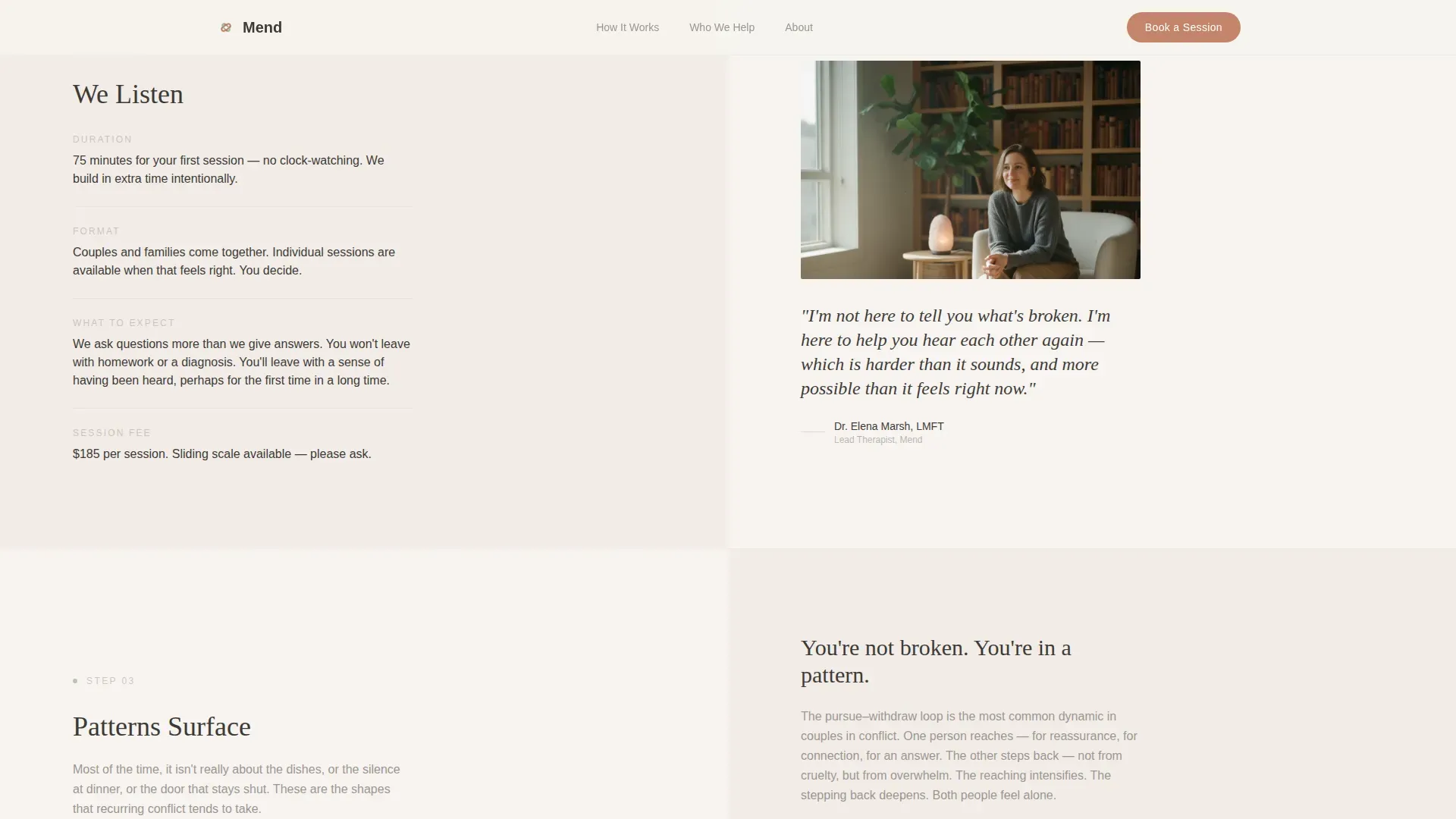
The "We Listen" section features a dedicated pull-quote area for a therapist's voice. This builds personal trust and makes the practice feel human and accessible before a visitor has ever spoken to anyone.
Soft Outcome and Testimonial Section
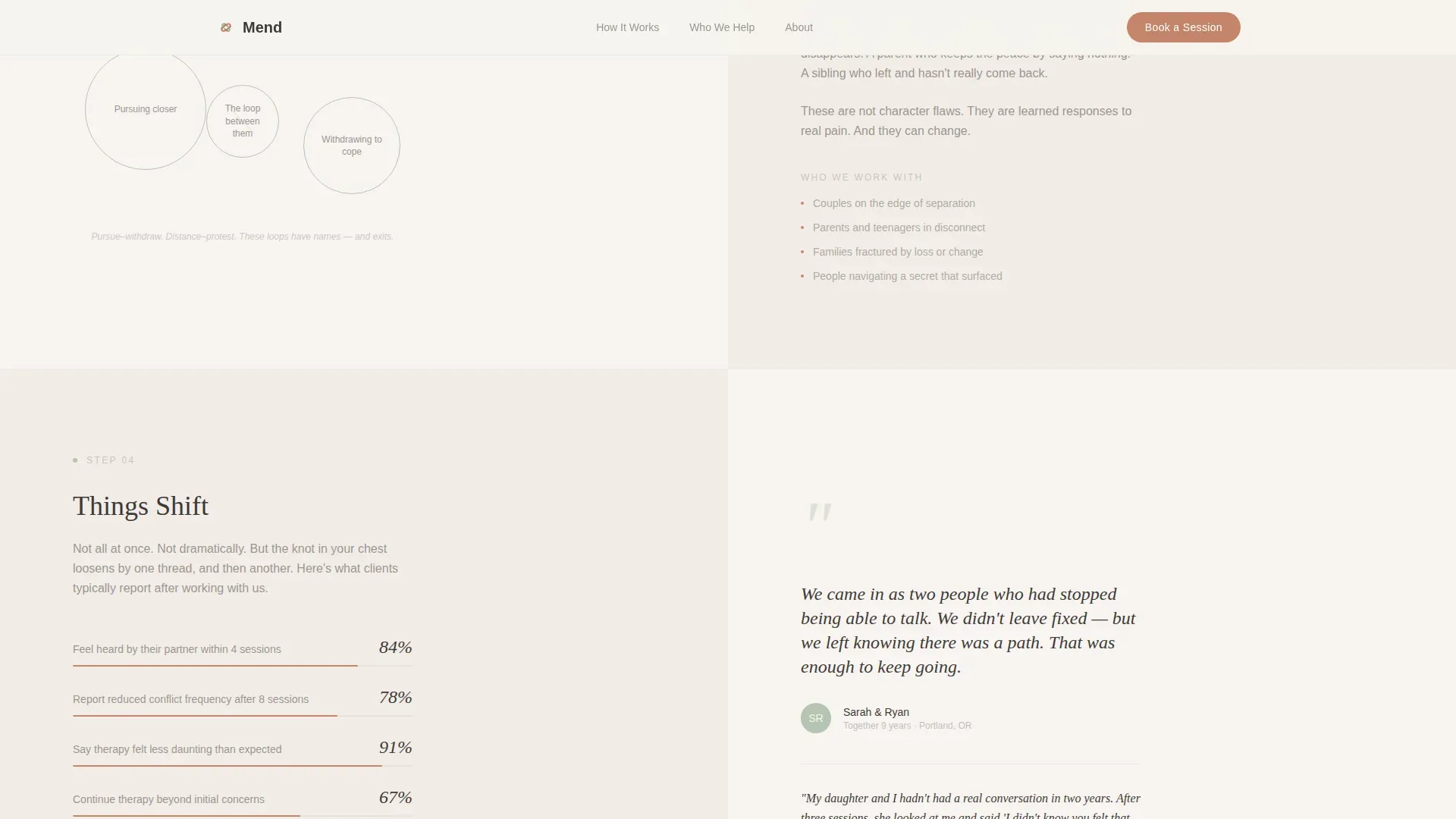
The "Things Shift" section combines gentle outcome language and soft metrics on the left with a real client testimonial on the right. This pairing gives visitors both logical and emotional reasons to move forward.
Page sections overview
| Section | Purpose |
|---|---|
| Hero Stats Panel | Opens with emotional statistics and a warm photograph to establish relevance and urgency |
| You Reach Out | Shows a form preview and confidentiality reassurance to lower the barrier to first contact |
| We Listen | Describes the first session and features a therapist pull-quote to build personal trust |
| Patterns Surface | Uses gentle diagrams and normalizing copy to help visitors feel understood, not judged |
| Things Shift | Pairs outcome language and soft metrics with a client testimonial to close the emotional arc |
| Horizontal Footer | Provides minimal navigation and closing context without distracting from the booking flow |
Design & branding system
The visual identity uses an Organic Flow style built on the Cloud Canvas color system. Every design decision aims to feel unhurried, imperfect, and breathable, like morning light in a quiet room.
- Warm white (#F7F4F0) backgrounds, muted sage (#B5C4B1) for section anchors and secondary text, quiet stone (#9B9590) for body copy, and terracotta (#C4856A) reserved for buttons and interactive elements
- Fraunces serif headings paired with DM Sans body type for a balance of warmth and readability
- Low-to-medium animation with gentle fade-ins and soft scroll reveals to keep the pace calm and never jarring
Mobile & speed optimization
This template is built mobile-first, with the midnight-searching visitor in mind. The layout adapts cleanly from a desktop split-screen to a single-column mobile flow without losing its emotional clarity.
- A sticky call-to-action bar fixed at the bottom of the mobile screen keeps "Book Your First Session" always reachable
- Static server components handle the page's content sections to keep JavaScript load minimal
- Smooth scroll behavior and hover states are included for an unhurried, deliberate experience across devices
How this template helps you convert
The page earns the booking by removing uncertainty at every stage. By the time a visitor reaches the final section, starting therapy no longer feels like a leap.
- The hero statistics create immediate emotional recognition, making visitors feel seen before they have read a single word of copy
- The step-by-step section structure demystifies the therapy process so that booking a first session feels like a logical, manageable next step rather than an unknown commitment
- The dual call-to-action system, a bold primary button and a soft secondary text link, gives both ready visitors and hesitant visitors a path forward at every scroll depth
Other information about this template
This template is purpose-built for the couples and family therapy niche inside the broader health and medical category. It is particularly well-suited for practices that serve clients who have never tried therapy before and need the process explained in plain, compassionate language.
- The creative direction follows a Step-by-Step Guide pattern, which aligns naturally with how first-time therapy seekers process new information
- The Click-Through landing page direction means all booking happens on an external scheduling page, keeping this template lightweight and focused
- The Organic Flow theme and Cloud Canvas palette were chosen specifically to avoid the sterile look common in medical and psychiatric web design
- The intersection of the Mental Health and Psychiatry subcategory with the Couples and Family Therapy niche informed every copy and layout decision in this template
Theme
Organic Flow
Creative direction
Step-by-Step Guide
Color system
Cloud Canvas
Style
Split Screen (50/50)
Direction
Click-Through
Page Sections
Stats-driven Hero Panel
Step-by-step Section Flow
Split-screen 50/50 Layout
Dual Call-to-action System
Therapist Pull-quote Block
Sticky Mobile Booking Bar
Related questions
Can I use this template for a solo therapy practice?
Does this template support direct booking or does it link to an external scheduler?
Can I edit the statistics shown in the hero section?
Is this template suitable for family therapy as well as couples therapy?
How does the layout behave on a phone screen?