Family Counseling & Support Specialist Booking Website Template
Mend is a warm, modular landing page template built for family therapy practices. It uses a citrus-toned artisan design, a gallery-style card grid, and a single-focus click-through structure to guide hesitant visitors toward booking a first session. Every section builds emotional trust before asking anything in return.
by Rocket studio
Quick summary
Mend is a family therapy landing page template with a Warm Artisan visual identity and a Gallery Walk card grid layout. It pairs a full-bleed hero photo with scroll-reveal content cards, an expandable inline explainer, and a persistent booking call to action. The overall effect is unhurried, intimate, and purposefully human.
Who this template is for
This template is built for family therapy practices that want their website to feel like a place rather than a pitch. It suits clinicians and small practices working with families in emotionally charged situations, where trust matters more than conversion pressure.
- Family therapists and counselors serving parents, co-parenting couples, and adult siblings
- Solo practitioners or small group practices launching or refreshing their digital presence
- Mental health professionals who want warm, design-led pages without hiring a custom developer
What problem this template solves
Therapy websites often feel cold and clinical, which is exactly what hesitant families do not want to see. A parent of a withdrawn teenager or a sibling navigating a parent's care plan needs to feel understood before they will book anything. Generic templates cannot carry that emotional weight.
- Visitors arrive skeptical and leave without acting because the page does not reflect the warmth of the actual practice
- Clinical-looking layouts signal a transactional relationship, not a human one
- First-time therapy seekers need to picture themselves in the room before they can commit to a session
What you get with this template
You get a fully structured, single-page layout designed specifically for family counseling practices. Every section serves a purpose, and every design decision reinforces the feeling of a warm, attentive practice.
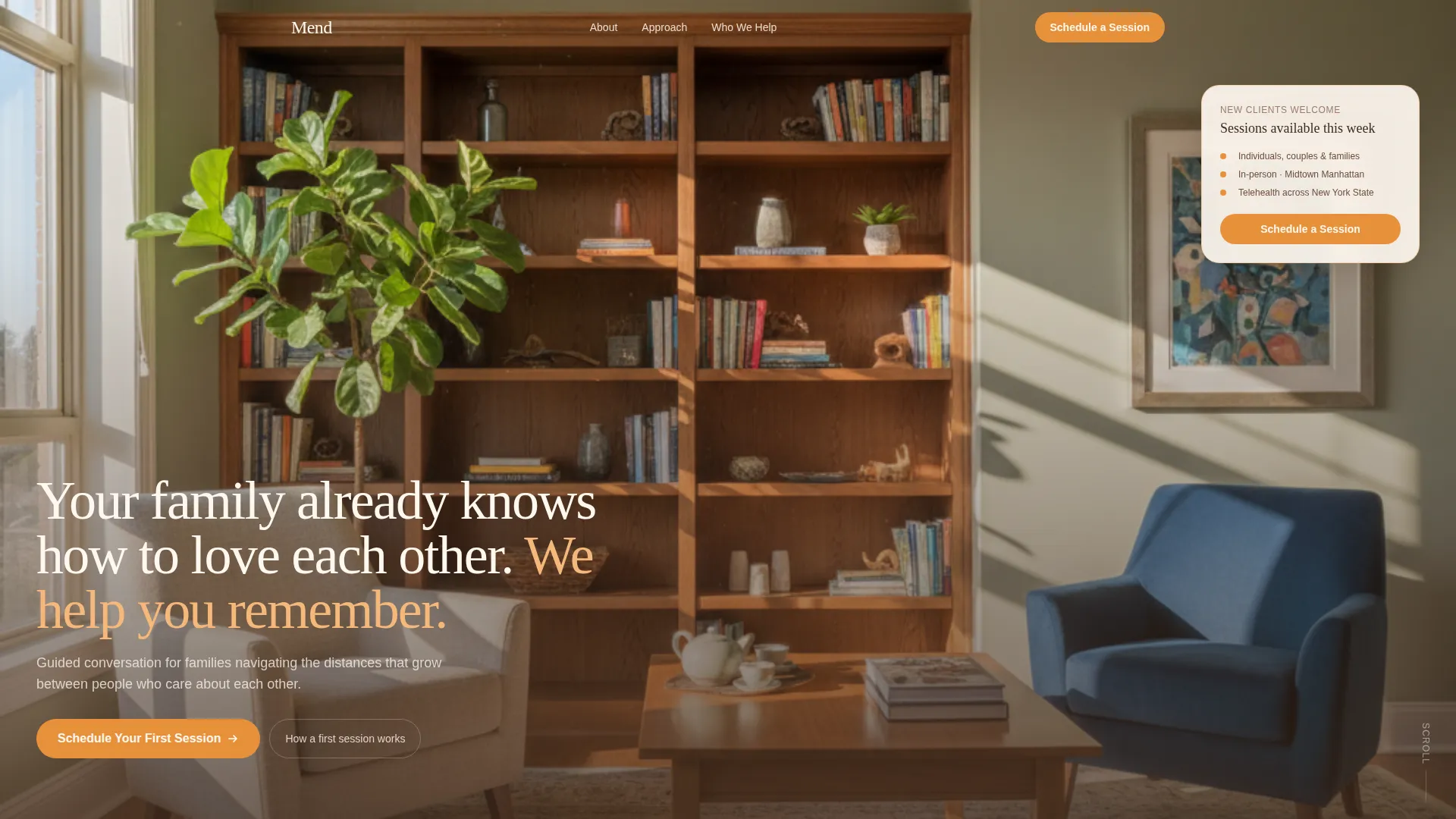
- A full-bleed hero section with a fade-in headline set over a naturally lit therapy room photograph
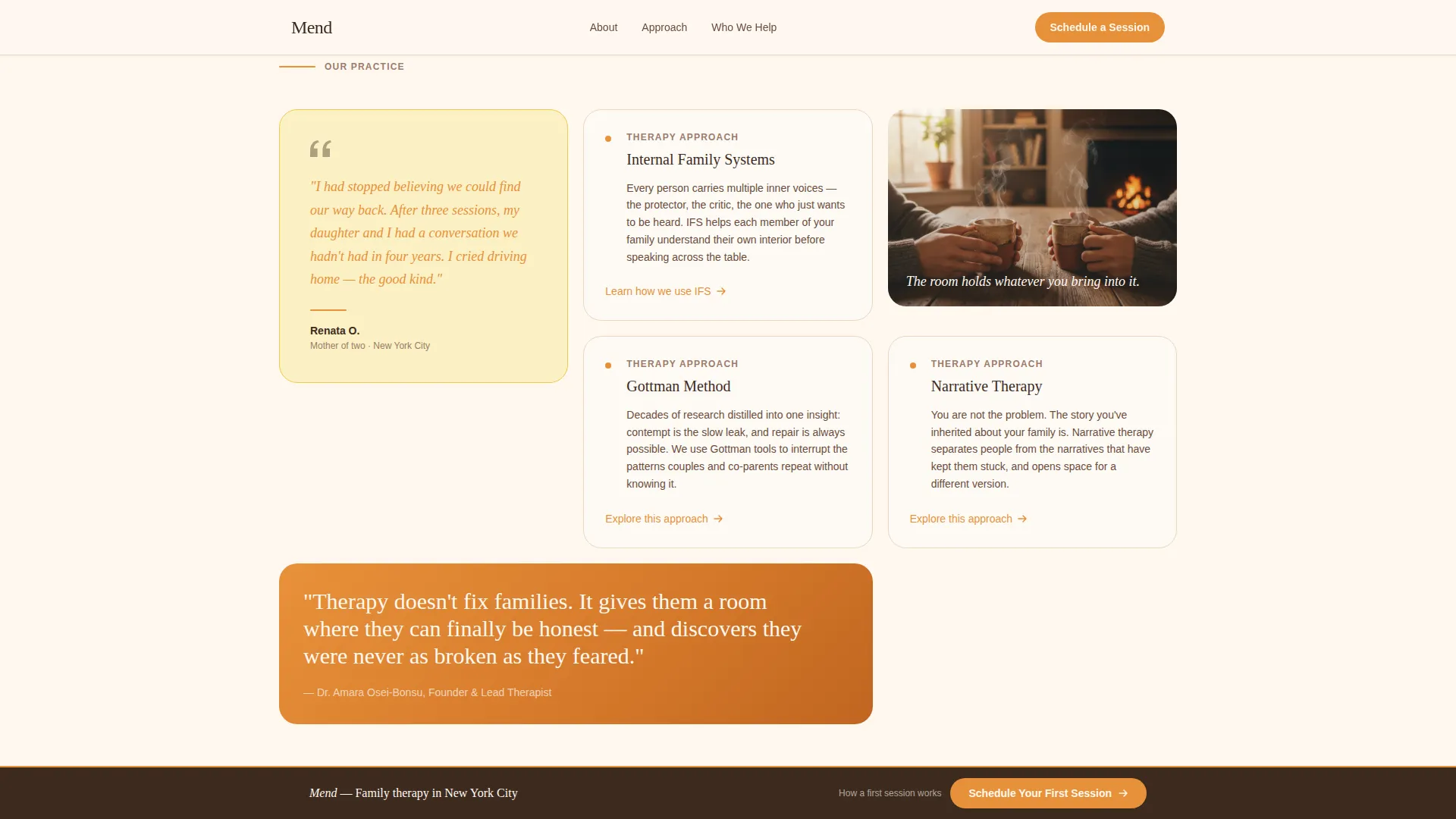
- A modular card grid with testimonial cards, therapy approach cards, and photo vignette cards in a salon-style layout
- A midpoint call-to-action block with an expandable inline card that walks visitors through a first session minute by minute
Feature list
This template's features are drawn directly from the brief and built around one goal: turning a curious visitor into a booked client.
Full-Bleed Hero with Fade-In Headline
The header opens with a wide, naturally lit therapy room photo and no people in the frame. A single headline fades into the lower third as the page loads, setting an emotional tone before the visitor reads a single word of body copy.
Gallery Walk Card Grid
Cards vary in height and visual emphasis, arranged in a salon-style rhythm that rewards browsing. Each card is a discrete moment: a testimonial, a therapy approach description, a close-up photograph. Together they build a cumulative portrait of the practice.
Expandable Inline Session Explainer
A secondary text link triggers an inline expandable card. It walks prospective clients through what happens minute by minute during a first session. This directly addresses the anxiety of the unknown without cluttering the main layout.
Persistent Booking Call to Action
The primary call-to-action button, "Schedule Your First Session," appears at the header, midpoint, and footer. A persistent bottom bar reinforces it throughout the scroll. Every pathway leads to one destination: the booking page.
Scroll-Reveal Card Animations
Cards enter the viewport with a staggered scroll-reveal animation. Hover states lift each card slightly. The motion is medium in intensity, keeping the page lively without feeling busy or clinical.
Therapy Approach Cards
Dedicated cards present individual therapy approaches, including Internal Family Systems, the Gottman Method, and Narrative Therapy. Each approach is described in two plain sentences, giving visitors context without overwhelming them.
Page sections overview
| Section | Purpose |
|---|---|
| Hero photo header | Opens the page with emotional atmosphere and a fade-in headline |
| Card grid row one | Displays testimonial, approach, and photo cards in a modular layout |
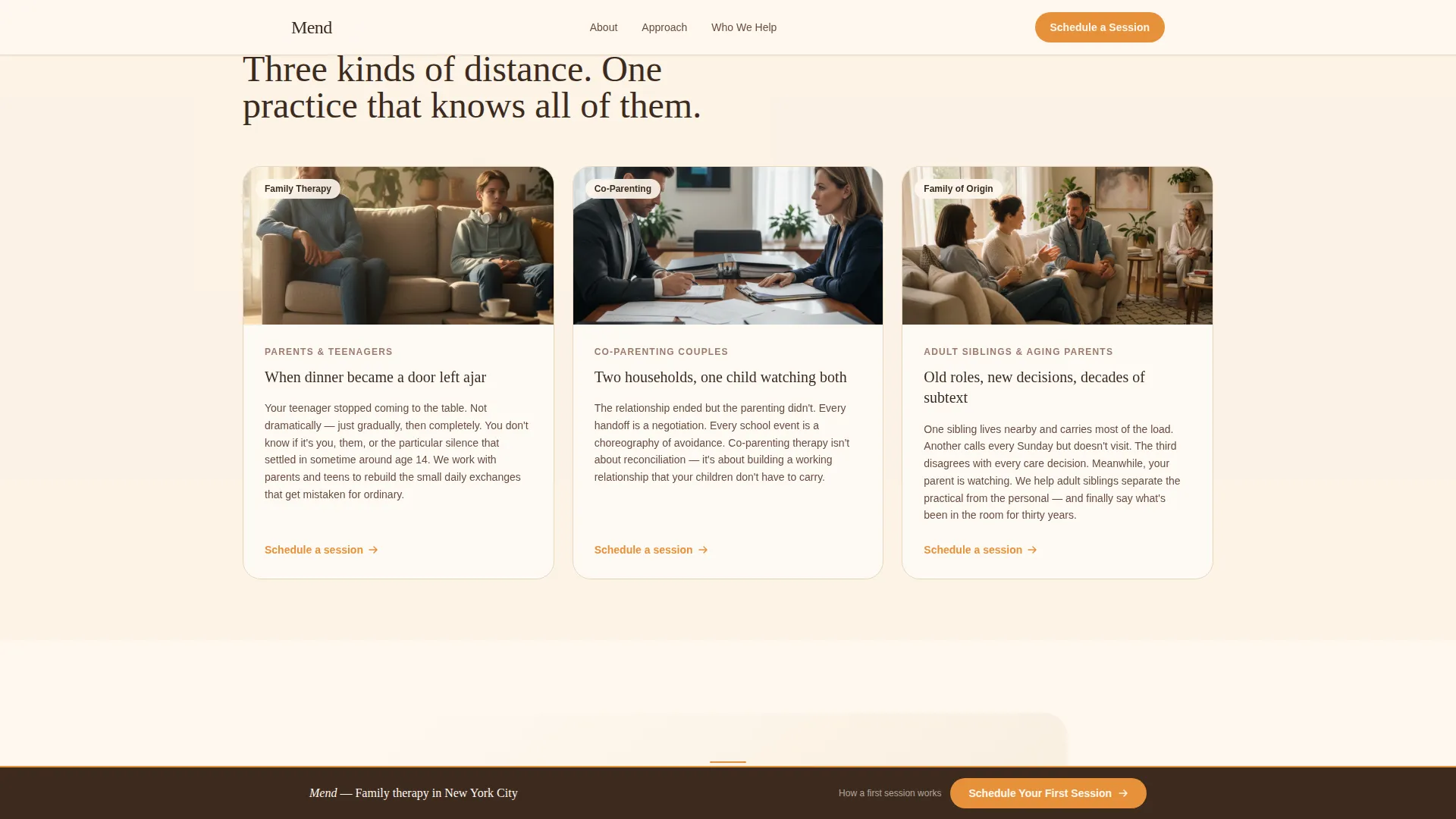
| Who We Help | Presents three client vignettes for parents, co-parents, and siblings |
| Midpoint call to action | Prompts booking and triggers the expandable first-session explainer |
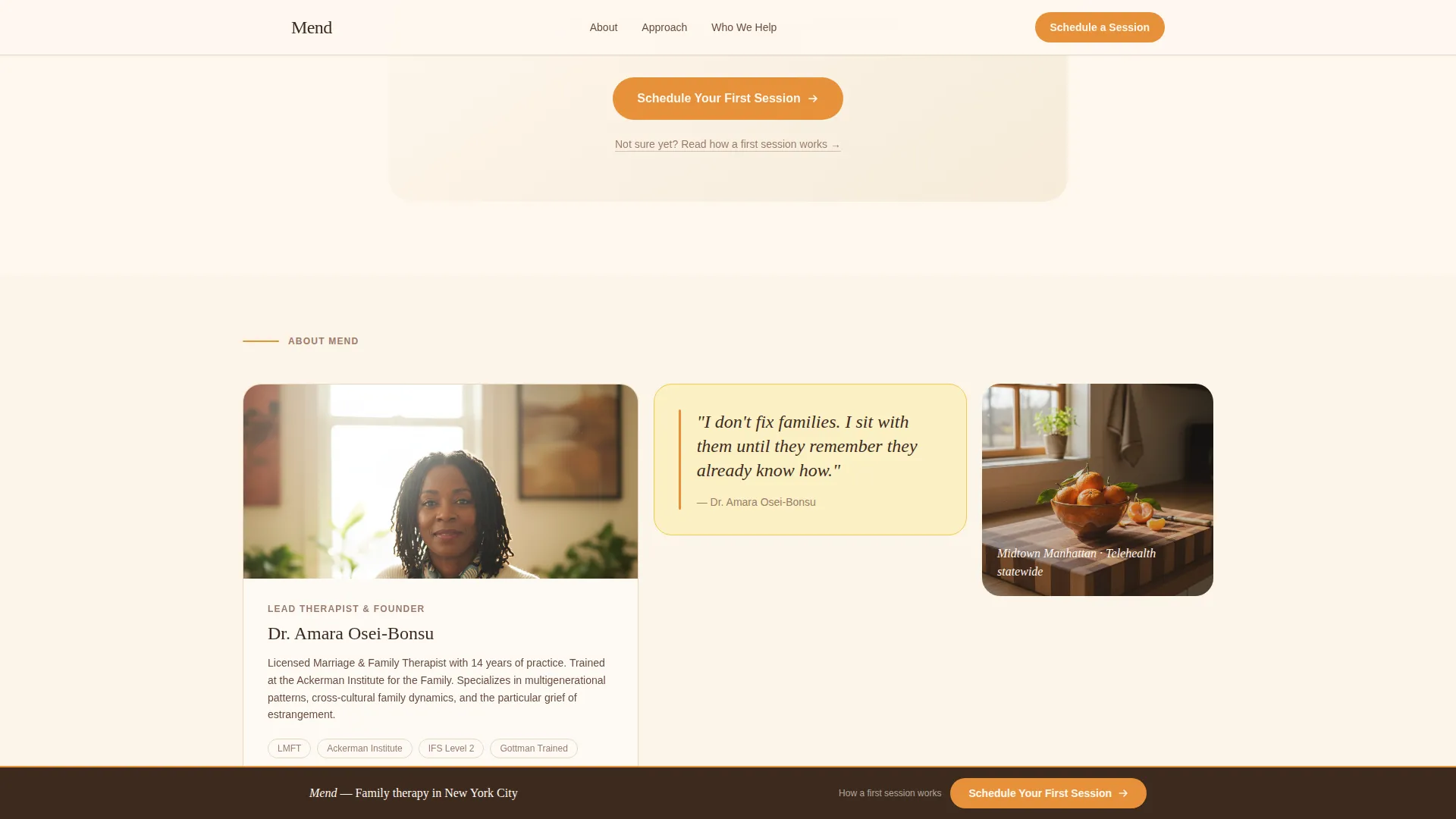
| Bottom card grid row | Closes with therapist bio, pull-quote, photo, and final booking card |
| Footer | Delivers horizontal flow layout with practice contact and navigation |
Design & branding system
The Citrus Burst color palette gives the template its distinctive warmth. Every color choice is intentional, drawing from the image of a hand-thrown ceramic bowl of citrus on a butcher-block counter: vivid but never loud.
- Soft satsuma (#E8913A) warms buttons, pull-quotes, and testimonial type; warm parchment (#FFF8F0) dominates backgrounds for an unhurried reading experience
- Ripe Meyer lemon (#F2C94C) activates hover states and highlights testimonial cards; grounding walnut (#3D2B1F) anchors all body text and card borders
- Typography pairs Fraunces serif headlines with DM Sans body text, creating a handmade-but-considered voice throughout
Mobile & speed optimization
The template is built desktop-first with strong mobile adaptation in mind. The card grid and hero section reflow cleanly for smaller screens without losing their visual warmth.
- Static-first build approach with optimized images keeps the page light and responsive across devices
- Scroll-reveal and hover animations are medium in intensity, designed to perform well on standard connections
- Card grid columns adapt to narrower viewports, preserving the gallery rhythm on mobile screens
How this template helps you convert
The page earns the click through accumulation rather than argument. By the time a visitor reaches the final card row, they have already imagined themselves in the therapy room.
- The hero headline disarms resistance immediately by affirming what the visitor already knows, that their family is capable of connection, before introducing the practice
- The Gallery Walk card grid builds trust card by card, layering testimonials, human photographs, and plain-language approach descriptions into a picture of a practice that pays attention
- The expandable first-session explainer removes the last barrier by answering the question most first-time clients are too hesitant to ask, turning uncertainty into readiness
Other information about this template
Mend fits naturally within the Kids & Family category, specifically the Family Counseling and Support subcategory. It is designed for the family therapy practice niche and aligns with a B2C mental health and wellness service model.
- Template style is Card Grid (Modular); creative direction is Gallery Walk; header concept is Full-Bleed Photo; landing page direction is Click-Through
- The Warm Artisan theme and Citrus Burst color system are the two defining visual frameworks for this template
- Footer uses a Vercel Horizontal Flow pattern (Pattern 3) for clean, minimal end-of-page navigation
- The template is localized for English-language audiences using US date formats and USD pricing context
Theme
Warm Artisan
Creative direction
Gallery Walk
Color system
Citrus Burst
Style
Card Grid (Modular)
Direction
Click-Through
Page Sections
Full-bleed Hero with Fade-in Headline
Gallery Walk Modular Card Grid
Expandable First-session Explainer
Persistent Booking Call to Action
Therapy Approach Description Cards
Scroll-reveal and Hover Animations
Related questions
Can I use this template without a professional therapy room photo?
How does the expandable first-session card work?
Can I update the therapy approach cards to reflect my own methods?
Does this template work for a solo therapist as well as a group practice?
How many times does the booking call to action appear on the page?