Organic Cooking Class Landing Page Template | Pastoral Calm
Mesa is a hero-dominant organic cooking class landing page template built around a pastoral calm aesthetic. It guides visitors through a warm, story-led experience before presenting a booking form. With a cinematic full-bleed hero, an origin story arc, three class-type offerings, and an inline reservation flow, Mesa helps cooking class businesses convert Saturday-morning browsers into confirmed students.
by Rocket studio
Quick summary
Mesa is a single-page booking template designed for organic cooking class businesses that want to sell an experience before they ask for a commitment. The page unfolds like a slow morning: a full-bleed cinematic hero, a founder origin story, a class-type selector, and an inline reservation form. It is warm, welcoming, and built to earn the click through story rather than pressure.
Who this template is for
Mesa is made for food educators and experience-economy creators who believe that how a class feels matters as much as what it teaches. This template works especially well for small-batch, intimate cooking programs where the story behind the food is part of the draw.
- Organic cooking class instructors offering weekend sessions who want visitors to feel the experience before they decide to book
- Couples-focused or community-oriented food educators running seasonal, farm-to-table, or fermentation-based programs
- Independent chefs and food entrepreneurs in California and similar culinary-culture markets who source from local gardens and farmers markets
What problem this template solves
Most booking pages for cooking classes look like appointment software with a logo slapped on top. They ask for a commitment before they have earned any trust. Visitors land, scan a price, and leave. The real problem is that an organic cooking class is not a transaction; it is an experience that lives in the imagination first. Visitors need to almost taste the broth and feel the flour between their fingers before they are ready to reserve a seat.
Mesa solves this by making the story the sales engine. The layout slows the visitor down, carries them through a narrative arc, and only presents the booking form once they have already imagined the morning they want to claim.
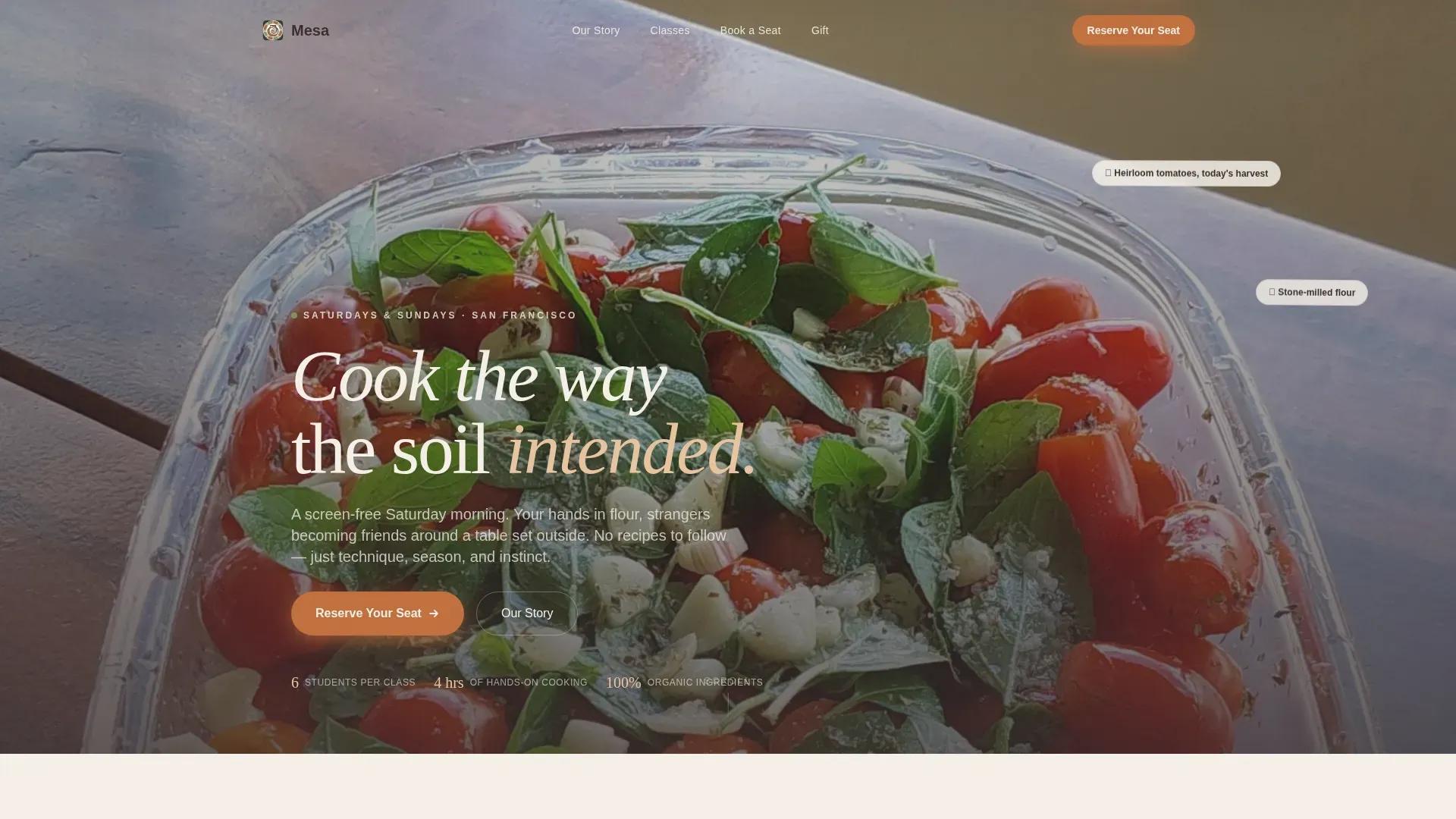
- The hero-dominant layout captures attention before any copy is read, giving the page an immediate sense of warmth and place
- The origin story arc builds trust and connection without relying on hard-sell language or generic credential blocks
- The inline booking form appears after the story has done its work, so the conversion feels like a natural next step rather than a cold ask
What you get with this template
Mesa delivers a complete, single-page booking experience with every section pre-built and ready for your content. The visual and structural decisions have already been made: the hierarchy, the pacing, the color relationships, and the interactive booking flow are all resolved so you can focus on your story and your classes.
- A full-bleed 90-viewport-height hero section with a fade-up headline and a soft sticky call-to-action bar that appears after the hero scrolls out of view
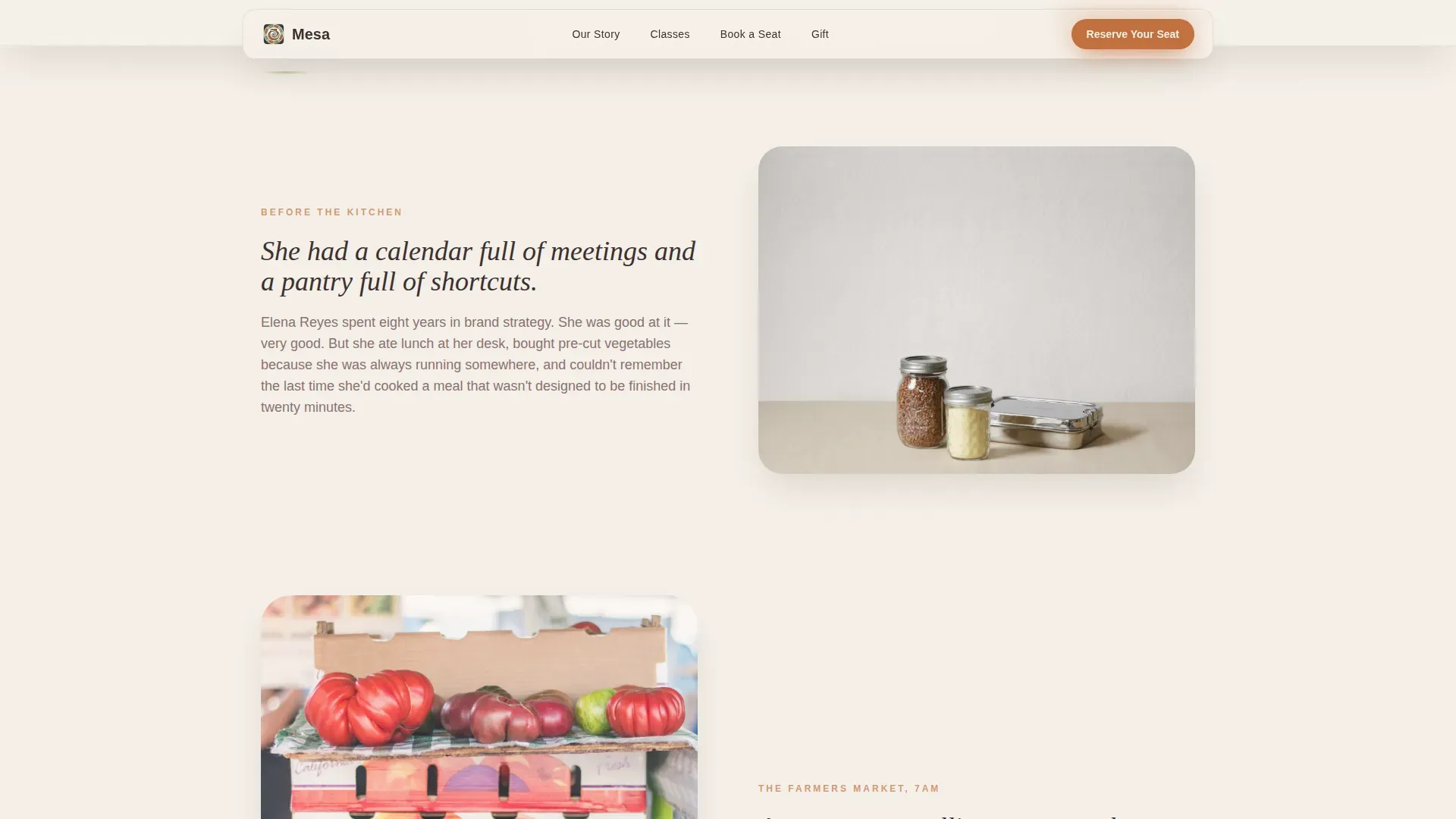
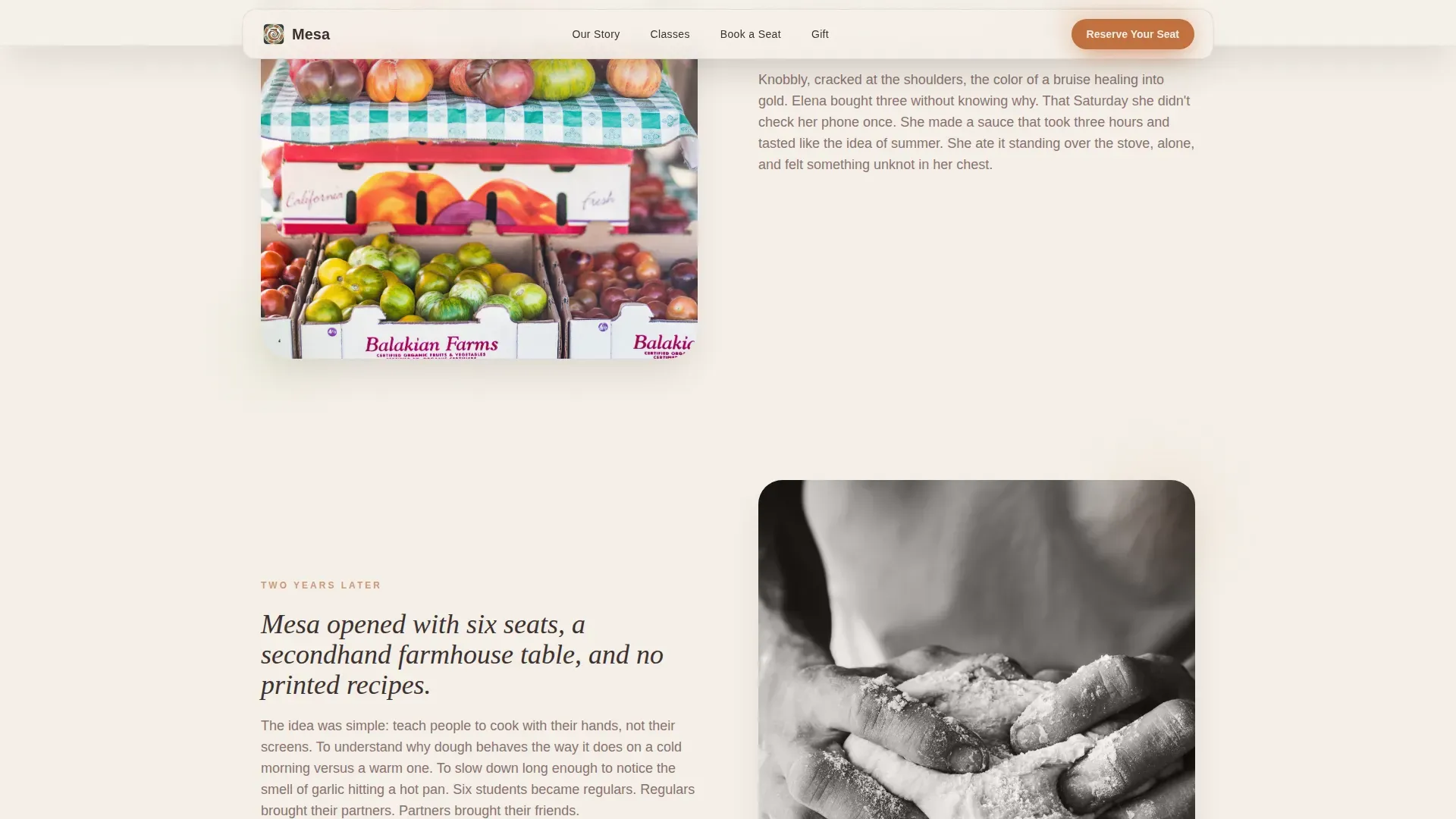
- A founder origin story section with structured narrative beats, photography placement guidance, and a day-unfolding scroll rhythm that carries visitors from the first day at the market to the shared table
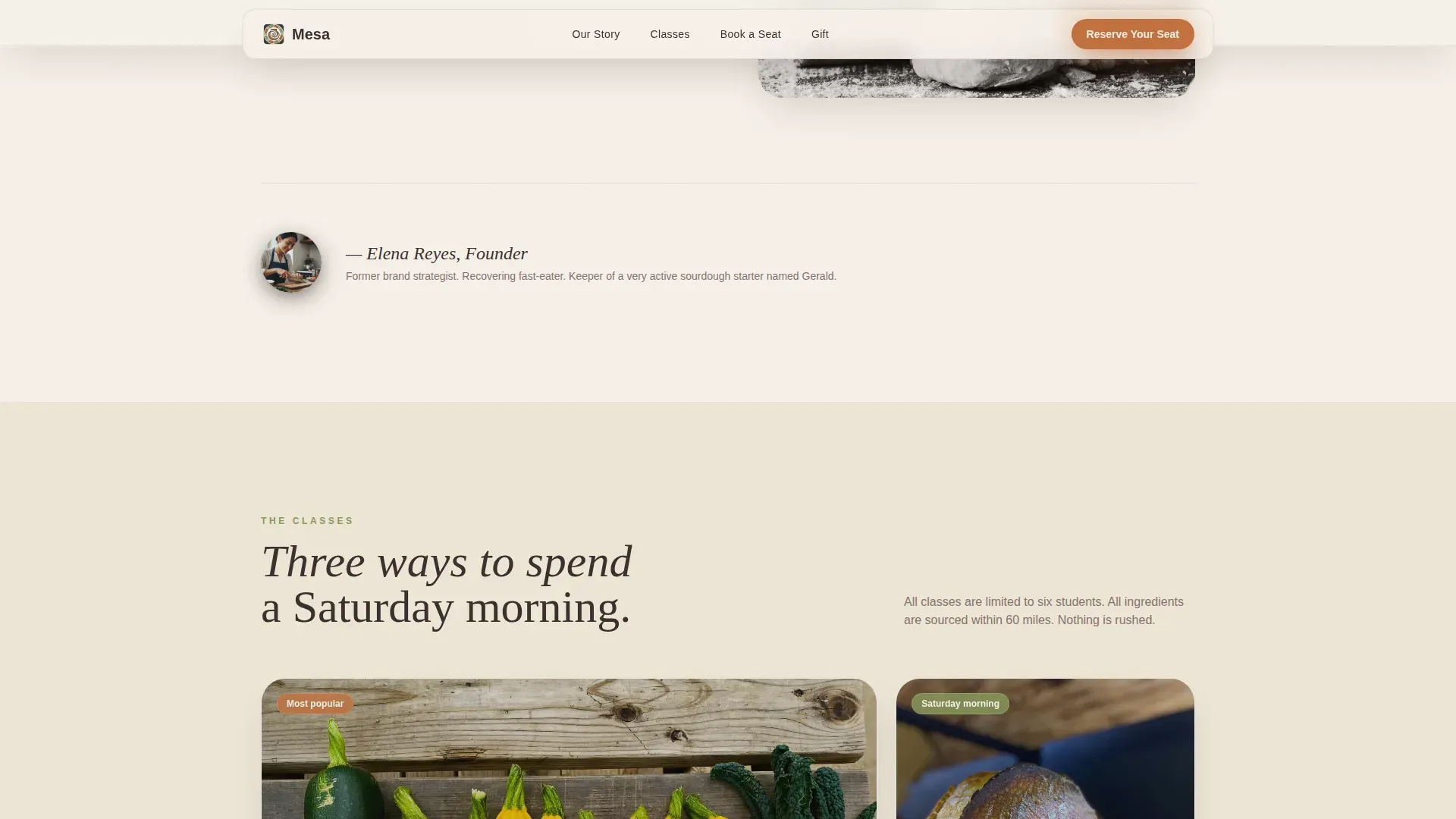
- An asymmetric class-experience grid showing three distinct course types, an inline booking calendar with a class-type selector, group-size toggle, and email field, plus a secondary gift-a-class flow and an intimate testimonials section
Feature list
Mesa's features are grounded in what the brief calls for: a visually rich, story-forward booking experience built for desktop-first Saturday-morning browsing with strong mobile support.
Full-Bleed Cinematic Hero
The hero section fills ninety percent of the viewport with a wide, editorial photograph. A single headline fades up in linen white as the page loads. After the hero scrolls past, a soft sticky bar slides in with the primary "Reserve Your Seat" call to action, keeping conversion access available without interrupting the reading experience. The hero is designed to create immediate atmosphere and a welcoming sense of place before the visitor reads a single word of body copy.
Founder Origin Story Arc
This is not a standard bio block. The origin story section is structured as a narrative sequence that moves forward in time: from sourcing at dawn markets, through hands-deep kitchen prep, to the shared table at the end of the session. Photography placement shifts from wide landscape shots to intimate close-ups as the story deepens. Each beat is a deliberate paragraph, not a bullet. This section is what separates Mesa from a generic booking page and is central to the template's ability to create emotional investment before the calendar appears.
Asymmetric Class Experience Grid
Three course types are displayed in an asymmetric bento-style grid with supporting imagery. Each card presents a class name, a brief description, and a visual that communicates the feeling of that particular experience. Visitors can see at a glance whether they want a Seasonal Harvest session, a Bread and Ferment morning, or a Farm-to-Table Date Night. The grid is designed to help visitors self-select and feel confident before they reach the booking step.
Inline Booking and Reservation Form
The reservation section is a full-width block that appears after the origin story arc has completed its work. It contains an inline calendar showing available Saturday and Sunday sessions, a class-type selector, a group-size toggle for solo or pairs bookings, and a single email field. The design keeps the form calm and uncluttered, consistent with the pastoral tone of the rest of the page. A secondary path within the same section offers a gift-a-class flow for visitors who want to celebrate someone they care about.
Intimate Testimonials and Social Proof
Testimonial quotes use first names only and are presented without corporate headshots or star-rating widgets. This keeps the social proof feeling human and grounded rather than transactional. The section is placed after the booking form to catch visitors who scroll past the calendar and need one more reason to decide. Real words from past students carry the kind of credibility that a polished marketing sentence cannot.
Sunset Mesa Color System and Typography
The visual identity is fully built out. Sun-baked clay anchors every button and price display. Dried sage serves as a quiet section divider. Raw linen white holds the backgrounds. Deep loam grounds the body typography. The type pairing uses a serif display face for headlines and a clean sans-serif for body copy, creating a warm editorial feel that is easy to read across screen sizes.
Page sections overview
| Section | Purpose |
|---|---|
| Full-Bleed Hero | Sets cinematic atmosphere, delivers headline, triggers sticky bar |
| Sticky Reservation Bar | Keeps primary call to action accessible after hero scrolls away |
| Founder Origin Story | Builds trust through narrative, moves visitor emotionally forward |
| Class Experiences Grid | Shows three course types with imagery for self-selection |
| Reserve Your Seat | Inline calendar, class selector, group toggle, email capture |
| Gift a Class | Secondary conversion path for gifting a session to friends or family |
| Testimonials Section | Social proof through intimate, first-name-only student quotes |
| Page Footer | Logo and tagline left, navigation links right |
Design & branding system
Mesa's visual identity is built around the Sunset Mesa color system. Every color decision has a specific role, and the result is a palette that feels like a wooden table set outside at golden hour: warm, grounded, and completely intentional. Earthy tones, natural textures, and a pastoral calm aesthetic ensure the page resonates with visitors who already value organic food, slow living, and meaningful community experiences.
- Clay (#C2703E) anchors buttons, price tags, and primary calls to action; sage (#8A9A5B) handles section dividers; linen white (#F5F0E8) holds page backgrounds; and deep loam (#3B2F2F) provides weighty, readable body typography
- Curved shapes, flowing section transitions, and natural photographic textures replace sharp geometric edges, giving the layout an organic feel that matches the subject matter
- The type system pairs a Fraunces serif display face for headlines with DM Sans for body copy, balancing warmth with readability across all screen sizes
Mobile & speed optimization
Mesa is built desktop-first to match its primary audience: urban professionals browsing on a Saturday morning with a laptop and a coffee. Strong mobile support is included so the experience translates across devices without losing its atmosphere or its booking functionality.
- The hero image is set to priority load so the full-bleed photograph appears immediately; all below-fold content uses lazy loading to keep the initial experience fast
- Scroll-reveal animations powered by GSAP are set at a medium intensity, giving sections a gentle entrance without creating jank or delay on lower-powered devices
- The sticky reservation bar, inline calendar, class-type selector, and group-size toggle are all designed to function clearly at mobile screen sizes, keeping the booking flow accessible on any device
How this template helps you convert
Mesa is a booking template that earns conversion through sequence. The layout is not built around aggressive calls to action or scarcity tactics. It is built around the understanding that someone booking an organic cooking class wants to feel confident, inspired, and genuinely excited before they enter their email address. Every structural decision serves that goal.
- The hero-dominant opening creates an immediate emotional atmosphere. Visitors feel the warmth and the welcoming sense of place before they read a word, which lowers resistance and opens curiosity. By the time the story begins, they are already leaning in.
- The origin story arc moves the visitor forward in time, from the farmers markets at dawn to the shared table at night, building community and connection at every step. This narrative structure makes the experience feel real and imagined simultaneously, which is the most powerful kind of persuasion.
- The inline booking form appears only after the story has done its work. At that point, reserving a seat does not feel like a purchase; it feels like claiming a morning the visitor already decided they wanted. The gift-a-class secondary path extends the conversion opportunity to visitors who are interested but booking on behalf of someone they love.
Other information about this template
Mesa is one of the most fully realized templates in the pastoral calm category. It is designed specifically for the experience economy, where the success of a business depends on how well a page communicates feeling before function. The following points cover additional context about the template's scope, inspiration, and practical applications that are useful to know before you begin customizing.
- The mesa pastoral calm organic cooking class landing page template draws on California's vibrant farm-to-table culture, where many years of community-supported agriculture have shaped how people think about food, gardens, and shared meals
- California cooking culture runs deep in this template's visual DNA: the golden-hour light, the terracotta tones, the farmers markets heavy with seasonal produce, and the community gardens that supply ingredients direct from the earth
- The origin story section is flexible enough to support a range of founder backgrounds. Whether your story begins in a California farmhouse kitchen, in community gardens inherited from family tradition, or in a professional culinary world you decided to leave behind, the narrative structure accommodates it
- The template supports seasonal content updates. Many cooking class businesses run programs that shift with the calendar. January is a strong booking month as people look forward to fresh starts and new skills after the holidays. The class-type selector can be updated to reflect seasonal offerings throughout the year, from winter root-vegetable sessions to spring herb-garden workshops
- West Africa has a long and wonderful history of community food culture, communal cooking, and farm-to-table tradition. If your program draws inspiration from West Africa or other global culinary traditions, the origin story section is the right place to share that history with warmth and depth. Many years of food heritage from West Africa and other regions have inspired chefs and cooking educators to build programs that celebrate where food comes from and the community that grows it
- The testimonials section is designed to catch visitors who scroll past the calendar. Quotes that share a wonderful experience, an amazing time in a welcoming kitchen, or a story about leaving as friends carry real credibility that sales copy cannot replicate
- Collaborating with local organic farms, Community Supported Agriculture programs (CSA programs connect consumers directly with local farmers for fresh, seasonal produce), and health food stores can give your cooking class additional marketing reach and community visibility that the template's story sections are built to reflect
- Community gardens and CSA partnerships are worth mentioning in your origin story and class descriptions. Organic farming practices that maintain soil health through composting and crop rotation, and that grow food without synthetic fertilizers or pesticides, are values your audience already holds. Naming them on the page creates instant connection
- Educational programs focused on organic cooking raise awareness about sustainable practices and environmental stewardship. Community initiatives that incorporate organic cooking can improve access to fresh, nutritious food and strengthen bonds within any own community
- The gift-a-class path is particularly effective around the holiday season and around Valentine's Day, when couples seek something more meaningful than a standard dinner-and-a-movie night. It is also popular in January as a way to give a fresh beginning to someone you care about
- Using testimonials and success stories from past students enhances credibility and attracts new participants. The template's social proof section is built for exactly this purpose, using warm, first-name-only quotes that feel like a recommendation from a friend rather than a marketing device
- If you plan to expand your marketing beyond the page itself, email marketing is an effective tool for promoting organic cooking classes. Pairing this landing page with a simple welcome email sequence allows you to stay in touch with interested visitors even before they decide to book
- The template's welcoming visual environment, calm pacing, and biophilic design elements (natural light, earthy materials, plant-forward imagery) align with what research on cooking class atmospheres consistently finds: a sense of peace and calm is as important as the skills being taught
- The best part of Mesa as a starting point is that the hard work of layout, hierarchy, and conversion sequencing is already resolved. You bring the story, the photography, and the class details. The template brings the structure that turns a browser into a student
Theme
Pastoral Calm
Creative direction
Origin Story
Color system
Sunset Mesa
Style
Hero-Dominant (90/10)
Direction
Booking/Scheduling
Page Sections
Full-bleed Cinematic Hero with Sticky Bar
Founder Origin Story Arc
Asymmetric Class Experience Grid
Inline Booking and Reservation Flow
Intimate Testimonials Section
Sunset Mesa Color and Typography System
Related questions
Can I update the class types shown in the booking section?
Is this template suitable for a single instructor or a small teaching team?
How does the gift-a-class flow work within the template?
What kind of photography works best with this template?
Can the template support seasonal content changes throughout the year?