Residential Specialty Design Blog Website Template
Module is a single-page landing page template built for prefab architecture studios. It pairs an asymmetric 60/40 grid with an editorial magazine visual style, a full-bleed crane-photo hero, and a stepped three-slide intake form. The result is a lead generation page that qualifies serious project inquiries from residential architects, boutique hotel developers, and municipal housing authorities.
by Rocket studio
Quick summary
Module is a dark, editorial landing page template designed for prefabricated architecture studios. It uses a 60/40 asymmetric grid, an Electric Indigo color system, and a stepped overlay form to capture qualified project briefs. The page guides serious clients from first impression to inquiry without pricing or a configurator in sight.
Who this template is for
This template is built for design studios that sell precision-engineered prefab living volumes to professional buyers. It speaks to clients who need technical credibility and architectural quality on the same page.
- Residential architects speccing accessory dwelling units (ADUs) who need clear proof of quality and process
- Boutique hotel developers and municipal housing authorities who prioritize scale, speed, and delivery confidence
What problem this template solves
Generic architecture portfolio pages feel too passive for active project conversion. They show work but rarely qualify the right clients or filter out casual browsers before they waste a studio's time.
- No structured intake flow means inquiries arrive half-formed, mixing serious projects with vague interest
- Flat visual presentation fails to communicate the precision and scale that professional buyers expect
What you get with this template
You get a fully structured, single-page lead generation layout built around the editorial identity of a prefab architecture studio. Every section is designed to move a professional buyer from curiosity to commitment.
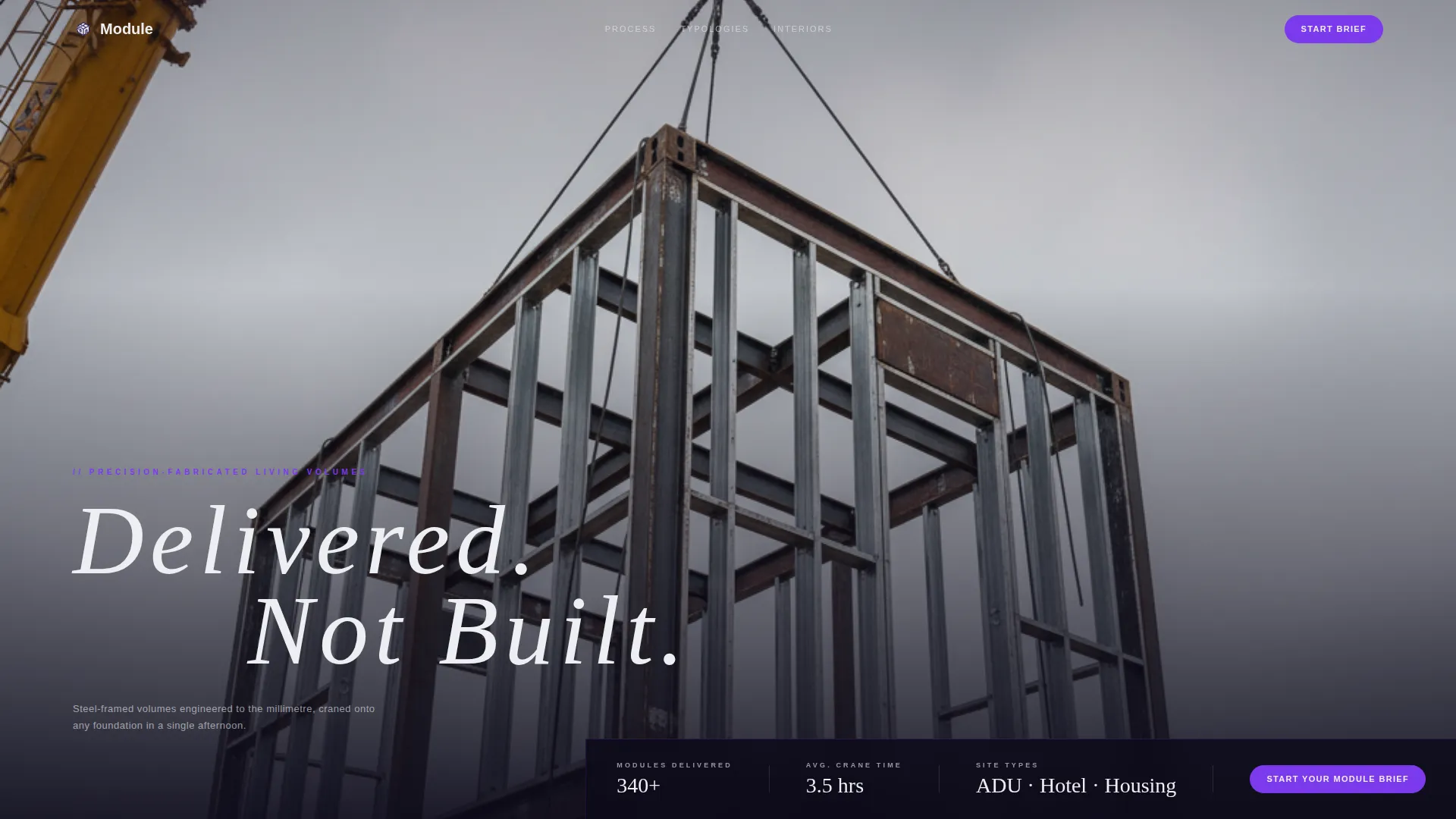
- A full-bleed crane photo hero with a delayed serif headline reveal and a floating specification strip
- An alternating factory process section, an asymmetric typology grid, a golden-hour interior photography section, and a stepped three-slide contact form overlay
- A dark, spacious design system using a near-black background, charged indigo dividers, and reactive violet interactive states
Feature list
This template ships with a set of purpose-built components. Each one serves the editorial feel and lead generation goal of the page.
Full-Bleed Hero with Delayed Headline
The hero opens on a single crane photograph that fills the entire viewport. After a held beat, a wide-kerned thin serif headline sets across the lower third of the image, creating cinematic tension before any copy appears.
Stepped Three-Slide Intake Form Overlay
The primary call to action opens a focused overlay form. Slide one asks for project type (ADU, hospitality, or multi-unit housing). Slide two asks for site location and unit count. Slide three collects name, email, and a free-text field labeled "Tell us about the site."
Asymmetric 60/40 Grid Layout
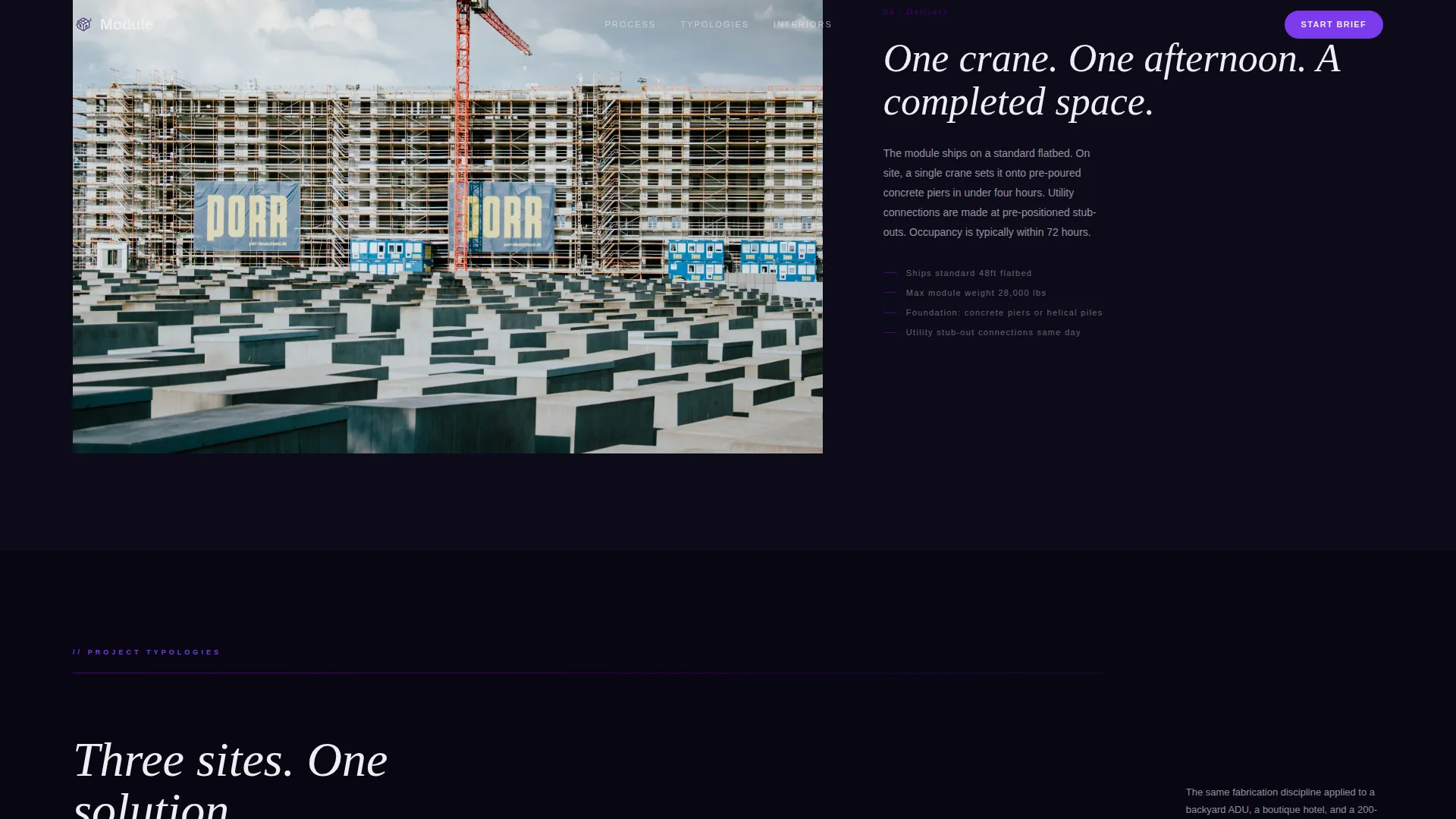
The page uses a deliberate 60-column and 40-column split throughout. Wide columns carry immersive photography while narrow columns hold restrained editorial text, specifications, and captions. The pacing decelerates as the page descends.
Factory Process Section
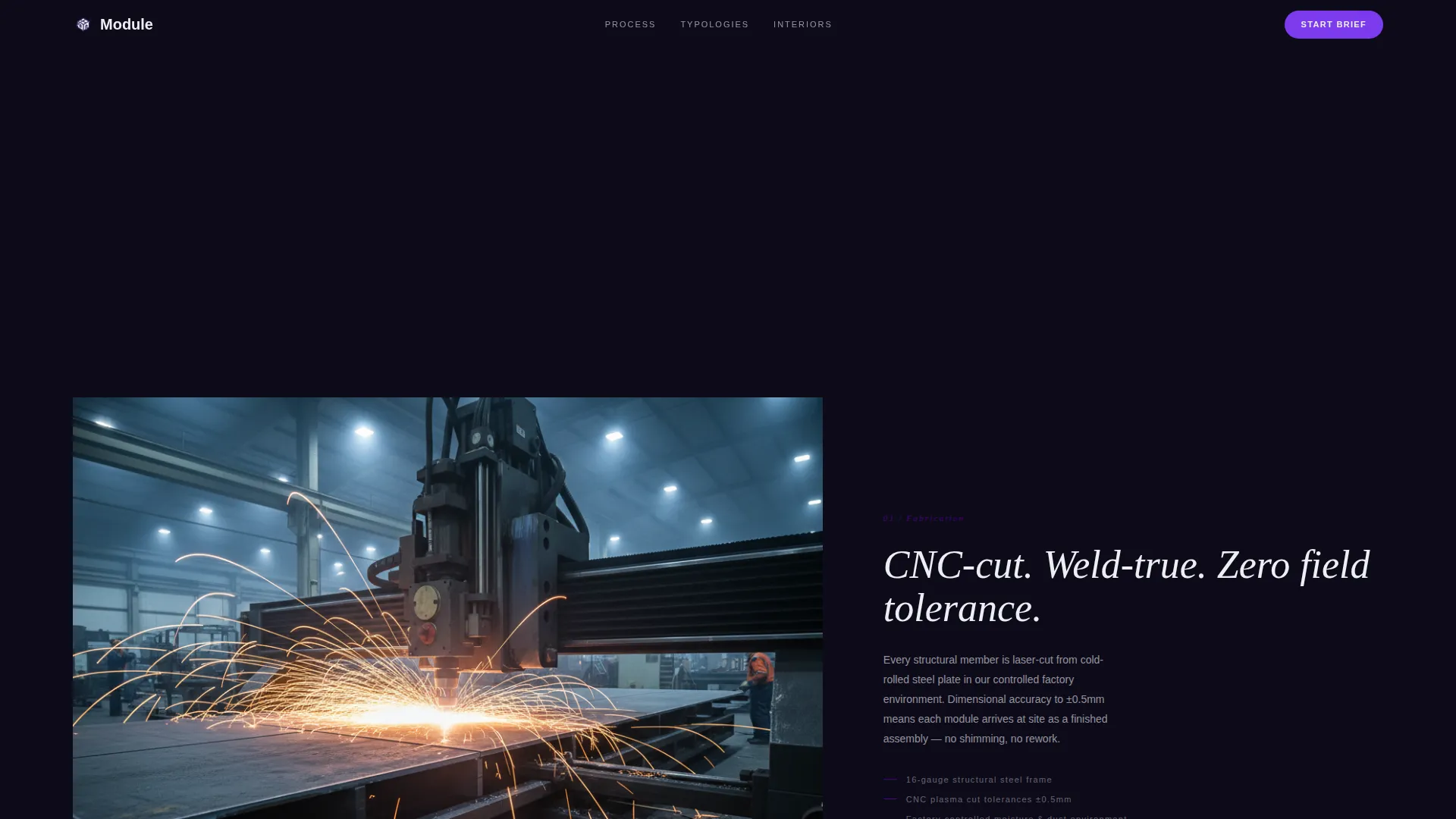
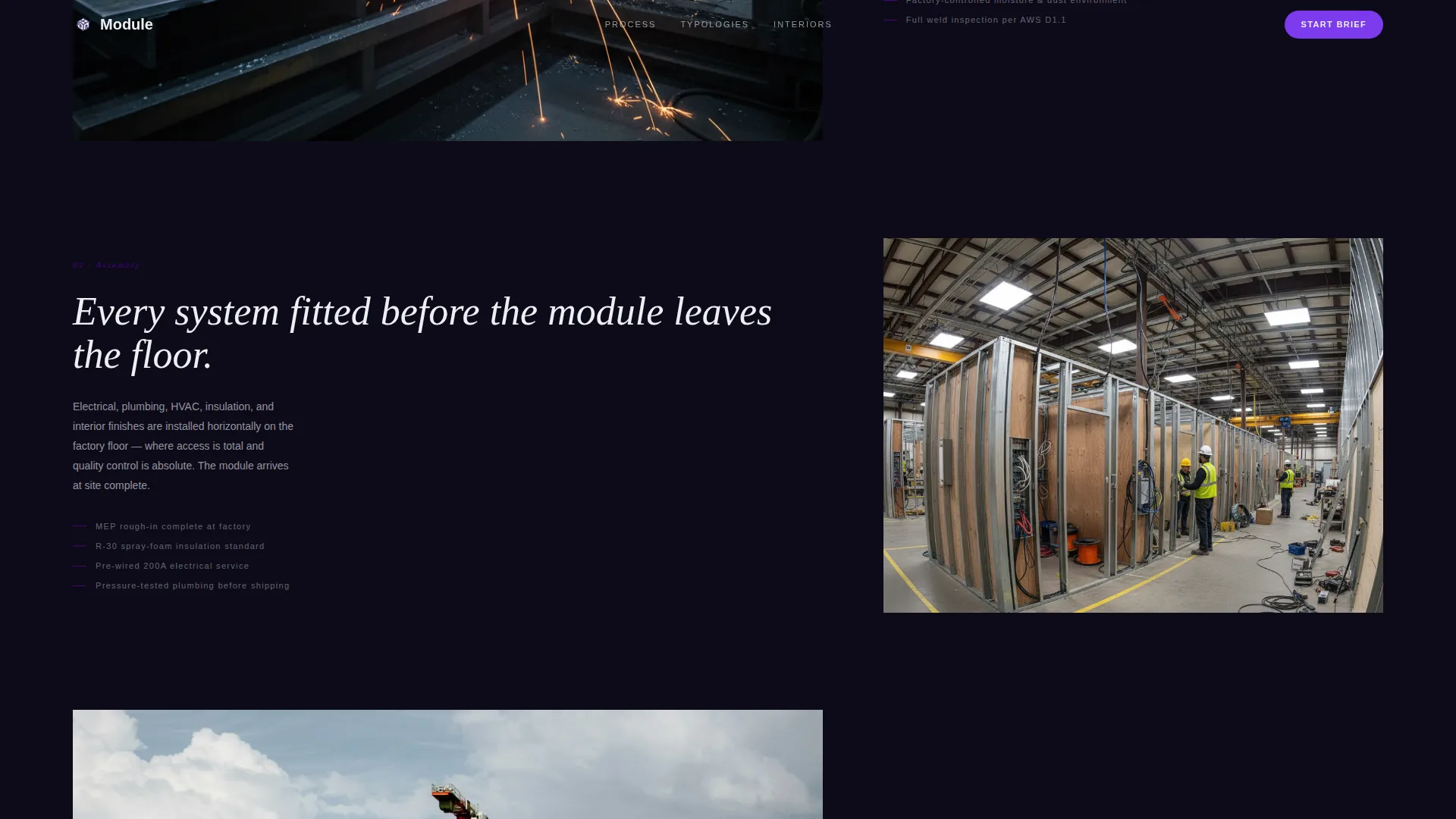
An alternating split-section sequence walks through the production stages: CNC routing, welding, and module assembly. Each stage pairs close-up photography with concise editorial copy, building technical credibility without a data sheet.
Typology Bento Grid
Three project types sit inside an asymmetric bento-style card grid. ADU, Hospitality, and Multi-Unit Housing each have their own card with hover states that reveal additional context, keeping the page interactive and scannable.
Fixed Navigation Call-to-Action Pill
A persistent nav pill keeps "Start Your Module Brief" visible throughout the entire scroll. The same call to action also appears at the page's emotional low point after the final interior photograph, catching buyers at peak engagement.
Page sections overview
| Section | Purpose |
|---|---|
| Hero Full-Bleed | Opens with a suspended crane module photo and a delayed serif headline to create immediate editorial impact |
| Floating Spec Strip | Displays key delivery metrics beneath the hero to establish credibility before the buyer scrolls |
| Factory Process | Alternating split sections covering CNC, welding, and assembly to demonstrate precision manufacturing |
| Typologies Grid | Asymmetric bento cards for ADU, Hospitality, and Multi-Unit Housing with hover interactivity |
| Interiors Portfolio | Editorial pull-quote and golden-hour photography grid to show finished quality and atmosphere |
| Stepped Form Overlay | Three-slide intake form triggered by "Start Your Module Brief" for qualified lead capture |
| Footer Row | Linear single-row dark footer for studio contact details and navigation |
Design & branding system
The visual identity treats every page element like a spread in an architectural monograph. The palette feels like a technical blueprint exposed under ultraviolet light: precise, glowing, and purposeful.
- Color system: deep page-black (#0D0B1A) as background, charged indigo (#4B0082) for section dividers and pull-quotes, reactive violet (#7C3AED) on buttons and hover states, and cool architectural white (#EDEEF2) for body text and generous margins
- Typography pairing: a thin display serif for headlines and editorial moments, paired with a clean geometric sans-serif for body copy, captions, and interface labels
Mobile & speed optimization
The template is designed desktop-first, reflecting the large-screen workflows of architects and developers. Full mobile responsiveness ensures the page holds its editorial structure at every screen size.
- GSAP ScrollTrigger drives section reveals, the delayed headline type-in, and parallax behavior on the hero photograph
- GPU-accelerated CSS transforms and smooth scroll keep motion fluid without relying on heavy rendering paths
How this template helps you convert
The page is engineered around one outcome: turning a professional visitor into a qualified project inquiry. Every structural decision supports that goal.
- The fixed navigation pill keeps "Start Your Module Brief" visible at all times, removing friction for buyers ready to act early in the scroll
- The stepped three-slide form uses progressive commitment to filter serious projects from casual interest, so every submission arrives with enough context to evaluate
Other information about this template
This template sits inside the Architecture and Design category, under the Residential Specialty Design subcategory, targeting the Prefab Module Designer niche. It is a strong fit for studios operating across B2B and B2G (business-to-government) markets where the buyer is a professional, not a consumer.
- The template includes no e-commerce functionality, no pricing display, and no live configurator; it is built purely for lead qualification
- Animation intensity is set to high, with GSAP ScrollTrigger handling reveals, type-in effects, and parallax, making the template most impactful when deployed with JavaScript enabled
- The page localization defaults to English with a United States geography context, including ADU regulatory framing and municipal housing language
Theme
Editorial Magazine
Creative direction
Atmosphere & Mood
Color system
Electric Indigo
Style
Asymmetric Grid (60/40)
Direction
Lead Generation
Page Sections
Full-bleed Hero with Delayed Headline
Stepped Three-slide Intake Form
Asymmetric 60/40 Grid Layout
Factory Process Alternating Sections
Typology Bento Grid with Hover States
Fixed Navigation Call-to-action Pill
Related questions
Who is this landing page template designed for?
Does the template include a pricing page or product configurator?
How does the stepped intake form work?
Can I adapt the typology cards for different project categories?
Is this template suitable for mobile users?