Elite Rowing Training Landing Page Template
The Stroke landing page template is built for rowing coaching services that convert club rowers, masters athletes, and university crews into clients. It follows a Hero's Journey scroll narrative, pairs an animated SVG sculler header with a modular card grid layout, and drives lead generation through a multi-step booking form and a gated PDF download. The Alpine Fresh colour system and Organic Flow design style bring the feeling of a calm dawn outing to every section.
by Rocket studio
Quick summary
The Stroke template is a single-page, card grid landing page designed for a premium rowing coaching service. It guides visitors from the pain of plateauing through to the promise of transformation, using a Hero's Journey scroll structure. Built for lead generation, it captures both ready-to-book athletes and curious browsers through a free stroke assessment form and a gated PDF download.
Who this template is for
This template suits rowing coaches and technique-focused fitness professionals who need a high-converting landing page without building from scratch. It is designed for service providers targeting athletes who want real, measurable progress in the water or on the rowing machine.
- Club rowers stuck at a plateau and looking to fix their rowing technique
- Masters athletes returning to the sport who need a safe, structured approach to rebuild rowing form
- University crews and coaches seeking programme support without full-time staffing
What problem this template solves
Most coaching websites look generic. They list services without telling a story, and they fail to address the exact frustrations a rower feels before they commit. This template solves that gap directly.
- Athletes arrive already frustrated with stalling split times, recurring pain in the back or knees, and a sense that more training alone will not fix their stroke
- The page mirrors that experience and builds trust by naming the problem before offering the solution
- There is no clear conversion path on most coaching pages; this template provides two: a booking form and a free PDF download
What you get with this template
You get a complete, ready-to-customise landing page structured around a coaching service narrative. Every section has a defined purpose and a clear place in the scroll journey.
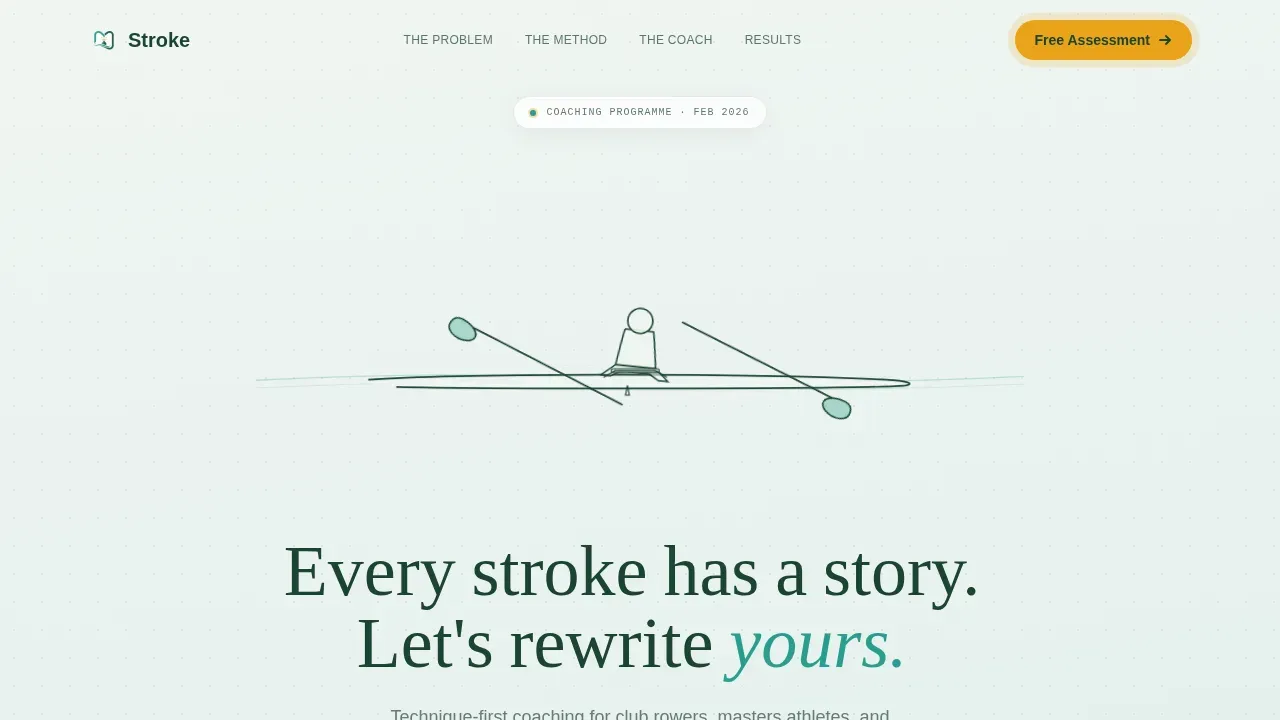
- An animated SVG hero section with a looping sculler illustration and a hand-lettered headline
- A modular card grid that moves through pain points, coaching method, and results
- A multi-step lead generation form and a secondary email-gated PDF download path
Feature list
This template includes six purpose-built components that work together as a single persuasion system.
Animated SVG Hero Section
The header features a fluid ink-line sculler looping continuously through the full rowing stroke cycle. The blade enters at the catch, the legs push through the drive phase, the arms pull to the finish, and the recovery glides forward again. This motion is GPU-accelerated and rendered in SVG for smooth performance across devices.
Hero's Journey Scroll Narrative
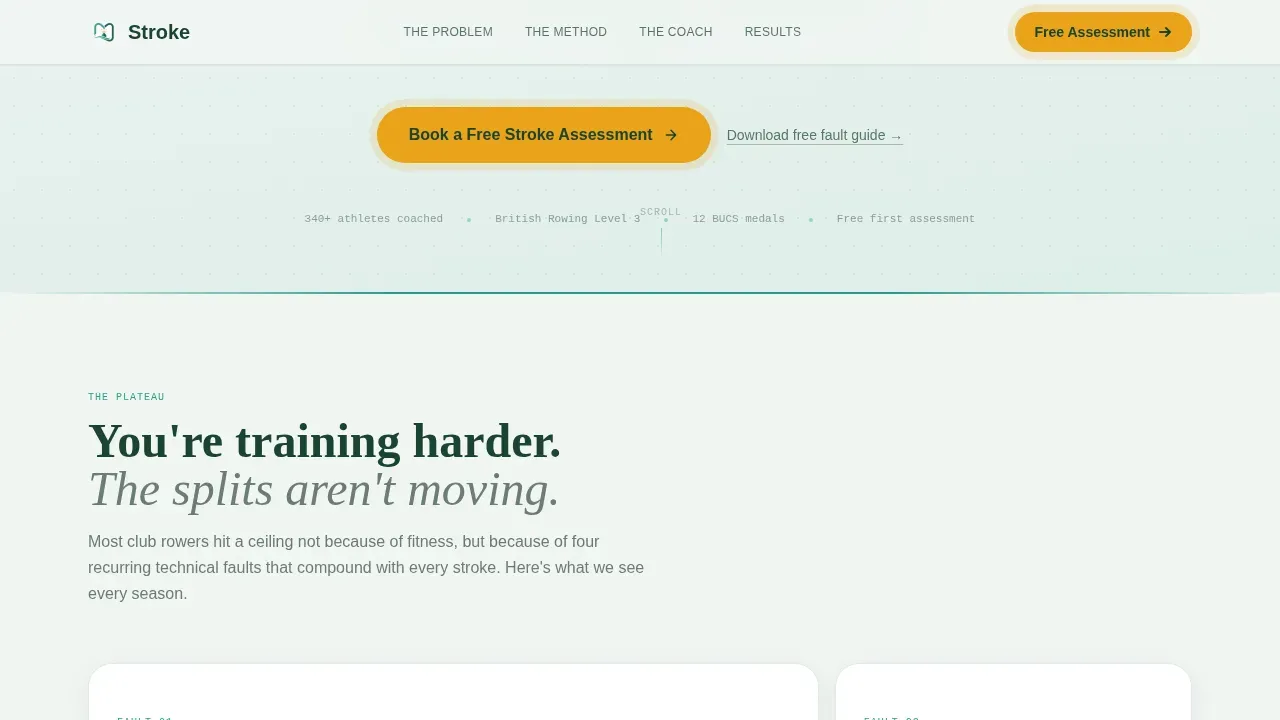
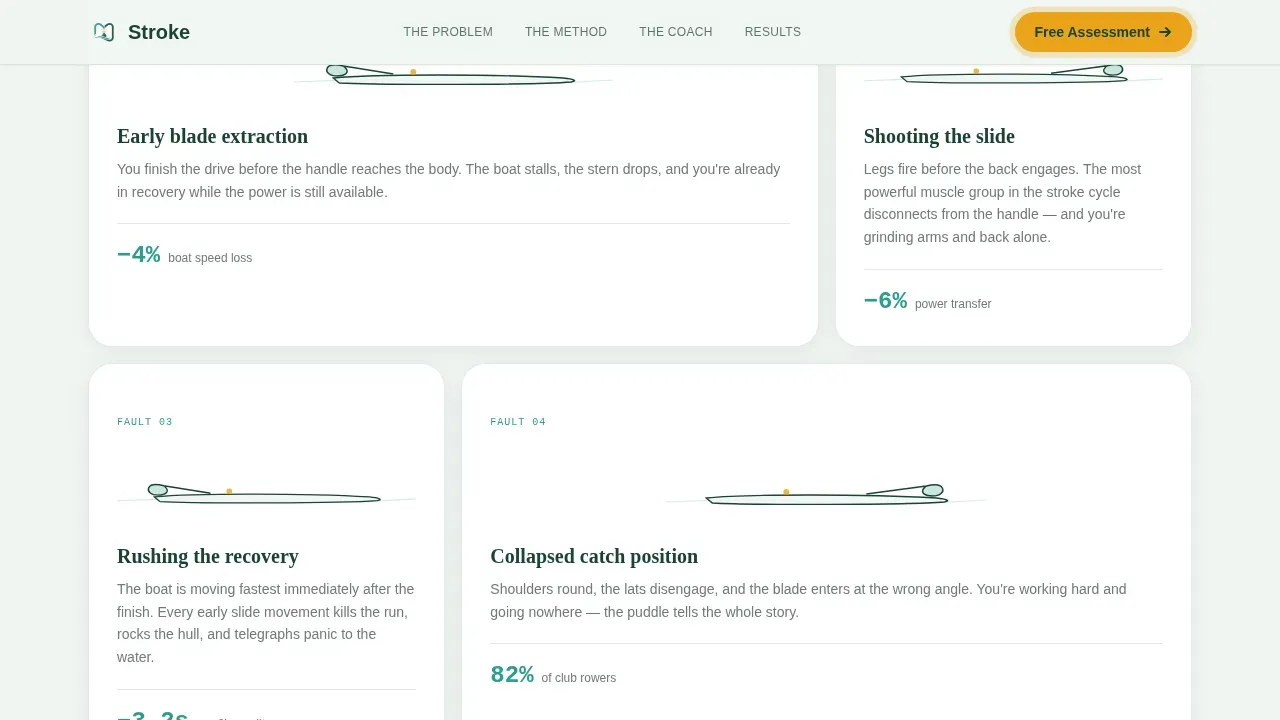
The page is structured as a story. The first card row names plateau symptoms and common errors in rowing form, illustrated with annotated stroke diagrams. The next row introduces the coach with credentials and a philosophy manifesto. Method cards follow, then social proof, then results. Each section builds naturally on the last.
Modular Card Grid Layout
Cards vary in width to match their content weight. Wider storytelling cards carry the coach philosophy and before-and-after video analysis. Compact cards hold testimonials, split times, and medals. This asymmetric bento grid approach keeps the page visually active and easy to scan.
Multi-Step Lead Generation Form
The primary call to action is "Book a Free Stroke Assessment." The form collects rowing experience level first, then primary goal, then preferred format, then name and email. This sequencing reduces friction and qualifies leads before the coach sees them.
Gated PDF Download Path
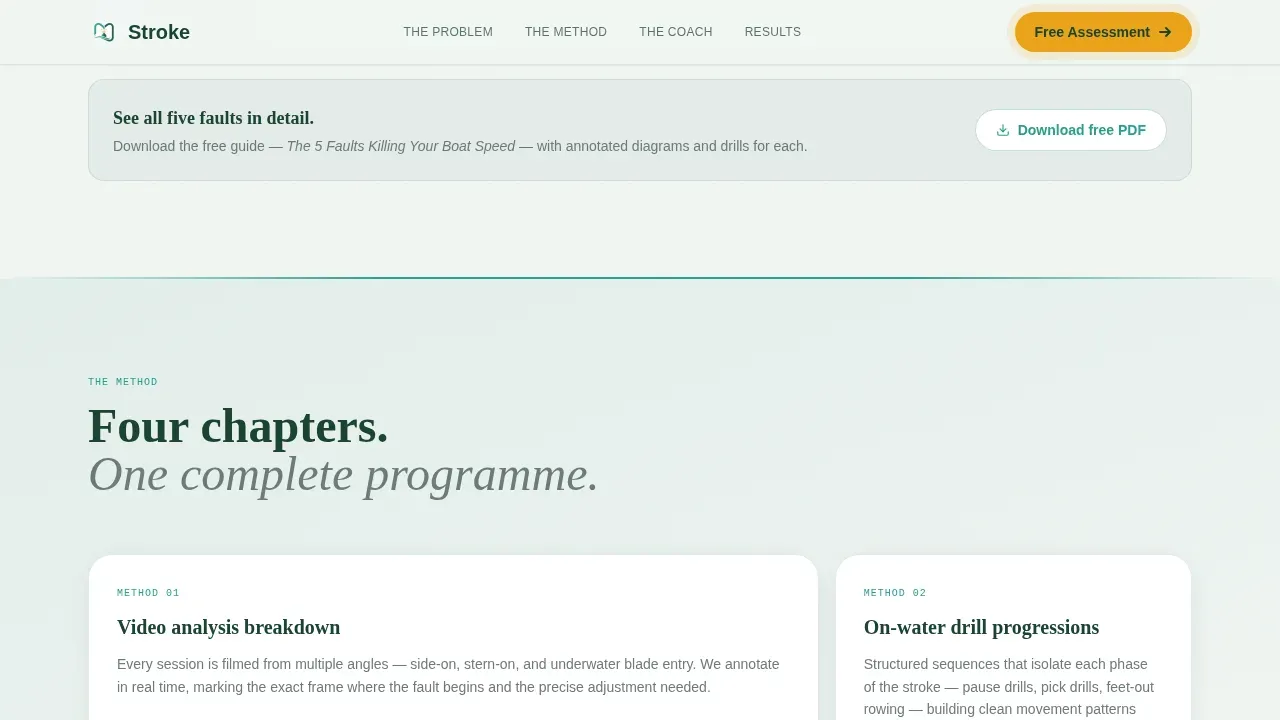
A secondary conversion path captures visitors who are not yet ready to book. The offer is a free downloadable PDF titled "The 5 Faults Killing Your Boat Speed," gated behind email only. This extends the reach of the page to athletes earlier in their decision journey.
Sticky Amber Call-to-Action Element
The booking button appears first below the hero section. After the midpoint of the scroll, it reappears as a sticky element anchored to the viewport. The amber colour reserved for calls to action ensures it is always visible without disrupting the reading flow.
Page sections overview
| Section | Purpose |
|---|---|
| Hero animated header | Introduce the brand and loop the sculler stroke cycle |
| Pain bento grid | Surface plateau symptoms and common rowing technique faults |
| Method card grid | Explain video analysis, drill progressions, erg programming, race strategy |
| Coach philosophy manifesto | Build trust through credentials and a scroll-reveal technique statement |
| Results social proof | Show split times, medals, and athlete testimonial quotes |
| Lead generation footer | Capture bookings and email sign-ups with the linear footer row |
Design & branding system
The template uses an Organic Flow visual style with the Alpine Fresh colour palette. Every colour has a precise role, and the typography pairing reinforces the premium coaching feel.
- Glacial lake teal (#2A9D8F) washes through section dividers and hover states; deep pine (#1B4332) anchors all text and card borders; morning mist white (#F0F5F2) breathes across backgrounds; warm sunrise amber (#E9A319) appears only on calls to action and progress indicators
- Fraunces serif handles all headings for an editorial, authoritative feel; DM Sans carries body copy for clarity; JetBrains Mono renders split times and data points for precision
- The ink-line illustration style, fluid curves, and wake-dissolving white space create a visual rhythm that mirrors the control and balance of a clean rowing stroke
Mobile & speed optimization
The template is desktop-first, reflecting the browsing habits of rowing coaches and competitive athletes, but it includes full mobile support throughout.
- SVG stroke cycle animations are GPU-accelerated so they run smoothly without blocking layout rendering
- Server Components handle all static sections, reducing unnecessary load on the client
- The sticky call-to-action and multi-step form are both touch-friendly, with large tap targets that work comfortably on smaller screens
How this template helps you convert
The page is engineered to move visitors from curiosity to commitment across two distinct paths.
- The primary path guides an athlete through the Hero's Journey scroll, from recognising their pain to trusting the coach, then presents the "Book a Free Stroke Assessment" form at the moment of peak motivation.
- The secondary path captures athletes who are still researching by offering the gated PDF download, keeping them in the coaching ecosystem until they are ready to act.
Other information about this template
This template is categorised under Wellness and Fitness, specifically the Rowing Fitness subcategory. It is relevant to anyone building a coaching service around rowing technique, erg-based training, or on-water performance improvement.
- Rowing is a full body workout that engages approximately 86% of your major muscle groups when performed with proper form, making technique coaching genuinely high-value for athletes at every level
- The recovery phase is the portion of the stroke cycle that occurs between the finish and the catch; rushing the recovery phase disrupts rhythm and leads to poor posture, back pain, and inefficient strokes across longer rowing sessions
- Rowing is predominantly a lower body exercise, with the legs and core accounting for 80 to 90% of the work in each rowing stroke; the drive phase begins with the legs pushing through the heels, body fully extended before the upper body and arms engage
- Poor posture during rowing can cause lower back pain and compress the spine; maintaining a straight back and controlled body swing through the catch and finish protects the spine and builds sustainable rowing efficiency
- The program starts with controlled movement at around 20 strokes per minute at low intensity before progressing to power-building sets, which helps prevent injury and avoids unnecessary tension in the shoulders and arms
- A light grip on the handle reduces unnecessary tension in the forearms and shoulders; keeping the knees tracking straight and the hips level during the slide forward protects the joints and builds cleaner body mechanics
- Cooling down with 5 to 10 minutes of easy rowing and gradually lowering your stroke rate is often overlooked but is crucial after any intense rowing workout; it helps muscles recover and reduces stress on the body
- Incorporating strength training alongside on-water rowing helps build strength in the glutes, quadriceps, and lats, and translates directly to more power at the catch
- Rowing is a low-impact exercise compared to running or cycling, making it a fun way to build cardiovascular fitness while giving joints time to rest and recover
- The stroke rebuild your rowing power landing page template is suited to coaches who want a professional, story-driven page that qualifies leads and communicates methodology clearly before the first conversation
Theme
Organic Flow
Creative direction
Hero's Journey
Color system
Alpine Fresh
Style
Card Grid (Modular)
Direction
Lead Generation
Page Sections
Animated SVG Sculler Hero
Hero's Journey Scroll Structure
Asymmetric Bento Card Grid
Multi-step Lead Generation Form
Email-gated PDF Download
Sticky Amber Call-to-action Button
Related questions
Who is this template designed for?
What conversion paths does the page include?
Can I adapt the coaching method sections to my own programme?
Does the template include social proof sections?
Is the template suitable for coaches who work with beginners and returning athletes?