Tibetan Cuisine Professional Website Template
Momo is a warm artisan Tibetan restaurant landing page template built around a masonry photo grid mosaic, scroll-driven storytelling, and a Parchment and Rust color system. It guides visitors from an immersive visual welcome through menu photography, kitchen narrative, and ingredient illustrations, ending with clear calls to action for ordering and reservations.
by Rocket studio
Quick summary
Momo is a single-page restaurant template designed to feel like stepping into a steam-fogged neighborhood kitchen. The design centers on a mosaic photo grid, masonry menu cards, and a warm editorial pace. Every section builds emotional momentum toward one goal: getting the visitor to order or book a table.
Who this template is for
This template fits restaurant owners and hospitality brands who want their online presence to match the soul of their cooking. It is especially well-suited for neighborhood dining concepts with a strong visual and cultural story to tell.
- Tibetan and Nepali restaurant operators seeking an immersive brand landing page
- Local dining spots ready to drive online ordering and reservation click-throughs
- Food and beverage category businesses that lead with photography and atmosphere
What problem this template solves
Most restaurant templates display a static hero image and a generic menu list. That approach loses the visitor before the story starts. This template solves the engagement gap with a layered, editorial design that draws readers deeper with every scroll.
- Visitors bounce when a restaurant page feels cold or generic
- Ordering and booking links get buried under overcrowded layouts
- Authentic culinary identity is hard to communicate without the right visual structure
What you get with this template
This template delivers a fully structured landing page with five distinct content sections, scroll animation behavior, and a deliberate click-through design. Each section is ready for your own photography and copy.
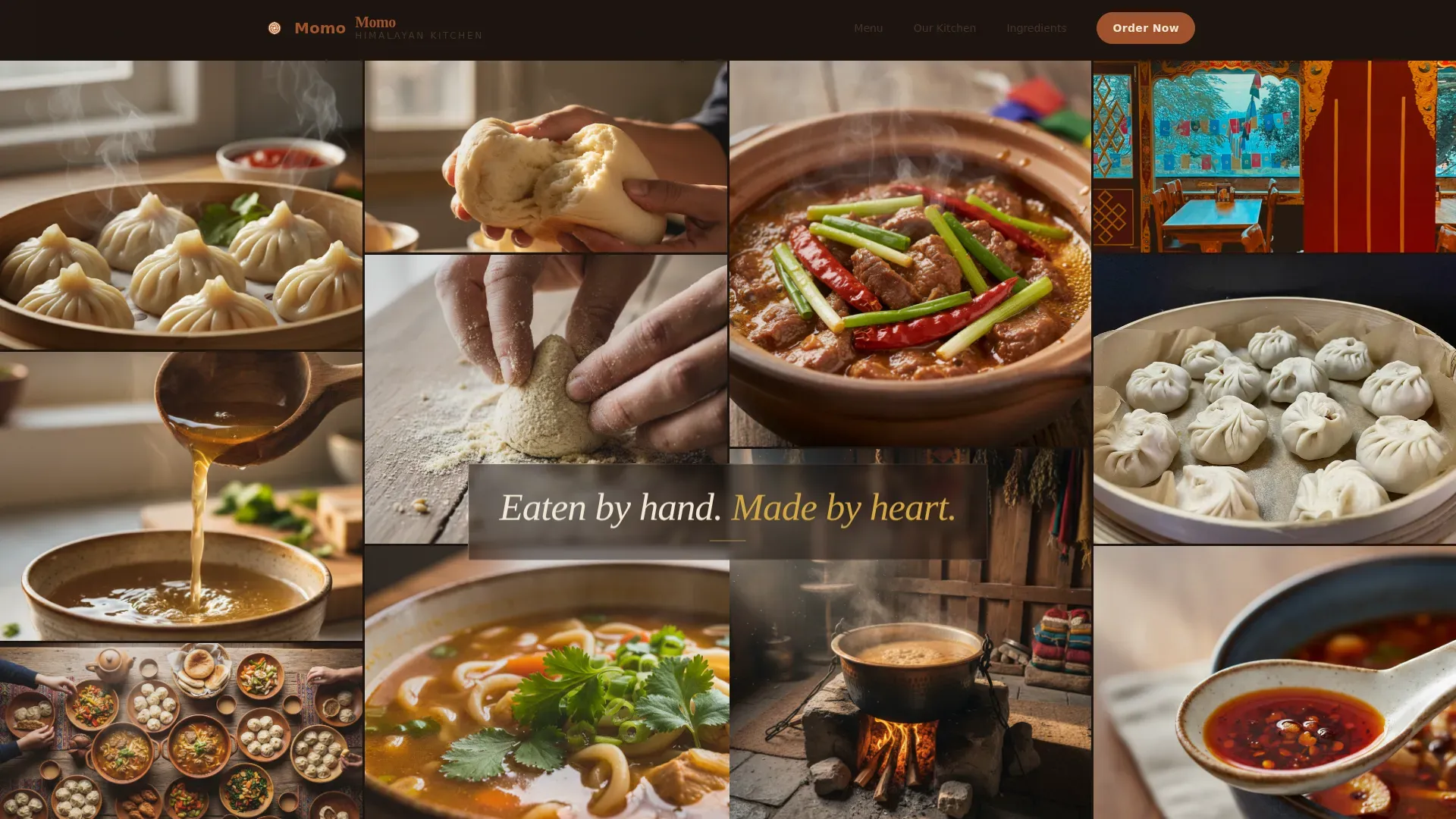
- A viewport-filling photo mosaic header with a floating headline and rust call-to-action button
- Masonry menu cards, gallery-style kitchen photography, and hand-drawn ingredient illustration cards
- A closing call-to-action room with order and booking prompts, plus a minimal horizontal footer
Feature list
Mosaic Photo Grid Header
The header fills the full viewport with an asymmetrical grid of richly saturated food and atmosphere photographs. A single centered headline floats across the grid. Parallax cursor movement adds a subtle sense of depth on desktop.
Masonry Menu Card Layout
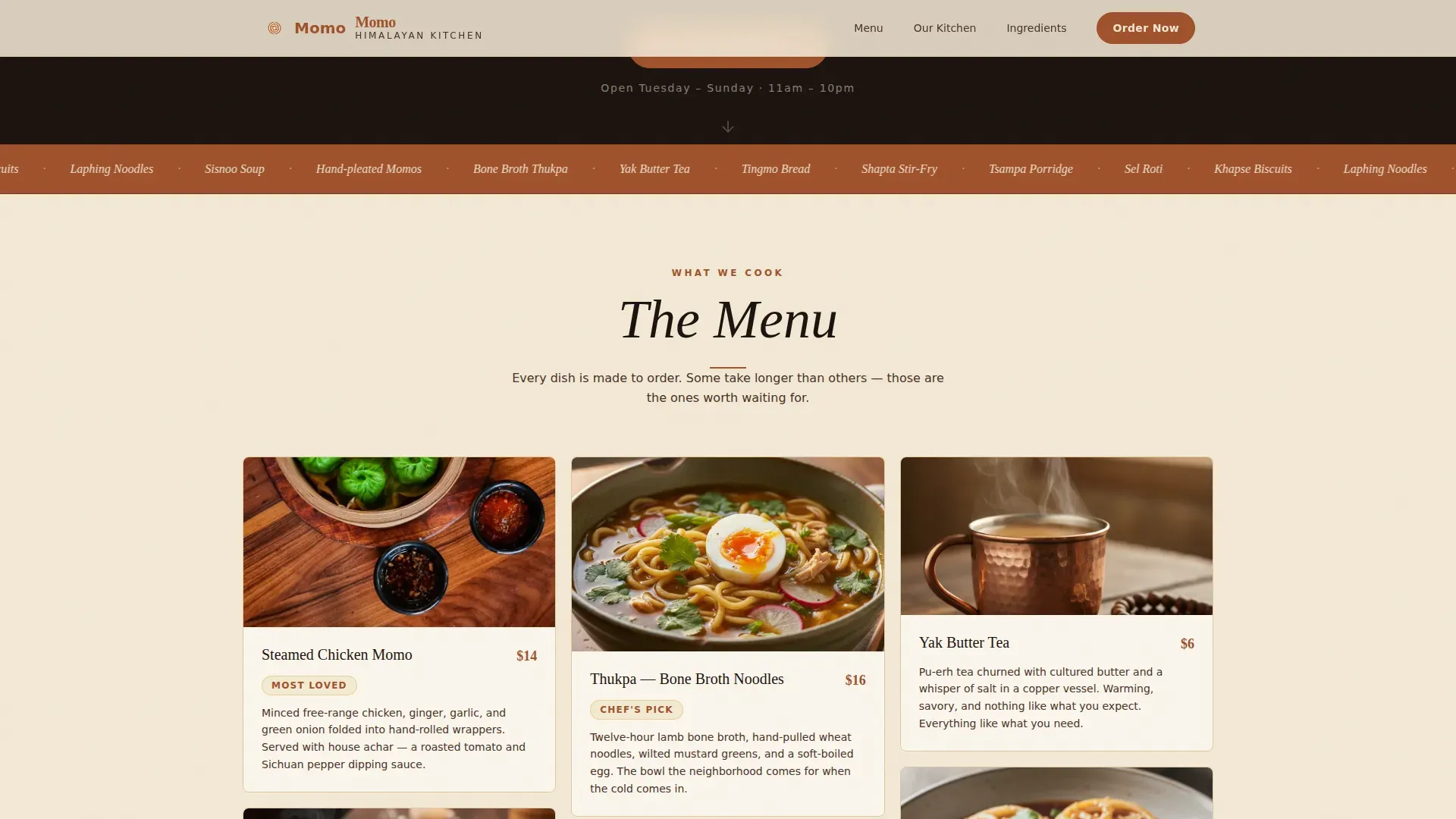
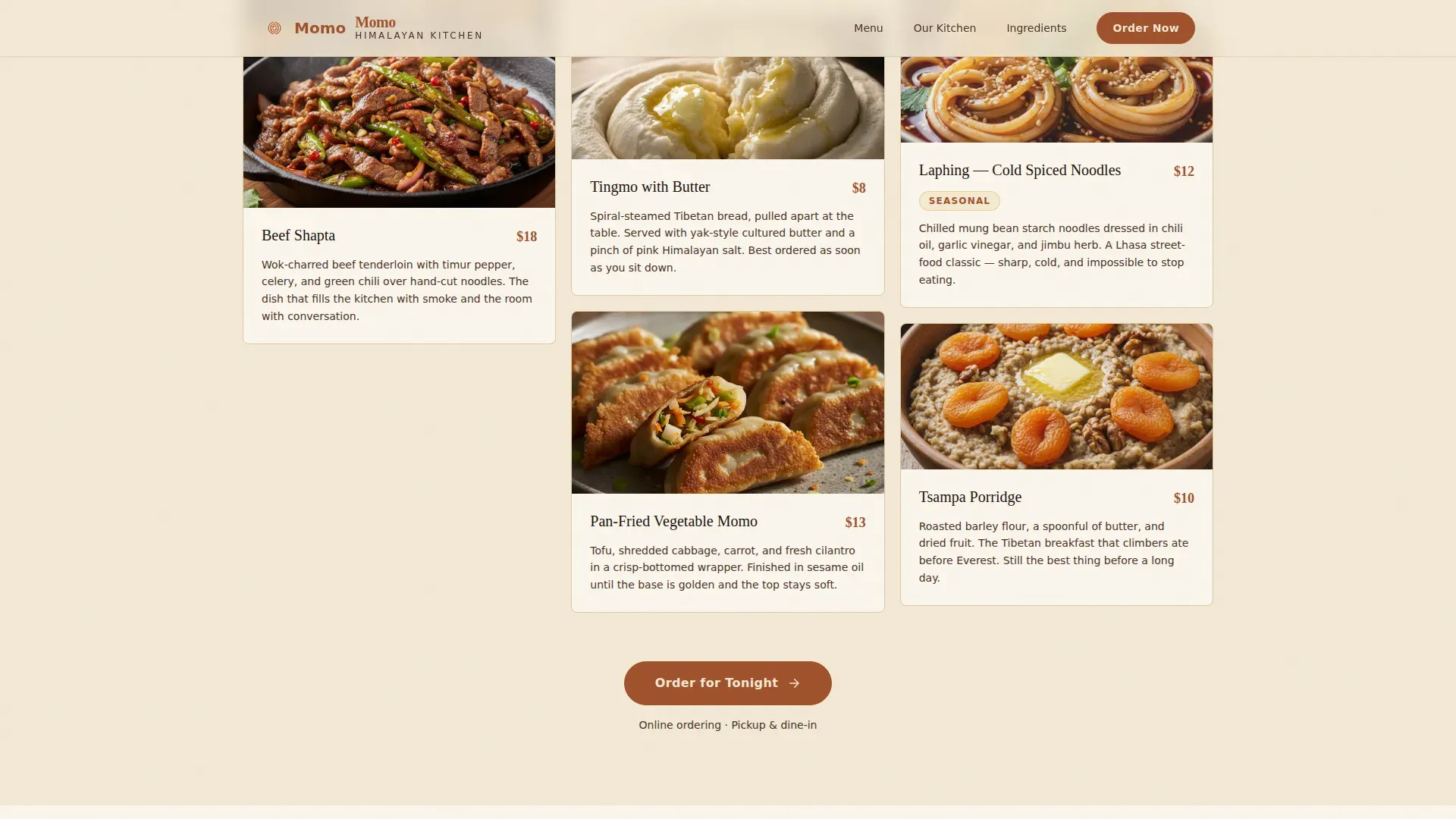
Menu items display as staggered masonry cards with overhead food photography. Each card shows the dish name and description at a glance, giving the user a tactile, browsable experience similar to flipping through a handmade cookbook.
GSAP Scroll Reveal Animations
Sections enter the viewport through staggered reveal animations and a marquee text element. The scroll pacing mimics the unhurried rhythm of a shared meal, encouraging visitors to slow down and engage with every section.
Hand-Drawn Ingredient Cards
The ingredients section pairs illustrated artwork of spices and aromatics with short origin stories. This section deepens trust by showing where flavors come from, which reinforces authenticity and service quality.
Dual Call-to-Action Structure
Two primary calls to action appear at key emotional high points: "See the Full Menu" after the mosaic and "Order for Tonight" after the kitchen story. A softer secondary link, "Book a Table for the Weekend," sits below the ingredient section.
Gallery-Style Kitchen Story Section
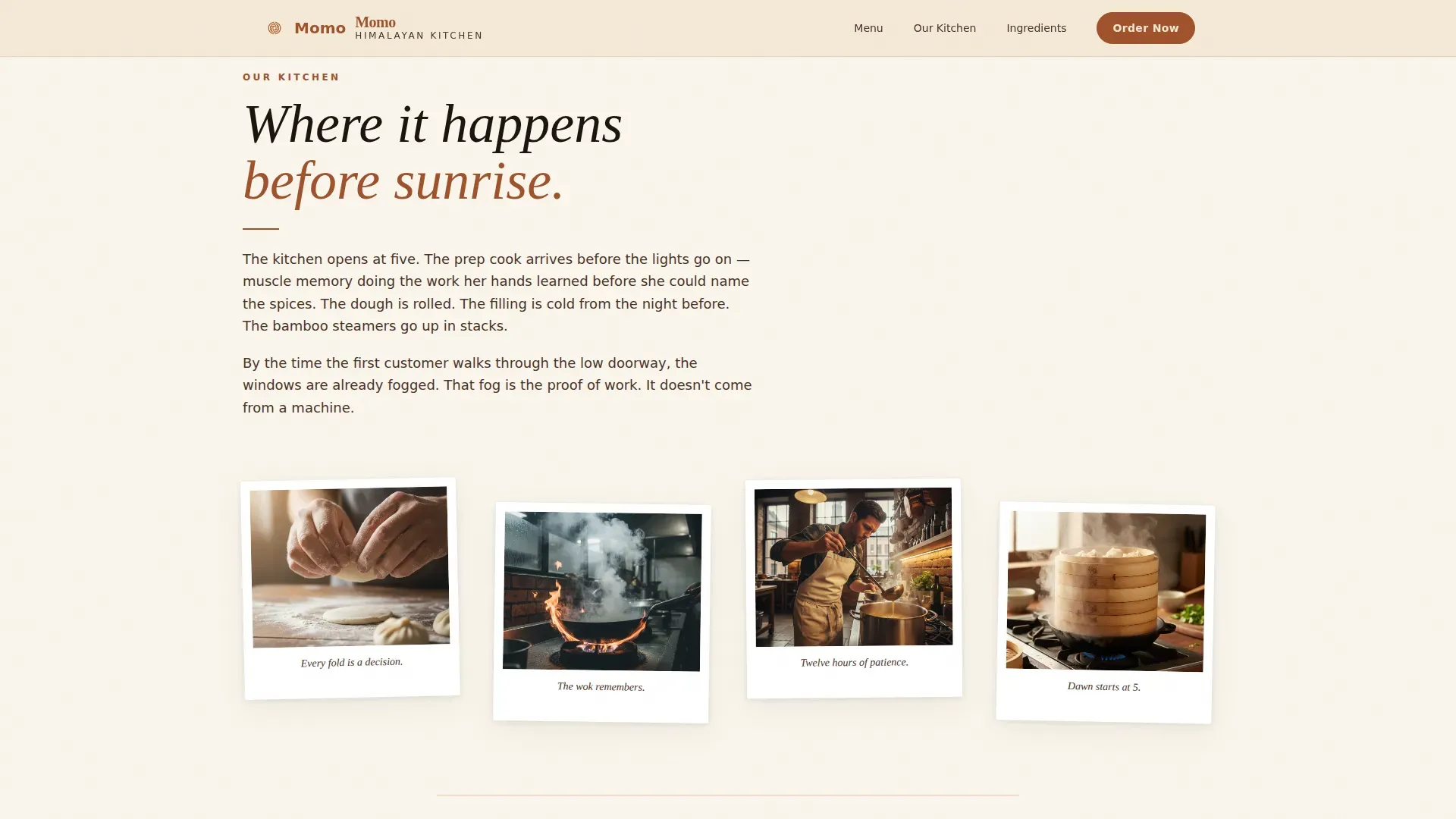
Kitchen photographs of flour-dusted hands and blackened woks are presented like gallery prints with generous whitespace. The editorial spacing and warm tones make the cooking process feel worth pausing for.
Page sections overview
| Section | Purpose |
|---|---|
| Photo Grid Mosaic | Immersive viewport-filling header with headline and primary call to action |
| Masonry Menu Cards | Scrollable food photography cards with dish names and descriptions |
| Kitchen Story Gallery | Gallery-print photos of the kitchen process with editorial whitespace |
| Ingredient Origin Cards | Hand-drawn illustrations and origin stories for key spices and ingredients |
| Call-to-Action Room | Final ordering and booking prompts in a warm, atmosphere-rich layout |
| Minimal Footer | Horizontal flow footer with essential contact and navigation links |
Design & branding system
The design follows a Warm Artisan editorial style. Typography pairs Fraunces serif display headings with DM Sans body text. The result feels like a hand-bound cookbook left open near a wood fire.
- Parchment (#F2E8D5) backgrounds, Rust (#A0522D) headlines and buttons, Hearth Black (#1C1410) body text
- Muted Saffron (#D4A843) reserved for hover states and highlighted text accents
- High-contrast editorial spacing with wider margins in the slower-paced ingredient section
Mobile & speed optimization
The template is built desktop-first to honor the immersive photography experience, and it scales responsively across screen sizes. Mobile-friendly design is crucial for any restaurant landing page reaching diners on smartphones.
- Priority image loading above the fold keeps the mosaic header fast to render
- Lazy loading applied to below-fold sections reduces initial page weight
- Responsive masonry grid reflows cleanly for tablet and mobile viewports
How this template helps you convert
The entire page is structured around a single direction: move the visitor toward a click. No form fields compete for attention. The emotional weight of the photography does the persuasion work.
- The mosaic header and floating "See the Full Menu" rust button create an immediate, low-friction first action for the user
- The "Order for Tonight" button reappears after the kitchen story, catching visitors at peak appetite
- The "Book a Table for the Weekend" saffron text link gives a softer second path for diners who want the full in-room experience
Other information about this template
This landing page sits in the Food and Beverage category and is designed for the Tibetan restaurant niche. It is one of the more immersive templates in that category, built with GSAP animation and cursor parallax interactivity. Customizable design sections let you select your own photographs and swap copy without design expertise. Contact information should remain clearly visible in the footer so visitors can easily reach the restaurant. You can also add an email address or phone number to the footer area. Templates like this one streamline the process of building a professional restaurant presence online. The design shares principles with culture-focused templates built for African cuisine and diaspora dining concepts, including the fufu authentic togolese catering landing page template, where warm earthy palettes and high-quality food photography drive visitor engagement. Promotional materials built from templates like these help attract diners and celebrate vibrant food traditions. A well-designed restaurant page captures authenticity much like a well-designed flyer does for african cuisine events, and print-ready or digital formats can complement this landing page for broader restaurant display across social channels.
- Works within the Food and Beverage category for single-location neighborhood restaurants
- Easily lets you select your own photography without altering the layout structure
- Footer area supports email address and contact details for clear visitor access
Theme
Warm Artisan
Creative direction
Immersive Visual
Color system
Parchment & Rust
Style
Masonry/Pinterest
Direction
Click-Through
Page Sections
Mosaic Photo Grid Header
Masonry Menu Card Layout
GSAP Scroll Reveal Animations
Hand-drawn Ingredient Origin Cards
Dual Call-to-action Structure
Gallery-style Kitchen Story Section
Related questions
Can I swap the food photography with my own images?
Does this template include a reservation or ordering form?
Is this template suitable for other restaurant cuisine types?
How does the template handle mobile visitors?
Can I add my restaurant contact details and email address to this template?