Intensivist & Critical Care Practice Website Template
Rounds is a split-screen landing page template built for intensivist practices. It pairs a dawn-toned visual identity with a structured expert panel layout, guiding ICU nurses, resident physicians, and hospital administrators toward downloadable critical care protocols. Each section earns trust before asking for an email, making it a practical and credible resource delivery tool.
by Rocket studio
Quick Summary
Rounds is a single-page template designed for intensivist practices that deliver clinical resources to ICU teams. The layout uses a 50/50 split-screen structure, a Slate and Sky color system, and an expert panel creative direction. Visitors move naturally from a compelling hero section through curated protocol cards to a bundled ICU toolkit download. The design feels like the calm between alarms: steady, purposeful, and clear.
Who This Template Is For
This template is built for practices and professionals working at the center of critical care medicine. It speaks directly to the people who live inside the intensive care unit and the administrators who support them from outside it.
- Intensivist practices that want to share curated clinical resources, downloadable protocols, and credibility-building content with a wider audience of healthcare professionals.
- ICU nurses and resident physicians looking for structured access to best practice guidelines, including ventilator weaning, sepsis management, and neurocritical care decision tools.
- Hospital administrators evaluating tele-ICU partnerships who need a clear, confident introduction to the practice's expertise and the depth of its clinical knowledge base.
What Problem This Template Solves
Critical care teams are busy. ICU nurses, attending physicians, and residents rotating through their first critical care month rarely have time to search scattered resources. There is no shortage of clinical information online, but most of it lacks structure, credibility markers, and a clear way to access what you actually need at the bedside.
- Credibility gaps are common for practices trying to reach nurses, residents, and administrators simultaneously. This template positions each intensivist as a named expert with a concrete resource attached, so authority is demonstrated rather than claimed.
- Friction in resource delivery stops patients and teams from benefiting from proven protocols. The template removes that friction with a simple email capture form and a role selector, so the right resource reaches the right professional.
- Missed conversion on scroll is a real problem for long-form clinical pages. The template solves this with a secondary footer call to action that bundles all resources for visitors who read the entire page.
What You Get With This Template
You get a fully structured, single-page template that guides visitors from first impression to protocol download. Every section is designed to demonstrate value before making an ask, letting clinical credibility do the work.
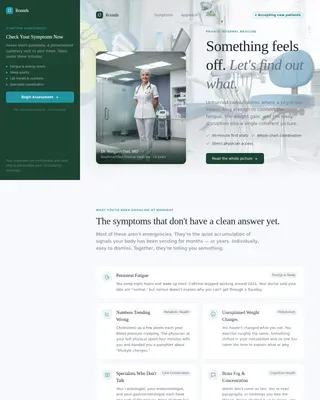
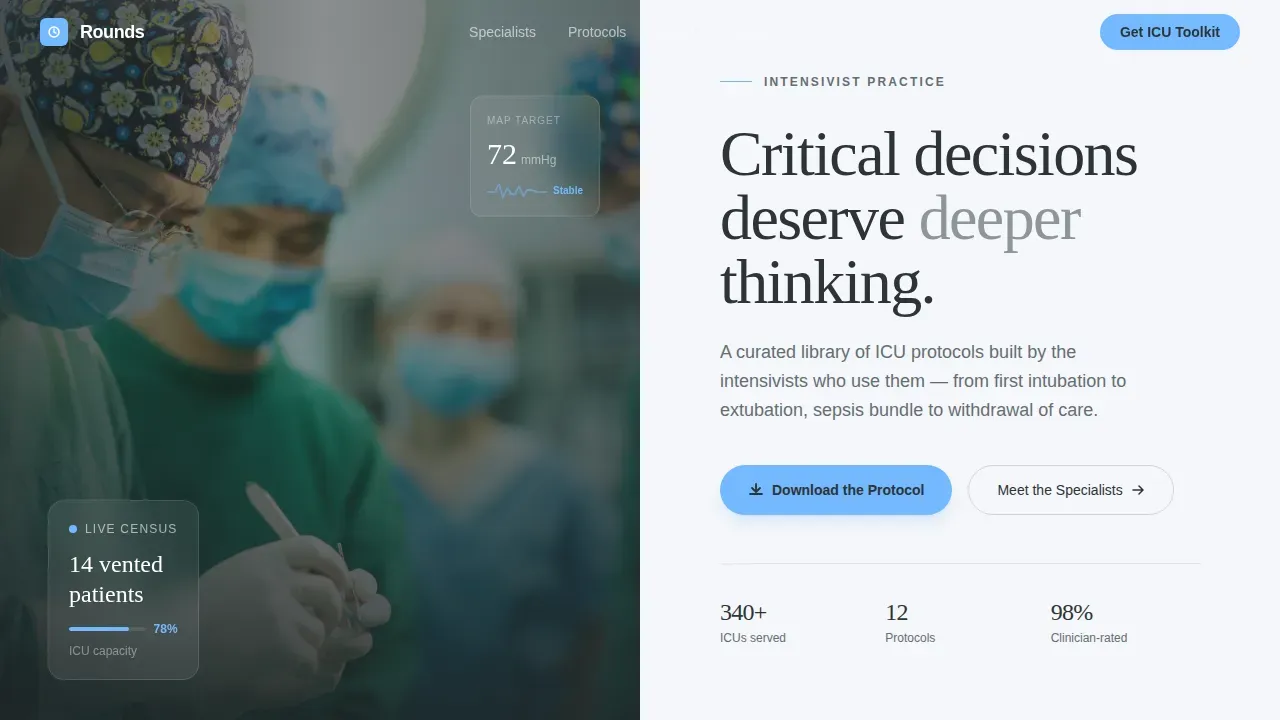
- A 50/50 hero section with a close-cropped physician photograph on the left and a headline, positioning sentence, and soft-gradient call-to-action button on the right.
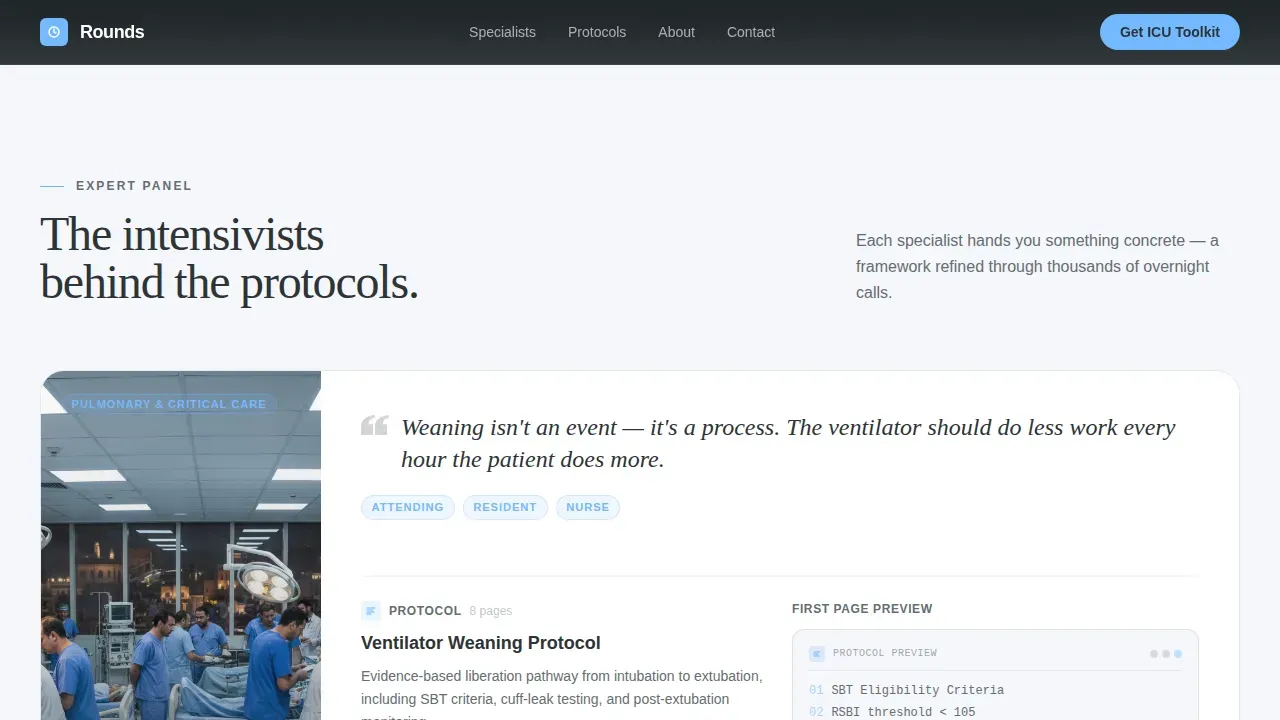
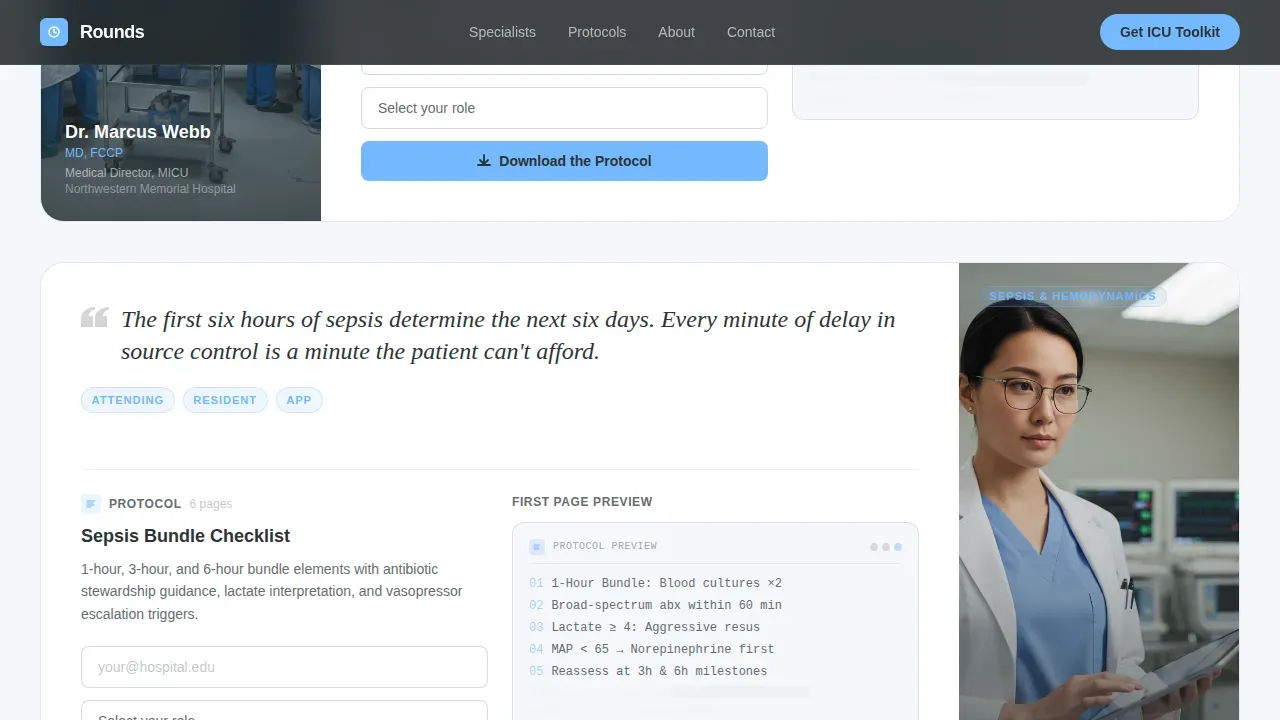
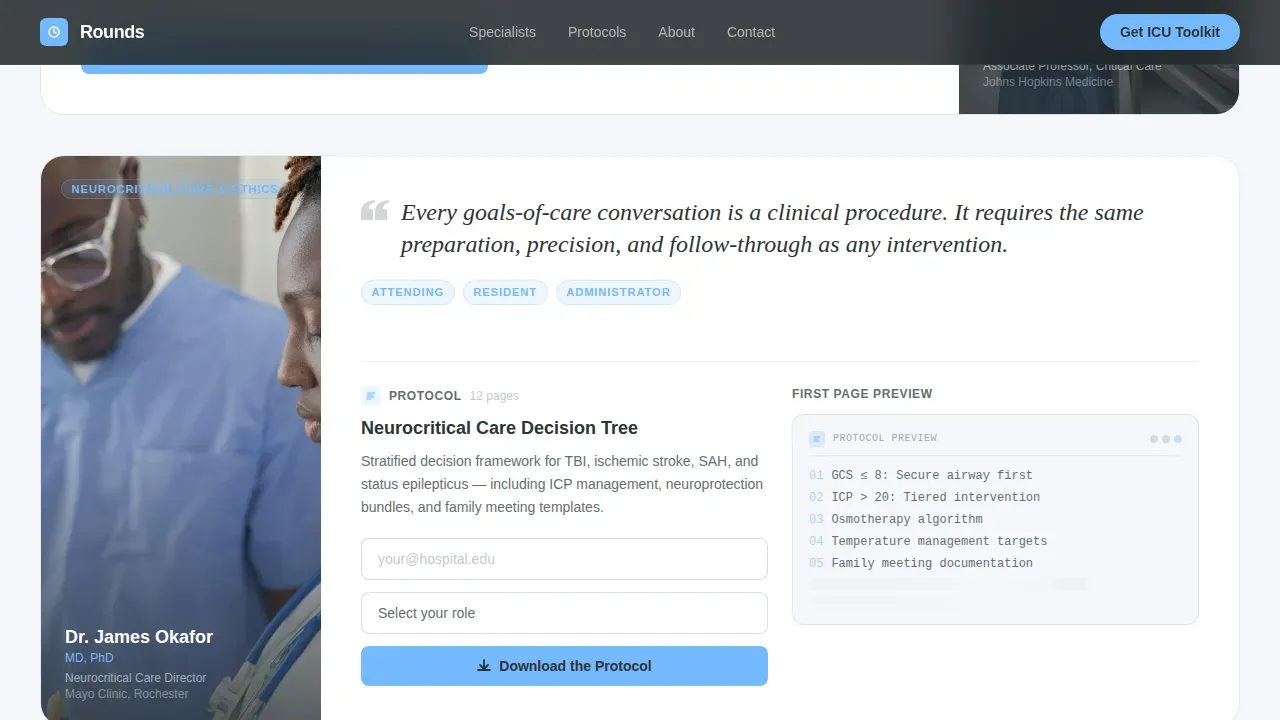
- An expert panel section featuring split cards with intensivist portraits, clinical perspectives, and individually linked downloadable resources covering ventilator weaning, sepsis bundles, and neurocritical care decision trees.
- A resource preview section that shows the first page of each protocol PDF before requesting an email and role, a stats and credibility section with numbers, and a full ICU toolkit footer call to action.
Feature List
This template ships with a focused set of purpose-built components. Each one is developed to serve a specific job inside the critical care resource delivery flow.
Split-Screen Hero with Photo Panel
The hero divides the viewport evenly. The left panel holds a warm-toned clinical photograph, physicians' hands at a central line hub with monitors softly blurred behind. The right panel carries a light-weight serif headline, a positioning sentence for the resource library, and a call-to-action button that pulses once on load. The first impression sets the tone: calm authority, not clinical sterility.
Expert Panel with Downloadable Protocol Cards
Scrolling past the hero reveals a curated roster of intensivists. Each expert appears on a split card with their portrait on the left and their clinical perspective on the right. Every card anchors a downloadable resource, for example a ventilator weaning protocol, a sepsis bundle checklist, or a neurocritical care decision tree. Staggered card reveal animations make the scroll feel like a structured ICU huddle rather than a document list.
PDF Preview and Email Capture Form
Before asking for any contact details, the template shows visitors the first page of each protocol PDF. This preview-before-capture approach lets clinical credibility earn the click. The email capture form is minimal: one email field and one role selector covering attending, resident, nurse, advanced practice provider, and administrator. The form is implemented as a client-side interactive component for responsive feedback.
Stats and Credibility Section
A dedicated section presents the practice's achievements as numbers: patients supported, institutions partnered, and protocols developed. This section gives administrators and department leads the quantitative context they need to assess the practice's scale and commitment to evidence-based care.
Full ICU Toolkit Footer Bundle
Visitors who scroll the complete page reach a footer call to action that bundles all downloadable resources into a single "Get the Full ICU Toolkit" download. The same email and role selector appears here, giving a second conversion path for visitors who preferred to review all the resources before committing. The footer follows a split layout with the logo and tagline on the left and navigation links on the right.
Scroll-Reveal Animation System
The template uses a medium-weight animation plan. Sections reveal on scroll, the hero button pulses once on load, and the expert panel cards stagger into view. These interactions are intentional and restrained, matching the calm clinical tone without distracting from the content. Animation serves the reader's sense of progress through the page.
Page Sections Overview
| Section | Purpose |
|---|---|
| Hero Split Panel | Establish authority and introduce the resource library with a single call to action |
| Expert Panel Cards | Present named intensivists alongside their downloadable clinical protocols |
| Resource PDF Preview | Preview each protocol before email capture to demonstrate value upfront |
| Stats and Credibility | Communicate scale and track record with numerical practice highlights |
| Full Toolkit call to action | Bundle all downloads into one footer offer for engaged end-of-page visitors |
| Footer Navigation | Provide logo, tagline, and structured links in a split Arc Browser layout |
Design & Branding System
The visual identity is built around a Soft Gradient theme using the Slate and Sky color system. The palette was designed to feel like a hospital window at dawn, the weight of overnight call dissolving into the pale reassurance of morning light. Every color decision is purposeful and clinically grounded.
- Color palette: Deep charcoal slate (#2D3436) grounds the left panels, steel blue (#636E72) handles secondary text and dividers, open-sky blue (#74B9FF) activates buttons and progress indicators, and clinical white (#F5F6FA) breathes across the right-side content panels. Gradients move vertically from slate to sky, never harsh.
- Typography: DM Sans handles body copy and user interface elements for clear readability at clinical workstation screen sizes. Fraunces, a variable serif, carries the headlines with warmth and authority. The pairing communicates expert knowledge without feeling cold or institutional.
- Visual language: The design direction is Expert Panel. Portraits humanize each intensivist. Clinical photographs emphasize hands-on practice rather than abstract medicine. The overall aesthetic is calm, confident, and built for desktop-first viewing by professionals at workstations.
Mobile & Speed Optimization
This template is built desktop-first, reflecting the reality that ICU nurses, attending physicians, and hospital administrators most often access clinical resources from workstations. Mobile support is included to ensure the page remains fully usable across devices.
- Desktop-first layout: The 50/50 split-screen structure and expert panel cards are optimized for large-screen reading, giving clinical professionals the full visual experience on the devices they actually use at work.
- Responsive mobile support: Column stacking, touch-friendly form inputs, and appropriately scaled typography mean the page remains navigable on tablets and phones when needed.
- Static and client component separation: Server Components handle static content sections for fast initial load. Client Components power the interactive email capture forms and role selectors, keeping interactivity focused and contained.
How This Template Helps You Convert
The template is built around a simple principle: demonstrate value before making any ask. Every section is planned to advance visitor trust and move them closer to a download. The conversion plan is layered across the full page.
- Hero to first protocol card: The hero button introduces the resource concept. Visitors who scroll immediately encounter the expert panel where each card shows a real intensivist, a clinical perspective, and a named downloadable resource. The combination of face, voice, and resource creates immediate credibility that motivates the first email submission.
- PDF preview as proof before capture: The resource preview section shows the actual first page of each protocol before requesting contact details. This approach reflects the best practice in content-led conversion: give something first, then ask. Visitors who can see the quality of the protocol are far more likely to complete the short form.
- Footer bundle for full-page readers: Visitors who reach the footer have seen everything. The bundled toolkit offer meets them with a single, low-friction action: one form to get all resources at once. This secondary conversion path captures highly engaged visitors who might not have acted on individual protocol cards.
Other Information About This Template
This section covers additional context that helps you understand the research thinking behind the template's content structure and how it relates to established approaches in ICU quality improvement.
The template's checklist-based resource structure is grounded in decades of evidence. Several studies have shown that checklist use in the intensive care unit produces a significant reduction in preventable complications. Research published at a national level has consistently linked structured ICU rounds and protocol compliance to better outcomes for critically ill patients. The template is designed to present this kind of evidence-backed material in a format that is both accessible and credible.
For example, critical care research has evaluated how ICU rounds structured around a daily checklist help the medical team assess pain levels, review medication plans, address deep venous thrombosis prevention, monitor foley catheter necessity, and confirm hand hygiene compliance. These are not abstract items. They represent the total number of touchpoints a team must address each morning to keep critically ill patients safe.
This template's expert panel section is built to reflect that layered thinking. Complexity builds from airway management to hemodynamics to the ethics of withdrawal, mirroring the assessment process that intensivists perform on every shift. Each protocol card is a practical intervention: a ventilator associated pneumonia prevention bundle, a sepsis response checklist, a neurocritical care decision tree.
The pediatric intensive care community has also developed robust checklist and protocol systems for critically ill pediatric patients. This template can support practices that serve pediatric populations by adapting the resource card and protocol structure to their specific clinical context.
- Research-backed structure: The template's resource delivery model reflects the approach validated in pilot study and systematic review literature on protocol implementation in the intensive care unit (ICU) setting.
- Checklist compliance focus: Each downloadable resource is designed to support team compliance with evidence-based guidelines, from foley catheter review to infectious disease prevention and medication reconciliation.
- Leape LL and patient safety legacy: The broader patient safety movement, associated with foundational research from contributors such as Leape LL, established that structured communication and checklist use are essential for reducing preventable harm. The corresponding author of the template's content model is this tradition of rigorous, accessible clinical knowledge.
- Data collection and analysis support: The stats section is designed to help practices report on their data collection efforts, present data analysis findings, and communicate institutional improvements to hospital stakeholders and potential partners.
- Valuable information for every role: Whether you are an ICU nurse seeking clinical information about best practice compliance, a resident building knowledge in critical care medicine, or an administrator needing informed, approved materials to share with your team, this template makes every section of that valuable information accessible and clearly organized.
Theme
Soft Gradient
Creative direction
Expert Panel
Color system
Slate & Sky
Direction
Content/Resource
Page Sections
Split-screen Hero with Clinical Photo
Expert Panel with Protocol Cards
PDF Preview Before Email Capture
Stats and Credibility Block
Full ICU Toolkit Footer Bundle
Scroll-reveal Animation System
Related questions
Who is this template designed for?
What downloadable resources does the template support?
Can the email capture form be customized for different roles?
How does the template handle visitors who scroll the full page?
Is this template suitable for pediatric critical care practices?