Dark Theme Makeup Artist Landing Page Template
Muse is a dark-theme makeup artist landing page built for high-end creative partnerships. It pairs full-bleed editorial photography with manifesto-style copy, an ink-and-paper color palette, and a focused inquiry form. The result feels less like a portfolio site and more like a monograph you linger over before reaching out.
by Rocket studio
Quick summary
Muse is a single-page portfolio landing page designed for makeup artists who work at the editorial and commercial level. It uses a storybook layout, a deep ink-black palette, and a rhythm of full-page images paired with conviction statements. The page positions the artist as a creative collaborator and closes with a partnership-focused inquiry form.
Who this template is for
This template is built for working makeup artists whose clients are decision-makers, not casual browsers. It speaks directly to artists who want their book to do the qualifying before a single conversation happens.
- Makeup artists pitching creative directors at fashion houses and editorial publications
- Artists targeting brand managers at cosmetics companies running seasonal campaigns
- Freelancers working music video, commercial, and runway sets who need a professional, project-ready presence
What problem this template solves
Most portfolio templates treat the artist like a service provider listing rates and availability. That framing positions the artist as a vendor. Muse flips that dynamic by presenting the work as a body of vision, not a menu of services.
- Generic portfolio layouts fail to communicate artistic authority or curatorial point of view
- Standard contact forms reduce creative inquiry to a booking request, which undercuts positioning
- Light or neutral themes feel misaligned with the dark, tactile aesthetic of high-end editorial work
What you get with this template
You get a full storybook landing page built around immersive editorial imagery and manifesto-style copy. Every design decision reinforces a single idea: this artist is a collaborator you pitch to.
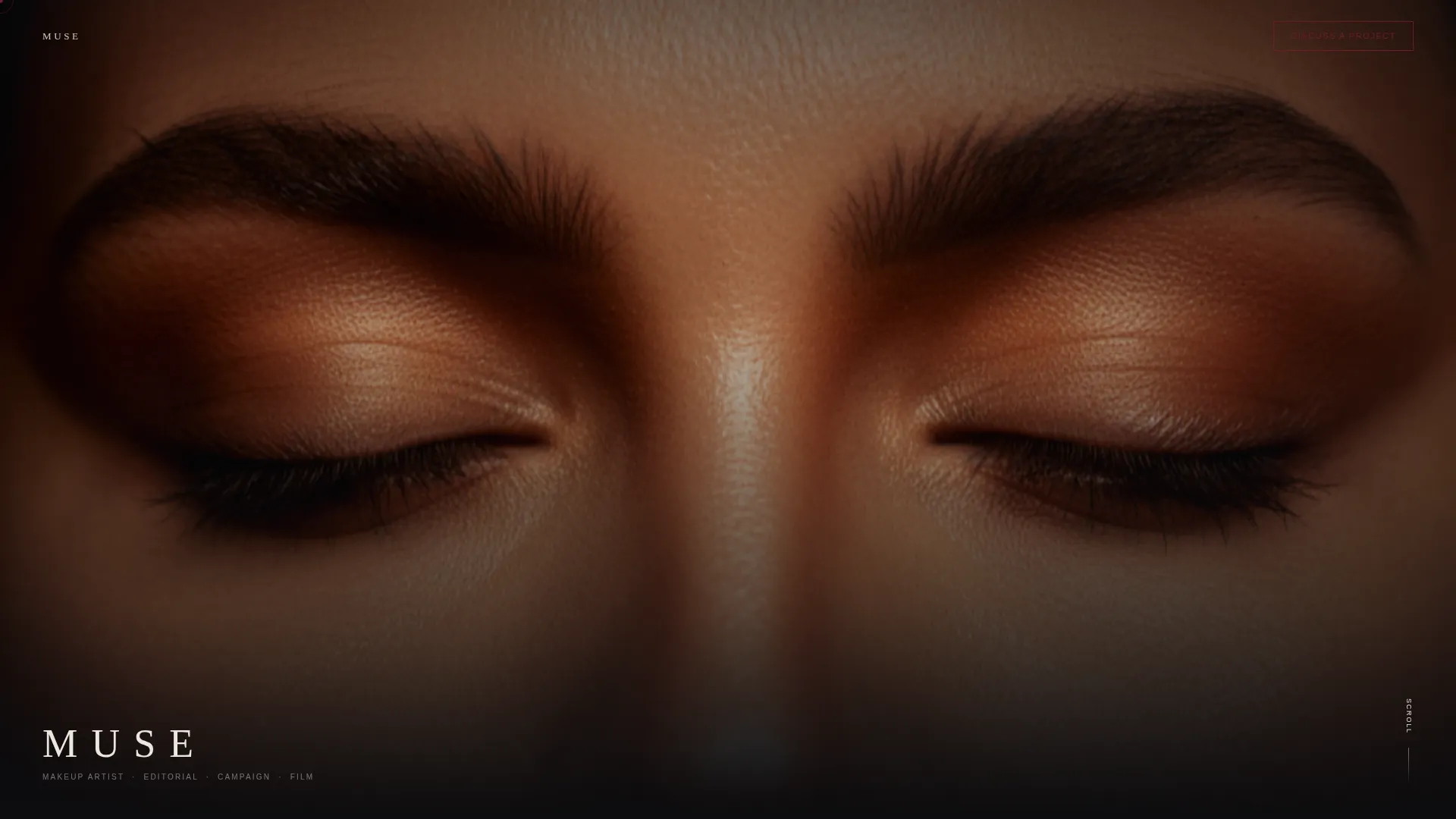
- A full-bleed portrait header with a delayed name reveal in thin tracked-out serif type
- Alternating full-page image spreads and text-on-black conviction statement sections
- A fixed top-right ghost button and a partnership inquiry form with project-specific fields
Feature list
This section covers the core built-in components that define how Muse looks, reads, and converts.
Full-Bleed Portrait Header
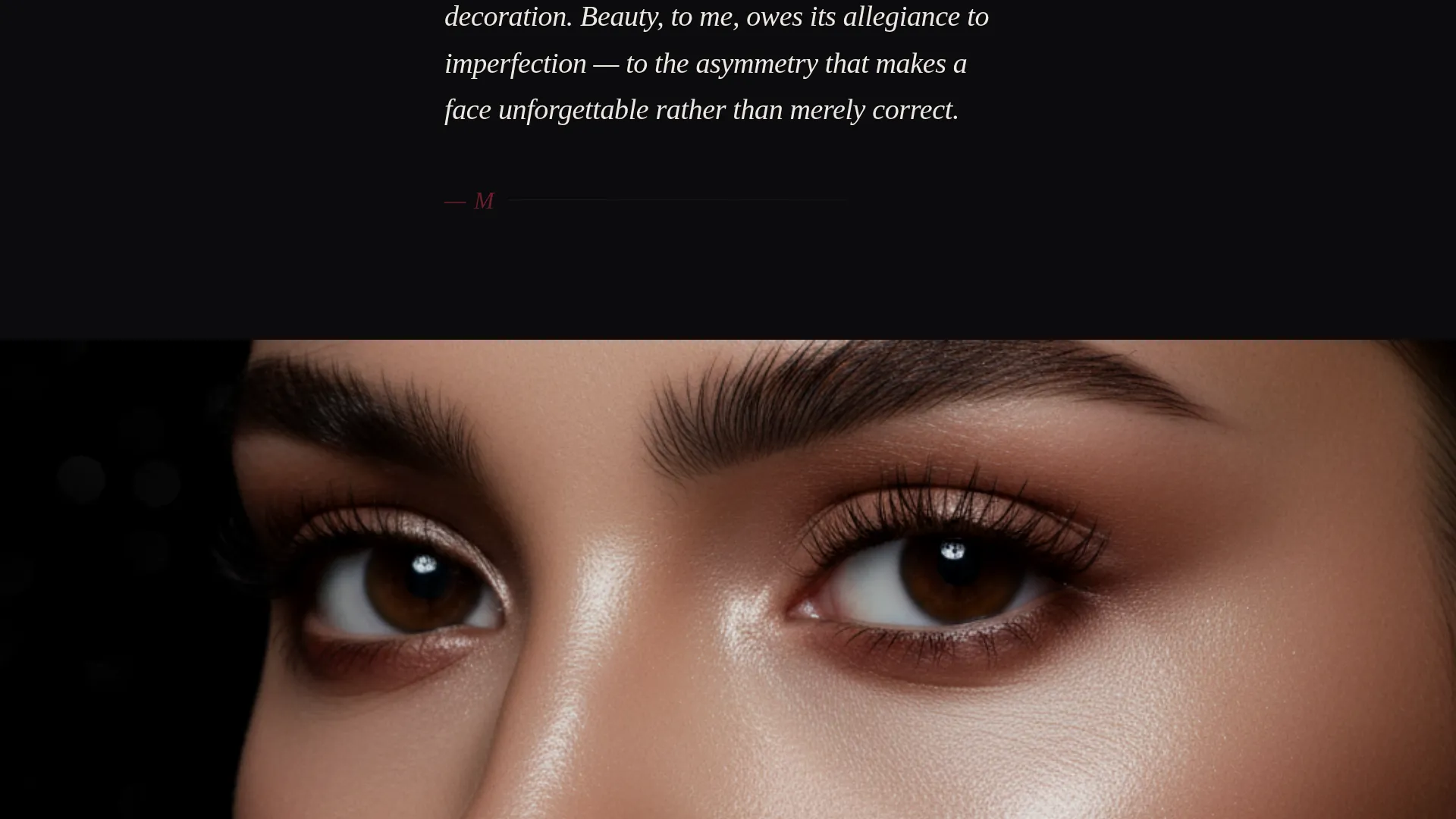
The opening section fills the entire viewport with a single close-up medium-format style portrait. Shallow depth of field lets skin texture and contour detail take focus. The artist's name appears at the bottom edge in thin tracked-out serif type, quiet and deliberate like a gallery placard.
Manifesto Copy Section
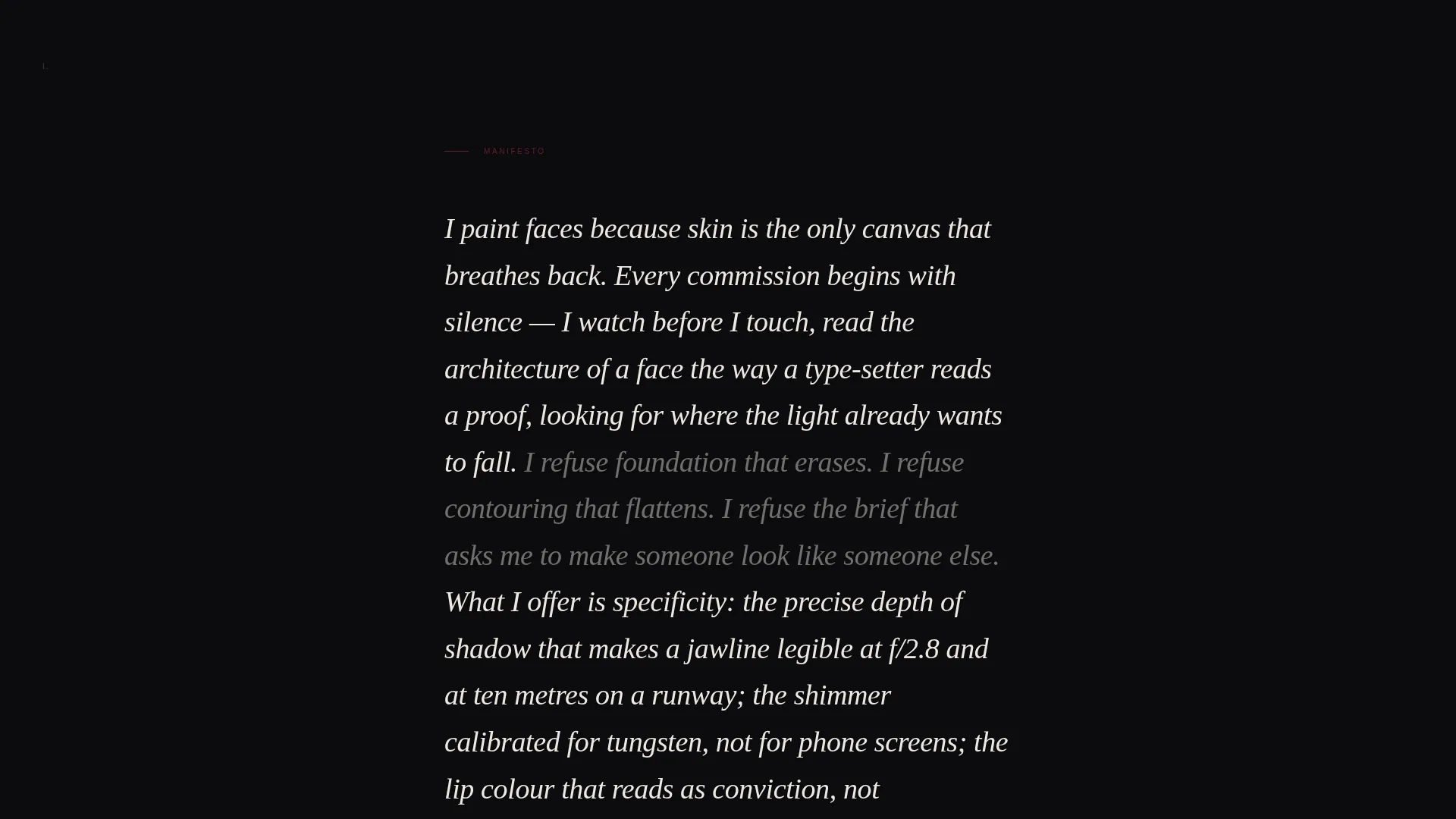
Below the portrait, an oversized serif paragraph unfolds the artist's philosophy in long-form. The language is personal and declarative. This section establishes creative authority before the visitor sees a single portfolio image.
Alternating Storybook Spreads
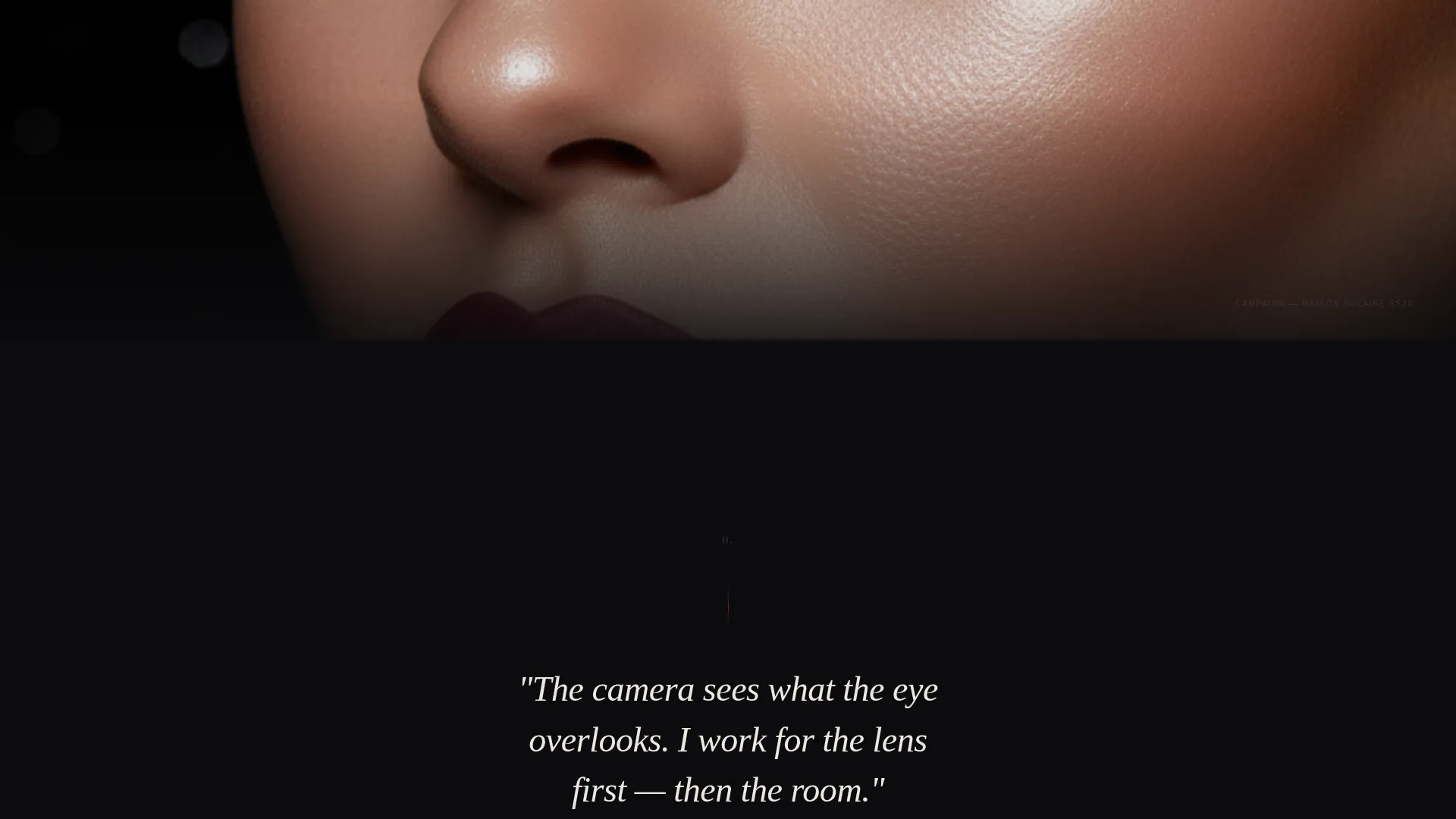
Each subsequent full-page section pairs one editorial image with one short conviction statement. The rhythm alternates between silence (image alone, edge to edge) and speech (text on black). This pacing makes the scroll feel like turning pages in a printed monograph.
Fixed Partnership Call to Action
A burgundy-text ghost button labeled "Discuss a Project" sits fixed in the top-right corner across the entire page. It inverts on hover. The placement keeps the conversion action visible without disrupting the editorial atmosphere.
Partnership Inquiry Form
The inquiry form asks for brand or publication name first, then project type (editorial, campaign, runway, or film), then shoot dates, and finally a freeform field labeled "Tell me about the vision." This structure signals that the artist reviews briefs, not booking requests.
Ink and Paper Color System
The palette runs on deep sumi ink black as the dominant tone, with uncoated stock warm white for body text, a graphite mid-tone for supporting elements, and a single dried-blood burgundy accent for links, hover states, and the artist's signature mark. The system is restrained and tactile by design.
Page sections overview
| Section | Purpose |
|---|---|
| Full-Bleed Header | Opens with a close-up portrait filling the viewport |
| Name Reveal Type | Sets artist name quietly at the bottom edge |
| Manifesto Paragraph | Declares artistic philosophy in oversized serif copy |
| Editorial Spread One | Pairs a full-page image with a conviction statement |
| Editorial Spread Two | Continues the alternating image-and-text rhythm |
| Editorial Spread Three | Deepens the storybook pacing with another spread |
| Text on Black | Delivers a standalone conviction statement section |
| Inquiry Form | Collects partnership project details from prospects |
Design & branding system
The visual identity follows an Ink and Paper theme that feels like a letterpress proof pulled from an iron plate. Black occupies roughly eighty percent of the viewport, letting white text breathe like handwritten notes in wide margins.
- Color palette: sumi ink black (#0B0B0D), warm white (#EDE8E1), graphite (#3A3A3C), and burgundy accent (#6B1D2A)
- Typography: thin tracked-out serif type used for the artist name, oversized serif for manifesto copy, and restrained body sizing throughout
- Burgundy is reserved exclusively for links, hover states, and the artist's signature mark to maintain accent discipline
Mobile & speed optimization
The storybook layout is built to carry its editorial weight on smaller screens without losing the immersive quality that defines the desktop experience. Full-bleed sections reflow cleanly for portrait viewing.
- Full-page image spreads scale to fill mobile viewports without cropping the focal subject
- The fixed ghost button remains accessible and properly positioned on touch devices
- Text sections maintain generous spacing so oversized serif copy stays readable at mobile sizes
How this template helps you convert
Muse is designed for a specific kind of conversion: a qualified creative inquiry from someone who already respects the work. The page does not ask for a sale. It earns a conversation.
- The storybook pacing and manifesto copy build artistic credibility before any call to action appears, so the visitor arrives at the form already aligned with the artist's positioning.
- The inquiry form fields (brand name, project type, shoot dates, vision brief) filter out low-fit inquiries and invite the kind of detail that makes a first conversation productive.
Other information about this template
Muse is a strong fit for makeup artists who are building or refreshing a dark-theme portfolio presence for the first time. It also suits artists who already have a representation relationship but want a direct-contact page that speaks before an agent does.
- Template style: Storybook and full-page, with a section-led single-page flow
- Creative direction: Manifesto, meaning copy is personal, declarative, and accumulative rather than promotional
- Header concept: Full-bleed photo with a deliberate delayed typography reveal
- The partnership inquiry direction means no rates, no packages, and no transactional language anywhere on the page
- Designed for the makeup artist dark theme portfolio niche within the broader Portfolio and Agency category
Theme
Ink & Paper
Creative direction
Manifesto
Color system
Ink & Paper
Style
Storybook/Full-Page
Direction
Partnership/B2B
Page Sections
Full-bleed Portrait Header
Manifesto Copy Block
Alternating Storybook Spreads
Fixed Ghost Button Call to Action
Partnership Inquiry Form
Ink and Paper Color System
Related questions
Is this template designed for a single page or multiple pages?
Can I use my own editorial photos in the full-bleed sections?
Does the inquiry form include rates or pricing fields?
Who is the ideal visitor for a landing page like this?
Can the burgundy accent color and typography be customized?