Multiple Sclerosis Care Specialist Professional Website Template
Myelin is a multiple sclerosis digital therapy app landing page template built around an empathy-first interactive audit. Visitors check boxes that mirror their real daily experience, watch a coral progress ring fill, and receive a personalized symptom plan. The hub and spoke layout guides relapsing-remitting, secondary progressive, and primary progressive MS patients from self-recognition to sign-up with gentle precision.
by Rocket studio
Quick summary
Myelin is a multiple sclerosis digital therapy app landing page template. It uses an interactive checklist audit across five spoke sections to match each visitor's symptoms to specific app features. The Soft Mist color system, animated SVG waveform, and progressive three-step form create a warm, mobile-first experience that earns trust before asking for anything.
Who this template is for
This template is designed for digital health product teams, MS app founders, and healthcare marketers building a conversion-focused landing page for a multiple sclerosis management tool. It speaks directly to three distinct audience groups who experience MS in very different ways.
- Newly diagnosed adults in their thirties processing a first MRI and looking for structure
- Long-term patients managing relapse cycles alongside full-time jobs and daily routines
- Caregiving partners who log symptoms on behalf of a loved one, often in the middle of the night
What problem this template solves
Most health app landing pages pitch features before they listen. For people living with multiple sclerosis, that approach feels cold and irrelevant. This template reverses the flow entirely, letting visitors self-identify their symptom reality before any product claim is made.
- Visitors feel seen through relatable checkbox statements before they encounter a single sales message
- Each spoke section connects a real symptom cluster directly to the app feature that addresses it
- The three-step progressive form reduces friction by asking only the most relevant question at each stage
What you get with this template
This template delivers a complete, single-page hub and spoke layout with five interactive spoke sections anchored by a persistent top navigation bar. Every element is built to support lead generation through layered engagement rather than a single hard ask.
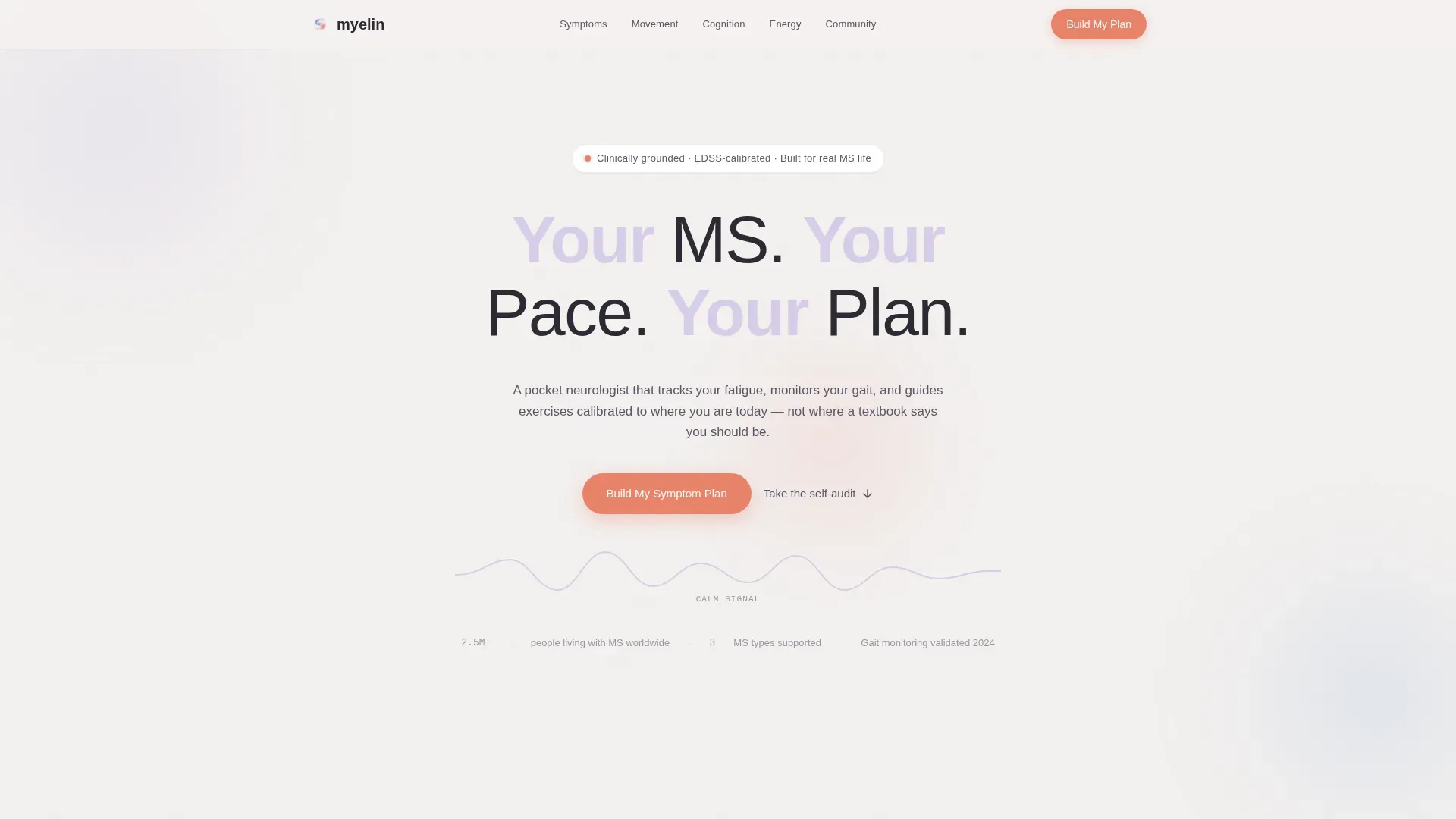
- A centered hero headline with an animated self-drawing SVG waveform below it
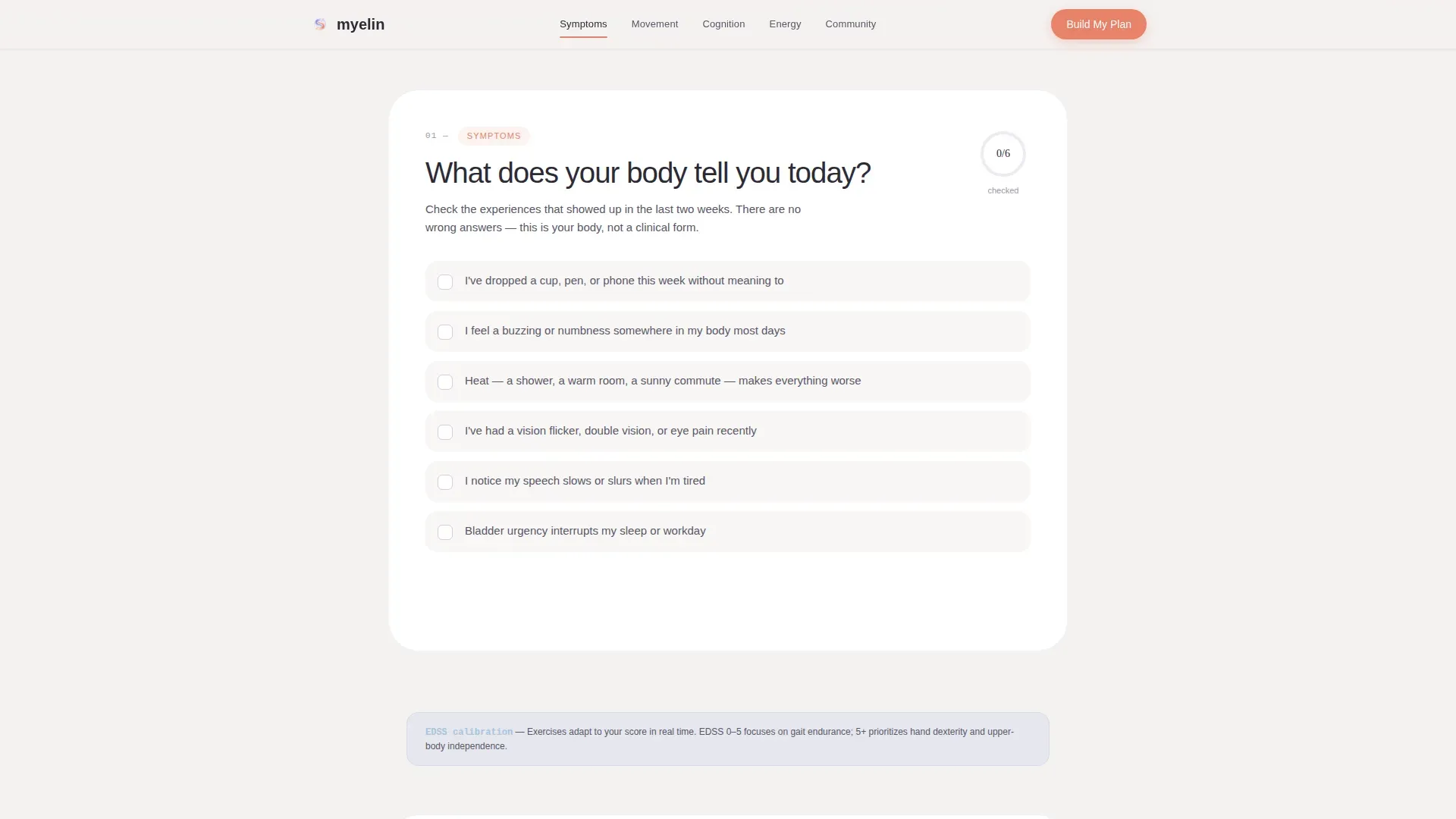
- Five interactive audit spokes covering Symptoms, Movement, Cognition, Energy, and Community
- A three-step progressive lead form, a floating coral call-to-action button, and a friction-free PDF fallback path
Feature list
This template includes several purpose-built components that work together to move a visitor from passive reader to engaged lead.
Interactive Checklist Audit System
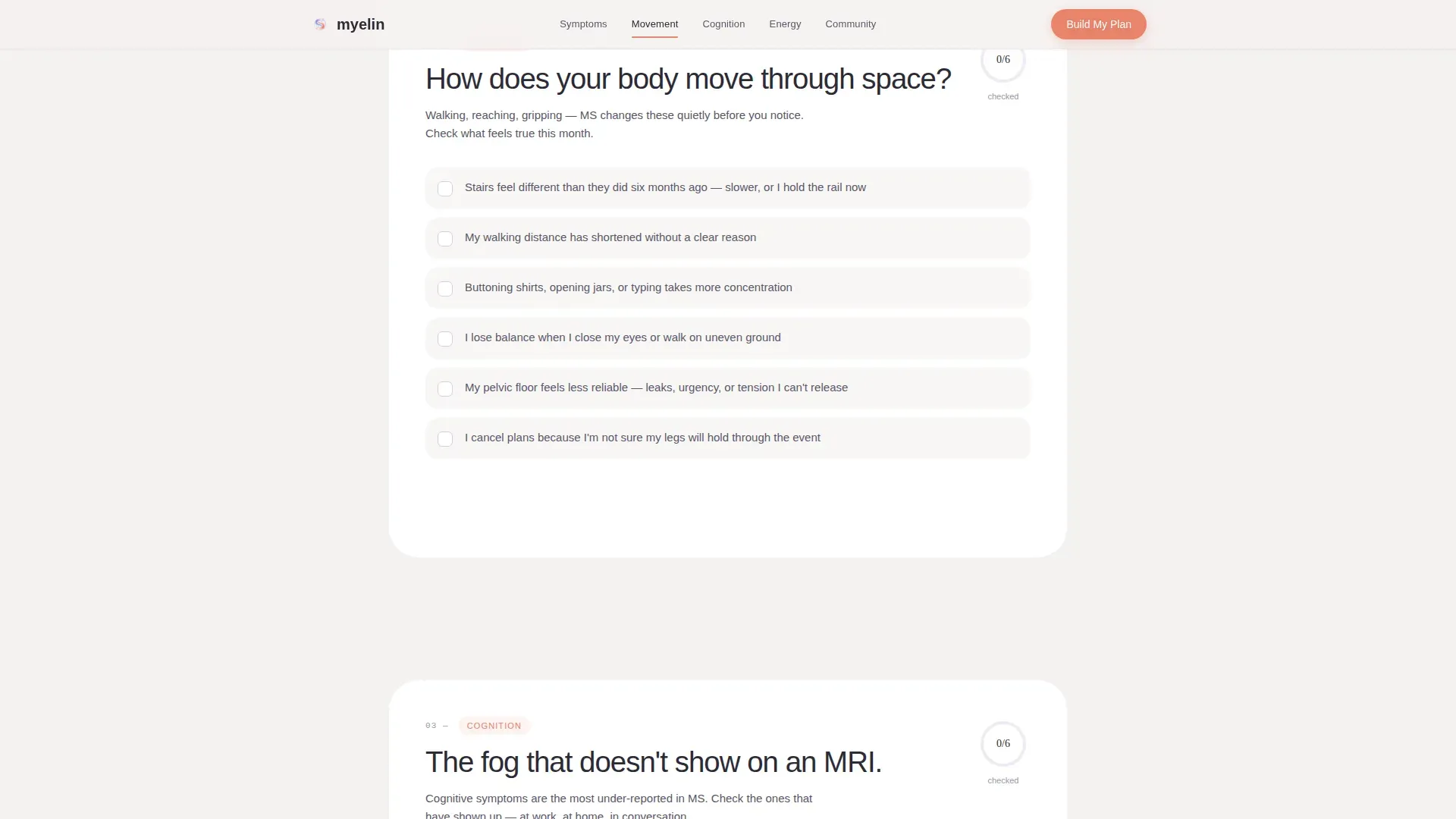
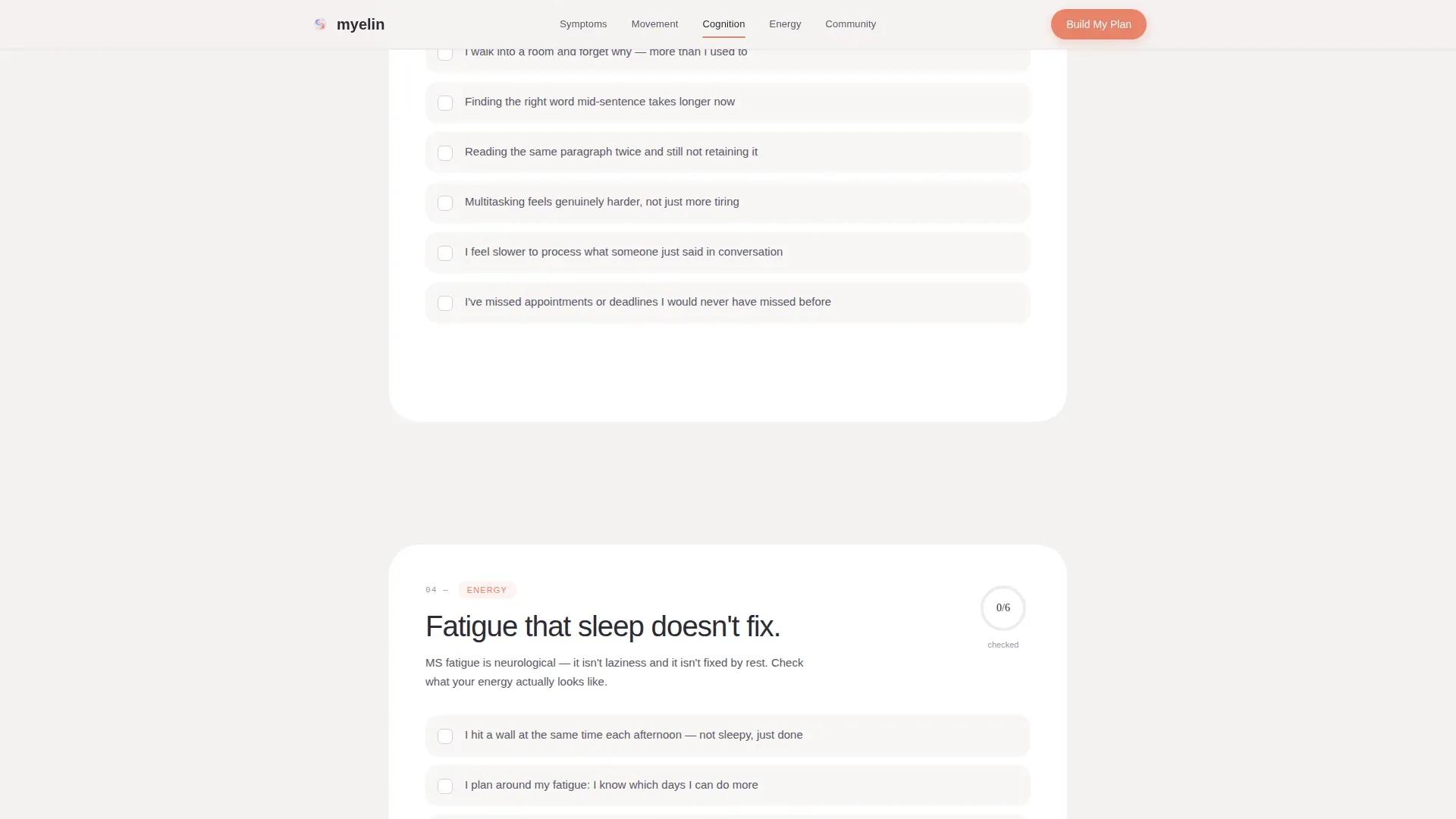
Each of the five spoke sections contains checkbox statements drawn from real MS daily experience. As visitors select items, a coral-accent progress ring fills in real time, and the section responds by surfacing the specific app feature tied to that symptom cluster.
Personalized Spoke Summary Generator
After a visitor completes a spoke's checklist, the template generates a short personalized summary sentence based on their selections. This makes each visitor feel individually understood before any form or commitment is requested.
Three-Step Progressive Lead Form
The lead capture form is split into three screens to reduce drop-off. Screen one asks for first name and MS type. Screen two pre-fills concern areas from audit selections. Screen three captures email address and preferred notification time.
Floating Coral Call-to-Action Button
A persistent floating button labeled "Build My Symptom Plan" appears throughout the page. Its coral opacity intensifies as the visitor engages with more checkboxes, creating a visual signal that responds to real interaction.
Friction-Free PDF Fallback Path
Visitors not ready to complete the full form can download a Fatigue Tracker PDF by providing their email address alone. This secondary conversion path captures early-stage interest without pressure.
Animated SVG Hero Waveform
Below the giant centered headline, a single line animates itself into a calm waveform that suggests a steady nervous-system signal. The animation sets an emotional tone of quiet stability rather than clinical urgency.
Page sections overview
| Section | Purpose |
|---|---|
| Hero Headline | Anchors tone and introduces the five-spoke nav |
| Symptoms Spoke | Fatigue and sensory self-audit with progress ring |
| Movement Spoke | Gait, pelvic-floor, and dexterity audit with EDSS note |
| Cognition & Energy | Cognitive fog and fatigue spike audit spoke |
| Community & Lead Gen | Personalized summary, progressive form, and PDF fallback |
| Footer Row | Single-row linear footer with essential links |
Design & branding system
The visual identity uses the Soft Mist color system. Every tone in the palette is chosen to feel like condensation on a window at dawn, nothing harsh, nothing clinical, every transition dissolving gently into the next.
- Morning fog white (#F4F1F0) as background, lavender-touched gray (#D5CDE8) for primary type, diffused sky blue (#A8C4E0) for supporting elements
- Living coral (#E8836B) reserved exclusively for call-to-action buttons, progress ring fills, and engagement indicators
- DM Sans in soft weights (300 to 600) for all headings, IBM Plex Mono for data points and statistics
Mobile & speed optimization
This template is built mobile-first. Many MS patients interact with health tools during a symptom episode, often in bed, using a phone with one hand. Every interactive element is sized and spaced for that reality.
- Intersection Observer is used for staggered section reveals, so content loads progressively as the visitor scrolls
- CSS custom properties drive the progress ring animations, keeping transitions smooth without heavy scripting
- The three-step form and checkbox audit are optimized for single-thumb interaction on small screens
How this template helps you convert
The template earns conversion through empathy before it earns it through persuasion. Every structural decision is designed to lower resistance and increase personal relevance.
- The audit-first flow means visitors self-select into a relevant feature story before any pitch is made, making the eventual call to action feel like a natural next step rather than an interruption.
- The floating "Build My Symptom Plan" button gains visual intensity as checkbox engagement grows, so the most motivated visitors see the strongest prompt at exactly the right moment.
- The PDF fallback path captures email addresses from visitors who are not yet ready for the full form, creating a second conversion lane that keeps early-stage leads in the pipeline.
Other information about this template
This template is part of the Hub and Spoke anchor navigation category. It is built under the Soft Gradient theme using the Soft Mist color system and follows the Checklist and Audit creative direction with a Giant Headline Centered header concept. The landing page direction is Lead Generation.
- The page references clinically cited context, including a 2024 smartphone gait monitoring study and a 2.5 million diagnosed population figure, intended for placement as social proof within the template
- The Expanded Disability Status Scale (EDSS) score is referenced in the Movement spoke as the calibration marker for exercise guidance, giving clinically aware visitors an immediate trust signal
- Three peer testimonial slots are included to represent the three core user archetypes: newly diagnosed adults, long-term relapsing patients, and caregiving partners
Theme
Soft Gradient
Creative direction
Checklist & Audit
Color system
Soft Mist
Style
Hub & Spoke (Anchor Nav)
Direction
Lead Generation
Page Sections
Interactive Checklist Audit System
Personalized Spoke Summary Generator
Three-step Progressive Lead Form
Floating Coral Call-to-action Button
Animated SVG Hero Waveform
Friction-free PDF Fallback Path
Related questions
Who is this landing page template designed for?
Can I customize the checklist statements in the audit spokes?
What makes the three-step form different from a standard lead form?
Does the template include a secondary conversion path for hesitant visitors?
Is this template suitable for mobile users during a symptom episode?