MS Patient Education Landing Page Template
Myelin is a single-column landing page template built for multiple sclerosis patient education platforms. It pairs a warm Soft Mist visual identity with a progressive eight-question MS Readiness Assessment, patient voice testimonials, and clearly structured educational modules. The result is a calm, readable experience that guides newly diagnosed patients, long-term warriors, and caregiving spouses toward their personalized MS learning path.
by Rocket studio
Quick summary
Myelin is a single-column landing page template designed for multiple sclerosis education platforms. It translates complex neurology into clear, human-sized content through an illustrated assessment widget, patient voice testimonials, and structured educational modules. The Soft Mist color system and warm typography keep every surface readable, even on difficult days.
Who this template is for
This template serves anyone building a digital health resource around multiple sclerosis care, education, or patient support. It is especially well-suited for platforms that want to address the full range of MS experiences, from early diagnosis to long-term management.
- Newly diagnosed patients still learning what multiple sclerosis means for their daily life
- Long-term patients adjusting to a new disease-modifying therapy, also called a DMT
- Caregiving spouses and family members who want to understand what their loved one cannot always articulate
What problem this template solves
Multiple sclerosis is a chronic condition that assaults the central nervous system, particularly the brain and spinal cord. The body's immune system erroneously attacks the protective sheath, known as myelin, that covers nerve fibers, causing communication problems between the brain and the rest of the body. Patients searching for clarity often land on dense clinical pages that worsen confusion rather than resolve it.
- Existing health pages rarely address the emotional weight of a new MS diagnosis
- Generic layouts fail to guide visitors from overwhelming information toward a clear, personal starting point
- Most platforms do not offer a structured path that helps patients identify their own symptoms, treatment status, and learning needs
What you get with this template
This template delivers a fully structured, single-column page flow built around a personalized assessment experience. Every section is designed to feel unhurried, so visitors with fatigue or brain fog can absorb content at their own pace.
- An illustrated MS Readiness Assessment widget with a coral progress ring and eight-question progressive flow
- A Testimonial Mosaic section layout that weaves patient voice quotes between educational content modules
- A Daily Management Toolkit section with topic cards and a sticky bottom call-to-action bar that resurfaces after the second scroll section
Feature list
This template's features are grounded directly in the prompt brief. Each one serves a specific need within the MS patient education context.
Illustrated MS Readiness Assessment Widget
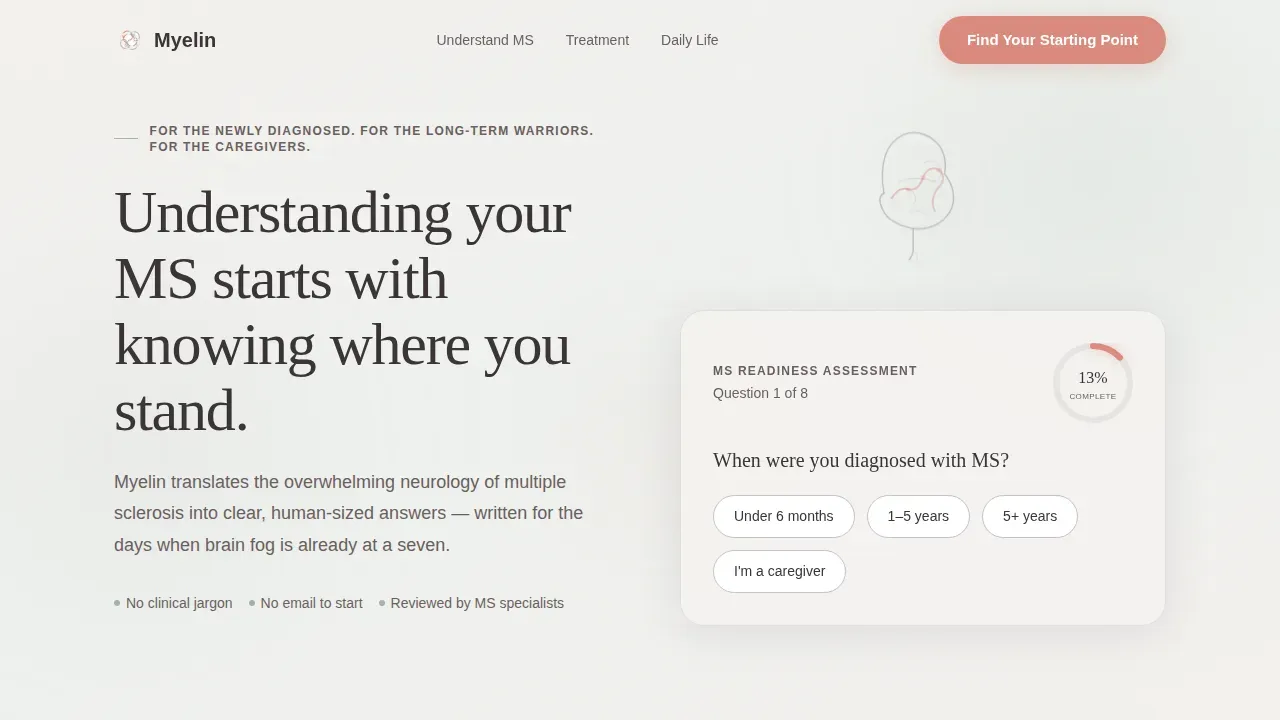
The header opens with a simple assessment widget showing a partially completed coral progress ring on a fog-white field. Visitors answer eight questions covering diagnosis date, current symptoms, treatment status, daily challenges, information confidence, caregiver involvement, and preferred learning format. Each answer subtly fills the ring further, creating a sense of gentle progression.
Testimonial Mosaic Patient Voice Flow
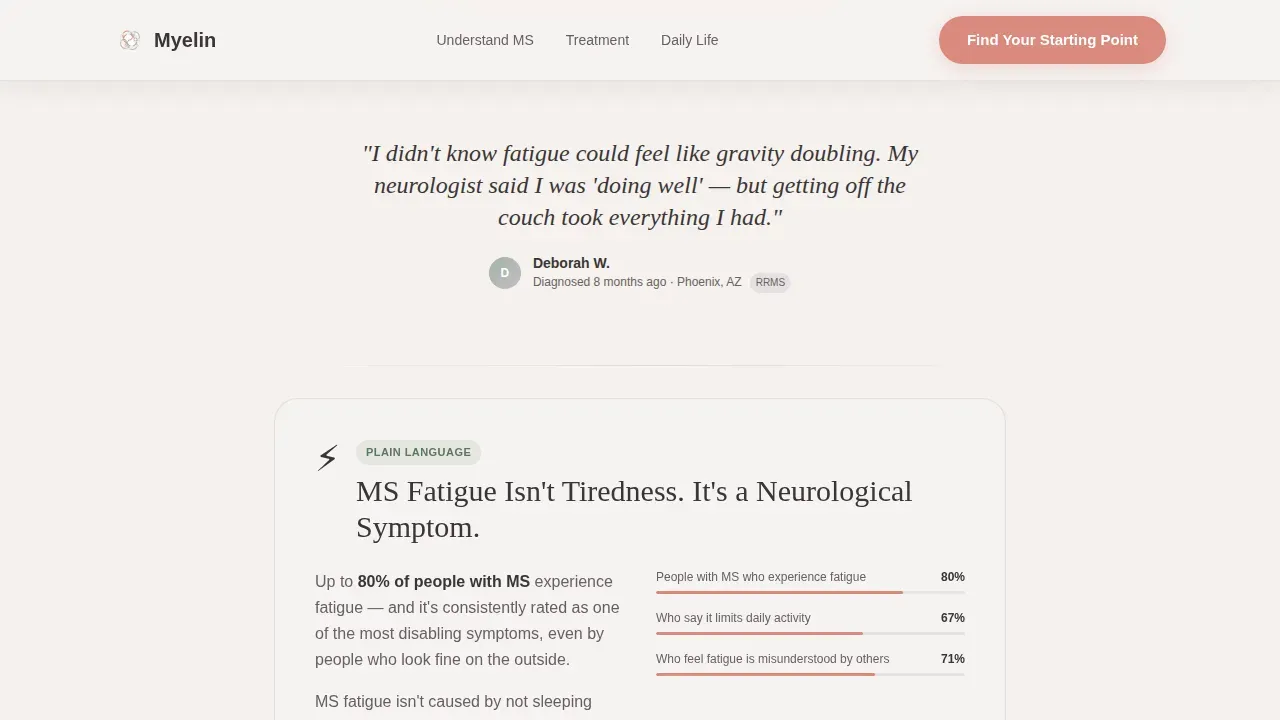
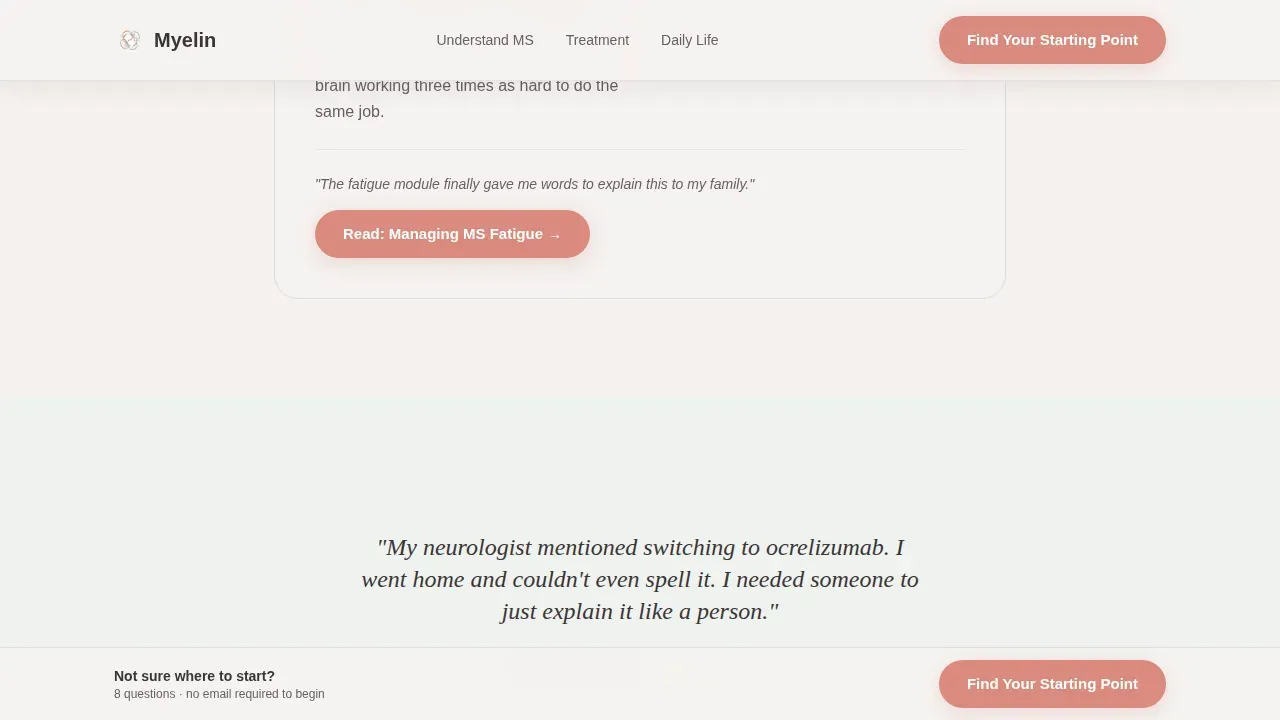
Patient quotes in handwritten-style italic appear before each educational module, building recognition before delivering information. The mosaic grows denser as visitors scroll, moving from single quotes to clustered cards showing diverse ages, diagnosis timelines, and MS types. This rhythm helps every person feel less alone before they reach the educational content.
Progressive Results Screen with Personalized Learning Path
After completing the assessment, visitors see a personalized "Your MS Learning Path" summary. No email address is required until this results screen, keeping the experience frictionless and value-first. Visitors are then invited to save their path using just an email address.
Treatment Literacy Module with DMT Explainer
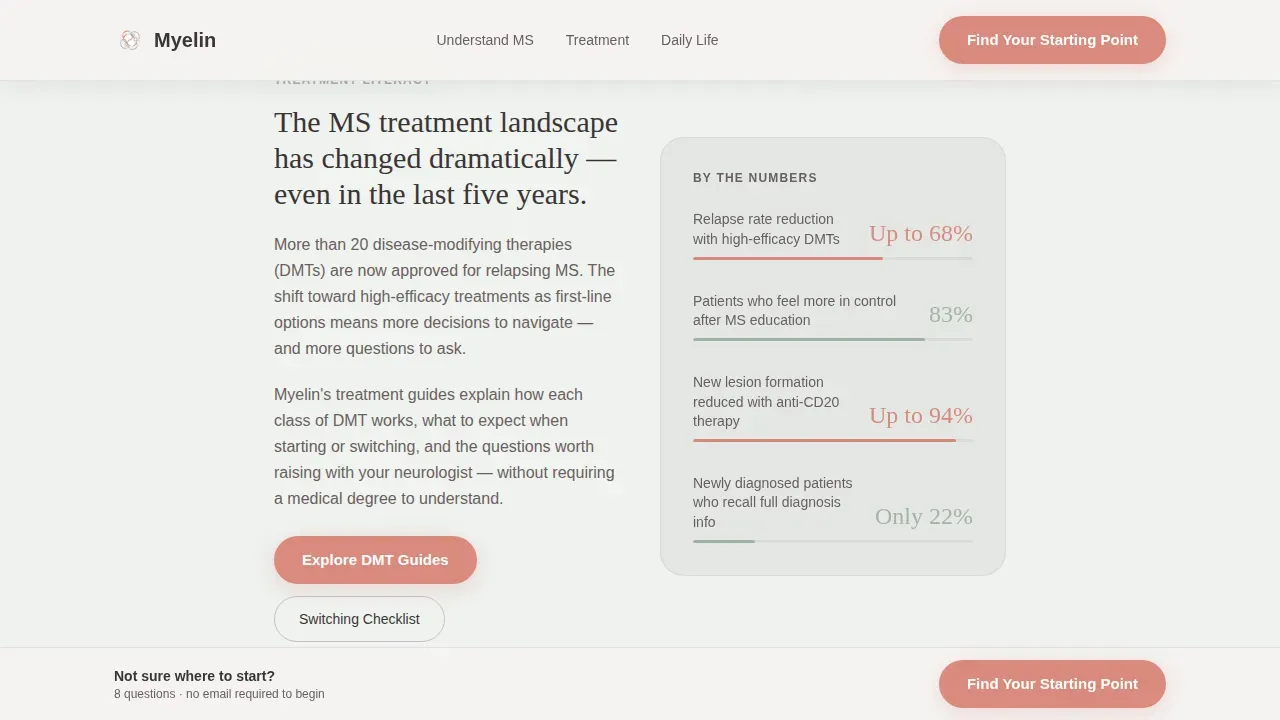
A dedicated section explains disease-modifying therapies using a before-and-after metrics style that avoids clinical jargon. This supports treatment literacy for patients adjusting to a new DMT and helps caregivers understand the role treatment plays in managing progression and symptoms.
Daily Management Toolkit Section
Topic cards address fatigue, mobility, pain, vision, and other common multiple sclerosis symptoms. Each card is written at an accessible reading level suited to someone whose brain fog is already high. Physical therapy guidance, muscle tone exercises, and daily activities support are among the areas this section can address.
Sticky Call-to-Action Bar
After the second scroll section, a sticky bottom bar resurfaces the primary call to action, "Find Your Starting Point." This keeps the assessment entry point accessible throughout the scroll without interrupting the reading experience.
Page sections overview
| Section | Purpose |
|---|---|
| Hero Assessment Widget | Opens the page with the MS Readiness Assessment, coral progress ring, and diagnosis timeline prompt |
| Voice and Fatigue Module | Patient quote introduces fatigue education, setting an empathetic tone before the content |
| Treatment Literacy Section | Explains DMTs and treatment options in plain language with a metrics-style layout |
| Testimonial Mosaic Cards | Clustered diverse patient voice cards build community recognition and emotional trust |
| Daily Management Toolkit | Topic cards covering symptoms, physical therapy, and daily tasks with a final call to action |
| Minimal Page Footer | Horizontal flow footer keeping navigation simple and uncluttered |
Design & branding system
The Soft Mist color system is built for tired eyes. Every surface feels warm and unhurried, like early light through sheer curtains onto a linen bedspread. Nothing is clinical, and nothing is harsh.
- Fog white (#F4F1EE) and faint sage (#A3B5A6) alternate as section backgrounds, while warm coral (#D98A7E) appears only on interactive elements such as buttons and progress indicators
- Lavender-gray (#C5BFC7) adds quiet depth to secondary elements, and deep warm charcoal (#3B3536) body text sits on generous line height for comfortable reading
- Fraunces serif headings bring warmth and humanity to titles, while DM Sans keeps body copy clean and accessible at any size
Mobile & speed optimization
MS patients frequently access health content on phones during waiting rooms and infusion appointments. This template is built mobile-first to serve that reality directly.
- Scroll reveal animations, a staggered quote reveal system, and an animated SVG neural shimmer are set at a medium intensity to stay smooth without overwhelming mobile browsers
- Static sections use server-side rendering for fast initial load, while the interactive assessment widget runs as a client component to keep the progress ring responsive
How this template helps you convert
The assessment-led structure is designed to deliver value before asking for anything in return. Every conversion moment is gentle and earns its place in the scroll flow.
- The hero widget opens with a single visible question and three soft pill-shaped answer buttons, making the first interaction feel effortless and low-stakes for any person arriving with anxiety about their diagnosis
- The sticky bottom call-to-action bar reappears after the second section, keeping "Find Your Starting Point" visible without interrupting the testimonial and education rhythm
- The results screen presents a personalized MS Learning Path before requesting an email address, ensuring visitors receive real value and feel understood before they are ever asked to commit
Other information about this template
This template is titled the Myelin Empowering MS Patient Education Landing Page Template and belongs to the Health and Medical category under the Multiple Sclerosis Care subcategory. Several additional facts are worth noting for platform builders and healthcare professionals evaluating this template.
- Multiple sclerosis symptoms vary widely from one person to another. Common MS symptoms include fatigue, pain, vision changes such as optic neuritis affecting the optic nerves, mobility issues, depression, and difficulties performing daily tasks
- Risk factors for developing MS include genetic predisposition, certain viral infections such as the Epstein-Barr virus, vitamin D deficiency, thyroid disease, and other autoimmune diseases. Environmental factors also play a role, and people with higher risk profiles benefit most from early education
- Those who develop relapsing remitting MS experience periods of new symptoms followed by partial or full recovery. Relapsing remitting MS is the most common form, and the disease is characterized by inflammation that can affect the spinal cord and brain
- Repeated urinary tract infections are a complication that can occur in MS and are among the range of health challenges patients manage alongside core MS symptoms
- Vitamin D and vitamin B12 both support nerve health. Vitamin D is linked to fewer relapses, while B12 is essential for myelin production. Regular exercise promotes natural myelin repair, and deep sleep supports brain recovery
- A multidisciplinary care team, including physicians, physical therapists, occupational therapists, and other healthcare professionals, is most effective at treating MS. Physical therapy improves muscle tone, addresses mobility, and helps patients perform daily tasks with greater confidence
- Physical therapy also offers pain relief through manual therapy, heat therapy, and cold therapy, and fatigue management strategies teach energy conservation techniques. Stretching and flexibility exercises improve muscle tone and reduce stiffness, while aerobic exercise enhances stamina without worsening symptoms
- Education is a cornerstone of treating MS. Resources that patients can share with their care team, such as summary guides, help the whole care team align on management goals and improve quality of life
- Lifestyle factors including physical activity, diet, and managing comorbidities support brain health and slow progression. Patients are encouraged to adapt their home environments to support mobility and independence in daily activities
Theme
Educational Guide
Creative direction
Testimonial Mosaic
Color system
Soft Mist
Style
Single Column Flow
Direction
Quiz/Assessment
Page Sections
Illustrated MS Readiness Assessment Widget
Testimonial Mosaic Patient Voice Flow
Personalized MS Learning Path Results Screen
Treatment Literacy Module
Daily Management Toolkit Section
Sticky Bottom Call-to-action Bar
Related questions
Who is the primary audience for this template?
Does the assessment require an email address to start?
Can this template support a physical therapy or multidisciplinary care context?
What makes the design appropriate for MS patients specifically?
Is this template suitable for mobile use during infusion appointments or waiting rooms?