Marine Electronics Landing Page Template
Helm is a full-width immersive landing page template built for professional marine electronics installers. It opens with an interactive before/after slider revealing a transformed helm station, then walks visitors through an escalating comparison journey that makes neglected wiring feel genuinely dangerous. The page drives toward a three-step booking form, converting bluewater cruisers, charter captains, and commercial fishermen into scheduled clients.
by Rocket studio
Quick summary
Helm is a single-page, full-width immersive landing page template designed for professional marine electronics installers. It uses a visceral before/after contrast to show visitors exactly what separates amateur wiring from bulletproof, mil-spec installation. The page is built around a Comparison Journey structure that escalates from a simple device swap to a full commercial electronics buildout, pulling every visitor deeper toward booking.
Who this template is for
This template is built for working marine electronics professionals who need a landing page that earns trust fast and converts visitors into booked clients. The design and copy structure reflect the technical depth that serious marine clients expect before they hand over their boat.
- Bluewater cruisers planning a full helm refit before an offshore passage, who need to see proof of craft before committing
- Charter captains whose aging screens and flickering displays need a reliable upgrade, fast
- Commercial fishermen requiring a complete electronics suite set up and tested before the season opens
What problem this template solves
Most marine trades websites look like they were built in ten minutes. They fail to communicate technical authority, and they give hesitant buyers no reason to pick up the phone. A prospect who cannot picture the difference between a professional installation and a DIY job will not book. This template closes that gap.
- It replaces vague service lists with a scroll-driven comparison journey that makes the gap between bad wiring and proper installation feel real and urgent
- It gives cautious leads a lower-commitment path through a photo-upload quote option, so no lead is left without a next step
- It presents process photography, technical specificity, and a structured booking form that together move the visitor from doubt to decision
What you get with this template
Helm delivers every component a marine electronics installer needs to run a high-converting landing page. The layout is designed to let visitors quickly assess your work, understand your service tiers, and book without friction. Every section earns its place, nothing is decorative.
- A full-viewport interactive before/after slider hero, a three-comparison scroll journey, a process photography strip, and a three-step booking form
- A monochrome steel visual identity with an industrial raw aesthetic, Manrope and JetBrains Mono typography, and signal amber call-to-action accents
- A sticky bottom bar keeping your primary call to action visible while visitors scroll, plus a secondary photo-upload quote path for hesitant leads
Feature list
This section covers the core built-in features of the Helm template, grounded in the prompt brief.
Interactive Before/After Slider Hero
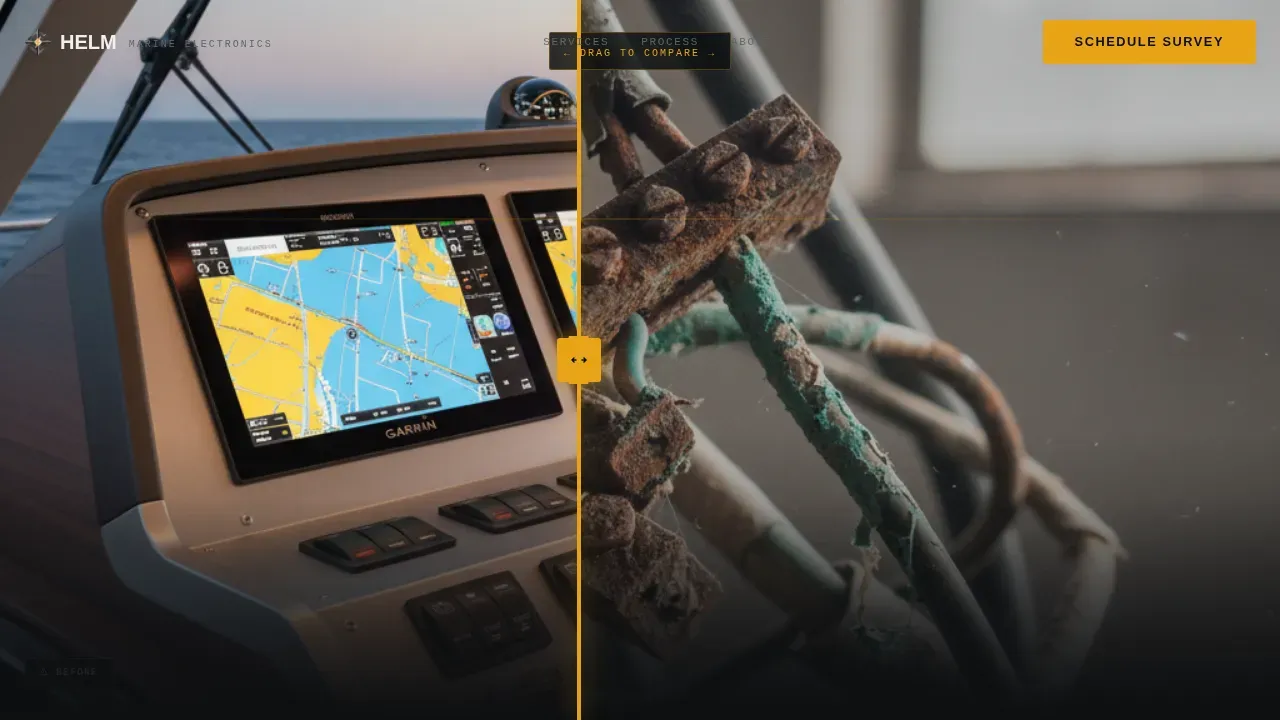
The header fills the full viewport with a split-screen slider. The left side shows a helm station in disrepair: tangled wiring behind a cracked multi function display, corroded bus bars, and a panel held together with zip ties. The right side reveals the same boat, same angle, fully transformed: flush-mounted screens glowing, wiring lashed in clean parallel runs, waterproof connectors, and a tidy breaker panel. The drag handle is styled as a thick amber circuit-breaker toggle. The headline "Same boat. Different standard." appears only after the visitor interacts, rewarding engagement with a punchy reveal.
Escalating Comparison Journey
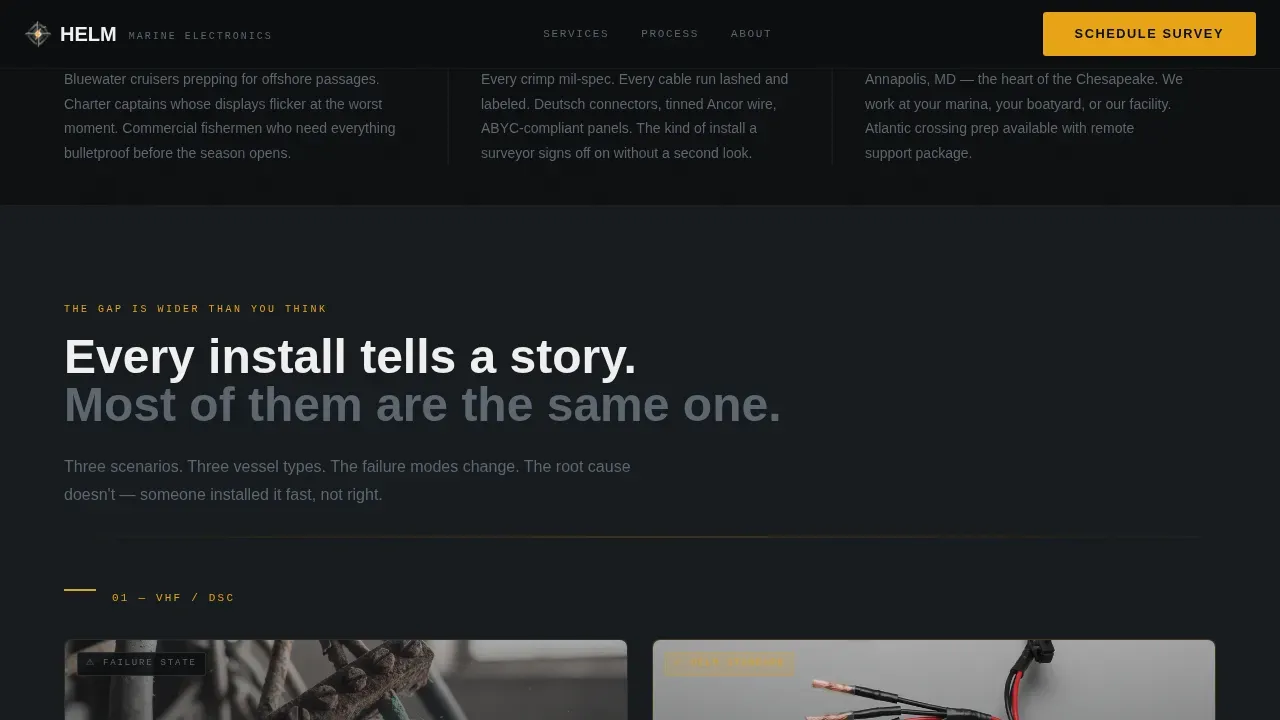
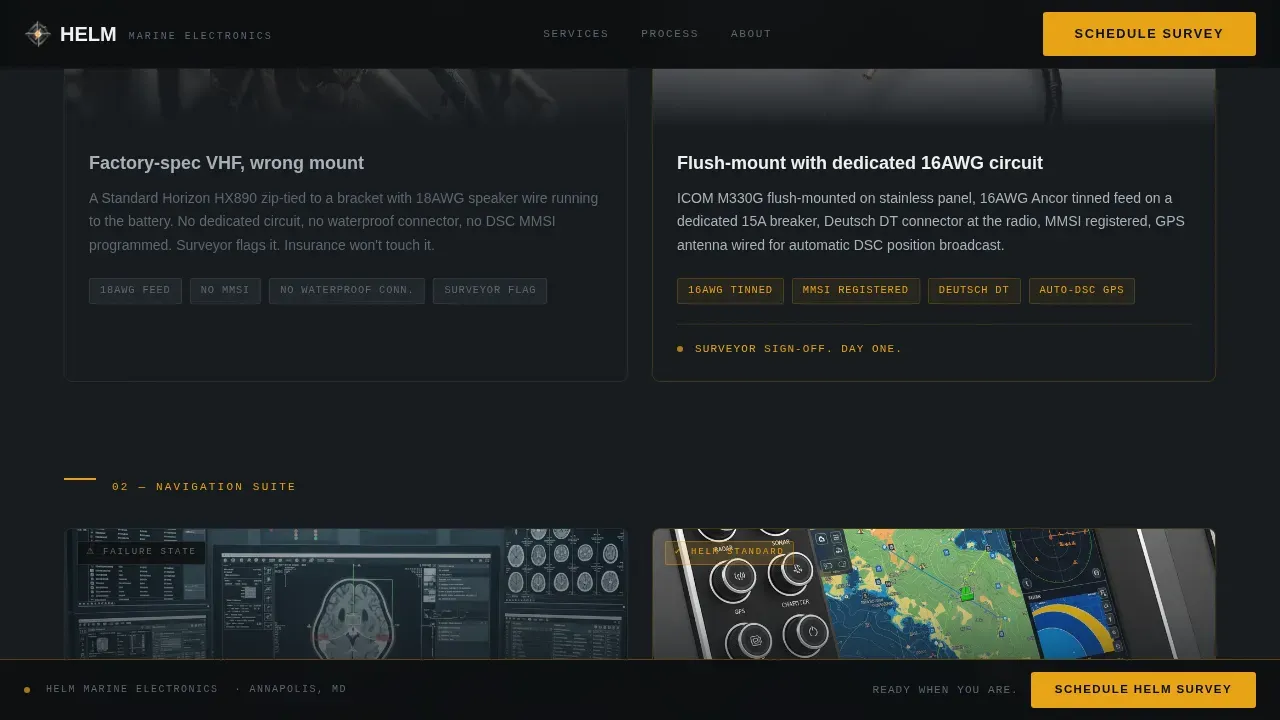
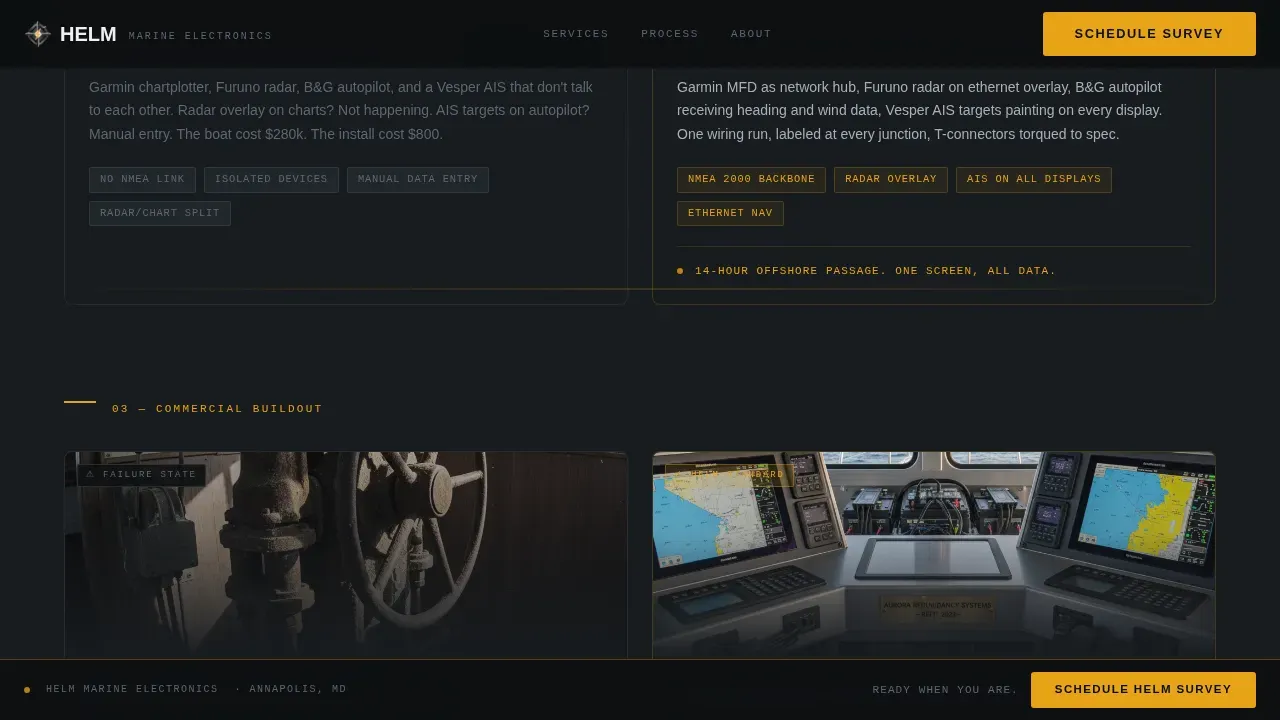
Three scroll sections pair a real failure state against the shop's professional solution. The first comparison covers a straightforward VHF radio swap. The second covers a full navigation suite integration, showing how GPS, radar, and display devices connect into a coherent system. The third covers a commercial vessel NMEA 2000 (National Marine Electronics Association network standard) backbone buildout with redundant GPS and satellite comms. Each comparison is designed to make the visitor mentally audit their own helm, widening the perceived gap between amateur and professional work with every scroll.
Craft and Process Photography Strip
Between comparison sections, a tight photography strip shows close-up process shots: hands crimping terminals, thermal imaging of overloaded circuits, and time-lapse cable runs. These images build trust through visible craft rather than claims. They demonstrate the difference between a temporary mount job and a permanent, labeled, marine-grade installation. Real process photography signals that the installer's standard is worth the investment.
Three-Step Booking Form
The booking section uses a structured three-step form. Step one asks the visitor to select vessel type (sailboat, powerboat, or commercial) and overall length. Step two lets them choose a service tier: single device install, full helm refit, or complete electronics package. Step three presents a calendar synced to the shop's available schedule for date selection. A secondary path invites visitors to upload photos of their current setup for a quick quote, lowering commitment while still capturing the lead.
Sticky Signal Amber Call-to-Action Bar
The primary call to action, "Schedule a Helm Survey," appears in signal amber after the second comparison section. It then locks into a slim sticky bar at the bottom of the page as the visitor continues scrolling. This means the booking prompt is always visible, always reachable, and always contrasting against the dark bilge black background. Visitors never have to scroll back up to find the next step.
High-Contrast Industrial Raw Design System
The visual system uses bilge black (#0D0F11) as the primary background, brushed stainless (#A8B0B8) and anodized aluminum mid-tone (#5C6670) for body and structural elements, and signal amber (#E8A317) reserved exclusively for calls to action and live-wire accents. Section headers render in pure white (#F0F0F0) like console backlighting in a dark wheelhouse. Backgrounds alternate between bilge black and a steel wash to create depth without decoration.
Page sections overview
| Section | Purpose |
|---|---|
| Before/After Hero | Reveal transformed helm station with interactive slider |
| Comparison One: VHF | Show professional VHF radio swap versus. amateur install |
| Comparison Two: Nav Suite | Contrast full navigation suite integration depth |
| Comparison Three: Commercial | Display NMEA 2000 backbone and redundant GPS buildout |
| Craft Process Strip | Build trust through close-up process photography |
| Booking Form | Guide visitors through three-step vessel and date selection |
| Photo Quote Path | Capture hesitant leads via image upload for quick quote |
| Sticky call to action Bar | Keep booking prompt visible throughout scroll |
| Footer | Linear single-row footer with contact and service info |
Design & branding system
The Helm template uses an Industrial Raw visual theme that feels like stepping below deck into a freshly rewired engine room. Every color, weight, and spacing decision is functional. Nothing is added for decoration. The aesthetic communicates precision and competence before a single word is read.
- Color system: bilge black (#0D0F11) primary, brushed stainless (#A8B0B8) and aluminum mid-tone (#5C6670) for structure and body, signal amber (#E8A317) for calls to action only, and section headers in pure white (#F0F0F0)
- Typography: Manrope for body and headings at utilitarian technical weights, JetBrains Mono for specification labels, device names, and technical data callouts
- Backgrounds alternate between bilge black and a barely-there steel wash; the layout is designed desktop-first with a responsive structure that scales cleanly to mobile
Mobile & speed optimization
The Helm template is built desktop-first, reflecting how marine professionals typically evaluate helm station layouts and electronics plans at a desk or chartroom monitor. The design is fully responsive and scales to mobile for on-the-go boaters who may head to the page from a marina.
- The interactive slider, three-step form, and photo upload path are built using client-side components for rich interactivity, while static sections use server components to keep load performance clean
- The sticky call to action bar, condensed navigation, and single-column mobile layout ensure easy access to the booking form from any screen size
- Process photography and comparison sections reflow cleanly for smaller displays, keeping the visual argument legible and the call to action reachable without scrolling past dead space
How this template helps you convert
A professional marine electronics installer landing page only works if visitors move from curiosity to commitment. Helm is structured to close that distance section by section, using contrast, specificity, and low-friction booking paths.
- The before/after slider opens a visual argument that no paragraph of text can match: the visitor sees the gap between a neglected helm and a professionally installed electronics suite before they read a single service description, making the value of expert installation immediately felt
- The escalating comparison journey raises the stakes with every scroll, turning a casual browse into a mental audit of the visitor's own boat, wiring panel, and radar setup, so by the time the booking form appears, the visitor already knows they need the service
- The two-path conversion system (direct booking form and photo-upload quote option) means every type of visitor, whether ready to commit or still on the fence, has a clear and low-friction next step that captures their contact and moves them into the shop's pipeline
Other information about this template
Helm is the helm professional marine electronics installer landing page template built for a niche where trust is everything and bad wiring can be genuinely dangerous offshore. The notes below cover additional practical context for installers and studio teams using this template.
- Garmin is referenced throughout the template as an example brand context, including flush-mounted displays and navigation systems consistent with real-world marine electronics installations; the layout also supports display of partner brand logos such as Raymarine and Simrad for credibility
- The comparison journey references a fish finder, chart plotter, VHF radio, and electronic charts as example device types across the three comparison tiers, covering the full range from a basic fish finder install to a complex commercial electronics buildout
- The lower helm and port side layout references in the comparison sections reflect real vessel terminology, helping the copy resonate with bluewater and commercial clients who rely on accurate language to judge installer competence
- The page is designed to cover two displays or more at the nav suite tier, and the template layout gives room to note specific device configurations such as a dedicated radar screen or a split-screen multi function display running depth and GPS side by side
- The booking form is set up to capture vessel type and length, making it easy for the installer to plan job scope and estimate without a back-and-forth; the photo quote path lowers the barrier for clients who possibly have never booked a professional marine electronics installation before
- Regular maintenance reminders can be incorporated into the footer or a dedicated note block, reinforcing the idea that ongoing care of installed electronics is part of a professional shop's service relationship
- The template supports inclusion of trust signals such as NMEA certification badges, marine-grade warranty statements covering all wiring and labor, and a service area map to help visitors quickly figure out whether the shop operates in their region
- AIS (Automatic Identification System) transceivers, waterproof Deutsch connectors, and Ancor marine-grade wire runs are referenced in the comparison sections as example installation details that communicate technical authority to informed buyers
- The template website structure is intentionally single-page so every scroll moment heads the visitor closer to booking, with no dead-end pages or navigation that pulls attention away from the conversion funnel
Theme
Industrial Raw
Creative direction
Comparison Journey
Color system
Monochrome Steel
Direction
Booking/Scheduling
Page Sections
Interactive Before/after Helm Slider
Three-tier Escalating Comparison Journey
Process Photography Trust Strip
Three-step Structured Booking Form
Sticky Signal Amber Call to Action Bar
Industrial Raw Visual Identity System
Related questions
What type of businesses is this template designed for?
Can I adapt the comparison sections for my own services?
Does the template include the booking calendar and photo upload components?
What does the before/after slider actually show?
How does this template handle leads who are not ready to book immediately?