Zambian Restaurant Landing Page Template
Nshima is a single-column restaurant landing page built for authentic Zambian village dining. It pairs an immersive cinemagraph hero and a founder origin story with a story-driven menu, prominent reservation form, and a warm Desert Rose color system that feels like red earth after a short rain. Mobile-first, richly designed, and conversion-ready.
by Rocket studio
Quick summary
This template delivers a warm, story-led landing page for a Zambian village restaurant. A cinemagraph hero opens the experience, followed by a founder origin story, an ingredients-as-characters section, a one-line-origin menu, and a full reservation form. Earthy terracotta, gold, and cassava white keep the tone grounded and inviting throughout.
Who this template is for
This template is built for restaurants that want to highlight their culinary excellence through cultural storytelling rather than generic menu listings.
- Zambian and Southern African diaspora restaurant owners serving homesick guests
- City restaurants offering niche cuisine to embassy workers and adventurous diners
- Food founders whose brand lives in a specific family story and place of origin
What problem this template solves
Many restaurant landing pages look beautiful but fail to explain why the food matters. This template fixes that gap by letting the story do the selling before a single dish is listed.
- Visitors leave without feeling connected to the food or the people behind it
- Generic menu layouts give no reason to choose one restaurant over another
- Mobile users on the go struggle with PDF menus and buried reservation links
What you get with this template
You get a complete single-column landing page layout that balances rustic village aesthetics with modern functionality, ready to customize and launch.
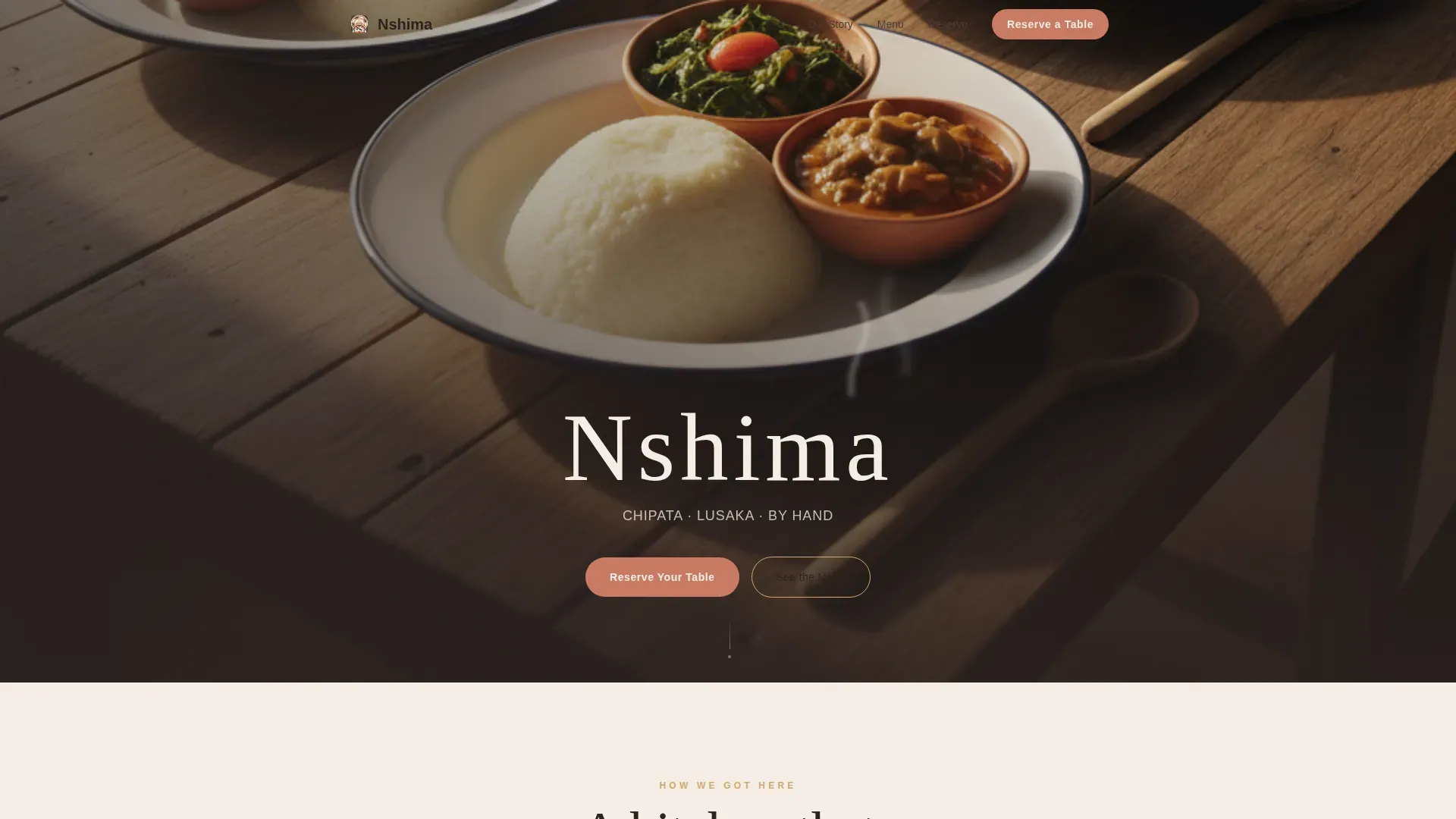
- Cinemagraph hero section with CSS steam animation and delayed name reveal
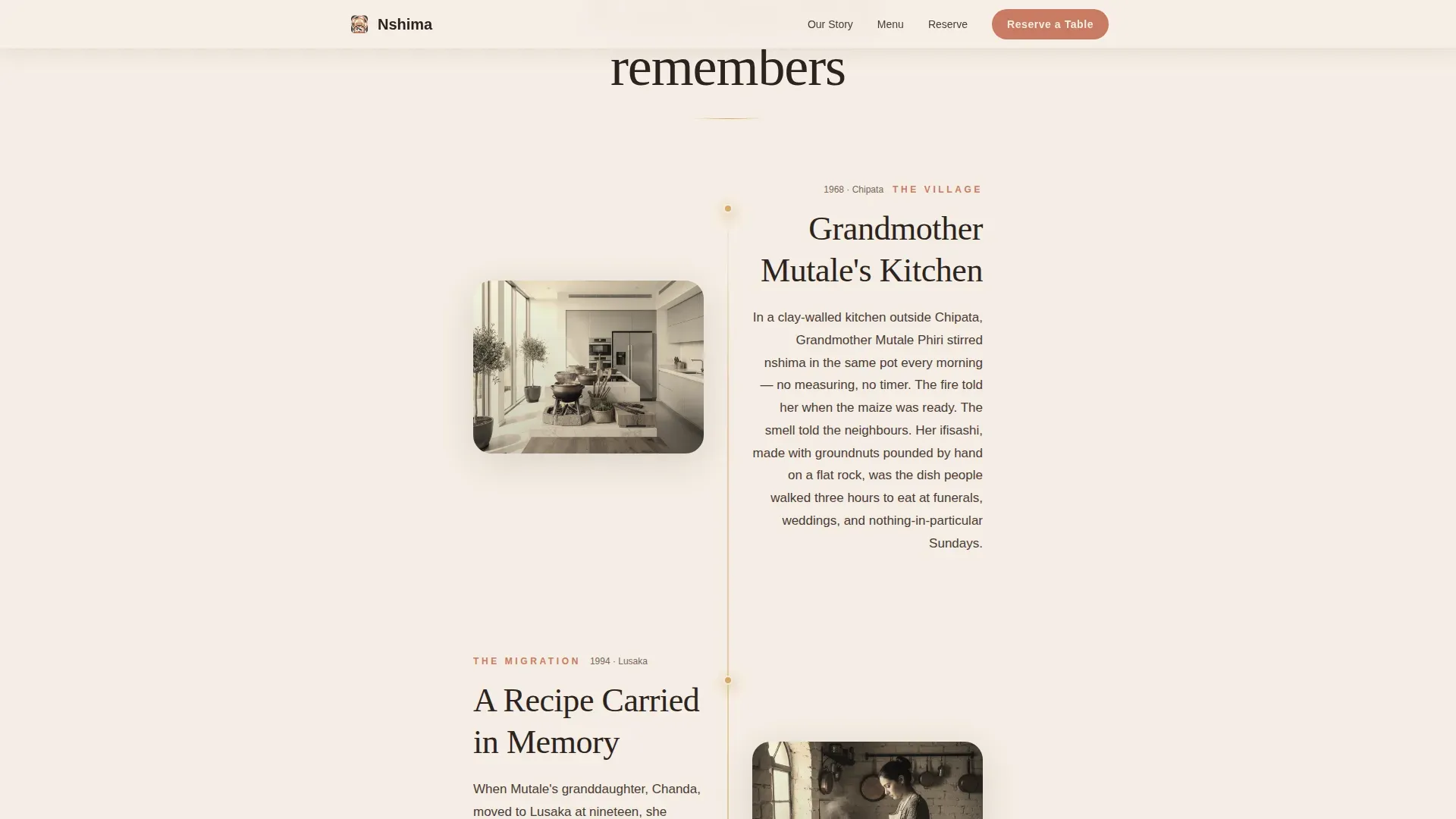
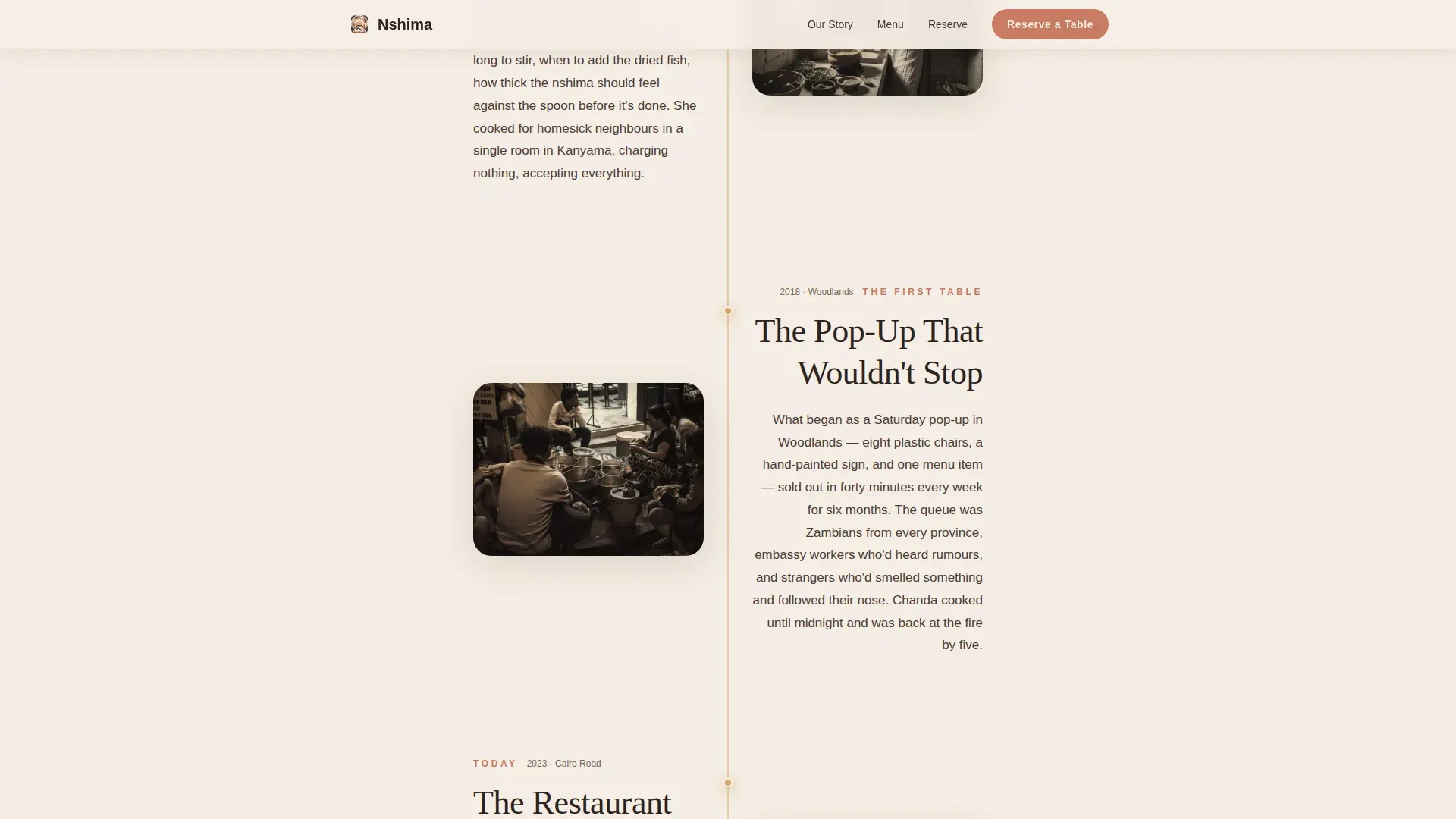
- Origin story flow moving from grandmother to village kitchen to restaurant today
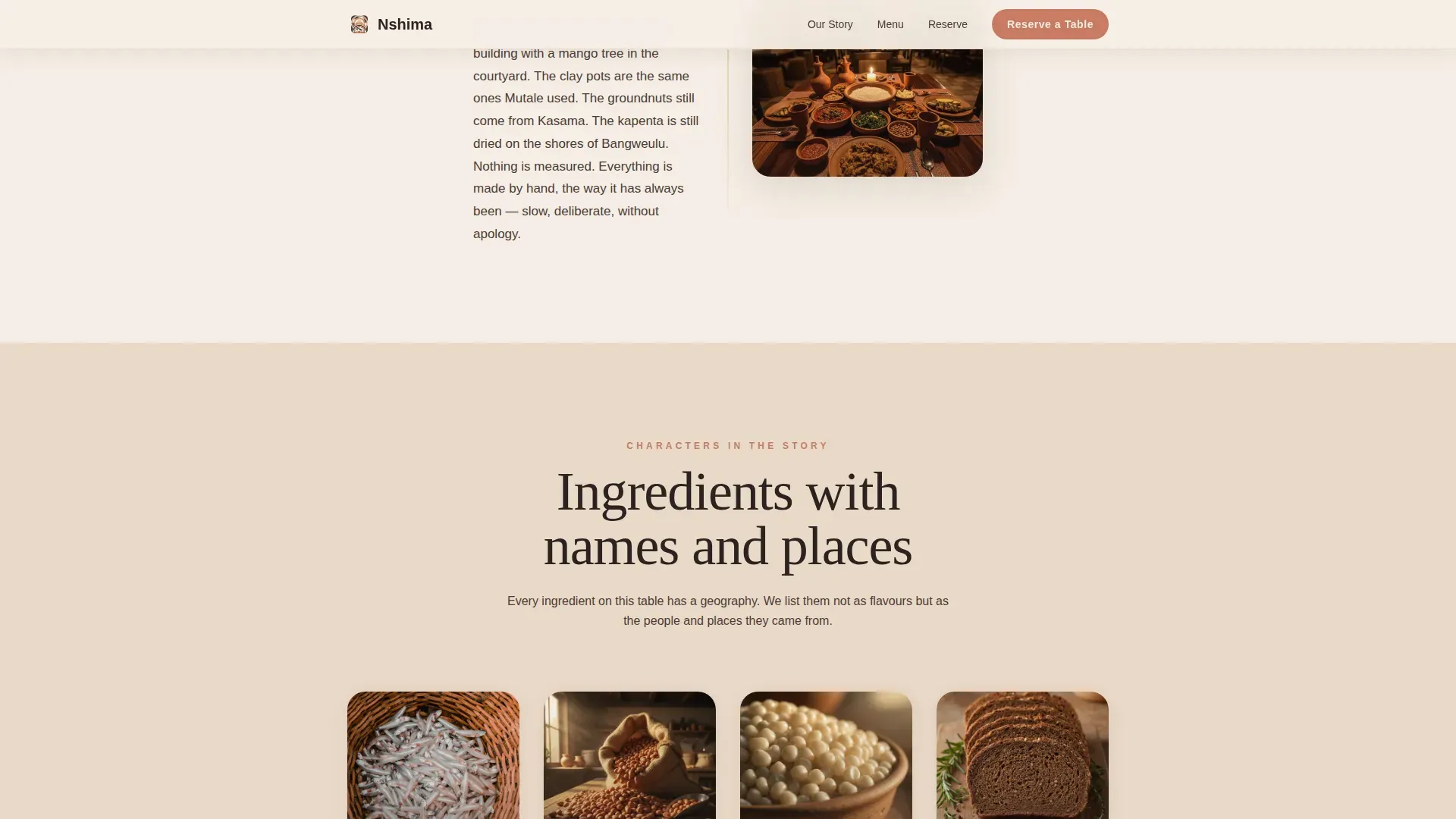
- Ingredients-as-characters section introducing sourced items like dried fish from Bangweulu
- Embedded HTML menu with one-line dish origins, designed for mobile readability
- Reservation form with date picker, party size selector, and dietary notes field
- Secondary pickup call-to-action path for returning guests
Feature list
This template is built around six purposeful components, each earning its place in the scroll.
Cinemagraph Hero with Steam Animation
A still table scene with a single animated element: steam curling from a clay pot. The restaurant name settles into view after two seconds using a delayed serif type reveal. The effect is unhurried and atmospheric.
Founder Origin Story Flow
The origin story section moves through a visual timeline from grandmother to migration to pop-up to present-day restaurant. Photographs shift from faded warmth to crisp present tense as the guest scrolls deeper.
Ingredients as Characters
Key ingredients are introduced by name and origin before the menu appears. Dried kapenta, pounded groundnuts from Kasama, and chikanda are treated as characters, not commodity items. This deepens trust before the order decision.
Story-Paired Menu Section
Each dish carries a one-line origin reason, not a standard description. Guests understand what they are ordering and why it matters. The menu uses an embedded HTML layout for full mobile readability.
Reserve Your Table Form
A prominent reservation form includes a date picker, party size selector, and an optional field for dietary notes or special occasions. A secondary "Order for Pickup" path serves returning guests who already know what they want.
Mobile-First Single Column Layout
The entire layout flows in a single column optimized for mobile screens. Call-to-action buttons are placed prominently at multiple scroll points for visibility and ease of use across all devices.
Page sections overview
| Section | Purpose |
|---|---|
| Cinemagraph Hero | Opens with atmosphere and delayed name reveal |
| Origin Story | Traces the founder's journey from village to city |
| Ingredients as Characters | Introduces sourced ingredients by name and region |
| Menu with Origins | Pairs each dish with a one-line cultural reason |
| Reserve Your Table | Collects bookings via date picker and party size form |
| Pickup Order Path | Gives returning guests a faster secondary conversion route |
| Footer | Displays contact information and linear single-row links |
Design & branding system
The Desert Rose color system draws from red earth, dried grass, and cassava flour. Every tone is warm, specific, and deliberate.
- Terracotta (#C97B63) carries headlines and hover states throughout the page
- Gold (#D4A96A) highlights prices and accent borders in the menu section
- Cassava white (#F5EDE3) serves as the background, giving the single column room to breathe
- Deep bushveld charcoal (#2C2321) anchors all body text for strong contrast and readability
Mobile & speed optimization
The template is built mobile-first, reflecting how diaspora guests and embassy workers are most likely to browse.
- Single-column flow adapts naturally to any screen size without layout shifts
- CSS animations are structured for smooth rendering on mobile hardware
- Images are lazy-loaded to keep the initial view fast on slower connections
How this template helps you convert
Highlighting traditional cooking methods and grounding every dish in a named origin builds the kind of trust that drives reservations rather than casual browsing.
- "Reserve Your Table" calls to action appear after the origin story peak and again anchoring the menu, so intent is captured at two high-engagement moments
- The story-first structure means guests arrive at the reservation form already emotionally invested in the meal
Other information about this template
This landing page was designed with no-code customization in mind. Non-technical users can update colors, swap images, and edit copy without traditional programming. AI-powered platforms can help users build and extend pages like this from natural-language prompts, and no-code solutions allow quick launches of production-ready pages. Subscription-based models are common for AI-powered development services that streamline backend integration. The Nshima authentic village dining restaurant landing page template is listed in the Food and Beverage category under Zambian Cuisine.
- Contact information and a clickable call button for mobile users are included in the footer area
- The embedded HTML menu supports better mobile readability compared to a linked PDF file
- The Village Story section is built into the origin flow to reinforce the brand's cultural heritage
Theme
Pastoral Calm
Creative direction
Origin Story
Color system
Desert Rose
Style
Single Column Flow
Direction
Direct Sales
Page Sections
Cinemagraph Hero with Name Reveal
Founder Origin Story Section
Ingredients as Characters Block
Story-paired Embedded HTML Menu
Reserve Your Table Reservation Form
Mobile-first Single Column Flow
Related questions
Can I edit the menu items and dish origin lines?
Does the reservation form support dietary notes?
How does the cinemagraph hero effect work?
Is this template suitable for non-technical users?
Who is this landing page template best suited for?