Evidence-Based Lactation Landing Page Template
Latch is a clinical-authority landing page template built for board-certified lactation consultants. It leads with credential badges, introduces each consultant individually, and presents a side-by-side service comparison table covering prenatal, postpartum, and NICU feeding support. The page closes with a gated Feeding Assessment Guide download and an insurance coverage check tool, converting trust into action.
by Rocket studio
Quick summary
Latch is a single-page template designed for lactation consultant practices that want to project clinical precision rather than warm-fuzzy marketing. It opens with IBCLC certification seals, moves through a team profile section and a detailed service comparison table, then closes with a gated resource download and an insurance check tool. Every section builds the case before asking for anything.
Who this template is for
This template is purpose-built for practices where clinical credentials do the heavy lifting. It suits professionals who work at the intersection of breastfeeding medicine and structured patient care.
- Board-certified lactation consultants (IBCLC) who serve postpartum mothers, NICU families, and pediatric referral networks
- Multi-consultant practices that need a clear way to present each person's specialization and training side by side
- Health care professionals seeking a referral-ready page that communicates clinical depth to both families and pediatric colleagues
What problem this template solves
Most breastfeeding resources online feel either too casual or too scattered. Moms at 3 a.m. searching for help with a shallow latch, low milk supply, or nipple pain deserve a page that feels like a clinical intake, not a mommy blog. This template solves the trust gap.
- Parents struggle to find a lactation consultant whose credentials, services, and fees are presented clearly in one place
- Pediatricians referring out for tongue tie assessments or infant weight-stall cases need a professional page they can confidently share with families
- Generic website templates do not accommodate the comparison table format needed to explain service tiers across prenatal, postpartum, and NICU feeding support
What you get with this template
The template delivers a fully structured, single-page layout with five distinct content sections. Each section is ready to populate with your practice's real data, team images, and service details.
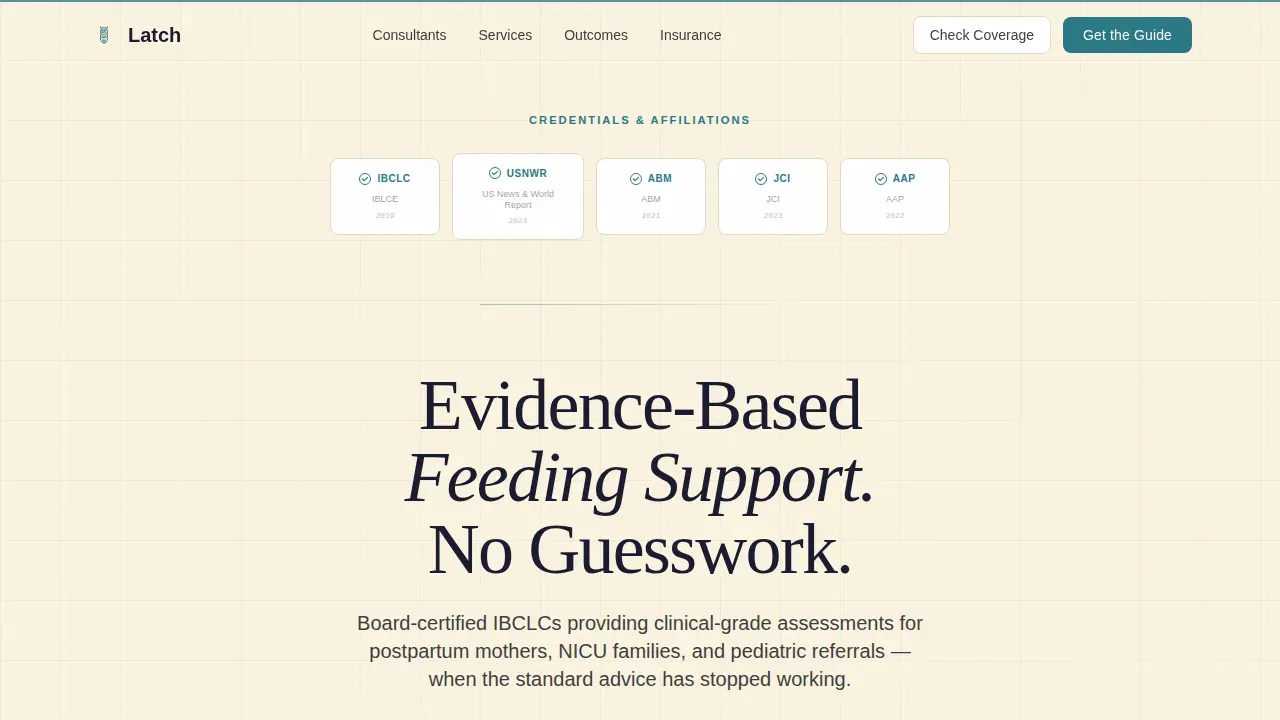
- A hero section with credential badge row, serif headline, and a clear primary call to action
- An individual consultant profiles section paired with a side-by-side service comparison table covering session length, follow-up protocols, insurance compatibility, and included resources
- A dual call-to-action section featuring an email capture form for a downloadable Feeding Assessment Guide and a secondary insurance coverage check tool with a quick intake form
Feature list
This template was created to serve practices that need more structure than a standard service page can deliver.
Credential Badge Hero Section
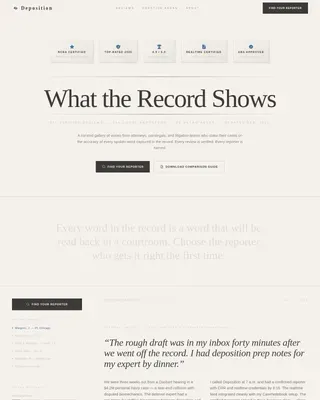
The header opens with IBCLC certification seals, hospital affiliation logos, and professional recognition badges arranged in a centered horizontal row. Each badge renders in monochrome with a teal verification mark. A bold serif headline sits directly below, establishing clinical authority before a word of body copy is read.
Side-by-Side Service Comparison Table
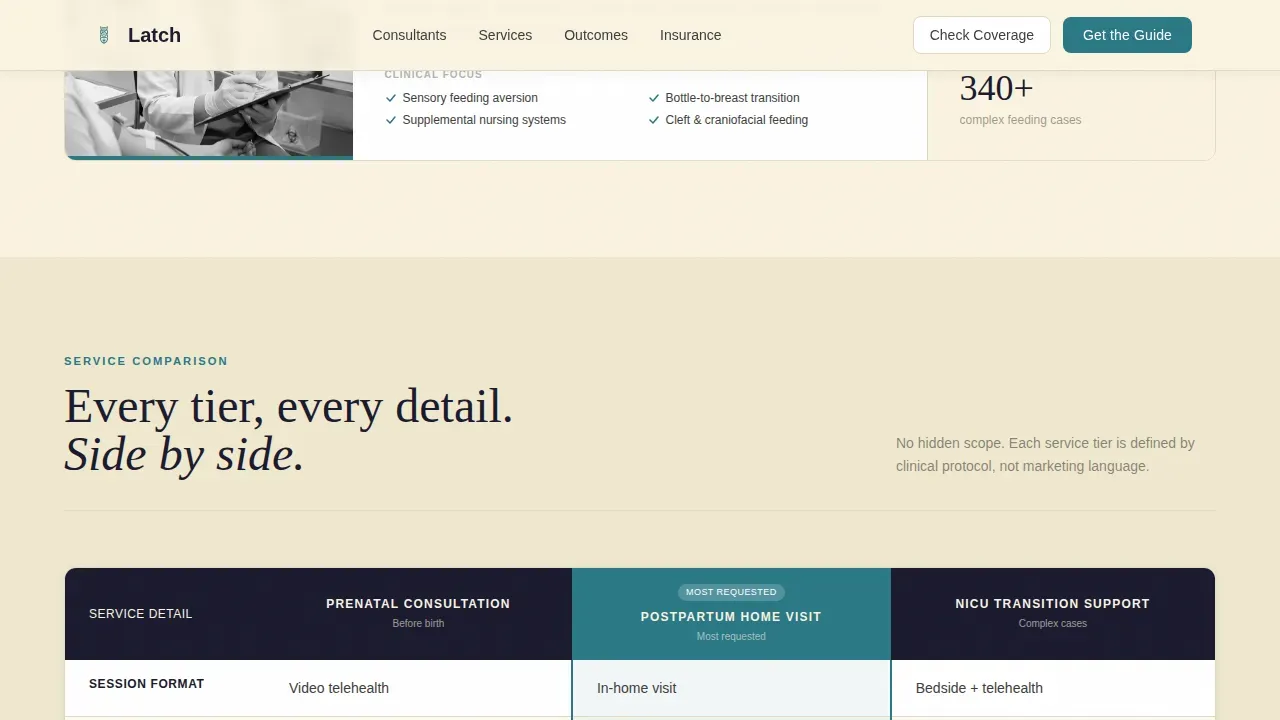
The comparison table is the structural centerpiece of the page. It sets prenatal consultations, postpartum home visits, and NICU transition support as column headers, then delivers row-by-row detail on session length, follow-up protocols, accepted insurance plans, pumping guidance, and included resources. Column hover states highlight each service tier so visitors can note differences instantly.
Individual Consultant Profiles Section
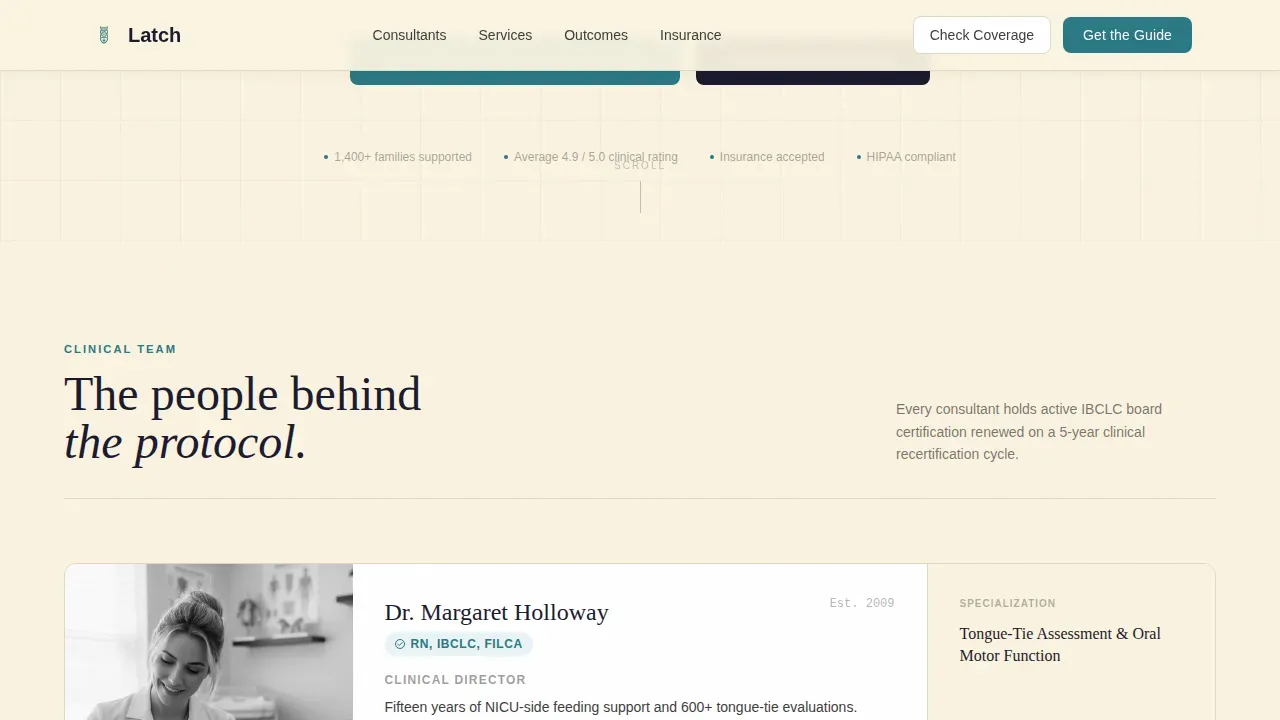
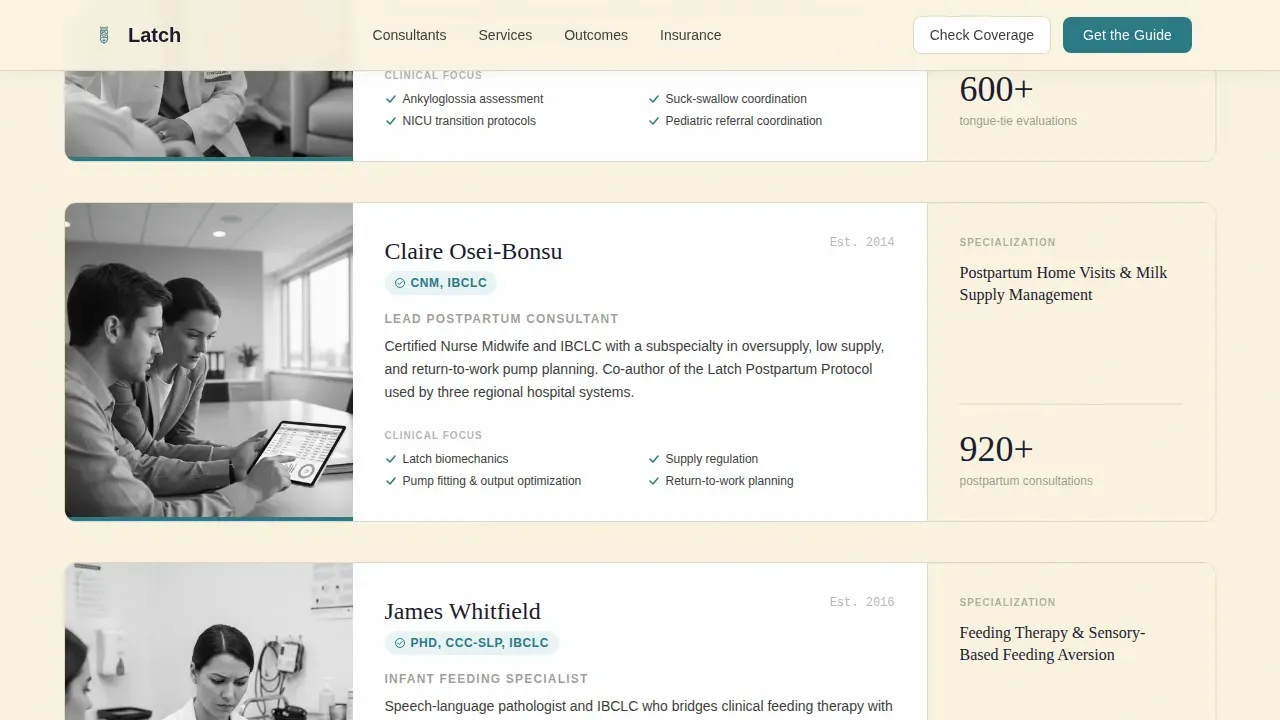
Each lactation consultant is presented individually with a clinical photograph, credential list, specialization note, and professional history summary. The scroll through profiles builds the same confidence a patient history review would deliver, methodical, detailed, and reassuring.
Outcome Statistics and Structured Case Summaries
The evidence section presents breastfeeding outcome data and structured case summaries formatted as clinical records rather than emotional testimonials. This section allows the practice to deliver reference-grade social proof. It helps moms and referring pediatricians alike assess track record before booking.
Gated Resource Download and Insurance Check Tool
After the comparison table has completed its job, the page presents two conversion paths. The first is a single-field email capture form to download the Feeding Assessment Guide. The second links to a quick form tool for checking insurance coverage by provider name and plan type. Visitors can attempt one or both actions without friction.
frequently asked question Toggle Section
An interactive frequently asked question toggle lets visitors find answers to common questions without leaving the page. Topics such as tongue tie assessment procedures, engorgement management, positioning techniques, pumping schedules, and medications compatibility are natural candidates for this section.
Page sections overview
| Section | Purpose |
|---|---|
| Hero with Badges | Establish IBCLC credentials and clinical authority immediately |
| Consultant Profiles | Introduce each lactation consultant with specialization and history |
| Service Comparison Table | Compare prenatal, postpartum, and NICU feeding support tiers |
| Outcomes Evidence Wall | Present outcome data and structured case summaries |
| Dual Call to Action | Capture emails via guide download and offer insurance check tool |
| Footer Row | Deliver contact details, location, and compliance links |
Design & branding system
The visual language draws from a peer-reviewed journal aesthetic. Every design decision prioritizes legibility, authority, and clinical calm. Body text in charcoal reads without strain across all device sizes. Teal appears sparingly, only on links, badge accents, and interactive states, so it always signals something actionable.
- Color system: archival cream (#FAF3E0) backgrounds, manuscript black (#1A1A2E) headlines, clinical charcoal (#3D3D3D) body text, and editorial teal (#2A7886) reserved for links and interactive elements
- Typography: Fraunces serif for headlines delivers a printed-journal weight; DM Sans handles body copy and user interface text with clean readability
- Imagery style: team photographs in clean clinical settings, monochrome credential badge versions, and structured data-table layouts that reinforce the evidence-first tone
Mobile & speed optimization
The template is designed desktop-first to support the complexity of the comparison table, with full responsiveness built in for mobile devices. The static-first build approach keeps unnecessary scripts off the page.
- Scroll-reveal animations use Intersection Observer, so transitions trigger only as sections enter the viewport on any device
- Badge stagger animations and table row highlights are set to medium intensity, present enough to guide attention without creating visual noise
- The comparison table reflows cleanly on smaller screens so mobile visitors can still read each service tier without horizontal scrolling
How this template helps you convert
Every section earns the next action rather than demanding it. The page is structured so a first-time visitor moves from credential trust to service clarity to resource value before encountering any form.
- The credential badge hero and consultant profiles establish authority so that by the time a mother or referring pediatrician reaches the comparison table, they already figure the practice as credible and worth considering
- The comparison table delivers transparent, row-level detail on session type, insurance notes, and included resources, removing the friction that occurs when pricing and scope are hidden
- The gated Feeding Assessment Guide positions the email capture as a logical next step rather than a cold ask, visitors who have read this far recognize the guide as a useful clinical tool, not a marketing material
Other information about this template
This template is a quick and easy way to launch a professional lactation consulting presence without building from scratch. It covers the full scope of what an effective clinical landing page needs, from credential display to service transparency to resource delivery.
- The Latch evidence based lactation consultant landing page template is built around the LATCH documentation tool concept, modeled similarly to the Apgar scoring system, where each component of the breastfeeding assessment is addressed in a clear, structured framework
- Note that LATCH scores can vary from one feeding to the next, so the template's frequently asked question toggle and resource section are well-suited to discuss how the practice tracks infant feeding progress across visits
- The template supports inclusive language such as "chestfeeding" alongside "breastfeeding" so practices can utilize a non-judgmental, welcoming tone for all clients
- A resources section with links to peer-reviewed material helps clients avoid unvetted internet advice and positions the practice as the authoritative reference
- Note sections for medications history, pumping instructions, and breast care guidance can be added within the documentation-style content blocks
- The Baby-Friendly Hospital Initiative requires training for health care professionals working with breastfeeding mothers and infants; this template makes it straightforward to note hospital affiliations and completed training programs in the credential badge row
- Evidence-based online courses can improve physicians' knowledge related to breastfeeding medicine; the template's outcomes section is a natural place to reference continuing education credentials and any children's hospital partnerships
- Downloading the Feeding Assessment Guide is discussed as the primary conversion path; the template is also set up for secondary versions of the call to action, such as booking a prenatal visit directly
- Legal links including a Consent for Care page and privacy policy should be set in the footer alongside contact details to match standard practice for clinical landing pages
- The template can match the visual identity of an existing practice by swapping the Ink and Paper color system for a custom palette, keeping the structural system intact
Theme
Corporate Precision
Creative direction
Team & People
Color system
Ink & Paper
Style
Comparison Table
Direction
Content/Resource
Page Sections
Credential Badge Hero with Serif Headline
Side-by-side Service Comparison Table
Individual Consultant Profiles Grid
Outcomes Evidence Wall
Dual Conversion Call-to-action Section
Interactive Frequently Asked Question Toggle
Related questions
Can I customize the service tiers in the comparison table?
Does this template include an email capture form for the guide download?
How does the insurance check tool work in this template?
Is this template suitable for a solo lactation consultant as well as a group practice?
What types of credentials and badges can I display in the hero section?