Palliative Care Medicine Professional Website Template
Palliate is a single-column landing page template built for palliative care medical device companies. It guides clinical decision-makers through a transparent five-step workflow, from sensor placement to outcome documentation, before presenting a lead generation form. The Slate and Sky color system and Stacked Type Tower header create a tone of calm, clinical authority that earns trust before asking for a commitment.
by Rocket studio
Quick summary
Palliate is a precisely structured landing page template for a real-time symptom monitoring device used in hospice and palliative care settings. It walks clinical stakeholders through the device's full workflow, builds trust with data visualizations and a family member quote, then presents two clear conversion paths: a clinical review request and an evidence summary download.
Who this template is for
This template is built for palliative care technology companies that need to reach senior clinical buyers. It speaks directly to the professionals who make adoption decisions at the bedside and the boardroom level.
- Hospice Medical Directors reviewing overnight telemetry and evaluating new monitoring tools
- Palliative care nurse practitioners and physician assistants managing symptom titration mid-shift
- Hospital Chief Nursing Officers building quality metrics around end-of-life comfort scores
What problem this template solves
Palliative care technology is hard to sell because clinical buyers are skeptical, time-poor, and deeply responsible for patient outcomes. A generic marketing page creates doubt. This template removes that doubt by showing the full clinical workflow before asking anything of the visitor.
- Decision-makers see every step of the device process, from sensor placement to outcome documentation, with no black box
- The transparent walkthrough replaces sales pressure with clinical logic, so the lead form feels like a natural next step
- Two conversion paths accommodate both ready buyers and those still evaluating the evidence
What you get with this template
The template delivers a complete, single-column landing page flow designed around clinical credibility and lead generation. Every section earns the next one.
- A hero section with a Stacked Type Tower header, a single clarifying subtitle, and generous whitespace
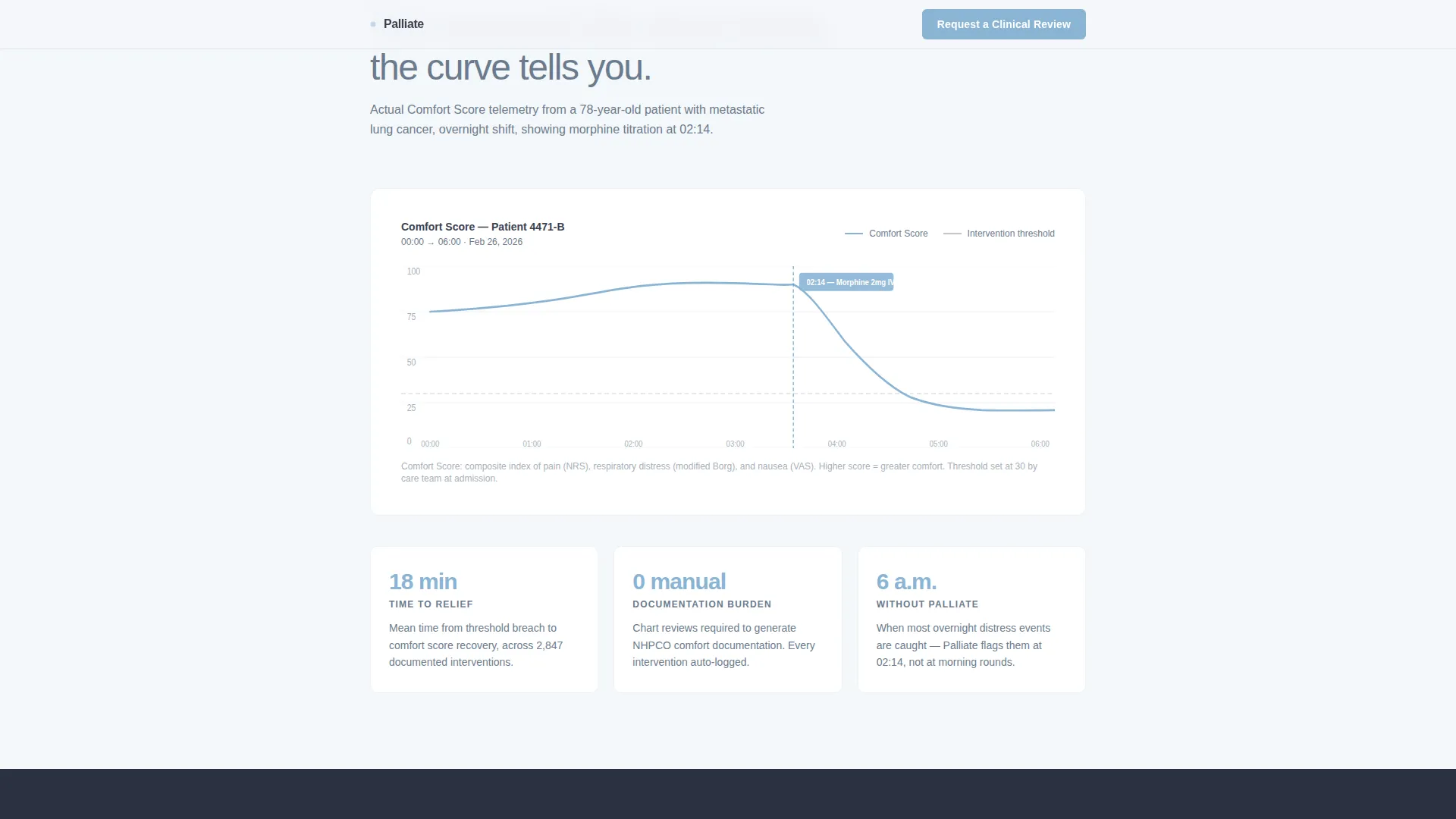
- A five-step clinical process walkthrough with numbered steps and a symptom data visualization showing real curves flattening after intervention
- A dual-path lead generation section with a detailed clinical review form and a lighter-commitment evidence download gate
Feature list
This template is built around six purposeful components, each serving a specific role in the clinical buyer journey.
Stacked Type Tower Hero
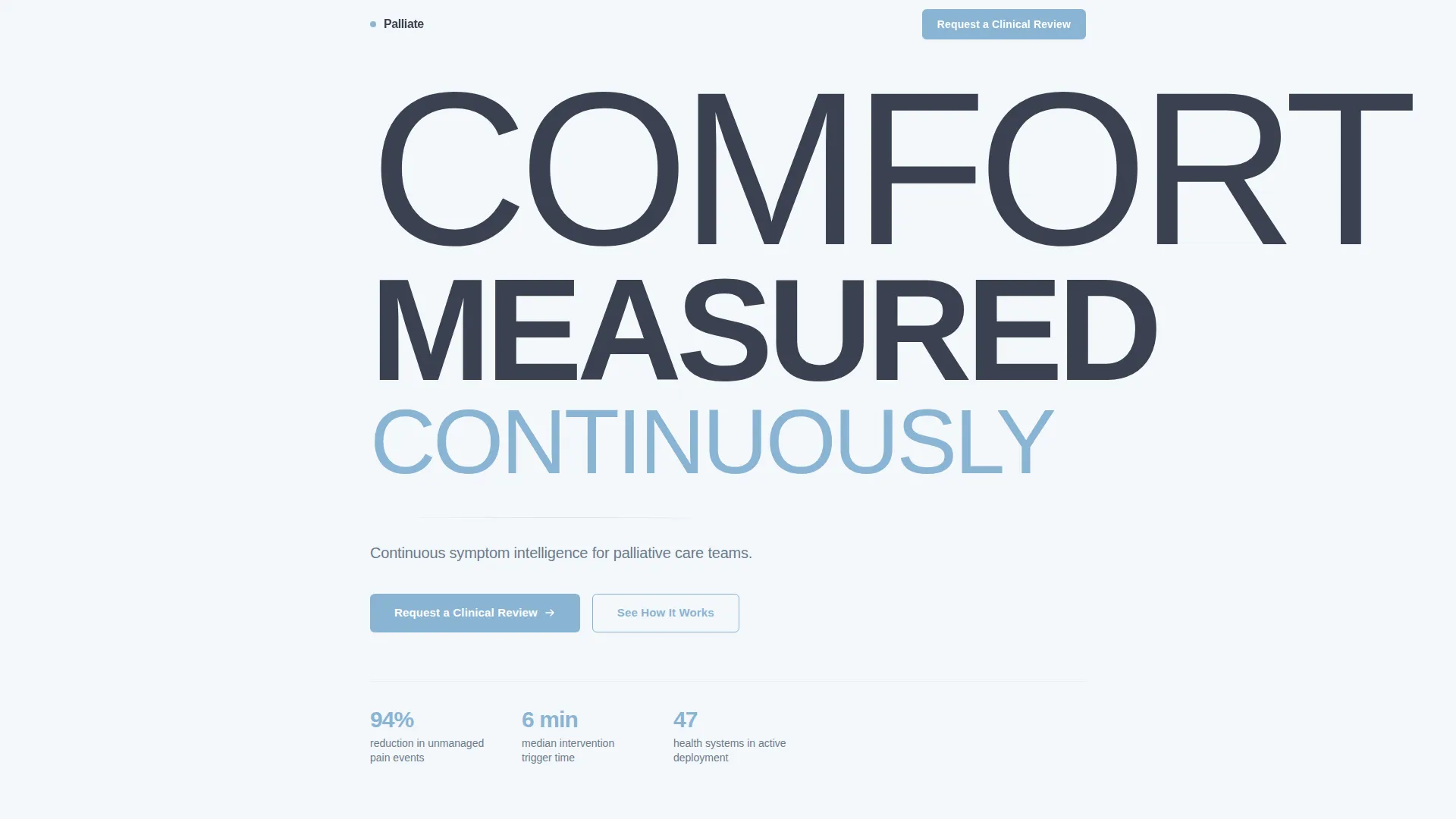
The hero opens with three stacked lines, COMFORT, MEASURED, and CONTINUOUSLY, each stepping down in size and weight. A single slate-colored subtitle sits below. The result is a clinical declaration that communicates the device's core value in under three seconds.
Five-Step Clinical Walkthrough
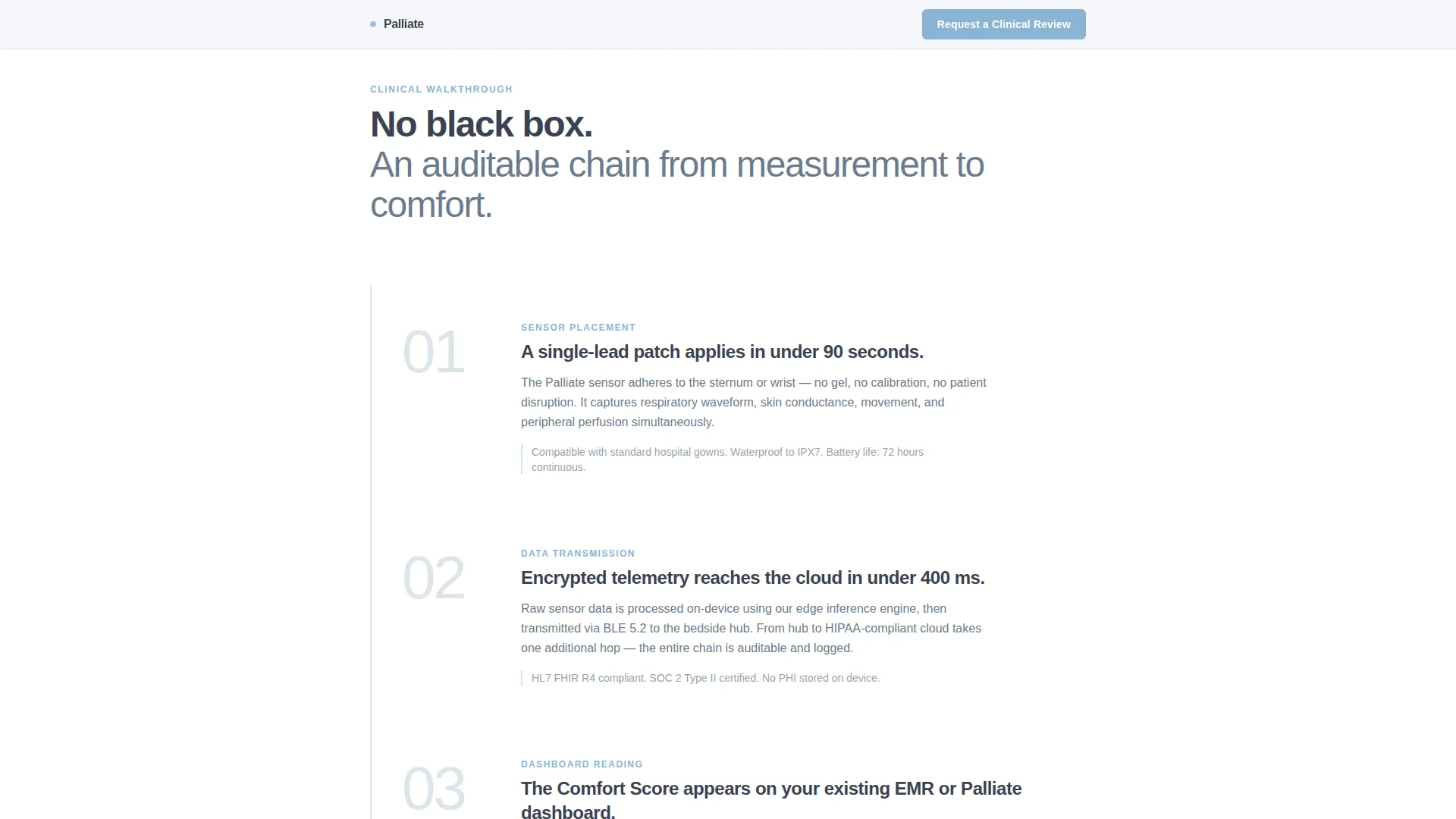
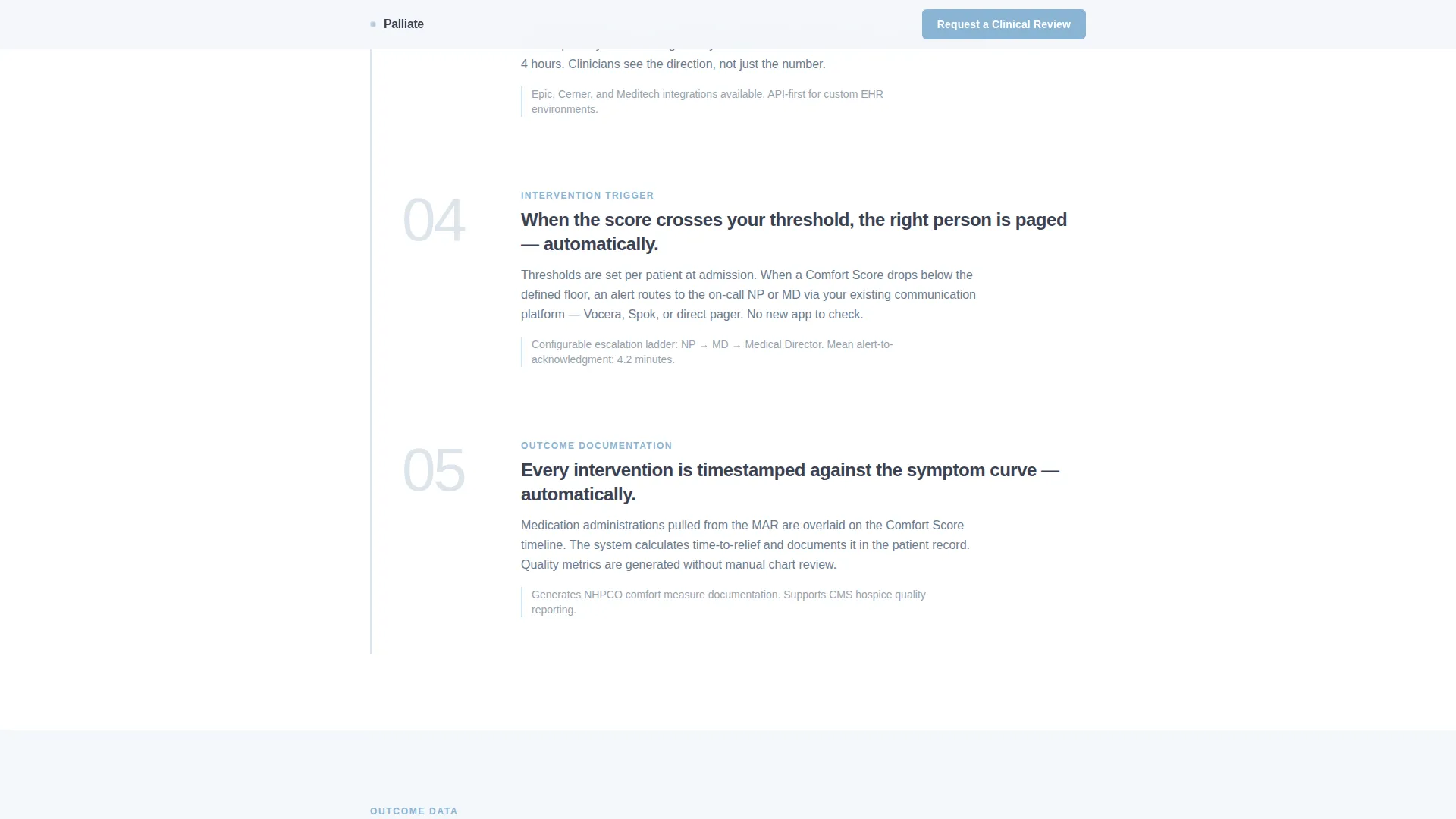
Five numbered sections guide the reader through sensor placement, data transmission, dashboard reading, intervention trigger, and outcome documentation. Each step answers "and then what happens?" so a skeptical medical director sees a fully auditable chain, not a sales pitch.
Symptom Data Visualization
A scroll-triggered visualization displays real symptom curves flattening after a clinical intervention. This is not an abstract infographic. It shows the actual behavioral pattern the device is designed to produce, giving clinical buyers a concrete reference point.
Dual-Path Lead Generation Form
The primary call to action, "Request a Clinical Review," collects institution name, role via dropdown, current census size, and preferred contact method. A secondary path offers the Clinical Evidence Summary gated behind email only, serving buyers who need more time before committing.
Family Member Social Proof Quote
The final section before the form presents a quote from a family member, not a data chart. This deliberate shift from technical credibility to emotional permission gives clinical buyers the human context that rounds out a purchasing decision.
Scroll-Reveal Animation System
Sections animate into view as the visitor scrolls, using staggered reveals and a symptom curve draw animation. The motion is measured and purposeful, reinforcing the template's tone of calm clinical precision without distraction.
Page sections overview
| Section | Purpose |
|---|---|
| Hero Tower | Establish device value proposition immediately |
| Clinical Process Walkthrough | Demystify the full five-step device workflow |
| Symptom Data Visualization | Show real post-intervention symptom curve data |
| Family Member Quote | Add emotional permission after technical credibility |
| Lead Generation Form | Capture clinical review requests and evidence downloads |
| Footer | Provide linear single-row navigation and closing context |
Design & branding system
The template follows a Medical Clarity theme using the Slate and Sky color system. The palette is described as looking out a hospital window on a clear winter morning, sterile but not cold, calm but fully awake.
- Primary text uses clinical charcoal (#3B4252), secondary copy and dividers use instrument slate (#6B7B8D), and interactive elements use open-sky blue (#89B4D4)
- Background surfaces use horizon white (#F4F7FA), keeping the visual field clean and clinical without feeling institutional
- Typography pairs DM Sans for headers with Manrope for body copy, reinforcing precision and readability at desktop scale
Mobile & speed optimization
The template is built desktop-first, reflecting the primary use case of a medical director reviewing data at 6 a.m. on a desktop monitor. The layout adapts responsibly to smaller screens without compromising the clinical walkthrough structure.
- Server Components handle static sections to minimize JavaScript load and keep the page responsive
- Scroll-reveal animations and the symptom curve draw use minimal JavaScript, keeping the interaction layer lightweight
- The single-column flow translates cleanly to tablet and mobile viewports without restructuring the narrative order
How this template helps you convert
This template earns conversions by building clinical trust before making any request. The conversion architecture is deliberate and sequenced.
- The transparent process walkthrough answers every "what happens next" question a skeptical buyer would ask, removing friction before the form appears.
- Two distinct calls to action serve two different buyer readiness levels, a full clinical review request for ready decision-makers and a low-commitment evidence download for those still evaluating.
Other information about this template
The Palliate template is a purpose-built asset for palliative care medical device marketing. A few additional details are worth noting for teams evaluating it.
- The template is designed for the US healthcare context, with English copy and USD pricing assumptions built into the form structure
- The dropdown role field includes Medical Director, NP/PA, Chief Nursing Officer, Palliative Care Coordinator, and Other, covering the full range of clinical buyer types
- Animation intensity is set to medium, with scroll-triggered stagger reveals and a symptom curve draw that reinforces the device narrative without overwhelming the clinical tone
- The footer uses a linear single-row pattern, keeping the closing section clean and uncluttered
Theme
Medical Clarity
Creative direction
Transparent Process
Color system
Slate & Sky
Style
Single Column Flow
Direction
Lead Generation
Page Sections
Stacked Type Tower Hero
Five-step Clinical Walkthrough
Symptom Data Visualization
Dual-path Lead Generation Form
Family Member Social Proof Quote
Scroll-reveal Animation System
Related questions
Who is this landing page template built for?
What conversion paths does this template support?
What sections are included in the clinical process walkthrough?
Is the symptom data visualization included as a working component?
Can this template be adapted for a different medical device category?