Pantry — Gluten-Free Grocery Landing Page Template
The Pantry safe gluten-free grocery delivery landing page template is a hero-dominant, single-page design built for certified gluten-free food delivery services. It combines a UGC photo wall hero, an editorial aisle-walk product gallery, parchment-and-rust Neo-Retro branding, and a three-step inline booking form to guide newly diagnosed celiacs, parents, and seasoned gluten-free home cooks from first scroll to scheduled delivery.
by Rocket studio
Quick summary
This landing page template is purpose-built for a certified gluten-free grocery delivery service. It uses a Gallery Walk layout to lead visitors through curated product aisles, then funnels them into a three-step scheduling form. The design feels like a warm, well-stocked general store, not a clinical health site.
Who this template is for
This template serves specialty food delivery businesses that need to earn trust before asking for a commitment. It is ideal for gluten-free grocery brands targeting a safety-conscious audience who need proof, not just promises.
- Newly diagnosed celiacs navigating their first online grocery shopping run after a diagnosis
- Parents building safe lunchbox routines for children with gluten sensitivities
- Seasoned gluten-free home cooks seeking a reliable, convenient food delivery alternative to specialty store trips
What problem this template solves
Most grocery landing pages treat every shopper the same. A gluten-free grocery landing page needs to address real fear first. Visitors with Celiac disease need to understand cross-contamination risk before they will place an order. This template solves that by leading with social proof and certification before the scheduling form ever appears.
- Generic grocery website design does not communicate dedicated-facility safety or certification marks clearly
- Standard food delivery landing pages skip the trust-building steps that fearful shoppers require
- Visitors abandon pages that rush to checkout before showing real product detail and community feedback
What you get with this template
You get a fully structured, single-page landing page collection that covers every stage of the buyer journey, from first-glance trust to confirmed delivery booking. The template includes a rich set of pre-built sections and interactive functionalities ready to populate with your own branding, copy, and product images.
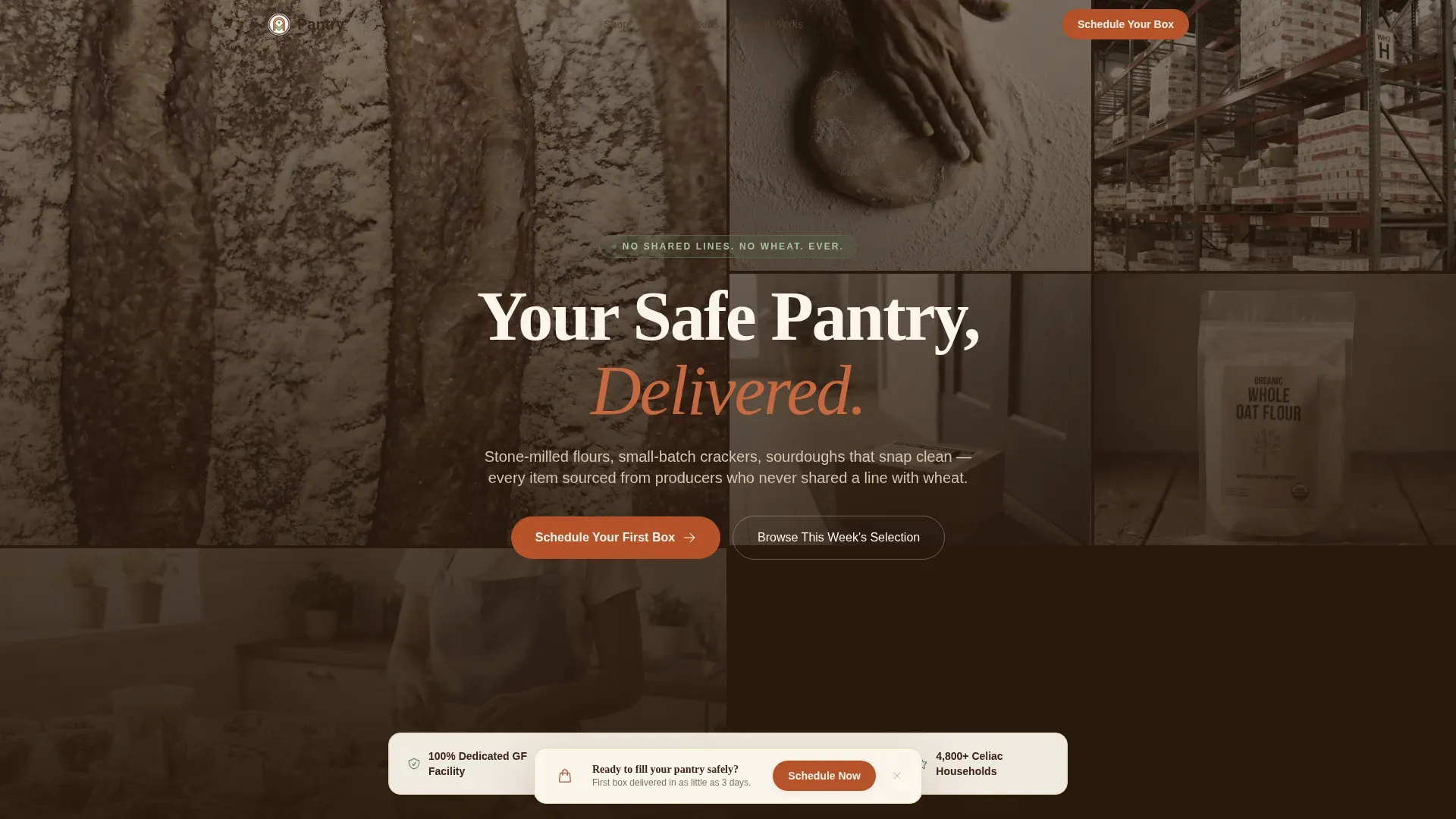
- A full-viewport UGC photo wall hero with a hand-lettered headline overlay and floating trust bar
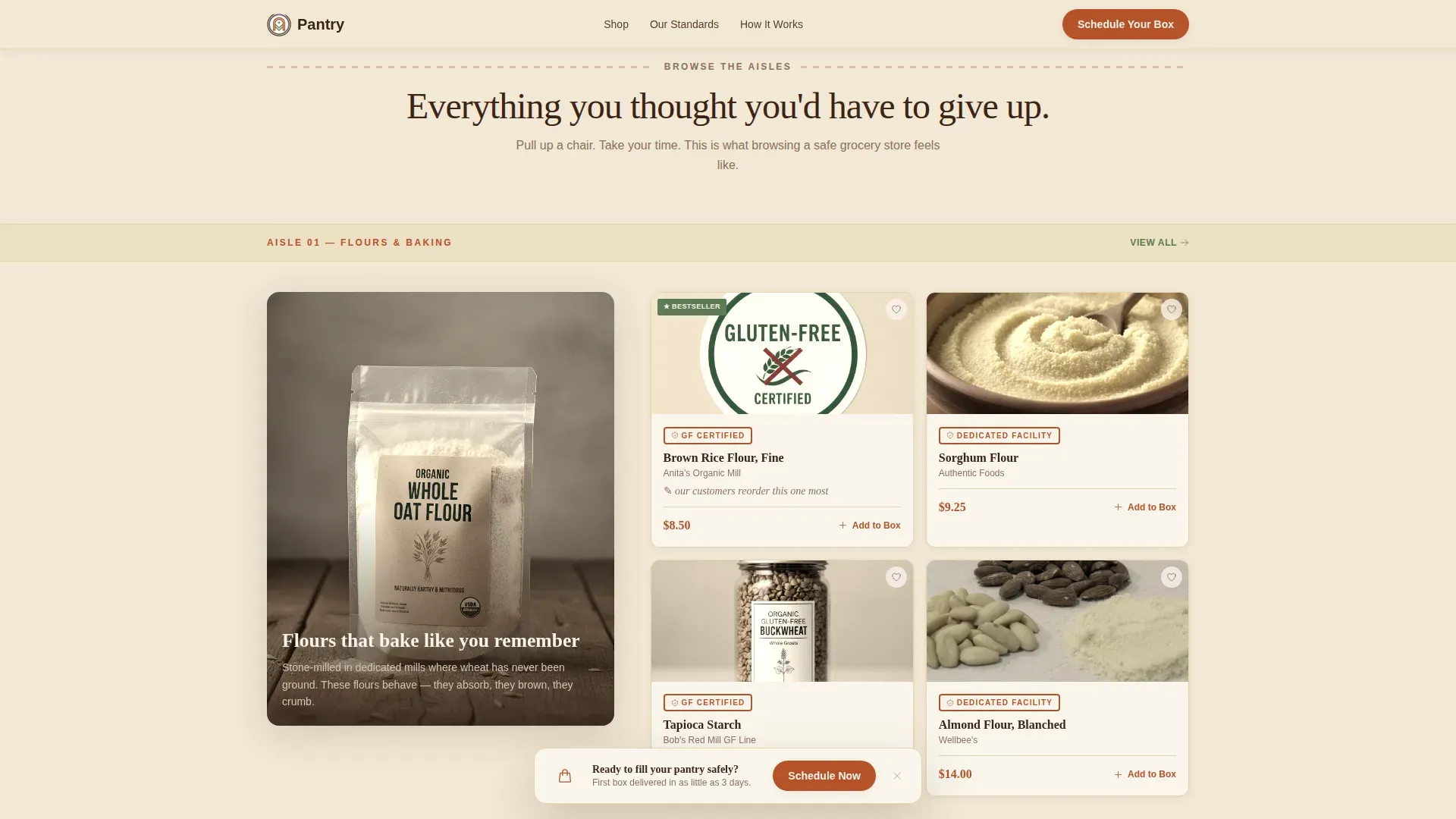
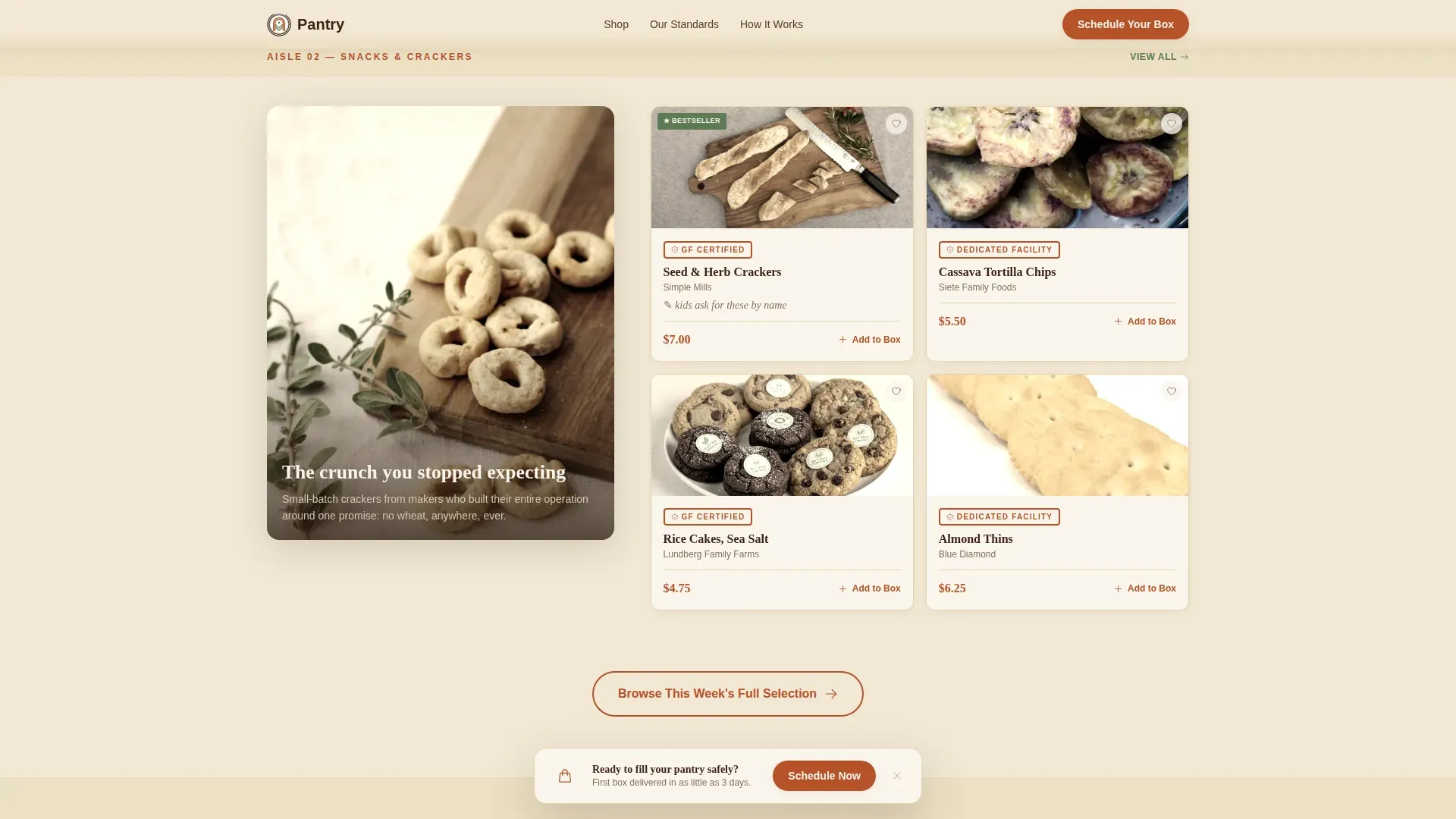
- Four editorial aisle sections covering Flours and Baking, Snacks and Crackers, Pasta and Grains, and Bread and Bakery, each with product card grids bearing certification stamps
- A three-step inline booking form with a weekly calendar grid, box-size selector, and zip code coverage check
Feature list
This landing page template ships with a focused set of functionalities designed specifically for gluten-free grocery delivery conversion. Every feature listed below is built into the template as described in the source brief.
UGC Photo Wall Hero Section
The hero fills the full viewport with a mosaic of real customer snapshots. A warm film-grain overlay unifies the images under the Neo-Retro tone, and a hand-lettered headline fades in over the center tile. No stock photography, no studio polish. The imperfection itself is the proof of authenticity.
Gallery Walk Aisle Layout
Each product category opens as a browsable aisle with a large editorial photograph on the left and a tight product card grid on the right. Cards carry rust-bordered certification stamps and hand-written-style reorder annotations, creating an unhurried, shopkeeper-curated shopping experience that builds confidence before any call-to-action appears.
Three-Step Inline Booking Form
The primary conversion path is a sticky scheduling bar that appears after the first aisle scroll. Visitors pick a delivery day from a weekly calendar grid, choose a box size from Essentials, Full Pantry, or Family options, and enter their zip code to confirm coverage. The form earns the booking by showing real food first.
Parchment Band Customer Quotes
Between every aisle, single customer testimonials sit on parchment-colored bands styled like bookmarks. These quote sections use real named voices with context about diagnoses or household needs, building the social proof that gluten-free customers specifically rely on when deciding to trust a new food delivery service.
Secondary Browse Path with Favorites
A secondary call-to-action, labeled "Browse This Week's Selection," lets hesitant visitors explore the full product collection before committing. Items can be favorited during browsing, and the flow returns users to the scheduling form with those selections already saved, reducing friction for cautious first-time buyers.
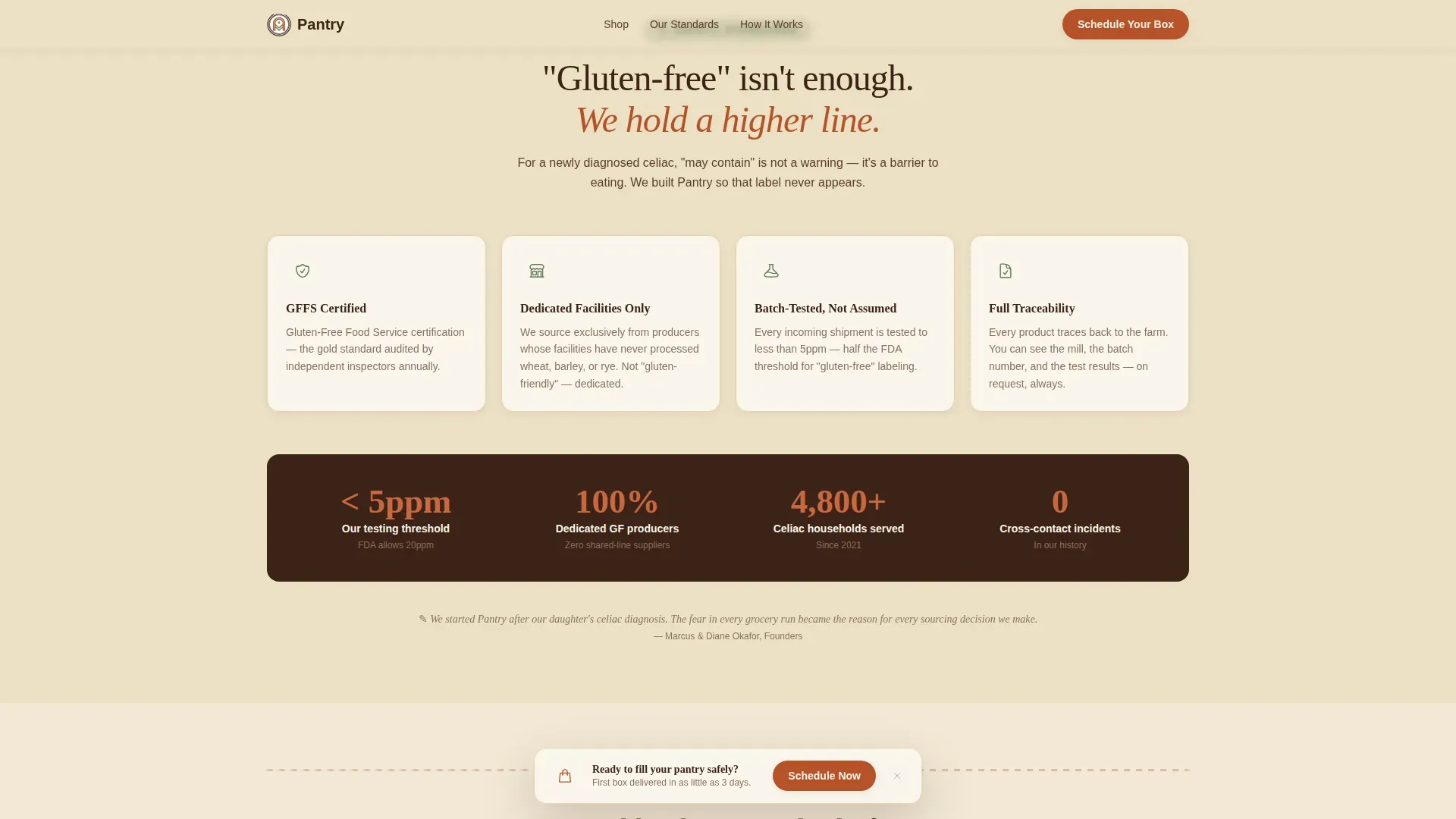
Safety and Certification Band
A dedicated parchment section displays certification marks and dedicated-facility proof. This section explicitly communicates that every product in the collection comes from producers who never shared a production line with wheat, directly addressing the cross-contamination concern that matters most to Celiac shoppers.
Page sections overview
| Section | Purpose |
|---|---|
| UGC Hero Wall | Opens with customer photo mosaic and trust bar |
| Floating Trust Bar | Displays key certification and safety signals |
| Flours and Baking Aisle | Editorial photo plus product card grid |
| Snacks and Crackers Aisle | Editorial photo plus product card grid |
| Pasta and Grains Aisle | Editorial photo plus product card grid |
| Bread and Bakery Aisle | Editorial photo plus product card grid |
| Customer Quote Bands | Parchment bookmark testimonials between aisles |
| Safety Certification Band | Dedicated-facility proof and certification marks |
| Schedule Your Box | Three-step inline booking form |
| Footer | Linear single-row footer pattern |
Design & branding system
The template follows a Neo-Retro visual identity that feels like a 1940s general store receipt left on a sunlit windowsill. Every color, typeface, and spacing choice supports the warmth and credibility that gluten-free shoppers need to feel before they trust a new food delivery service.
- Color system uses aged parchment cream (#F2E8D5) as the base, warm rust (#B7522A) for headlines and primary buttons, faded grocer green (#5E7A56) for certification badges and category tags, and deep cocoa (#3B2316) for body text
- Typography pairs Fraunces for display headlines with Plus Jakarta Sans for body copy, creating a confident editorial contrast across all pages
- Film-grain overlay, scroll reveals, sticky bar animation, and marquee elements add medium-to-high motion depth without relying on heavy scripting
Mobile & speed optimization
The template is built mobile-first, reflecting how most grocery shopping decisions happen. Responsive designs ensure the aisle layout, product cards, booking form, and hero mosaic all adapt cleanly from mobile to desktop without losing visual impact or usability.
- Product card grids, the three-step booking form, and the sticky scheduling bar are all optimized to stack and scroll naturally on small screens
- Images are lazy-loaded across all aisle sections, and CSS animations are preferred over JavaScript for film grain, scroll reveals, and sticky behavior
- The layout was tested across various devices and screen sizes to confirm compatibility and consistent rendering before release
How this template helps you convert
This landing page earns the booking by building trust at every scroll point before the calendar ever appears. The structure is deliberately unhurried: show real food, show real people, then show the form.
- The UGC photo wall and certification band address the primary fear of cross-contamination immediately, allowing visitors to understand that safety is guaranteed before they see any pricing or scheduling options
- The aisle-walk layout and parchment quote bands use real community feedback and shopkeeper-style annotations to build the kind of trust that moves gluten-free customers from browsing to booking
- The sticky scheduling bar and secondary browse path work together, creating two conversion routes that meet customers at different levels of readiness and funnel both groups toward a confirmed delivery date
Other information about this template
This template is part of a broader collection of grocery landing page templates and grocery website design resources built on the same Neo-Retro system. It is designed to be easy to customize even without deep technical knowledge, allowing teams to swap in personal branding elements such as colors, fonts, and images through a drag-and-drop editor. AI technology can generate tailored content, HTML, and CSS updates based on specific prompts, making seamless updates and enhancements straightforward after launch.
- The pantry safe gluten free grocery delivery landing page template is ideal for direct-to-consumer gluten-free grocery brands building their first online store presence
- Templates in this collection are designed for compatibility across desktop and mobile, with responsive designs confirmed across device types before publishing
- Choosing a grocery website template that aligns with brand identity is important; this template's parchment-and-rust system is ready to adapt to your own color and font preferences with minimal changes
- The template supports online grocery shopping features including category filters for secondary dietary needs such as Dairy-Free and Nut-Free, recurring delivery setup, and a review system for community-driven social proof
- Pages in this template are set up to protect user trust through clear certification display, transparent sourcing details, and accessible contact information, helping customers save time on label checking and find what they need in one place
Theme
Neo-Retro
Creative direction
Gallery Walk
Color system
Parchment & Rust
Style
Hero-Dominant (90/10)
Direction
Booking/Scheduling
Page Sections
UGC Photo Wall Hero with Trust Bar
Gallery Walk Aisle Layout
Three-step Inline Booking Form
Parchment Band Testimonials
Safety and Certification Section
Secondary Browse Path with Favorites
Related questions
Can I customize the colors and fonts in this template?
Does the template include the three-step booking form?
Is this template suitable for a newly launched gluten-free grocery delivery service?
How does the secondary browse path work?
Can I add or remove product aisles from the template?