Prison Reform Community Foundation Landing Page
Pardon is a warm, modular landing page template built for a prison reform community foundation. It leads with a family testimonial card, builds through alternating heart-and-evidence card rows, and converts with a gold-accented sign-up form. Designed for families, advocates, and donors, it earns trust before it ever asks for a name.
by Rocket studio
Quick summary
Pardon is a single-page, card grid landing page template for a prison reform community foundation. It opens with a handwritten-style testimonial card, unfolds through alternating story and statistics rows, and closes with two conversion paths: a lead capture form and a story submission form. The design is warm, dignified, and built to hold real human weight.
Who this template is for
This template speaks directly to the people already carrying the weight of incarceration's reach. It was built for organizations doing serious work at the intersection of family, justice, and community.
- Nonprofit foundations focused on prison reform, family reunification, and reentry support
- Advocacy groups and public defenders who need a credible, emotionally resonant web presence
- Community-led organizations seeking to collect email supporters, story submissions, and donor interest in one place
What problem this template solves
Most nonprofit templates feel either too corporate or too generic. Neither fits a foundation whose audience includes a mother checking her phone in a prison parking lot or a formerly incarcerated father navigating his first school pickup. This template solves the mismatch between the emotional reality of the work and the coldness of standard digital design.
- It gives organizations a structure that leads with real people, not mission statements or donation buttons
- It removes the pressure to choose between emotional storytelling and credible data by weaving both together in the same scroll
- It provides two clear conversion paths that meet supporters wherever they are, whether they want to donate, advocate, or simply be heard
What you get with this template
You get a complete, scroll-ready single-page layout built entirely from modular cards. Every section is designed to function independently and feel cohesive as a whole.
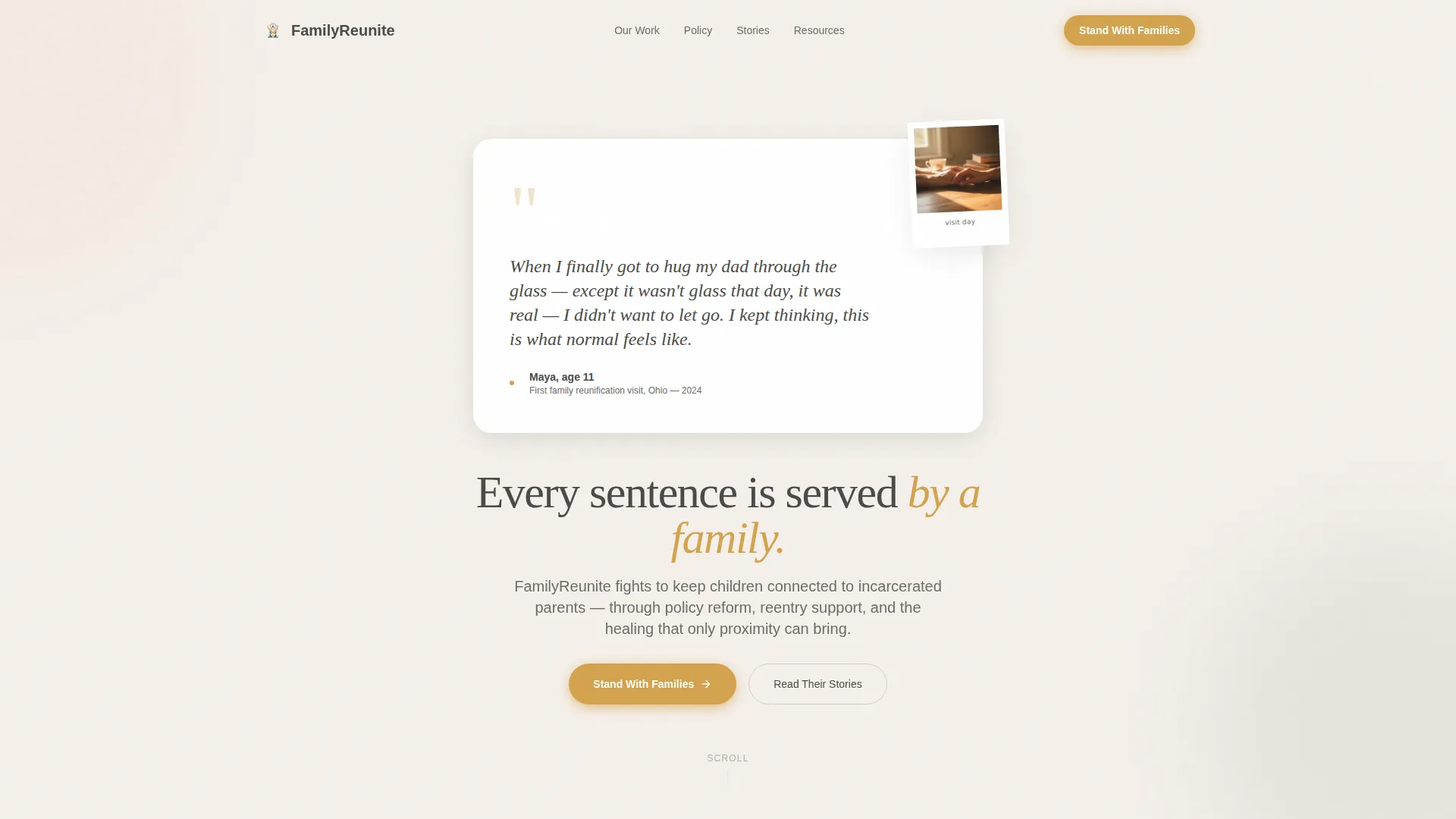
- A hero testimonial card with handwritten-style type, a polaroid-style image, and a fade-in headline beneath it
- A full modular grid system covering impact statistics, policy reform cards, and community voices, all alternating in a heart-and-evidence rhythm
- Two conversion sections: a gold call to action card with a lead capture form placed at the two-thirds scroll point, and a story submission form at the bottom of the page
Feature list
This template is built around a small set of deliberate, purposeful features. Each one exists to serve the people this foundation is trying to reach.
Testimonial Hero Card
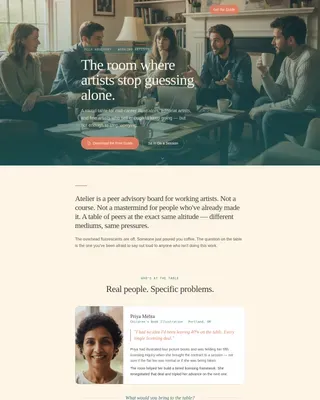
The page opens with a single oversized card centered on a linen white background. It features handwritten-style type quoting a child who attended a family reunification visit. A polaroid-style image of hands held across a table sits slightly rotated beside the text. A soft shadow makes the card feel like something just placed in front of you. Beneath it, the headline "Every sentence is served by a family" fades in quietly.
Alternating Heart-and-Evidence Grid
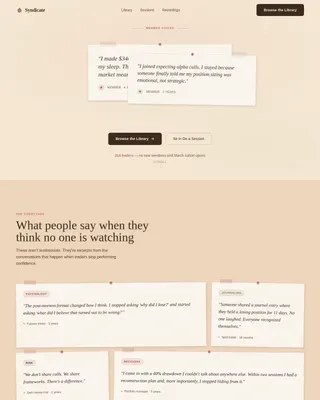
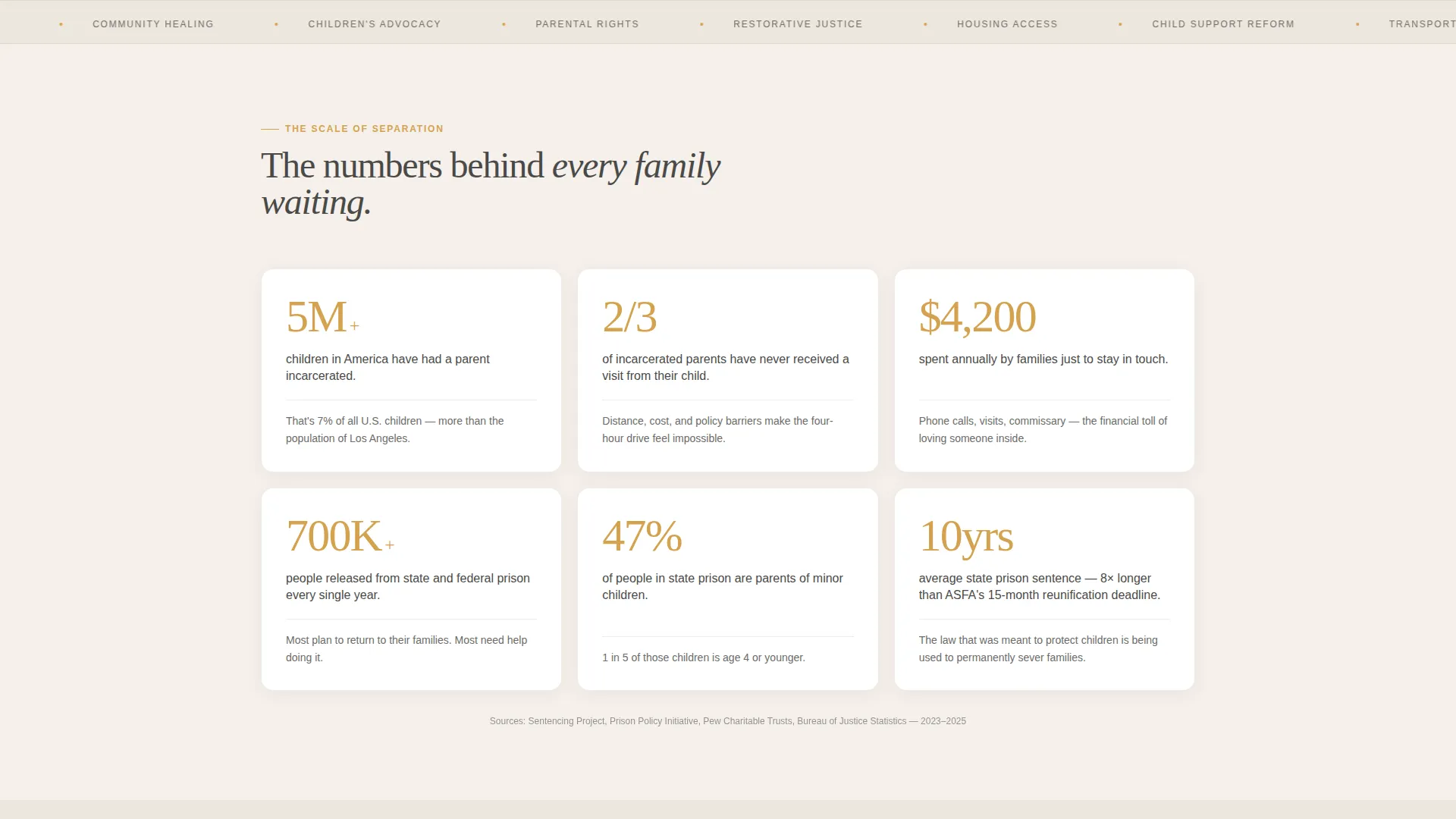
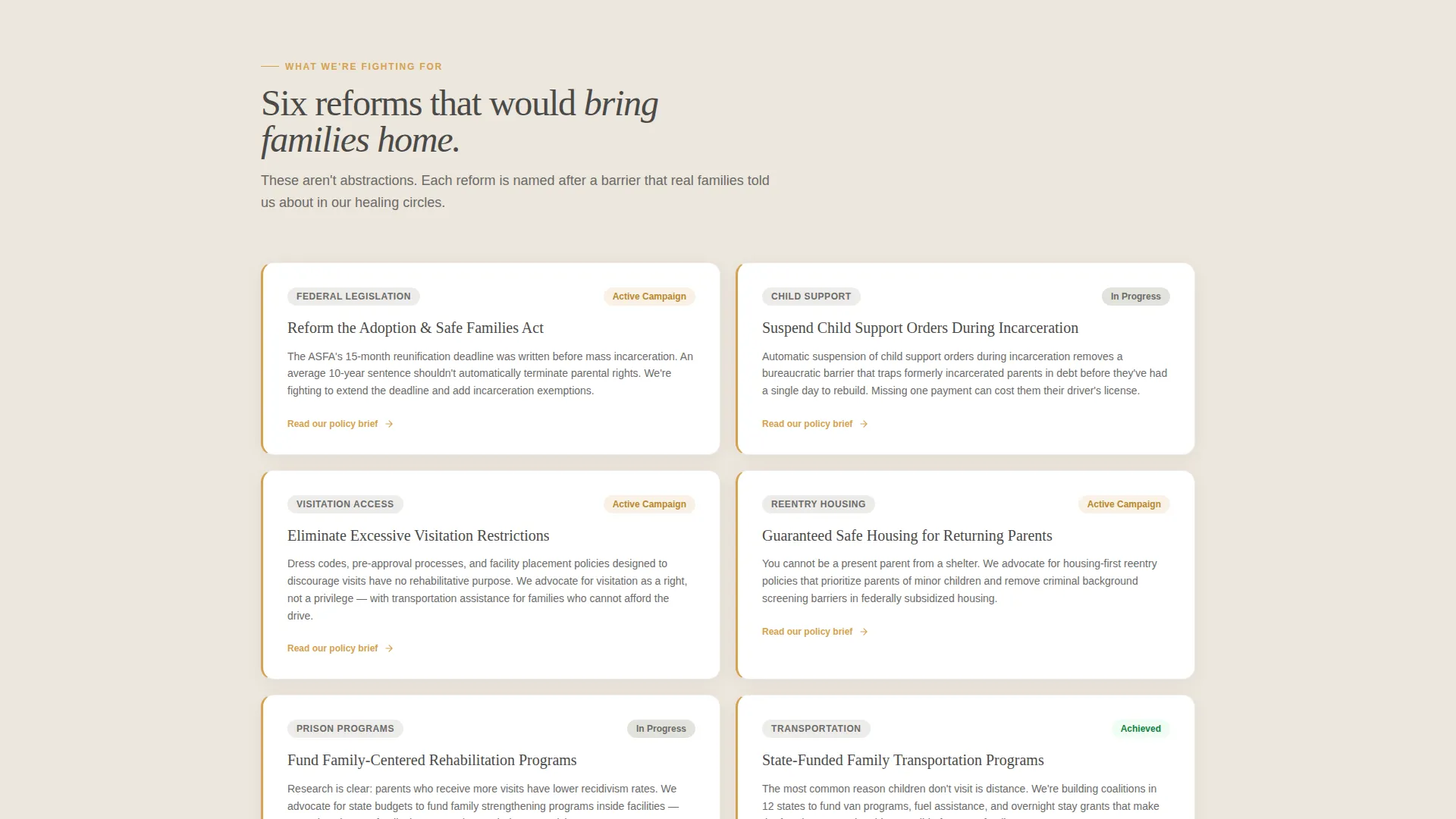
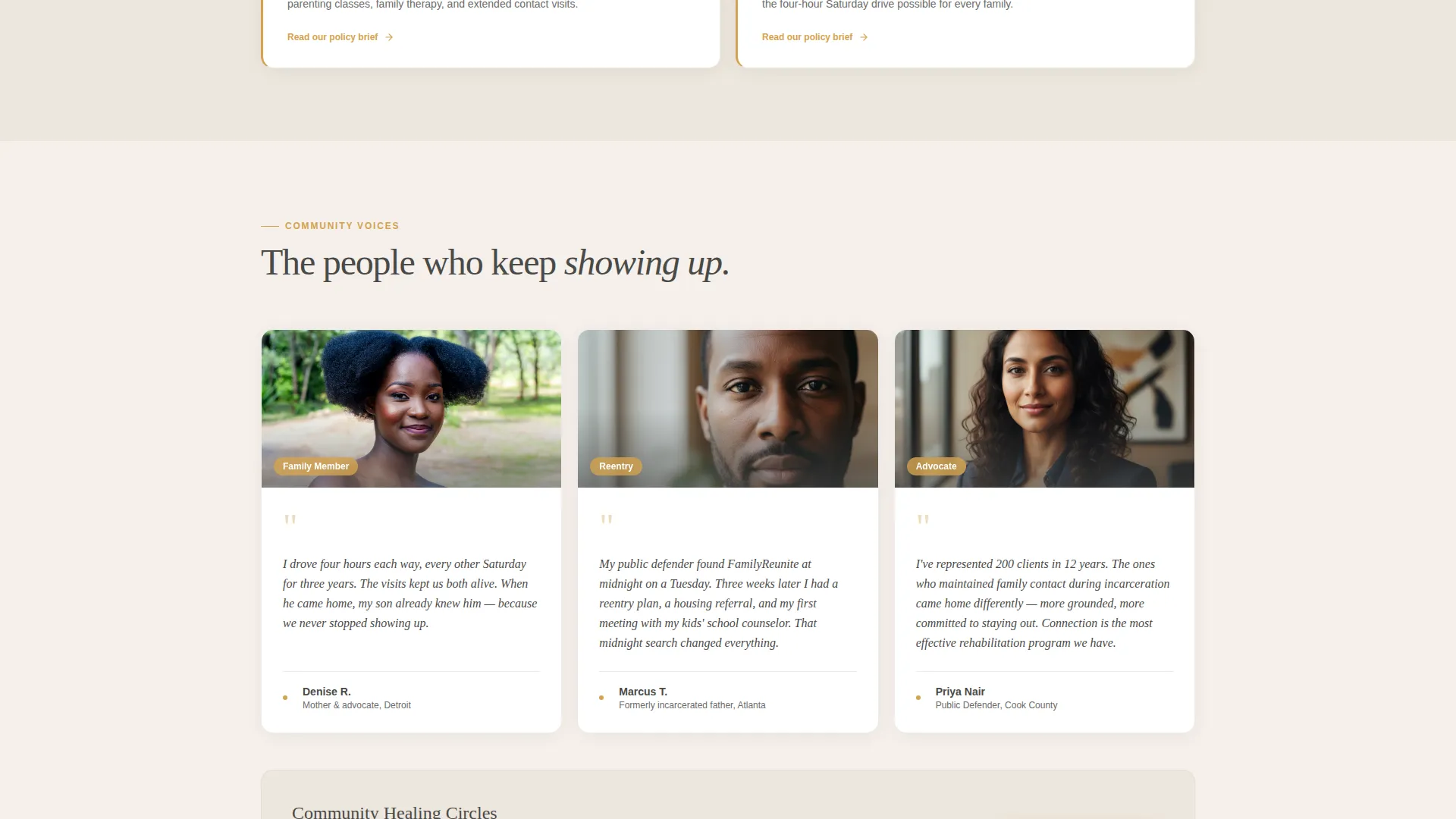
Rows of modular cards alternate between family testimonials and impact statistic cards. Statistic cards display large numerals with a single sentence of context. Policy reform cards name specific reforms the foundation champions. This rhythm makes the emotional and the factual feel inseparable as the visitor scrolls.
Gold Lead Capture Form Card
At the two-thirds scroll point, a warm gold card breaks the grid. It asks for a first name, email address, and a single dropdown: "I am a family member / advocate / donor / policy maker." The primary call-to-action reads "Stand With Families." This placement lets visitors build trust before they are ever asked to give anything.
Story Submission Section
A second conversion path sits near the bottom of the page. It offers an open text field and optional contact information, giving formerly incarcerated individuals and their families a voice without requiring commitment. This section asks for nothing more than a story.
Cloud Canvas Color System
The palette uses soft linen white, morning fog gray, steady slate, and a single accent of held-hand gold. Gold is reserved for calls to action, progress indicators, and moments of hope. The result feels like sunlight pressing through sheer curtains, unhurried and deliberately gentle.
Scroll-Reveal Animation System
Cards animate into view using scroll-triggered reveals, staggered timing, and gentle fades. No heavy animation libraries are used. The motion feels like a gradual exhale rather than a performance, matching the emotional register of the content.
Page sections overview
| Section | Purpose |
|---|---|
| Hero Testimonial Card | Opens with a child's quote and polaroid image to establish emotional grounding immediately |
| Impact Statistics Grid | Displays large numerals and single-sentence context to anchor the foundation's credibility |
| Policy Reform Cards | Names specific reforms the foundation champions, giving visitors concrete things to believe in |
| Community Voices Grid | Three-column testimonial cards from families, advocates, and community members |
| Lead Generation Card | Gold card with sign-up form breaks the grid and invites visitors to stand with families |
| Share Your Story | Open text form gives visitors a low-commitment way to contribute their experience |
| Footer | Horizontal flow footer closes the page with links and foundational information |
Design & branding system
The design language is built around a Family First theme. Every visual decision is made to feel warm, dignified, and handcrafted rather than institutional or cold.
- Color system uses four values: linen white (#F5F0EB), morning fog gray (#D0CFC7), steady slate (#4A4A48), and held-hand gold (#D4A24E) reserved strictly for calls to action and moments of emphasis
- Typography pairs Fraunces serif headlines with DM Sans body text, creating a contrast that feels both personal and readable
- Whitespace between cards is generous and intentional, so each story or statistic has room to land without competing with the next
Mobile & speed optimization
This template is built mobile-first. Its primary audience includes people checking their phones in prison parking lots, advocates searching for resources late at night, and families who may not have reliable desktop access.
- The card grid stacks cleanly on small screens, maintaining readable type sizes and comfortable touch targets throughout
- Scroll-reveal animations use lightweight, staggered fades with no dependency on heavy external libraries
- Forms are simple and minimal, requesting only essential fields to reduce friction on mobile keyboards
How this template helps you convert
This template earns the click before it asks for it. The conversion strategy is built into the scroll itself.
- The page leads with a real child's voice, not a donation ask, so visitors feel understood and respected before they encounter any form or button
- The "Stand With Families" lead capture form appears only after the visitor has moved through emotional testimony and credible statistics, making the decision to sign up feel natural rather than pressured
- The story submission path at the bottom offers a second, lower-commitment conversion for visitors who are not ready to join the list but want to contribute their experience
Other information about this template
This template is part of the Community and Nonprofit category and sits within the Prison Reform Community Foundation niche. It is designed as a single-page lead generation layout with a card grid structure and a Movement and Cause creative direction.
- The header concept is a Testimonial Card, one of the more emotionally direct opening approaches available in this template family
- The template uses the Cloud Canvas color system, a palette designed specifically for cause-driven and community-focused work where warmth and trust matter more than boldness
- Localization is set for English, United States date format, and United States dollar currency references, making it ready for domestic nonprofit use without modification
Theme
Family First
Creative direction
Movement & Cause
Color system
Cloud Canvas
Style
Card Grid (Modular)
Direction
Lead Generation
Page Sections
Testimonial Hero Card Opening
Alternating Heart-and-evidence Card Grid
Gold Lead Capture Form
Story Submission Section
Scroll-reveal Animation System
Cloud Canvas Branding System
Related questions
Who is the primary audience for this template?
Can this template support two different calls to action on one page?
Is this template suitable for a small or emerging nonprofit?
What makes this template different from a standard nonprofit layout?
Does the page use stock photography?