Payroll & Benefits Platform Specialist Portfolio Website Template
Payday is a recruitment-focused landing page template built for payroll software companies. It leads with emotional storytelling before functional details, using a zigzag case study layout, a bold navy-and-amber visual system, and a structured application flow. The goal is simple: attract mission-aligned candidates who understand why getting every paycheck right actually matters.
by Rocket studio
Quick summary
Payday is a single-page recruitment template for a payroll software company. It opens with a lifestyle-led hero, builds trust through alternating case study sections, and closes with a streamlined job application form. Every design choice reinforces one idea: payroll done right changes real lives, and the people who build it should feel that weight and that pride.
Who this template is for
This template is built for payroll and HR software companies that want to recruit people who actually care about the mission. It speaks directly to candidates who understand operational complexity and want their work to mean something beyond the sprint cycle.
- Operations leads, HR directors, and finance professionals considering a career move into the software space
- Engineers, Customer Success, and Sales candidates who want to join a company with a clear human purpose
- Hiring teams who want their careers page to do more than list job titles
What problem this template solves
Most careers pages feel like afterthoughts. They list roles, describe perks, and ask for a resume. They do not explain why the work matters or give candidates a reason to trust the company before applying. That gap costs mission-driven companies their best applicants.
- Candidates arrive without context and leave without conviction
- Generic job listings fail to differentiate the company from dozens of similar postings
- HR teams spend time screening poor-fit applicants because the page attracted the wrong audience
What you get with this template
This template gives you a complete, section-led recruitment landing page. Each section has a distinct job: earn trust, prove impact, show the people, list the roles, and capture the application. Nothing is redundant.
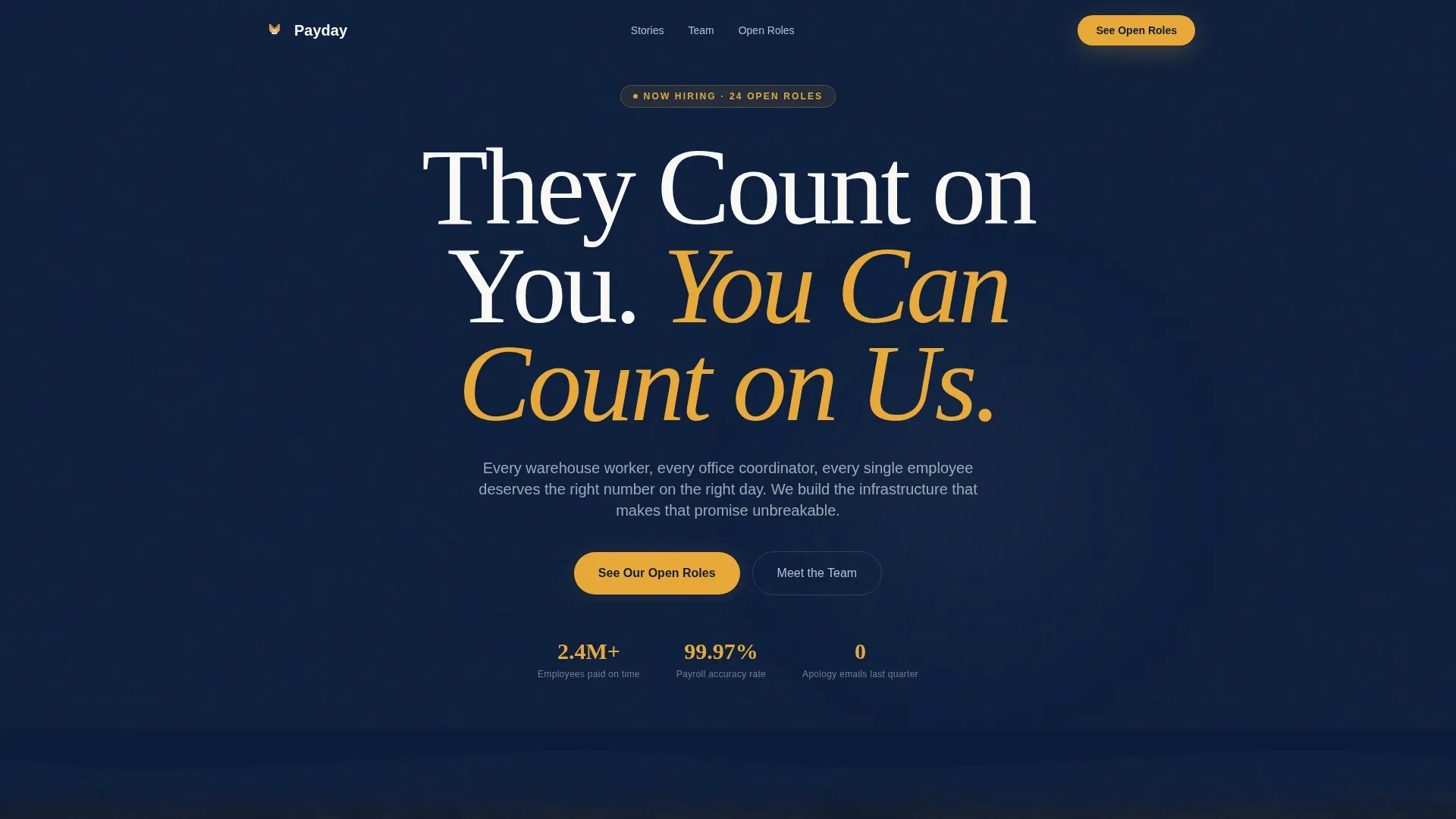
- A hero section with a viewport-dominating serif headline and a lifestyle photograph
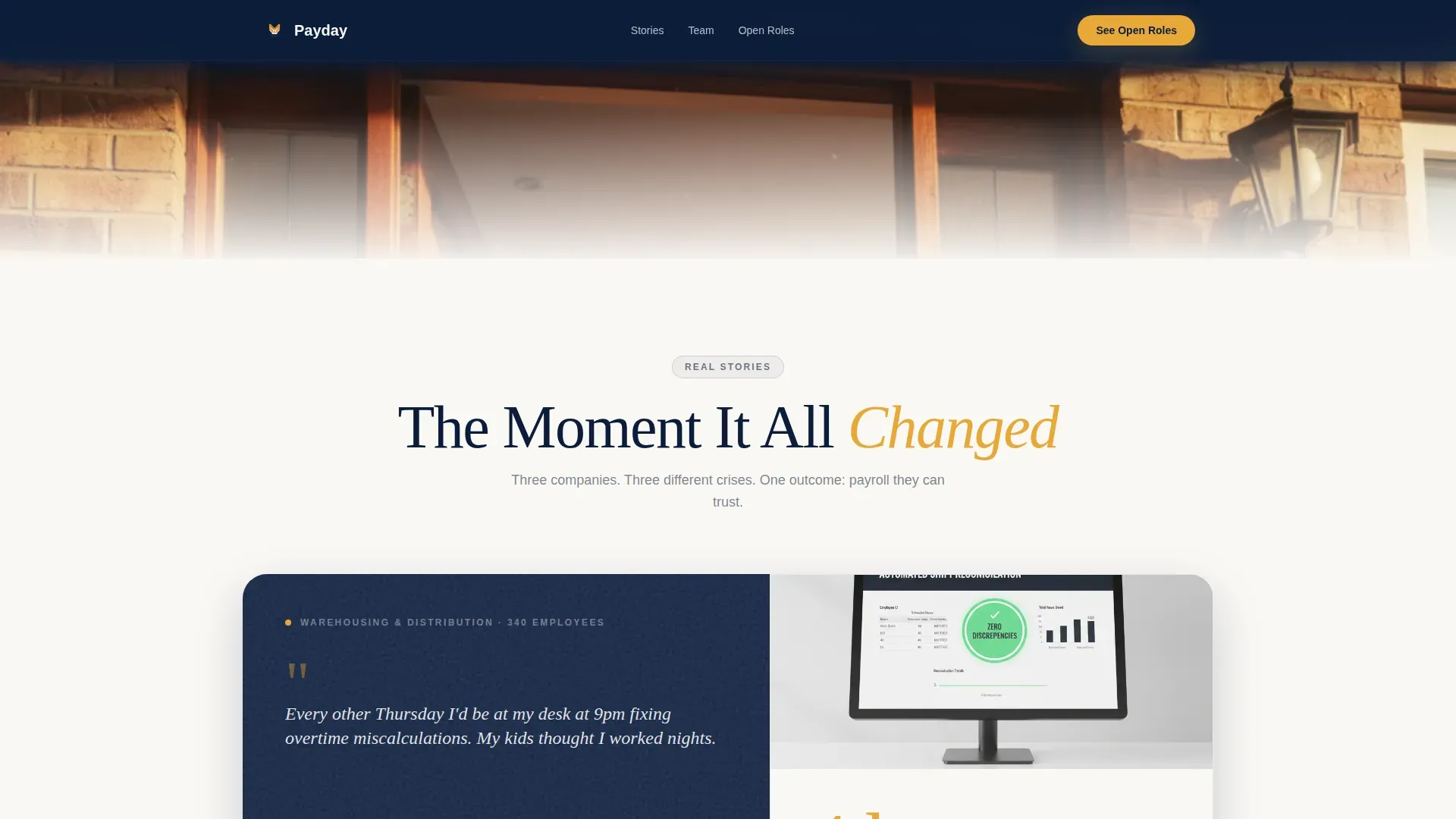
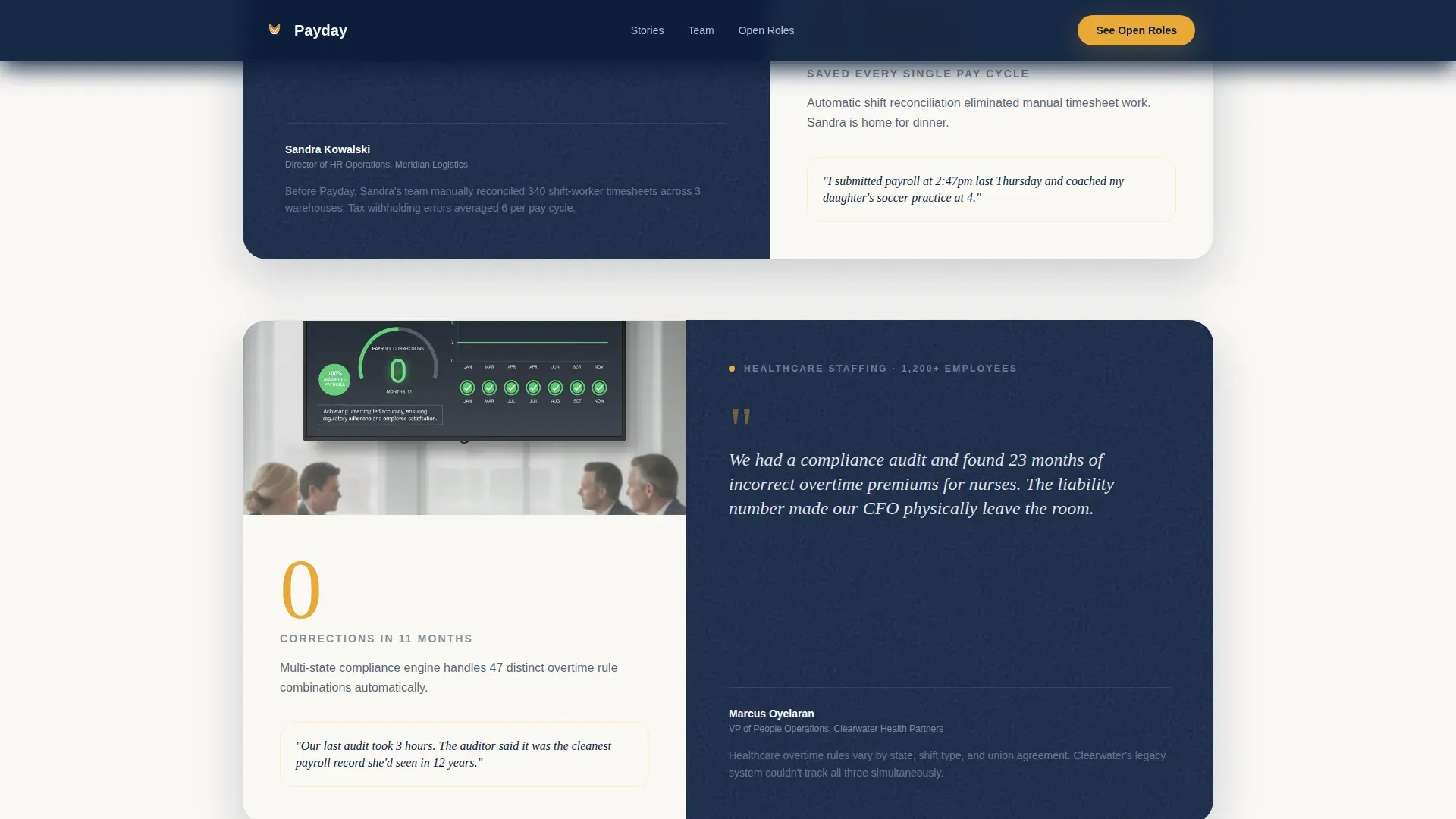
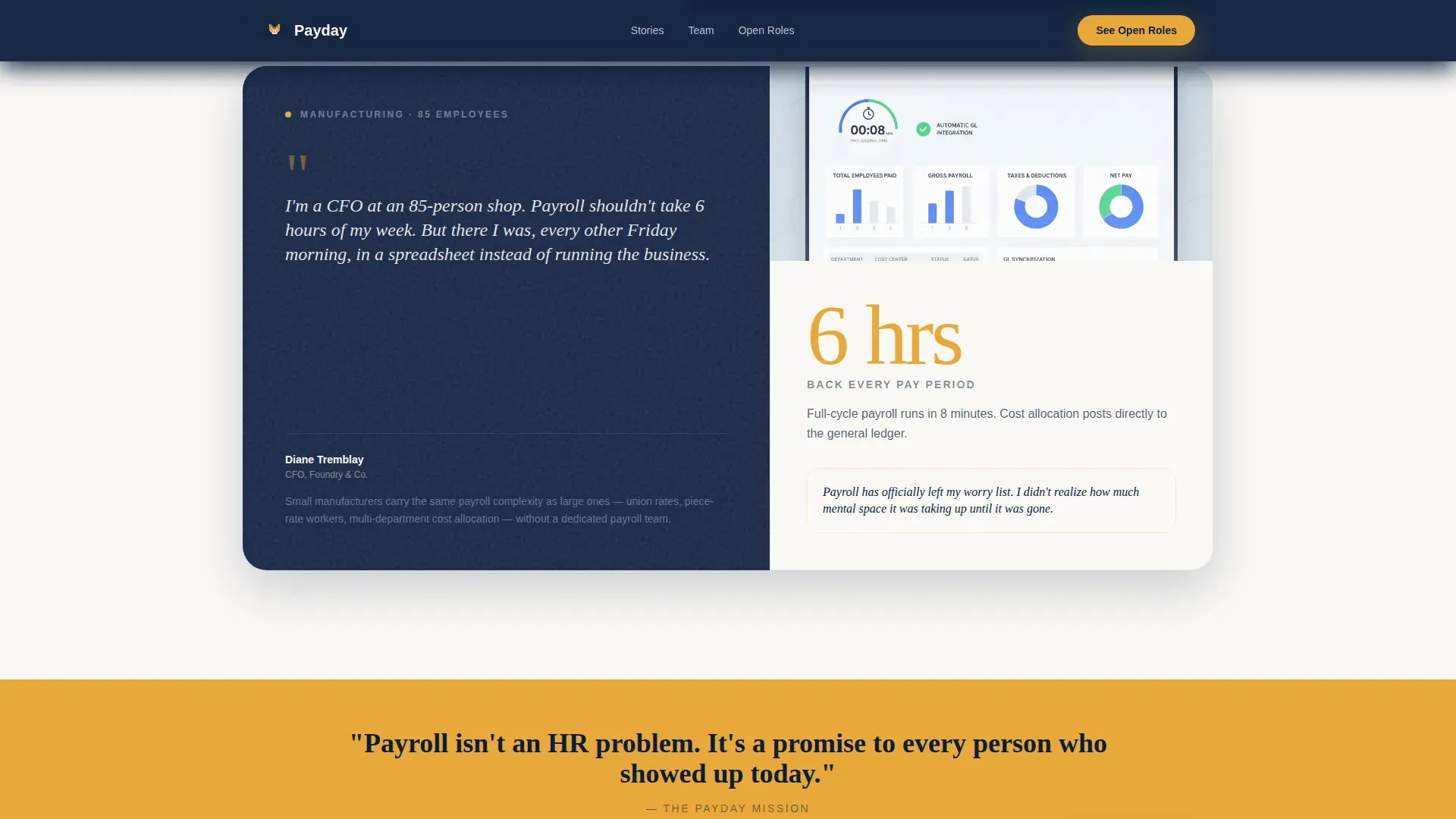
- Three alternating zigzag case study sections with quote blocks, product screenshots, and oversized amber metrics
- A team mosaic, a department-grouped open roles section, and a focused five-field application form
Feature list
Emotional Hero Section
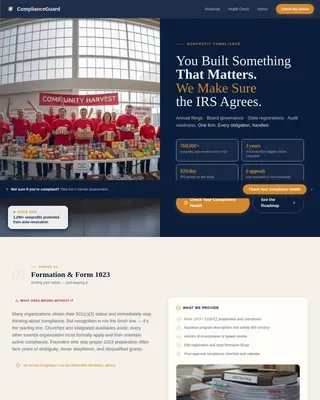
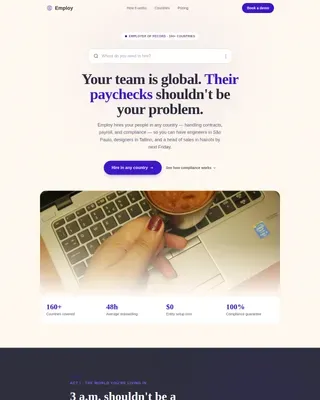
The hero opens with stark white Fraunces serif type on deep command navy at full viewport scale. A soft-focus lifestyle photograph bleeds in from the bottom edge, showing the moment after work ends. A single supporting line of copy and the primary amber-on-navy call to action sit below the headline, inviting visitors to see open roles before they read a single job description.
Zigzag Case Study Layout
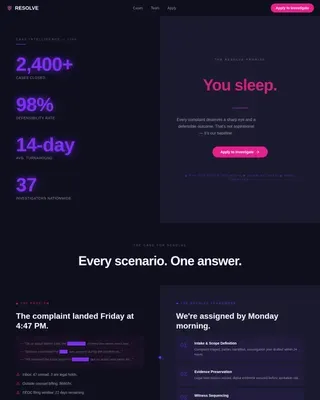
Three alternating sections each tell one complete payroll turnaround story. The left block carries the pain in a real-feel HR manager quote set against a grainy, stressed texture. The right block delivers the resolution with a clean product screenshot and one oversized amber metric. The diagonal rhythm keeps readers scrolling and builds cumulative proof across company sizes and industries.
Sticky Call to Action Bar
After the second case study, a sticky recruitment bar appears and follows the visitor down the page. It holds the primary "See Our Open Roles" button in amber on navy, keeping the conversion path accessible without interrupting the reading experience.
Meet the Team Mosaic
A portrait grid introduces the people behind the product. Each photograph is paired with a short quote explaining why that team member stayed. The section humanizes the company and reinforces the Family First theme without requiring a separate about page.
Department-Grouped Open Roles
The careers listing organizes roles into three departments: Engineering, Customer Success, and Sales. Each department opens with a one-sentence team philosophy. This gives candidates a fast, honest read on culture before they click into any individual role.
Focused Application Form
The application form keeps friction low with five fields only: name, role of interest, LinkedIn profile URL, and one open-ended question asking what getting payroll right means to the applicant. The question filters for mission alignment before the first interview.
Page sections overview
| Section | Purpose |
|---|---|
| Hero headline | Establish emotional promise and primary call to action |
| Case study one | Show payroll pain and resolution for a mid-size company |
| Case study two | Show payroll pain and resolution for a second industry |
| Case study three | Show payroll pain and resolution for an enterprise context |
| Sticky recruitment bar | Keep open roles call to action visible during scroll |
| Meet the Team | Humanize the company with portraits and stay-reason quotes |
| Open Roles listing | Group available positions by department with team philosophy |
| Application form | Capture candidate details and one mission-alignment question |
| Footer | Close with linear brand pattern and navigation links |
Design & branding system
The visual identity follows a Family First theme expressed through the Navy Authority color system. The palette balances institutional authority with genuine warmth, signaling that this is a company serious enough to trust with a livelihood and human enough to remind you why the work matters.
- Colors: deep command navy (#0B1D3A) as the primary surface, dependable slate (#3D5A80) for mid-level contrast, warm hearth white (#FAF8F5) for body areas, and human-touch amber (#E8A838) reserved for buttons, badges, and metric highlights
- Typography: Fraunces heavy serif for all display headlines, DM Sans for body copy and interface labels
- Texture and motion: grainy stressed textures in pain-state blocks, clean flat surfaces in resolution blocks, scroll-triggered fade-up animations with staggered reveals, and grayscale-to-color hover transitions on team portraits
Mobile & speed optimization
The template is built desktop-first, reflecting the reality that its core audience of HR directors and finance leaders typically reviews careers pages on a laptop or workstation. A mobile-responsive fallback ensures the page still reads cleanly on smaller screens.
- Scroll-triggered animations use stagger reveals that adapt gracefully to reduced-motion preferences on mobile devices
- Static sections use server-rendered components for faster initial load; the sticky bar and application form use client-side components only where interactivity is required
- The sticky recruitment bar collapses appropriately on narrow viewports to avoid blocking content
How this template helps you convert
Every layout decision in this template serves the same conversion goal: earn trust through proof, then make applying easy. The page does not ask for a resume before it gives a reason to care.
- The hero leads with emotional resonance before any functional claims, so candidates immediately understand the human stakes of the product and the role
- The case study zigzag builds cumulative credibility across three different company contexts, meaning each visitor finds a story that mirrors their own experience
- The sticky call to action bar and the low-friction five-field form reduce drop-off at the final step, keeping the path from interest to application as short as possible
Other information about this template
This template is designed specifically for the payroll software recruiting niche, where candidate motivation is as important as candidate qualifications. It works well for companies that want their careers page to reflect the same reliability they promise their customers.
- The template is built for a single-page flow with no multi-page navigation required
- Animation intensity is set to medium: enough to create visual rhythm without slowing the reading experience
- The linear footer pattern from Pattern 1 closes the page with clean brand consistency
- The department filter tabs in the Open Roles section support three default groups and can be relabeled to match the company's actual team structure
- This template suits payroll software companies at growth stage, where recruiting mission-driven talent is as strategically important as acquiring new customers
Theme
Family First
Creative direction
Case Study Narrative
Color system
Navy Authority
Style
Zigzag/Alternating
Direction
Recruitment/Hiring
Page Sections
Emotional Hero with Lifestyle Photography
Zigzag Case Study Sections
Sticky Recruitment Call to Action
Team Mosaic with Stay-reason Quotes
Department-grouped Careers Listing
Mission-alignment Application Form
Related questions
Who is the ideal candidate this landing page is designed to attract?
Can the case study sections be updated with real company stories?
How does the application form help identify the right candidates?
Is this template practical for a company that is still building its team?
What separates this from a standard job listing page?