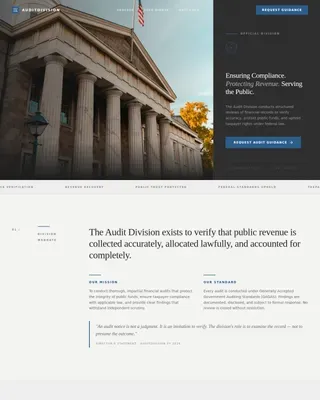
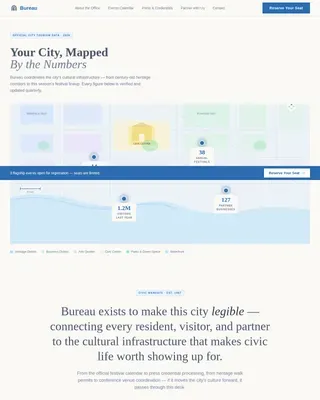
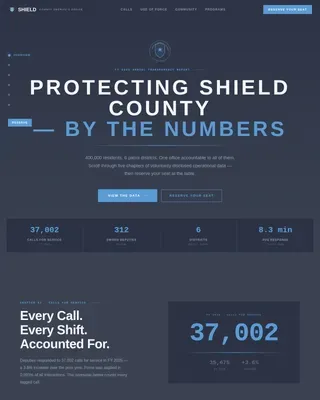
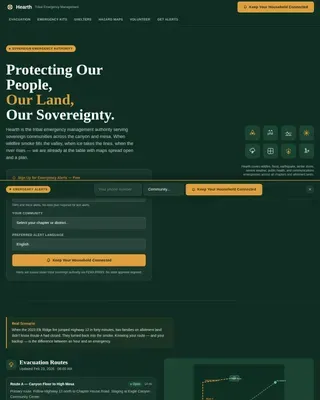
Historic Preservation Government Education Website Template
The Preserve historic landmark fundraising landing page template is built for municipal preservation offices that need to turn civic pride into real donations. It combines animated impact metrics, a flip-card education grid, active campaign listings, and a streamlined donation form into one visually appealing, emotionally resonant landing page designed to collect donations and grow your supporter base.
by Rocket studio
Quick summary
Preserve is a card grid fundraising landing page for municipal historic preservation offices. It opens with animated odometer counters, guides site visitors through a docent-style education grid, and closes with a sticky donation bar tied to tangible preservation outcomes. Every section builds emotional investment before making the ask, so your fundraising campaign converts readers into committed donors.
Who this template is for
This landing page is built for offices and nonprofit organizations that work every day to protect historic structures from demolition, neglect, and uninformed zoning decisions. If your work lives at the intersection of civic duty and community memory, this template was designed with you in mind.
- Municipal historic preservation offices running an active fundraising campaign for landmark protection
- Nonprofit preservation organizations seeking to inform community members, grow their donor list, and collect donations online
- Civic groups and neighborhood associations ready to build a credible donation page for threatened buildings or districts
What problem this template solves
Many organizations that do genuinely important preservation work struggle to communicate urgency online. Their websites feel bureaucratic, their donation page is buried, and donors leave before they understand what is at stake. This fundraising landing page solves that by putting the story first.
- Visitors arrive to a striking hero section with real metrics, not a wall of text, so they grasp the scale of the mission instantly
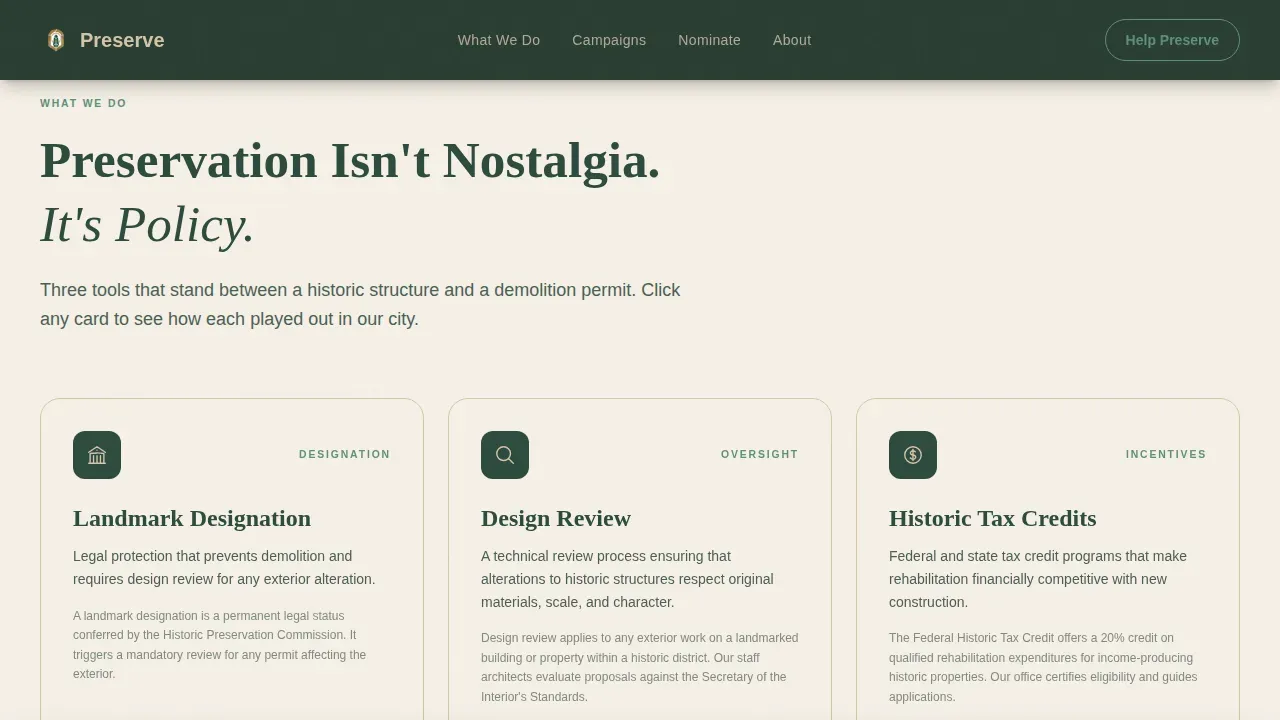
- The education grid teaches what landmark designation, design review, and tax credit programs actually mean before asking anyone to donate
- A sticky call-to-action bar with outcome-tied preset amounts keeps the fundraising goal visible without interrupting the emotional journey
What you get with this template
You get a fully structured, single-page fundraising landing designed for desktop-first use with strong mobile responsiveness. The layout is modular, so each card row can reflect your current programs, active campaigns, and preservation projects without a redesign.
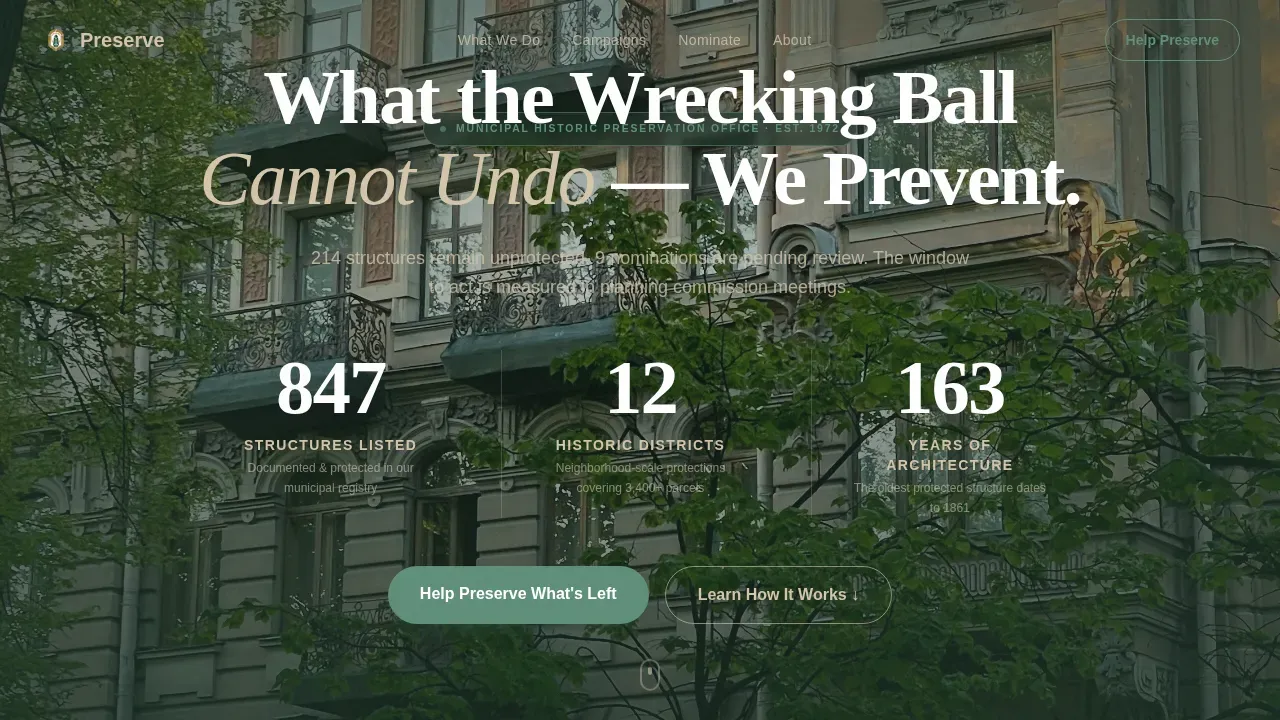
- Hero section with animated odometer counters, a full-width golden-hour streetscape photograph, and an urgency subline
- Two rows of modular flip cards covering preservation education and active threatened-building campaigns, each with before-and-after photograph support
- A dedicated donation form with preset giving tiers tied to real outcomes, an optional mailing list sign-up, and a Nominate a Building card for civic-action supporters
Feature list
This template delivers a focused set of built-in components. Each one was chosen to build credibility, deepen emotional connection, and reduce friction in the donation process.
Animated Odometer Hero
The hero section opens with three oversized counters that tick upward like an odometer: structures listed, historic districts protected, and years of architecture preserved. These numbers are set in a heavy serif typeface that feels carved rather than printed. A single urgency subline sits below, turning pride into a prompt to act.
Flip-Card Education Grid
The first card row teaches before it asks. Each card covers a key preservation concept, such as landmark designation or tax credit programs, and flips on click to reveal a local case study with a before-and-after photograph. This approach helps supporters understand the real difference that preservation work makes, turning passive readers into motivated donors.
Active Campaigns Grid
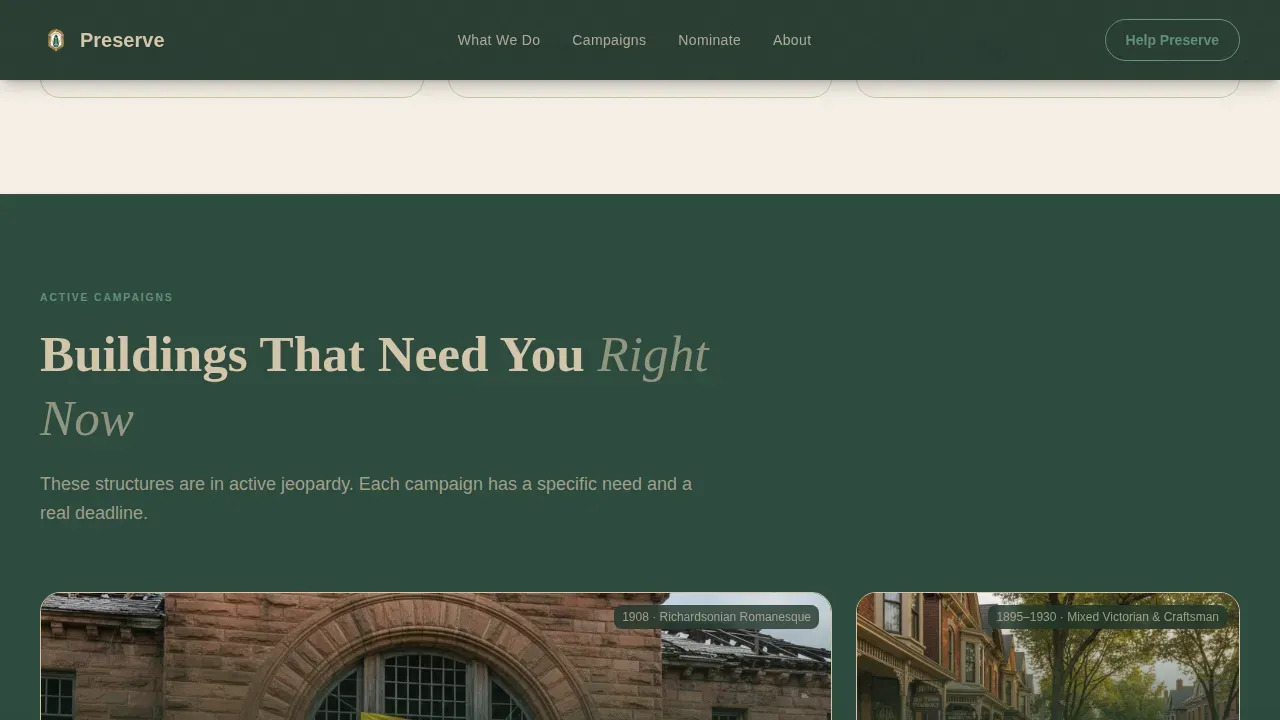
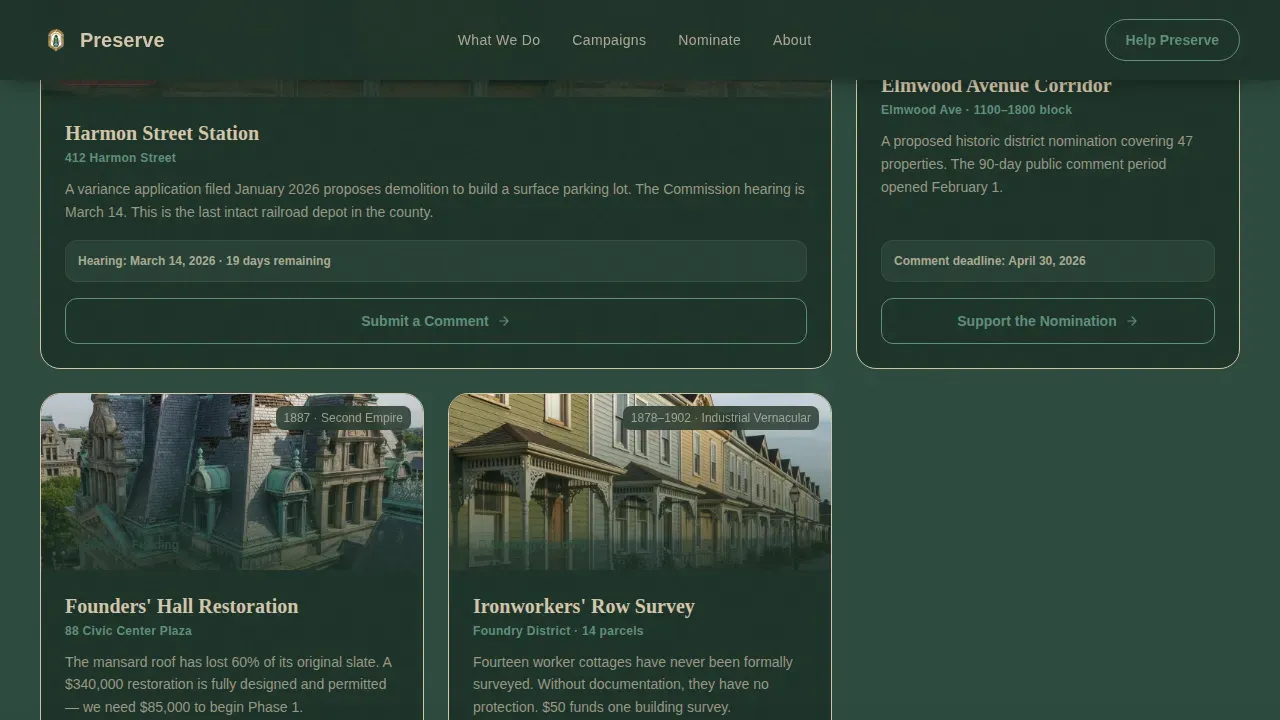
The second card row surfaces buildings currently threatened, districts under review, and restoration projects seeking funding. Each card tells a compressed story of what is at risk and why it matters. This section makes the fundraising goal feel specific and immediate rather than abstract.
Outcome-Tied Donation Form
The donation form presents preset giving amounts connected directly to tangible restoration needs. For example, one tier funds a building survey and another sponsors a full landmark nomination. This structure helps most donors feel their contribution makes a concrete difference, which increases follow-through. The form also includes an optional checkbox to join the Preservation Advocates mailing list.
Sticky Donation Bar
A sticky bottom bar carrying the primary call-to-action appears only after a visitor scrolls past the second card row. This timing ensures emotional context is fully built before the ask arrives. The bar stays anchored as donors scroll, keeping the path to donate visible without being intrusive.
Nominate a Building Card
A distinct card in the grid offers a secondary conversion path for visitors whose currency is civic action rather than dollars. This peer to peer element broadens your reach by inviting community members to participate in the nomination process, not just give money.
Page sections overview
| Section | Purpose |
|---|---|
| Hero with Metrics | Opens with animated counters and an urgency subline to establish scale |
| Education Card Grid | Flip cards teach landmark designation, design review, and tax credits |
| Active Campaigns Grid | Surfaces threatened buildings and districts needing immediate support |
| Nominate a Building | Gives civic-action visitors a clear non-donation conversion path |
| Donation Form | Collects donations using outcome-tied preset tiers and mailing list opt-in |
| Footer | Linear single-row footer with contact and organization details |
Design & branding system
The visual identity follows an Educational Guide theme using a Forest Trust color scheme. The palette feels like a brass plaque bolted to a limestone wall: weathered, authoritative, and rooted in materials that outlast the people who laid them. Typography pairs Fraunces, a heavy carved serif for headings, with DM Sans for clean, readable body copy.
- Old-growth evergreen (#2D4A3E) anchors the primary backgrounds; archive parchment (#F5F0E6) alternates for section contrast, and sandstone mortar (#D4C5A9) bridges dividers so nothing reads as cold or bureaucratic
- Patina copper (#5F8F7A) is reserved for interactive card borders and hover states, giving every flip card and donation preset a tactile visual cue
- Section backgrounds alternate between parchment and deep evergreen, creating a rhythm that feels like walking through a well-curated archive, visually appealing and easy to navigate
Mobile & speed optimization
The template is built desktop-first for planning commission researchers and property owners doing detailed reading, and then adapts cleanly for smaller screens. Mobile optimization is a core part of the build, not an afterthought, because a meaningful share of donors will arrive via social media on their phones.
- Flip-card interactions, odometer animations, and the sticky donation bar are all handled by dedicated client components so static content loads immediately
- The navigation bar and sticky call-to-action remain usable at all breakpoints, keeping the donation page accessible whether a visitor is at a desk or on a phone
- The layout is mobile friendly by design, with single-column card stacking and touch-friendly tap targets for the donation form presets
How this template helps you convert
A well-structured fundraising landing page does more than present information. It builds a sequence of emotional and rational reasons to give before asking. This template is engineered around that sequence.
- The hero section leads with verified impact numbers, building trust immediately and signaling that this organization has a real track record. A progress bar component can be added to show how close any specific fundraising goal is to completion, motivating donors to close the gap.
- The education grid and active campaigns grid work together to inform and create urgency. Before-and-after photographs tell a story that text alone cannot. When supporters understand what is genuinely at risk, the donation process feels less like a transaction and more like a rescue.
- The outcome-tied donation form and sticky call-to-action bar reduce friction at the moment of decision. Preset giving tiers eliminate guesswork. The streamlined donation process asks only for essential information: name, email, amount, and an optional mailing list sign-up, so donors to give do not have to wade through unnecessary steps.
Other information about this template
This section covers additional context that helps organizations plan how to use the template effectively across a range of campaign types and outreach strategies.
- The template supports capital campaigns for major restoration efforts as well as smaller recurring fundraising campaigns for ongoing survey and nomination work
- Donor data collected through the mailing list opt-in can inform future giving tuesday campaigns, a giving tuesday campaign focused on preservation can use this same landing page with updated hero copy and event details
- A donor wall section can be added to the grid to highlight recent contributors and encourage small donations by showing social proof in real time
- Organizations can use the template for an exciting event such as a preservation gala or a community walk-a-thon by updating the active campaigns grid with event details and a countdown message
- Pitching preservation stories to local media is more effective when you can direct journalists to a credible, visually appealing landing page that reflects your current programs and active preservation projects
- The template is designed to support success stories through the flip-card case studies, giving your fundraising landing page proof points that build credibility with skeptical donors
- Incorporating social media share links and visual assets from the site into your social media plan helps maximize outreach and bring new supporters into your community
- The template can accommodate a specific program focus, such as a threatened mill district or a single endangered courthouse, by customizing the active campaigns grid to highlight that one project
- Key takeaways for organizations using this template: keep your fundraising goal visible, connect every giving tier to a real outcome, and let the story do the heavy lifting before the ask arrives
- Most donors respond to transparency; listing your mission, tax-exempt status, and project costs directly on the site reinforces the trust signals this template is built to deliver
- Volunteer opportunities can be surfaced through the grid cards or the footer, giving community members who cannot donate financially a way to stay involved and participate in the preservation mission
- Major gifts and capital campaigns benefit from a dedicated card or section that explains the specific problem, such as structural damage to a historic facade, and the concrete plan to fix it
- The template is designed so that family members of long-time residents and neighborhood stakeholders feel the weight of local history the moment they land on the page
Theme
Educational Guide
Creative direction
Vision & Mission
Color system
Forest Trust
Style
Card Grid (Modular)
Direction
Donation/Fundraising
Page Sections
Animated Odometer Hero Section
Flip-card Education Grid
Active Campaigns Card Row
Outcome-tied Donation Form
Sticky Fundraising Call-to-action Bar
Nominate a Building Civic Card
Related questions
Can I customize the donation preset amounts in the template?
Does this template work for a giving tuesday campaign?
How does the flip-card grid help build donor engagement?
Can the template handle both financial donations and building nominations?
Is this template practical for a small nonprofit preservation organization?