Compassionate Immigration Landing Page Template
The Raíces landing page template is built for human rights community foundations serving immigrant families. It combines a watercolor neighborhood illustration hero, a three-field intake form designed around trust, and dual conversion paths for help-seekers and supporters. The Cloud Canvas color system and handmade visual style make every section feel warm, safe, and neighborhood-made.
by Rocket studio
Quick summary
Raíces is a hero-dominant landing page template for immigrant rights and community foundations. It pairs a full-viewport watercolor illustration with two focused conversion paths: one for families seeking help, one for donors and volunteers. The design feels handmade and intimate, built to earn trust before it asks anything of the visitor.
Who this template is for
This template is made for organizations that stand alongside immigrant families navigating detention, deportation defense, and reunification. It works best when the mission is neighborhood-rooted and the audience needs to feel safe before they reach out.
- Immigrant rights foundations and legal defense nonprofits
- Community organizers running know-your-rights programs
- Local donors and volunteer networks ready to take action
What problem this template solves
Immigrant families in crisis often search for help late at night, on a phone, in a language that may not be English. A generic nonprofit page feels cold and institutional. This template solves the trust gap by leading with warmth, safety, and radical simplicity.
- Long, complicated forms that ask for sensitive data before offering anything in return
- Impersonal stock photography that signals distance instead of community
- Pages that bury the most urgent help options under layers of navigation
What you get with this template
You get a complete, single-page layout built around two conversion goals: connecting families to help and converting neighbors into donors or volunteers. Every design and content decision prioritizes safety and clarity.
- A 90-percent viewport hero with a custom watercolor neighborhood illustration and a fade-in headline
- A three-field intake form collecting only first name, preferred language, and contact method
- A secondary pledge path with a "Stand With Your Neighbors" call to action for donors and volunteers
Feature list
This template includes purpose-built sections and interaction patterns rooted in the source brief. Each feature serves the foundation's dual mission: protect first, then act.
Hero Illustration Section
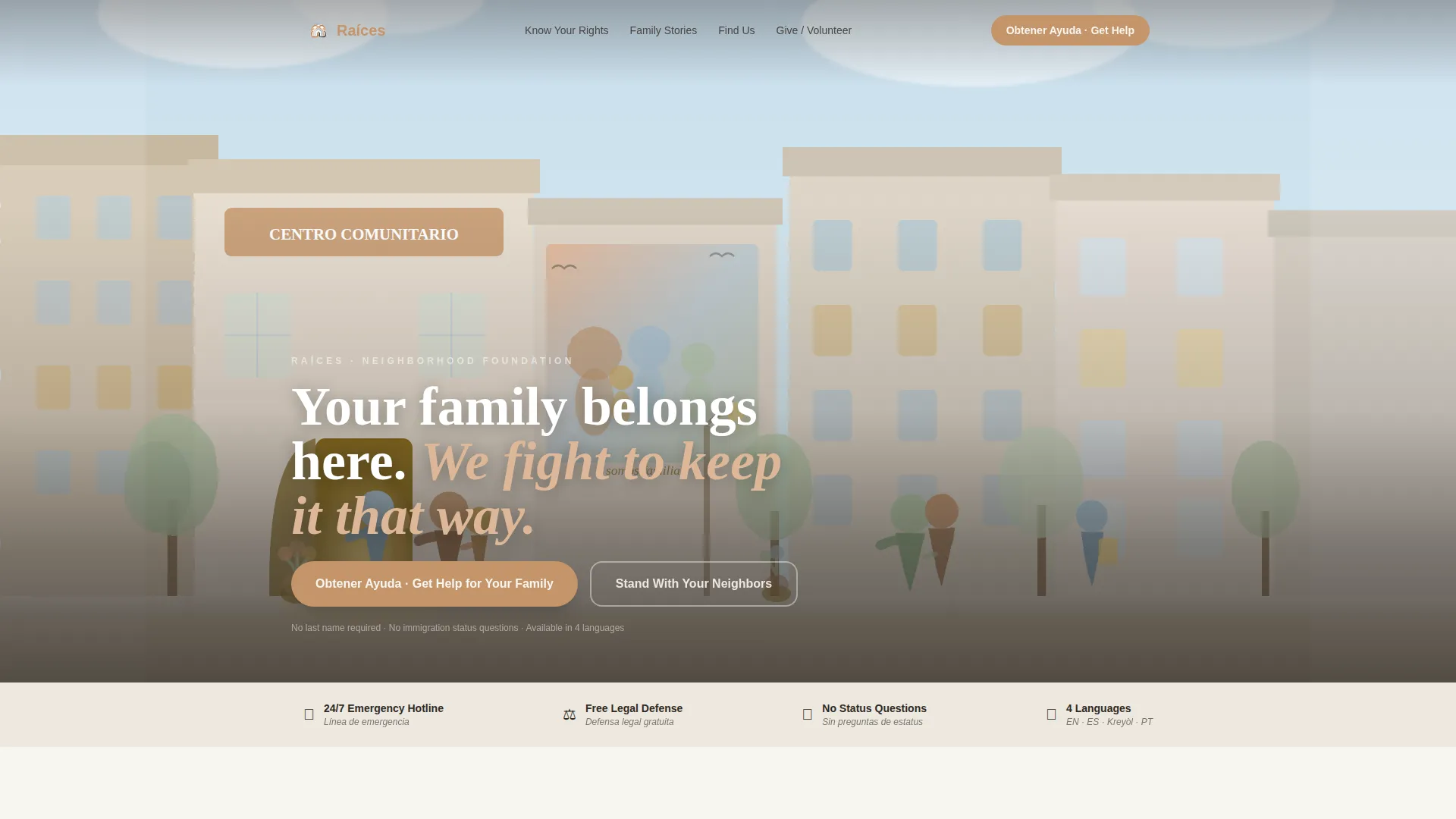
A custom watercolor scene fills ninety percent of the viewport. Families walk past murals and storefronts, children hold parents' hands, and a community center door stands open with warm light. A headline fades in over the illustration: "Your family belongs here. We fight to keep it that way."
Minimal Three-Field Intake Form
The primary conversion form asks only three things in order: first name, preferred language via dropdown (English, Spanish, Haitian Creole, and Portuguese), and a contact method toggled between phone and email. No last names. No immigration status questions. The form design communicates safety through what it omits.
Know Your Rights Panel
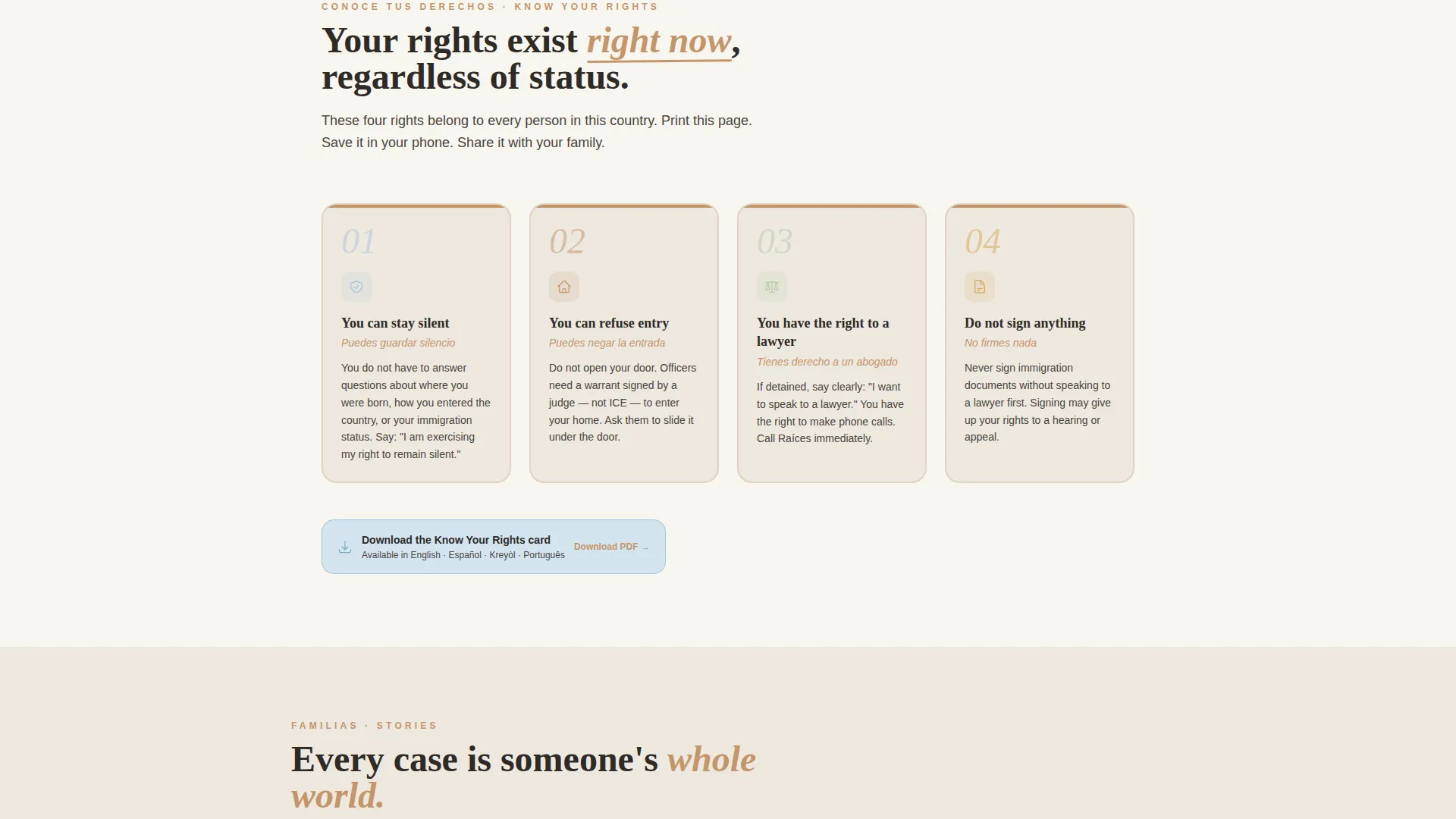
A hand-drawn pamphlet-style section presents rights information through illustrated cards. The visual style signals community authorship, not institutional distance, making the content feel approachable for visitors who may distrust formal documents.
Illustrated Family Stories
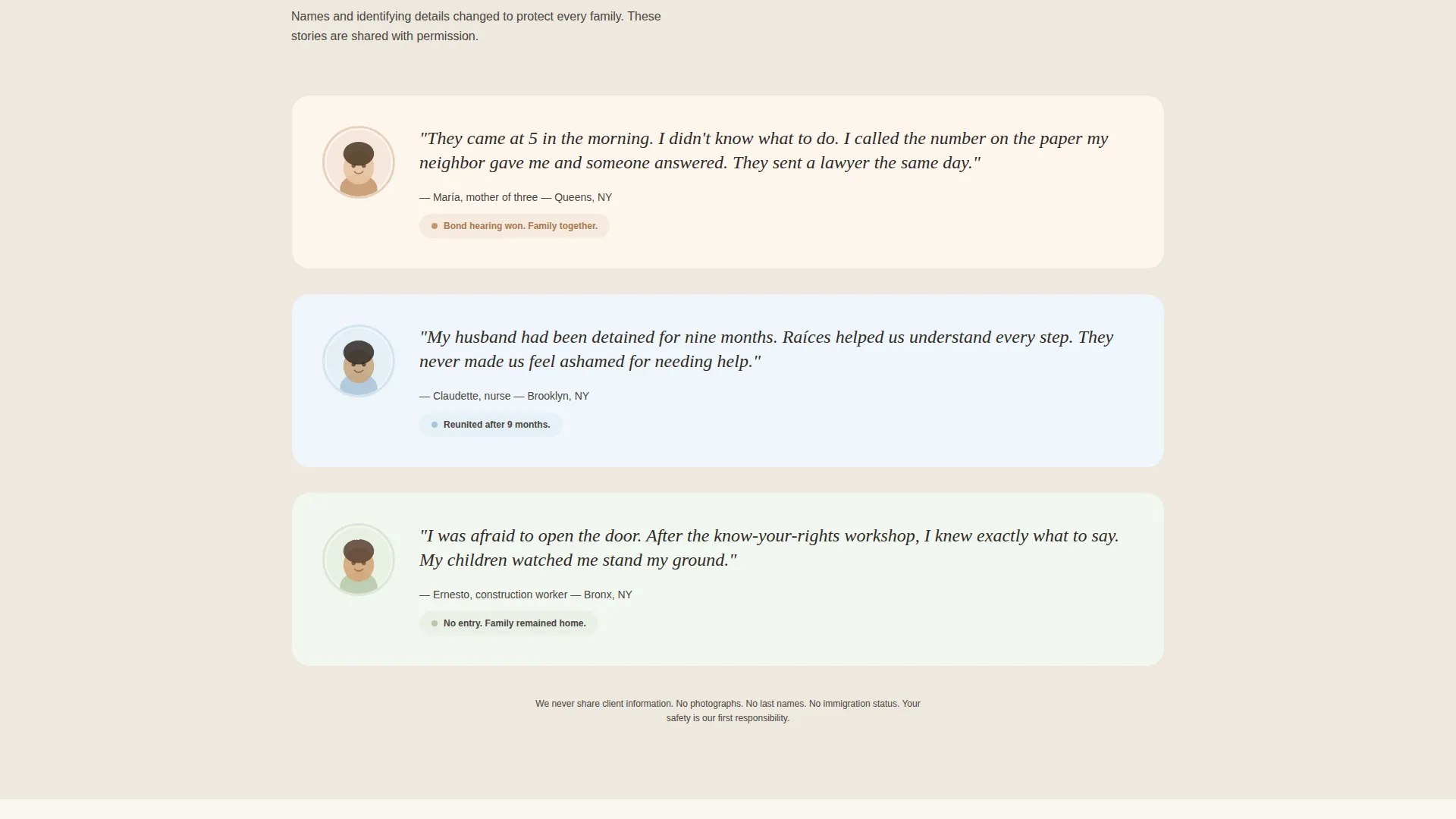
First-person quotes sit beside illustrated portraits instead of photographs. This protects the identities of real community members while still conveying authentic, human stories that build credibility and emotional connection.
Neighborhood Service Map
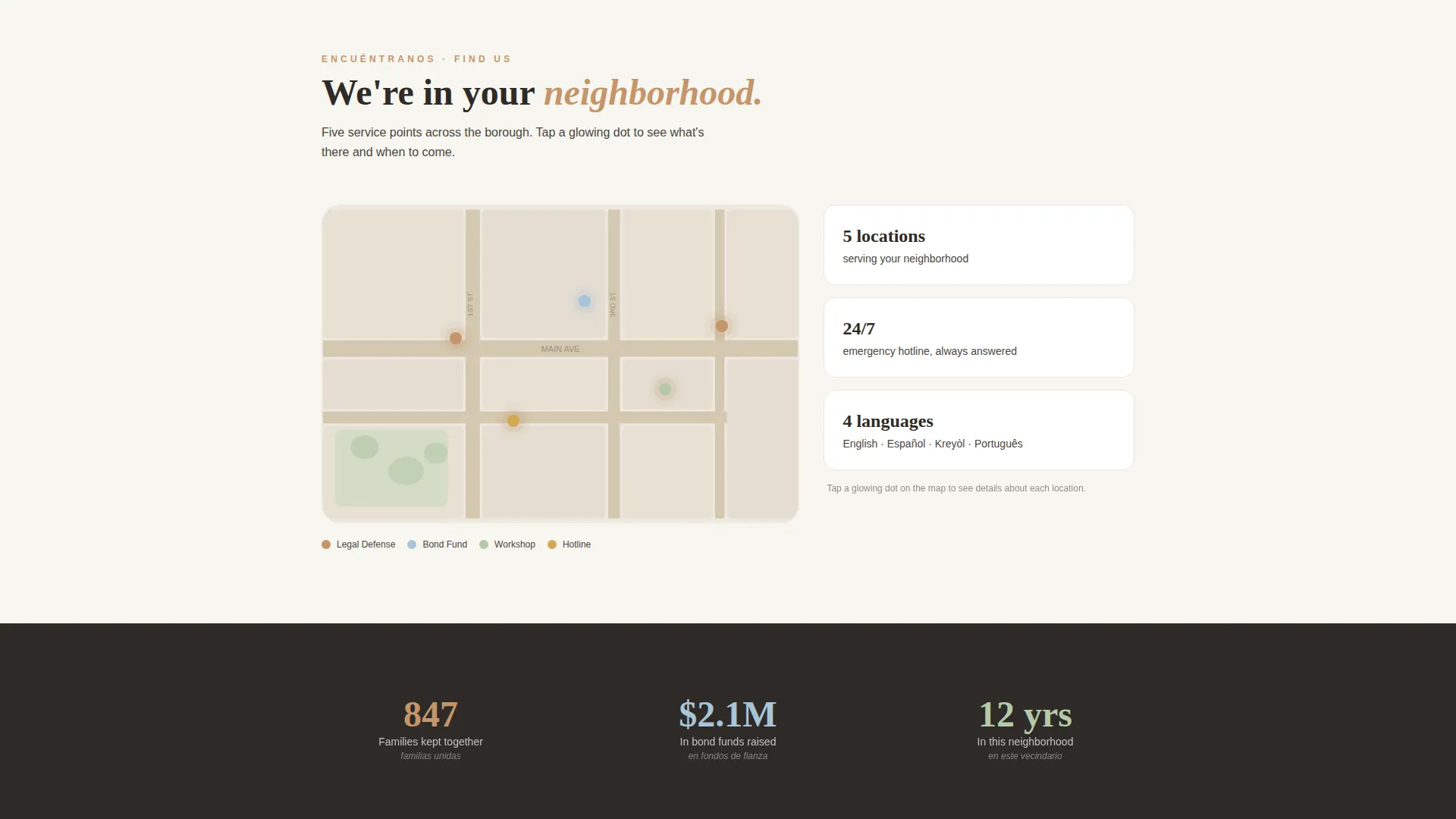
Service locations appear as warm glowing dots on an illustrated neighborhood map. Hover states activate on each dot, giving visitors a clear, safe sense of where help is physically available without exposing sensitive location data.
Dual Call-to-Action Section
A dedicated section near the bottom of the page presents both conversion paths side by side. "Get Help for Your Family" repeats the warm adobe button from the hero. "Stand With Your Neighbors" opens the donor and volunteer pledge form.
Page sections overview
| Section | Purpose |
|---|---|
| Hero Illustration | Full-viewport watercolor scene with fade-in headline and primary call to action |
| Know Your Rights | Hand-drawn pamphlet panel presenting rights cards in an approachable illustrated style |
| Family Stories | Illustrated portrait quotes sharing first-person community experiences without photographs |
| Neighborhood Service Map | Glowing dot map showing service locations with hover interaction |
| Stand With Neighbors | Dual call-to-action block for help-seekers and donors or volunteers |
| Footer | Linear single-row minimal footer with essential links |
Design & branding system
The Cloud Canvas color system uses soft, warm tones that feel handmade and unhurried. Typography pairs Fraunces serif headlines with DM Sans body text, creating a contrast between warmth and readability.
- Background in cloud white (#F7F5F0), call-to-action buttons in warm adobe (#C4956A), and body text in deep charcoal-earth (#2E2A26)
- Sky-wash blue (#A8C4D8) fills secondary highlights and icon accents throughout the page
- Watercolor illustration style, imperfect line work, and generous white space ensure nothing crowds or competes for attention
Mobile & speed optimization
Crisis searches happen at night, on phones, with urgency. This template is built mobile-first so the most important help options are immediately visible and easy to tap.
- SVG illustrations replace heavy image files, keeping the page light without sacrificing visual warmth
- Scroll reveals, gentle parallax, and a fade-in headline deliver medium animation that feels alive without slowing the experience
- The intake form is designed for single-thumb use with a clear tap order: name, language, then contact method
How this template helps you convert
Every layout and copy decision in this template is designed to reduce friction for visitors in high-stress situations. Trust is built before anything is asked.
- The hero anchor places the "Get Help for Your Family" button immediately after the illustration, catching visitors who are ready to act before they scroll further.
- The three-field form removes every barrier a vulnerable visitor might fear, communicating that the organization protects people before collecting data.
- The page repeats the primary call to action at the bottom, catching visitors who needed the full story before they felt ready to reach out.
Other information about this template
This template follows the Hero-Dominant (90/10) layout style, meaning the hero section dominates the visible screen on arrival. The Family First theme runs through every visual and copy decision, from the illustrated portraits to the intake form's deliberate omissions. The Local and Neighborhood creative direction shapes the scroll experience so each section feels like a different doorway on the same block. The landing page is designed for the Community and Nonprofit category, specifically aligned to Human Rights Nonprofit and Human Rights Community Foundation use cases. English is the primary language, with Spanish secondary labels built into the structure and a multilingual dropdown in the intake form. The footer follows the linear single-row pattern for minimal distraction.
- Template style: Hero-Dominant (90/10) with the Family First theme
- Creative direction: Local and Neighborhood scroll flow, section by section
- Color system: Cloud Canvas with watercolor illustration aesthetic
- Language support: English primary, Spanish labels, multilingual form dropdown
Theme
Family First
Creative direction
Local & Neighborhood
Color system
Cloud Canvas
Style
Hero-Dominant (90/10)
Direction
Lead Generation
Page Sections
Full-viewport Watercolor Hero
Three-field Trust-first Intake Form
Know Your Rights Illustrated Panel
Illustrated Portrait Story Section
Neighborhood Glowing Dot Map
Dual Conversion Call-to-action Block
Related questions
Who is the primary audience for this landing page template?
Why does the intake form only ask three questions?
Can this template support multilingual visitors?
What makes this template different from a standard nonprofit page?
Is this template suitable for organizations outside of immigration work?