Clinical Stroke Recovery Trial Matching Landing Page Template
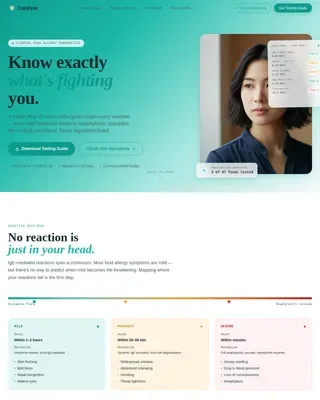
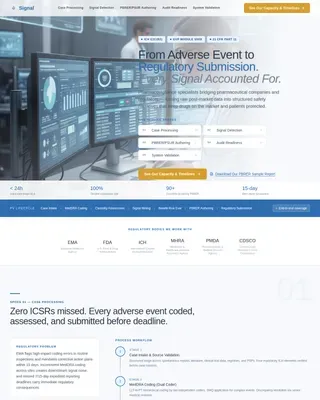
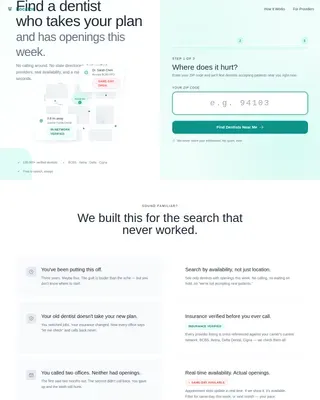
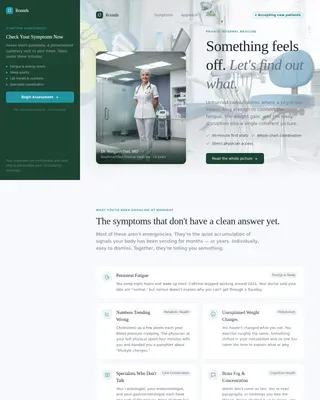
Catalyst is a single-column landing page template built for stroke recovery clinical trial matching services. It connects survivors, caregivers, and neurologists to active Phase II and Phase III trials within seventy-two hours. The design uses a Clinical Precision visual system, a three-step progressive lead capture form, and a stats-first content structure that builds trust fast and drives action.
by Rocket studio
Quick summary
Catalyst is a high-stakes landing page template purpose-built for clinical trial matching in the stroke recovery space. It gives HealthTech teams a complete, conversion-ready single-column layout that speaks directly to survivors, caregivers, and neurologists. The template pairs a stats-first narrative structure with a live-counting progressive form, turning every scroll interaction into evidence and every form step into momentum.
Who this template is for
This template is designed for teams operating at the intersection of clinical research and patient outreach. The audience it serves is urgent, informed, and arriving with a specific need. The design and content structure reflect that reality.
- Stroke recovery platforms and HealthTech startups running a clinical trial matching engine for patients post-discharge
- Research coordinators and university medical centers who need to recruit patients into Phase II and Phase III programs efficiently
- Neurologists and hospital departments seeking adjunct therapies for patients with ischemic stroke, hemorrhagic stroke, or cryptogenic stroke presentations
What problem this template solves
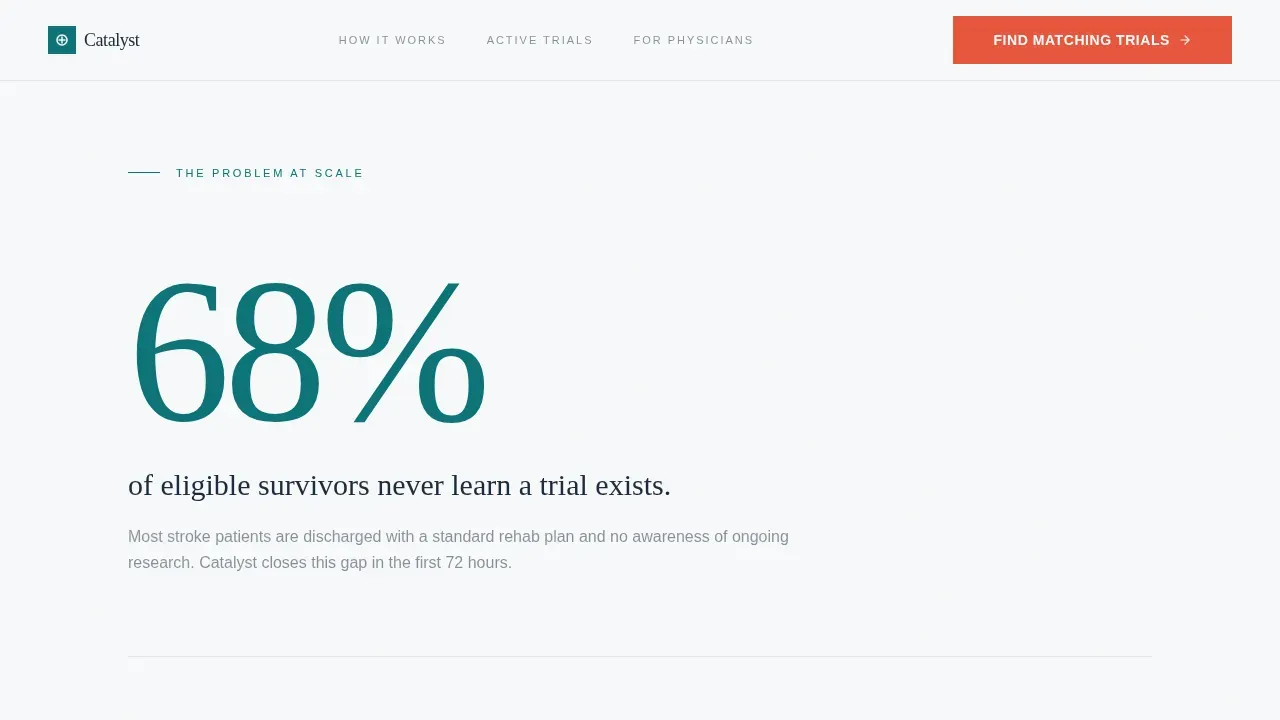
Stroke is a leading cause of long-term disability in adults. The recovery window after an acute stroke event is narrow, and time-sensitive access to clinical trials can directly affect patient outcomes. Yet the majority of eligible patients never learn a matching trial exists.
- Survivors of ischemic stroke, including acute ischemic stroke presentations, are discharged without any structured pathway to active enrolling trials, leaving them dependent on chance referrals
- Caregivers researching options late at night face dense, jargon-heavy databases that fail to surface trials relevant to their specific stroke subtype, proximity, or post-discharge period
- Researchers and principal investigators struggle to recruit the right patients quickly enough to maintain enrollment timelines and reach statistical significance in randomized studies
What you get with this template
You get a fully structured, production-ready landing page layout with every section pre-built and designed for the clinical trial matching use case. The template includes detailed visual direction, component logic, and a content architecture that supports lead generation from the first headline to the final form step.
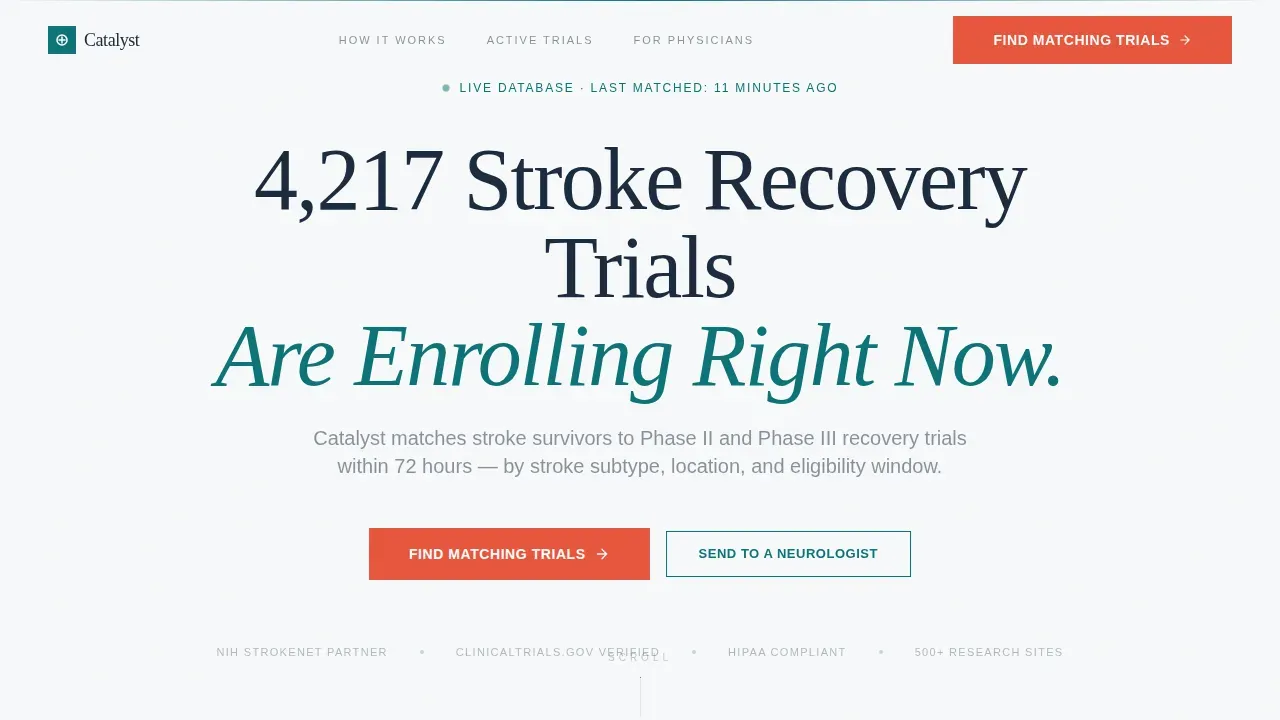
- A hero section with a giant centered stat headline, a real-time indicator element, and a coral call-to-action button that prompts immediate engagement from survivors and caregivers
- A three-step progressive disclosure form with a live match counter that updates as each field is completed, creating a reward loop that reduces abandonment
- A secondary lead channel built around a physician-focused shareable summary that captures the neurologist's email as a separate conversion path
Feature list
This template delivers six core built-in capabilities drawn directly from the project brief. Each one is described below in plain terms.
Stats-First Scrolling Narrative
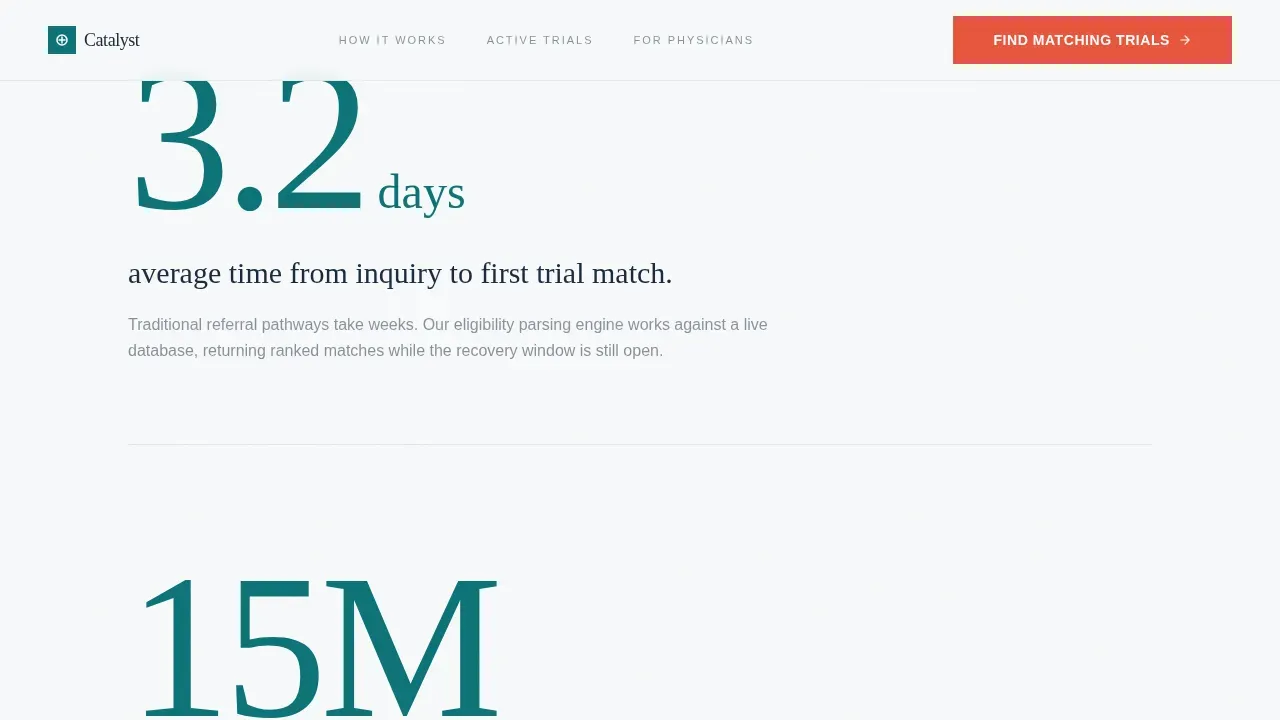
The page opens with an oversized, isolated statistic before any explanatory text appears. Each scroll transition follows the same rhythm: a large teal numeral at billboard scale, then the context paragraph, then a survivor quote in italicized charcoal. This structure mirrors the cadence of a clinical paper, building the case through evidence before offering interpretation. It is the right format for an audience that includes patients weighing serious health decisions and neurologists who evaluate evidence for a living.
Three-Step Progressive Disclosure Form
The lead capture form uses a staged structure that reduces cognitive load at every step. Step one asks for stroke type, including ischemic stroke, hemorrhagic stroke, or transient ischemic attack, and the number of months since the event. Step two requests zip code and travel willingness. Step three captures name and email. A live counter updates after each field, showing the number of trials matched so far. This turns data entry into a discovery process rather than a friction point.
Live Match Counter and Real-Time Indicators
Two live data elements are baked into the template layout. A pulsing indicator dot beneath the hero headline shows the last match timestamp. The progressive form counter updates the trial match count as each eligibility field is completed. These elements are reserved for the activation coral color, making them visually distinct and anchoring urgency without disrupting the clinical tone of the rest of the page.
Physician Referral Lead Channel
A secondary conversion path labeled "Send This to a Neurologist" generates a shareable clinical summary in portable document format. This path is designed for caregivers who want to bring a professional into the decision, and for neurologists themselves exploring adjunct therapy options. It captures the referring physician's email as a separate lead, creating a business-to-business-to-consumer funnel lane alongside the primary patient-facing form.
Active Trial Cards with Type Filters
The template includes a section for enrolling trial cards with filter controls. Visitors can sort by stroke type, including acute ischemic stroke, cryptogenic stroke, and hemorrhagic stroke, to surface the most relevant study options. Each card displays trial phase, proximity indicator, and enrollment status. This section gives patients and caregivers a concrete sense of what the matching engine actually surfaces before they complete the full form.
Giant Headline Hero with Zero Distraction
The hero section is built around a single large statistic rendered in clinical charcoal at eighty pixels or larger against a stark white background. There is no background image, no illustration, and no competing element. The headline carries all the weight. A smaller teal subline with a real-time indicator dot sits directly below it. This design choice is intentional: the statistic does the work that most hero images attempt and fail to do for a medically literate or emotionally urgent audience.
Page sections overview
| Section | Purpose |
|---|---|
| Hero Stat Headline | Anchors visitor attention with one large, isolated enrollment statistic and a coral call-to-action button |
| Real-Time Indicator | Shows last match timestamp with a pulsing dot to signal live data activity |
| Stats Impact Block | Presents monument-scale numbers followed by explanatory paragraphs and humanizing survivor quotes |
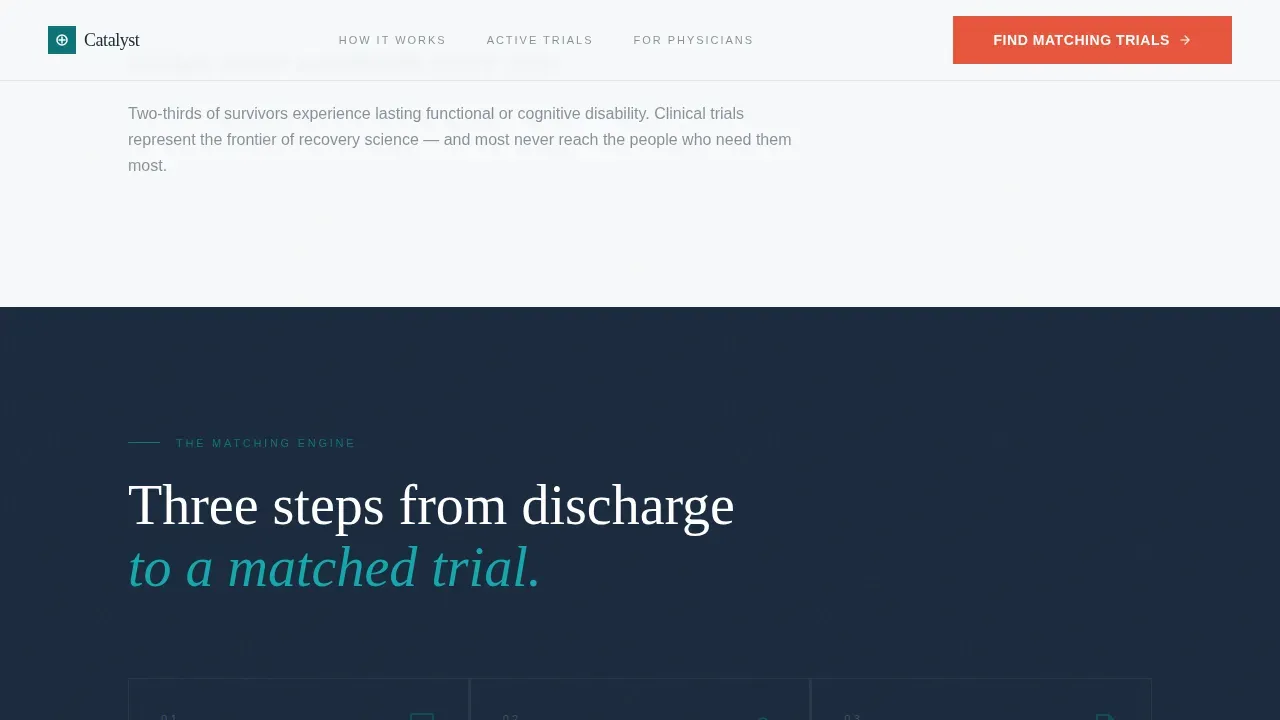
| How Matching Works | Three-step bento-style process diagram with a live trial count updating at each stage |
| Active Trial Cards | Filterable enrolling trial cards organized by stroke type and proximity |
| Progressive Lead Form | Three-step form with live match counter that grows as eligibility fields are completed |
| Physician Referral Path | Secondary conversion block for generating and sharing a clinical summary document |
| Minimal Footer Row | Single-row footer with essential links and compliance reference indicators |
Design & branding system
The visual system follows a Corporate Precision theme using the Teal Catalyst color palette. Every design decision is made to serve clarity, trust, and urgency for a medically serious audience.
- Deep medical teal (#0D7377) is the primary brand anchor used for headings, teal sublines, data numerals, and the real-time indicator dot; clinical charcoal (#1B2A3D) carries all body text, section dividers, and survivor quotes; sterile white (#F7F9FA) fills every open background area to create breathing room between high-density data sections
- Activation coral (#E8533D) appears exclusively on the primary call-to-action button, the mobile persistent bottom bar, and live data callouts, ensuring it functions as a visual trigger rather than a decorative element
- Typography pairs Fraunces, a high-authority serif, for all display headlines and monument numerals, with DM Sans for body paragraphs and form labels, creating a clinical contrast between the gravity of the headline and the readability of the supporting copy
Mobile & speed optimization
The template is built mobile-first, reflecting the reality that many caregivers research options on a phone late at night while a patient is still in hospital. Desktop excellence is layered on top of that mobile foundation.
- A persistent activation coral bottom bar on mobile keeps the primary call-to-action visible at all times without requiring the visitor to scroll back to the hero section
- The three-step progressive form is optimized for thumb-friendly input on small screens, with large tap targets and step-by-step sequencing that avoids overwhelming visitors with too many fields at once
- Animation is handled through GSAP ScrollTrigger for stat reveals and CSS fade-in-up transitions, with interactive JavaScript reserved for the live form counter and real-time indicator, keeping the static page load lean and client components scoped only to interactive elements
How this template helps you convert
Catalyst is structured to move emotionally invested visitors through a conversion funnel that respects their urgency and matches their medical literacy. Every layout decision serves the goal of enrollment.
- The hero statistic and real-time indicator create immediate credibility and urgency before a single word of body copy is read, giving visitors a reason to stay and a clear next action in the coral call-to-action button
- The stats-first scrolling narrative builds a layered case for the platform, escalating from the scale of the problem to the precision of the matching process to individual survivor outcomes, so visitors arrive at the form already convinced rather than skeptical
- The progressive disclosure form with a live match counter transforms data collection into a feedback loop, showing visitors that their inputs are producing real results and reducing the perceived cost of completing the form
Other information about this template
This section provides broader context on the clinical and research ecosystem this template is designed to operate within. Understanding that context helps teams use the template more effectively and position their platform with appropriate credibility.
The template is specifically suited for projects that must bridge the gap between complex clinical research and the patient-centric needs of stroke survivors and their families. A landing page for a catalyst clinical trial focused on improving stroke recovery outcomes must navigate that bridge carefully. Transparency regarding trial benefits and risks is essential throughout, including potential benefits of the investigational therapy and the study's time commitment. The template layout supports that transparency through its stats-first narrative and clear section hierarchy.
Stroke affects hundreds of thousands of adults every year and is a leading driver of long-term disability, cognitive impairment, and cardiovascular complications. The incidence of ischemic stroke, including acute ischemic stroke and ischaemic stroke presentations, accounts for the majority of all stroke cases globally. Hemorrhagic stroke, cryptogenic stroke, and rarer presentations such as cerebral venous thrombosis or conditions linked to cerebral small vessel disease each carry distinct eligibility criteria that enrolling trials must account for. The template's filterable trial card section and progressive form are structured to handle that clinical specificity without overwhelming patients.
Post-stroke rehabilitation is a long and often underfunded journey. Physical therapy remains a cornerstone of recovery, supporting brain plasticity and motor function restoration in the weeks and months following an acute stroke event. High doses of rehabilitation therapy are associated with greater behavioral gains in stroke recovery, yet many patients do not receive adequate therapy due to barriers including transportation, insurance, and limited access to specialist programs. Telehealth and home-based telerehabilitation programs can address some of these barriers, improving patient motivation and compliance while supporting secondary stroke prevention. The template can be used by platforms that incorporate these modalities as part of a holistic rehabilitation care model.
From a trial design standpoint, the template must support platforms whose enrolled studies include important methodological elements. Many Phase II and Phase III trials in this space use a randomized, placebo-controlled design to evaluate efficacy. Some studies compare an investigational therapy against standard of care to establish whether results are non inferior or demonstrate statistical significance over the control group. Researchers and principal investigators use primary endpoint metrics such as modified Rankin Scale scores or cognitive function assessments to evaluate outcomes. Adverse events are tracked rigorously in all phases, and the most common adverse event in each study is disclosed to participants prior to enrollment. The template supports this level of transparency through its frequently asked question section and eligibility display components.
The template also supports neuroscience-adjacent use cases. Research into the neuroprotective role of certain therapies after acute ischemic stroke is an active area of clinical development. Endovascular treatment and endovascular thrombectomy studies evaluate whether early intervention can reduce brain injury and improve outcomes for patients presenting with large vessel occlusion. Teams running trials in those areas can adapt the template's trial card section to surface relevant studies prominently.
Funding and institutional context matters for trust. Established programs such as the Stroke Clinical Research Catalyst Grant program aim to increase capacity for clinical stroke research and improve patient outcomes through clinical research. Heart and Stroke's Grant-in-Aid program provides operating funds to support novel research in heart disease and stroke, and their research programs are designed to support important, pertinent research that can lead to improved outcomes for stroke patients. Heart and Stroke is committed to funding innovative research in heart and brain health and encourages applications from researchers at all career stages. Pilot Awards at The Ohio State University support interdisciplinary, innovative, high-risk team research projects, with successful proposals expected to leverage pilot funding to secure extramural grants. The Heart-Brain Connection IMPACT Award supports research aimed at generating new knowledge for conditions impacting the heart and brain. The Global Cardiovascular Research Funders Forum aims to fund international research programs addressing cardiovascular health, including programs focused on stroke prevention and recovery.
For teams preparing a full application to any of these funding bodies, the template can serve as the public-facing recruitment component of the broader research project. The landing page layout accommodates ClinicalTrials.gov registration numbers and links to the official protocol, which is a requirement for regulatory compliance and also a trust signal for patients evaluating whether to participate. Accreditation badges from sponsoring institutions or regulatory bodies can be placed in the footer or trust-signal strip. The frequently asked question section of the template is structured to address common concerns around costs, travel reimbursement, and data privacy, all of which are standard questions from potential participants and their caregivers.
Large fonts and high-contrast colors support readability across a wide range of users, including older adults who are among the most frequently affected by stroke and who may have visual impairments as a result of their brain injury. Patient-centric content uses bite-sized text chunks and bullet points to facilitate understanding and reduce cognitive load, keeping copy free of medical jargon wherever possible. Eligibility criteria are presented clearly using the template's structured display components, with key inclusion and exclusion factors made easy to scan. Providing alternative contact methods, such as a direct phone number for questions prior to registering, is a design consideration the template layout supports. The sole purpose of the landing page is to encourage visitors to act, and every section in this template is organized around that principle.
- The template supports ClinicalTrials.gov registration number display and protocol link placement for regulatory transparency
- Accreditation badge placement is built into the trust signal areas of the layout, supporting institutional credibility for university-affiliated and institute-backed programs
- The physician referral path creates a second lead channel that can be used by research recruitment teams to build relationships with neurologists and increase referral volume
- Secondary stroke prevention information can be integrated into the stats narrative or frequently asked question section to address the health concerns of survivors who are also managing increased risk of recurrent events
- Mental health considerations for stroke survivors, including post-stroke depression and anxiety, can be addressed in the educational content areas of the template to support a holistic care framing
- Environmental factors that influence stroke risk, rehabilitation access, and trial participation, such as transportation, income, and geography, are implicitly addressed by the proximity-based matching logic built into the form design
Theme
Corporate Precision
Creative direction
Stats-First Impact
Color system
Teal Catalyst
Style
Single Column Flow
Direction
Lead Generation
Page Sections
Stats-first Scrolling Narrative Layout
Three-step Progressive Disclosure Form
Live Data Indicators and Real-time Match Counter
Physician Referral and Neurologist Lead Channel
Filterable Active Trial Cards Section
Mobile-first Persistent Call to Action Bottom Bar
Related questions
Who is the primary audience for this landing page template?
What stroke types does the form and trial filter system support?
How does the live match counter work inside the form?
Can the template support a physician referral or neurologist outreach pathway?
Does the template include an frequently asked question section for trial participants?