Wellness Modalities Booking Website Template
Releasepoint is a card grid landing page built for trigger point therapy practitioners. It uses a modular pain-pattern layout, a cinematic Adventure Terrain visual identity, and a zero-friction quiz-to-booking flow. Designed for runners, climbers, and desk workers, the page turns body-awareness into action, helping visitors identify their pain, understand the therapy, and book a session.
by Rocket studio
Quick summary
Releasepoint is a single-page template for solo trigger point therapy practitioners. It opens with a cinematic lifestyle hero, moves visitors through a modular pain-pattern card grid, and closes with a body-map quiz that delivers a personalized trigger point profile. The goal is simple: help someone feel seen in their pain, then guide them to book a release session.
Who this template is for
This template is built for solo practitioners offering trigger point therapy to active, pain-aware adults. If your clients arrive already describing exactly where it hurts, this page speaks their language from the first scroll.
- Trigger point therapy practitioners working with runners, climbers, and desk workers
- Solo wellness providers who want a quiz-led booking flow with no email gate
- Manual therapy professionals targeting an active adult clientele aged 25 to 45
What problem this template solves
Most therapy landing pages feel clinical and forgettable. They list services without making the visitor feel understood. People in chronic muscular pain need to recognize themselves before they trust a practitioner enough to book.
- Generic therapy pages fail to connect a specific pain pattern to a specific solution
- Visitors leave before booking because they cannot see how the service applies to them
- A standard contact form creates too much friction for someone searching mid-pain on their phone
What you get with this template
You get a fully structured single-page layout that moves from emotional recognition to confident booking. Every section is designed to reduce doubt and build momentum toward a first session.
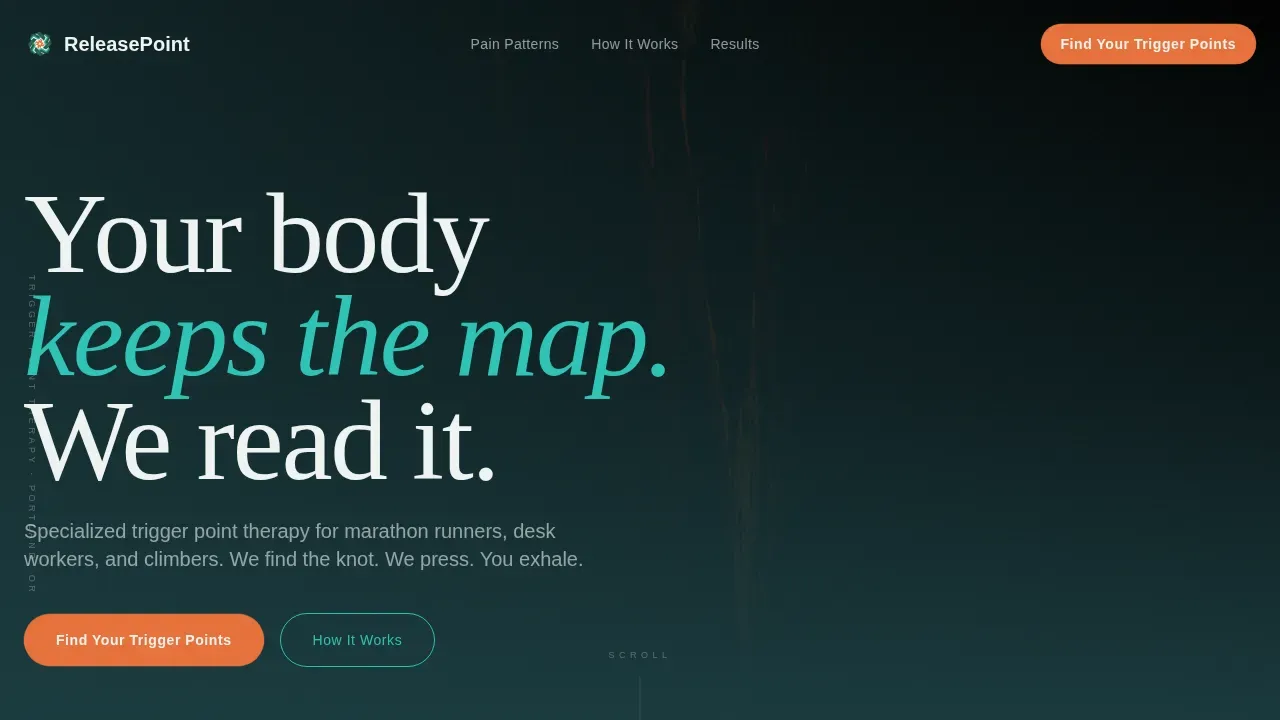
- A cinematic lifestyle hero with a dual call-to-action and scroll-reveal text animation
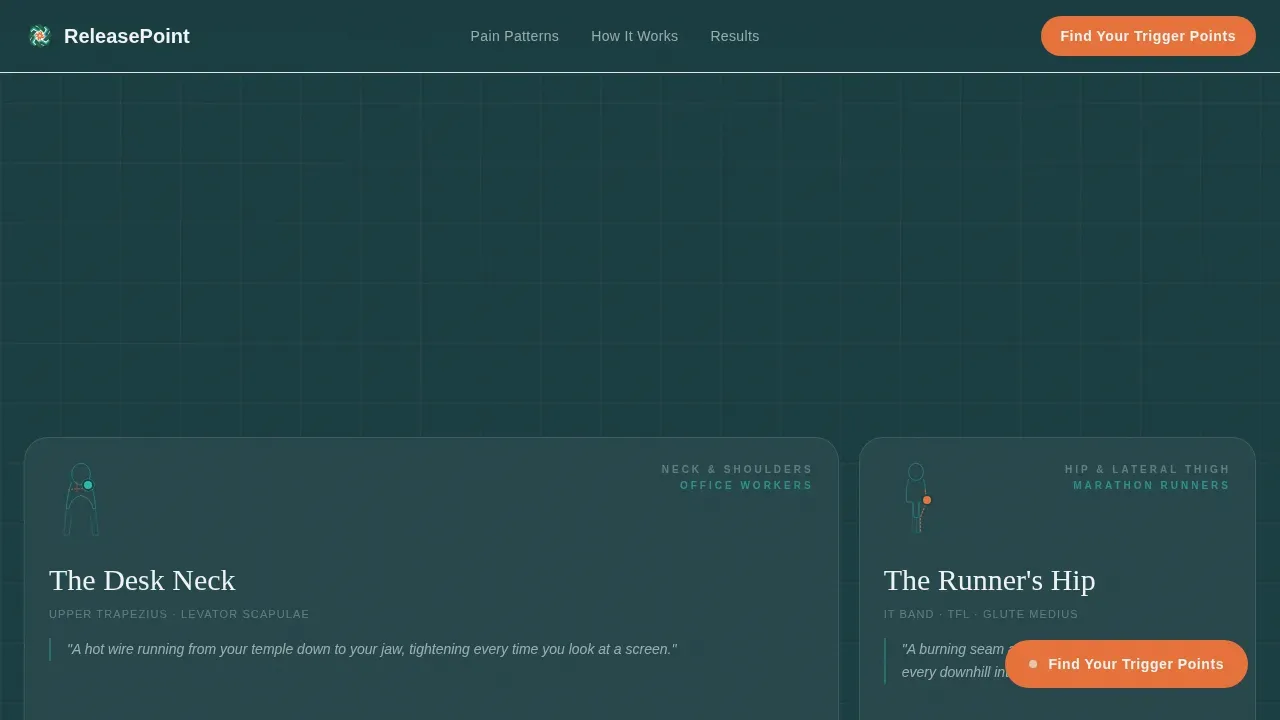
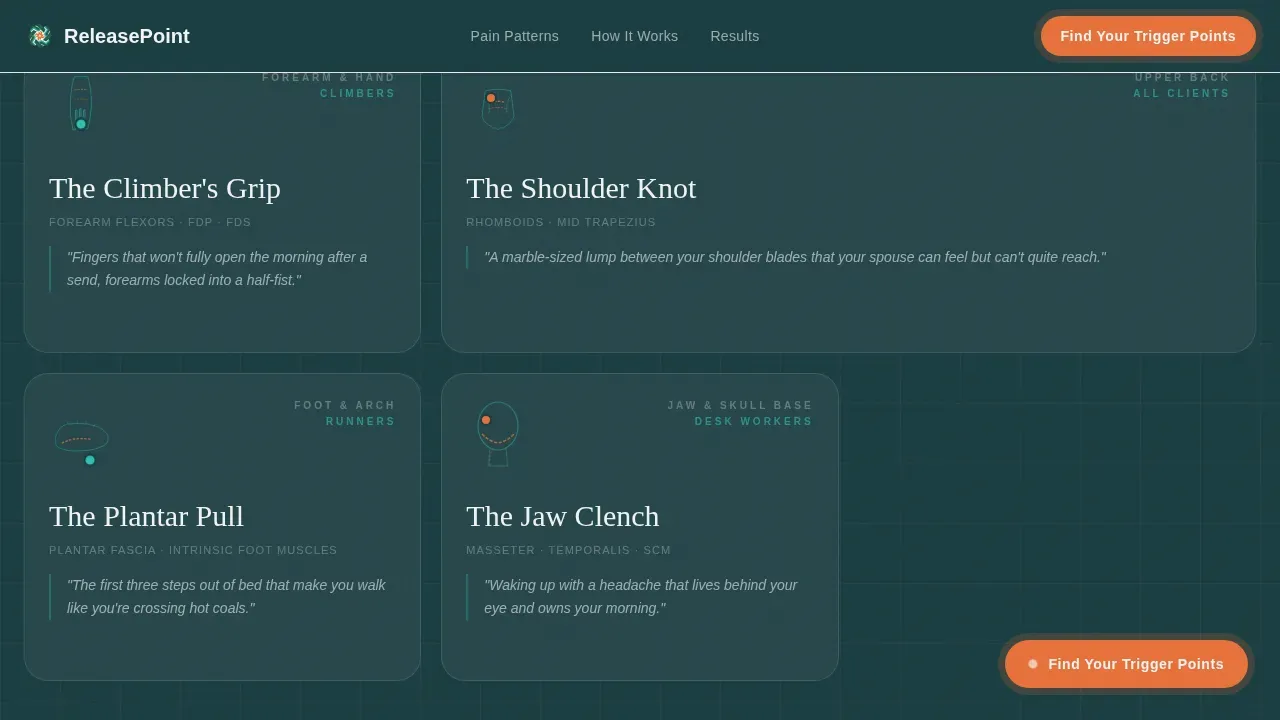
- A modular bento-style card grid mapping pain patterns by body region with pulse animations
- A full-screen quiz overlay with illustrated body maps, sliders, and a personalized results profile
Feature list
This template ships with a focused set of interactive and visual components. Each one is mapped directly to the practitioner's conversion goal.
Pain Pattern Card Grid
Each card targets a specific pain pattern, "The Desk Neck," "The Runner's Hip," "The Climber's Grip," and more. Cards include a short anatomical illustration, a one-sentence sensory description of the pain, and a subtle pulse animation on the trigger point site. Cards lift on hover with soft shadows that create a tactile, skin-depth effect.
Full-Screen Quiz Overlay
The primary conversion path is a five-step quiz that opens as a full-screen overlay. Visitors tap illustrated body maps to mark pain locations, adjust frequency and intensity sliders, and answer one activity-level question. Results deliver a personalized trigger point profile and a direct "Book Your First Release" button with calendar integration.
Floating Call-to-Action Button
A "Find Your Trigger Points" button appears as a floating element after the visitor scrolls past the first card row. It stays visible throughout the rest of the page, keeping the quiz entry point within reach without interrupting the reading experience.
Cinematic Lifestyle Hero
The hero section features a full-bleed lifestyle photograph of a climber mid-stretch on a granite slab at golden hour. The headline, "Your body keeps the map. We read it.", enters from below on scroll reveal. A dual call-to-action anchors the hero, giving visitors two clear paths forward.
Testimonials Section
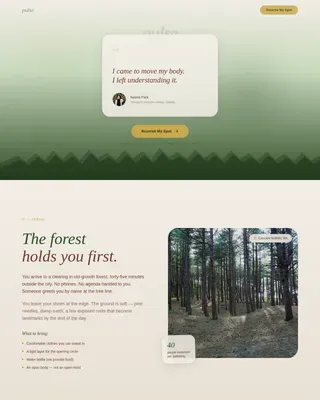
A dedicated social proof section presents named testimonials organized by client type: runner, climber, and desk worker. Each testimonial pairs an activity type with a specific session outcome, making the results feel concrete and credible rather than generic.
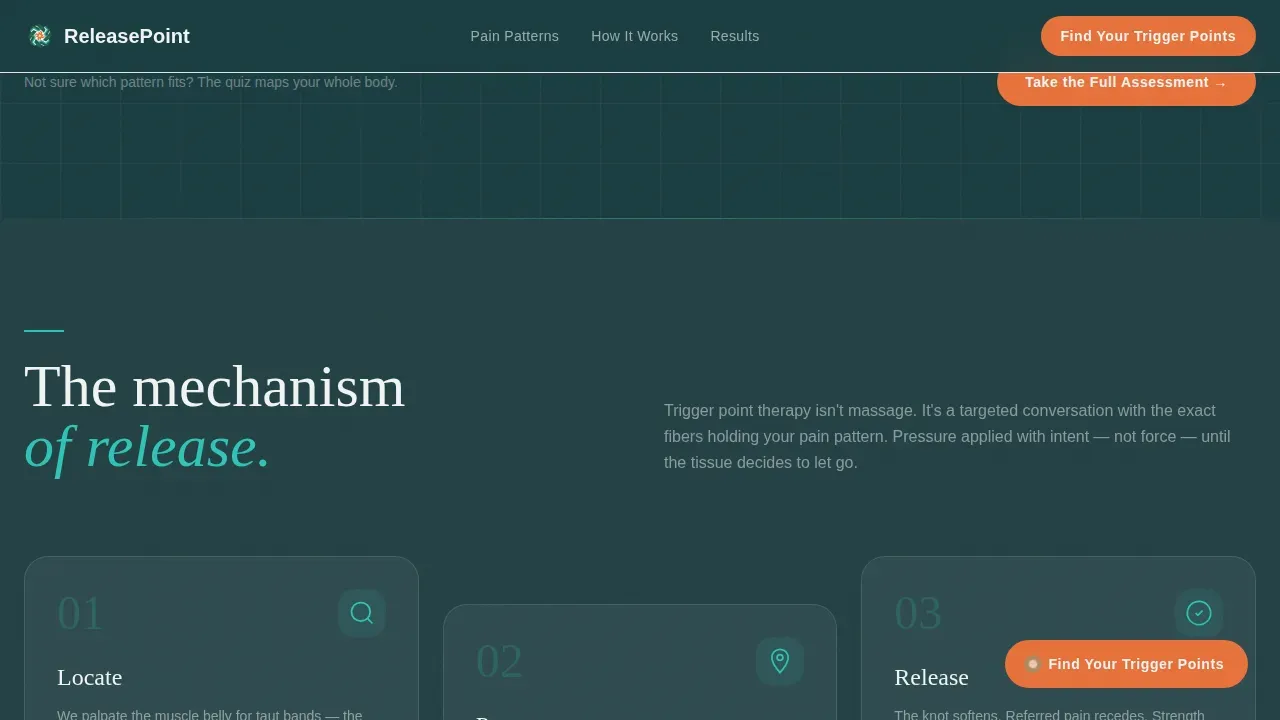
Mechanism Section
A "How Release Works" section uses a pressure-and-release visual sequence to explain the therapy process. This section bridges the emotional recognition of the card grid and the commitment of the booking step, giving first-time visitors the context they need to feel confident.
Page sections overview
| Section | Purpose |
|---|---|
| Hero lifestyle shot | Opens with identity and dual call-to-action |
| Pain pattern cards | Maps body regions through modular grid |
| How Release Works | Explains therapy mechanism visually |
| Who We've Helped | Builds trust with typed testimonials |
| Quiz call-to-action | Drives booking via body-map quiz |
| Single-row footer | Closes page with minimal navigation |
Design & branding system
The visual identity follows an Adventure Terrain theme built on the Teal Catalyst color system. The palette draws from natural terrain, wet stone, packed earth, cold air at a trailhead before a hard effort begins.
- Deep trail green (#1A3C40) grounds all primary typography and dark backgrounds; activated teal (#2EC4B6) drives dividers, hover states, and interactive accents
- Signal orange (#E8713A) is reserved for buttons and interactive states, creating high-contrast focal points against the dark base
- Typography pairs Fraunces serif headlines for emotional weight with DM Sans body text for clean readability; summit white (#F0F4F3) is used for card surfaces
Mobile & speed optimization
This template is built mobile-first, which directly matches how its target audience behaves. People searching for muscle pain relief often do so on their phones, sometimes mid-discomfort.
- The layout stacks the card grid cleanly on small screens, preserving the pain-pattern browsing experience
- The quiz overlay is designed for touch input, with large body-map tap targets and thumb-friendly sliders
- Static sections use server-side rendering while interactive elements, quiz, animations, and the floating button, run as client components
How this template helps you convert
The conversion architecture moves visitors through three emotional stages: recognition, understanding, and action. Each stage has a clear design mechanism behind it.
- The pain-pattern card grid invites visitors to find themselves in the content before they read a single word about services, building personal relevance immediately
- The no-gate quiz delivers genuine value first, a personalized trigger point profile, so the "Book Your First Release" button feels earned rather than forced
- The floating call-to-action button and the hero dual call-to-action keep the booking path visible at every scroll depth, removing the need to hunt for next steps
Other information about this template
This template is categorized under Wellness and Fitness, specifically within Wellness Modalities for a Trigger Point Therapy Practitioner niche. It carries an intersection match score of 13, indicating strong alignment between the design system, conversion direction, and audience intent.
- The template style is Card Grid (Modular), suited to practitioners who want to organize content by body region or pain type rather than a linear service list
- The landing page direction is Quiz and Assessment, making it well suited for practitioners who prefer value-first lead generation over form-first capture
- The header concept is a Lifestyle Shot, which grounds the page in real physical experience rather than abstract wellness imagery
- Localization is set for the United States market with pricing and language in English and USD
- Animation intensity is set to high, covering scroll reveal, card lift hover, and trigger-point pulse effects throughout the page
Theme
Adventure Terrain
Creative direction
Sensory Appeal
Color system
Teal Catalyst
Style
Card Grid (Modular)
Direction
Quiz/Assessment
Page Sections
Pain Pattern Card Grid with Pulse Animations
Full-screen Body Map Quiz Overlay
Floating Quiz Entry Button
Cinematic Hero with Scroll-reveal Text
Activity-typed Testimonials Section
How Release Works Mechanism Section
Related questions
Can I edit the pain-pattern cards to match my own specialties?
Does the quiz require visitors to enter their email before seeing results?
Is the floating call-to-action button included in the template?
What activity types does the quiz cover?
Can I connect the booking button to my own calendar tool?