Cinematic Motion Graphics Landing Page Template
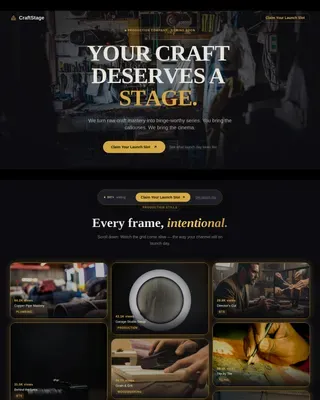
Composite is a masonry-style landing page for visual effects and post-production studios. It leads with a full-bleed behind-the-scenes hero image, then builds trust through a creator-spotlight grid where each tile opens a mini-documentary moment. The page ends with a direct "Book a Bid Call" intake flow, built for indie directors, ad producers, and streaming showrunners.
by Rocket studio
Quick summary
Composite is a single-page, masonry-layout template for visual effects and post-production studios. A full-bleed colorist hero image sets the mood instantly. A creator-organized project grid escalates from music videos to full episodic runs. Two clear conversion paths, a bid-call intake form and a rate card download, close the sale before the visitor scrolls away.
Who this template is for
This template is built for post-production businesses that lead with artist craft, not service menus. It works best when the studio has real project work to showcase and a defined intake process for new clients.
- VFX and post-production studios pitching indie directors and ad agency producers
- Animation studios handling streaming-platform episodic work at scale
- Boutique compositing houses that want to match clients to specific artists
What problem this template solves
Most studio portfolio pages organize work by service category. That makes sense internally, but it leaves visitors comparing line items instead of trusting people. Composite flips that model. The grid is organized by creator, so each scroll feels like a studio walkthrough, not a capability checklist.
- Visitors leave before converting because the page never proves craft at a human level
- Producers cannot picture which artist would actually touch their footage
- There is no structured intake, so qualified leads arrive as vague cold emails
What you get with this template
You get a fully structured landing page with every section pre-built and arranged for a specific conversion journey. The layout moves from atmosphere to evidence to action without detours.
- A full-bleed hero section, a masonry creator grid, a sticky call-to-action bar, mini-documentary modals, a structured intake form, and a footer
- Sunset Gradient color system with curtain black backgrounds, amber-to-coral card glows, and horizon pink hover states
- Fraunces serif display type paired with DM Sans body text for a cinematic, high-contrast reading experience
Feature list
A paragraph introduces each built-in capability below.
Full-Bleed Hero with Title-Card Wordmark
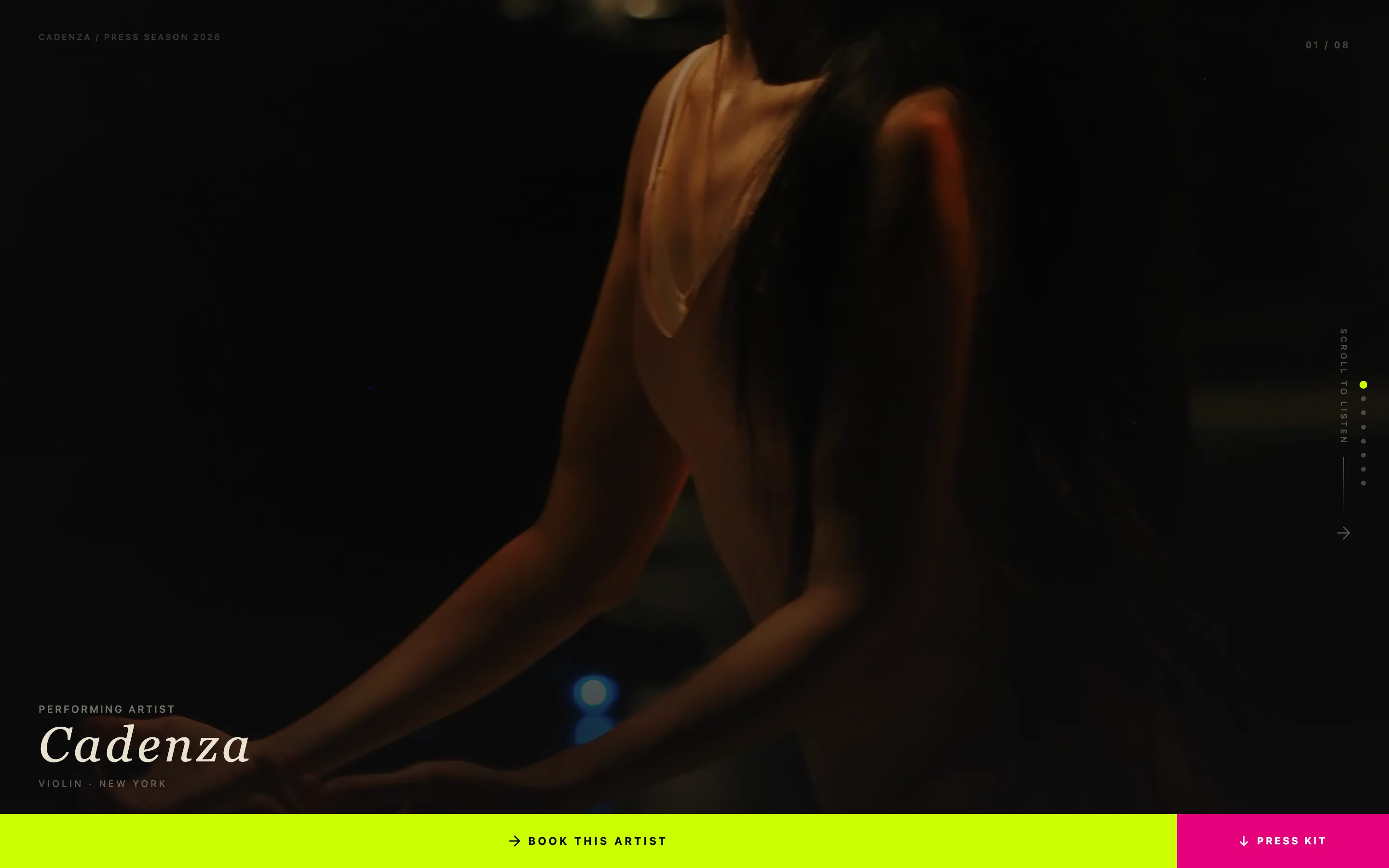
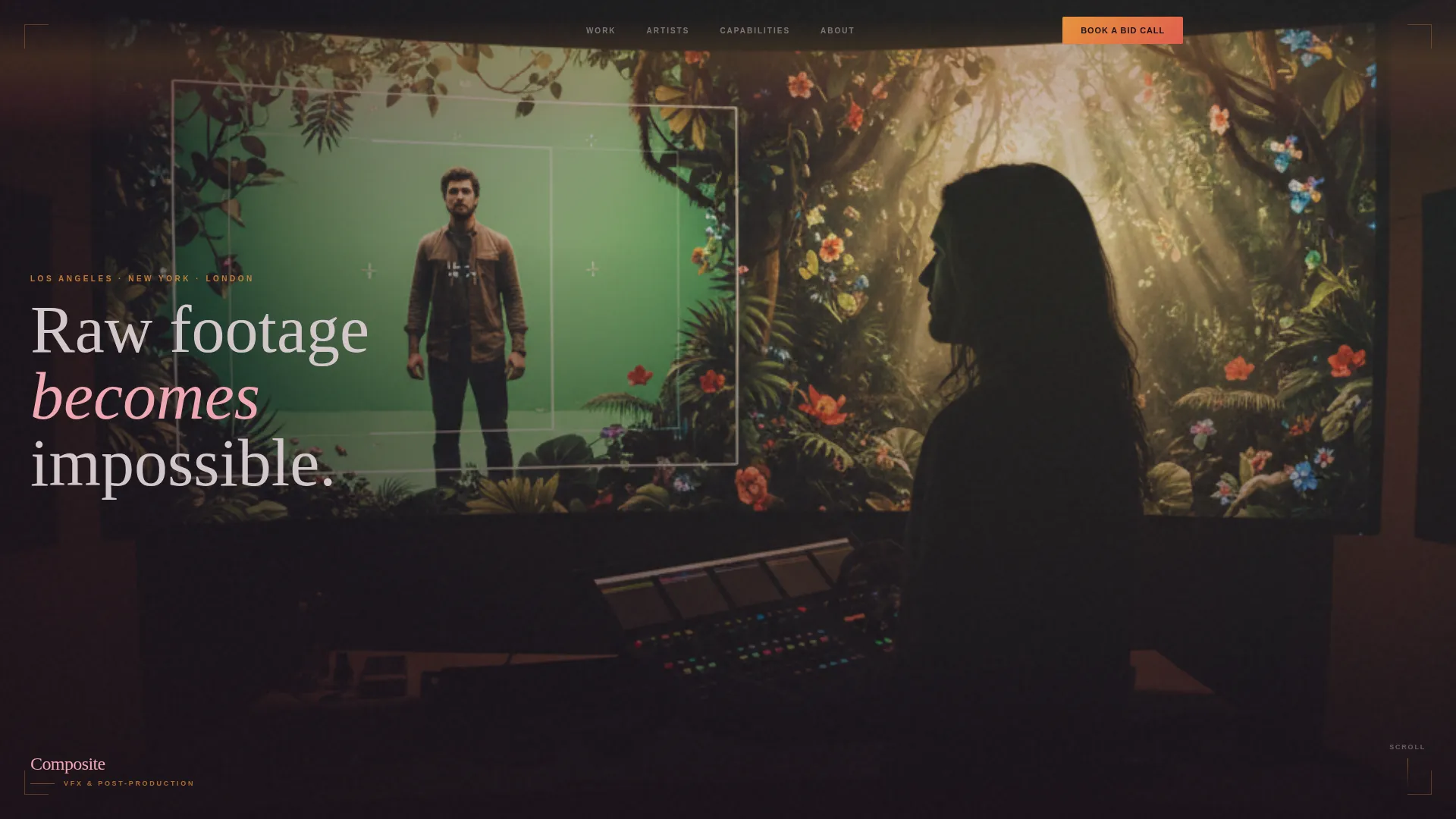
The header uses a behind-the-scenes photo taken over a colorist's shoulder. The monitor in frame shows a half-finished composite: raw green-screen plate on one side, fully rendered jungle canopy on the other. The studio wordmark appears small and confident in the lower-left corner, styled like a film title card.
Masonry Creator-Spotlight Grid
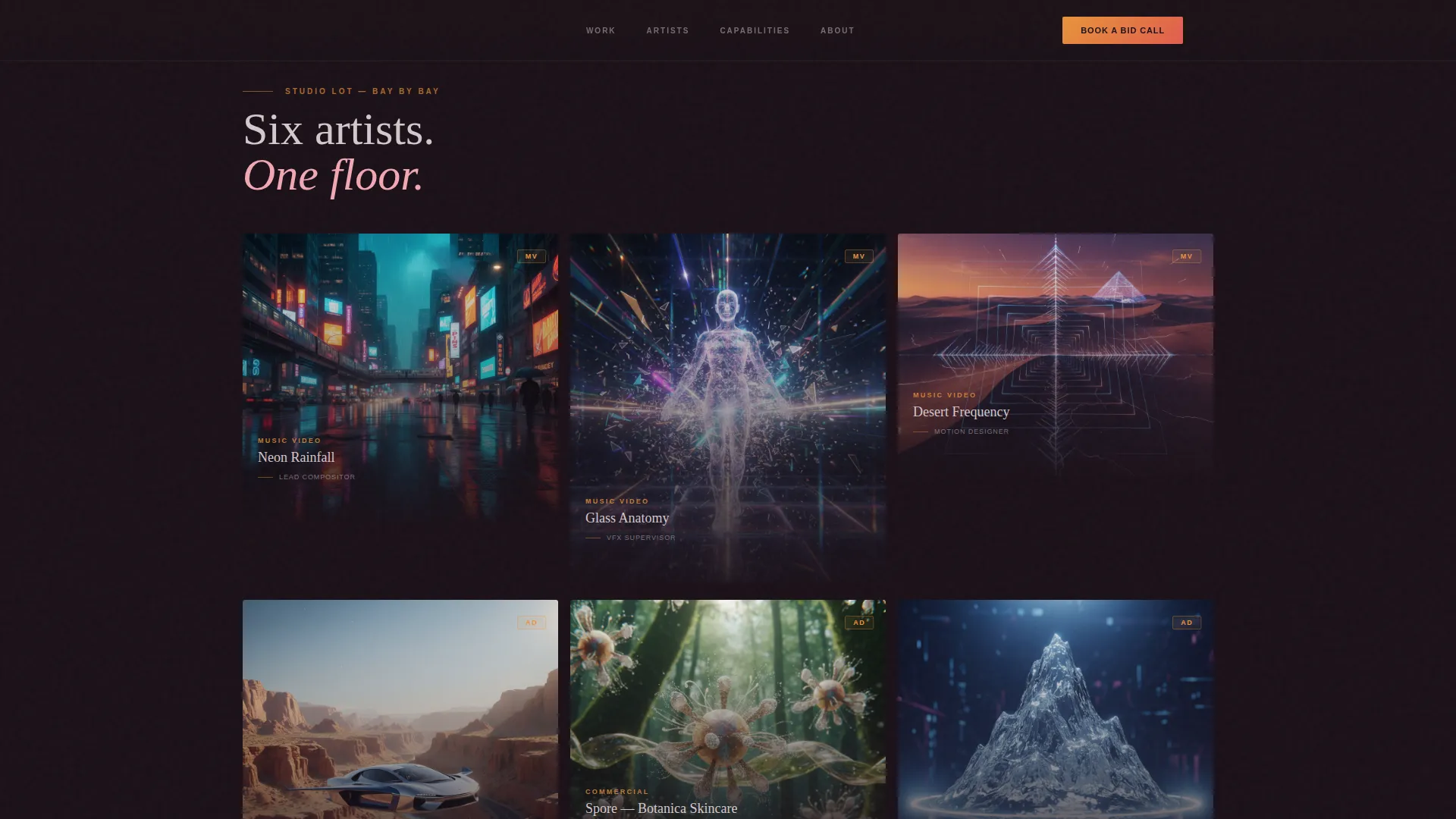
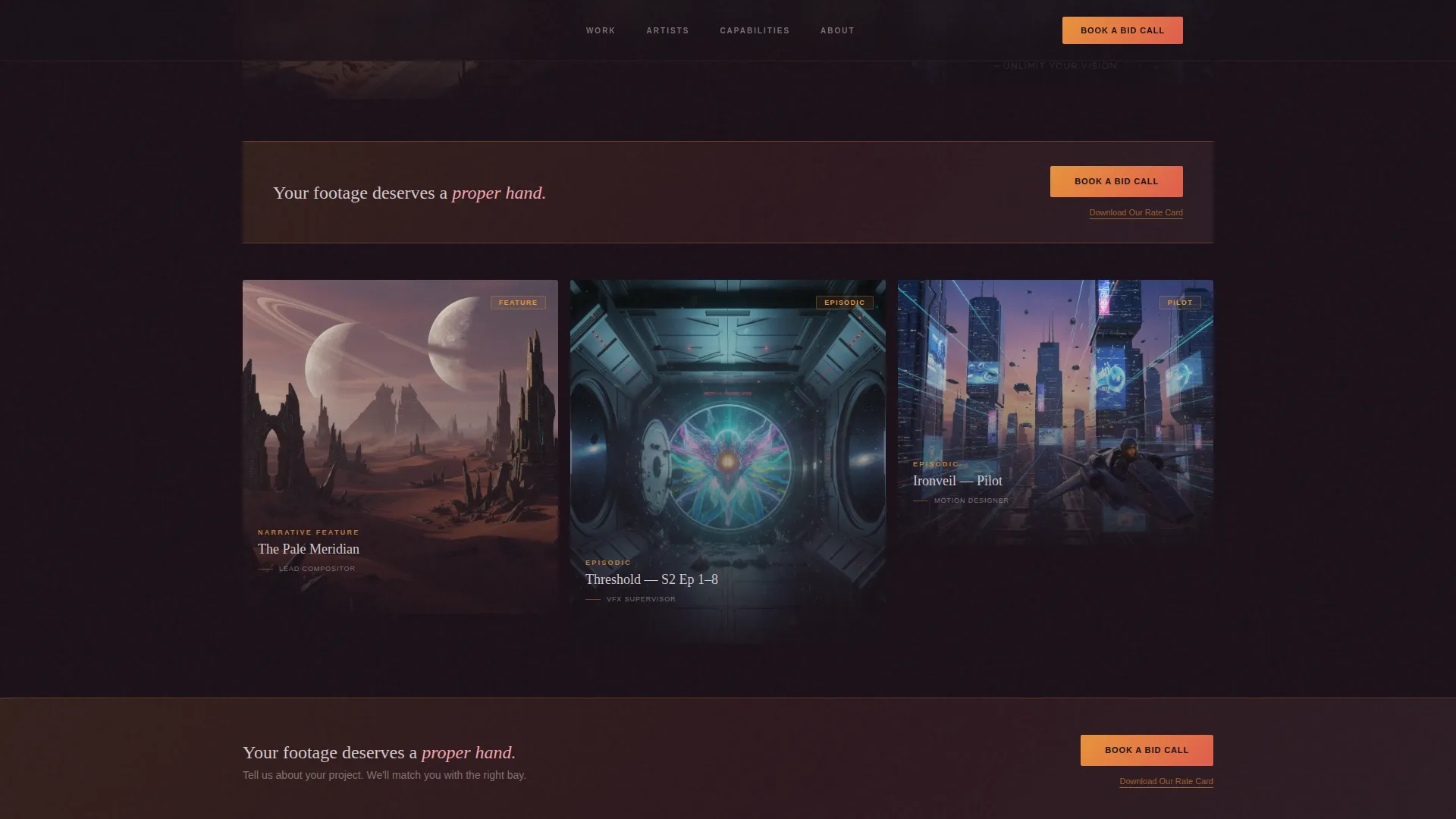
Tiles are organized by artist, not service type. Projects intentionally escalate in scale across the grid, from a music video to a commercial to a feature sequence to a full episodic run. This structure lets the portfolio tell a stakes-building story without a single word of self-promotion.
Mini-Documentary Project Modals
Clicking any tile opens a modal moment rather than a static gallery. Each modal contains a thirty-second loop of the artist at work, their name and role in warm amber type, a before-and-after hero shot, and a single pull-quote about the creative problem they solved.
Sticky "Book a Bid Call" Bar with Intake Form
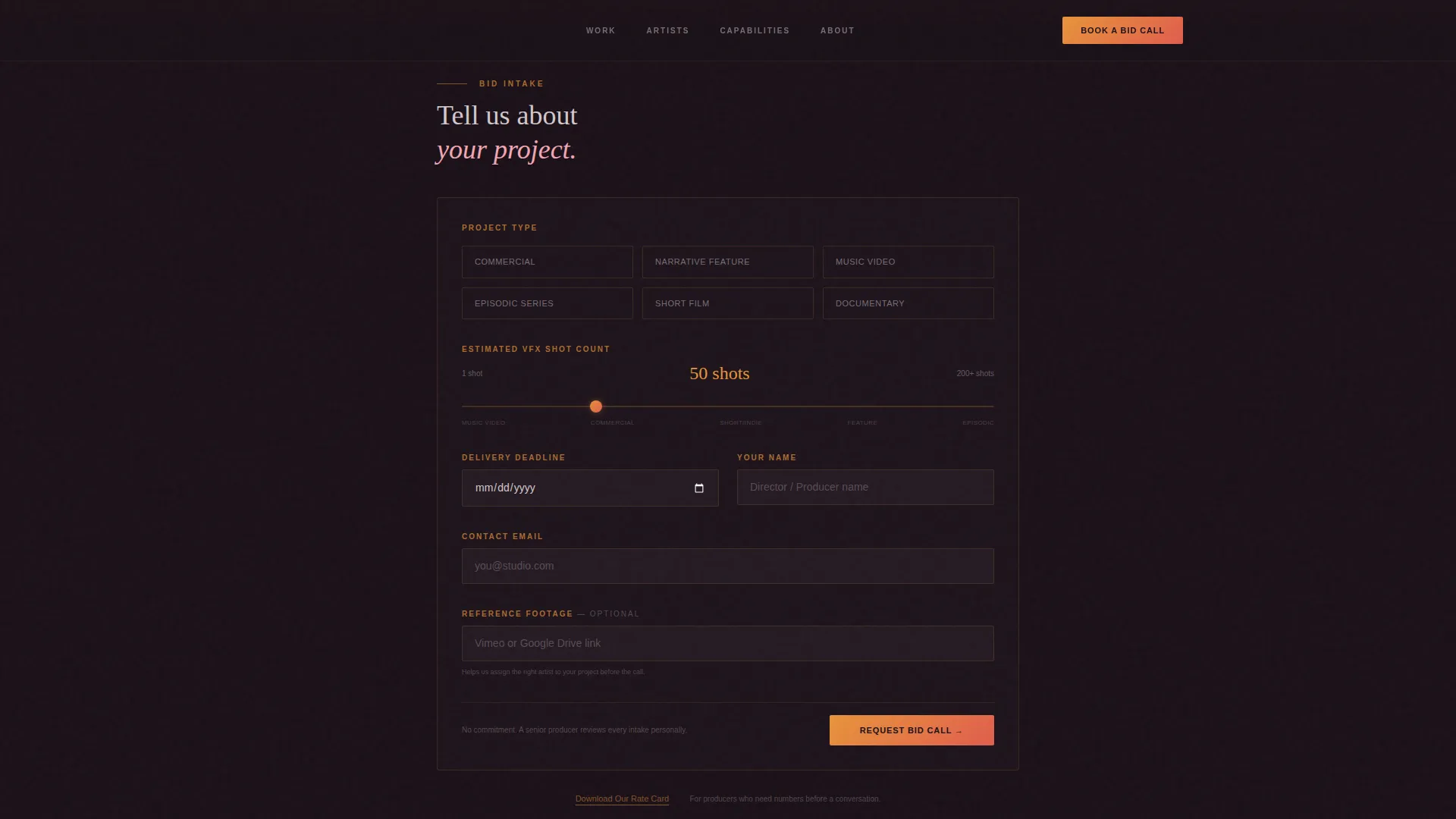
A slim amber-gradient bar pins itself to the page after the third row of tiles and repeats at the bottom. Clicking it opens a short intake form covering project type, estimated shot count via a slider, delivery deadline via a calendar picker, and an optional reference footage link.
Rate Card Download Path
A secondary conversion option sits as an underlined text link directly beneath the primary call-to-action button. Producers who need budget numbers before a conversation can download the rate card without filling out the intake form first.
Scan-Line and Film Grain Atmosphere
The template layers scan-line textures, film grain, masonry hover glows, and modal transitions across the page. These animation details reinforce the post-production identity without requiring custom code from the buyer.
Page sections overview
| Section | Purpose |
|---|---|
| Hero Header | Full-bleed colorist photo with wordmark |
| Masonry Creator Grid | Artist-organized project tiles, escalating scale |
| Call-to-Action Bar | Amber gradient bar with bid-call trigger |
| Mini-Documentary Modals | Per-artist loop, before/after, pull-quote |
| Intake Form | Project type, shot count, deadline, reference link |
| Footer | Horizontal flow layout with studio links |
Design & branding system
The visual identity follows a Stage and Spotlight theme. Every design decision reinforces a sense of theatrical warmth emerging from darkness, the way a color suite looks at golden hour when the monitor is the only light source in the room.
- Color palette: deep curtain black (#1A1018) for backgrounds, warm amber (#E8943A) as the primary action color, molten coral (#E05C4D) for accents, and soft horizon pink (#F2A7B3) reserved for hover states and gradient tails
- Typography: Fraunces serif for display headings and DM Sans for body copy, always set at high contrast, cinematic and readable
Mobile & speed optimization
The template is designed desktop-first to honor the color-suite aesthetic, with a mobile fallback layout included. Interactive components use client-side rendering only where necessary.
- Static sections use server components to keep initial load lean; interactive masonry, modals, and the intake form run as client components
- The masonry grid and modal transitions are built for desktop viewports first, with a clean single-column fallback for smaller screens
How this template helps you convert
The page is structured so that trust is fully established before any call-to-action appears. By the time the bid-call bar pins into view, the visitor has already seen six artists' best work inside their own mini-documentary moments.
- The creator-spotlight grid proves craft at a personal level, so visitors arrive at the intake form already convinced, not still browsing
- Two conversion paths, the bid-call intake and the rate card download, reduce drop-off by matching the visitor's readiness level rather than forcing a single next step
Other information about this template
This template is a strong fit for studios that operate across the animation and visual effects industry and need a landing page that communicates scale without a word count. A few additional details worth knowing before you build:
- The template is localized for English language, US dollar pricing, and US date format out of the box
- The intake form supports four project types: commercial, narrative, music video, and episodic
- Social proof is structural, not cosmetic; pull-quotes and project scale escalation are baked into the grid logic, not bolted on as a testimonials row
- The footer uses a horizontal flow layout suitable for studio contact links, social profiles, and legal copy
Theme
Stage & Spotlight
Creative direction
Creator Spotlight
Color system
Sunset Gradient
Style
Masonry/Pinterest
Direction
Direct Sales
Page Sections
Full-bleed Hero with Title-card Wordmark
Masonry Creator-spotlight Grid
Mini-documentary Project Modals
Sticky Bid-call Bar and Intake Form
Rate Card Secondary Conversion Path
Scan-line and Film Grain Atmosphere
Related questions
Can I reorganize the masonry grid by service type instead of by creator?
Does the intake form connect to any external tool automatically?
Is the rate card download linked to a real file in the template?
What happens when a visitor clicks a masonry tile on mobile?
Can the 'Book a Bid Call' bar be repositioned or hidden?