Rescue - Family First Dog Adoption Landing Page Template
Rescue - Family First Dog Adoption Landing Page Template
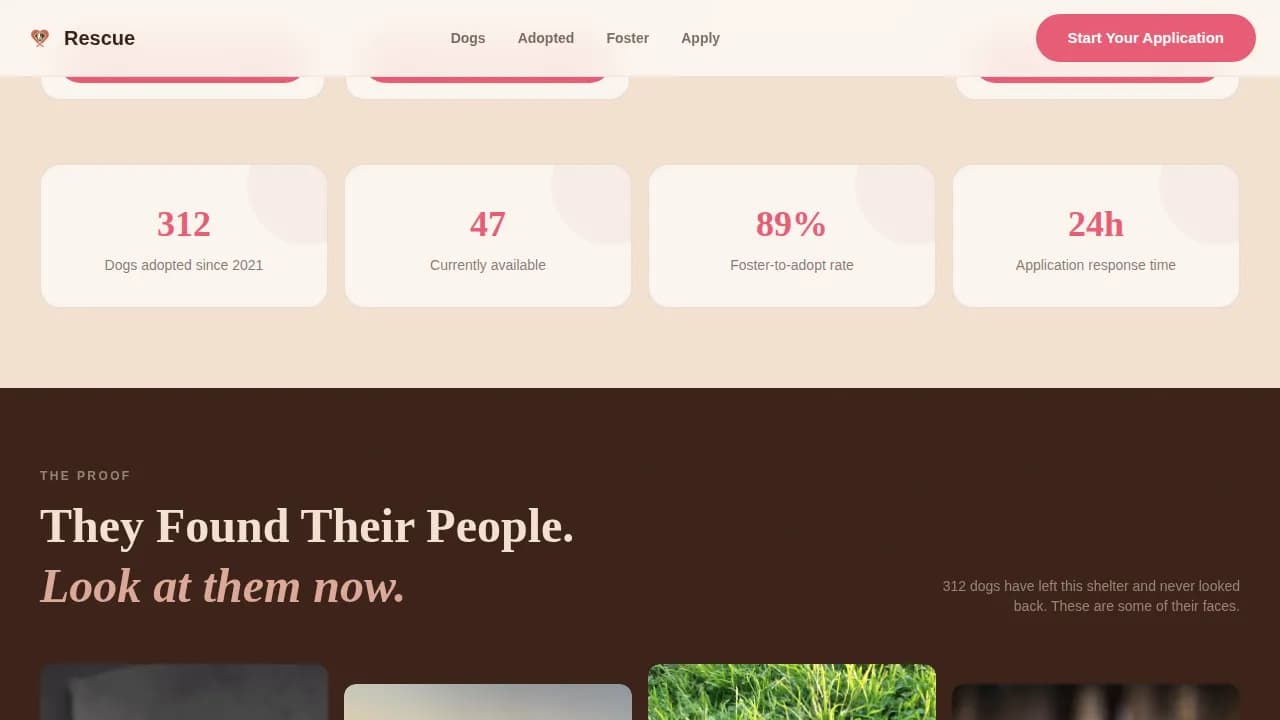
The Rescue Family First Dog Adoption Landing Page Template is a modular card-grid landing page built for dog rescue shelters. It combines an emotionally driven Photo Grid Mosaic hero, a living dog card wall with status badges, an adopted gallery strip, a stepped application form, and a Foster First path, all styled in a warm Desert Rose color system tailored for pet adoption organizations.
by Rocket studio
Loading preview…
Quick Summary
This template gives animal shelters a ready-to-use, emotionally resonant landing page for dog adoption. Sixteen warm shelter dog portraits fill the hero edge to edge. Below, a modular card grid lets potential adopters browse every dog by name, age, and personality. A stepped application form, a Foster First path, and an adopted gallery strip work together to move visitors from browsing to applying.
Who This Template Is For
Rescue organizations and animal shelters need a page that works as hard as the people running it. This landing page is built for teams with big missions and limited time. It gives them a polished, high-impact presence without starting from scratch.
This template is a strong fit for:
Dog rescue shelters wanting to showcase available animals and streamline the adoption process
Animal rescue organizations running foster programs alongside full adoption pipelines
Volunteers and coordinators who need a professional site that supports community engagement and donations
What Problem This Template Solves
Most animal shelters post a list of dogs with basic details and hope for the best. That approach rarely connects emotionally. Potential adopters scroll past without feeling anything, and the page does nothing to guide them toward action.
This template solves that gap directly:
Dog bios written in the animal's own voice create emotional gravity that a data table never could
Status badges in Available, Pending, and Adopted states show real-time pipeline activity and manufacture gentle urgency without a countdown timer
A split conversion model serves both committed adopters and foster-curious visitors, so no one leaves empty-handed
What You Get With This Template
This landing page template is a complete, section-led experience designed for dog adoption. Every section has a specific role in moving a visitor from interest to application. The layout is modular, so rescue organizations can add or reorder dog cards as new animals arrive.
Theme
Family First
Creative direction
Community Gallery
Color system
Desert Rose
Direction
Marketplace/Multi
Page Sections
Modular Dog Card Grid with Status Badges
Slide-in Detail Drawer Per Dog
Stepped Adoption Application Form
Foster First Short-form Conversion Path
Adopted Gallery Strip with Social Proof
Photo Grid Mosaic Hero
Related questions
Can rescue organizations update dog cards without rebuilding the page?
Does the template include both an adoption form and a foster form?
Can this template support cats or other animals, not just dogs?
What details does the adoption application form collect?
How does the adopted gallery strip build trust with potential adopters?
Included in this template:
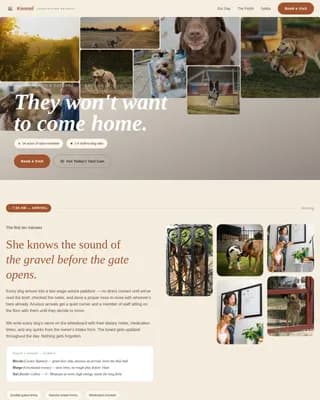
A 16-portrait Photo Grid Mosaic hero with a knockout white headline overlay and warm-graded, Polaroid-style photography
A modular dog card grid with dog-voice bios, age, breed details, temperament tags, availability badges, and a slide-in detail drawer per dog
A stepped "Start Your Application" form, a Foster First short-form path, an adopted gallery strip, a three-step How It Works section, and a full footer with logo, tagline, and links
Feature List
This template ships with purpose-built features that reflect how real rescue organizations operate and how potential adopters actually make decisions.
Modular Dog Card Grid with Status Badges
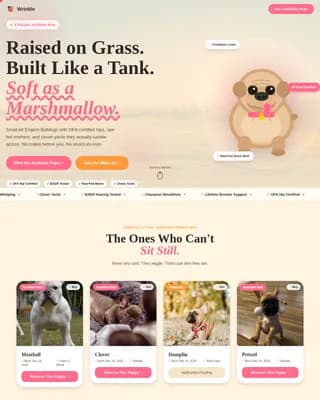
Each card in the grid shows a dog portrait, a hand-lettered first name, age, a single dog-voice bio sentence, and a colored status badge. Pear pink marks Available animals, terracotta marks Pending, and mesquite with a strikethrough marks Adopted. Rescue teams can add new content and update card status without redesigning the page. The modular layout means the living wall grows naturally as new dogs arrive at the shelter.
Slide-In Detail Drawer per Dog
Every dog card includes a "Meet [Name]" button that opens a detail drawer. The drawer surfaces medical notes, temperament tags, and a foster-or-adopt toggle so the applicant can choose their commitment level before filling out any form. Detailed health and behavioral information is presented clearly here, giving potential owners the key information they need to find the best match for their home environment.
Stepped Adoption Application Form
The primary application form uses a stepped layout collecting household type, other pets in the home, and an open-text "Why this dog?" field. Keeping the form short, ideally under five fields, can increase conversion rates by up to 120%. The form helps rescue organizations efficiently screen each applicant and ensure responsible pet placements. Pet adoption application forms like this one streamline the process of matching pets with their ideal forever homes.
Foster First Short-Form Path
Visitors not ready to adopt can take a secondary conversion path. The Foster First section asks only for a name, email, and zip code. This low-barrier form keeps individuals interested in fostering engaged rather than bouncing. It broadens the support base for rescue organizations without requiring a full commitment from the visitor.
Adopted Gallery Strip
Between card rows, full-width strips feature adopter-submitted photos of the same dogs now living in loving homes, on couches, in cars, at beaches. Short captions and dates make these feel like a real family album. This gallery functions as social proof, showing success stories that build trust before the main ask. A dedicated section for success stories and testimonials from previous adopters can encourage first-time owners to take the next step.
How It Works Section
A three-step asymmetric layout walks visitors through Browse, Apply, and Bring Home. This section outlines the adoption process with clear steps so potential adopters know exactly what to expect. Listing steps and fees upfront manages expectations and reduces friction. The section supports community engagement by making the process feel welcoming rather than bureaucratic.
Page Sections Overview
Section
Purpose
Hero Mosaic Grid
Sixteen dog portraits fill the viewport; knockout headline sets emotional tone
Dog Card Wall
Modular grid of available animals with bios, badges, and detail drawers
Adopted Gallery Strip
Full-width adopter photos proving the rescue pipeline works
How It Works
Three-step layout explaining Browse, Apply, and Bring Home
Foster First Section
Split section offering a low-barrier foster path for hesitant visitors
Footer Arc Split
Logo and tagline left, navigation links right, contact details visible
Design & Branding System
The Desert Rose color system gives this landing page the feel of a dusty ranch porch at golden hour. Every color has an assigned role, so the visual hierarchy stays clear and nothing competes with the dogs themselves.
Sand (#F2E0D0) dominates all backgrounds, keeping the page warm and easy to read; mesquite brown (#3B2218) anchors all body text, card borders, and the Adopted badge state
Terracotta (#C98A7D) warms section dividers, secondary headings, and the Pending badge; pear pink (#E85D75) is reserved exclusively for buttons and Available badges so every call to action pulses with clear intent
Typography pairs Plus Jakarta Sans for body text with Fraunces for display text and dog names, giving the page a hand-lettered warmth without sacrificing readability; these fonts enhance the overall personality of the rescue brand
Mobile & Speed Optimization
A high percentage of users discover pets on their phones. This template is built mobile-first, so the card grid, drawers, and forms all work cleanly on small screens. The layout prioritizes the adoption browsing experience that happens on phones, not desktops.
Staggered card reveal animations and drawer slide-ins are set to medium intensity, keeping motion purposeful without overwhelming slower connections
Lazy loading is built into the image-heavy mosaic and gallery sections, so the page remains responsive even with dozens of dog photos loading across the card wall
A static server-component shell handles the page structure, keeping the initial render fast regardless of how many animal cards are present
How This Template Helps You Convert
The page is designed around two conversion paths, not one. Every section either builds trust or reduces friction before the ask arrives.
The emotional architecture works first: the mosaic hero creates immediate connection, dog-voice bios develop attachment card by card, and the adopted gallery strip proves that rescue organizations here actually deliver dogs to loving homes, so the applicant enters the form already convinced.
The stepped form and Foster First path then serve different visitor readiness levels. Committed potential owners fill out the full application. Foster-curious visitors complete a three-field short form. Both groups leave the page having taken an action, which is how shelters turn browsers into volunteers, fosters, or adopters over time.
Other Information About This Template
This template is tailored for the specific needs of dog rescue operations in the United States, but rescue organizations focused on cats or mixed-species animals can adapt the card layout to suit their own unique needs. The modular structure means any shelter can customize the page to reflect their mission and community.
The template supports donation calls to action and volunteer sign-up flows alongside the primary adoption focus, so organizations can run 'Adopt. Donate. Volunteer.' messaging from a single page
Dog bios in the template are designed to include names, ages, breed details, and personality-driven emotional stories; compatibility icons can be added to each drawer to quickly show if a dog is Kid-Friendly, Cat-Friendly, or Good with Other Animals, helping potential owners find the perfect match
The template can assist rescue organizations in sharing adoption events and new content through social media integration, keeping community engagement active between formal adoption cycles
Prominent contact information including location, hours, and phone number belongs in the footer, which uses the Arc Browser Split layout with logo and tagline on the left and navigation links on the right
Educational resources can be added to the site to cover topics like the 3-3-3 Rule (three days to decompress, three weeks to learn a routine, three months to feel fully secure), home environment preparation guides, and pet-proofing advice to support the well being of new animals and their owners
The rescue family first dog adoption landing page template is built without requiring design skills; users can customize fonts, colors, photos, and layout elements using the intuitive editor, making it accessible to organizations of any size