Environmental Consulting Specialist Professional Website Template
Restore is a single-column landing page template built for ecological restoration practices. It leads with oversized outcome data, guides visitors through methodology, and converts them through a gated toolkit download and a site assessment request. Designed for watershed managers, ranch owners, and conservation nonprofits, it pairs a field-journal visual style with evidence-first content structure.
by Rocket studio
Quick summary
Restore is a stats-first, single-column landing page template for ecological restoration services. It opens with a cinematic lifestyle hero image and measurable impact figures, then builds trust through methodology content and a resource hub before presenting two clear conversion points. The design system draws from an agrarian field journal aesthetic with a botanical color palette.
Who this template is for
This template is built for professionals who need to communicate measurable land recovery outcomes to skeptical, data-driven audiences. It suits organizations working in native seed restoration, riparian repair, and post-disturbance land management.
- Municipal watershed managers who need compliance-ready documentation and verifiable outcome data
- Ranch owners and land managers losing topsoil who need a credible service provider to present results
- Conservation nonprofits stretching grant budgets across damaged acreages and needing clear proof of impact
What problem this template solves
Ecological restoration services often struggle to earn trust quickly. Visitors arrive with hard questions about methodology, measurable outcomes, and whether the investment is worth it. A generic service page cannot answer those questions fast enough.
- Prospective clients leave before they reach the ask because the evidence arrives too late
- Municipal and nonprofit buyers need compliance-grade proof, not just photography and testimonials
- The gap between a striking visual and a credible data case causes hesitation and abandoned inquiries
What you get with this template
This template gives you a complete, conversion-focused landing page structured around evidence first and story second. Every section is sequenced to build confidence before presenting a call to action.
- A full single-column page flow with five distinct content sections, from the hero through the resource hub and site assessment form
- A gated toolkit download form with an email field and a land-type dropdown covering riparian, rangeland, post-fire, and mine reclamation
- Ungated case study resources and seasonal planting calendars placed below the fold to build trust before the primary ask
Feature list
This section highlights the core built-in capabilities that make the Restore template work as a conversion tool for ecological restoration practices.
Stats-First Hero Section
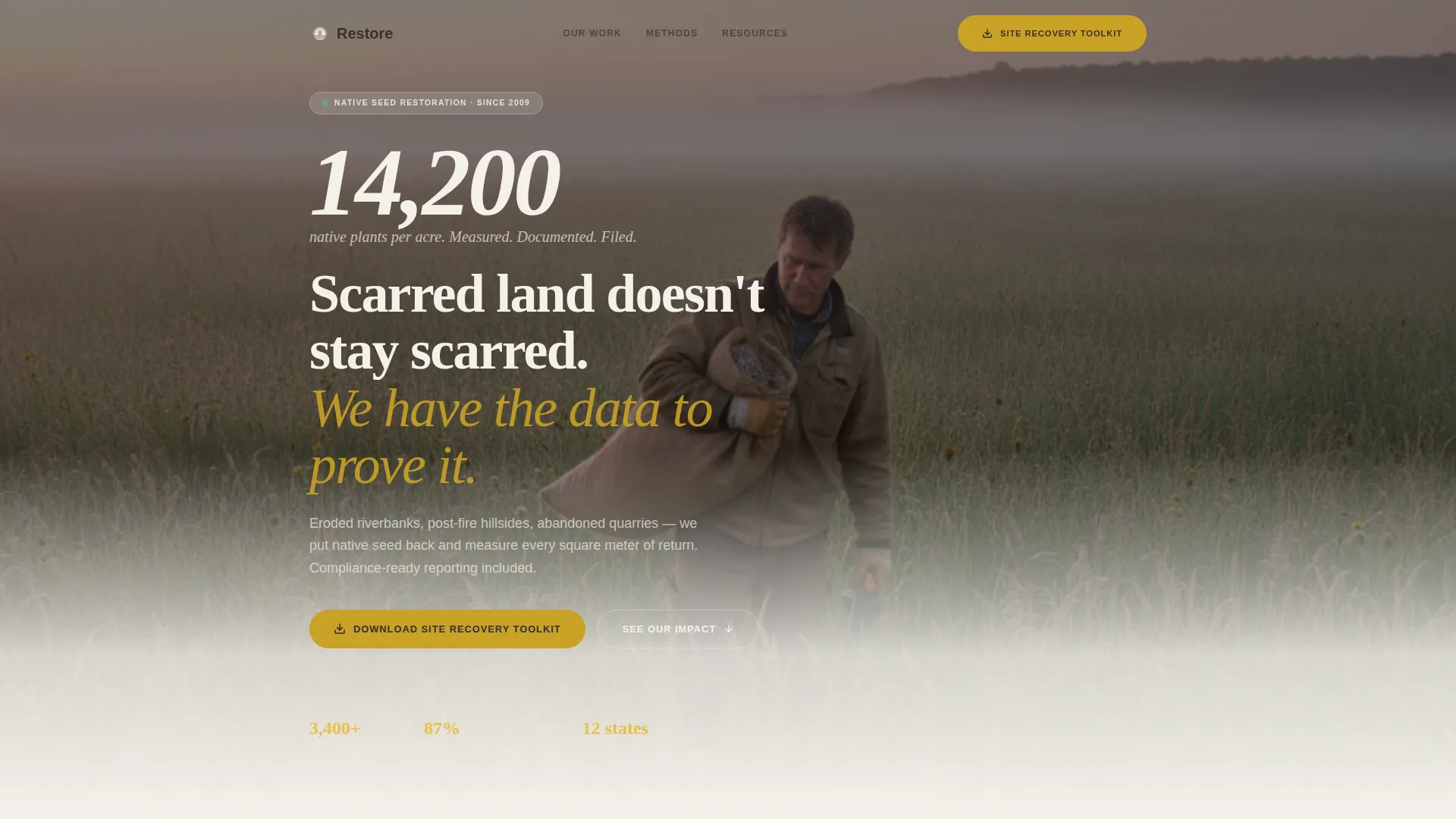
The hero opens with a cinematic lifestyle photograph and one oversized impact figure before any body copy appears. This sets the tone immediately: evidence precedes explanation throughout the entire page.
Oversized Impact Numbers Block
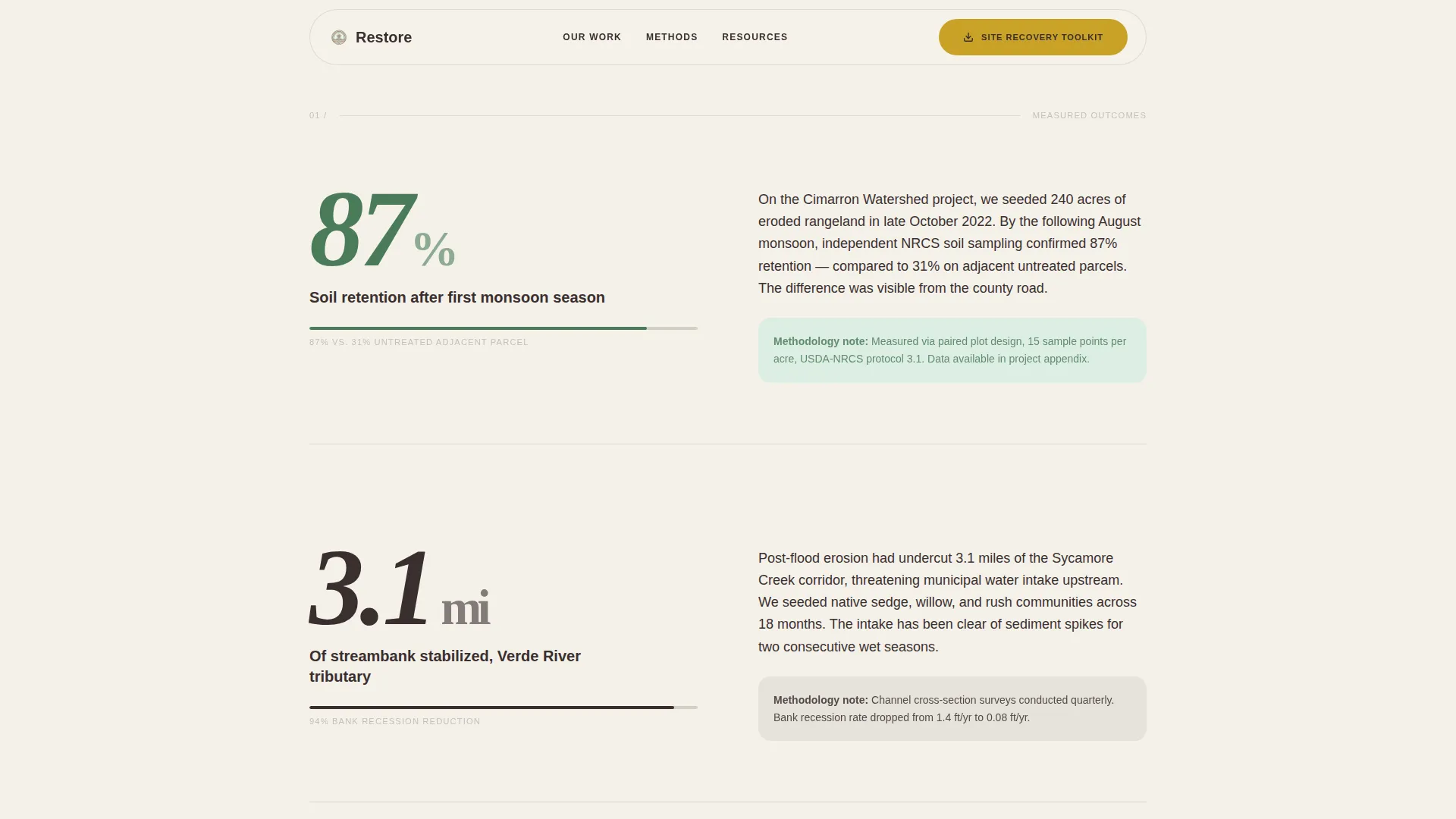
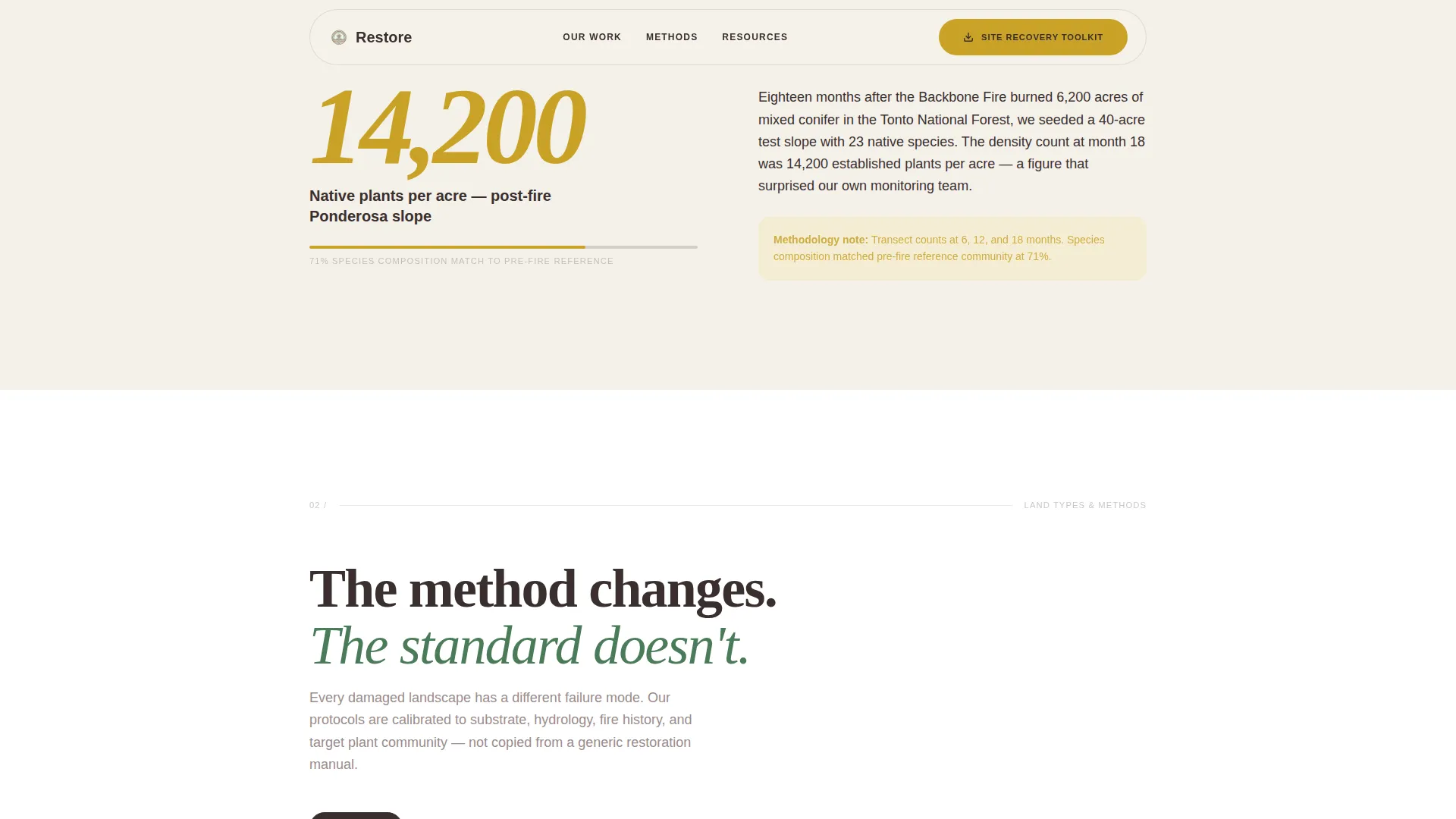
A dedicated section presents three or more measurable outcomes in large display type, such as plants per acre, soil retention rates, and streambank miles stabilized. Each figure is followed by a short methodology note, creating an evidence-then-story rhythm that builds credibility with technically minded readers.
Gated Toolkit Download Form
The primary conversion point is a downloadable Site Recovery Toolkit gated behind an email address and a single land-type dropdown. The form is interactive and uses client-side rendering to keep the experience smooth without a page reload.
Ungated Resource Hub
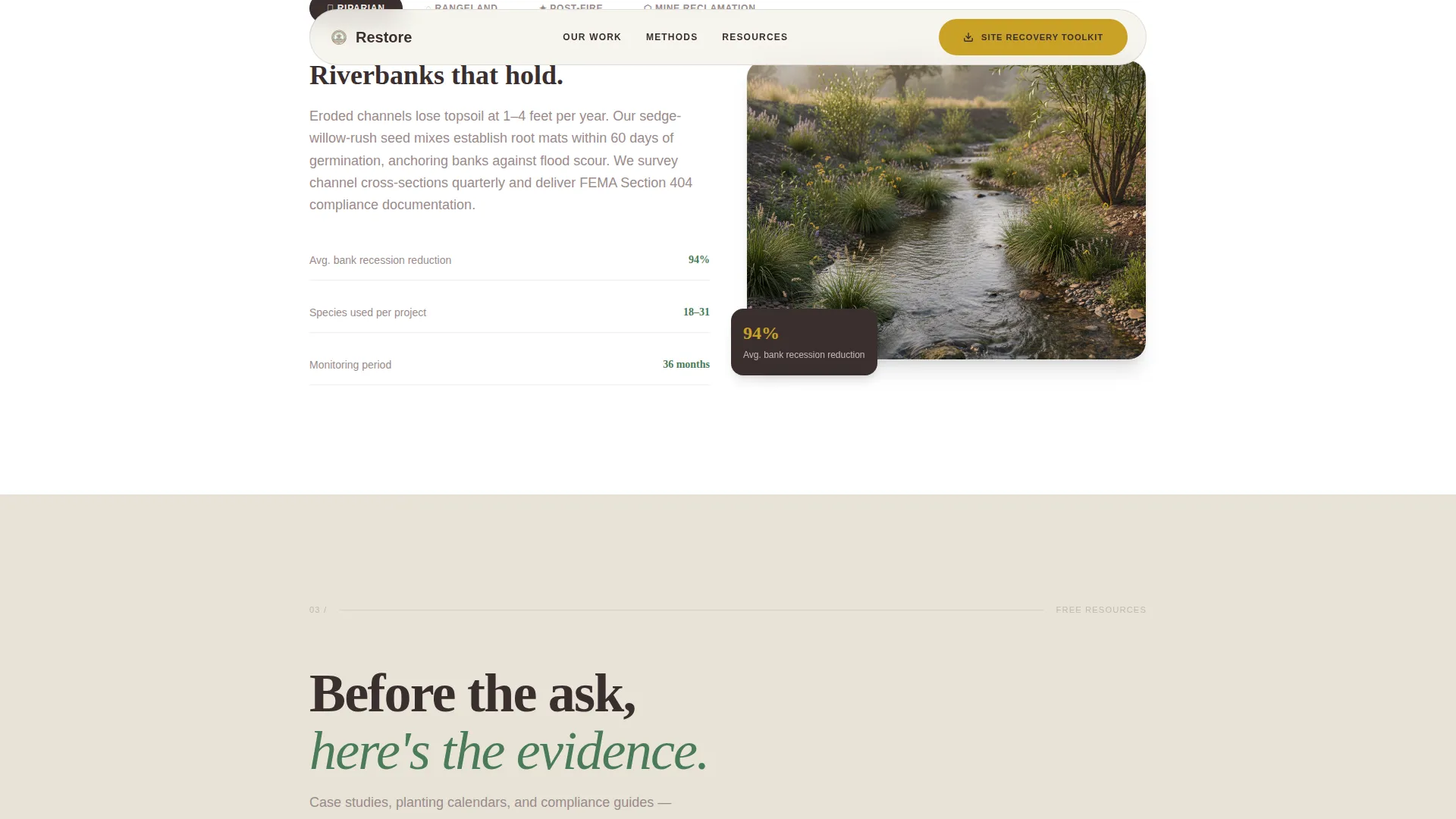
Below the gated form, a resource hub presents case study documents and seasonal planting calendars without requiring any sign-up. These ungated materials serve as trust-builders that warm up hesitant visitors before they encounter the toolkit form or the site assessment request.
Secondary Site Assessment Call to Action
After the third data section, a secondary call to action invites visitors to request a site assessment. Placement is intentional: it appears only after enough proof has accumulated for visitors to believe the numbers are real.
FAQ Accordion Component
An interactive accordion handles frequently asked questions directly on the page. This reduces friction for buyers who have process questions and keeps the page length manageable without burying important information.
Page sections overview
| Section | Purpose |
|---|---|
| Hero with stat | Establish credibility with lifestyle image and one oversized impact figure, plus toolkit download call to action |
| Impact numbers | Present three measurable outcome figures in large display type, each paired with a brief methodology note |
| Methodology detail | Explain the restoration process land type by land type, using evidence-then-story rhythm |
| Resources hub | Deliver ungated case study documents and seasonal planting calendars to build trust before the ask |
| Site assessment form | Capture qualified leads via a request form positioned after sufficient proof accumulation |
| Footer | Horizontal flow footer providing navigation and contact context |
Design & branding system
The visual identity follows an Agrarian Root theme built on a Botanical color system. The overall impression is a field journal left open on a tailgate: sun-faded pages, pressed botanical specimens, and pencil annotations in the margins.
- Four-color palette: chalk limestone (#F4F1EA) as the primary reading surface, deep loam brown (#3B2F2F) for headers and dividers, chlorophyll mid-green (#4A7C59) for living data and progress indicators, and dried seedhead gold (#C9A227) for interactive elements and linked resources
- Typography pairs Fraunces for display headers with DM Sans for body text, reinforcing the contrast between editorial authority and practical readability
- The hero uses a low-angle lifestyle photograph of a restoration ecologist in tallgrass prairie, shot to frame the recovering landscape behind the figure rather than in polished stock-photo style
Mobile & speed optimization
The template is designed desktop-first to match the primary audience of watershed managers and land managers working at a desk, while maintaining full usability on smaller screens.
- Scroll-triggered reveal animations and staggered stat counters are applied at medium intensity, keeping the page dynamic without overwhelming slower connections
- The parallax hero and interactive form components use client-side rendering only where needed; static sections use server components to keep load behavior predictable
- The single-column layout adapts cleanly to mobile viewports, preserving the reading order and keeping all calls to action reachable without horizontal scrolling
How this template helps you convert
The conversion strategy is sequenced deliberately: proof accumulates before any ask is made, so visitors arrive at each call to action already convinced by data.
- The gated toolkit download captures emails and land-type context early, qualifying leads while delivering genuine value through the Site Recovery Toolkit
- The ungated resource hub lowers the barrier for first-time visitors, giving skeptical nonprofit and municipal buyers something useful before they commit to sharing contact details
- The site assessment call to action appears after the third data section, timed to land when the visitor has seen enough measurable outcomes to trust the offer is real
Other information about this template
This template is part of the Agriculture and Environment category, specifically within the Environmental Consulting and Ecological Restoration niche. It is built for western US ecological contexts and uses English copy with USD pricing references and US date formatting throughout.
- The Intersection Match Score of 13 reflects strong alignment between the landing page direction, the Stats-First Impact creative direction, and the Content and Resource hub structure
- The template style is Single Column Flow, which keeps the reading path linear and reduces decision fatigue for time-pressured municipal and nonprofit buyers
- Animation settings are set to medium intensity, with scroll-triggered reveals and stagger effects on stat counters to keep the data presentation engaging without distracting from the content
Theme
Agrarian Root
Creative direction
Stats-First Impact
Color system
Botanical
Style
Single Column Flow
Direction
Content/Resource
Page Sections
Stats-first Hero with Lifestyle Image
Oversized Impact Numbers Display
Gated Toolkit Download Form
Ungated Resource Hub
Secondary Site Assessment Request
Interactive FAQ Accordion
Related questions
Who is this landing page template designed for?
Can I customize the land types in the toolkit download form?
What resources are included in the resource hub section?
Does the template support a two-step conversion path?
Is this template suitable for a desktop-first audience?