Stroke Recovery Telehealth Landing Page Template
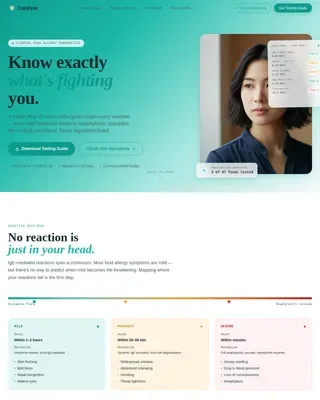
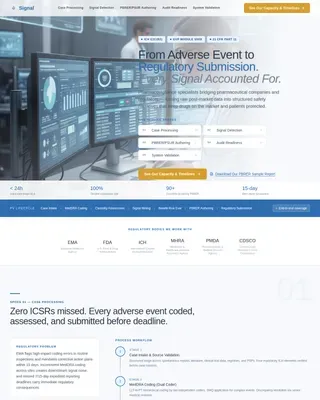
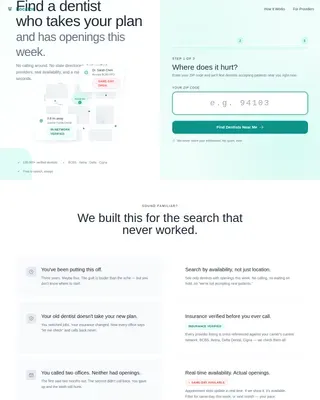
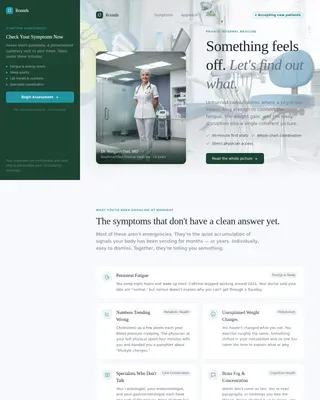
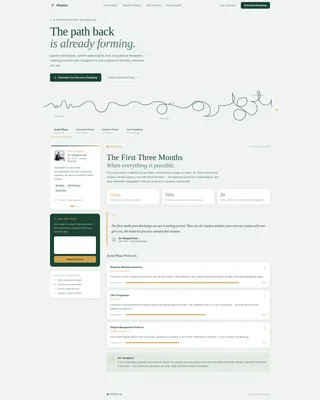
Rewire is a sidebar companion landing page built for stroke recovery telehealth practices. It organizes clinical resources by recovery phase, pairs each phase with a rotating specialist panel, and guides survivors and caregivers from free expert content toward a gated Recovery Roadmap download. The design uses a Forest Trust color system and a continuous line-art header to communicate trust, warmth, and clinical credibility.
by Rocket studio
Quick summary
Rewire is a single-page, sidebar companion layout built for stroke recovery telehealth services. It delivers phase-organized clinical content narrated by rotating specialists, earns visitor trust through free clinical depth, and converts through a gated PDF download and a low-friction sidebar inquiry form. The visual identity is calm, clinical, and full of earned warmth.
Who this template is for
This template is built for telehealth practices serving the stroke recovery community. It works especially well for small to mid-sized clinical teams offering remote care across specialties.
- Telehealth practices combining neurology, speech therapy, and occupational therapy
- Care teams targeting adult children managing a parent's recovery from a distance
- Clinicians who want to lead with educational depth before asking for a conversion
What problem this template solves
Stroke survivors leaving hospital care often feel dropped. Caregivers search online for answers and find either generic articles or hard sales pages. Neither builds trust. This template closes that gap by making clinical expertise the first thing a visitor experiences.
- Visitors arrive scared and skeptical; the page gives them real content before asking for anything
- Caregivers need phase-specific guidance, not one-size-fits-all messaging
- Remote families need to trust a practice they cannot visit in person
What you get with this template
You get a fully structured, content-rich landing page that organizes recovery information into three clinical phases, presents rotating specialist panels in a fixed sidebar, and offers two conversion paths. Every section is designed to lower anxiety and build trust progressively.
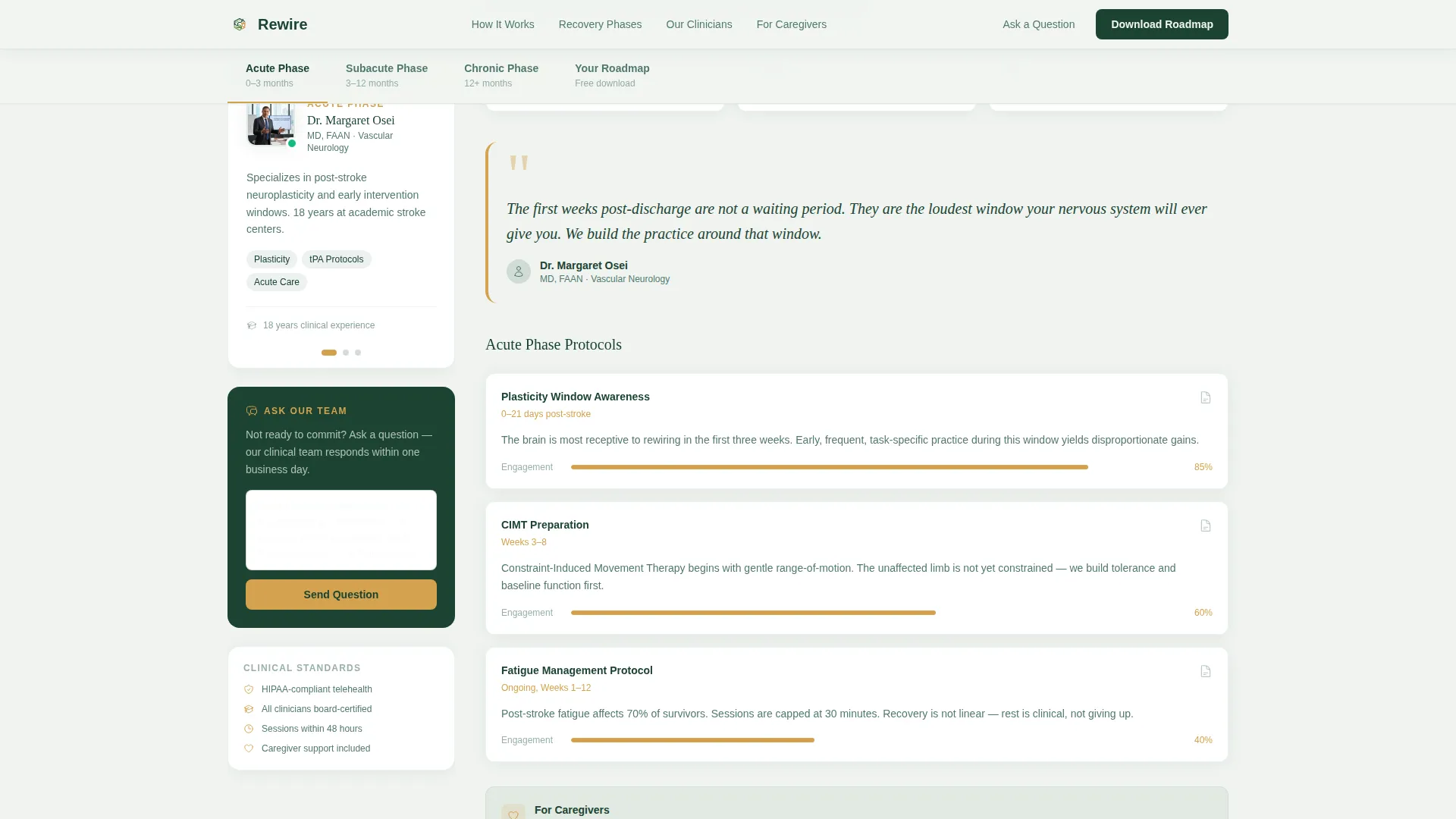
- A sticky sidebar showing the active clinician's credentials, specialty, and photo thumbnail
- Three scrollable phase sections: Acute (0 to 3 months), Subacute (3 to 12 months), and Chronic (12 or more months)
- A primary download call-to-action and a secondary low-barrier sidebar inquiry form
Feature list
This template ships with a focused set of components that serve the specific needs of a stroke recovery content hub.
Animated SVG Line Art Header
A full-width, continuous single-stroke illustration draws on load. The line traces a neuron firing, a hand opening, and a person standing. It renders in evergreen ink on birch white and animates left to right using a CSS stroke-draw technique, setting the emotional tone before a word is read.
Fixed Sidebar Specialist Panel
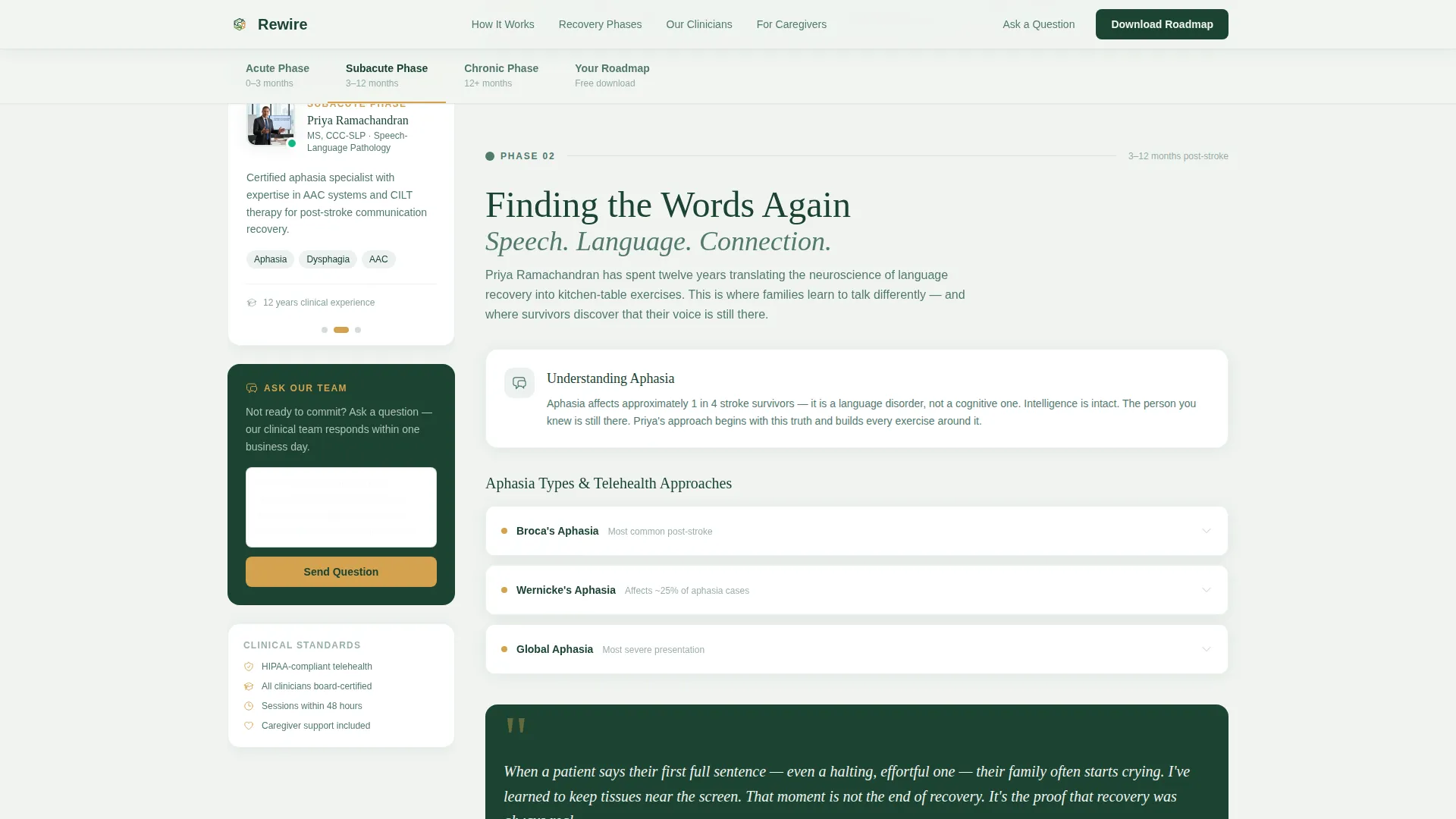
The sidebar stays in place as users scroll through recovery phases. It surfaces the current clinician's name, credentials, specialty badge, and a thumbnail photo. This creates a sense of a steady clinical companion, even as the main content changes.
Phase-Tabbed Content Sections
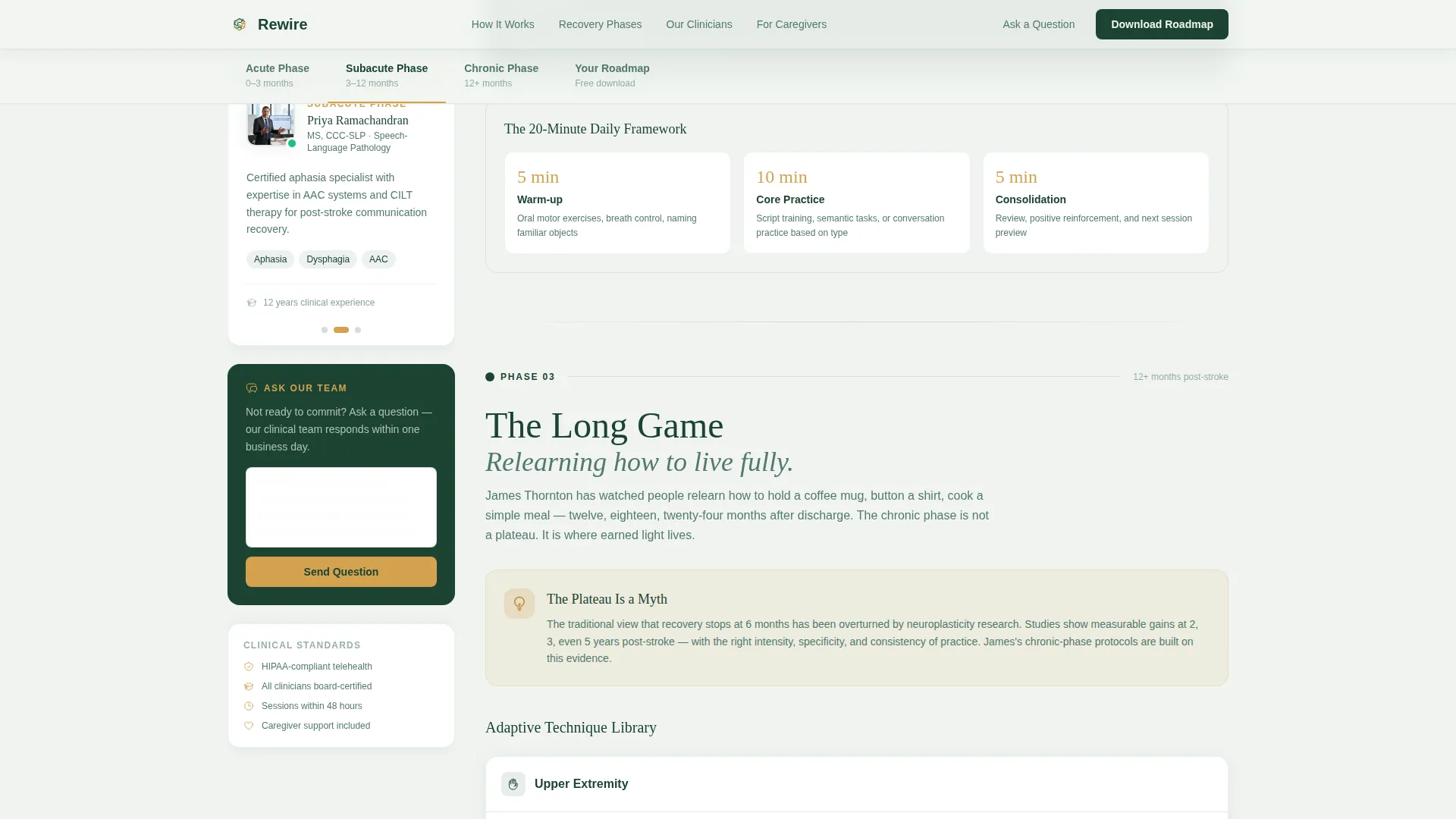
Three distinct content zones are organized by recovery timeline. A neurologist narrates the Acute phase with content on plasticity windows. A speech-language pathologist covers aphasia exercises in the Subacute phase. An occupational therapist demonstrates adaptive techniques in the Chronic phase.
Gated Recovery Roadmap Download
The primary call-to-action is a phase-specific PDF guide. A short gating form asks for the visitor's role (survivor or caregiver), months since stroke, and primary recovery goal. Options include speech, mobility, cognition, and daily living.
Low-Barrier Sidebar Inquiry Form
A secondary conversion path sits in the persistent sidebar. It is a single free-text field labeled "Ask Our Team a Question." This lowers the commitment threshold for visitors not yet ready to download or book.
Intersection-Observer Section Reveals
Content sections animate into view as the visitor scrolls. Reveal timing is staggered using intersection observer logic to keep the scroll feeling deliberate and calm, matching the tone of the recovery journey itself.
Page sections overview
| Section | Purpose |
|---|---|
| Hero with Phase Nav | Introduces the service and anchors the three recovery phases |
| Acute Phase Panel | Neurologist-led content on plasticity windows and early recovery |
| Subacute Phase Panel | Speech-language pathologist content covering aphasia exercises |
| Chronic Phase Panel | Occupational therapist guidance on adaptive daily techniques |
| Download call to action Section | Gated Recovery Roadmap form with role and goal fields |
| Sidebar Specialist Panel | Fixed companion showing active clinician credentials |
| Footer | Horizontal flow footer pattern with supporting links |
Design & branding system
The visual system follows a Medical Clarity theme built on the Forest Trust color palette. It balances clinical authority with the living warmth of a rehabilitation garden. Typography pairs Fraunces serif headings with DM Sans body text to blend earned gravitas with clinical clarity.
- Deep evergreen (#1B4332) anchors the sidebar, headings, and persistent navigation elements
- Soft moss (#52796F) softens section backgrounds and secondary containers
- Birch white (#F0F4F0) creates breathing room in content-heavy areas, and warm amber (#D4A24E) highlights progress indicators, interactive elements, and calls-to-action
Mobile & speed optimization
The layout is designed desktop-first to support the sidebar companion structure. On smaller screens, the sidebar stacks above the phase content so the specialist context is never lost. CSS animations are preferred over JavaScript-heavy solutions to keep motion smooth without heavy overhead.
- Sidebar stacks vertically on mobile so clinician credentials appear before each phase section
- SVG stroke animation and intersection-observer reveals use CSS where possible
- Server components handle static content sections to reduce client-side rendering load
How this template helps you convert
The conversion strategy is built on trust earned through content. By the time a visitor reaches the download form, three specialists have already helped them for free. The ask feels like a natural next step in a relationship that started the moment the line art began to draw.
- The three rotating specialist panels give clinical depth freely, reducing skepticism before any form appears
- The phase-specific gating form personalizes the Recovery Roadmap, making the download feel relevant rather than generic
- The sidebar inquiry form offers a second, lower-commitment path for visitors who are not yet ready to download
Other information about this template
This template is built as a single-page content hub with a sidebar companion layout. It is suited to telehealth practices in the stroke recovery care space that want to lead with clinical authority and convert through relationship-building rather than hard selling.
- Page type: single-page landing page with sticky sidebar and smooth-scroll phase navigation
- Animation level: medium, including SVG stroke draw on load, staggered section reveals, and smooth scroll behavior
- Typography stack: Fraunces for display headings and DM Sans for body and form labels
- Footer pattern: horizontal flow layout supporting supporting navigation and contact links
- No photography or stock imagery is used; the visual identity relies entirely on the evergreen line art illustration and the Forest Trust color palette
Theme
Medical Clarity
Creative direction
Expert Panel
Color system
Forest Trust
Style
Sidebar Companion
Direction
Content/Resource
Page Sections
Animated SVG Line Art Header
Fixed Sidebar Specialist Panel
Phase-tabbed Recovery Sections
Gated Recovery Roadmap Download
Low-barrier Sidebar Inquiry Form
Intersection-observer Section Reveals
Related questions
Who is this template designed for?
Can I adapt the three recovery phases to my own specialties?
How does the gated download form work?
Does the sidebar stay visible on mobile devices?
Is this a good fit if my practice only has one specialist?