Artisan Japanese Curry House Landing Page Template
Roux is a single-column landing page template built for an artisan Japanese curry house. It pairs a macro close-up hero photograph with draggable before/after process reveals, a scroll-driven craft narrative, and a clean multi-step reservation form. The design uses a warm Haute Craft palette to make every visitor taste the food before they arrive.
by Rocket studio
Quick summary
Roux is a booking-focused landing page template designed for a Japanese curry restaurant that leads with craft. A full-viewport katsu curry close-up opens the page. Draggable sliders reveal the kitchen's process from raw ingredients to finished dish. A three-step reservation form converts appetite into confirmed seats.
Who this template is for
This template fits restaurants and food businesses where the craft behind the dish is part of the draw. It speaks directly to owners who want their page to feel as considered as the food they cook and serve.
- Japanese curry restaurants seeking reservations from local diners and date-night couples
- Fine-casual food businesses that want to tell a craft story alongside a menu and booking path
- Restaurant operators who want a modern, editorial design without writing a single line of code
What problem this template solves
Most restaurant landing pages show a photo and a phone number. That approach does not build appetite or trust before the visit. Roux solves this by making the process visible and delicious before a visitor ever clicks "Reserve a Seat."
- Visitors leave reservation pages that feel generic and fail to communicate why the food is worth the trip
- A slow or cluttered page risks losing over 20% of potential bookings before the form even loads
- Restaurants with a strong craft story have no clear template designed to carry that narrative with visual impact
What you get with this template
This template delivers a complete single-column landing page flow, purpose-built for a Japanese restaurant that earns reservations through storytelling. Every section is ordered to move a visitor from curiosity to commitment.
- A full-viewport macro hero section with a delayed serif restaurant signature, three draggable before/after craft-reveal sliders, and a scroll-scrub atmospheric craft statement section
- A two-path reservation block: a three-step "Reserve a Seat" form covering date, party size, and seating preference, plus an "Order Omakase Curry" secondary path for the chef's tasting menu
- A Haute Craft visual system using Fraunces serif display type, DM Sans body text, and a Sunset Mesa color palette built around deep roux brown, warm turmeric clay, steamed-rice white, and a burnt chili accent
Feature list
This template is built around five core capabilities drawn directly from the design brief.
Macro Close-Up Hero Section
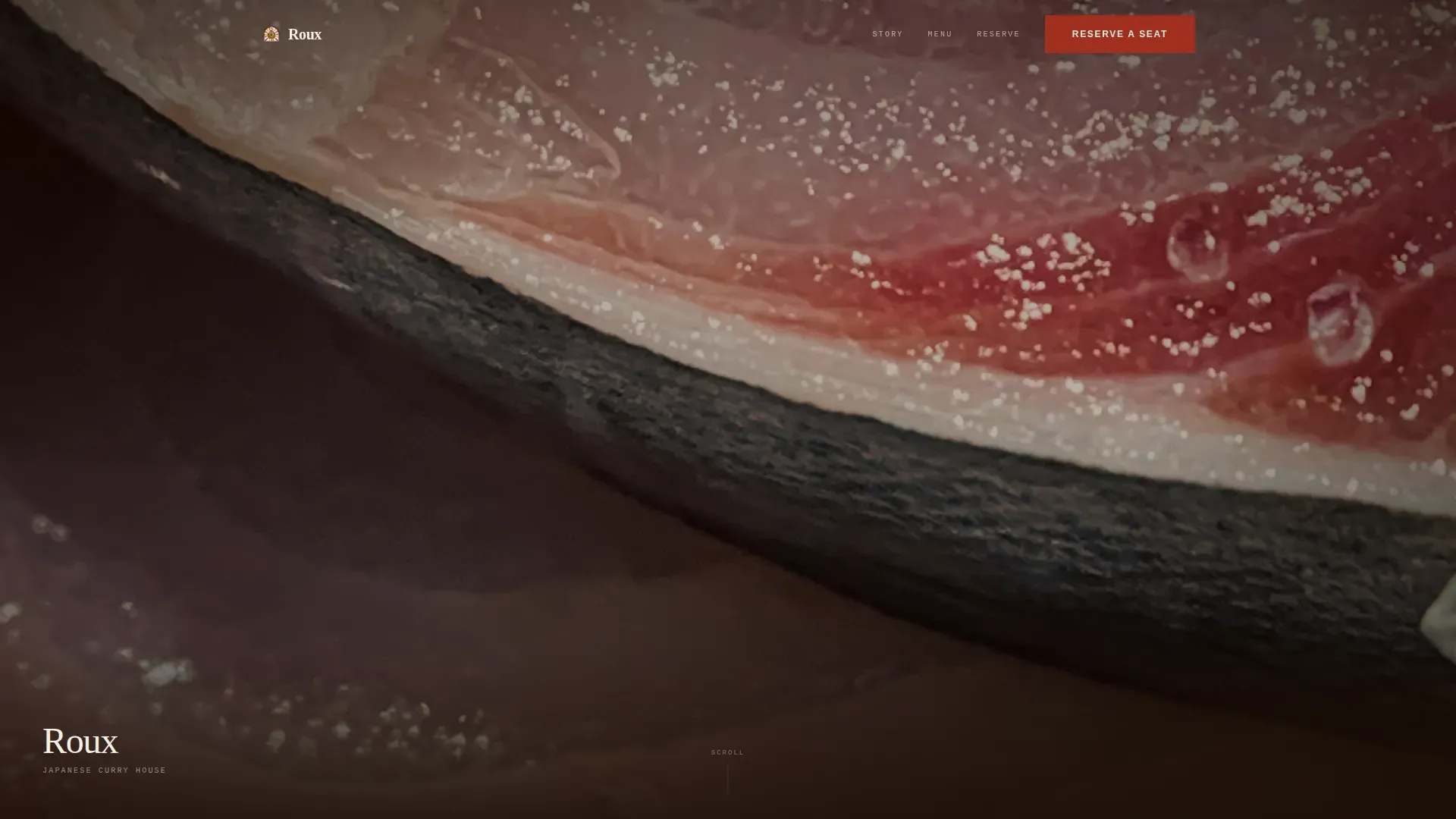
The hero opens with a full-viewport photograph shot inches from a katsu curry plate. Shallow depth of field dissolves the background into warm bokeh. The restaurant name appears in a restrained serif at the bottom left, like a signature on a painting. No introductory text competes with the image in the first beat.
Draggable Before/After Craft Sliders
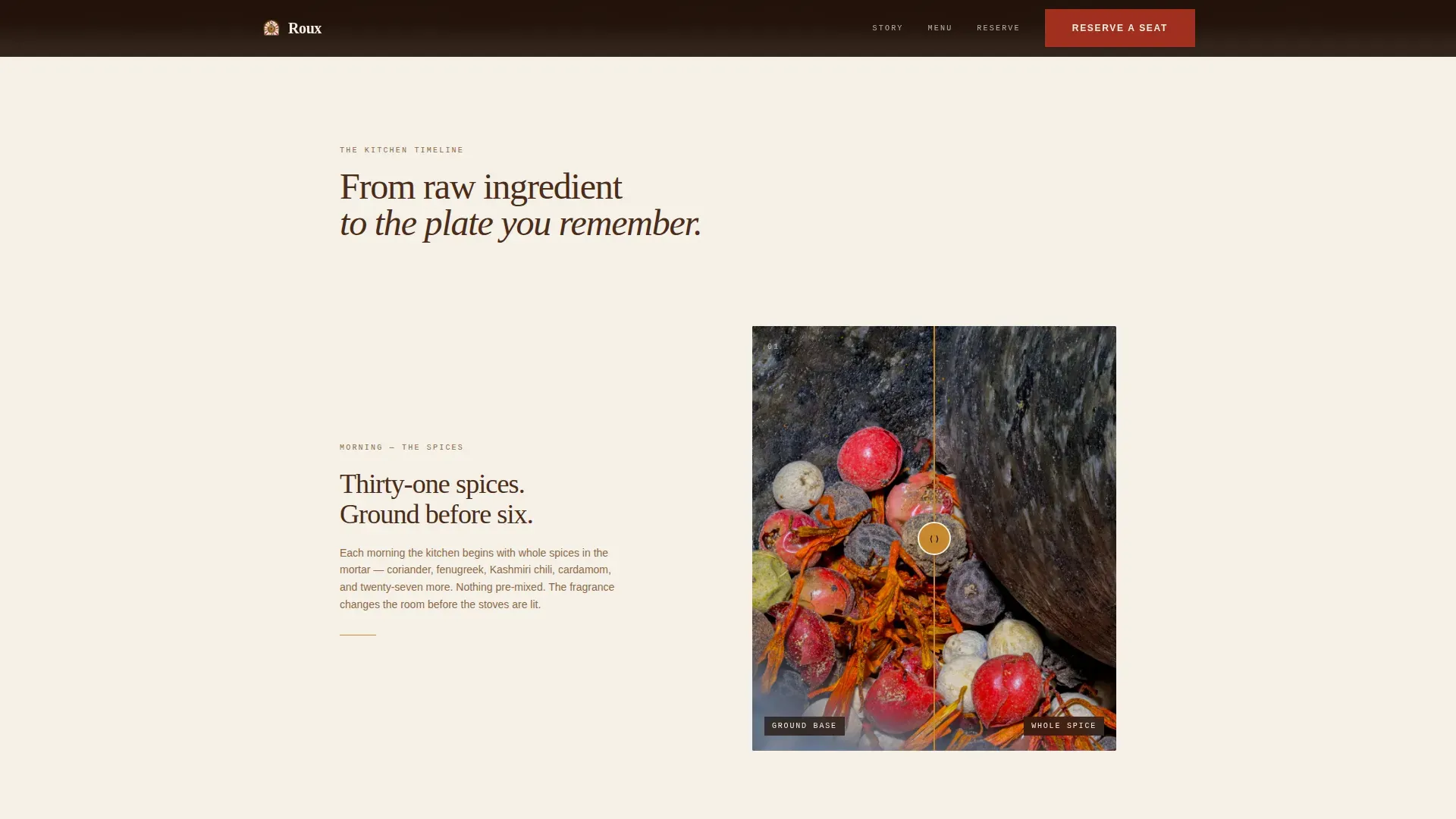
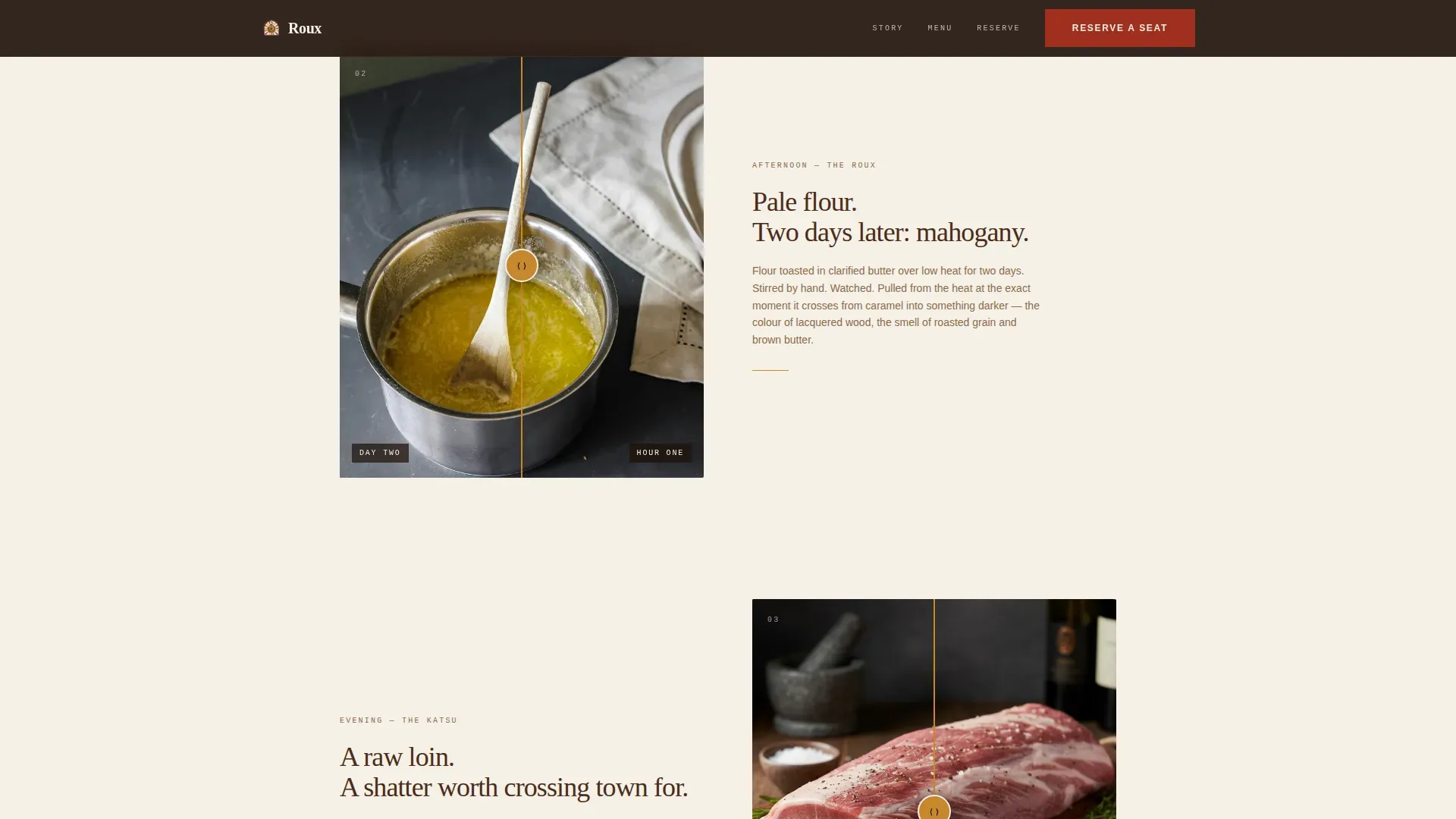
Three interactive sliders walk visitors through the kitchen's morning-to-evening timeline. Whole spices in a mortar become the fragrant curry roux base. A pale block of flour and butter becomes the thick, glossy sauce. A raw cut becomes the shattering katsu. Each reveal builds appetite and respect for the craft.
Scroll-Driven Craft Statement
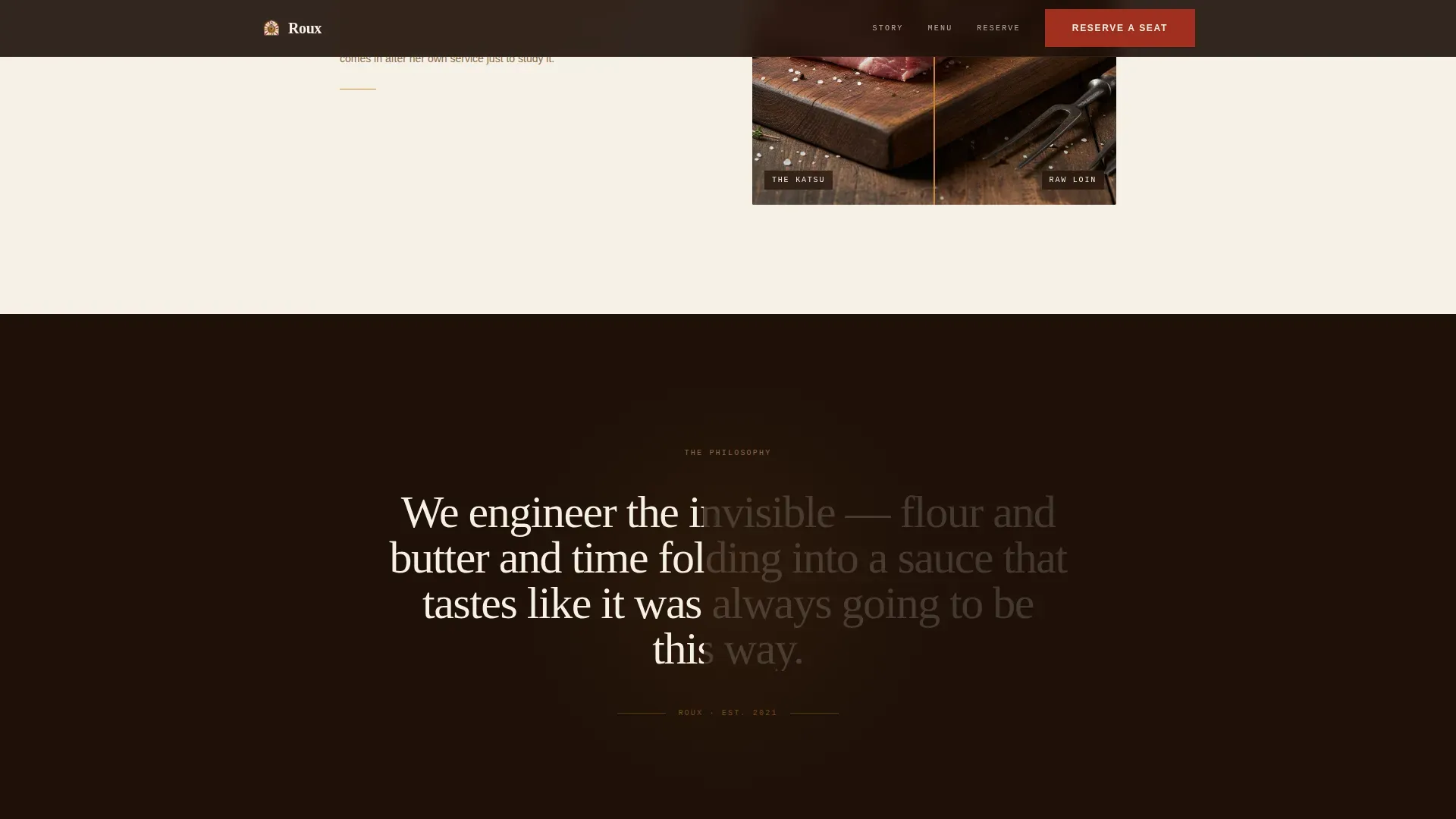
A dedicated dark atmospheric section uses scroll-scrub text animation to carry the narrative of the two-day roux process. This section holds the page's emotional weight and reinforces the restaurant's identity before the reservation ask arrives.
Two-Path Reservation Form
The booking block offers two routes. The primary "Reserve a Seat" path collects date, party size, and seating preference across three clean steps. The secondary "Order Omakase Curry" path requires only a date and dietary notes. The form appears after the third scroll section and again anchored at the page bottom.
Haute Craft Design System
Typography pairs Fraunces for display headings with DM Sans for body text. The Sunset Mesa palette uses deep toasted roux brown for primary surfaces, warm turmeric clay for highlights, soft steamed-rice white for backgrounds, and a burnt chili accent reserved for buttons and hover states. The overall design leans into Japandi principles: minimalist, warm, and functional.
Page sections overview
| Section | Purpose |
|---|---|
| Hero, Macro Close-Up | Opens with full-viewport katsu curry photo and delayed serif name reveal |
| Process Reveal Sliders | Three before/after draggable sliders showing craft timeline from prep to plate |
| Craft Statement Block | Scroll-scrub dark section carrying the two-day roux narrative |
| Reserve a Seat Form | Three-step booking form plus secondary omakase curry path |
| Page Footer | Linear footer pattern closing the single-column flow |
Design & branding system
The visual identity follows a Haute Craft direction that feels like a wooden counter lit by a single warm pendant. The palette and type choices work together to signal quality without shouting. Ample white space keeps attention on the food and the story.
- Sunset Mesa color system: deep toasted roux brown (#4A2C1A), warm turmeric clay (#C8882E), soft steamed-rice white (#F5F0E6), burnt chili accent (#A03020) for buttons and hover states
- Fraunces serif for elegant display headings and DM Sans for clean, modern body copy, mixing readability with traditional warmth
- Japandi-influenced layout: minimal ornamentation, deliberate negative space, and earthy tones that trigger appetite without visual noise
Mobile & speed optimization
The template is built with equal priority on desktop drama and mobile booking convenience. Visitors browsing on a phone can reach the reservation form quickly without fighting the layout. Images are lazy-loaded and animations rely on CSS transforms only.
- Single-column flow adapts naturally to small screens; buttons are sized and spaced for comfortable thumb use
- Lazy-loaded images and CSS-only transforms keep the page responsive across every modern browser without heavy scripts
- Mobile-friendly text-based menu display avoids PDF formats, supporting both usability and discoverability
How this template helps you convert
Every design and layout decision in Roux points toward one goal: turning a visitor's appetite into a confirmed reservation. The page earns the click by building trust through craft before the form ever appears.
- The macro hero and draggable sliders create an emotional connection with the food before any call to action is presented, making the "Reserve a Seat" button feel like a natural next step rather than an interruption
- Placing the reservation form after three scroll sections means visitors arrive at the booking step already primed by the craft narrative, raising the likelihood they complete the form
- A single primary goal structure avoids decision paralysis; the secondary omakase path gives a meaningful second option without splitting attention or weakening the main conversion flow
Other information about this template
This section covers additional context useful for buyers evaluating the template for their own Japanese restaurant or food business.
- The roux artisan japanese curry house landing page template is fully customizable, allowing users to swap photography, adjust copy, and update the color system to match their own brand identity
- Japanese curry has a rich history: curry was introduced to Japan during the Meiji era in the 19th century and is now a beloved dish enjoyed more widely than sushi or tempura in many parts of Japan
- The classic recipe for japanese curry uses a savory curry roux made from equal parts butter and flour, then builds depth with onion, carrots, potatoes, and a liquid base; homemade curry roux skips preservatives found in some store-bought blocks, and you can mix in soy sauce, honey, or a grated apple for added sweetness
- Unlike indian curry, japanese curry tends toward a mild, thick, slightly sweet flavor profile; it is typically served over a bowl of steamed rice or alongside udon noodles, and the dish can be adapted with chicken, beef, or vegan vegetables
- Other ingredients like salt, garnish, and a touch of honey are easy ways to stir extra character into the final pour when you cook your own curry roux in a large saucepan or pot
- This template can be adapted for sushi bars, Japanese restaurants, ramen shops, and other food businesses across Japan and beyond; users without technical experience can customize it without touching any code, making it practical for independent restaurant owners and small teams
- Japanese restaurant website templates like this one help customers and operators create a polished online presence quickly; many stores and restaurants rely on responsive, modern templates to expand their reach and attract new diners who discover them through search or social scroll
Theme
Haute Craft
Creative direction
Before/After Reveal
Color system
Sunset Mesa
Style
Single Column Flow
Direction
Booking/Scheduling
Page Sections
Macro Close-up Hero Section
Draggable Before/after Craft Sliders
Scroll-driven Craft Statement
Two-path Reservation Form
Haute Craft Design System
Related questions
Can I use this template without writing any code?
Is the reservation form included and ready to use?
Can this template work for a restaurant that serves dishes beyond Japanese curry?
Does the template support mobile visitors?
Can I change the color palette and typography?