Adaptive Reuse Architecture Bento Grid Landing Page
Salvage is a bento grid landing page template built for adaptive reuse architecture practices. It pairs an animated architectural cross-section header with a case study narrative scroll structure, guiding visitors through project transformations from derelict industrial buildings to finished spaces. The Obsidian and Gold visual identity and a gated resource download make this template a strong portfolio and lead capture tool.
by Rocket studio
Quick summary
Salvage is a single-page bento grid template designed for architecture studios specializing in adaptive reuse. The page opens with an animated ink-drawn cross-section that builds itself on screen, then guides visitors through layered project case studies. A gated PDF download anchors the primary conversion path, making the template equally effective as a portfolio showcase and a professional lead generation tool.
Who this template is for
This template is built for design practices and individuals who work at the intersection of heritage preservation and spatial transformation. It speaks directly to studios that need to demonstrate complex, constraint-driven work to sophisticated clients.
- Architecture studios and design practices focused on adaptive reuse and building transformation
- Boutique hospitality groups and heritage-listed property owners looking for a studio with a proven methodology
- Municipal development agencies and property developers seeking design partners for economically distressed or historically significant sites
What problem this template solves
Most architecture portfolio templates prioritize visual polish over narrative depth. When your work involves listed buildings, planning boards, and multi-year transformation timelines, a gallery grid simply does not communicate the complexity or the expertise.
- Visitors cannot understand the scale of constraint your projects involve from photographs alone
- A generic portfolio layout gives heritage clients, municipal planners, and hospitality developers no reason to trust the methodology before they reach out
- There is no structured conversion path to capture professional leads who are still in the research phase
What you get with this template
You get a fully structured bento grid landing page that turns each project into a sequential narrative rather than a static image tile. The layout is designed to escalate in detail as the visitor scrolls, earning trust incrementally before presenting the download offer.
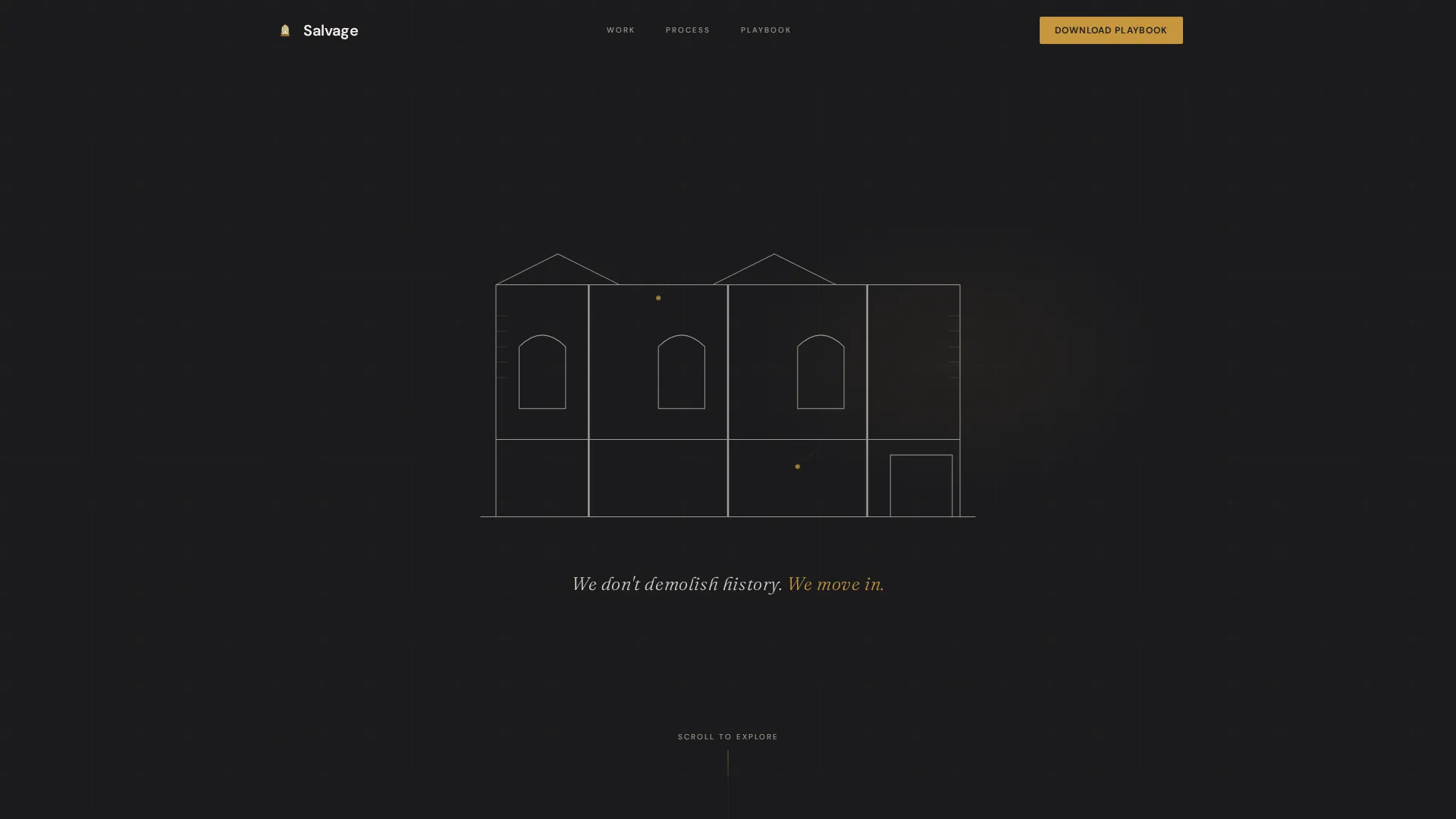
- An animated header illustration that draws an architectural cross-section in real time, with a parallax cursor effect adding dimensional depth
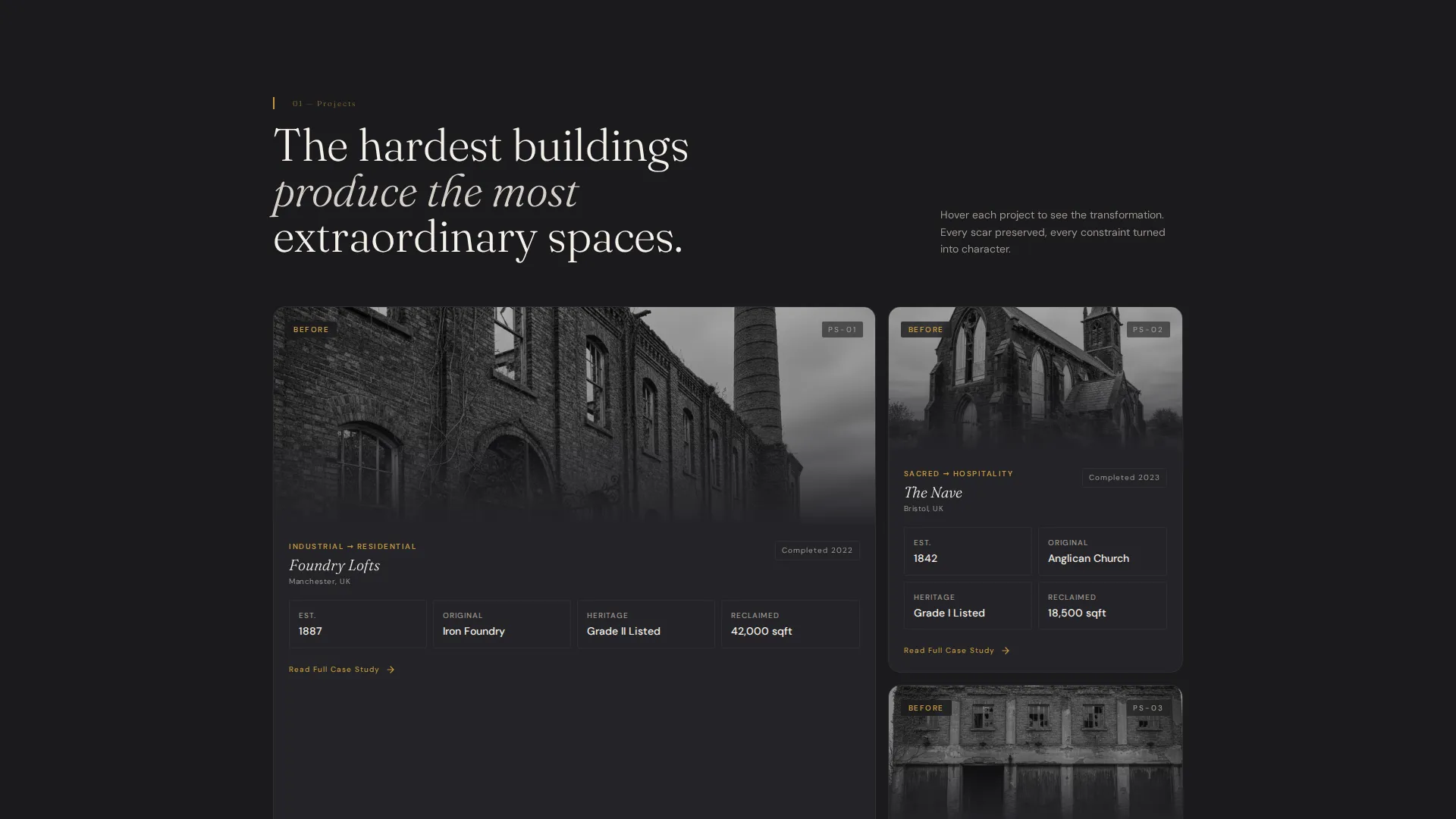
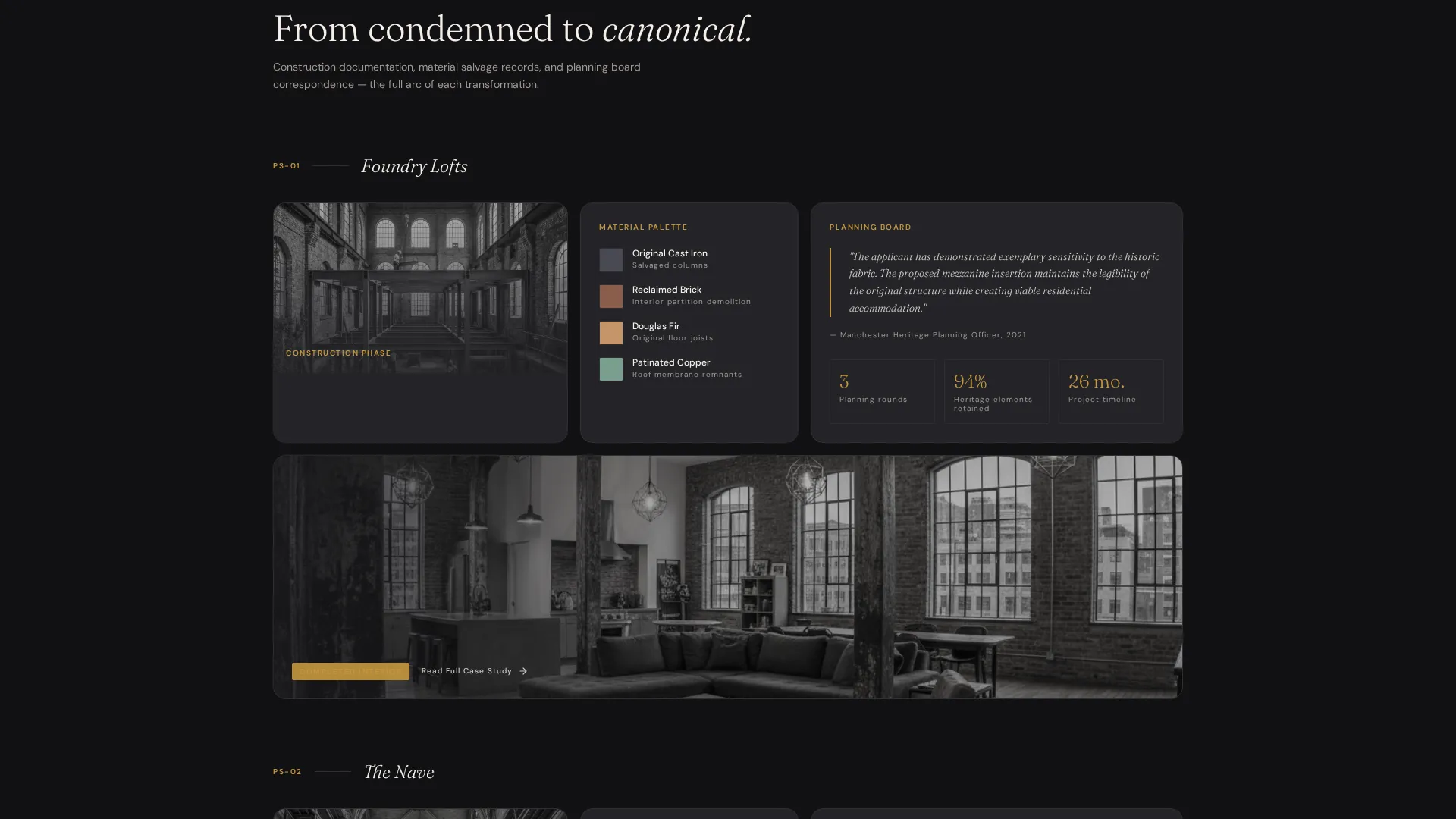
- A scrolling bento grid system where cells expand to reveal before photographs, construction documentation, material palettes, heritage data tiles, and completed interior photography
- Two conversion paths: a primary "Download the Reuse Playbook" gated form and a secondary "Read Full Case Study" gate woven through each project cluster
Feature list
This section describes the core built-in capabilities of the Salvage template as defined by the design brief.
Animated Architectural Cross-Section Header
The header features a self-constructing ink-line illustration that draws itself on screen. Industrial bones render first in obsidian strokes, then adaptive interventions layer over in brass-tone lines. A parallax shift responds to cursor movement, giving the drawing a sense of physical depth without video or heavy assets.
Scrolling Bento Grid Case Study Layout
Each project occupies a cluster of bento cells that reconfigure as the visitor scrolls deeper. Cells expand progressively to reveal before photography, construction-phase documentation, sourced material palettes, planning correspondence excerpts, and final interior photography. The escalating detail structure builds a cumulative argument for the studio's expertise.
Heritage Data Tiles
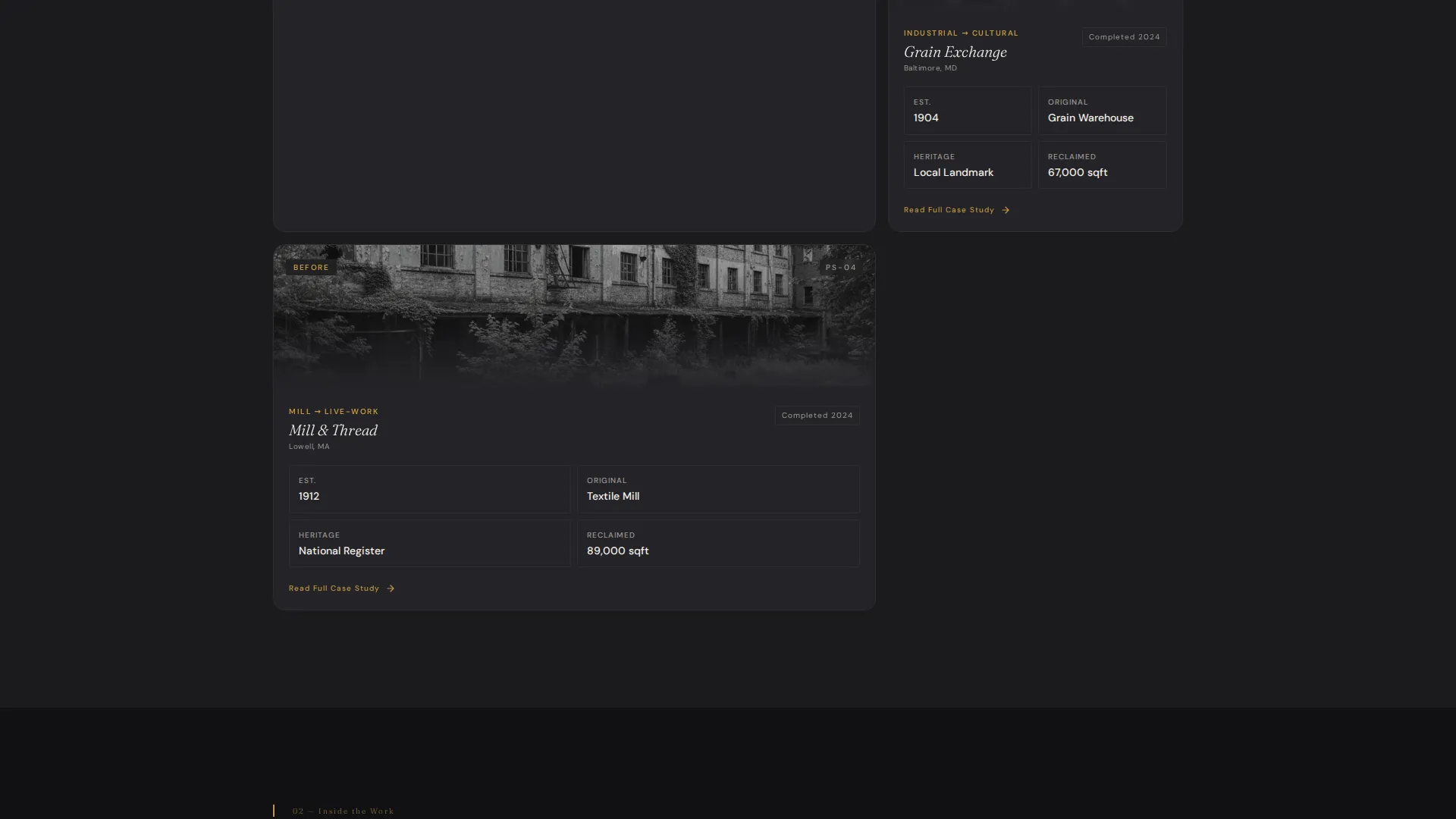
Each project cluster opens with compact data tiles showing year built, original use, heritage classification, and square footage reclaimed. These tiles give professional visitors an immediate factual anchor before the narrative images begin, signaling that the studio works with precise, documented information.
Dual Conversion Path with Gated Forms
The primary call to action offers a downloadable Reuse Playbook PDF, gated behind a short form that asks for professional role, email address, and an optional field for a specific building or site. A secondary gate links from each case study to a deeper project brief using the same lightweight form structure.
Interstitial Quote Cells
Single-cell quote blocks from clients or preservation officers appear between project clusters throughout the grid. These breaks introduce human voice into the visual flow, reinforcing the studio's credibility with first-person testimony rather than self-description.
Obsidian and Gold Visual Identity System
The template applies a deliberate four-tone color system throughout every cell and interactive element. Obsidian dominates backgrounds and typographic weight. Brass appears exclusively on hover states, progress indicators, and pull-quote rules. Plaster gray holds body text and secondary cards. Archival cream gives photography room to breathe inside bento cells.
Page sections overview
| Section | Purpose |
|---|---|
| Animated header illustration | Establishes studio identity and draws the visitor into the adaptive reuse narrative with a self-constructing architectural cross-section |
| Studio name and tagline | Sets the brand position with a restrained serif logotype and the single-line statement: "We don't demolish history. We move in." |
| Project cluster one | Introduces the first case study with before photography and heritage data tiles showing year built, original use, classification, and reclaimed area |
| Expanding bento cells | Reveals construction documentation, material palettes, planning board excerpts, and completed interior photography as the visitor scrolls |
| Interstitial quote cell | Breaks the visual rhythm with a first-person client or preservation officer quote between project clusters |
| Additional project clusters | Repeats and escalates the case study format across multiple projects, each increasing in complexity and constraint |
| Reuse Playbook call to action | Presents the primary download offer with a three-field gated form collecting professional role, email, and optional site detail |
| Case study gate links | Threads secondary conversion points through each project as "Read Full Case Study" calls to action using the same lightweight form |
Design & branding system
The Salvage template uses an Atelier Studio visual identity built on four deliberate tones. Every color decision follows a strict functional rule rather than a decorative one, keeping the palette feeling earned and considered.
- Obsidian (#1A1A1D) dominates page backgrounds and typographic weight; plaster gray (#D6CFC7) holds body text and secondary card surfaces; archival cream (#F5F0E8) fills bento cell content areas where photography lands
- Oxidized brass (#C5973E) appears only on interactive affordances including hover states, progress indicators, and pull-quote rules, so every gold element reads as a deliberate mark rather than decoration
- Typography uses a restrained serif for the studio name and display headings, reinforcing the Atelier Studio theme and keeping the tone architectural and precise rather than corporate
Mobile & speed optimization
The bento grid layout is designed to reflow across screen sizes, keeping the case study narrative readable on smaller viewports without losing the visual hierarchy that makes the scrolling experience work.
- The animated header illustration is structured to construct cleanly on screen without relying on video files, keeping load behavior predictable across devices
- Bento cells are sized and ordered so that the most important project information, including before photography and heritage data tiles, appears first in the mobile reading sequence
How this template helps you convert
The page is structured as a progressive trust-building sequence. By the time a visitor reaches the primary call to action, they have already seen the studio solve multiple difficult transformation problems. The download offer feels like a natural continuation of the value already demonstrated on the page.
- The animated header and opening tagline create an immediate, specific impression of the studio's position, filtering in the right audience before the first project tile loads
- The escalating case study scroll builds expertise proof project by project, so the gated Reuse Playbook download arrives after credibility is already established rather than before it
- The dual conversion structure means visitors who are not ready for the full download can still enter the funnel through a lighter "Read Full Case Study" gate, reducing friction and capturing leads at multiple readiness levels
Other information about this template
The Salvage template was designed specifically for the adaptive reuse architecture niche, where the sales cycle is long, the clients are highly informed, and visual credentials alone rarely close the conversation. This template supports that context by making methodology visible before the ask.
- The template style is a bento grid, which suits adaptive reuse portfolio work particularly well because it mirrors the patchwork logic of the buildings themselves
- The creative direction follows a Case Study Narrative structure, meaning content is sequenced to tell a transformation story rather than display a finished result
- The header concept is an Animated Illustration, a deliberate choice that signals craft and precision without relying on site photography in the above-the-fold moment
- The template is categorized under Portfolio and Agency, with a specific fit for Architecture and Interiors Portfolio use cases within the adaptive reuse niche
Theme
Atelier Studio
Creative direction
Case Study Narrative
Color system
Obsidian & Gold
Style
Bento Grid
Direction
Content/Resource
Page Sections
Animated Architectural Cross-section Header
Scrolling Bento Grid Case Study Layout
Heritage Data Tiles
Dual Gated Conversion Paths
Interstitial Quote Cells
Obsidian and Gold Color System
Related questions
Can I use this template without a full portfolio of completed projects?
What is the Reuse Playbook and do I need to prepare it before launching?
Who is the secondary conversion path designed for?
Can the color palette be updated to match an existing studio brand?
What kind of architecture practice gets the most value from this template?