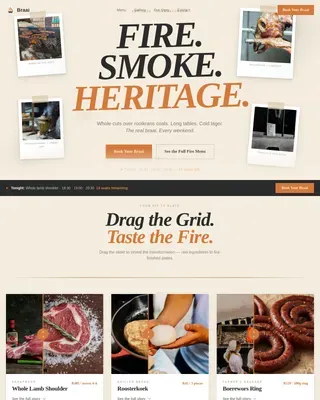
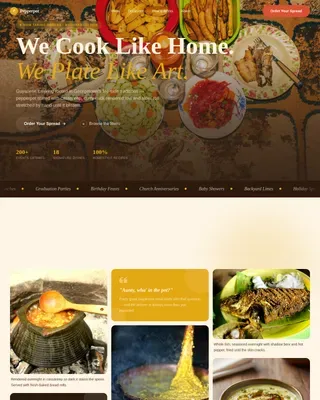
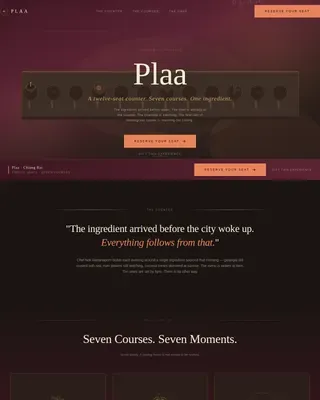
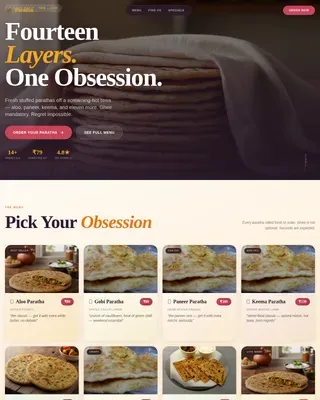
Regional & Specialty Restaurant Appointment Booking Website Template
The Kachori template is a hero-dominant landing page built for generational Indian snack shops. It blends ukiyo-e illustration art with vintage matchbox aesthetics across a Japanese Zen color system. A three-step booking form handles office trays, family gatherings, and event catering orders. The design evokes the quiet craft of a 5 AM kitchen where every kachori is pinched by hand.
by Rocket studio
Quick summary
Kachori is a single-page booking template for heritage Indian snack shops that serve crispy, deep fried street food at scale. The layout is hero-dominant, filling ninety percent of the first viewport with a custom ink illustration. A floating "Book Your Tray" button and a three-step form drive tray reservations for offices, families, and event planners. The visual identity fuses Neo-Retro warmth with Japanese Zen restraint.
Who this template is for
This template is built for food businesses rooted in tradition and ready to handle modern volume. It fits shops where the flavor story is as important as the order form.
- Generational snack shops and tiffin kitchens in India offering kachori, samosa, and related street food at scale
- Office catering coordinators, event planners, and family heads who need a reliable pre-booking path for large trays
- Heritage food entrepreneurs who want a landing page that communicates craft, culture, and dining quality before the visitor ever taps a button
What problem this template solves
Running a beloved local snack shop means managing a queue that stretches past the block while corporate offices call for trays of two hundred. Without a structured booking path, every large order becomes a phone negotiation. The template removes that friction entirely.
- Walk-in customers get quick access to hours and the menu without hunting through a cluttered page
- Office managers and event planners can complete a full tray booking in three focused steps, selecting occasion type, date and time, and item quantities with a live running total
- The origin story scroll builds appetite and trust at the same time, so first-time visitors feel the tradition behind every bite before they commit to an order
What you get with this template
The template delivers a fully structured, mobile-first landing page with a strong visual identity and a complete booking flow. Every section is purposeful and tied directly to converting a browser into a confirmed order.
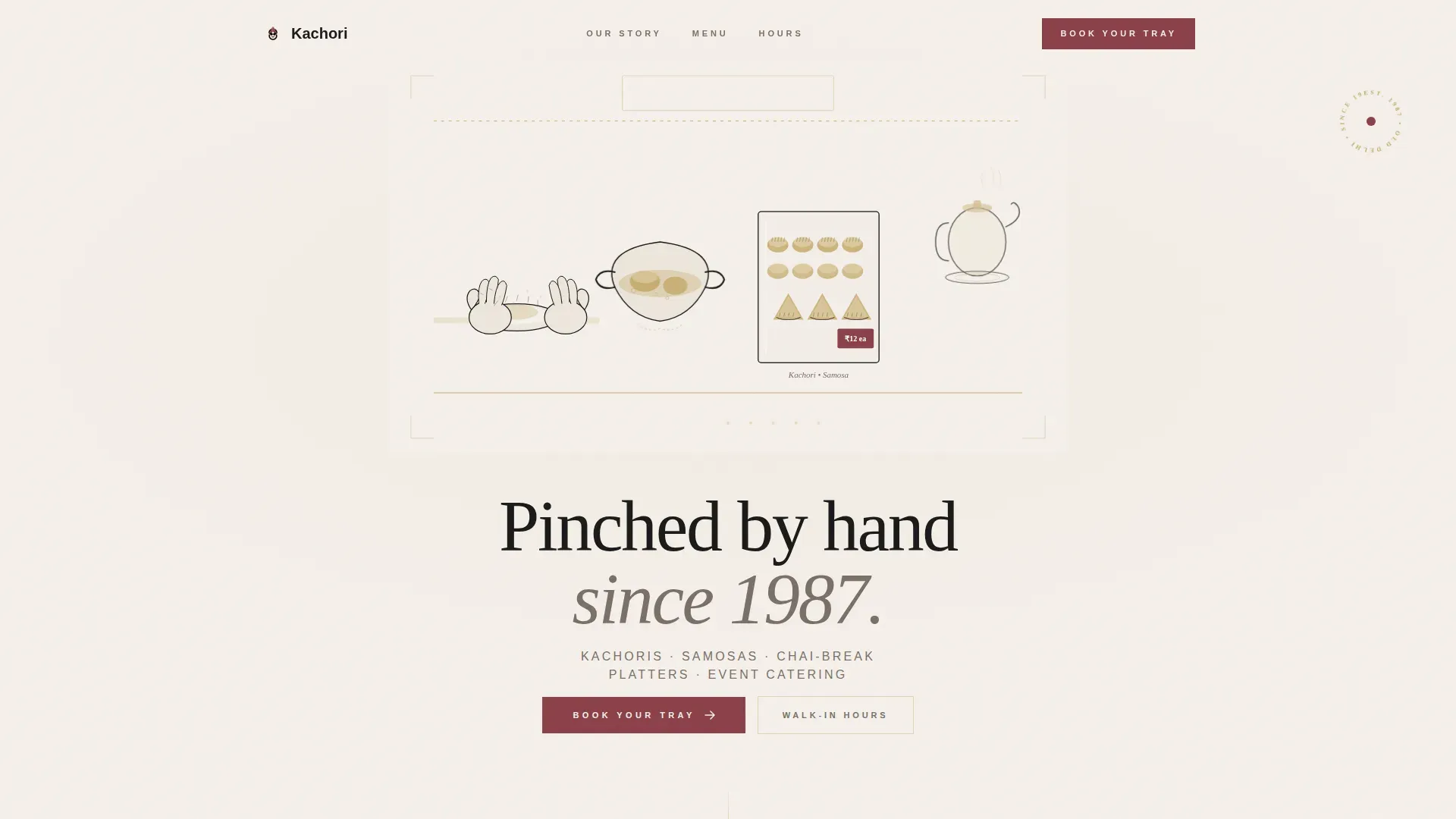
- A ninety-percent-viewport hero featuring a custom SVG illustration in ukiyo-e and vintage matchbox style, with a serif headline that fades in below center
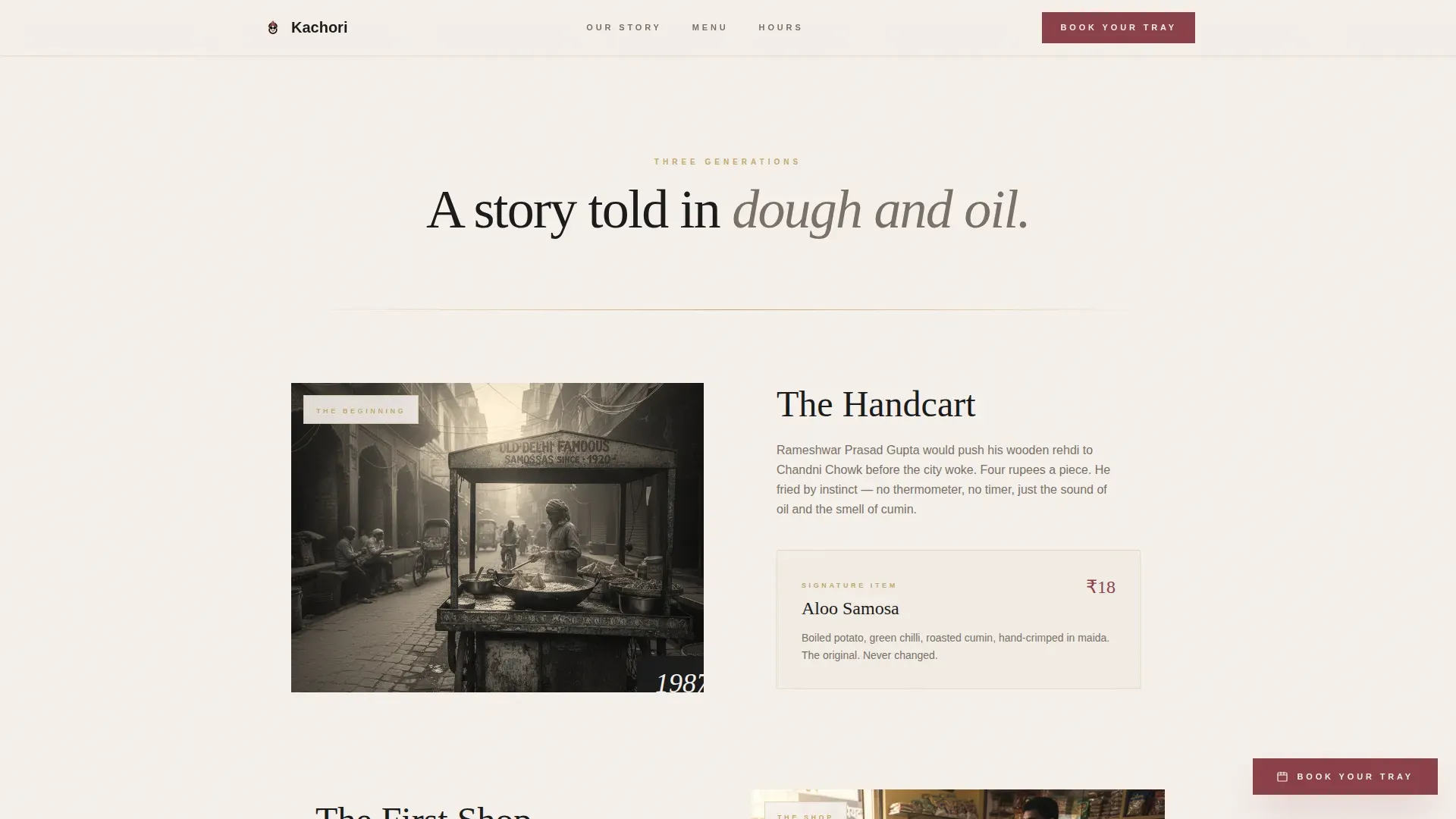
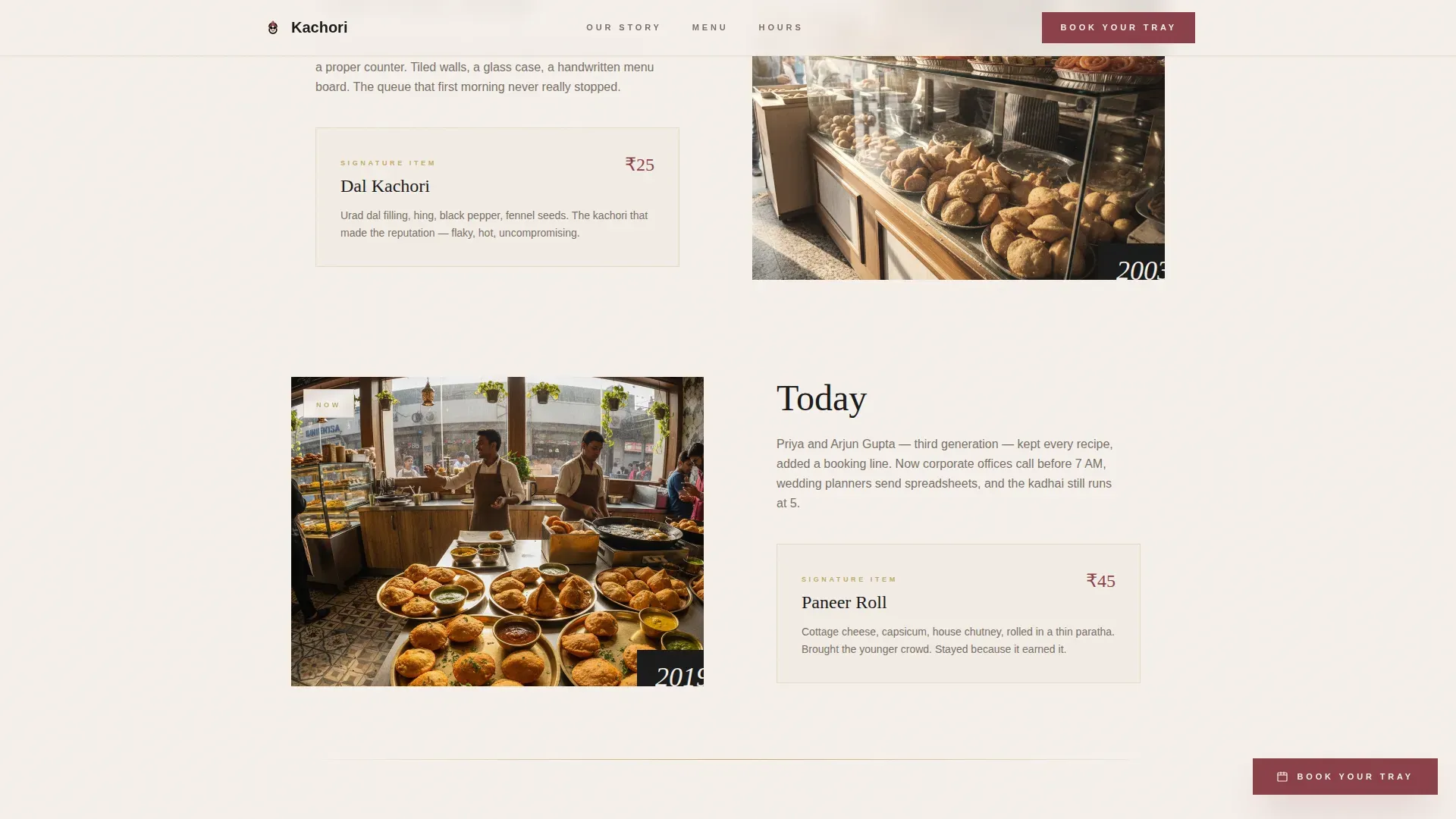
- A three-era origin story scroll moving from the 1987 handcart through the first brick-and-mortar shop to today's full-color kitchen, each era anchored by a signature snack item
- A three-step booking form covering occasion type, date and time with same-day slot logic, and a quantity selector with running total, plus a secondary "Walk-In Hours" anchor for simpler visitor intent
Feature list
The template ships with purpose-built sections and interaction patterns designed specifically for high-volume street food dining. Each feature reflects a deliberate choice to serve both the casual walk-in visitor and the bulk-order planner.
Hero Illustration with Serif Headline
The hero fills ninety percent of the viewport with a hand-drawn SVG illustration rendered in fine ink line work. Selective sesame-gold fills highlight hands crimping dough, a bubbling kadhai, stacked kachoris in a glass case, and a chai kettle in the background. The style sits between ukiyo-e woodblock and vintage Indian matchbox art. A single serif headline fades in below center, grounding the visual with calm authority.
Three-Era Origin Story Scroll
The page descends through three distinct eras of the shop's history. A sepia-toned illustration anchors the 1987 handcart era and introduces the original aloo samosa. A richer palette marks the first brick-and-mortar period and its dal kachori. Full-color detail and photography blend into line work for the present day and the paneer roll. Each era builds appetite and trust, communicating that this is a living tradition, not a brand exercise.
Three-Step Booking Form
The booking form opens from the floating "Book Your Tray" button and walks the visitor through three clear steps. Step one selects the occasion: office order, family gathering, or event catering. Step two presents a date and time picker with same-day slots grayed as appropriate. Step three offers quantity selectors for each menu item with a live running total displayed throughout. A secondary "Walk-In Hours" anchor sits below the form for visitors who simply want to know when the shop opens.
Signature Menu Bento Grid
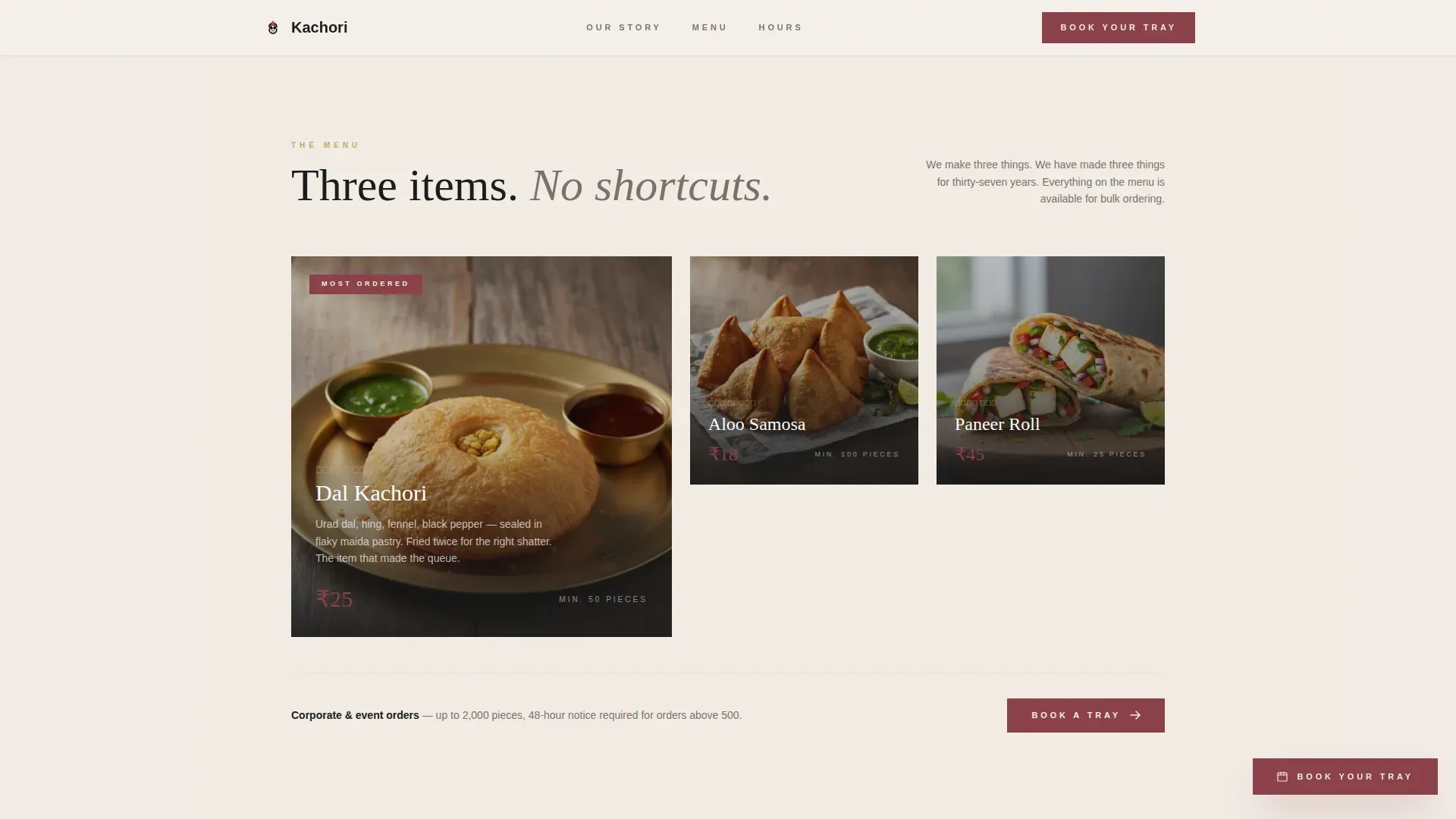
The menu section uses an asymmetric bento grid layout to present the three signature items: aloo samosa, dal kachori, and paneer roll. Each item is treated as a visual object, not just a list entry. The layout draws the eye across the grid before settling on a single item, mimicking the experience of scanning a glass case at the counter.
GSAP Scroll Animations and Parallax
The template uses GSAP ScrollTrigger for staggered reveals, clip-path transitions, and parallax effects across the origin story and menu sections. Animations are calibrated to feel unhurried, matching the deliberate pace of the visual identity. The floating booking button appears after the hero scrolls out of view and remains pinned for the rest of the page.
Walk-In Hours and Social Proof Section
A dedicated section pairs an hours card with testimonials from an office manager, an event planner, and a family customer. The section also carries a "2,000+ trays delivered" metric to anchor trust at the moment just before a visitor decides to book. Testimonials include names, roles, and order sizes, making the social proof specific and credible.
Page sections overview
| Section | Purpose |
|---|---|
| Hero Illustration Block | Anchors the brand with a full-viewport ink illustration and fades in the founding headline |
| Origin Story Scroll | Walks through three eras of the shop, each tied to a signature snack item and a distinct visual palette |
| Signature Menu Grid | Presents the core menu items in an asymmetric bento layout with item-level visual focus |
| Three-Step Booking Form | Guides bulk and event orders through occasion, date-time, and quantity selection with a live total |
| Walk-In Hours Card | Answers the simplest visitor question without requiring a full booking interaction |
| Social Proof Strip | Displays testimonials with roles and order sizes alongside a delivered-tray count |
| Single-Row Footer | Provides essential links and contact details in a clean linear layout |
Design & branding system
The visual identity holds two references in deliberate tension: a vintage Indian sweet-box label and a Kyoto ceramics shelf. The result is warm, unhurried, and precise. Every color decision is load-bearing.
- Stone white (#F5F0EB) covers all backgrounds, providing generous negative space that keeps each illustration and text element focal; sumi black (#1A1A1A) anchors all typography in a serif that nods to old bazaar signage
- Sesame gold (#C4A96A) traces thin divider lines and frames the hand-drawn illustrations, complementing the ink line work without competing with it
- Pickled plum (#8B4049) appears only on call-to-action buttons and price callouts, directing the eye exactly where action is required; Fraunces handles all display serif type while DM Sans carries body copy at comfortable reading weight
Mobile & speed optimization
The template is built mobile-first, recognizing that walk-in customers arrive on phones while office managers book from desktops. Both experiences are equally considered.
- The hero SVG illustration is static and lightweight, ensuring the first viewport loads without competing asset requests regardless of connection quality
- Lazy loading is applied to images in the origin story and menu sections, keeping the initial page weight low while the visitor scrolls into richer content
- The floating booking button and three-step form are optimized for thumb reach and single-column flow on small screens, reducing drop-off during the booking process
How this template helps you convert
The template is structured around one primary conversion: a confirmed tray booking. Every design and content decision either supports that goal or reduces friction for the visitor who is not yet ready to commit.
- The hero communicates craft and tradition at a glance, establishing trust before a single word is read; the "Book Your Tray" button appears as a floating element the moment the hero scrolls out of view, meeting the visitor exactly when interest is highest
- The origin story scroll builds emotional connection across three eras, turning a snack order into participation in a living food tradition; by the time the visitor reaches the booking form, they are ordering from a story, not just a menu
- The social proof section closes the loop with specific testimonials, real order sizes, and a cumulative tray count, giving first-time visitors the confidence that large orders are handled with the same care as a single kachori served hot at the counter
Other information about this template
This template draws on a rich tradition of street food culture rooted in northern India, where kachori has held a place at the breakfast table and the festival spread for generations. Understanding that context helps you customize the copy and illustration briefs to match your shop's specific story.
- Kachori is popular across Rajasthan and northern India as a tea time snack and a festival staple, often served hot alongside tamarind chutney or yogurt; in cities like Udaipur and Jaipur, the old city lanes near the city palace, temples, and local market squares are lined with shops that have served this crispy, deep fried snack for decades; Govindam Sweets in Jaipur is widely visited for its Pyaz Kachori with a flaky exterior and spicy onion filling
- The kachori handcrafted heritage snack shop landing page template is designed to reflect this cultural weight; integrating traditional patterns, local art, and iconography relevant to the kachori's region can evoke a sense of place and reinforce authenticity; aromatic spices, rich flavours, and the perfect balance of crisp pastry and spiced filling are the sensory anchors that the illustration and copy system is built to carry
- Kitchen efficiency is crucial for a restaurant's success, directly impacting operations and the guest experience; an efficient kitchen reduces food waste and controls costs through optimized workflows; brands that survive in the restaurant industry will be those that marry flavor with flow, art with arithmetic; the template supports this by presenting a booking and hours system that reduces inbound phone volume and helps the kitchen prepare with accurate advance counts
- The dining landscape is shifting toward smaller spaces, shorter menus, and tighter concepts; this template reflects that focus: one page, one primary call to action, and a clear secondary path for walk-in visitors; the economics of repeat visits drive profits, and a frictionless booking experience encourages return orders from office managers and event planners who visited once and found the process smooth
- In Rajasthani culture, savory snacks like kachori are typically served alongside sweet treats to create a perfect blend of flavors during meals; the template's menu section can be customized to reflect this tradition, whether your shop pairs kachori with sugar syrup-soaked sweets, masala chai, or tamarind chutney; the city palace area of Jaipur, the high court district of old city Delhi, and surrounding market zones are all natural contexts where shops using this template would feel at home
- The city and its capital context matters for localization; the template is localized for India with INR pricing, Indian Standard Time slots, and Indian names in the testimonial placeholders; visitors from other states who discover the shop through catering platforms or social sharing will find the booking flow familiar and the story legible regardless of where they are in the country
- Special occasions including monsoon festivals, holidays, and office celebrations are handled by the occasion selector in the booking form; the form's design anticipates the joy of planning a chai-break platter or a large event tray without requiring a phone call; the spirit of the shop, that calm certainty that everything will be fried to perfection on time, is present in every section of the template
Theme
Neo-Retro
Creative direction
Origin Story
Color system
Japanese Zen
Style
Hero-Dominant (90/10)
Direction
Booking/Scheduling
Page Sections
Hero Illustration with Floating Booking Button
Three-era Origin Story Scroll
Three-step Tray Booking Form
Asymmetric Bento Menu Grid
Social Proof and Tray Count Strip
Japanese Zen Neo-retro Visual System
Related questions
Can I customize the illustration and headline for my own shop's story?
Does the booking form support large catering orders with multiple items?
Is this template suitable for a shop that also serves walk-in customers?
Can I add or remove items from the bento menu grid?
How does the origin story scroll work if my shop's history is different?