Zinc & Lead Mining Landing Page Template
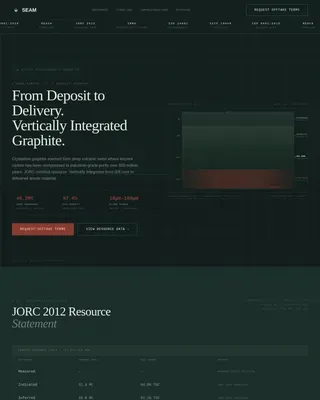
Seam is a modular card grid landing page built for zinc and lead mining operations. It guides procurement managers, mining engineers, and sustainability officers through resource data, geology reports, processing specifications, and rehabilitation evidence. A gated technical library and ungated card previews work together to earn the download while keeping every visitor type engaged from the first scroll.
by Rocket studio
Quick summary
Seam is a nature-inspired, navy-authority landing page for a zinc and lead mining operation. It uses a modular card grid to present concentrate grades, reserve statements, processing flowsheets, and rehabilitation timelines. A gated single-step form unlocks the full technical library. Ungated preview cards let visitors confirm the depth of data before committing.
Who this template is for
This template is built for mining operations that serve technically demanding buyers. It speaks directly to the professionals who evaluate data before they act.
- Procurement managers at smelting facilities comparing zinc and lead concentrate grades
- Mining engineers reviewing joint-venture geology reports and reserve estimates
- Sustainability officers at automotive original equipment manufacturers auditing supply chains back to the pithead
What problem this template solves
Industrial buyers in the zinc and lead sector rarely trust a page that leads with marketing copy. They want the geology, the processing specs, and the closure plan. This template solves the credibility gap by leading with data cards, not sales claims.
- Procurement teams have no fast path to concentrate specifications on typical mining sites
- ESG analysts struggle to find rehabilitation and water-quality evidence presented clearly alongside operational data
- A single undifferentiated page cannot serve an engineer and a sustainability officer at the same time
What you get with this template
You get a full card grid landing page structured as a content and resource hub. Every section is a self-contained module that serves a specific buyer role without forcing them to read content meant for someone else.
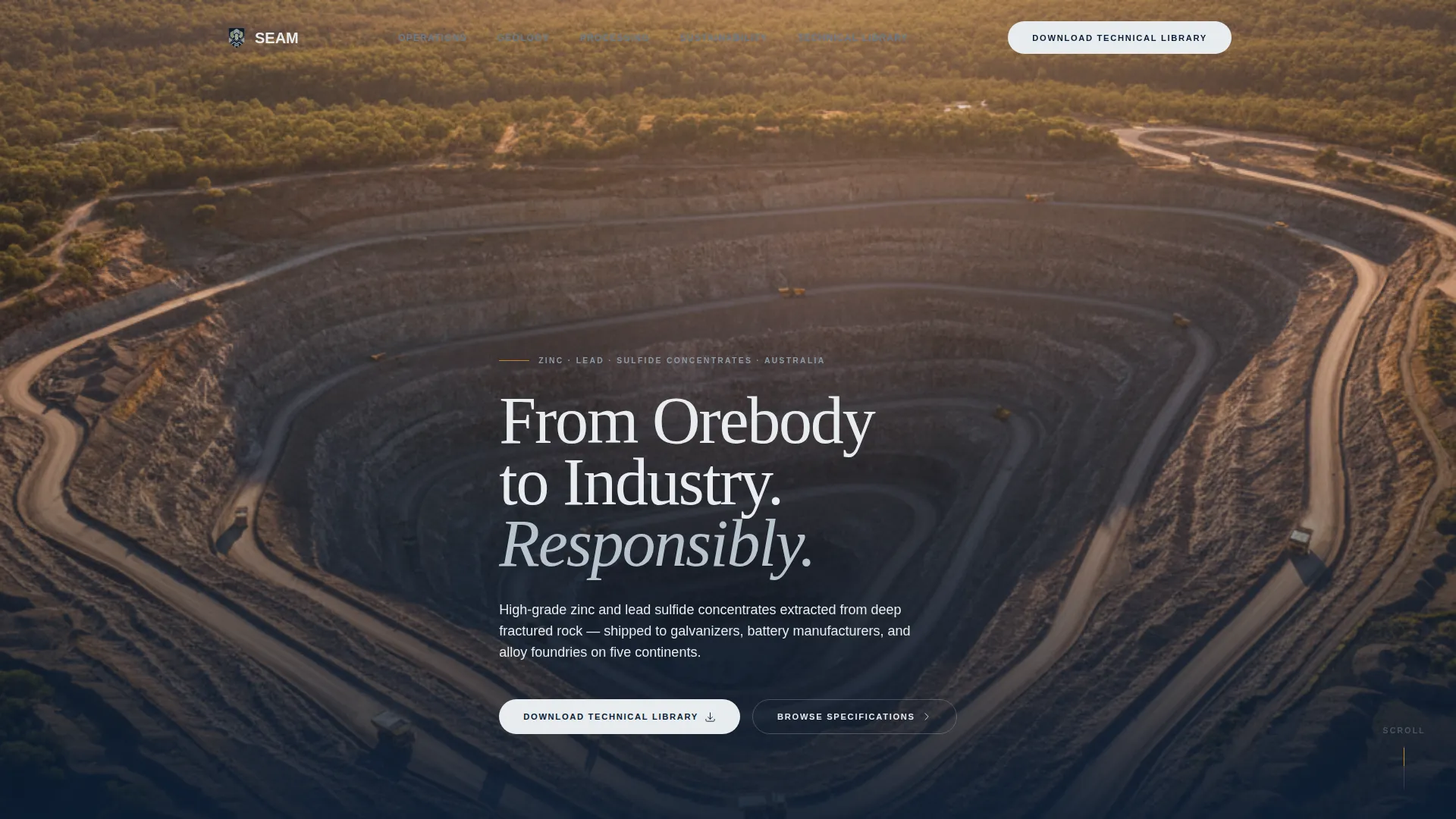
- A full-bleed helicopter-altitude hero with display typography set directly on dark bench shadows
- Modular cards covering resource data, geology, processing flowsheets, and revegetation case studies
- A gated single-step form and an ungated preview path that work side by side
Feature list
This template includes six core feature areas derived directly from the source brief.
Full-Bleed Hero Section
The header uses a helicopter-altitude golden hour photograph of a vast open-pit mine. White display type sits on the dark bench shadows at the lower third without an overlay gradient. The headline "From Orebody to Industry. Responsibly." anchors the visual tension between extraction and native canopy.
Modular Card Grid Layout
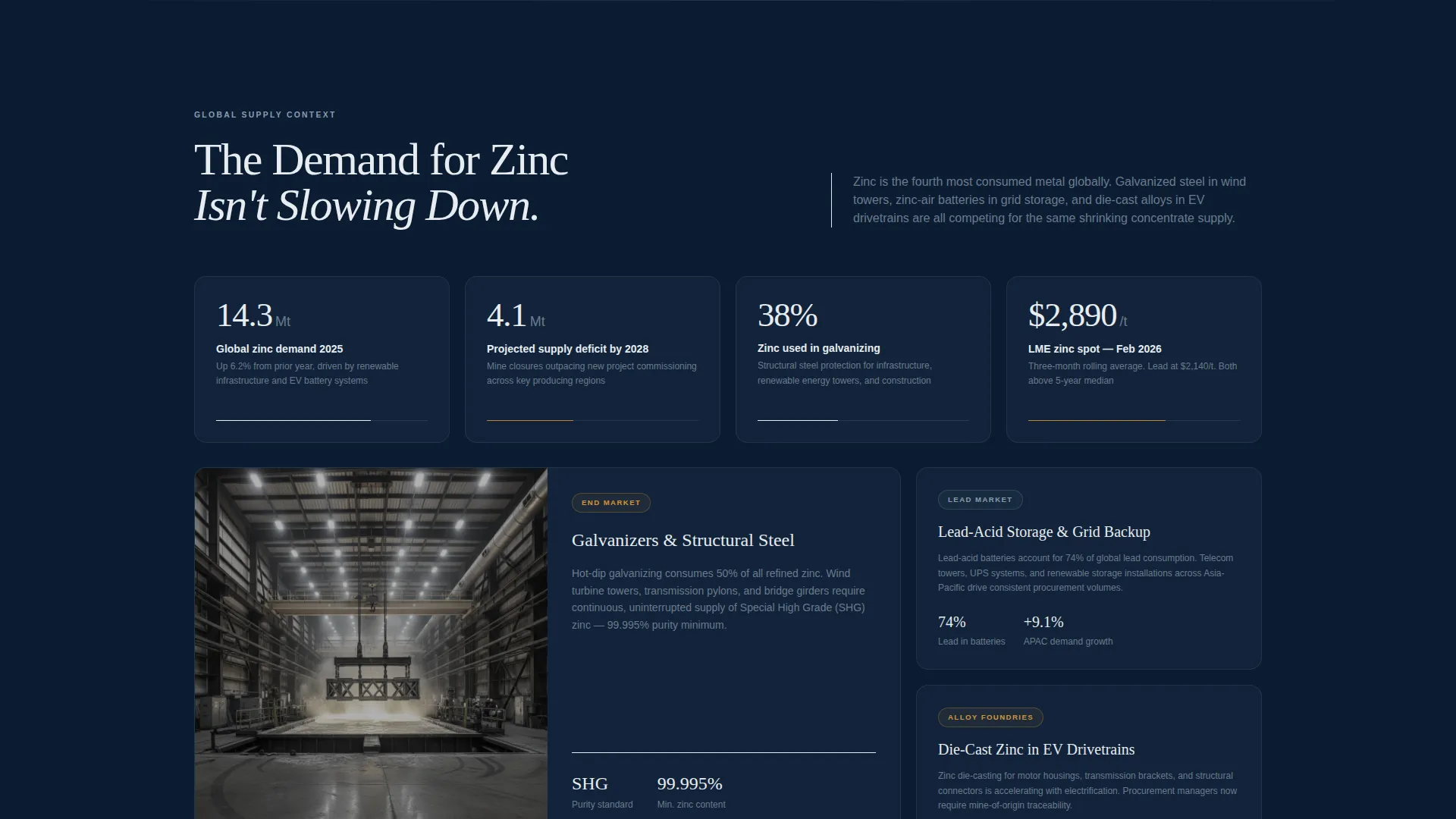
Cards are arranged in rows that descend through the Problem-to-Solution arc. Each card is self-contained and independently actionable. A procurement manager can pull a grade sheet while an ESG analyst opens a rehabilitation timeline from the same page view.
Per-Card Micro-calls to action
Every card carries its own action label. Examples built into the layout include "View Concentrate Specs," "Read Closure Plan," and "Open Reserve Statement." This means visitors engage with specific data before they ever reach the gated form.
Gated Technical Library Form
A single-step form gates the full technical library download. It asks for name, company, and role. The role field is a dropdown with five options: Smelter/Refiner, Engineer, Investor, Sustainability/ESG, and Other. The form is deliberately minimal to reduce friction.
Ungated Preview Path
Visitors can browse summary cards and preview PDFs without submitting the form. This secondary path lets the page earn trust through demonstrated depth before asking for contact details.
Sustainability and Rehabilitation Cards
The final card row presents revegetated land photography, water-quality monitoring dashboards, and community partnership case studies. These cards are styled with the native bushland sage accent color to visually separate ecological content from operational data.
Page sections overview
| Section | Purpose |
|---|---|
| Full-Bleed Hero | Opens with aerial pit photography and the core brand statement |
| Resource Scarcity Row | Presents zinc and lead demand data and market forecasts |
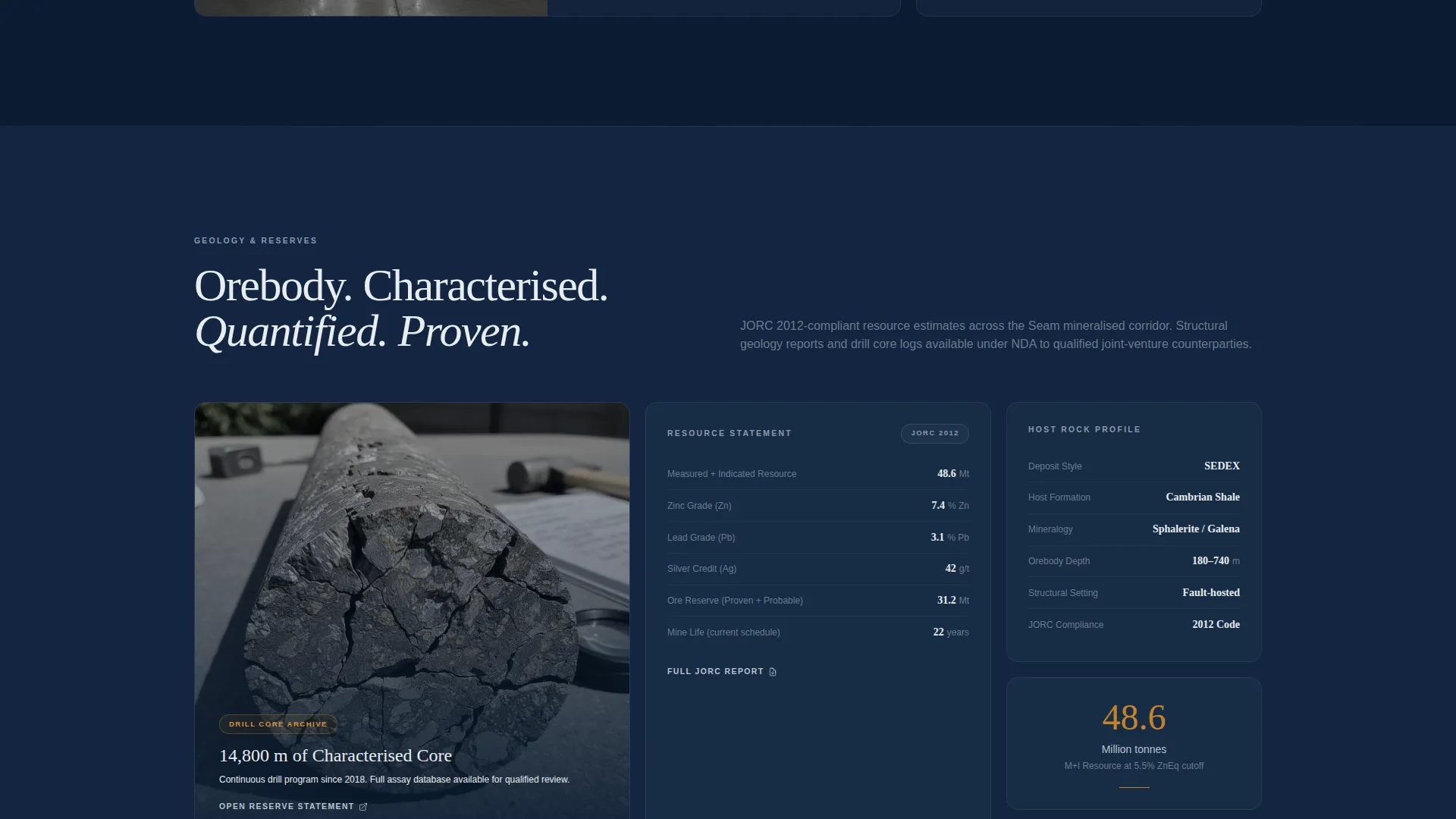
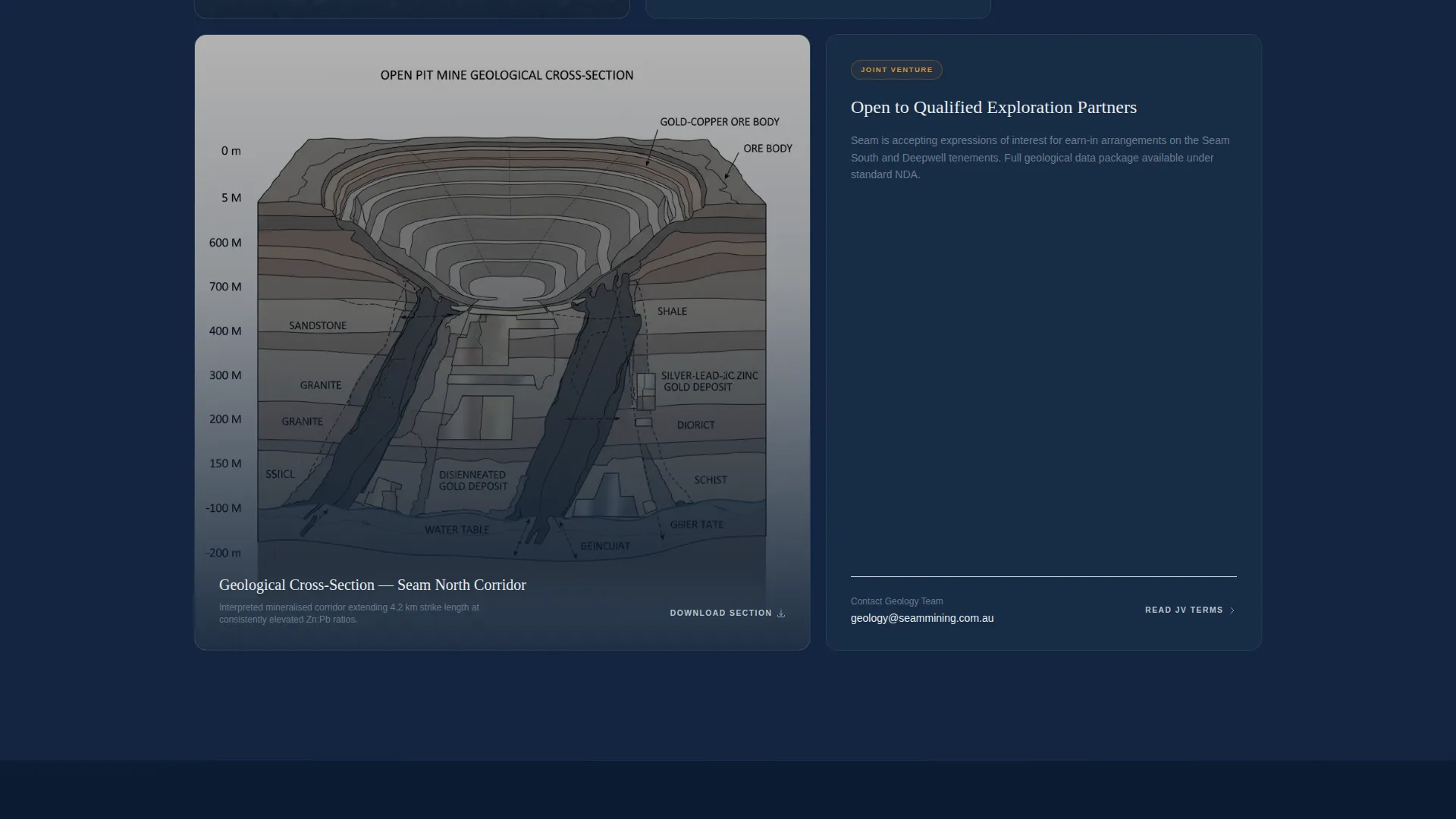
| Geology and Reserves | Displays reserve estimates and joint-venture geology context |
| Processing Flowsheet Cards | Shows flotation circuit diagrams and concentrate specifications |
| Technical Library Gate | Gated single-step form to unlock the full downloadable library |
| Rehabilitation and ESG Row | Presents revegetation evidence, water monitoring, and community partnerships |
Design & branding system
The visual identity follows a nature-inspired theme built on a navy authority color system. The palette is drawn from the geological layers of the mine itself, moving from compressed dark strata at the base to weathered surface rock and finally the scrub reclaiming rehabilitation zones.
- Deep shaft navy (#0B1D33) dominates the header and footer as the bedrock layer; oxidized zinc gray (#6B7B8D) surfaces card backgrounds and secondary text
- Galvanized silver-white (#E8ECF0) handles all primary typography and open-space elements to maintain contrast against the dark palette
- Native bushland sage (#7A8B6F) appears exclusively in sustainability and rehabilitation content, threading ecological credibility through the lower sections of the page
Mobile & speed optimization
The card grid layout is designed to reflow cleanly from wide desktop views down to narrower mobile screens. Each card module is independent, so the layout adapts without breaking the data hierarchy.
- Cards stack vertically on smaller screens, preserving the per-card micro-call to action for every visitor regardless of device
- The full-bleed hero photograph and the gated form both maintain readability and usability at mobile widths
How this template helps you convert
The conversion strategy works in two stages. First, the page builds credibility through ungated depth. Then it offers a single low-friction step to unlock the full technical library.
- Ungated summary cards and PDF previews let visitors confirm the quality of the data before they see the form, reducing the perceived risk of submitting contact details.
- Per-card micro-calls to action create multiple early engagement points across the page, so visitors who are not ready for the gated form still interact with specific data modules and deepen their interest.
- The single-step form with a focused role dropdown keeps the gated conversion moment fast and low-commitment, increasing the likelihood that qualified buyers complete it.
Other information about this template
This template is categorized under Mining and Natural Resources, specifically within the Metal and Mineral Mining subcategory and the Zinc and Lead Mining niche. It is built as a single landing page using a card grid (modular) template style.
- The creative direction follows a Problem-to-Solution arc, moving from global supply scarcity data at the top of the page down through geology, processing, and rehabilitation evidence at the base
- The header concept is a full-bleed photograph, consistent with the nature-inspired theme and the navy authority color system used across the design
- The intersection match score for this template across category, subcategory, niche, theme, creative direction, and color system is 13, indicating strong alignment between the visual identity and the operational subject matter
Theme
Nature-Inspired
Creative direction
Problem→Solution Arc
Color system
Navy Authority
Style
Card Grid (Modular)
Direction
Content/Resource
Page Sections
Full-bleed Aerial Hero
Modular Card Grid Layout
Per-card Micro-ctas
Gated Single-step Download Form
Ungated Preview Path
Sustainability and Rehabilitation Card Row
Related questions
Who is this landing page template designed for?
Can visitors access content without filling in the form?
What information does the gated form collect?
How does the sustainability content appear differently from operational content?
Can this template be adapted for other mining commodities?