Potash Mining Landing Page Template for Lead Generation
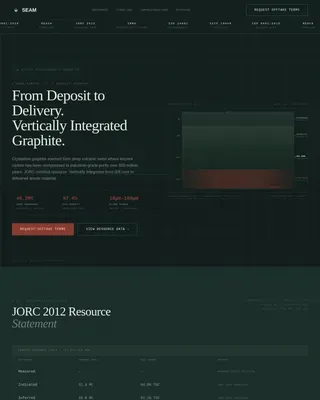
Seam is a single-column flow landing page built for industrial potash mining operations. It moves visitors from an aerial overview down through underground workings to the final fertilizer product, using depth and cause to build procurement trust. Two conversion paths capture both ready buyers and early-stage procurement officers before asking for any commitment.
by Rocket studio
Quick summary
Seam is a lead generation landing page designed for potash mining operations selling to agricultural cooperatives, fertilizer blenders, and sovereign procurement offices. It descends visually from aerial overview to underground workings to end-use cropland, earning procurement trust through verified operational data before presenting any contact form.
Who this template is for
This template is built for industrial-scale potash producers who sell bulk product on long-term contracts. The audience is commercial and procurement-driven, not consumer-facing.
- Agricultural cooperatives sourcing bulk muriate of potash (MOP) contracts at volume
- Fertilizer blenders requiring consistent granular product on predictable rail delivery schedules
- Sovereign procurement offices securing long-term nutrient supply for national food security programs
What problem this template solves
Procurement buyers in the fertilizer supply chain need proof of reliability before they negotiate. A generic company website rarely shows reserve life, production capacity, and logistics infrastructure in one credible, scannable flow.
- Buyers leave when supply reliability is unclear before the contact form appears
- Early-stage procurement officers need product specification data before they are ready to discuss terms
- The visual language of most mining sites fails to match the industrial scale buyers expect
What you get with this template
This template delivers a full single-column landing page structured to carry heavy procurement buyers from first impression to qualified lead. Every section earns the next scroll before asking for anything.
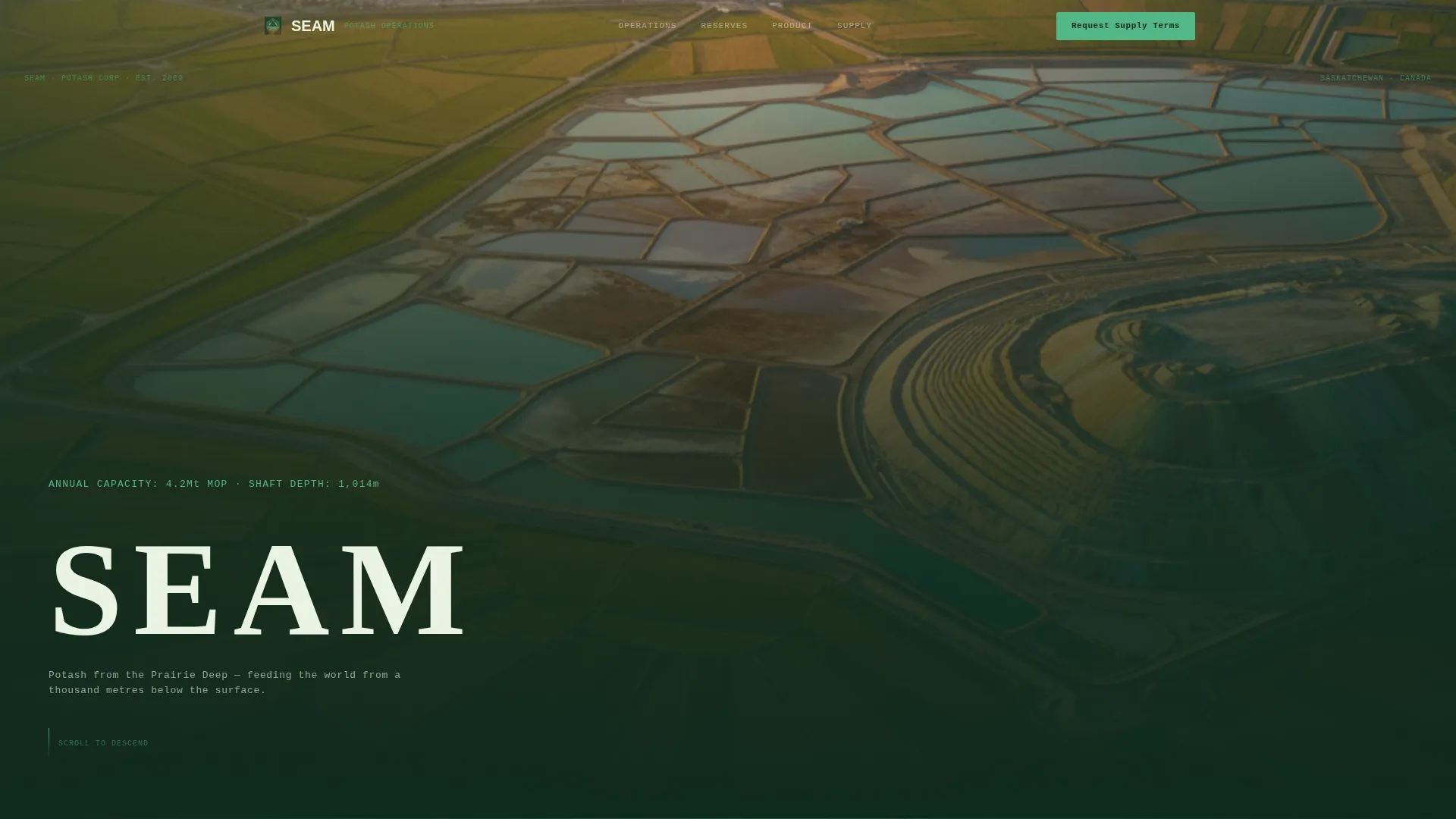
- A panoramic aerial header with animated coordinate and tonnage data that locks into the company name
- Two distinct conversion paths: a detailed supply inquiry form and a gated product specification sheet download
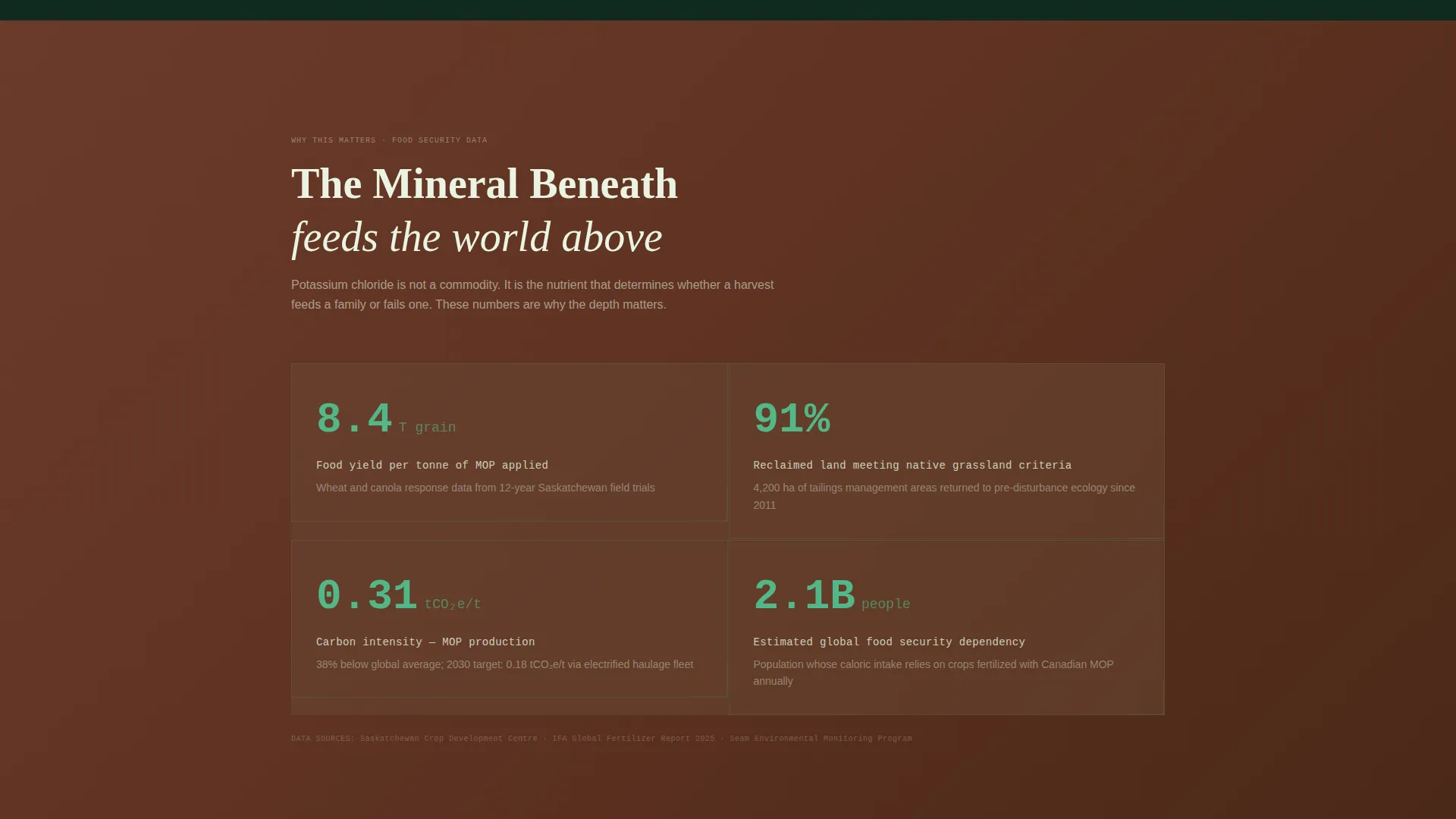
- Cause-driven data panels woven between operational sections, covering food production metrics and soil recovery data
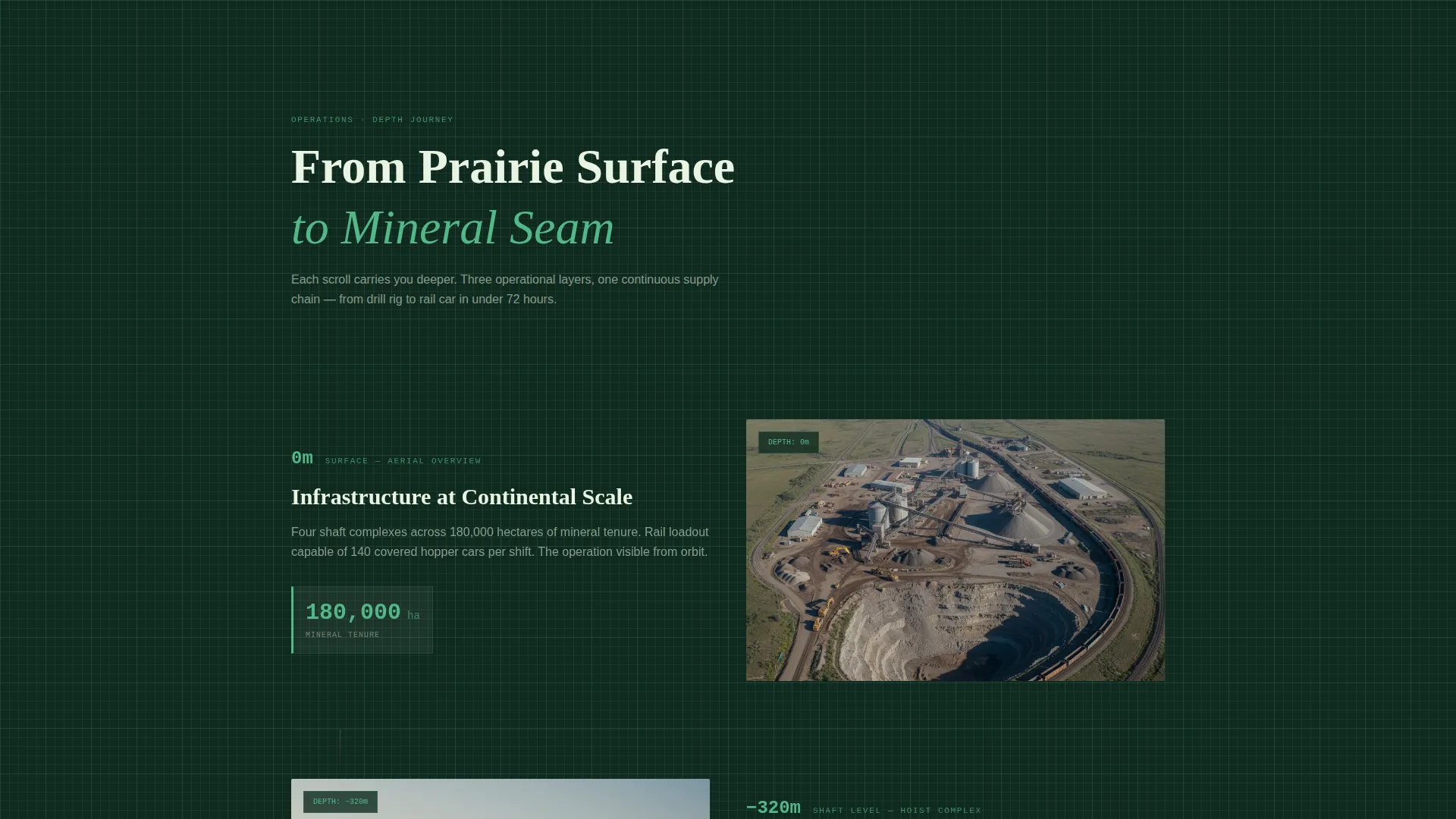
- A parallax scroll structure that descends from surface plant to underground workings to molecular detail to end-use cropland
Feature list
This template is built around a tight set of purposeful components. Each one serves the procurement buyer journey directly.
Panoramic Aerial Header with Live Data Overlay
A full-width, edge-to-edge header uses a drone footage treatment at golden hour over the mine site. Monospaced text types coordinates, annual tonnage, and potassium oxide (K₂O) grade across the lower third before the company name locks into place. The opening frame signals infrastructure scale immediately.
Depth-Driven Parallax Scroll Structure
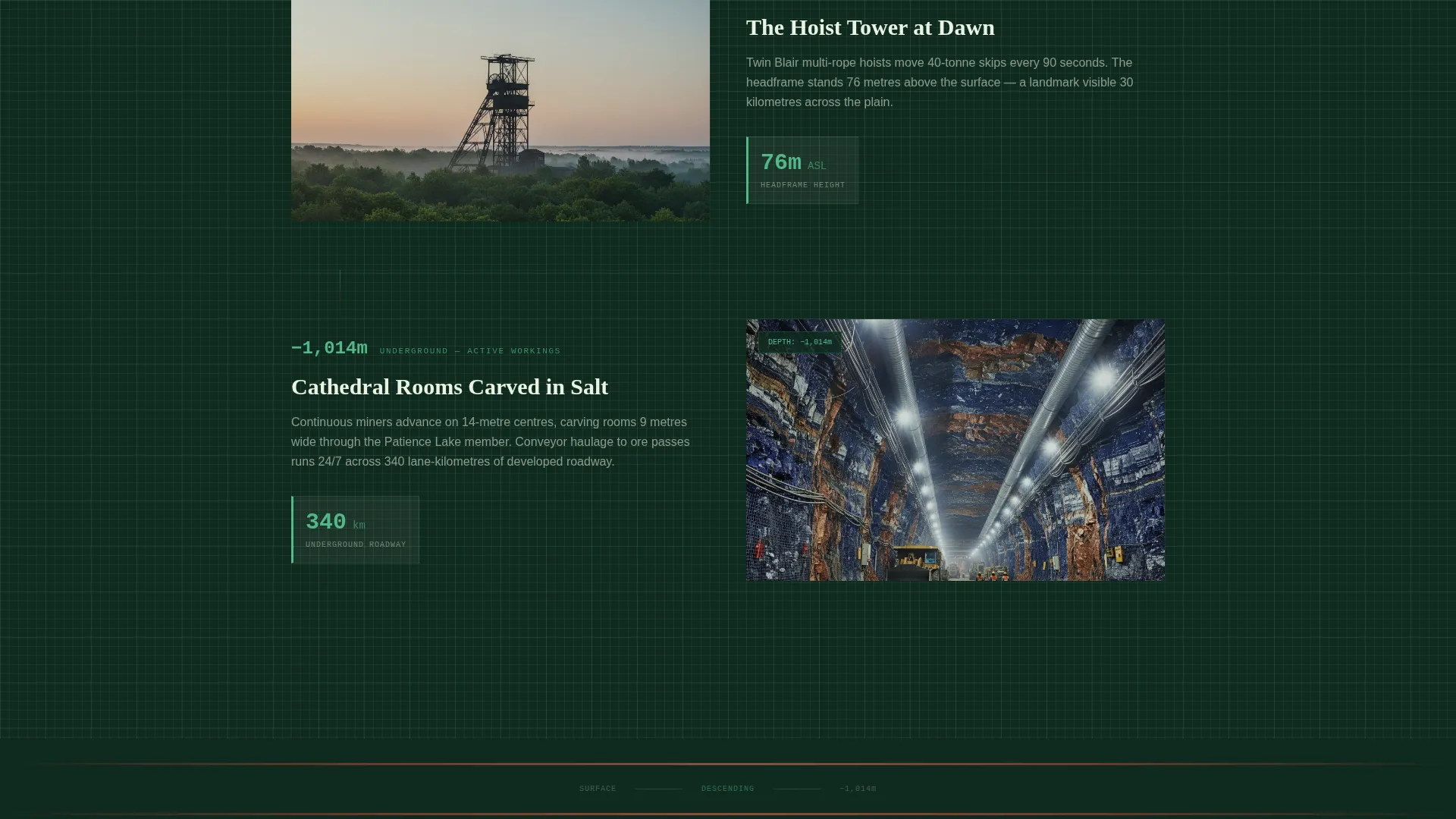
Each scroll carries the visitor one layer deeper. The page transitions from aerial overview to surface processing plant to underground continuous-miner workings to the molecular structure of potassium chloride to the wheat field where the product is applied. Subtle parallax shifts reinforce the sense of physical descent through the earth.
Cause-Driven Data Panels
Interspersed between operational sections are dedicated panels presenting verified figures. These include tonnes of food produced per tonne of potash applied, soil health recovery metrics from reclaimed land, and carbon intensity benchmarks. The panels connect industrial extraction to global food security in plain, measurable terms.
Dual Conversion Path Layout
The primary call to action, "Request Supply Terms," appears first after the underground operations section and again anchored at the page bottom. The form captures company name, annual volume requirement via dropdown in metric tonnes, delivery region, and preferred Incoterm. A secondary path, "Download Product Spec Sheet," gates a PDF behind only an email address for early-stage buyers.
Engineering Blueprint Typography System
Data blocks and specification callouts use a monospaced typeface throughout. Thin white grid lines ghost behind content sections like printed engineering schematics. This typographic system reinforces the blueprint aesthetic and signals technical precision to procurement readers.
Operational Proof Sections
Dedicated sections present verified reserve life, production capacity, and logistics infrastructure before any conversion ask. Rail loading visuals, mill processing details, and underground workings imagery establish supply reliability on the buyer's terms first.
Page sections overview
| Section | Purpose |
|---|---|
| Aerial Header | Establish scale and identity |
| Coordinate Data Overlay | Display key production metrics |
| Surface Plant Overview | Show processing infrastructure |
| Underground Operations | Describe continuous miner workings |
| Primary call to action Block | Capture qualified supply inquiries |
| Cause Data Panels | Connect output to food security |
| Molecular Detail Section | Illustrate product composition |
| End-Use Cropland Section | Link potash to agricultural outcome |
| Spec Sheet Download | Gate PDF for early-stage buyers |
| Logistics Infrastructure | Present rail and delivery capability |
| Bottom call to action Form | Anchor final conversion with full form |
Design & branding system
The visual identity follows an Engineering Blueprint theme built on a Rainforest color palette. The palette reads like a geological cross-section where the living surface and the mineral underworld meet.
- Deep canopy green (#1B4332) as the primary background, laterite soil brown (#6B3A2A) for section dividers and secondary panels, chlorophyll bright (#52B788) on hover states and data callouts, and blueprint vellum (#EAF4E2) for text-heavy content areas
- Monospaced typography governs all data, specifications, and coordinate overlays, reinforcing the engineering schematic aesthetic
- Thin white grid lines ghost behind content blocks across the full page, referencing technical drawing layouts without overwhelming the imagery
Mobile & speed optimization
The single-column flow structure adapts naturally to narrower viewports without restructuring the narrative sequence. The depth-driven scroll experience remains coherent on mobile.
- Full-width section panels and edge-to-edge imagery scale consistently across screen widths
- The dual conversion path layout stacks the supply inquiry form and the spec sheet download cleanly on small screens
- Monospaced type and grid-line overlays remain legible at reduced sizes without visual clutter
How this template helps you convert
The page is structured to prove supply credibility before asking for any contact information. Procurement buyers progress through operational evidence naturally before either conversion path appears.
- Reserve life, production capacity, and logistics infrastructure are presented in sequence before the first "Request Supply Terms" form appears, removing the reliability objection before it forms.
- The "Download Product Spec Sheet" path captures early-stage procurement officers who need to compare grades but are not yet ready to negotiate, widening the funnel without weakening the primary ask.
Other information about this template
This template is purpose-built for the potash mining niche inside the broader mineral and ore mining category. It sits at the intersection of industrial supply marketing and agricultural procurement communication.
- The template is part of the Seam collection, designed for extraction-industry operations with long sales cycles and institutional buyers
- It is suited to operations producing muriate of potash for bulk agricultural markets, including both domestic and export supply chains
- The cause-driven panels make it relevant beyond pure sales use: investor relations teams and sustainability reporting contexts can adapt the food security and soil recovery data sections
- The Engineering Blueprint theme and Rainforest color system are consistent with the broader Seam design language, making brand extension to additional pages straightforward
Theme
Engineering Blueprint
Creative direction
Movement & Cause
Color system
Rainforest
Style
Single Column Flow
Direction
Lead Generation
Page Sections
Panoramic Aerial Header with Data Overlay
Depth-driven Parallax Scroll
Cause-driven Data Panels
Dual Conversion Path Layout
Engineering Blueprint Typography
Operational Proof Sections
Related questions
Who is the primary buyer this landing page targets?
What are the two conversion paths included in this template?
Can I update the cause-driven data panels with my own figures?
Does the depth-driven scroll experience work on mobile?
Is this template suitable for operations that export internationally?