PTSD Wearable Monitor Landing Page Template
Sentinel is a single-page landing page template built for a wrist-worn PTSD biosensor. It guides clinical decision-makers through a transparent data pipeline, from raw sensor readings to a clinician dashboard, before presenting a booking form. The design follows a Corporate Precision aesthetic with a medical-device cleanroom palette and scroll-triggered zigzag sections.
by Rocket studio
Quick summary
Sentinel is a clinical-grade landing page template for a wrist-worn PTSD biosensor. It uses a zigzag alternating layout to walk visitors through the full data pipeline: raw sensor readings, biosignal fusion, a clinician dashboard, and twelve-week outcome data. The page ends at a three-field booking form with a calendar picker, earning the click by showing the engineering first.
Who this template is for
This template is built for clinical and procurement audiences who need to evaluate a serious medical device before committing time to a demo. It speaks directly to the people who live with the weight of managing trauma at scale.
- VA psychiatrists managing large patient caseloads who need biometric ground truth before a session
- Trauma therapists running Eye Movement Desensitization and Reprocessing (EMDR) sessions who want real-time desensitization confirmation
- Research principal investigators and procurement officers evaluating wearable biosensor solutions for institutional use
What problem this template solves
Clinical decision-makers are skeptical. They do not book demos for devices they do not understand. This template solves the trust gap by showing the complete data pipeline before asking for anything. It translates a technically complex product into a clear, sequential story a busy clinician can follow in a single scroll.
- Clinicians need to see the mechanism, not just the claim, before they will give thirty minutes of their time
- Procurement teams need outcome evidence before they forward a demo request up the chain
- The template removes ambiguity by staging the technology layer by layer, exactly matching how a clinical mind evaluates new tools
What you get with this template
You get a fully structured single-page layout ready to present a PTSD wearable monitor to clinical buyers. Every section has a defined role in moving a skeptical visitor toward a scheduled demo.
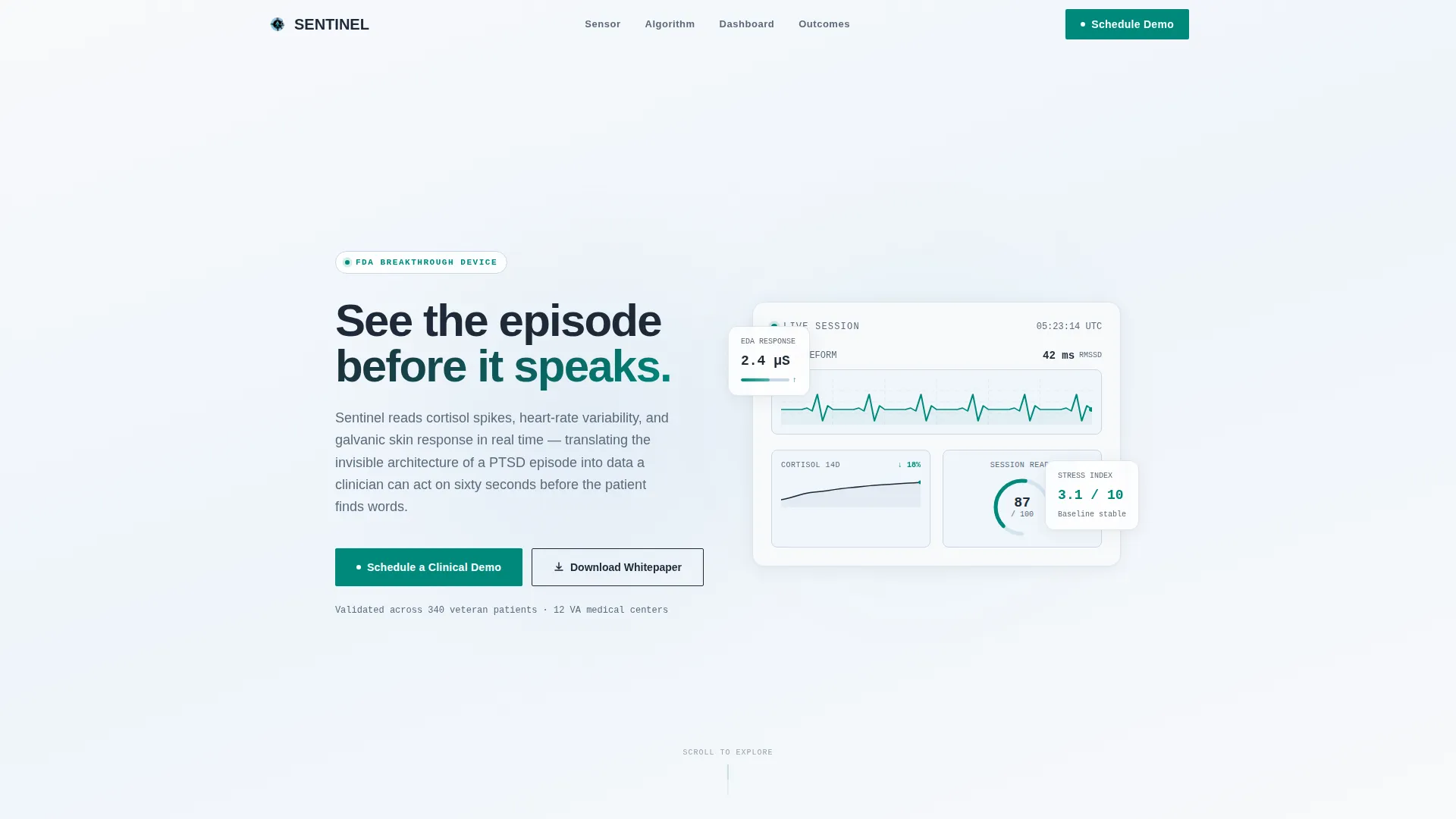
- A hero stats dashboard with a live heart-rate variability (HRV) waveform, a cortisol-trend sparkline, and a session-readiness score
- Four zigzag alternating content sections that peel back the technology in sequence, each swapping visual and text sides for reading rhythm
- A three-field booking form with a calendar picker and a secondary whitepaper gate for leads not ready to speak
Feature list
This template includes a set of purpose-built components that support clinical credibility and conversion without adding decorative noise.
Live HRV Waveform Dashboard
The hero section renders a realistic device screen showing a live HRV waveform at 42 ms RMSSD, a fourteen-day cortisol-trend sparkline, and a session-readiness score of 87. All metrics are rendered in thin vector lines on a glacier-blue field, establishing clinical authority immediately on load.
Zigzag Alternating Section Layout
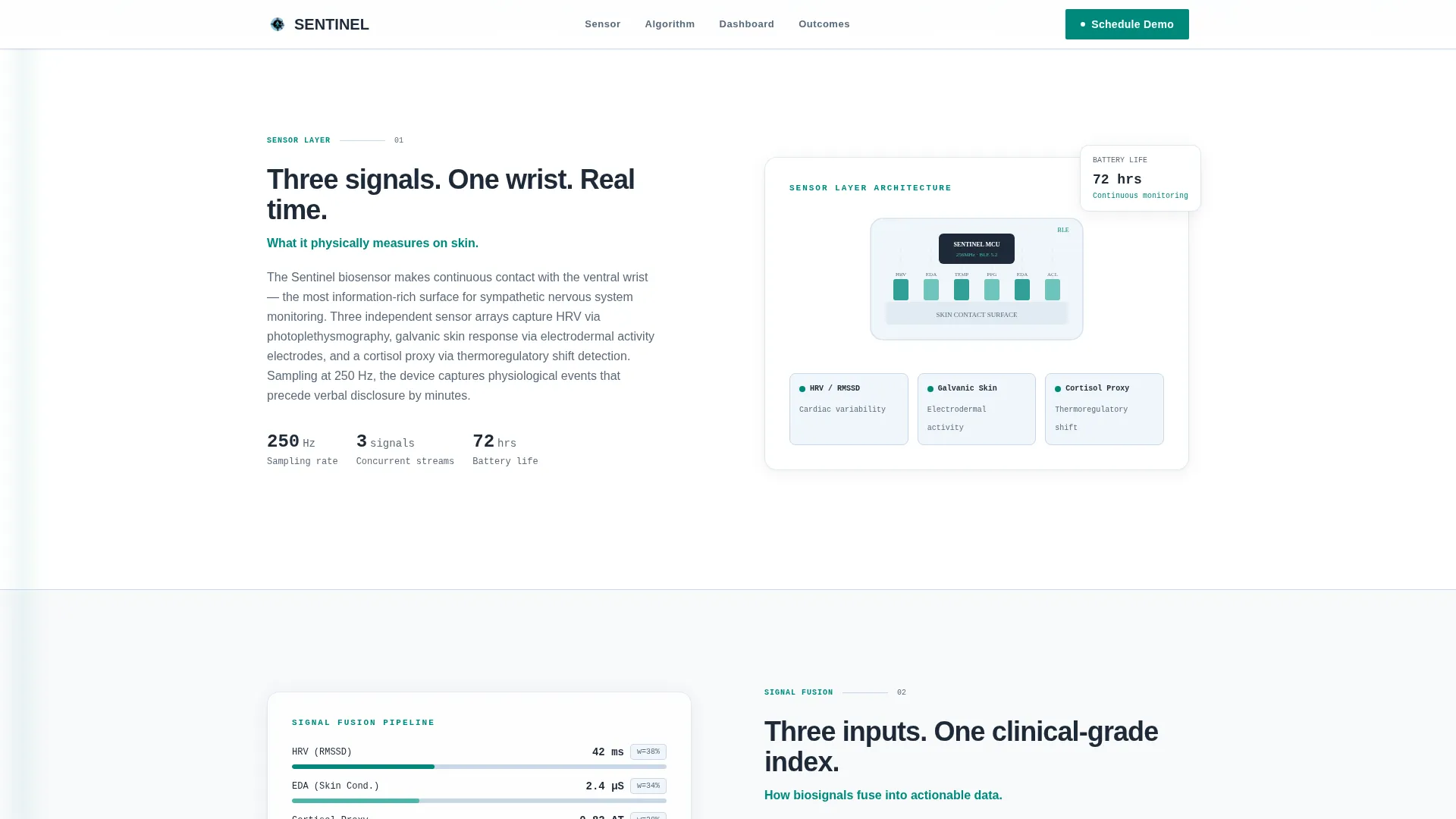
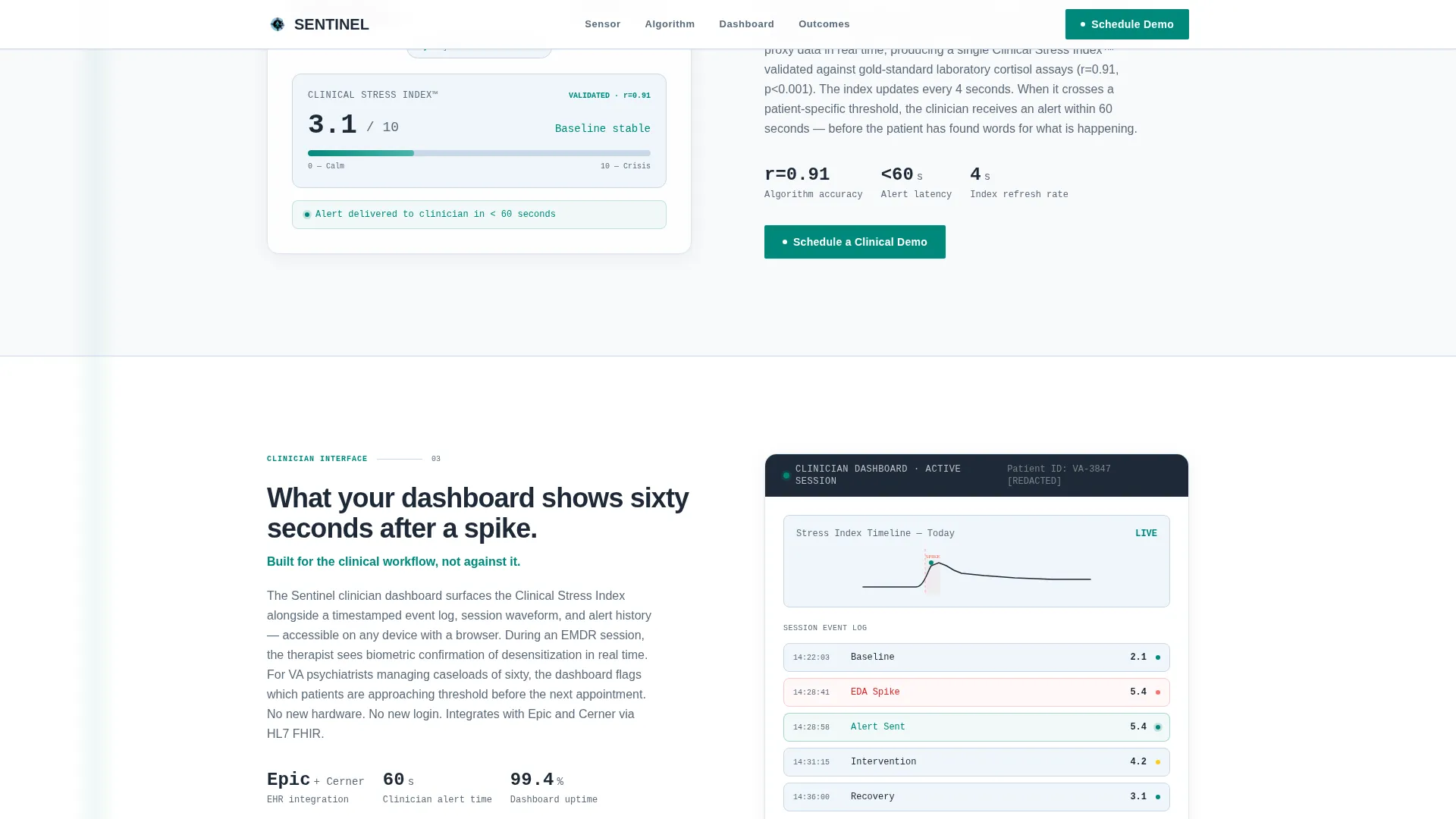
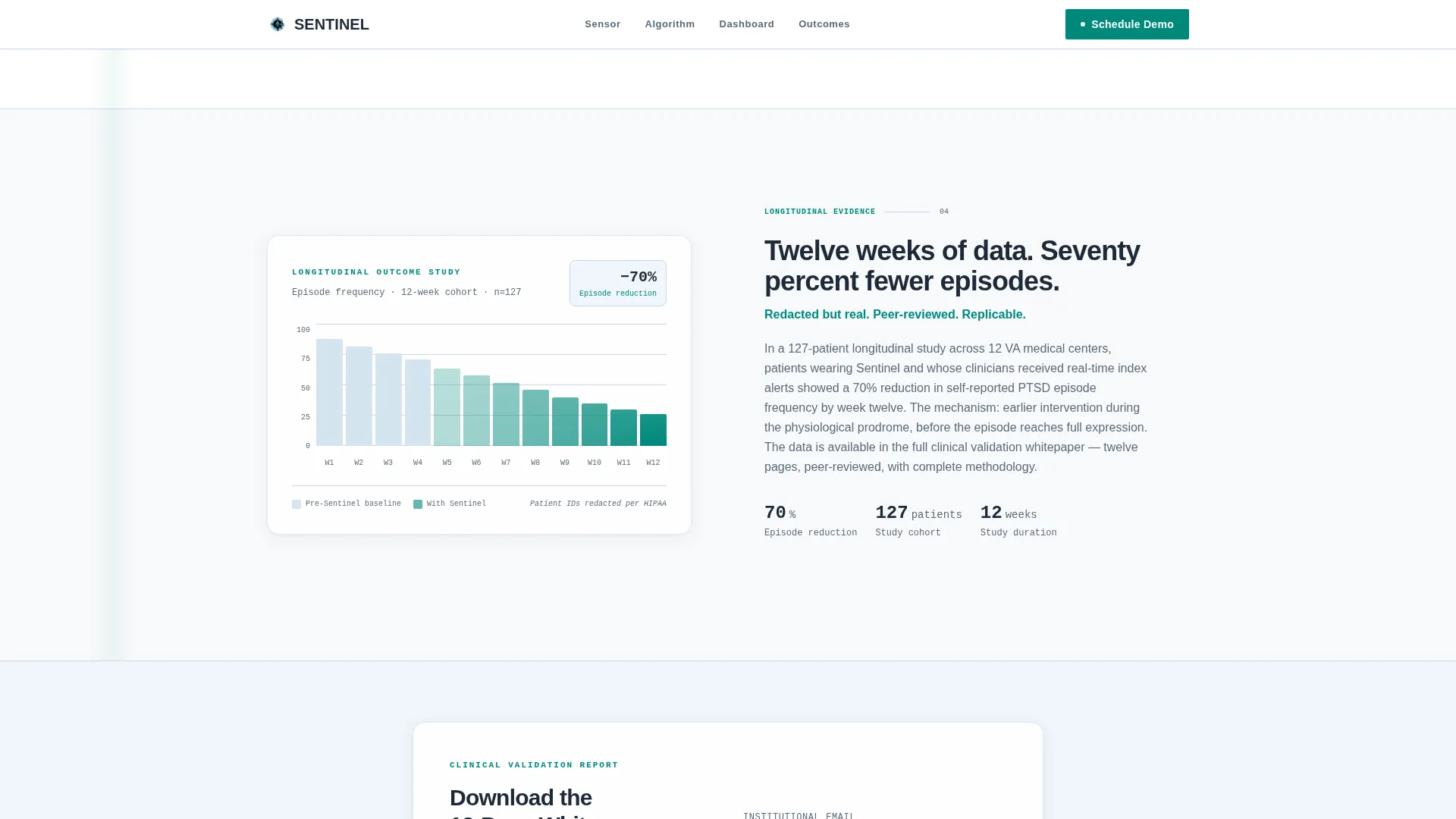
Four alternating content blocks create a peer-review reading rhythm. Each block pairs a visual panel with a plain-language explanation, progressing from raw sensor data through algorithm fusion, clinician dashboard alerts, and twelve-week longitudinal outcome data.
Scroll-Triggered Section Reveals
Sections animate into view as the visitor scrolls. GSAP entrance animations and scroll-triggered reveals keep the pacing deliberate, reinforcing the idea that each layer of evidence is earned, not dumped.
Sticky Booking Bar
From the third zigzag section onward, a sticky bottom bar anchors the primary call to action on screen. The bar persists without blocking content, keeping the scheduling prompt visible throughout the most convincing sections of the page.
Three-Field Booking Form with Calendar Picker
The booking form collects organization name, role via a dropdown (psychiatrist, clinical psychologist, research principal investigator, or procurement), and a preferred thirty-minute window through an embedded calendar picker. It defaults to the next available week, reducing friction at the moment of commitment.
Whitepaper Lead Gate
A secondary conversion path labeled "Download the Whitepaper" captures email addresses from visitors not yet ready to book. It gates a twelve-page clinical-validation document, giving the page two distinct conversion paths matched to different stages of the buying decision.
Page sections overview
| Section | Purpose |
|---|---|
| Hero Stats Dashboard | Display live biosensor metrics and establish clinical credibility on first view |
| Zigzag One: Raw Sensor | Explain what the device physically measures on the skin |
| Zigzag Two: Algorithm | Show how three biosignals fuse into a single clinical stress index; first call to action appears here |
| Zigzag Three: Clinician Dashboard | Demonstrate the sixty-second alert workflow; sticky booking bar activates |
| Zigzag Four: Outcome Data | Present the twelve-week longitudinal chart; whitepaper call to action appears here |
| Booking Form | Collect organization, role, and preferred demo time via calendar picker |
| Footer | Single-row linear footer with essential links |
Design & branding system
The visual identity follows a Corporate Precision theme designed to feel like the inside of a medical-device cleanroom. Every color decision serves a functional role, and nothing decorative is added.
- Arctic White (#F8F9FB) covers open backgrounds, Instrument-grade Charcoal (#1E2A38) is used for body text and section dividers, and Pale Glacier Blue (#D5E4F0) fills data-visualization panels
- Vital-sign Teal (#00897B) is reserved exclusively for interactive elements, calls to action, and live metric accents, keeping the eye's path toward conversion clear
- Typography uses Manrope throughout, chosen for its clinical precision and mechanical consistency across weight ranges
Mobile & speed optimization
The template is built desktop-first, reflecting the primary audience of clinicians reviewing dashboards at workstations. It remains fully responsive for secondary audiences on mobile devices.
- Static sections use server components to minimize unnecessary client-side rendering overhead
- The waveform SVG animation and booking form are isolated as client components, keeping interactive complexity contained
- The layout reflows cleanly on smaller screens without losing the zigzag section sequence or the sticky booking bar behavior
How this template helps you convert
The conversion strategy is built on earned trust. The page shows all the evidence before it asks for time, so by the moment the call to action appears the visitor is already convinced by the data.
- The hero dashboard opens with specific clinical metrics, a real HRV value, a trend chart, and a readiness score, signaling that the product is measurable and accountable before a single word of copy is read
- The zigzag sequence delivers proof in stages: sensor mechanism, signal fusion algorithm, clinician workflow, and real outcome data, matching the way a clinical mind evaluates a new device and removing objections one layer at a time
- Two conversion paths, one for demo booking and one for whitepaper download, capture both decision-ready buyers and earlier-stage leads, so no informed visitor leaves the page without a next step
Other information about this template
This template is part of the Health and Medical category under the PTSD Care subcategory, built specifically for the PTSD wearable monitor niche. A few additional details are worth noting before you use it.
- The page is localized for English (United States) use and reflects FDA-track clinical regulatory language throughout the copy structure
- The footer uses a linear single-row pattern, keeping the close of the page as clean as the open
- Animation intensity is set to medium: GSAP entrance effects, a live SVG waveform, and scroll-triggered reveals are included without overwhelming the clinical tone
- The whitepaper gate is designed for a twelve-page clinical-validation document, and the booking form dropdown includes four role options aligned to the target buyer profiles
Theme
Corporate Precision
Creative direction
Transparent Process
Color system
Arctic White
Style
Zigzag/Alternating
Direction
Booking/Scheduling
Page Sections
Live HRV Waveform Hero Dashboard
Four-section Zigzag Layout
Scroll-triggered GSAP Reveals
Sticky Bottom Booking Bar
Three-field Demo Booking Form
Whitepaper Lead Gate
Related questions
Who is this landing page template designed for?
What sections are included in the template?
Can this template be adapted for a different medical device?
How does the secondary whitepaper conversion path work?
Is the booking form customizable?