Wellness Modalities Professional Website Template
The Stillness template is a scroll-reveal landing page built for yin yoga practitioners who want to convert curious visitors into registered event attendees. Warm desert tones, cinematic full-bleed photography, and a progressive reveal structure let each section breathe. By the time a visitor reaches the registration form, the page itself has already taught them what stillness feels like.
by Rocket studio
Quick summary
The Stillness template is a single-page, scroll-reveal landing page designed for yin yoga practitioners running classes, weekend sessions, and immersive workshops. Every scroll step mimics the slow accumulation of a yin hold, guiding visitors from curiosity to commitment before they reach the registration form. The page earns each click through atmosphere and clarity, not pressure.
Who this template is for
This landing page was built for a specific kind of yoga teacher: one whose practice is quiet, unhurried, and deeply physical. If your work asks people to stay in a pose long enough to feel something real, this template matches that intention from the first pixel to the final call to action.
- Yin yoga practitioners offering in-person classes, canyon sessions, or weekend immersion events
- Wellness instructors whose students include burned-out professionals, trail runners, and power yoga refugees
- Independent yoga teachers who want a polished event registration page without building from scratch
What problem this template solves
Most yoga landing pages look like gym websites. They are loud, fast, and full of features that have nothing to do with stillness. A yin yoga practice asks visitors to slow down, and the page that promotes it should do the same. The mismatch between high-energy design and a slow, meditative practice costs registrations before visitors ever reach the form.
- Generic wellness templates do not create the atmospheric depth that yin yoga students expect
- Standard booking pages skip the "why" and jump straight to the form, losing visitors who need context first
- Event pages built for hot yoga or dance classes carry the wrong energy for a practice rooted in breath and rest
What you get with this template
This template gives you a complete, scroll-reveal landing page structured around the feeling of descending into a yin practice. Each section exposes one layer at a time, building physical and emotional context as visitors scroll deeper. The page is built to inspire trust before it asks for anything.
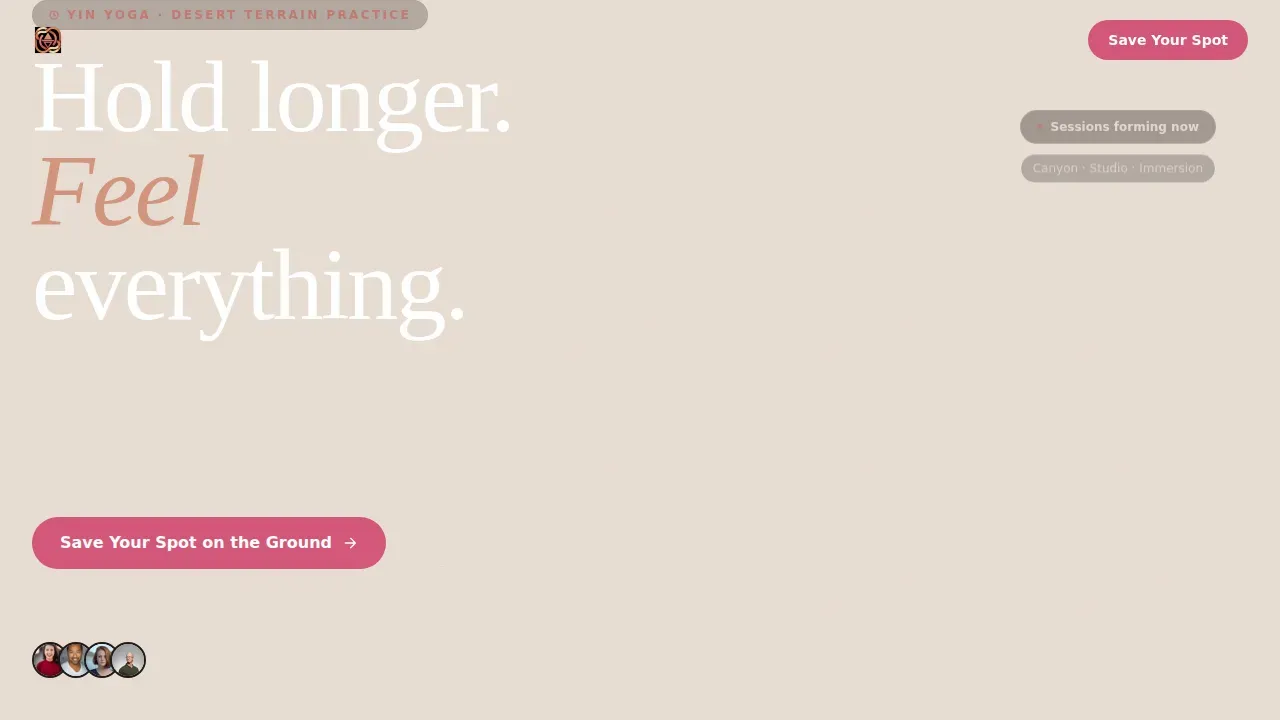
- A full-bleed hero section with a canyon-scale photo, staggered headline fade-in, and scroll-blur parallax effect
- A progressive content arc: what yin yoga is not, the anatomy of a hold, persona-matched audience cards, and a complete event registration form
- A secondary conversion path offering a free 20-minute recorded hold sequence in exchange for an email address
Feature list
This template includes six purpose-built sections and a set of interactive components that work together to deliver the atmosphere and conversion structure a yin yoga event page needs.
Full-Bleed Hero with Scroll-Blur Parallax
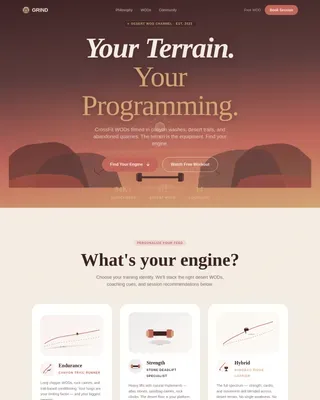
The hero section opens with a wide canyon photograph showing a single figure in pigeon pose on a rust-colored rock shelf. Natural light enters from the upper left. The headline, "Hold longer. Feel everything," fades in low and unhurried using a staggered text reveal. The scrollBlur parallax effect ties the visual depth of the canyon to the physical act of scrolling, so the page itself teaches visitors how to slow down.
What Yin Is Not: Three-Column Negation Cards
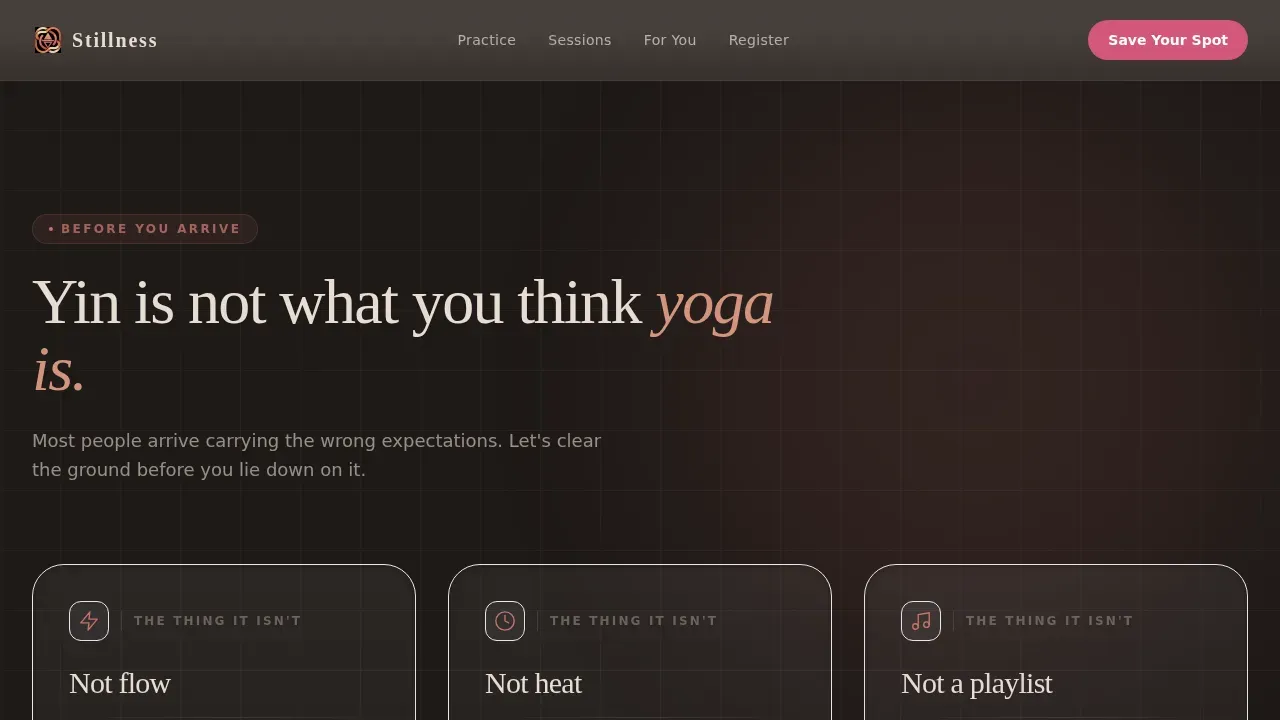
The second section uses a dark atmospheric contrast layout to establish what makes yin yoga different. Three cards address common misconceptions head-on: no flow, no heat, no playlist. This section does the work that most yoga event pages skip. It filters out the wrong audience and deepens trust with the right one. Visitors who have tried power yoga and left feeling more wound up than when they arrived will recognize themselves here and keep reading.
The Anatomy of a Hold: Scroll-Revealed Timeline
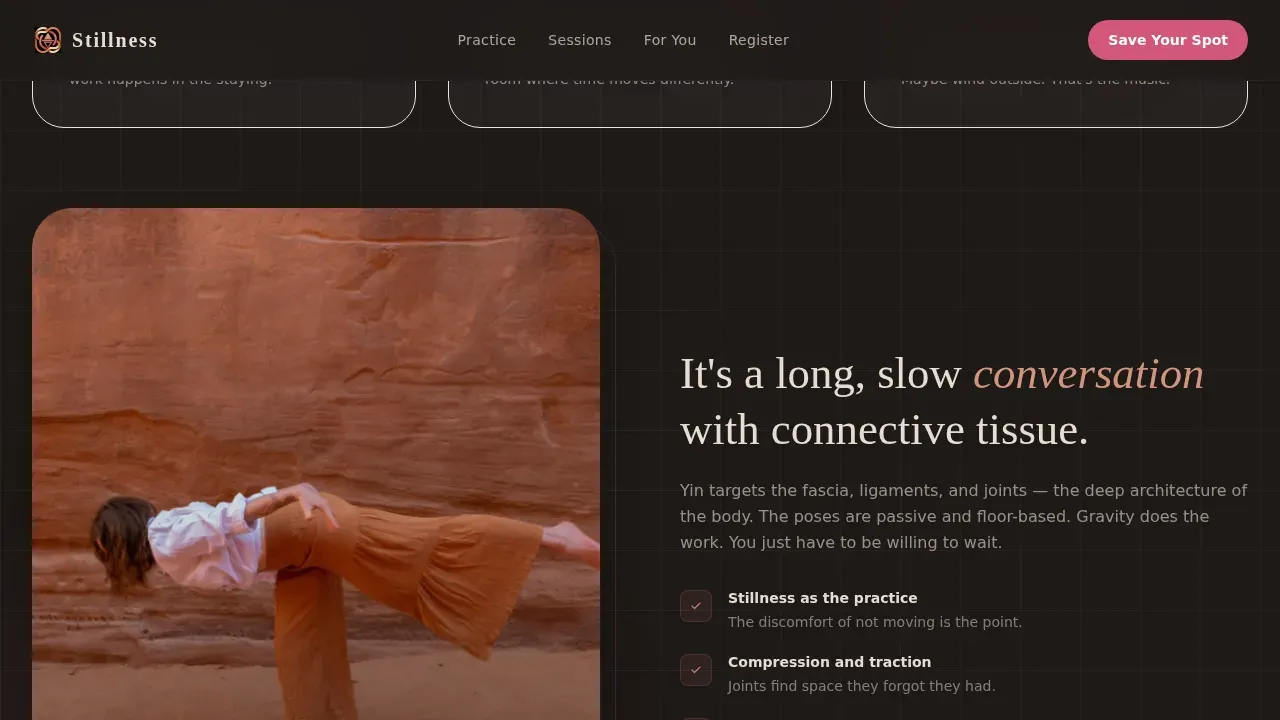
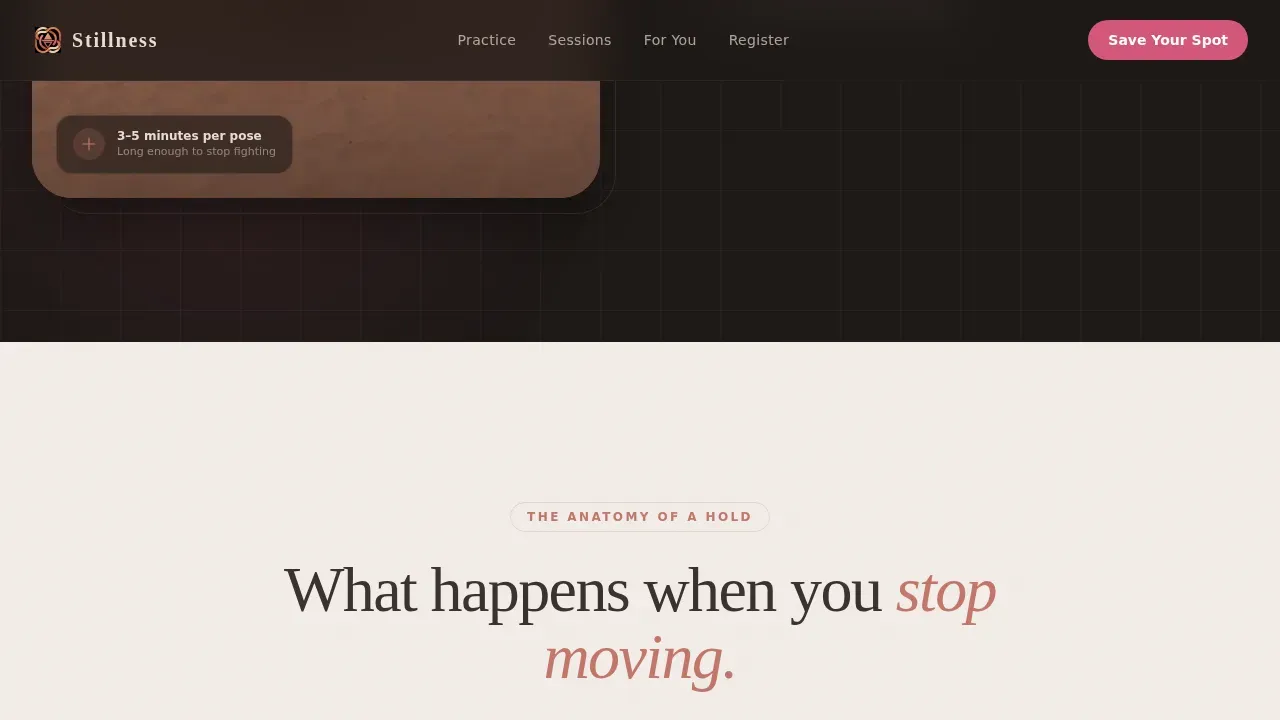
This section is the heart of the page. Three scroll-triggered moments reveal what happens at zero seconds, thirty seconds, and three minutes into a yin hold. Intimate photography moves from wide landscape to mid-body to a single hand pressing into earth. The progression deepens physically and emotionally, giving visitors a micro-experience of the practice before they register. This is where meditation meets movement and where the body begins to trust the page.
Who This Is For: Persona Bento Grid
A bento-grid layout presents three audience personas with embedded testimonials from past participants. Social proof tied to specific outcomes builds trust in a way that generic review stars cannot. Students often choose the teacher over the studio, so this section connects each person to a real outcome rather than a feature list. The grid creates a sense of community and connection even before anyone sets foot in the room.
Event Registration Form with Class Selector
The registration section includes a class-type selector with three categories: canyon session, studio yin, and weekend immersion. A preferred date picker lets visitors choose their schedule. An experience-level toggle covers first-time attendees, returning students, and teachers. The form collects the right details in a clean, distraction-free layout. A secondary offer for a free recorded hold sequence sits beside the main form, giving visitors a lower-stakes way to join the practice first.
Footer: Horizontal Flow Pattern
The footer uses a horizontal flow layout that closes the page calmly and completely. It carries the desert color system through to the final element, leaving visitors with a coherent visual impression from hero to footer.
Page sections overview
| Section | Purpose |
|---|---|
| Hero Full-Bleed | Establish atmosphere and introduce the headline with a scroll-blur parallax canyon photograph |
| What Yin Is Not | Reframe visitor expectations using three dark-card negation panels |
| Anatomy of a Hold | Reveal the yin experience through a three-moment scroll-triggered timeline |
| Who This Is For | Match visitors to personas using a bento grid with embedded testimonial feedback |
| Event Registration Form | Collect class preference, date, and experience level through a clean interactive form |
| Footer Flow | Close the page with a calm horizontal layout that maintains brand continuity |
Design & branding system
The visual identity follows an Adventure Terrain theme using a Desert Rose color system. The palette feels like a desert canyon at golden hour: warm dust, pink light catching the ridgeline, and cool shadows in deep crevices. Every color choice carries emotional weight and supports the slow, atmospheric tone of the yin practice it represents.
- Clay (#C4756B) serves as the primary surface tone; driftwood (#E8DDD3) provides the background; charcoal (#3B3230) anchors all foreground text
- Prickly pear bloom (#D4577A) is reserved exclusively for calls to action and hover states, creating a clear visual hierarchy without disrupting the calm aesthetic
- Display headings use Fraunces, a variable serif with warmth and weight; body text uses DM Sans for clean, readable prose across every section
Mobile & speed optimization
The template is built desktop-first, with careful mobile adaptation at every breakpoint. Interactive components, including the scroll-reveal timeline, the persona grid, and the registration form, are structured using server components for static content and client components for scroll-triggered interactions. This separation keeps the page responsive on any device without sacrificing the animation quality that makes the scroll experience meaningful.
- Scroll-blur parallax and IntersectionObserver-based staggered reveals are handled through client-side components, keeping static content fast to load
- The registration form is mobile-optimized with large tap targets, a clean field layout, and a format that works on any device without pinching or horizontal scrolling
- Photography scales responsively from wide canyon views on desktop to cropped intimate close-ups on smaller screens, preserving the emotional arc of the page
How this template helps you convert
A yin yoga event page has one job: make visitors feel the practice before they commit to showing up. This template earns the registration by building context in layers, the same way a yin hold builds sensation, slowly, deliberately, and without force.
- The scroll structure itself is the pitch. Each section deepens the visitor's understanding of what yin yoga is, who it is for, and what they will feel. By the time they reach the form, registering feels like the next natural exhale, not a decision that requires convincing.
- Two conversion paths work in parallel. The primary call to action, "Save Your Spot on the Ground," captures committed visitors ready to register. The secondary path, a free 20-minute recorded hold sequence, captures curious visitors who are not quite ready to commit, building an email list of warm leads without any extra page or separate site.
Other information about this template
This template was designed with the broader yoga registration landscape in mind. Whether your practice is rooted in studio space or outdoor terrain, the page structure supports a range of event formats and audience categories.
- The registration form can support live virtual sessions alongside in-person event categories, giving practitioners who offer online yoga classes a flexible format without a separate page
- Teachers who hold credentials from Yoga Alliance can surface that information naturally within the Who This Is For section or the registration form context, building trust with students who look for certified instruction
- The persona grid and testimonial layout are ideal for immersive yoga workshops that cultivate stillness and personal growth in a community setting, since social proof from past participants enhances trust in a yoga event
- Practitioners based in cities like San Francisco, where wellness programming is dense and competition for attention is high, will benefit from the calm aesthetic and clear value proposition this page communicates at first glance
- Sound healing practices integrate naturally alongside yin yoga in retreat and workshop contexts; the template's section structure can support a schedule that includes silence, breath, and sound-based healing without requiring a redesign
- The page supports connection to social media platforms through footer links, allowing practitioners to extend their community reach beyond a single event registration
- In 2026, manual booking processes are considered a conversion barrier; this template replaces that friction with a clean, self-serve registration experience that users can complete in under two minutes
- Payments and financial details, including early-bird pricing, can be referenced directly in the registration section so visitors have complete information before they submit
- The template is a no-code-ready format; users can customize persona cards, photography, color tokens, and form categories to fit their specific practice without traditional programming skills
- Wisdom shared through the page, whether through teacher bios, testimonials, or session descriptions, builds the kind of trust that inspires long-term student relationships and repeat workshop registrations
Theme
Adventure Terrain
Creative direction
Step-by-Step Guide
Color system
Desert Rose
Style
Scroll Reveal (Progressive)
Direction
Event Registration
Page Sections
Full-bleed Hero with Parallax Scroll
Three-column Yin Negation Cards
Scroll-revealed Hold Timeline
Persona Bento Grid with Testimonials
Multi-category Event Registration Form
Dual Conversion Path Design
Related questions
Is this template suitable for both in-person and virtual yoga events?
Can I use this template if I teach studio-based yin yoga rather than outdoor classes?
Does the page include space for testimonials and social proof?
How does the secondary conversion path work?
Can the registration form collect experience-level information from participants?