Mining Safety Consultancy Landing Page Template
Shaft is a mining safety consultancy landing page built for firms that audit active mine sites. It uses an Engineering Blueprint visual identity with a dark carbon-fiber palette, zigzag hazard-to-solution sections, and a gated Site Audit Checklist as the primary conversion goal. Every section is designed to demonstrate diagnostic authority before asking for a single click.
by Rocket studio
Quick summary
Shaft is a single-page template for underground and surface mining safety consultancies. It pairs a dark Engineering Blueprint aesthetic with a structured Problem-to-Solution scroll that mirrors a literal descent into a mine. The primary conversion goal is a gated checklist download. Visitors arrive at technical line art and leave with a tool they trust because the page earned it.
Who this template is for
This template is built for safety professionals and consultancies who work on active mine sites. It speaks the language of people who review ventilation plans on-site, not in conference rooms.
- Mining safety consultants serving open-pit, underground coal, and hard-rock operations
- Safety directors and operations VPs preparing for regulatory audits or rewriting procedures after a near-miss
- Mine managers who need a credible digital presence that reflects genuine field expertise
What problem this template solves
Most safety consultancy pages look like generic corporate brochures. They list credentials without showing diagnostic depth. Prospects with real technical problems scroll away without trusting the firm enough to make contact.
- Visitors cannot tell whether the consultant has actually worked underground or simply passed certifications
- There is no clear conversion path that matches the buyer's level of technical caution
- Generic layouts fail to communicate the stakes involved in mine safety engagements
What you get with this template
You get a fully structured landing page that walks a prospect from awareness of a specific hazard to confidence in your methodology, then delivers a practical conversion moment. Every section has a defined job.
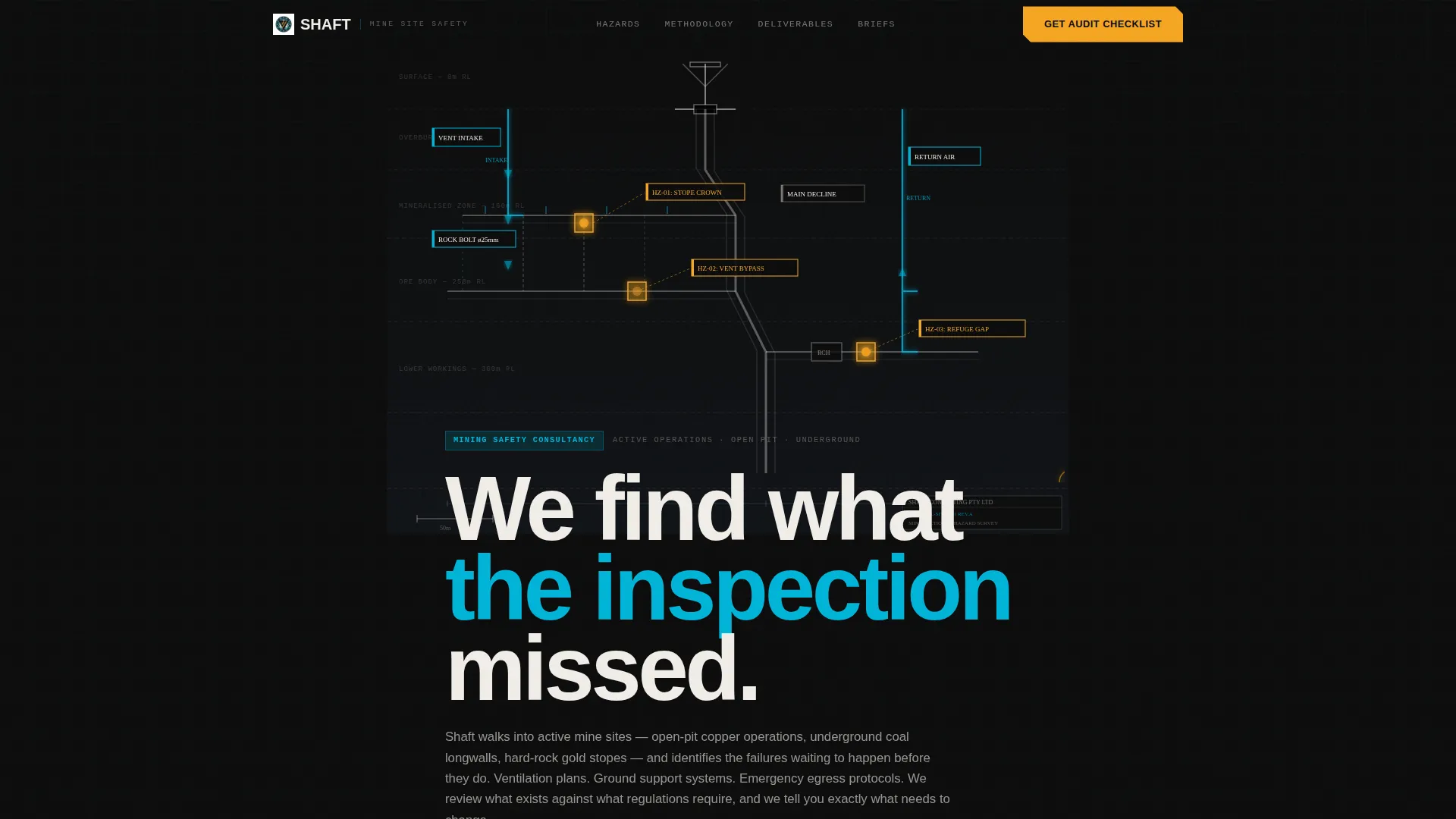
- An isometric cutaway header in precise technical line art with annotated hazard zones and a fade-in headline
- A zigzag alternating section layout that pairs hazard scenarios with consultancy methodology, deliverable names, standard references, and outcome metrics
- A dual conversion path: a gated Site Audit Checklist form and an ungated technical brief library organized by hazard category
Feature list
This section covers the core built-in capabilities that define the Shaft template.
Isometric Mine Cutaway Header
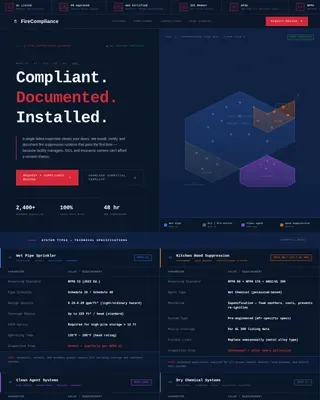
The header renders a technical line-art cutaway of an underground mine against shaft black. Cyan traces ventilation shafts, amber pulses on three identified hazard zones, and white annotation callouts label each risk. The headline fades in over the deepest level, reading like a living engineering schematic.
Zigzag Hazard-to-Solution Sections
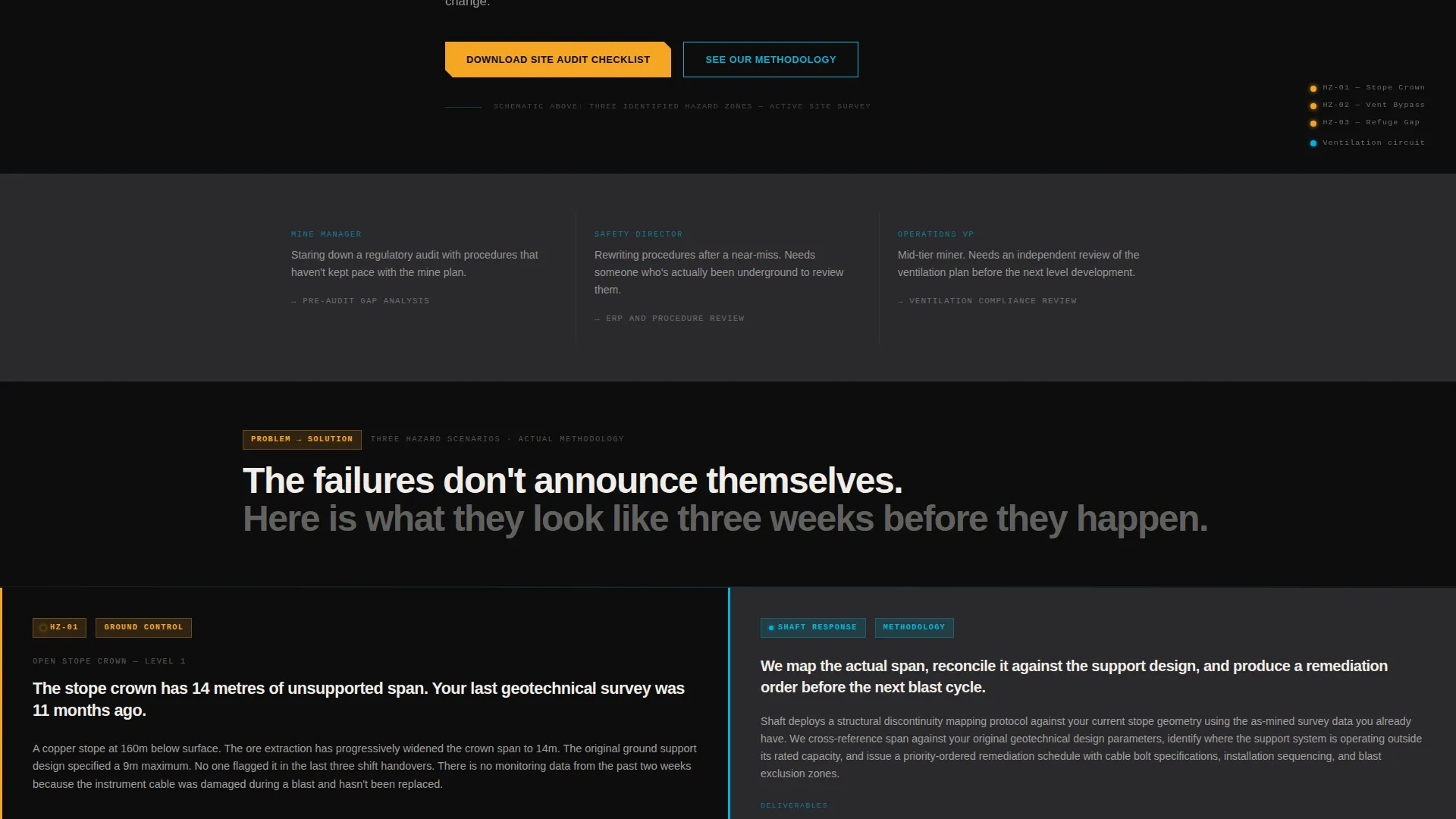
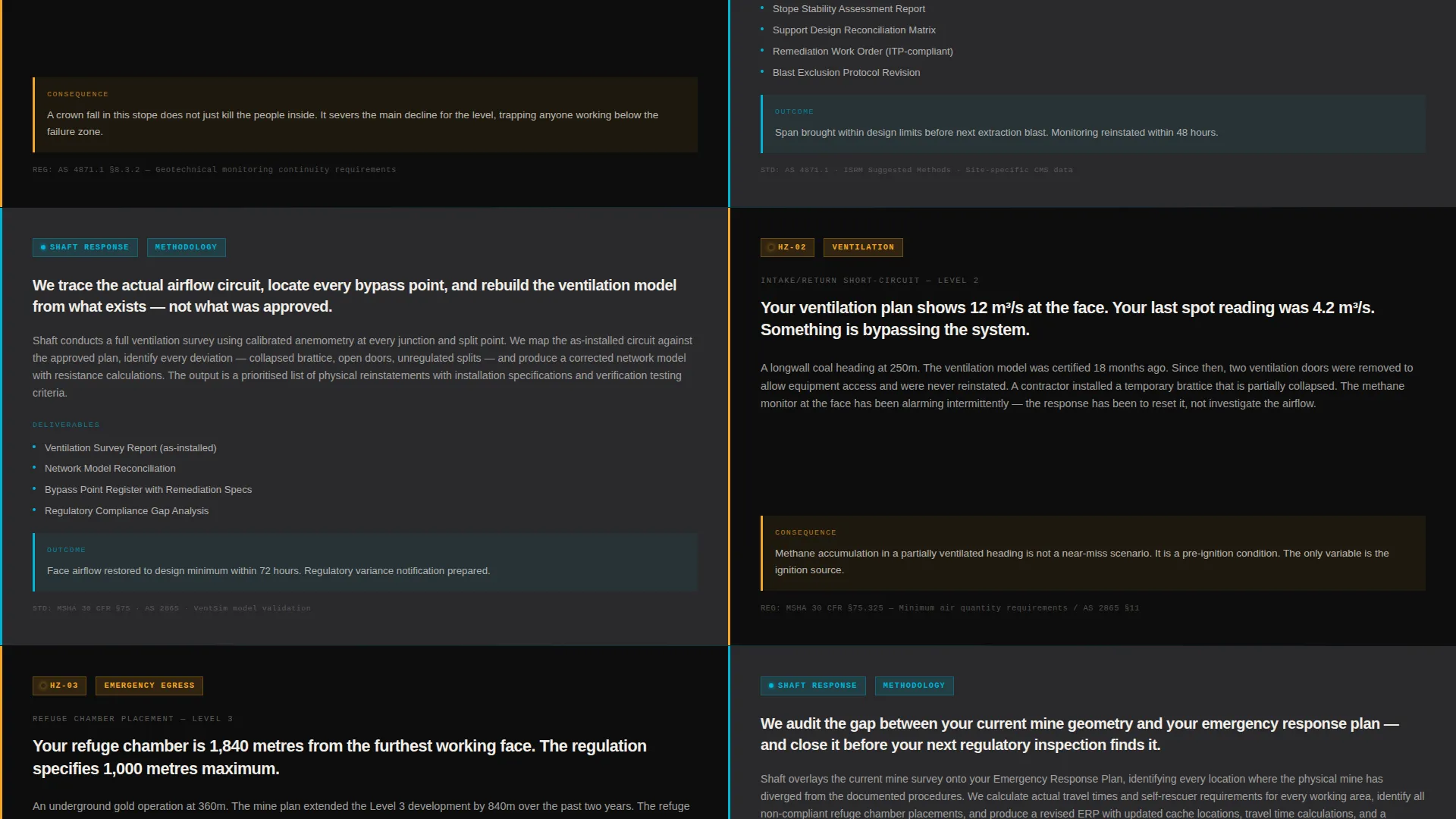
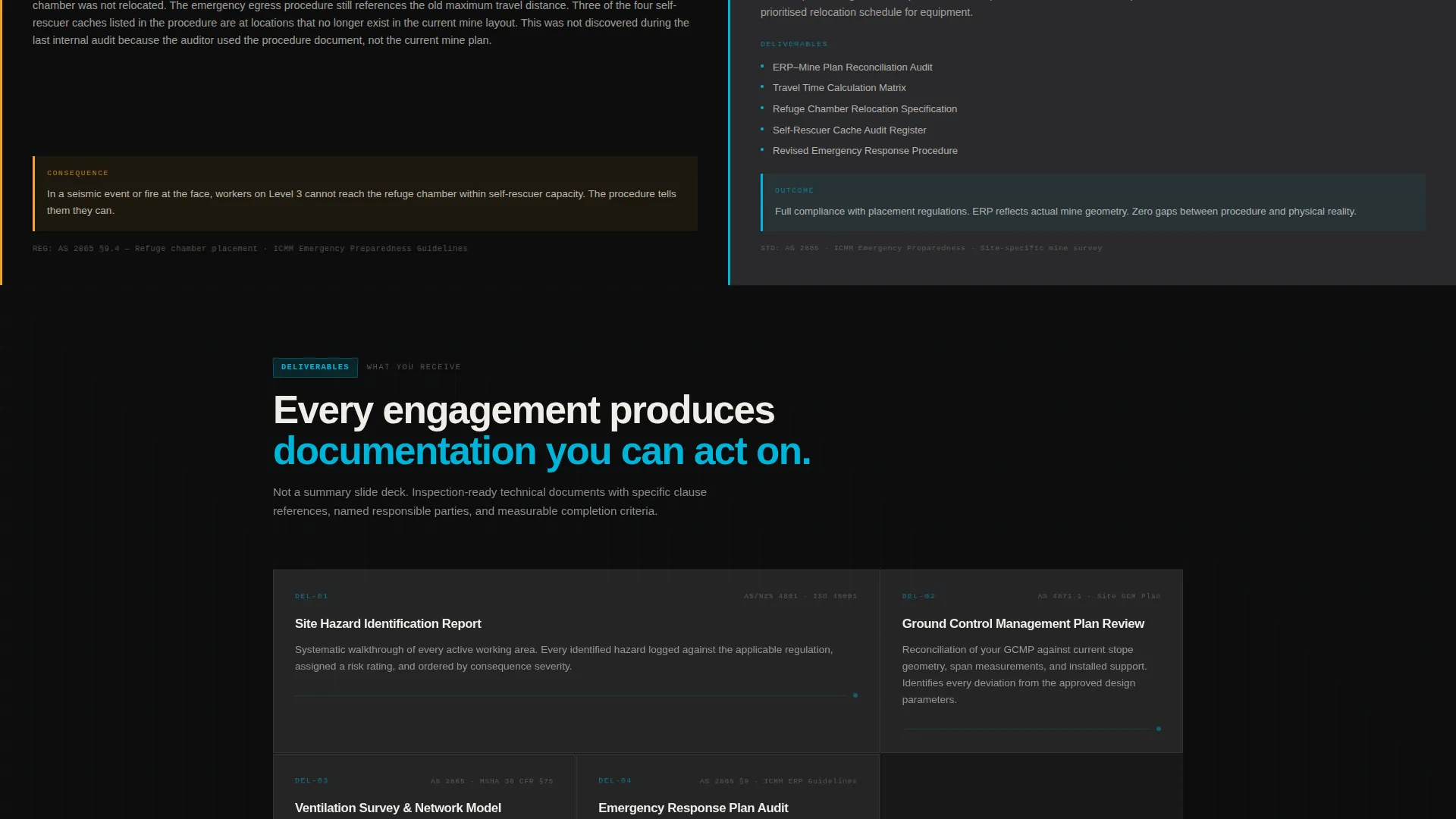
Each alternating section opens one side with a blunt hazard scenario (ground fall in a stope, ventilation short-circuit, inadequate refuge chamber placement) and the opposite side with the consultancy's resolution methodology. Deliverable names, standard references, and outcome metrics are built into each panel. Stakes escalate with each scroll step.
Gated Checklist Download Form
The primary conversion component is a single-step gated form collecting name, company, role (dropdown with mine manager, safety director, operations, and other), and email. It sits after the hazard-to-solution arc, so the visitor already understands the value of the tool before seeing the gate.
Ungated Technical Brief Library
A secondary conversion path presents a library of technical briefs organized by hazard category. This section builds trust before the gate, giving cautious buyers a reason to engage without committing to the form immediately.
Engineering Blueprint Color System
The Carbon Fiber color system uses deep shaft black, technical graphite, blueprint grid cyan, and caution-stripe amber. Backgrounds alternate between shaft black and graphite. Cyan traces structural lines and data highlights. Amber appears exclusively on calls to action and hazard callouts where attention must be immediate.
Escalating Scroll Narrative
The page is structured as a descent. Scroll depth mirrors going deeper underground, moving from procedural gaps to structural failures to emergency response breakdowns. This narrative arc keeps the visitor engaged and makes the final conversion moment feel earned rather than forced.
Page sections overview
| Section | Purpose |
|---|---|
| Isometric Mine Header | Sets technical authority with annotated hazard line art and fade-in headline |
| Hazard Scenario One | Presents ground fall stope risk in blunt operational language |
| Methodology Panel One | Shows resolution process with deliverables and standard references |
| Hazard Scenario Two | Presents ventilation short-circuit scenario |
| Methodology Panel Two | Covers ventilation audit methodology and outcome metrics |
| Hazard Scenario Three | Presents inadequate refuge chamber placement risk |
| Methodology Panel Three | Details emergency egress protocol review deliverables |
| Technical Brief Library | Ungated resource hub organized by hazard category |
| Checklist Download Form | Gated single-step form for Site Audit Checklist |
Design & branding system
The visual identity feels like a cross-section diagram printed on dark carbon-weave stock. Every color has a specific structural role and is never used decoratively.
- Shaft black (#0D0D0D) and technical graphite (#3A3A3C) alternate as section backgrounds, creating depth without distraction
- Blueprint grid cyan (#00B4D8) traces structural lines, data highlights, and section dividers throughout the page
- Caution-stripe amber (#F5A623) is reserved strictly for calls to action and hazard callouts, ensuring it always signals urgency
Mobile & speed optimization
The template is structured so content stacks cleanly on smaller screens without losing the narrative flow of the zigzag layout. The descent metaphor remains intact regardless of screen size.
- Zigzag alternating panels reflow to single-column stacks on mobile without breaking the hazard-to-solution pairing
- The annotation callouts and hazard zone indicators in the header scale proportionally to remain legible at smaller viewports
- The gated form fields and dropdown role selector are sized for comfortable touch interaction on mobile devices
How this template helps you convert
The conversion strategy is built into the scroll itself. By the time a visitor reaches the form, the page has already demonstrated exactly why the checklist is worth downloading.
- The escalating hazard narrative positions the consultancy as a field-experienced authority, not a general safety vendor, making the prospect want to see more before they even reach a call to action
- The ungated technical brief library gives cautious buyers a low-commitment first step, filtering in qualified leads who are already engaging with specific hazard categories
- The gated checklist form appears after the full hazard arc, so the single-step ask feels like a natural conclusion rather than an interruption
Other information about this template
This template was built at Intersection Match Score 9, meaning the niche, category, and subcategory alignment between the source brief and the template design is extremely tight. It is purpose-built for safety consulting and services within the Safety and Emergency category.
- The template style follows a Card Grid (Modular) structure adapted into a zigzag alternating layout for narrative scroll depth
- The creative direction is built around a Step-by-Step Guide flow, mirroring how a site audit actually unfolds from surface observation to deep underground review
- The header concept uses visual diagnostic elements (annotated hazard callouts) in the same conceptual role as award or credential markers, establishing authority at first glance
- This template is well suited for consultancies operating across multiple mine types: open-pit copper, underground coal longwalls, and hard-rock gold stopes
Theme
Engineering Blueprint
Creative direction
Step-by-Step Guide
Color system
Midnight Blue
Style
Card Grid (Modular)
Direction
Content/Resource
Page Sections
Isometric Mine Cutaway Header
Zigzag Hazard-to-solution Layout
Gated Site Audit Checklist Form
Ungated Technical Brief Library
Engineering Blueprint Color System
Related questions
Can I edit the hazard scenarios to match my consultancy's actual service areas?
Is the gated form connected to any email or data platform out of the box?
Can the ungated technical brief library be expanded beyond the default hazard categories?
Does the amber color appear anywhere other than calls to action and hazard callouts?
Is this template suitable for consultancies that cover both surface and underground mine operations?