Animal Cruelty Prevention Nonprofit Landing Page
Shelter is a modular card grid landing page built for animal cruelty prevention organizations. It leads with a rescuer testimonial, then unfolds rescue stories, live impact counters, event cards, and a confidential cruelty report form across a nature-inspired editorial layout. The design earns the visitor's trust before asking for their time.
by Rocket studio
Quick summary
Shelter is a single-page, card grid landing page designed for animal cruelty prevention nonprofits. It opens with a cinematic rescuer testimonial, then guides visitors through rescue case narratives, a live animal counter, upcoming volunteer events, legal victories, and a confidential cruelty report form. Every section is built to turn quiet concern into direct action.
Who this template is for
This template is built for organizations that do the hard, unglamorous work of animal protection. It speaks directly to the people those organizations need to reach.
- Suburban pet owners who witnessed a neighbor's neglect and need a clear, trusted path to report it
- Teachers and community educators looking to bring structured compassion programming into their schools
- Local business owners ready to commit time, not just money, to a cause worth showing up for
What problem this template solves
Most nonprofit landing pages ask for a commitment before they give a reason. They present a donation button before a single face. Shelter flips that sequence entirely.
- Visitors arrive at a page that leads with a human moment, not an organization's name
- People who witnessed animal cruelty often feel helpless; this page gives them a specific, immediate action to take
- Volunteer recruitment usually fails because the ask feels abstract; Shelter ties each event card to real slots, real dates, and a person-to-person sense of showing up for someone specific
What you get with this template
You get a fully structured, production-ready landing page built around a movement-and-cause creative direction. Every section serves a distinct purpose in the visitor's journey from witness to participant.
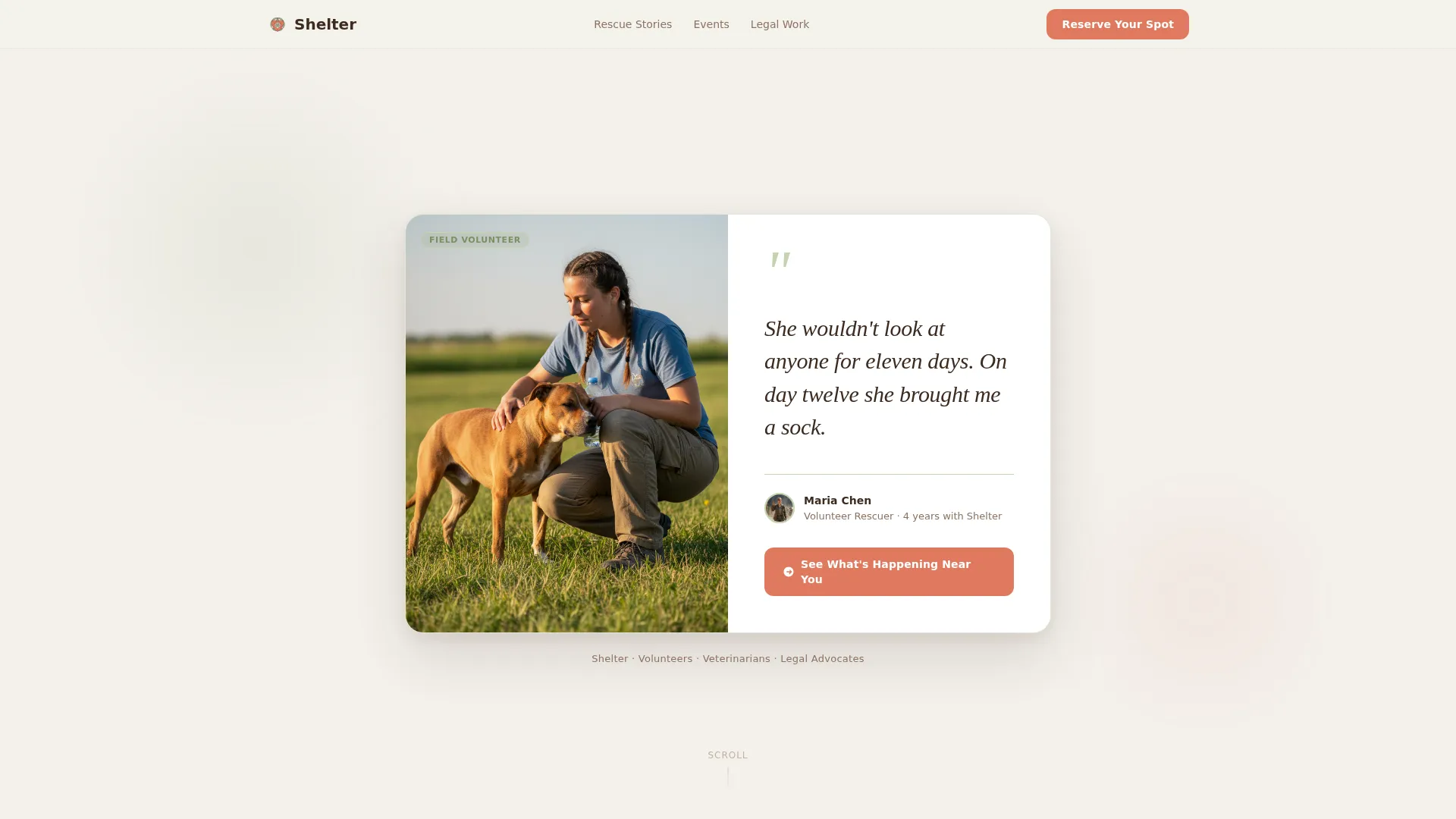
- A floating testimonial header card with a rescuer photograph and serif quote, rendered with a cinematic fade-in
- A modular card grid covering rescue stories, impact data, events, legal victories, and education programs
- An event registration modal with a visual card picker and a confidential cruelty report intake form
Feature list
This template includes a focused set of purpose-built components. Each one is grounded in the brief and designed to carry emotional and functional weight.
Rescuer Testimonial Header Card
A single oversized card floats against the fog-white background, showing a candid field photograph and a hand-set serif quote in Fraunces type. The fade-in animation lets the sentence land before anything else asks for attention.
Modular Rescue Story Cards
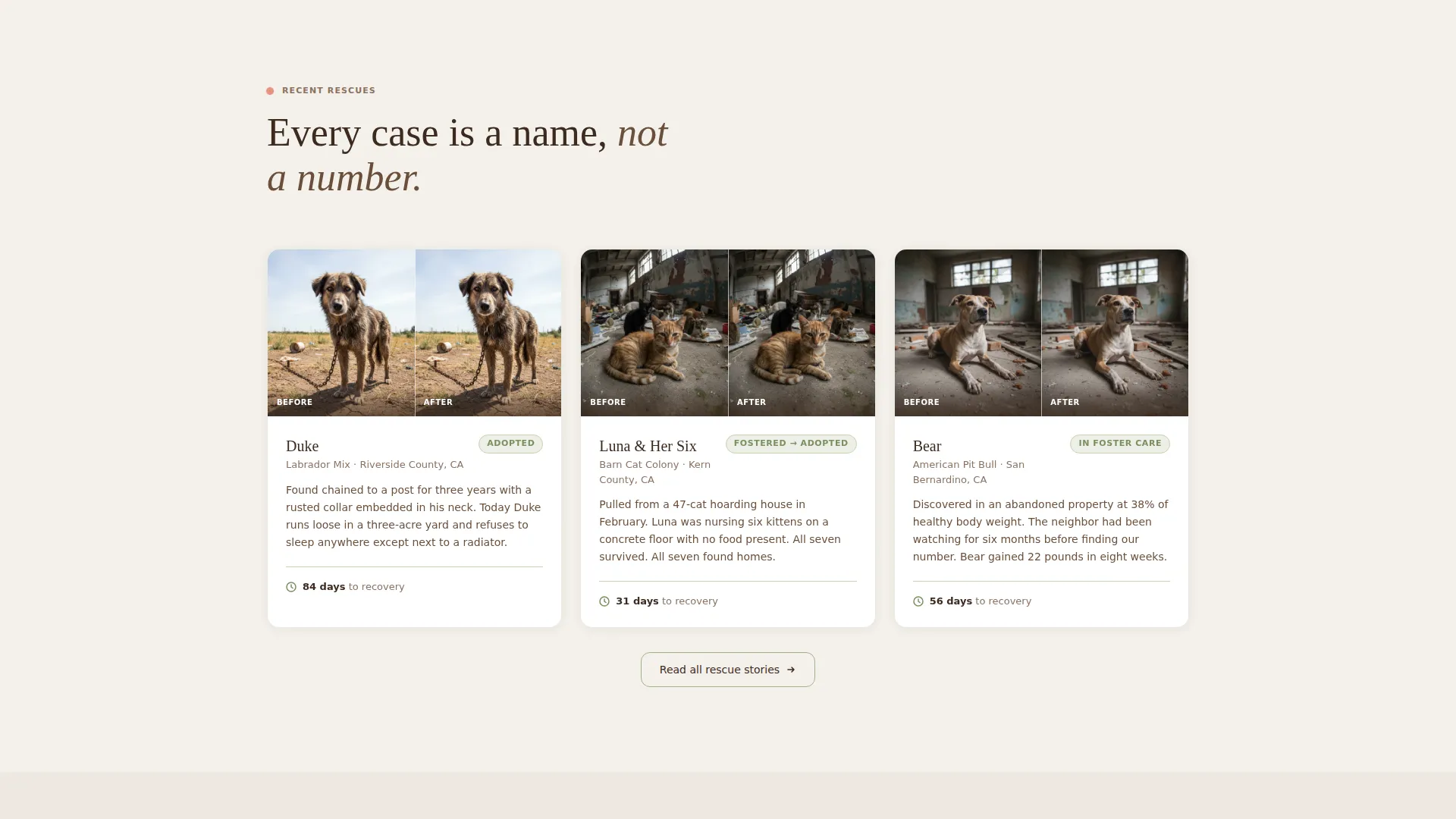
Three case cards in the first content row each carry before-and-after photographs and a 40-word narrative. They establish trust through specific, real-feeling stories before any call to action appears.
Live Animal Rescue Counter
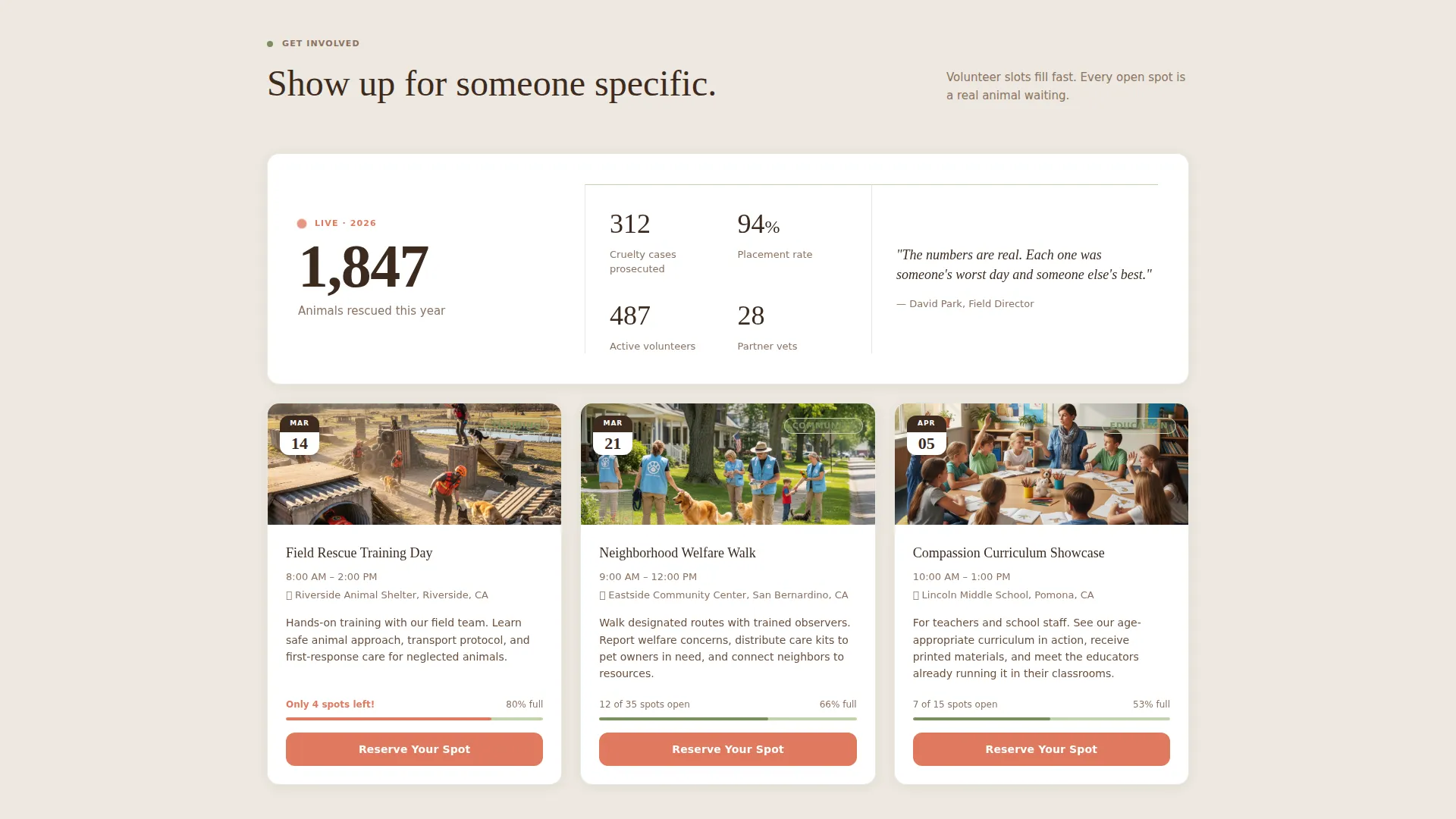
A wide counter card animates a running total of animals rescued in the current year. It sits as the anchor of the second content row, flanked by event cards, and updates the visitor's sense of scale in real time.
Event Registration Modal
Every event card carries a coral "Reserve Your Spot" button that opens a lightweight modal. The modal collects a first name, email, a visual event card picker, and a single toggle asking whether the visitor can bring a friend.
Confidential Cruelty Report Form
A dedicated card in the bottom row of the grid offers a separate, low-friction intake path. Visitors can submit a location, a written description, and an optional photo upload without going through the registration flow.
Legal and Education Card Grid
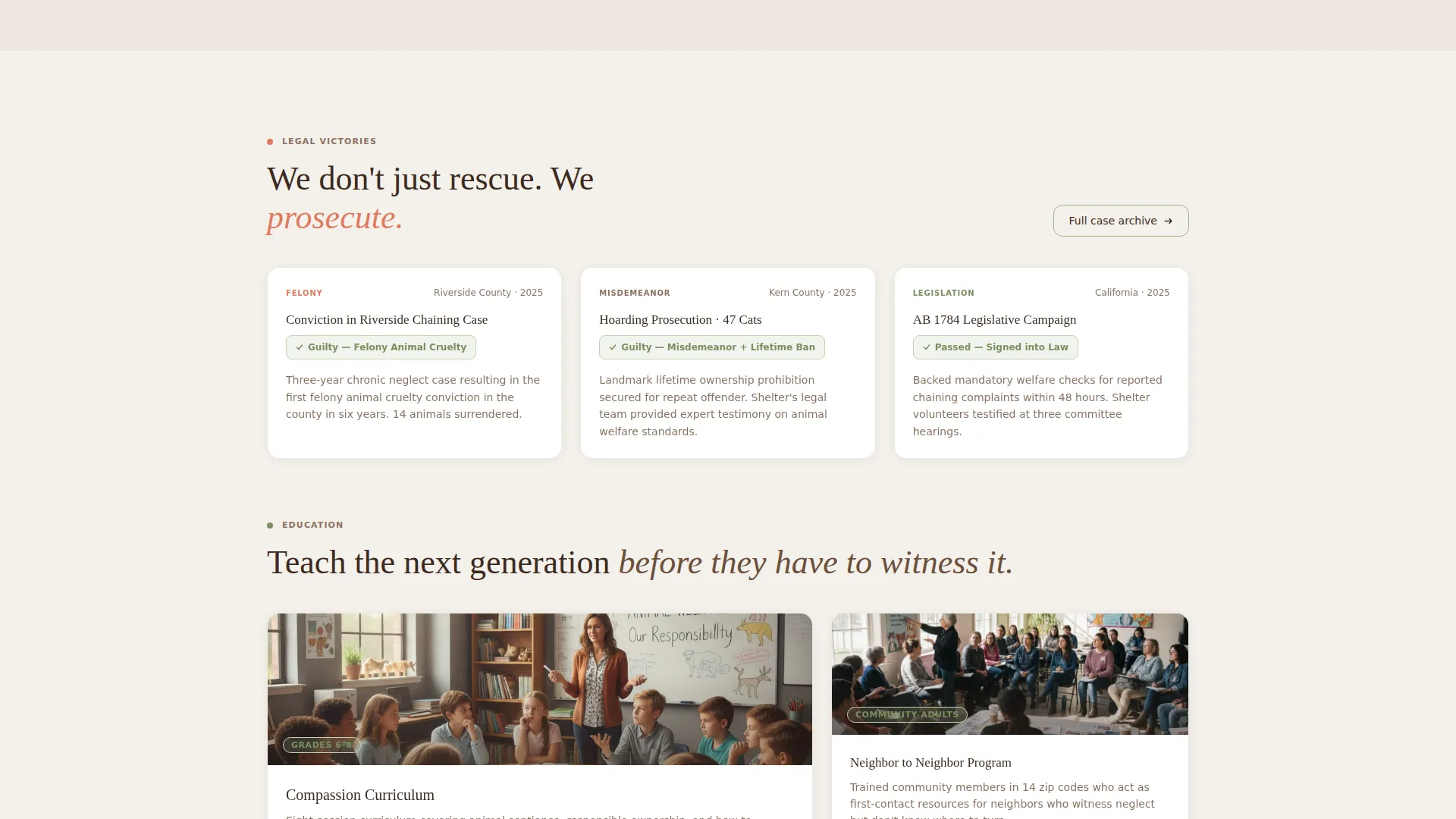
The third content row holds cards for legal victories, active legislative campaigns, and education programs. This row gives the organization credibility and shows visitors the full scope of the work beyond rescue operations.
Page sections overview
| Section | Purpose |
|---|---|
| Testimonial Header Card | Opens with a rescuer quote and photograph to anchor the emotional tone before any ask |
| Rescue Story Cards | Three before-and-after case cards build trust through specific 40-word rescue narratives |
| Live Impact Counter | Wide animated counter shows total animals rescued this year alongside flanking event cards |
| Upcoming Event Cards | Display dates, locations, and remaining volunteer slots with a coral registration call to action |
| Legal and Education Grid | Cards for legal victories, legislative campaigns, and education programs show organizational depth |
| Report Cruelty Card | Confidential intake form lets visitors submit location, description, and optional photo |
Design & branding system
The visual identity follows a nature-inspired editorial style that feels like a rain-washed field the hour after a storm. Every color and type choice is deliberate and restrained.
- Color palette: soft overcast white (#F4F1EC) for backgrounds, muted sage (#A3B18A) on card borders and section dividers, deep loam brown (#3D2B1F) for body text, and heartbeat coral (#E07A5F) reserved exclusively for calls to action and alert badges
- Typography: Fraunces serif for headlines and the testimonial quote, DM Sans for all body copy, creating a field journal contrast between editorial warmth and clean readability
- Card interaction: each card lifts subtly on hover, and generous grid gaps prevent the emotional weight of the content from ever feeling crowded
Mobile & speed optimization
The template is built mobile-first. The sticky bottom bar on mobile keeps the primary conversion path visible at every scroll depth.
- A sticky coral "Reserve Your Spot" bar pins to the bottom of the screen on mobile, so the event registration path is never more than one tap away
- Static sections use server components for fast initial rendering, while the live counter and modal run as client components
- The card grid reflows cleanly from a multi-column desktop layout to a single-column mobile stack without losing the field journal rhythm
How this template helps you convert
Shelter earns the click by showing faces before the ask. The conversion architecture is built into the page sequence itself.
- The testimonial header and rescue story cards create an emotional connection with specific animals and real volunteers before any registration prompt appears, so visitors arrive at event cards already invested in the outcome
- The event registration modal reduces friction to a minimum: first name, email, event selection, and one toggle, so the decision to show up feels small and specific rather than large and abstract
- The confidential cruelty report card gives hesitant visitors a separate low-commitment action, capturing people who are not ready to volunteer but still want to do something right now
Other information about this template
This template is part of a broader set of cause-driven and community nonprofit templates. A few additional details are worth noting for teams evaluating it.
- The footer follows a horizontal flow layout pattern suited to nonprofit contact and navigation needs
- The template is categorized under Community and Nonprofit, with a specific focus on animal welfare and protection use cases
- Card grid modularity means individual rows can be reordered or repurposed to fit an organization's specific program mix
- The Cloud Canvas color system and nature-inspired theme are consistent across the full template family, making it easy to pair with related page designs
Theme
Nature-Inspired
Creative direction
Movement & Cause
Color system
Cloud Canvas
Style
Card Grid (Modular)
Direction
Event Registration
Page Sections
Rescuer Testimonial Header Card
Modular Rescue Story Cards
Live Animal Rescue Counter
Event Registration Modal
Confidential Cruelty Report Form
Legal and Education Card Grid
Related questions
Can someone without design experience customize this template?
Is the cruelty report form separate from the event registration flow?
Can I use this template if my organization does not run public events?
What makes this layout different from a standard nonprofit donation page?