Shield — Proven Chemical Safety Landing Page Template
Shield is a 50/50 split-screen landing page template built for chemical safety training providers targeting EHS managers, shift supervisors, and HR directors. It pairs an industrial-left, domestic-right visual story with a chemical search hero, a Problem-to-Solution scroll arc, freemium trial conversion flow, and an amber-accented Slate and Sky design system that bridges the facility floor and the front door.
by Rocket studio
Quick summary
Shield is a single-page, split-screen landing page template purpose-built for chemical safety training companies. It uses a cinematic 50/50 layout to contrast the hazards of the facility floor with the warmth of home, driving freemium trial signups through a chemical search hero, escalating Problem-to-Solution scroll sections, social proof, a guided funnel, and a full-width closing call to action.
Who this template is for
This template is designed for training businesses that serve industrial and laboratory environments where hazardous materials are a daily reality. It speaks directly to the buyers who carry compliance responsibility and the workers whose safety is on the line every shift.
- EHS managers overseeing OSHA compliance across multiple facilities who need a landing page that earns trust immediately and moves visitors toward a free trial without friction.
- Training providers and safety consultants who sell chemical hygiene training, safety data sheets education, and emergency response modules to warehouses, manufacturing plants, and laboratory settings.
- HR directors and shift supervisors who are responsible for keeping incident rates low, insurance costs manageable, and employees prepared for potential hazards before every shift begins.
What problem this template solves
Chemical safety training providers face a conversion problem that generic templates cannot fix. Visitors arrive with specific, urgent questions about a hazardous chemical, a GHS code, or a safety procedure. If the page cannot answer those questions immediately, the visitor leaves. The stakes are too high for a slow reveal.
- No immediate relevance for hazardous materials professionals. Standard landing page templates cannot surface training content at the moment a visitor searches for a specific chemical name, flammable liquid, or emergency response procedure. This template solves that with a live chemical search hero built into the header.
- Weak emotional connection to the real cost of accidents. Training pages that list bullet points about compliance miss the human weight behind the numbers. This template uses a split-screen arc that pairs incident statistics with home-life imagery, making the cost of accidents visceral and the value of training personal.
- Friction-heavy trial signup flows. Most EHS and safety training pages ask for too much too soon. This template leads with a free preview triggered by the search box, then converts with a three-step form: work email, facility type, and team size. No credit card required.
What you get with this template
Every section of this template is built around one idea: the worker who leaves the lab or loading dock and comes home safe. The layout, the copy architecture, and the conversion flow all serve that emotional and practical promise.
- A fully structured 50/50 split-screen landing page with six distinct sections, scroll-triggered animations, and a visual arc that tightens from problem to solution as the visitor moves down the page.
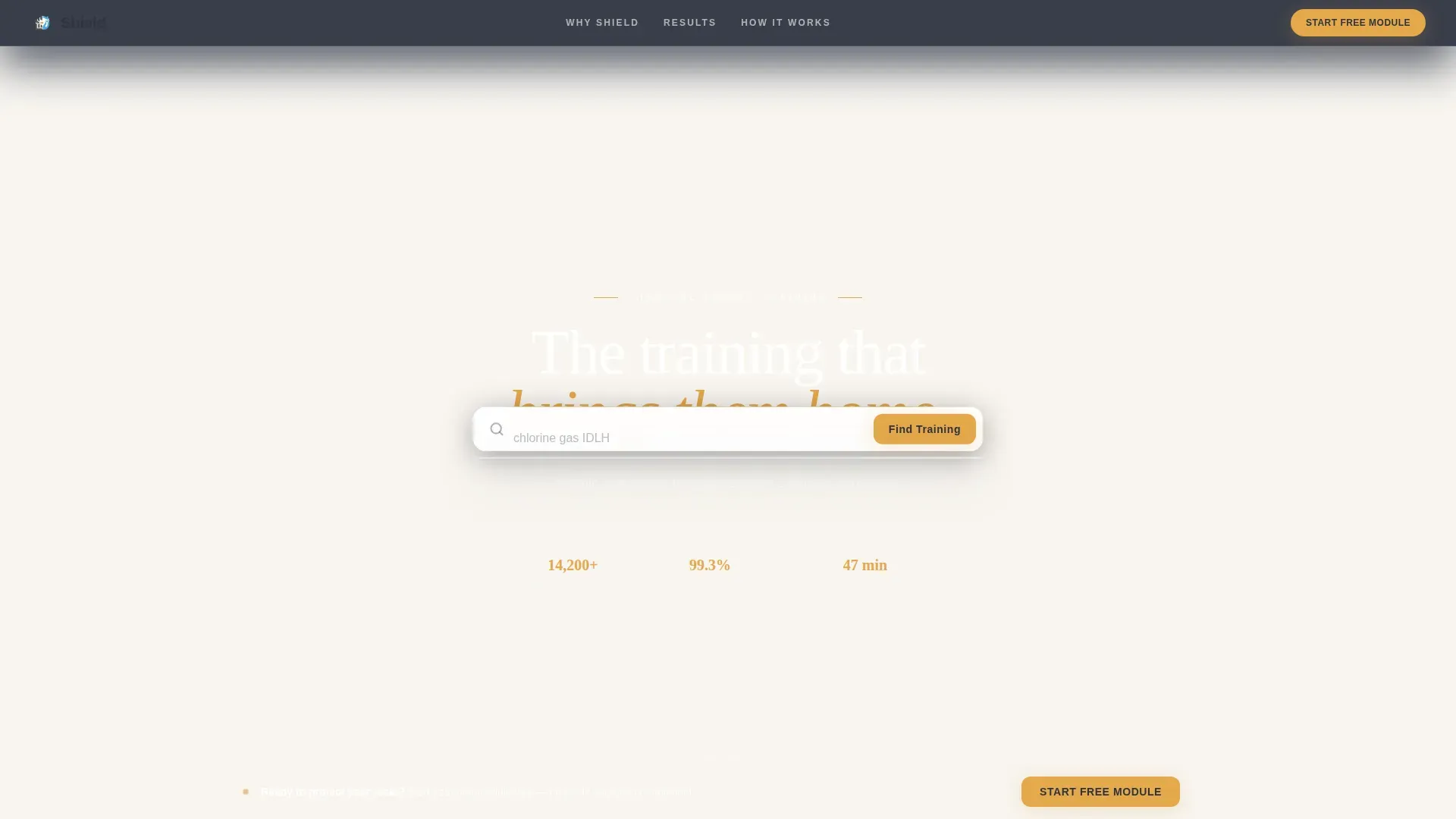
- A chemical search hero with ghost-text cycling through real query examples, a dropdown micro-training preview, and dual call-to-action paths for visitors at different stages of readiness.
- A complete freemium conversion funnel built into the page, including the primary "Start Your Free Safety Module" call to action and a secondary PDF gate offering a free Safety Data Sheets quick-reference card.
Feature list
This template includes six core feature areas, each designed to serve the specific conversion goals of a chemical safety training business.
Chemical Search Hero with Live Preview
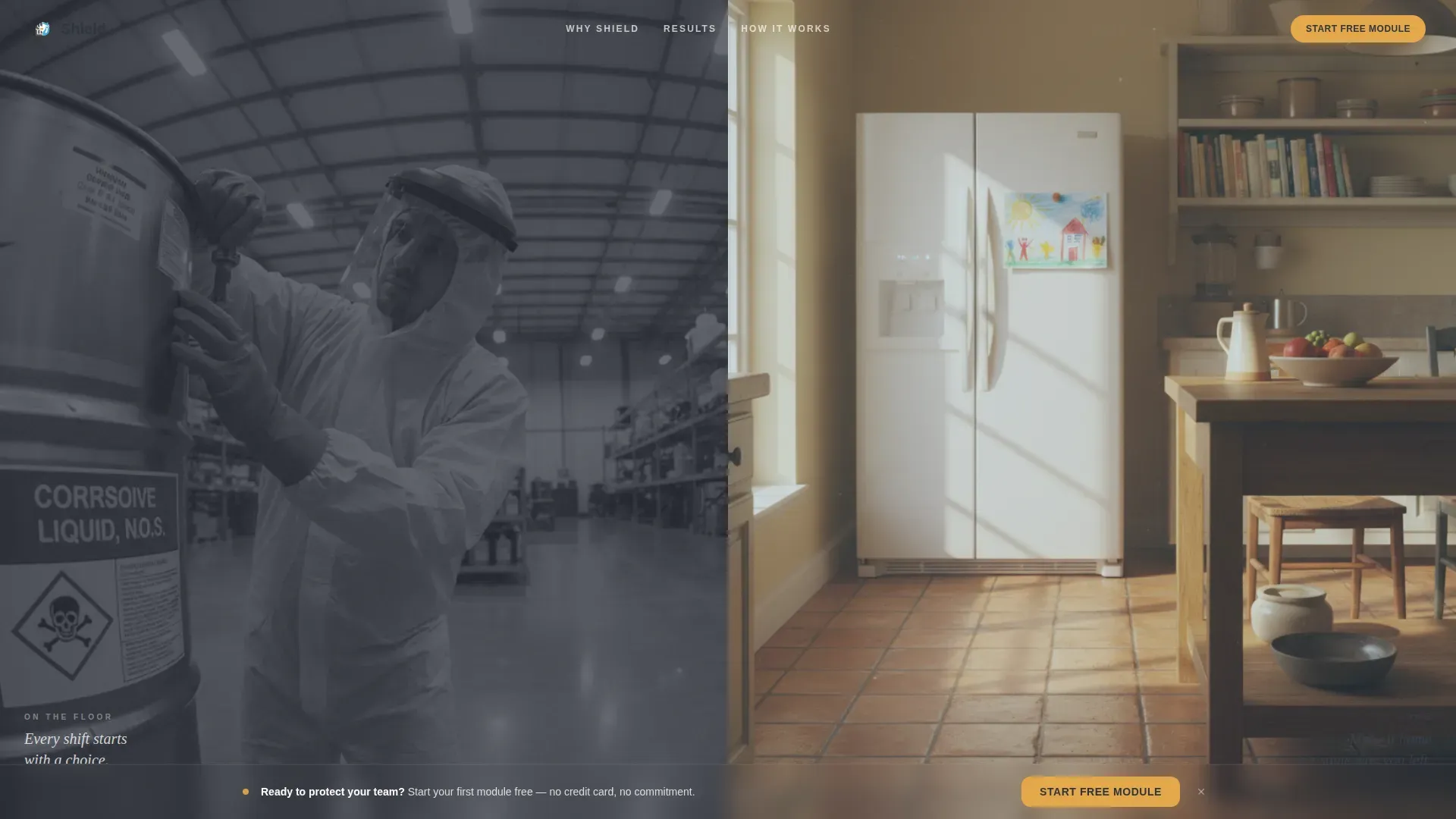
The header splits the viewport into two equal halves. The left side displays a close-up of gloved hands handling labeled chemical drums under fluorescent light. The right side shows a soft-focus domestic kitchen scene with morning light and a child's drawing on the refrigerator. Between them, a prominent search field reads "Search by chemical name, GHS code, or SDS number" with ghost-text cycling through real queries such as hydrochloric acid, Class 3 flammable, and ammonia exposure limits. When a visitor types any chemical name or hazard code, a dropdown delivers a free micro-training preview for that specific hazard, giving immediate value before any signup is requested.
Problem-to-Solution Scroll Arc
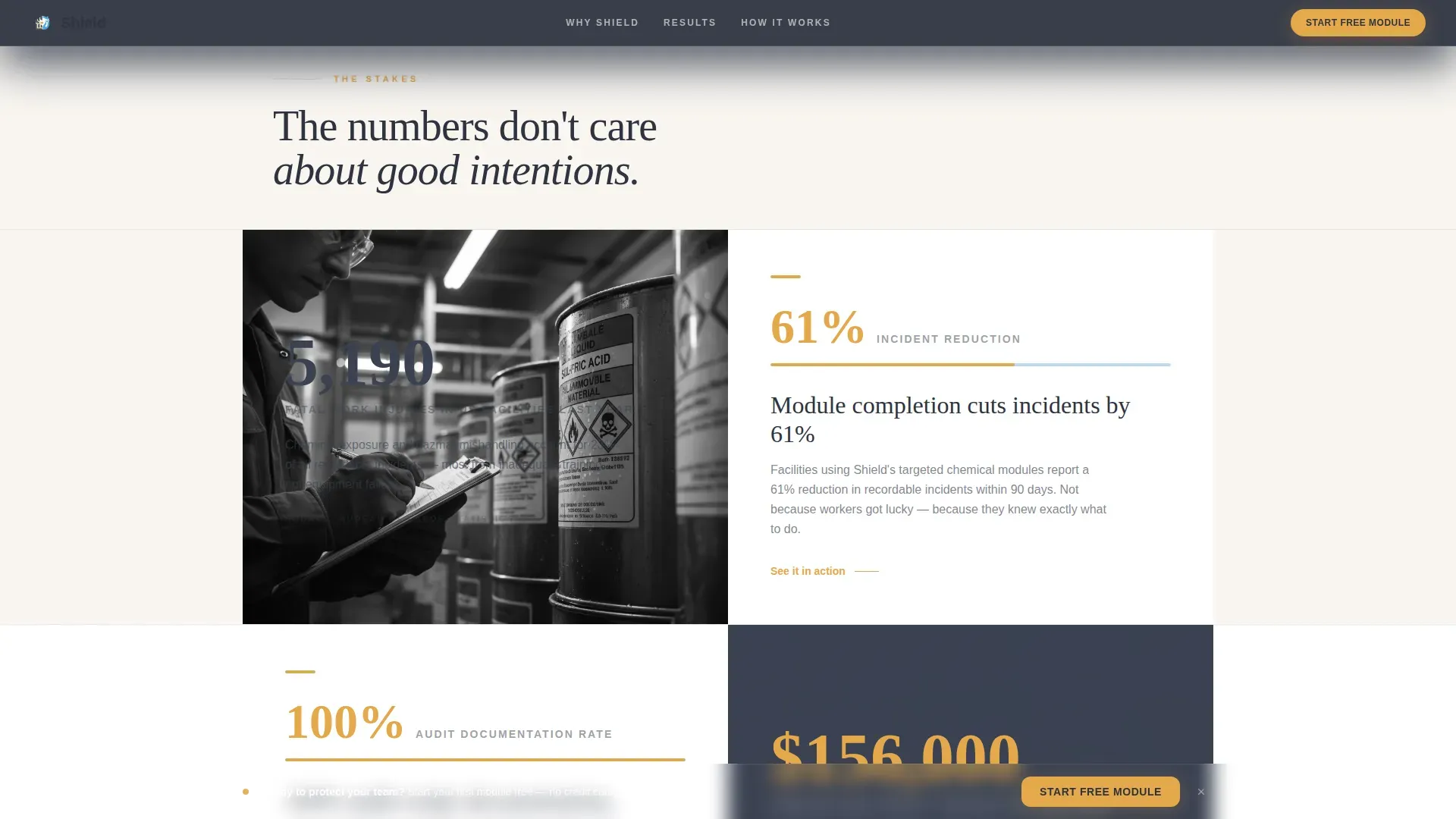
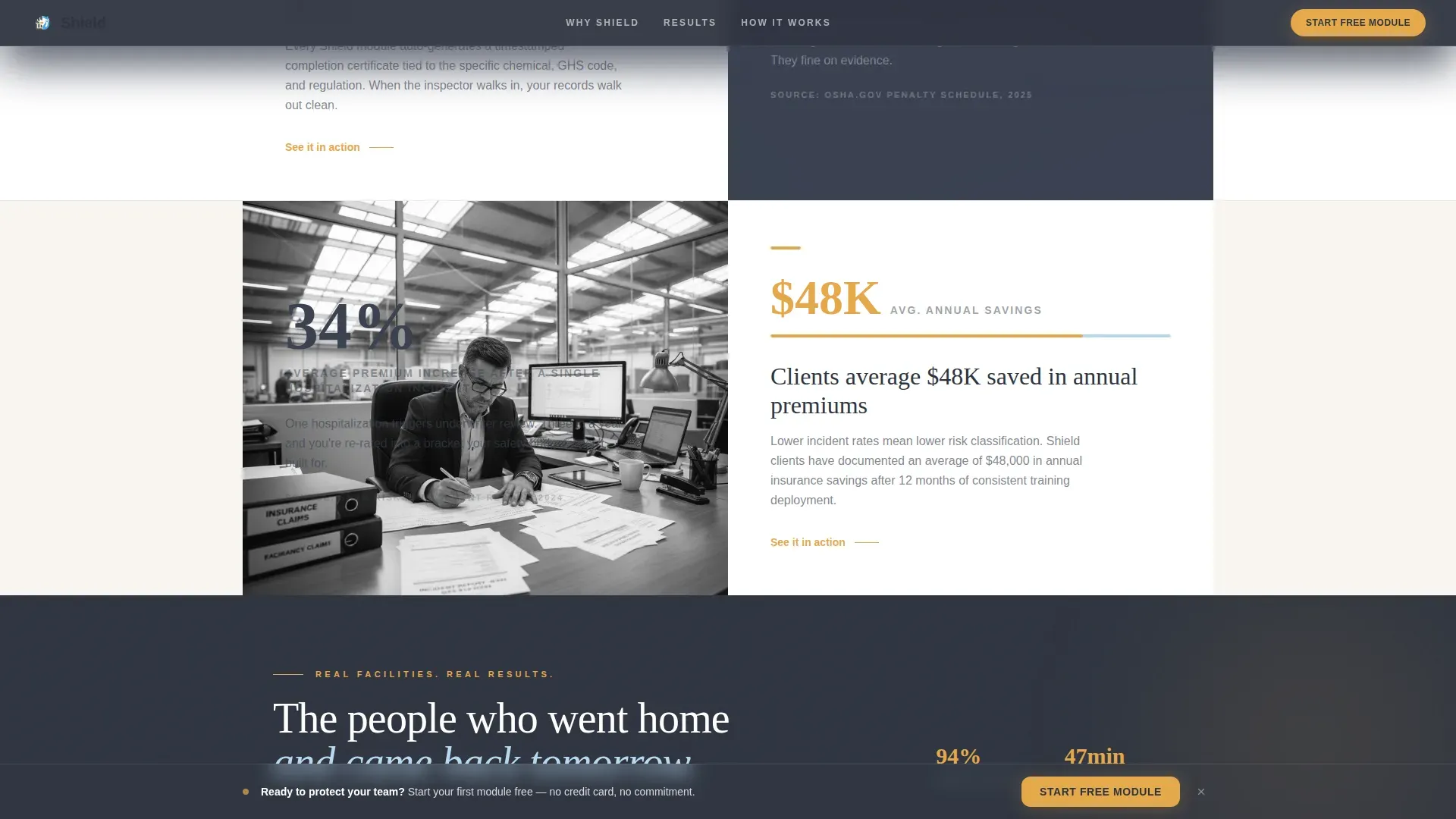
Below the hero, the left panel presents escalating incident statistics with ticker counters, a regulatory penalty timeline, and a looping simulated spill response video. The right panel answers each problem with completion rate dashboards, time-to-compliance metrics, and a testimonial video from a forklift operator describing the module that changed how he handles corrosives. The stakes escalate from minor infractions to hospitalization scenarios as the visitor scrolls, and the right panel keeps pace with matching proof at every level.
Social Proof Section with Facility Tagging
Testimonial cards are tagged by facility type, such as warehouse, lab, or manufacturing plant. Video testimonials from named workers and EHS managers give the social proof section the specificity that generic star ratings cannot. Completion rate metrics and compliance statistics sit alongside the testimonials so that both emotional and rational buyers find what they need to trust the training.
Three-Step Freemium Funnel
The "How It Works" section maps the freemium path in three visual steps: search a chemical, get a free preview, start the full trial. The trial signup form asks for work email first, then facility type via a selector, then team size via a slider. There is no credit card requirement. The flow is designed to feel like continuing a conversation already started in the search box, not beginning a sales process from scratch.
Full-Width Closing Call to Action with PDF Gate
The final section collapses the split screen into a single full-width frame showing a worker at home with a partner. The primary amber call-to-action button reads "Start Your Free Safety Module." Below it, a secondary path offers "Download the Free SDS Quick-Reference Card" as a PDF download gated by name and email only, capturing leads from visitors who are not yet ready to commit to the full trial.
Persistent Bottom Bar and Scroll-Triggered Animations
After the third scroll section, a persistent bottom bar carries the primary call to action so it is always visible without interrupting the reading experience. Scroll-triggered split reveals, clip-path transitions, staggered card entrances, and ticker counters are all built into the template to give the page the visual energy that safety training content needs to hold attention across a long-form scroll.
Page sections overview
| Section | Purpose |
|---|---|
| Split Search Hero | Chemical search box bridging the industrial and domestic visual split |
| Problem Stats Panel | Escalating incident data, penalty timeline, and spill response video loop |
| Solution Proof Panel | Completion dashboards, compliance metrics, and worker testimonial video |
| Social Proof Cards | Facility-tagged testimonials and named EHS manager quotes with completion rates |
| How It Works | Three-step freemium funnel: search, preview, trial signup |
| call to action Collapse Frame | Full-width closing frame with primary trial call to action and secondary PDF gate |
| Linear Footer | Single-row footer with navigation links and legal text |
Design & branding system
The visual identity uses the Slate and Sky color system to tell a two-world story in every scroll section. Industrial charcoal grounds the left panels like a concrete plant floor. Open sky blue lifts the right panels like the world beyond the facility gates.
- Color palette: Industrial charcoal (#3B4252) for left panels and structural backgrounds; open sky blue (#7EBCE6) for right panels and domestic scenes; deep graphite (#2E3440) for body text and supporting copy; warm amber (#E5A84B) for all interactive elements including buttons, toggles, and progress indicators.
- Typography: DM Sans for body copy, user interface labels, form fields, and navigation; Fraunces serif for emotional headlines that carry the weight of the Family First theme and give the page editorial authority.
- Visual style: Industrial-meets-domestic editorial split-screen with scroll-triggered reveals, grain texture on the left-side imagery, soft-focus warmth on the right, and a final full-width collapse that unifies both worlds in the closing call-to-action frame.
Mobile & speed optimization
This template is designed desktop-first, reflecting the reality that EHS managers and training administrators typically work from a desk when researching and purchasing compliance tools. The layout adapts cleanly for mobile users including shift supervisors and lab workers accessing content on a phone.
- Desktop-first responsive layout: The 50/50 split-screen stacks vertically on smaller screens, preserving the left-panel and right-panel narrative sequence without losing the problem-to-solution arc.
- Optimized interaction components: The chemical search field, facility type selector, team size slider, and ghost-text cycling are all built as client-side interactive elements with server-rendered static sections for fast initial load, keeping the page ready before the visitor reaches the first call to action.
How this template helps you convert
The Shield landing page template is built around one conversion principle: earn the click by delivering specific value before asking for anything in return. Every section is ordered to lower resistance and raise trust.
- The search box converts interest into intent. A visitor who types a chemical name into the hero search field has already told you what hazard they are dealing with. The dropdown preview delivers a free micro-training snippet for that exact hazard, making the trial feel like a natural next step rather than a cold commitment.
- The Problem-to-Solution arc converts skeptics into believers. Each left-panel problem is immediately answered by a right-panel proof point, from completion rate dashboards to named worker testimonials tagged by facility type. By the time a visitor reaches the closing frame, the training has already demonstrated its value twice over.
- Two conversion paths reduce drop-off. The primary "Start Your Free Safety Module" call to action captures visitors who are ready to trial. The secondary PDF gate for the free Safety Data Sheets quick-reference card captures the name and email of visitors who need more time, keeping both audiences in the funnel.
Other information about this template
This section covers additional context about the training content that this template is designed to present, the regulatory framework it supports, and the broader safety topics that the page structure is built to communicate.
Chemical safety training programs typically operate within a formal chemical hygiene plan, a document responsible for developing and implementing all policies and programs related to chemical safety within an organization. The chemical hygiene plan is especially relevant in laboratory and manufacturing settings where chemical hygiene procedures must be documented and followed by all lab personnel. A well-maintained chemical hygiene plan covers laboratory hazards including chemical, radiological, physical, and electrical hazards, and it defines the responsibilities of laboratory personnel, supervisors, and environmental health and safety officers.
Environmental health and safety teams are responsible for designing and conducting training programs regarding hazardous materials management. This includes training on the proper use of personal protective equipment such as safety glasses, gloves, and respirators; correct storage procedures for flammable liquids and flammable vapors; and emergency response procedures covering spills, chemical exposures, and evacuations. Employees must understand how to read safety data sheets, recognize an appropriate warning sign, and respond when a co-worker is exposed to a hazardous chemical.
The training content that this template supports extends across a wide range of workplace scenarios. Lab workers and laboratory workers handling laboratory chemicals need to understand fume hoods and properly functioning fume hood operation before beginning any work with volatile compounds. Glove boxes are required for highly toxic chemicals and other shock sensitive materials. Secondary containers and unbreakable secondary containers reduce risk during transport. Secondary containment systems protect storage areas from leaks involving flammable materials and radioactive materials alike.
Additional topics relevant to this template's training audience include proper disposal of hazardous waste, standard operating procedures for handling incompatible chemicals, and the risks associated with gases and flammable vapors in enclosed spaces. Laboratory work involving highly toxic compounds must never use mouth suction for pipetting, must take place in a well ventilated area or inside fume hoods, and must follow the buddy system when working alone with hazardous substances. Authorized personnel should be clearly identified, and any area storing hazardous materials should display an appropriate warning sign at eye level.
The shield family first chemical safety training landing page template is aligned with the OSHA lab standard and supports training providers who serve university policy compliance requirements, K-12 schools, and post-secondary institutions as well as industrial facilities. Colleges, schools, and departments using hazardous materials must maintain accurate records to track these materials from purchase to disposal. A Material Safety Data Sheet, also called an MSDS, communicates hazard information about hazardous chemicals to both employers and employees and remains a foundational document in any chemical hygiene program. The training covered by this template can be customized to meet the specific needs of different organizations, including those governed by university policy or operating under industry-specific regulatory frameworks.
No-code platforms allow users to build and update safety training applications without programming knowledge, which means organizations can adapt their training programs quickly as regulations change. AI-powered tools can further streamline content generation, identify knowledge gaps through performance data, and provide personalized learning experiences. Bite-sized, on-demand modules improve retention and real-world application for lab workers and field personnel who cannot attend long instructor-led sessions. Safety manuals, accreditations, and trust indicators such as OSHA compliance logos or partnership seals from organizations like the American Heart Association or American Red Cross can all be incorporated into the template's social proof section to reinforce credibility.
- This template supports training content covering chemical storage, hazardous waste disposal, and emergency response procedures for spills and chemical exposures.
- The page is structured to present OSHA-compliant training modules with clear value propositions and reduce friction through a short signup form.
- Trust indicators, compliance logos, and facility-tagged testimonials can be placed in the social proof section to build authority with EHS buyers.
- The template's two conversion paths serve both ready-to-trial visitors and those who need a lower-commitment first step before engaging with the full training program.
Theme
Family First
Creative direction
Problem→Solution Arc
Color system
Slate & Sky
Style
Split Screen (50/50)
Direction
Freemium/Trial
Page Sections
Split-screen Chemical Search Hero
Problem-to-solution Scroll Arc
Facility-tagged Social Proof
Three-step Freemium Trial Funnel
Full-width Closing Frame with Dual Call to Action
Persistent Bottom Bar and Animated Interactions
Related questions
What kinds of organizations is this template designed for?
Does the template include the search functionality and training content?
Can the template be adapted for laboratory and academic safety programs?
What conversion paths are built into the template?
Is the template suitable for desktop-first audiences like EHS managers?