Simmer — Flavorful Low-Sodium Cooking Class Landing Page Template
Simmer is a gallery-plus-detail landing page template built for low-sodium cooking class instructors. It guides visitors through an emotional scroll journey, from first diagnosis fear to confident, flavorful cooking, using a warm scrapbook aesthetic, multiple class cards with individual calls to action, and a free downloadable lead capture to grow your student list.
by Rocket studio
Quick summary
Simmer is a single-page landing page template designed for low-sodium cooking class instructors who need to convert worried home cooks into enrolled students. It pairs a warm, scrapbook-style visual identity with a structured scroll narrative, moving visitors from fear to curiosity to sign-up, one section at a time.
Who this template is for
This template is built for cooking educators and food wellness instructors who teach low-sodium cooking. It speaks directly to the audiences most likely to enroll and most in need of reassurance.
- Post-diagnosis home cooks managing hypertension or heart disease who fear bland meals
- Caregiving spouses learning new cooking rules for someone they love
- Health-conscious adults who want to explore umami, acid, fat, and heat as real flavor tools
What problem this template solves
Many instructors struggle to communicate that low-sodium cooking can be genuinely delicious. A plain class listing page does not earn trust from someone who is already scared their food will taste like cardboard.
- There is no visual proof that restriction can become creativity in the kitchen
- Visitors have no emotional on-ramp before they are asked to pay or register
- Multiple class options have no clear way to be browsed and compared on one page
What you get with this template
Simmer delivers a full single-page layout that earns trust before it asks for anything. Every section is purposefully sequenced to move the visitor forward.
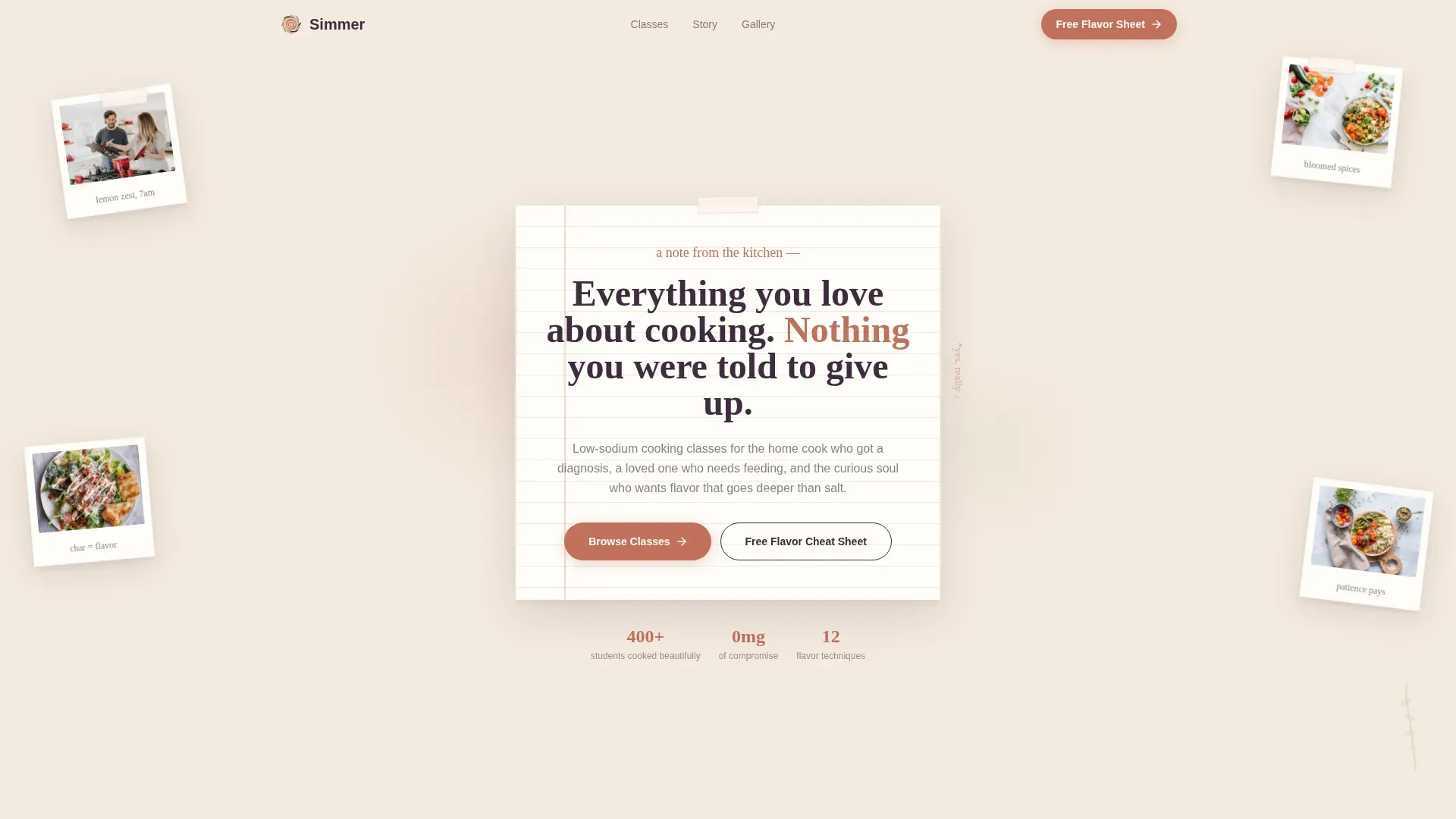
- A scrapbook-style hero section with polaroid-style photo collage and a torn-paper handwritten headline
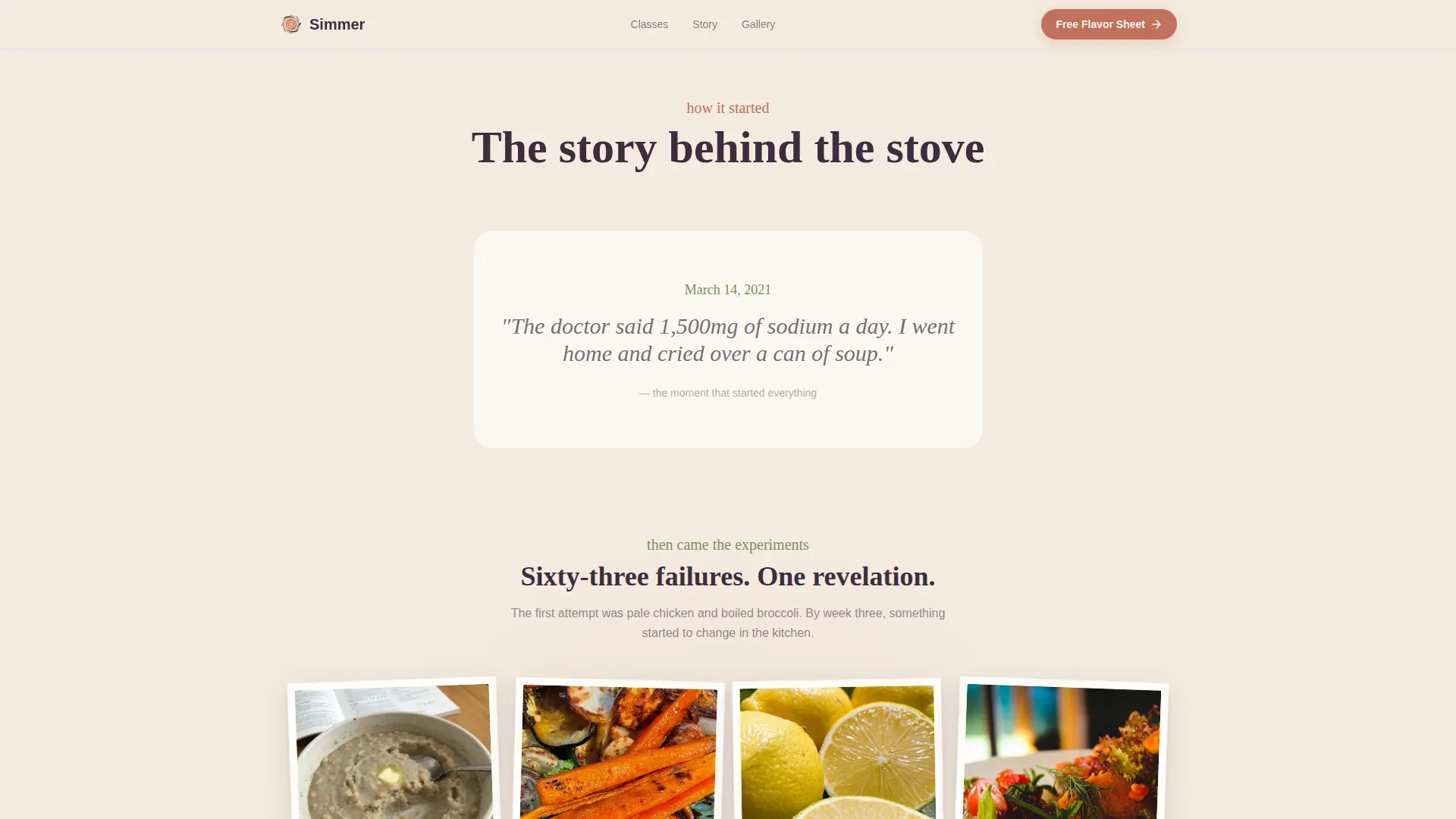
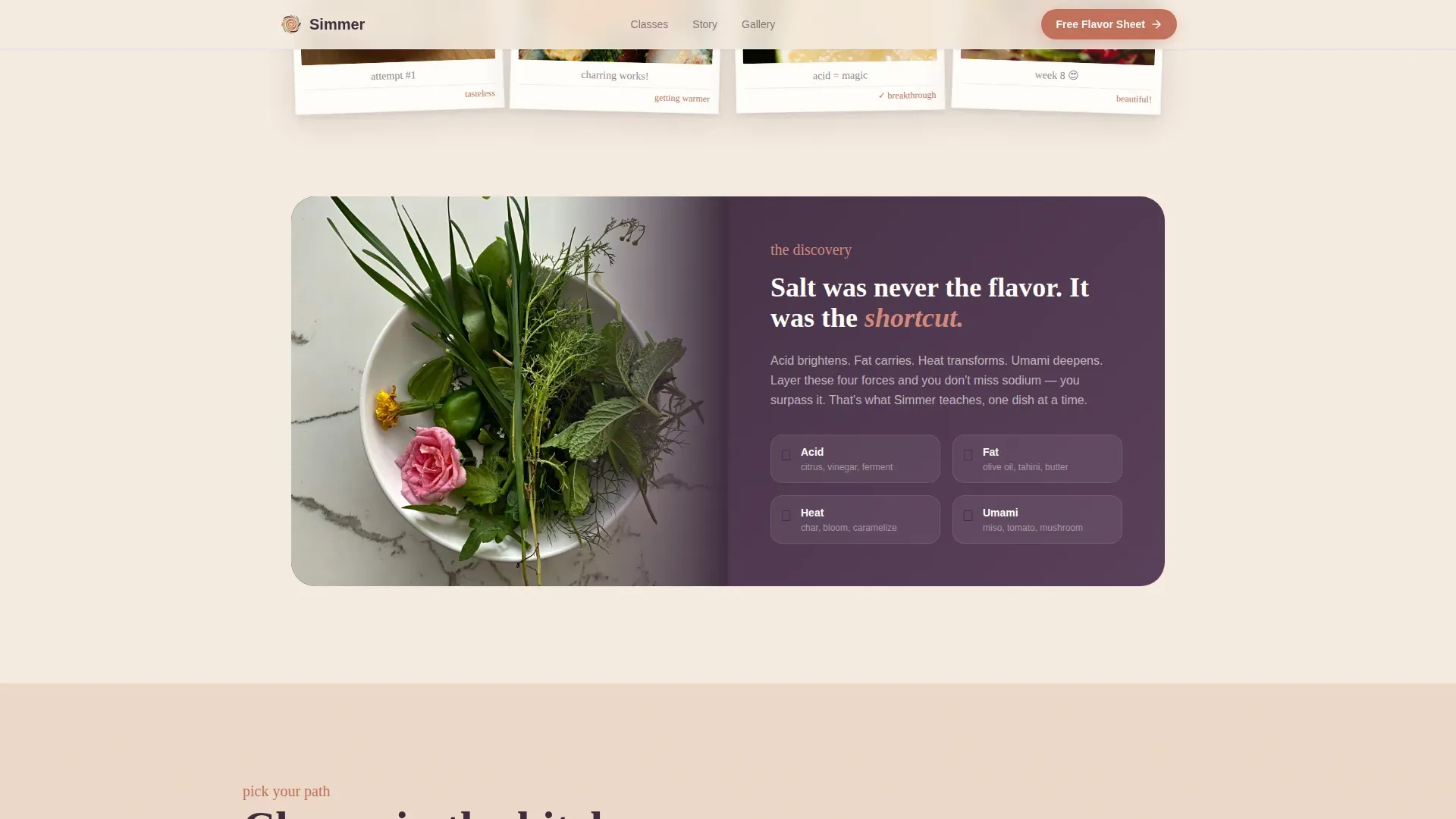
- An origin story scroll sequence that unfolds in three emotional beats, from quiet diagnosis moment to kitchen breakthrough
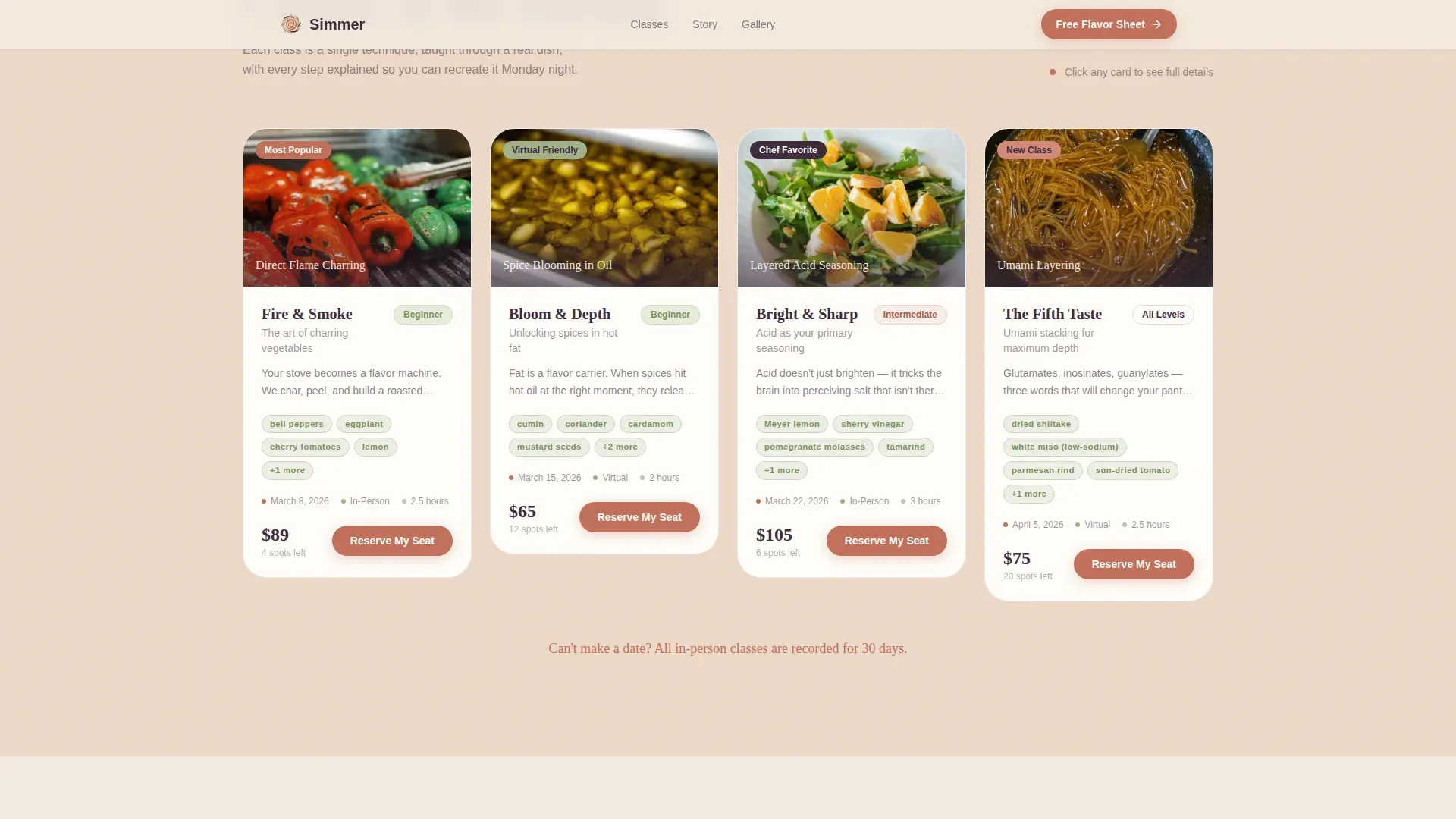
- A class gallery with expandable detail cards, each showing dish photos, technique names, dates, format, and skill level
- A testimonials section featuring student names, specific outcomes, and finished plate imagery
- A free lead-capture section offering a downloadable flavor cheat sheet in exchange for an email address and dietary preference
Feature list
This template includes carefully designed components that serve both the instructor and the visitor at every scroll depth.
Scrapbook Hero with Collage Composition
The header is built as a collage of overlapping polaroid-style photographs showing hands at work, ingredients mid-process, and a bubbling pot. Torn notebook paper carries the headline. Tape strips and a tucked herb sprig make it feel assembled on a real kitchen table, not in a design studio.
Scroll-Reveal Origin Story
The origin story section unfolds across three distinct visual beats as the visitor scrolls. It opens with a single quiet line on parchment, moves into an honest gallery of kitchen experiments, and lands on the flavor-layering breakthrough. The scroll itself tells the story.
Expandable Class Gallery Cards
Each class listing appears as a detailed card in the gallery. Visitors can see the dish photo, the technique being taught, the date, the format (in-person or virtual), and the skill level required before they ever click. A "Reserve My Seat" call-to-action button sits on every card.
Free Cheat Sheet Lead Capture
A dedicated section invites visitors to download a one-page flavor reference guide. The form collects only an email address and a dietary restriction note, keeping the barrier low and the value exchange clear.
Student Testimonials with Plate Photography
The social proof section pairs student testimonials with vivid finished-plate images. Names and specific outcomes are included, giving prospective students tangible proof that the method works in a real home kitchen.
Desert Rose Color System and Organic Typography
The template uses a four-color Desert Rose palette, warm parchment backgrounds, clay-colored buttons, sage green accents, and deep eggplant for body text. Fraunces serif headlines and DM Sans body text give every word organic warmth and clear readability.
Page sections overview
| Section | Purpose |
|---|---|
| Hero Collage Header | Establishes warm, handcrafted tone and surfaces the core promise |
| Origin Story Scroll | Builds emotional trust through a three-beat narrative journey |
| Class Gallery Cards | Presents multiple class options with full detail before the click |
| Student Testimonials | Provides social proof with names, outcomes, and finished plates |
| Cheat Sheet Capture | Collects email leads with a low-friction free download offer |
| Footer | Closes with a clean single-row linear layout |
Design & branding system
The template uses an Organic Flow visual theme built around the Desert Rose color system. Every design choice reinforces warmth, honesty, and appetite.
- Four-color palette: parchment (#F5EBE0) for backgrounds, clay (#C2705B) for buttons and highlights, sage (#A3B18A) for ingredient and success accents, and eggplant (#3D2B3D) for text and anchoring elements
- Typography pairing: Fraunces serif for headlines carries organic, handwritten warmth, while DM Sans keeps body copy clean and highly readable on any screen
- Scrapbook texture details including rough-cut photo edges, visible tape strips, handwritten note styling, and pressed herb accents reinforce the feeling of a well-loved personal recipe binder
Mobile & speed optimization
The template is built with a mobile-first layout priority, recognizing that home cooks most often browse on their phones while standing in the kitchen.
- Scroll-reveal stagger animations, polaroid tilt hover effects, and parallax hero layers are built for smooth engagement without overwhelming smaller screens
- Interactive elements including the class card modal expand, the email capture form, and gallery hover states use client-side rendering, while static content sections use server components for faster initial load
- The single-page structure keeps navigation friction low, so a visitor can move from hero to registration without leaving the page
How this template helps you convert
Simmer is designed around a clear conversion architecture that moves visitors through two distinct paths without pressure.
- The primary path flows from the hero through the origin story into the class gallery, where each card carries its own "Reserve My Seat" call to action with date, format, and skill level visible before the click.
- The secondary path offers the free flavor cheat sheet download as a lower-commitment entry point, capturing an email and dietary preference for visitors who are not yet ready to register.
Other information about this template
This template is part of a Food and Beverage category collection focused on food education and health-conscious consumer audiences. A few additional details worth noting:
- The template is localized for United States audiences, with English copy, USD pricing references, and US-format date display
- Animation intensity is set at a medium level, with scroll-reveal stagger, card expand interactions, and parallax layers on the hero
- The footer uses a Pattern 1 linear single-row layout for a clean, uncluttered close
- The template style is Gallery plus Detail, meaning class content is browsable in a visual grid before expanding into full detail
- The intersection niche is Low-Sodium Cooking Class within the broader Low-Sodium Food and Dining subcategory
- This template can support instructors offering both in-person and virtual class formats on the same page
Theme
Organic Flow
Creative direction
Origin Story
Color system
Desert Rose
Style
Gallery + Detail
Direction
Marketplace/Multi
Page Sections
Scrapbook Hero Collage
Scroll-reveal Origin Story
Expandable Class Gallery Cards
Free Flavor Cheat Sheet Capture
Testimonials with Plate Photography
Desert Rose Visual Identity
Related questions
Can I list both in-person and virtual classes on the same page?
How does the free cheat sheet lead capture section work?
Do I need design experience to customize this template?
Can a solo instructor use this template, or is it only for cooking schools?
What makes this template effective for a health-focused cooking audience?