Kosher Food & Dining Professional Website Template
Simmer is a warm, masonry-style kosher cookbook landing page template built for food authors who sell directly to home cooks. It pairs a hand-illustrated mascot, an emotional origin story scroll, and a scrapbook-style recipe grid with a clean purchase flow. The design feels like a grandmother's kitchen at golden hour, unhurried and full of flavor.
by Rocket studio
Quick summary
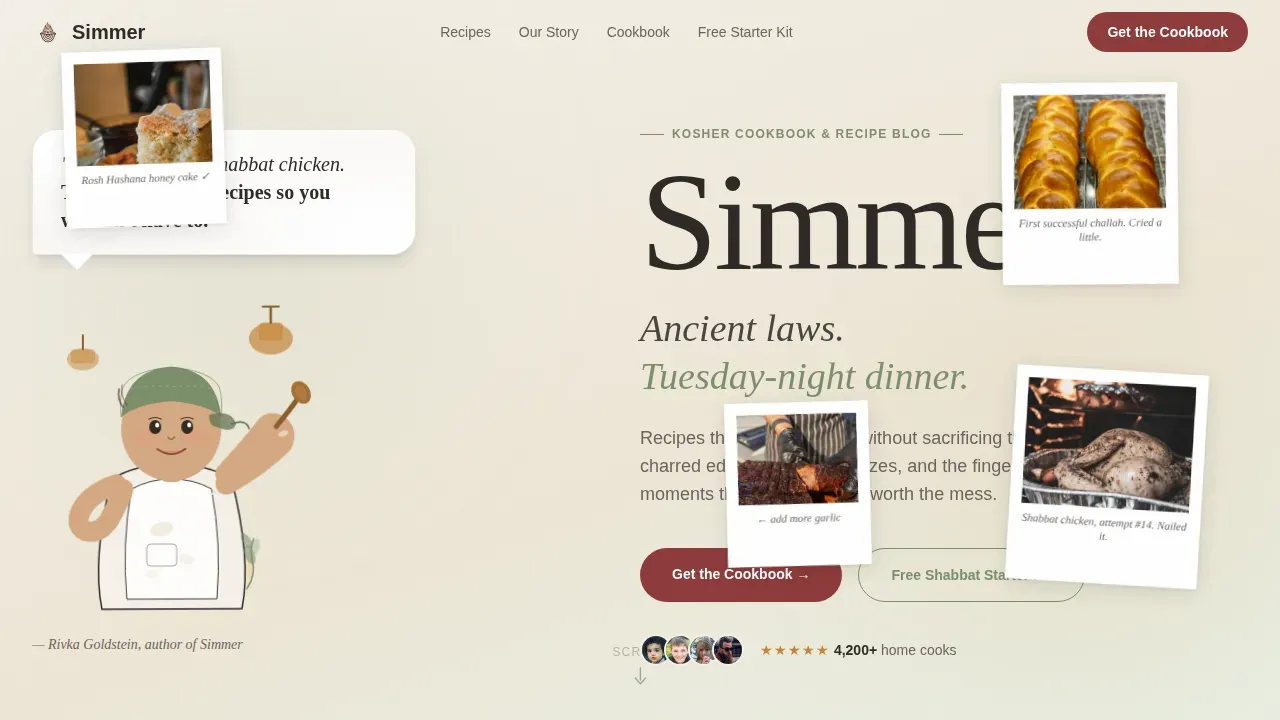
Simmer is a single-page masonry landing page template designed for kosher cookbook authors and recipe bloggers who sell directly to readers. It opens with a hand-illustrated mascot and a speech-bubble headline, then guides visitors through an origin story scroll before leading them to a cookbook purchase flow. Every design choice serves one goal: turn a warm first impression into a confident sale.
Who this template is for
This template was built for a specific kind of food creator. If you write recipes that honor kashrut and still taste like good food, this page speaks your language.
- Kosher cookbook authors selling hardcover or digital editions directly to readers
- Recipe bloggers in the kosher cooking space who want to grow an email list alongside book sales
- Jewish home cooks building a personal brand around Shabbat, Pesach, and everyday family meals
What problem this template solves
Selling a kosher cookbook online is harder than it looks. Generic e-commerce templates do not communicate warmth, tradition, or the lived experience behind the recipes. A reader who does not trust the author will not buy the book.
- Most templates treat a cookbook like any other product, stripping out the story that earns the sale
- Kosher food audiences need to see hechsher credibility and real kitchen authority before they commit
- A flat, static page cannot show the range of dishes from soups and salads to desserts and snacks that fill a full cookbook
What you get with this template
You get a fully structured landing page built around a proven emotional arc. The scrapbook scroll builds trust before the buy button appears, so visitors arrive at the purchase section already convinced.
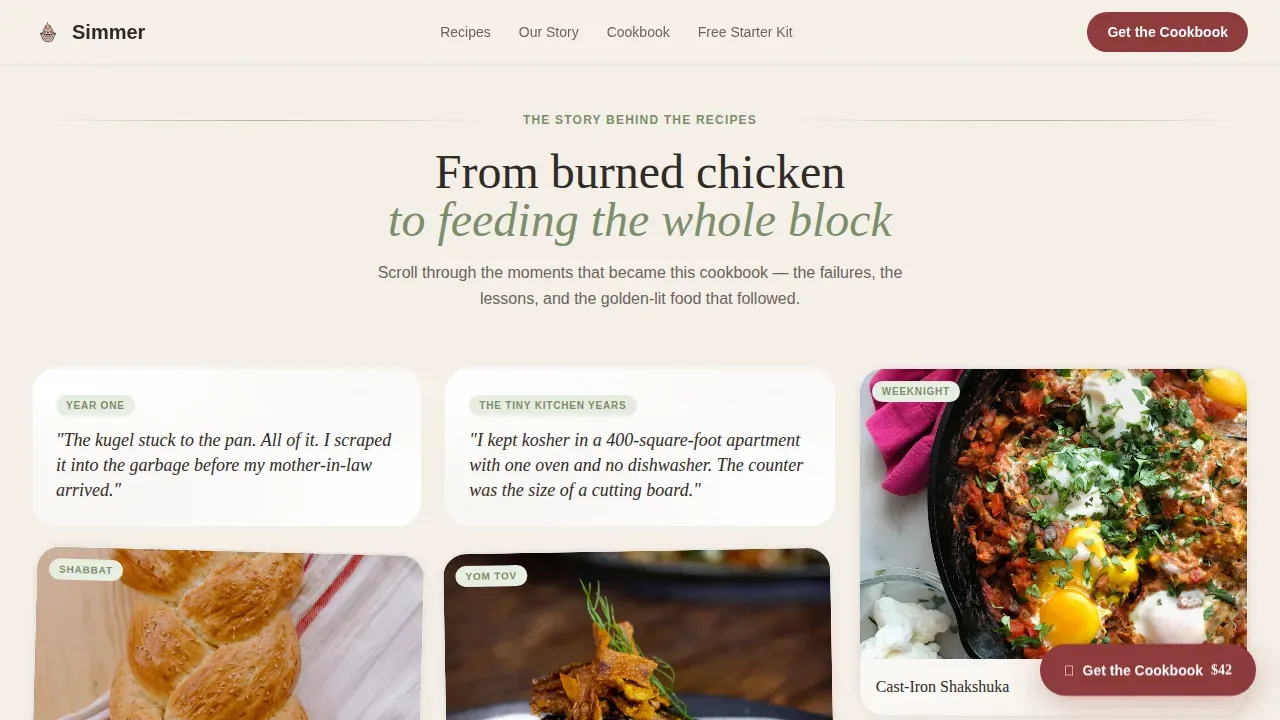
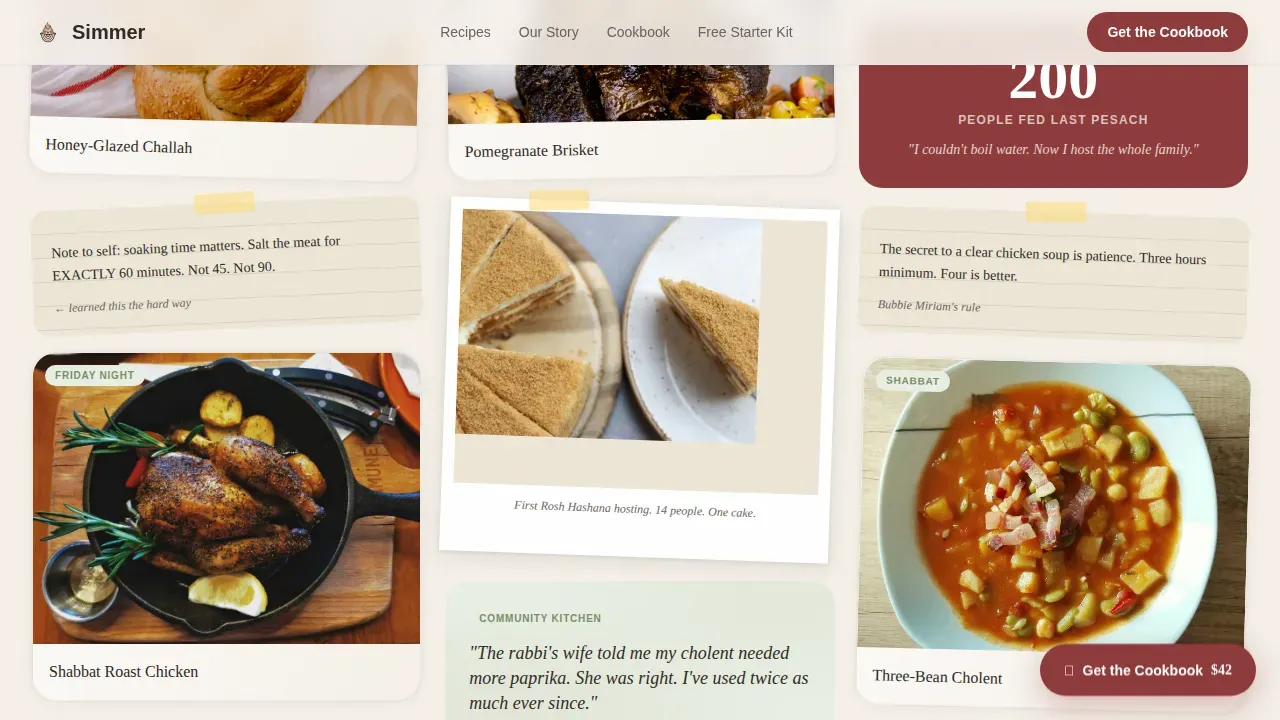
- A masonry origin story grid that mixes personal story cards with recipe photography, moving from "I couldn't cook" to "I fed two hundred people last Pesach"
- A tabbed recipe showcase displaying featured dishes with food photography and quick facts like cook time and serving size
- A purchase flow section with a hardcover and digital toggle, quantity selector, and a gift inscription field for personal dedications
Feature list
This template includes the following built-in components and design capabilities, all drawn directly from the source brief.
Hand-Illustrated Mascot Header
The hero section opens with a loose ink and watercolor mascot: a warm, round-faced character in a flour-dusted apron and tichel, wooden spoon mid-gesture, standing in a kitchen where copper pots hang and a challah cover drapes over rising dough. Her speech bubble carries the headline. This approach immediately establishes author voice and earns emotional trust before a single recipe is shown.
Origin Story Masonry Grid
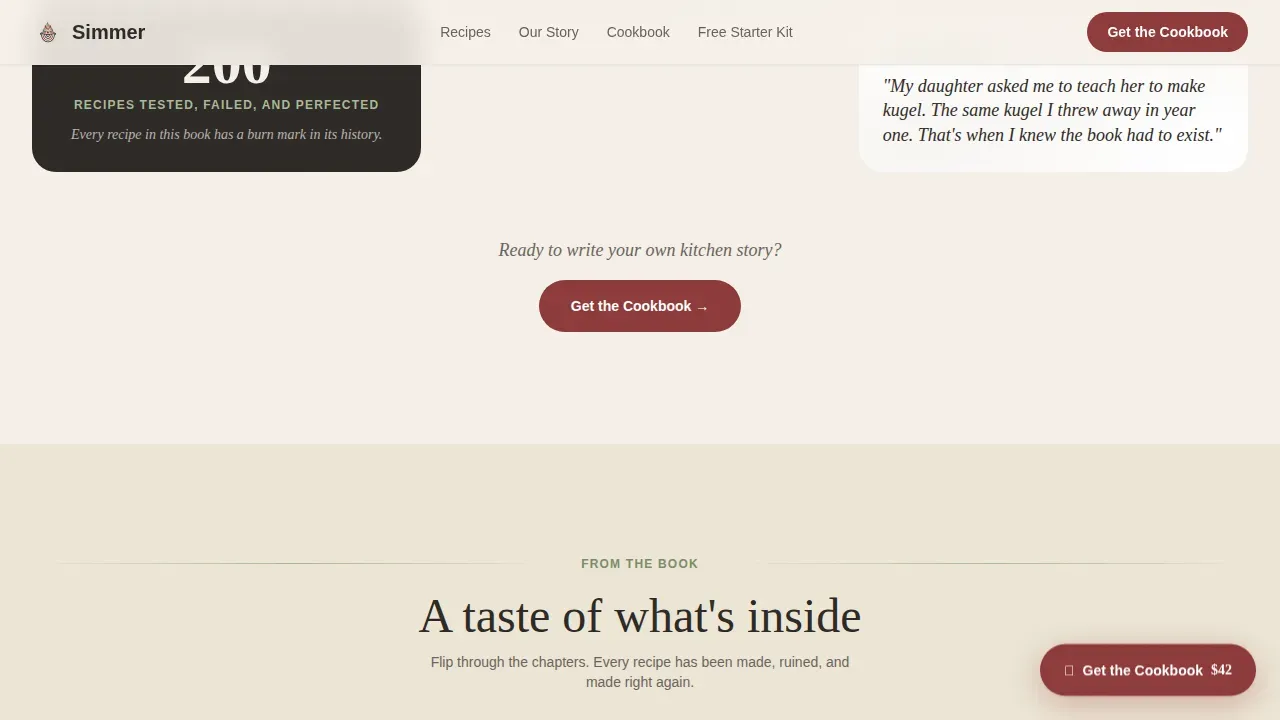
The masonry grid alternates between personal story fragments and finished recipe photography. Polaroid-style cards document moments like a failed kugel or the first kosher kitchen. The stakes build gradually until golden-lit food photography fills the grid, so visitors trust the author before they see an ingredient list. Staggered reveal animations and scroll-linked opacity transitions give the scroll a living, scrapbook feel.
Tabbed Recipe Showcase
A tabbed interface lets visitors preview featured recipes organized by category. Each tab displays food photography alongside quick facts: cook time, difficulty level, and serving size. This gives buyers a concrete sense of the cookbook's range, from hearty chicken dishes and warming soups to light salads, fish, and desserts.
Direct Sales Purchase Flow
The primary call to action is a pomegranate red "Get the Cookbook" button that appears first after the origin story and stays pinned as a floating button on scroll. Clicking opens a clean purchase section with a hardcover and digital toggle, a quantity selector, and a gifting option that includes a field for a personal inscription printed inside the cover.
Email Capture Starter Kit
A secondary conversion path offers three free recipes through email signup. The "Send Me the Shabbat Starter Kit" capture qualifies readers who are not ready to buy yet. This path keeps those visitors inside the author's community until a Friday night with the free recipes changes their mind.
Testimonials Block
A dark, warm testimonial section displays reader quotes and trust signals, including five-star recipe ratings. Social proof of this kind is essential for a kosher food audience that relies on community recommendation before trying a new cookbook.
Page sections overview
| Section | Purpose |
|---|---|
| Hero Mascot Header | Introduce author voice and hook visitors with the speech-bubble headline |
| Origin Story Grid | Build emotional trust through a scrapbook scroll of story and recipe photography |
| Recipe Showcase Tabs | Preview cookbook range with tabbed food photography and recipe quick facts |
| Testimonials Block | Reinforce credibility with reader quotes and five-star ratings |
| Purchase and Capture | Drive sales with the cookbook buy flow and qualify leads with the free kit signup |
| Footer Single Row | Provide navigation and links in a clean linear single-row layout |
Design & branding system
The visual identity follows an Organic Flow theme using a Japanese Zen color system. Every color in the palette carries deliberate meaning, like a linen tablecloth spread at golden hour.
- Washi paper cream (#F5F0E8) dominates backgrounds like blank parchment, matcha ceremonial green (#7B8F6A) threads through section dividers and herb illustrations, cast-iron charcoal (#2D2926) anchors headlines with the weight of tradition, and pomegranate seed red (#8E3A3A) appears only on purchase buttons and price callouts
- Typography pairs Fraunces serif headlines, which carry warmth and tradition, with DM Sans body text for clean readability
- Illustration style is loose ink with watercolor wash, evoking Studio Ghibli warmth applied to Jewish domestic life, with floating polaroid cards and hand-drawn herb accents throughout
Mobile & speed optimization
This template is built mobile-first. Its primary audience, young Orthodox mothers managing Shabbat prep with a toddler on one hip and a phone propped on the counter, needs a page that works in portrait mode with one hand.
- Images are lazy-loaded to keep the page responsive even when the masonry grid is full of golden-lit food photography
- Server Components handle static sections so the interactive elements, the toggle, the tab switcher, and the floating button, load without slowing the full page
- The floating "Get the Cookbook" button remains accessible on every scroll position on mobile, so the purchase path is never more than one tap away
How this template helps you convert
Every layout decision in Simmer points toward one of two outcomes: a cookbook sale or an email subscriber who will become a buyer.
- The origin story masonry grid earns trust before the price appears. Visitors who scroll through the author's journey from burnt Shabbat chicken to feeding two hundred people at Pesach arrive at the buy button emotionally invested, not cold.
- The dual conversion path means no visitor leaves empty-handed. Buyers get the cookbook. Readers who hesitate get the free Shabbat Starter Kit, three recipes that demonstrate the cookbook's voice and flavor before any money changes hands.
Other information about this template
This section covers additional context that cookbook authors and recipe bloggers will find useful when deciding whether Simmer fits their project.
- The template is designed for kosher cooking content where kitchen separation between meat and dairy sections is a real organizational need, and the tabbed recipe showcase can reflect that separation clearly
- Kosher cookbook publishing has a rich history of community-driven volumes. The Kosher Palette, self-published by the Joseph Kushner Hebrew Academy as a school fundraiser, involved the entire school community in recipe submissions and testing, featured over 300 recipes, sold 80,000 copies, and raised $1.5 million. Its success launched Susie Fishbein's career and proved that a kosher cookbook could reach thousands of homes with polished production value. The Kosher Palette Revised Anniversary Edition later added nutritional advice and healthier alternatives while keeping the original layout.
- The Silver Platter, created by Daniella Silver and Norene Gilletz, showed that family-friendly kosher cookbooks could combine culinary expertise with basic pantry ingredients. Miriam Pascal's Real Life Kosher Cooking built on that tradition with over 160 recipes, each with a photo, and a focus on comprehensive meal planning.
- The Simmer template is well suited for authors whose cookbook sits between a coffee table book and a practical weeknight guide: beautiful enough to display, useful enough to open on a Tuesday
- Kosher cookbooks benefit from clearly stating recipe count and organization upfront. The page sections overview and tabbed showcase in this template make it easy to communicate that range, whether you have 80 recipes or 200
- Each recipe in a serious cookbook should be tested by the author and at least one other person to ensure accuracy. Authors who include that process in their origin story build additional credibility with buyers
- The template supports a variety of recipe categories that a complete kosher cookbook would include: soups, salads, appetizers, meat and poultry dishes, fish, dairy recipes, desserts, snacks, breakfast items, and baked goods
- Innovative kosher recipes can cater to various dietary needs including gluten free options and allergy-friendly alternatives. The tabbed showcase and recipe quick facts make it straightforward to surface those details for cautious buyers
- Meal planning context matters to this audience. Many readers plan ahead for Shabbat and Pesach weeks in advance, and the free Shabbat Starter Kit email capture speaks directly to that planning mindset
- Authors who engage with their audience through social media and incorporate reader feedback into their recipes tend to build stronger communities. The testimonials block and social proof elements in this template reinforce that kind of ongoing relationship
Theme
Organic Flow
Creative direction
Origin Story
Color system
Japanese Zen
Style
Masonry/Pinterest
Direction
Direct Sales
Page Sections
Origin Story Masonry Grid with Animations
Hand-illustrated Mascot Hero Section
Tabbed Recipe Showcase with Quick Facts
Dual Conversion Purchase and Email Flow
Reader Testimonials and Trust Block
Mobile-first Floating Navigation and Layout
Related questions
Can I use this template to sell both a hardcover and a digital edition of my cookbook?
Does the template include a way to capture email subscribers who are not ready to buy?
Can the tabbed recipe showcase handle different kosher categories like meat and dairy?
Is this template suitable for a recipe blog as well as a direct cookbook sales page?
What makes Simmer different from a general food blog template?