Nordic Restaurant Landing Page Template
Skrda is a card-grid landing page template built for a fine-dining Nordic restaurant. It leads every visitor toward a single action, booking a table. A cinemagraph hero, staggered provenance grid, and a full-width closing module with a tasting menu preview work together to turn quiet curiosity into a confirmed reservation.
by Rocket studio
Quick summary
Skrda is a single-page template designed for a farm-to-table Nordic restaurant. It pairs a candlelit cinemagraph header with a modular card grid that tells the story of every dish, from the kitchen garden to the cast-iron pot. One clear path leads throughout: reserve a table.
Who this template is for
This template suits intimate, story-driven dining concepts where provenance and atmosphere are core to the brand. It works best for restaurants that want their online presence to feel as considered as the meal itself.
- Fine dining Nordic and farm-to-table restaurants seeking reservation-focused pages
- Tasting-menu concepts that attract food-focused travellers and anniversary diners
- Swedish or Scandinavian restaurants wanting a warm, textural visual identity online
What problem this template solves
Most restaurant pages bury the booking action under menus, galleries, and contact forms. Guests arrive curious but leave without committing. This template removes that friction by funnelling every scroll toward one destination.
- Visitors cannot easily find the reservation action on busy, multi-purpose restaurant pages
- Generic templates lack the sensory storytelling that convinces tasting-menu guests to commit
- A scattered layout dilutes brand identity and weakens the first impression
What you get with this template
You get a complete, single-page layout built around a clear reservation funnel. Every section has a defined purpose, from the opening hero to the closing availability module.
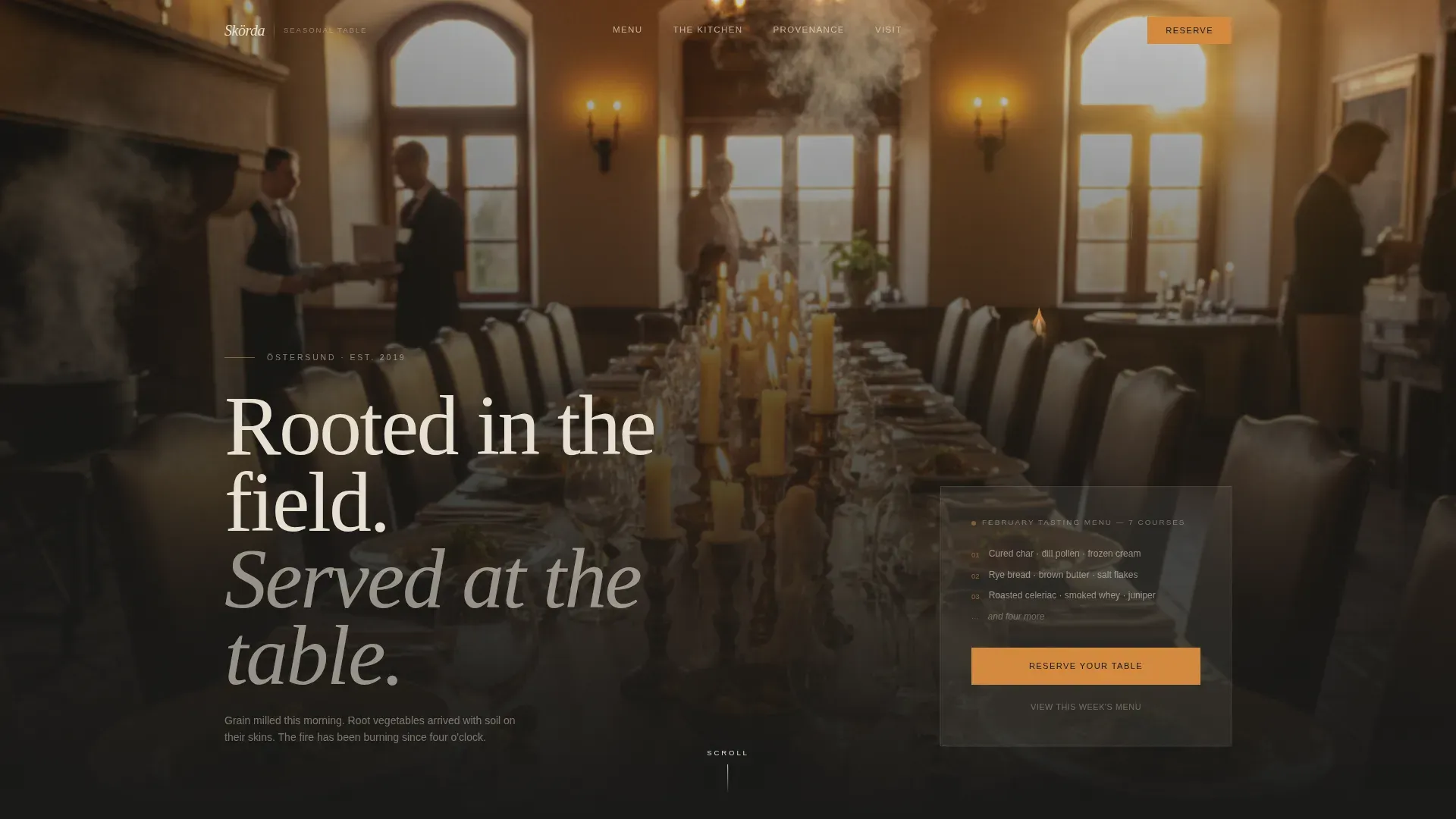
- A full-bleed cinemagraph hero with a serif headline fade-in and a cloudberry-amber call-to-action button
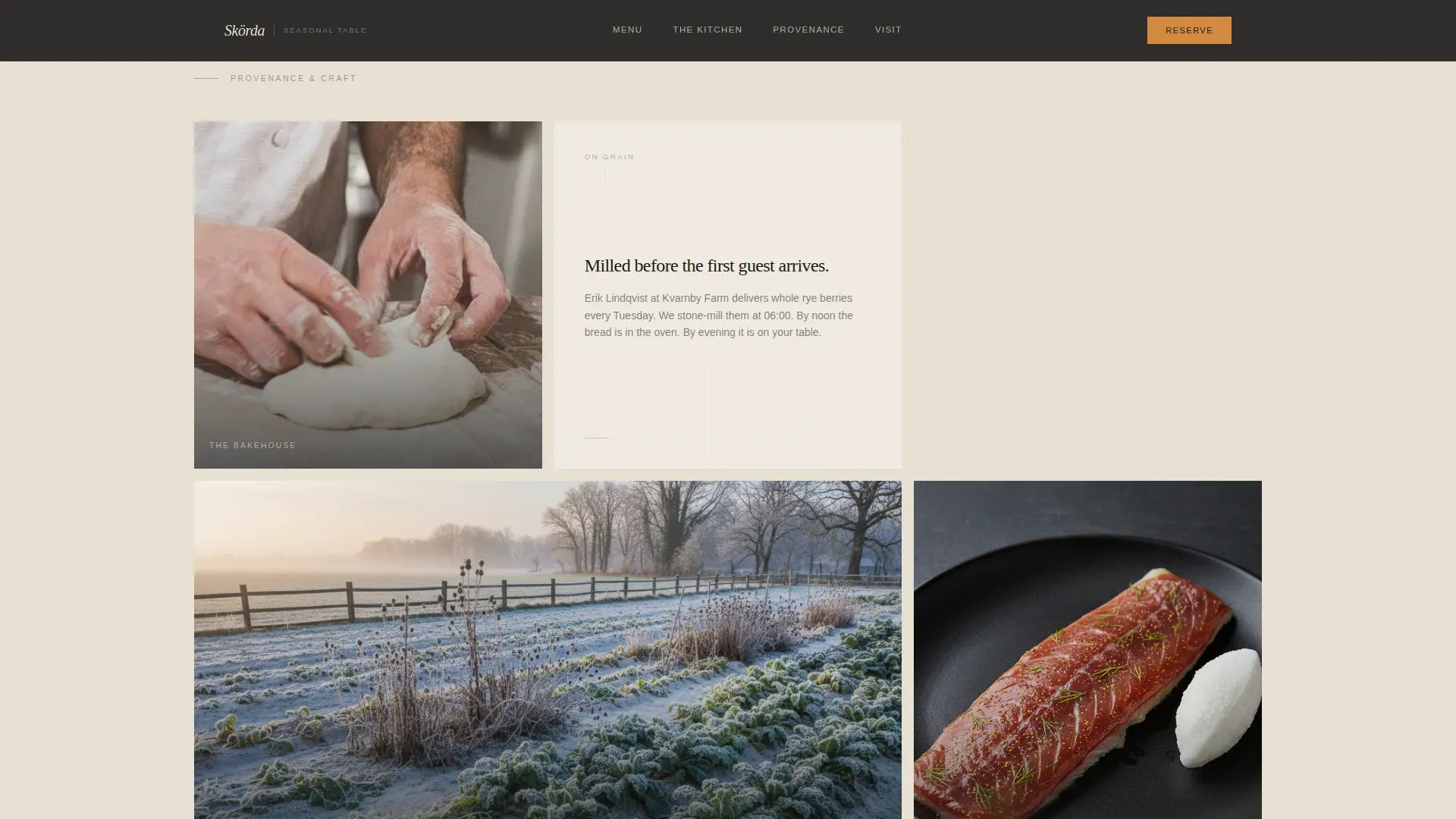
- A staggered card grid (provenance section) with alternating square and landscape ratios, text fragments, and tactile texture cues
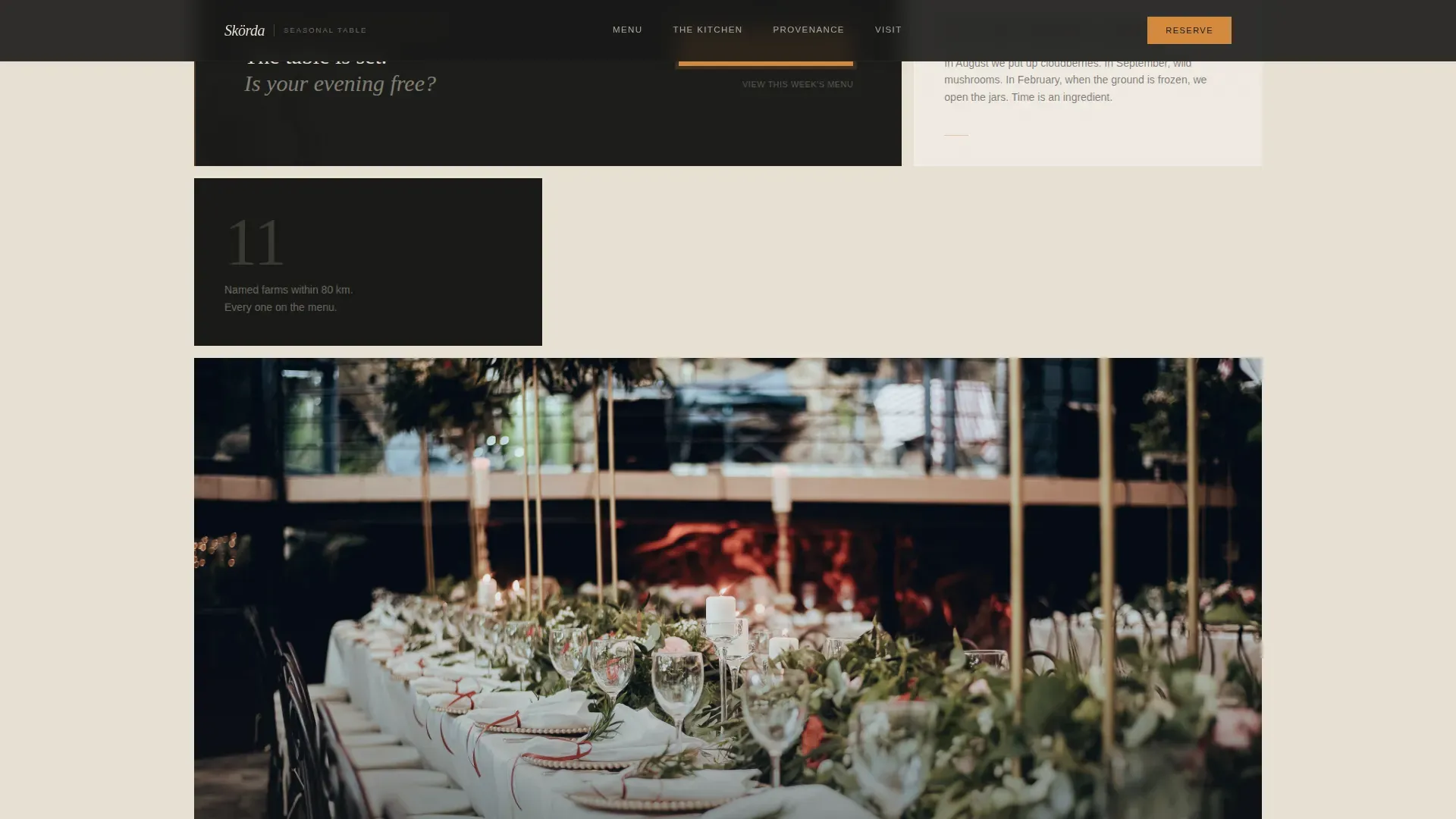
- A mid-grid reservation card, an asymmetric chef and cellar section, and a full-width closing module with tasting menu preview and seasonal availability display
Feature list
This template includes a focused set of built-in components, each matched to the needs of a high-intent fine-dining audience.
Cinemagraph Hero with Animated Candle Flame
The header is a nearly still dining-room scene at golden hour. A single candle flame moves using CSS animation, and steam curls off a cast-iron pot in the background. A fine serif headline fades in after a brief pause, followed by the primary call-to-action button in cloudberry amber.
Staggered Card Grid with Scroll Reveals
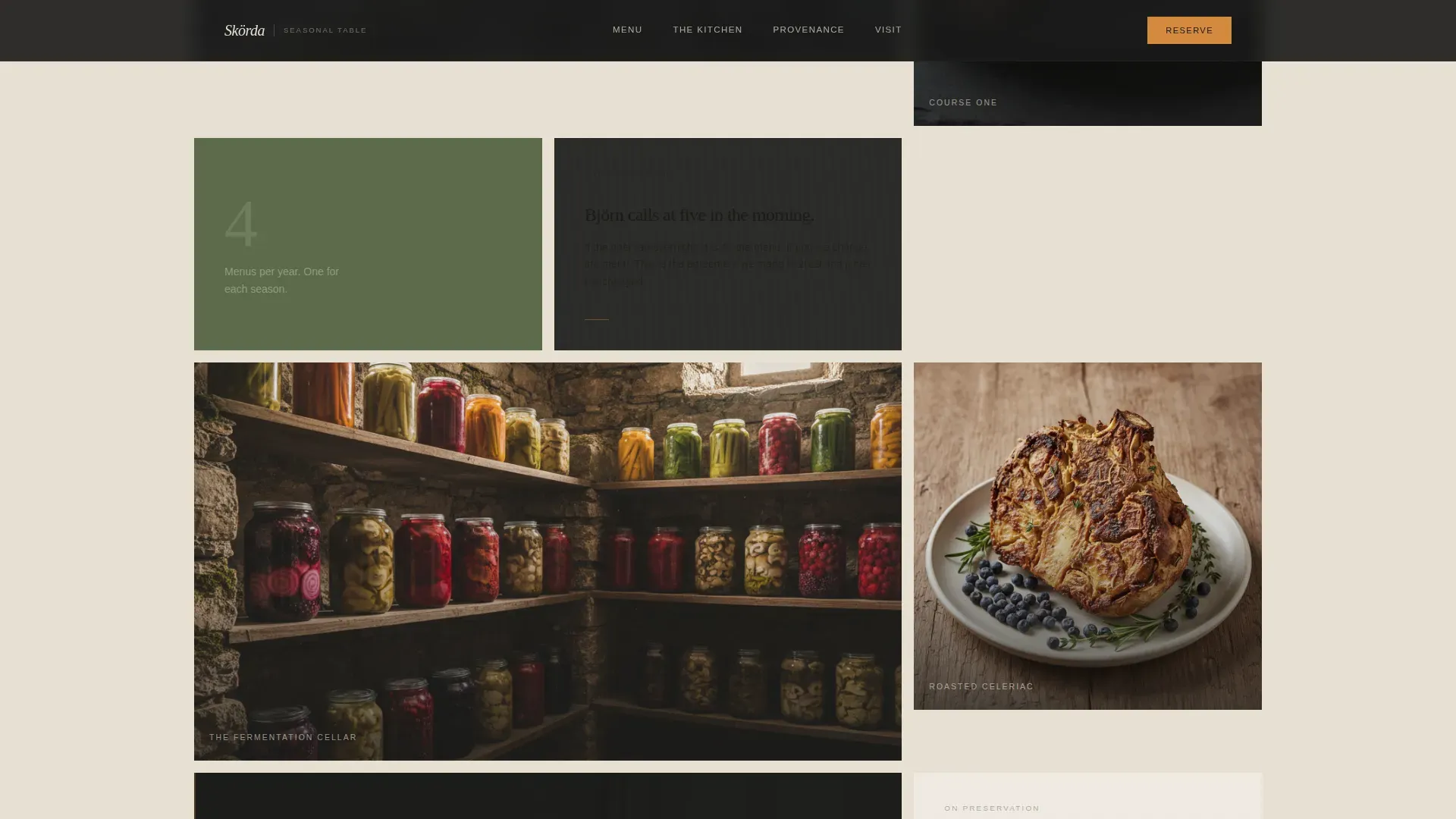
The provenance grid loads in staggered clusters using Intersection Observer, so cards appear as the visitor scrolls rather than all at once. Cards alternate between square and landscape ratios and mix close-up food photography, wide garden shots, and short text fragments. Some cards sit on linen backgrounds, others on raw wood, building a tactile visual rhythm.
Three-Point Reservation Funnel
The primary call-to-action button appears three times: anchored to the hero, embedded inside a dedicated mid-grid card, and commanding the full-width closing module. Each instance carries the visitor directly to the booking system, pre-loaded with the next available evening.
Menu Lightbox with Handwritten Carte
A secondary text link beneath each call-to-action opens a lightbox displaying the current menu written in the chef's hand. This gives hesitant visitors the detail they need without pulling them away from the reservation path.
Chef, Cellar, and Farmer Provenance Section
An asymmetric two-column section places the fermentation story on the left and the chef portrait on the right. Farmer credits appear within this section, grounding every dish in a named source and reinforcing the restaurant's farm-to-table identity.
Full-Width Closing Module
The final section includes a tasting menu preview and a seasonal availability calendar display. It closes with the primary call-to-action for visitors who have scrolled the full page before deciding to book.
Page sections overview
| Section | Purpose |
|---|---|
| Hero Cinemagraph | Opens with candlelit atmosphere and primary call to action |
| Card Grid Provenance | Tells the ingredient story through staggered modular cards |
| Mid-Grid Reservation | Embeds a full-span booking prompt inside the grid flow |
| Chef and Cellar | Shares fermentation story, chef portrait, and farmer credits |
| Closing Tasting Module | Previews the menu and seasonal calendar with final call to action |
| Minimal Footer | Provides horizontal flow navigation and essential links |
Design & branding system
The visual identity follows an Agrarian Root theme expressed through a Japanese Zen color palette. Every color choice is deliberate, restrained, and warm, like a hand-thrown ceramic bowl on a linen cloth, lit only by candle and hearth.
- Four-color palette: charred timber (#1A1A18), stoneware cream (#E8E0D2), moss after rain (#5B6B4A), and cloudberry amber (#D4893F) reserved for interactive elements and hover states
- Typography pairing: Fraunces serif for display headlines and DM Sans for body text, creating contrast between warmth and clarity
- Textural depth through linen and raw wood card backgrounds, grain textures on hover, and a parallax effect on the hero image
Mobile & speed optimization
The template is designed desktop-first, reflecting the reservation habits of the long-table dining audience. Full mobile support is included so the experience holds across all screen sizes.
- Native CSS scroll behavior and Server Components for static sections keep the layout lean and responsive
- Optimized images and CSS-driven animations (candle flame, steam keyframes) avoid heavy JavaScript dependencies
- The magnetic call-to-action button and staggered grid reveals are touch-friendly and adapt cleanly to smaller viewports
How this template helps you convert
Every design and layout decision points toward one outcome: a confirmed reservation. The page does not try to do many things at once.
- The cloudberry-amber call-to-action button appears at three distinct moments in the scroll journey, each reinforcing the booking intent without repeating the same context.
- The menu lightbox handles visitor hesitation in-page, keeping guests inside the experience rather than sending them elsewhere to find information.
- The closing module pairs a tasting menu preview with seasonal availability, giving late-scroll visitors both emotional and practical reasons to commit before they leave.
Other information about this template
This template is built for restaurants where the digital experience should match the care taken in the kitchen. A few additional details are worth noting.
- The template uses Fraunces and DM Sans, both available through Google Fonts, making typography setup straightforward
- The card grid layout supports a range of content styles, from documentary photography to hand-lettered text fragments
- The footer follows a minimal horizontal flow pattern, keeping the closing section clean and uncluttered
- European date format is used in the seasonal availability display, consistent with the Swedish restaurant context
- The page is structured for English-language content with a Swedish restaurant setting, making it practical for international food travellers and local guests alike
- No reservation form lives on the page itself; the call-to-action button carries visitors to an external booking system pre-loaded with availability
Theme
Agrarian Root
Creative direction
Immersive Visual
Color system
Japanese Zen
Style
Card Grid (Modular)
Direction
Click-Through
Page Sections
Cinemagraph Hero with Candle Animation
Staggered Provenance Card Grid
Three-point Reservation Funnel
In-page Menu Lightbox
Chef, Cellar, and Farmer Section
Full-width Closing Module
Related questions
Does this template include a built-in reservation system?
Can I adapt the card grid for my own photography and story?
How does the menu lightbox work?
Is this template suited to restaurants outside Sweden?
What typography does this template use?