Concrete Products Professional Website Template
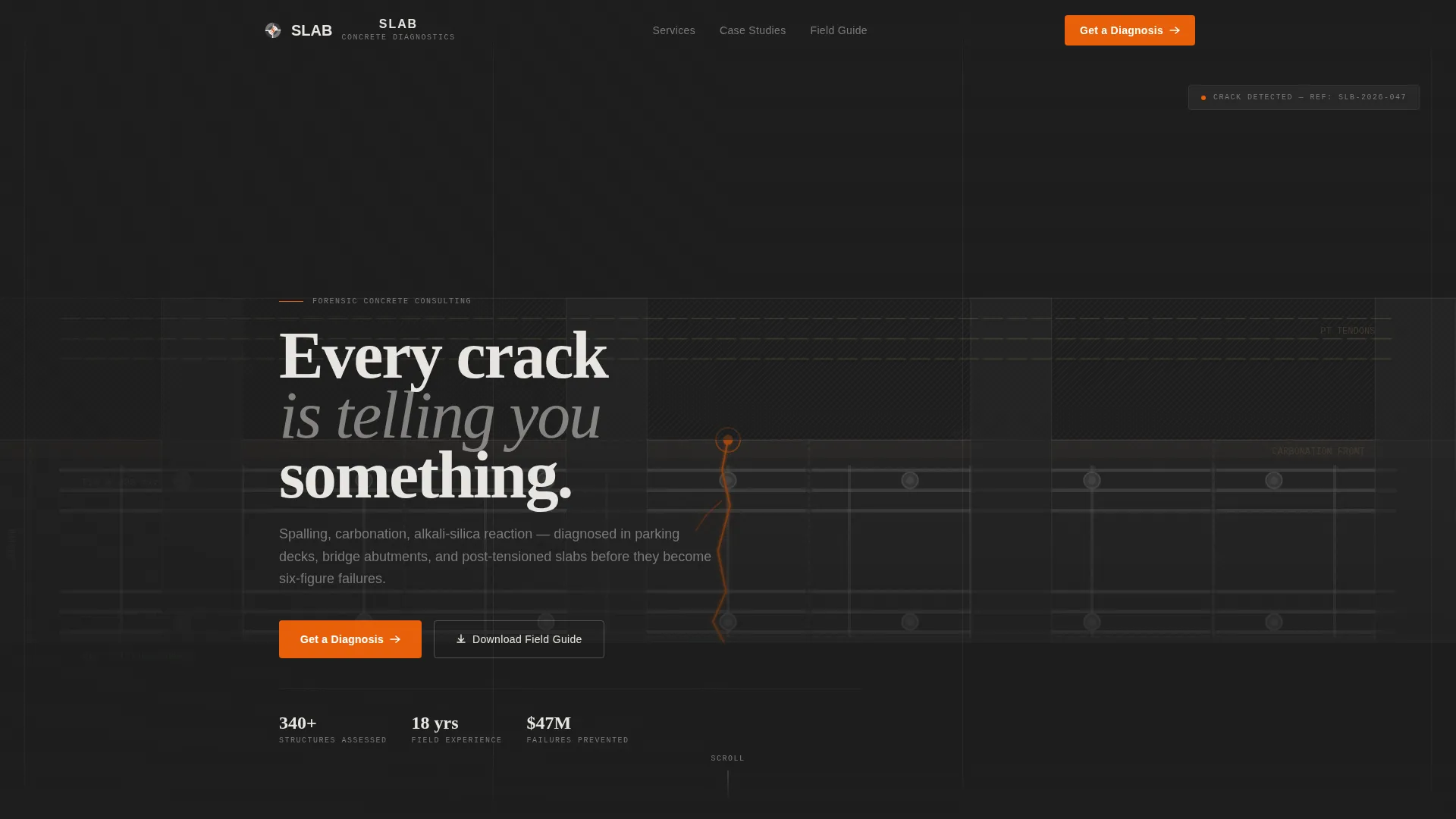
Slab is a single-page landing page template built for structural concrete diagnostics consultants. It uses an Industrial Raw visual identity, a Problem-to-Solution zigzag layout, and an animated SVG hero to escalate stakes from cosmetic defects to structural failure. The page drives qualified leads through a "Get a Diagnosis" intake form and a gated PDF download.
by Rocket studio
Quick summary
Slab is a lead-generation landing page template for a concrete diagnostics consultancy. It walks visitors through an escalating narrative of concrete failure modes and positions the consultant as the expert intervention at every stage. The design feels industrial and precise, with a full-viewport cross-section illustration, scroll-triggered animations, and a dual lead-capture system.
Who this template is for
This template is purpose-built for structural concrete diagnostics consultants who serve B2B clients in construction, infrastructure, and facilities management. It suits practitioners who diagnose distress in parking structures, bridge abutments, post-tensioned slabs, and precast elements.
- Concrete consultants converting facility managers and building owners into consultation leads
- Structural engineers offering peer review services on core samples or mix design decisions
- Independent diagnostics professionals targeting general contractors mid-project with reactive aggregate concerns
What problem this template solves
Most construction and concrete services pages fail to communicate urgency. They list credentials without showing the real cost of inaction. Clients arrive unsure whether their problem is cosmetic or structural, and they leave without booking a call.
- Visitors cannot gauge the severity of their own concrete distress problem without expert framing
- Generic service pages do not differentiate a forensic diagnostics specialist from a standard repair contractor
- There is no clear, low-friction path for a worried facility manager to start a conversation quickly
What you get with this template
You get a fully structured single-page layout that guides each type of visitor from symptom recognition to intake form submission. Every section is designed to build trust and tighten urgency as the visitor scrolls.
- A full-viewport animated hero with an SVG architectural cross-section and an orange crack propagation animation
- Three zigzag problem-and-solution sections covering spalling, carbonation, chloride penetration, and alkali-silica reaction (ASR)
- A dual lead-capture system: a sticky "Get a Diagnosis" intake bar and a full-width form block with a gated PDF download option
Feature list
This template includes prompt-backed components designed specifically for a concrete diagnostics lead-generation page.
Animated SVG Hero Section
The hero fills the full viewport with a line art architectural cross-section drawn in thin white strokes on formwork charcoal. As visitors land, a hairline crack animates in safety-orange across the illustration while the headline materializes beside it. The effect is cinematic and immediately communicates the consultant's diagnostic focus.
Zigzag Problem-to-Solution Layout
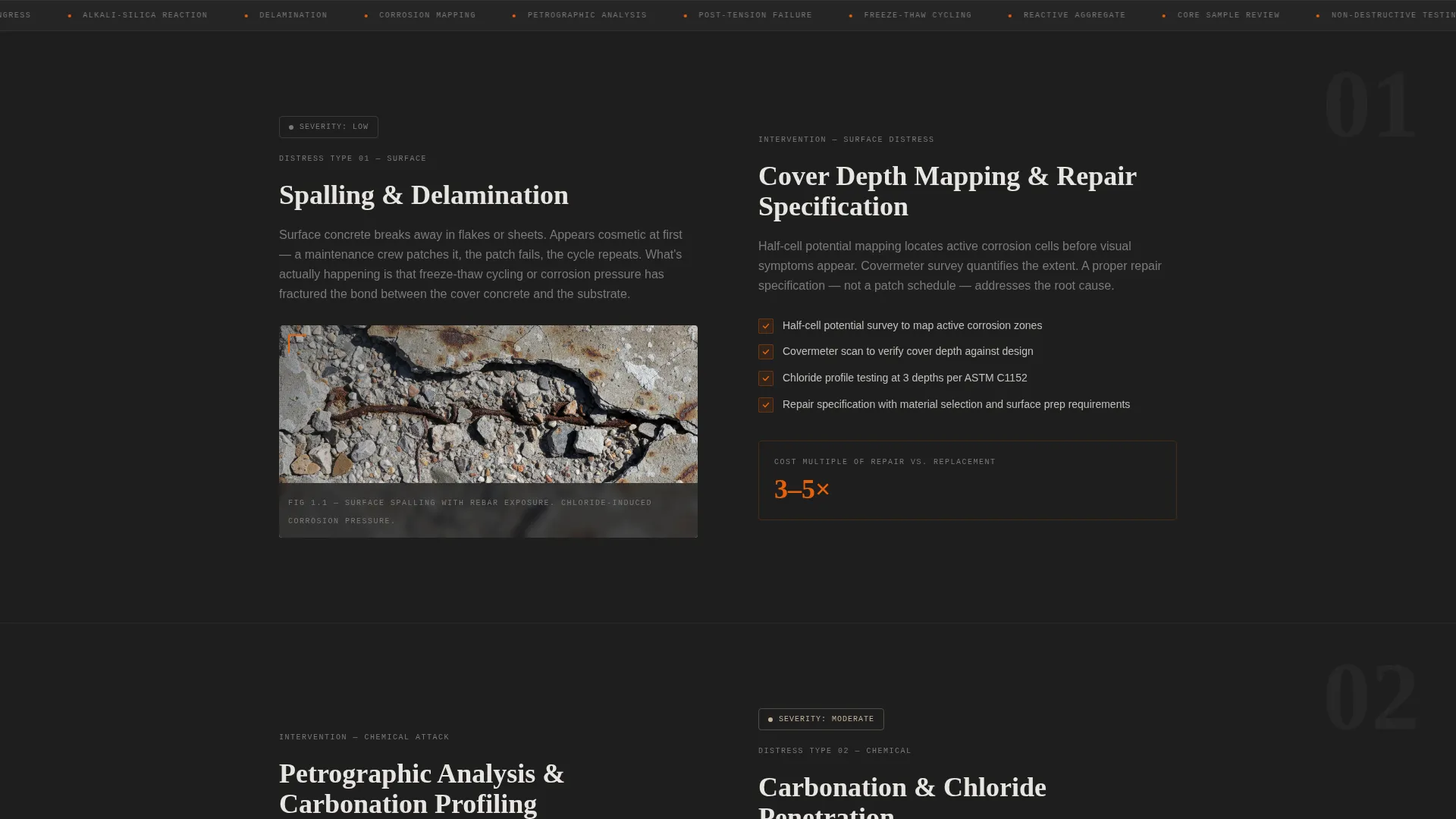
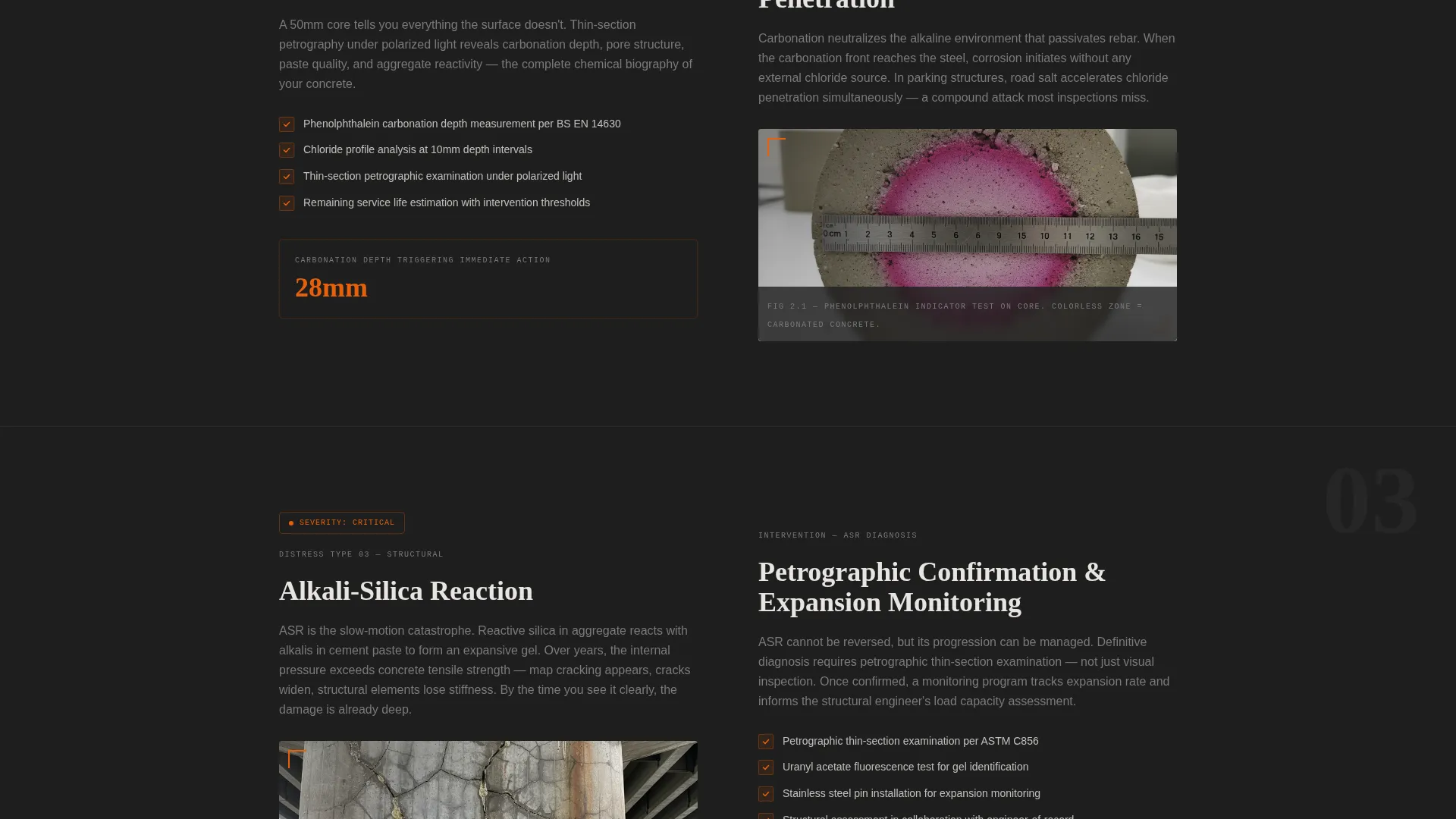
Three alternating sections pair a concrete failure mode on one side with the consultant's intervention on the other. The scroll sequence escalates from surface spalling at the top to ASR-driven structural compromise near the bottom. Each section uses real imagery types, spalling photography, petrographic thin-section visuals, and chloride penetration diagrams.
Dual Lead Capture System
A sticky bottom bar appears after the second section and persists as visitors scroll. A separate full-width form block appears after the case studies. Both use the same short intake form: structure type dropdown, symptom description field, structure age input, and a photo upload field for site images.
Gated PDF Field Guide Download
A secondary conversion path offers a downloadable "Concrete Distress Field Guide" PDF behind an email gate. This captures leads who are researching their problem but are not yet ready to speak with a consultant directly.
Escalating Case Study Block
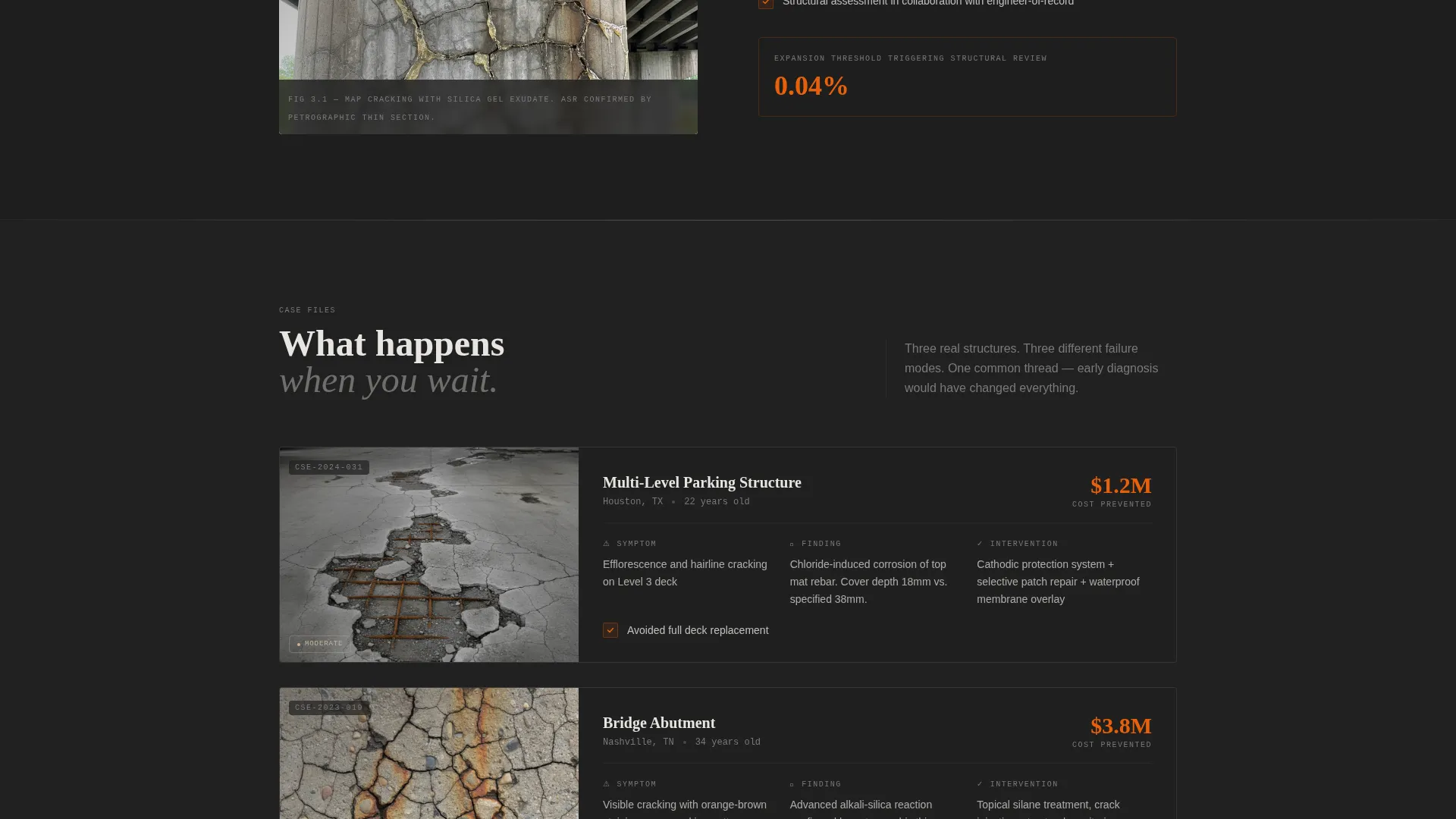
A dedicated section presents case studies in order of increasing severity, from manageable repair outcomes to avoided catastrophic failures. Each case study is anchored to a real structure type and references cost savings in USD, reinforcing the financial stakes of early diagnosis.
Scroll-Triggered Section Reveals
Sections enter the viewport with staggered cinematic animations triggered by scroll position. This pacing controls the emotional arc of the page, making the stakes feel heavier as the visitor progresses from cosmetic issues toward structural failure scenarios.
Page sections overview
| Section | Purpose |
|---|---|
| Hero with Animation | Establish authority and introduce the diagnostic framing with an animated crack and headline |
| Spalling Zigzag | Show surface spalling as the first failure mode and present the consultant's repair specification response |
| Carbonation Chloride Zigzag | Escalate stakes with carbonation and chloride penetration imagery paired with non-destructive testing detail |
| ASR Zigzag | Present alkali-silica reaction as a high-stakes structural threat with mix design correction context |
| Case Studies Block | Deliver social proof through escalating severity outcomes and USD cost savings references |
| Sticky Intake Bar | Capture leads mid-scroll with a persistent "Get a Diagnosis" form bar after section two |
| Full-Width Form | Provide a complete intake form block with structure type, symptoms, age, and photo upload |
| PDF Email Gate | Offer the Concrete Distress Field Guide download behind an email capture form |
Design & branding system
The visual identity uses an Industrial Raw theme built around a Monochrome Steel color palette. Every color choice references a physical material in the concrete construction world, making the design feel authoritative and domain-specific.
- Color palette: formwork charcoal (#2B2B2B) as the primary background, cured slab gray (#7A7A7A) and rebar shadow (#4A4A4A) for layered depth, exposed-aggregate white (#E8E5E1) for open space, and safety-orange (#E8600A) reserved exclusively for calls to action and diagnostic callouts
- Typography pairing: Fraunces for editorial headlines, giving them a structural weight that suits the forensic tone, alongside DM Sans for body text and interface elements for clean readability
- Visual texture: the blueprint-style SVG line art, formwork-textured backgrounds, and thin-stroke technical illustration style reinforce a precision-engineering aesthetic throughout
Mobile & speed optimization
The template is designed desktop-first to match the working environment of its primary audience: facility managers and structural engineers reviewing documentation at a desk. Responsive behavior is included for mobile visitors.
- Desktop-first layout proportions that preserve the cross-section illustration and zigzag panel balance at full width
- Mobile-responsive breakpoints that restack zigzag sections vertically and keep the sticky intake bar accessible on smaller screens
- Server Components handle static content sections while Client Components manage animations, the sticky bar, and form interactivity for efficient rendering
How this template helps you convert
The entire page is structured to move a hesitant visitor toward a qualifying conversation, without showing pricing or making premature commitments.
- The Problem-to-Solution arc escalates emotional stakes with each scroll section, making inaction feel progressively more expensive and motivating the visitor to act before their situation worsens.
- The sticky intake bar keeps the "Get a Diagnosis" call to action in view throughout the middle and lower sections, so the conversion path is always one tap or click away once the visitor is convinced.
- The gated PDF download provides a lower-commitment entry point for visitors who are still in the research phase, capturing their email and keeping the consultant's brand present while they decide.
Other information about this template
This template is a strong fit for construction and concrete products and services professionals who need a single-page presence that communicates technical expertise without a lengthy website. A few additional details worth knowing before you use it:
- The intake form supports a structure type dropdown with five options: parking structure, bridge, slab-on-grade, post-tensioned, and precast
- No pricing is displayed anywhere on the page; the consultation itself qualifies the project scope
- Localization is set for the United States market, using imperial measurements, USD cost references, and US city-level case study framing
- The orange accent color (#E8600A) is used only for calls to action and diagnostic callouts, never as a decorative element, keeping its urgency signal clear
- The template style is Zigzag/Alternating, a layout well suited to consultants who want to present paired problems and interventions in a visually engaging sequence
Theme
Industrial Raw
Creative direction
Problem→Solution Arc
Color system
Monochrome Steel
Style
Zigzag/Alternating
Direction
Lead Generation
Page Sections
Animated SVG Hero with Crack Effect
Zigzag Problem-to-solution Sections
Dual Lead Capture Setup
Gated PDF Field Guide Download
Escalating Case Study Block
Scroll-triggered Animation System
Related questions
Who is this landing page template designed for?
Does the template show service pricing?
What does the Get a Diagnosis form collect?
Can I use this template if I specialize in only one type of concrete distress?
What is the Concrete Distress Field Guide download?