Editorial Roofer Landing Page Template
Slate is a single-column editorial landing page built for roofing contractors who earn trust through transparency. It walks visitors through a complete roof replacement process, chapter by chapter, then converts them with a gated checklist and a booking form. The design is typographically bold, industrially minimal, and built to feel authoritative from the first scroll.
by Rocket studio
Quick summary
Slate is a single-column editorial landing page for roofing professionals. It guides visitors through a documentary-style walkthrough of the full roof replacement process before asking for anything in return. The layout earns trust through education, then converts with a gated inspection checklist and a booking form at the bottom.
Who this template is for
This template is built for roofing businesses that want to stand out by showing their work honestly rather than hiding it behind polished marketing language. It suits contractors who are comfortable letting the quality of their process speak for itself.
- Residential roofers looking to convert storm-damage leads from homeowners
- Property managers who need a reliable contractor they can vet before picking up the phone
- Real estate professionals who need a trusted roofer ready to act before a closing deadline
What problem this template solves
Most roofing landing pages look identical. They list services, show a phone number, and hope the visitor calls. That approach fails with buyers who have been burned before and want to understand what they are actually paying for.
- Visitors leave before contacting a contractor because nothing on the page builds genuine credibility
- Homeowners after a storm are anxious and need reassurance, not a sales pitch
- Property managers and agents need process clarity, not just a price estimate
What you get with this template
Slate gives you a fully structured single-column landing page with a clear editorial personality. Every section has a defined role, from the opening headline to the final booking form, so nothing feels out of place.
- A giant editorial headline section that uses typography as the visual centerpiece
- A seven-chapter process walkthrough with space for photographs and plainspoken explanatory text
- Two conversion paths: a gated checklist with email and zip code capture, and a detailed booking form at the bottom
Feature list
The template is built around a set of deliberate structural choices. Each feature below reflects a specific decision made to serve the roofing audience and the editorial design direction.
Giant Headline Opening Section
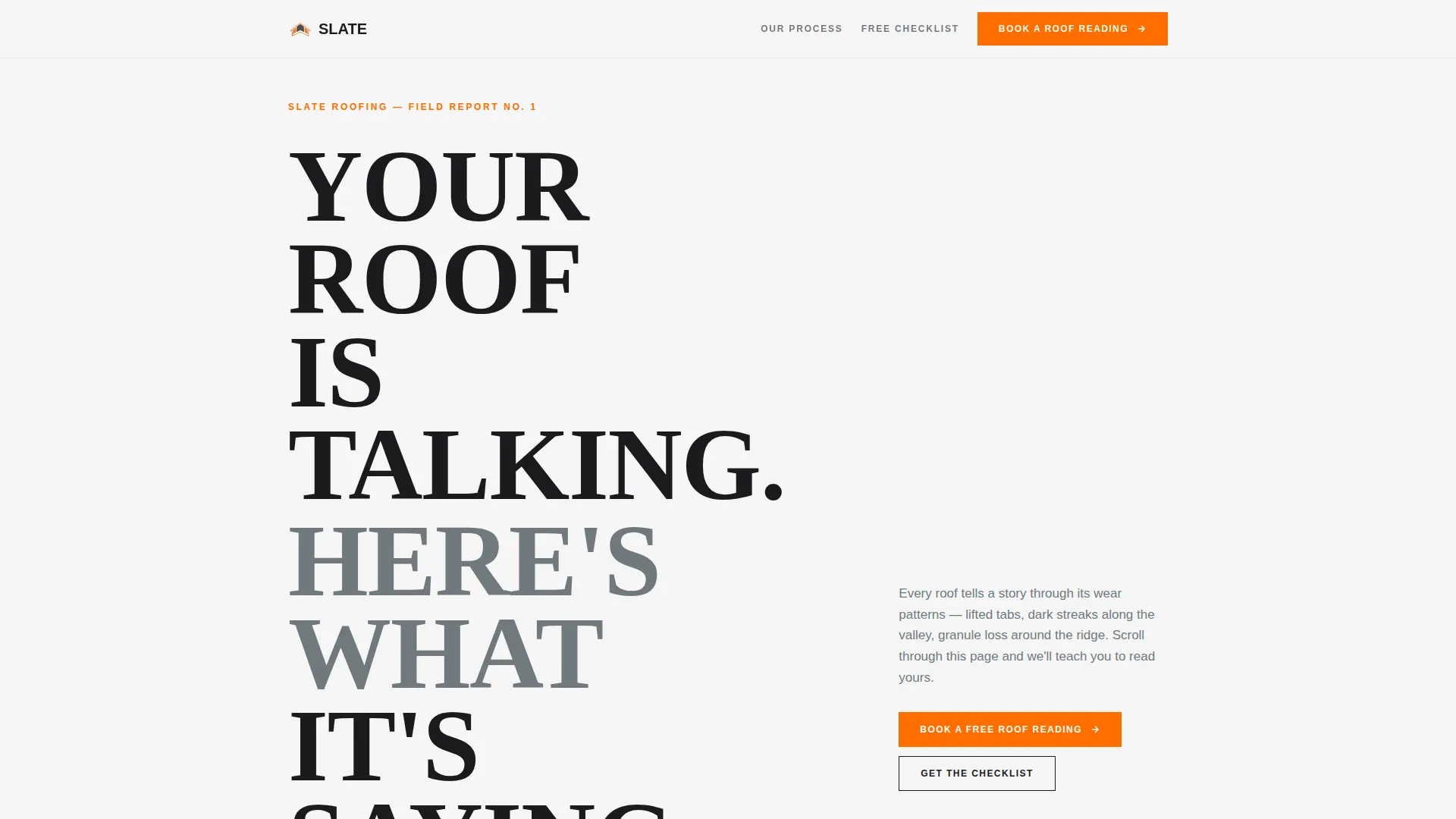
The header occupies roughly seventy percent of the viewport with flush-left condensed black-weight typography. There is no hero image. The headline itself carries the visual weight, sitting on a chalk-line white background with a thin charcoal rule beneath it, exactly like the opening spread of a trade magazine.
Seven-Chapter Process Walkthrough
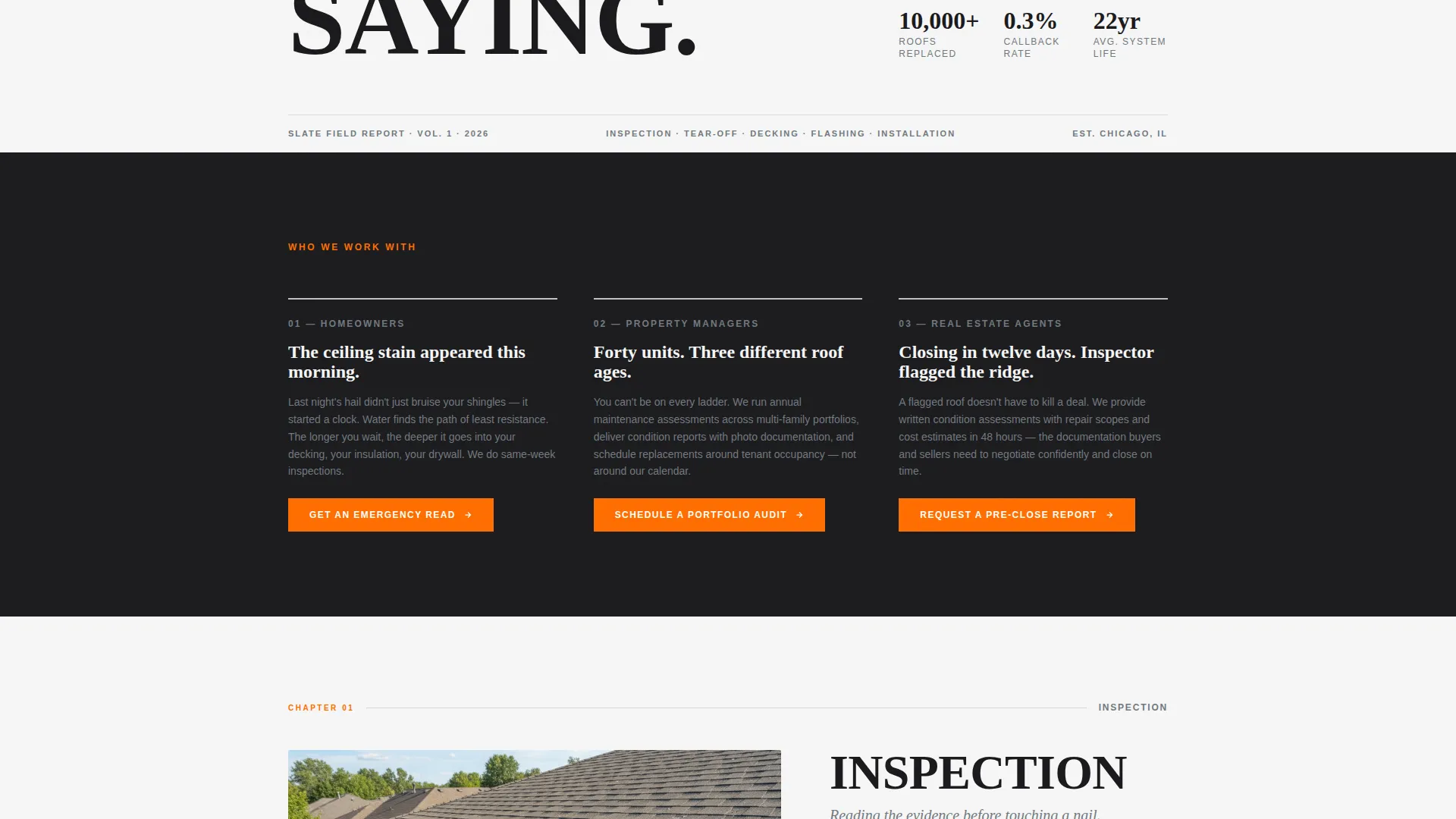
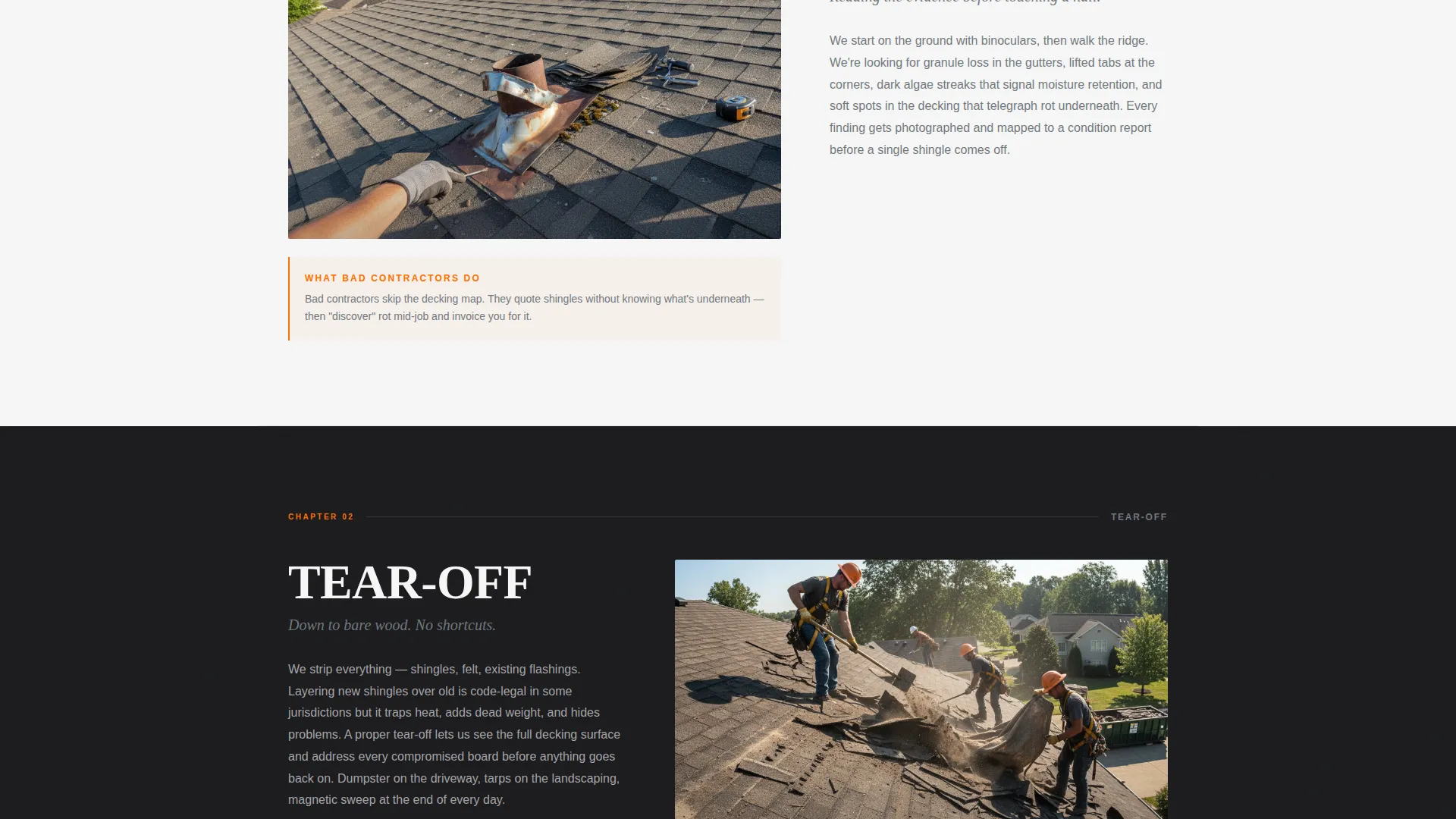
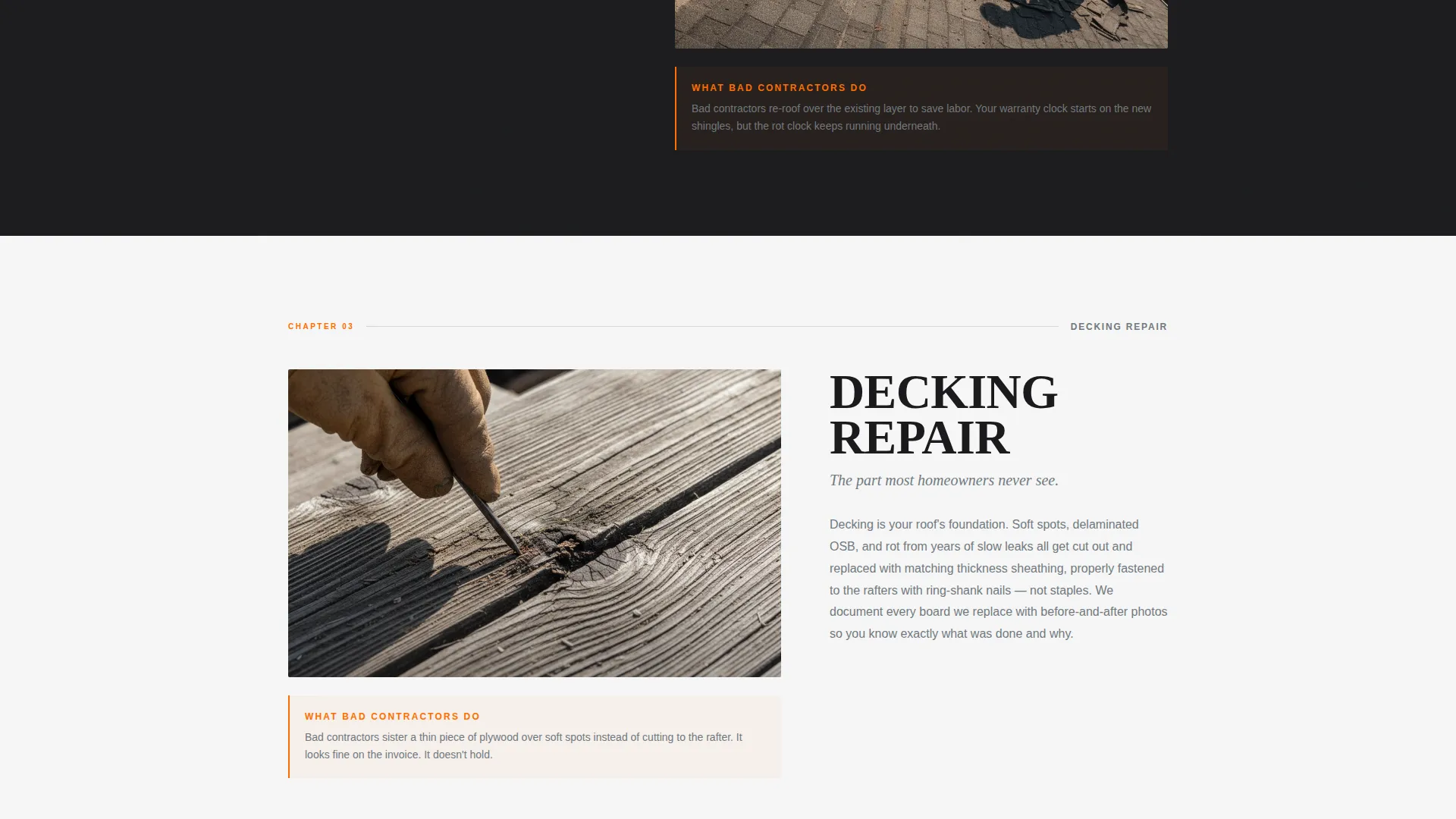
The page scrolls through seven sequential chapters: inspection, tear-off, decking repair, underlayment, flashing, shingle installation, and final walkthrough. Each chapter pairs an editorial photograph taken from the roofer's perspective with a short paragraph explaining what is happening, what to watch for, and what shortcuts less careful contractors often take.
Gated Checklist Conversion Block
After the third chapter, a conversion block offers a downloadable roof inspection checklist. Visitors enter their email address and zip code to receive it. This placement is intentional: it appears once the visitor has absorbed enough detail to recognize the value of the reference guide.
Booking Form with Roof Type Selector
The bottom of the page includes a "Book a Free Roof Reading" booking form. It contains a date picker, a roof type selector covering asphalt shingle, metal, flat and TPO (thermoplastic polyolefin), and tile options, plus a single open textarea asking the visitor to describe what they are seeing on their roof.
Editorial Chapter Dividers
Each process chapter is separated by generous white space and a thin steel-gray horizontal rule. This pacing gives the page a page-turning rhythm that keeps readers moving through the content without feeling rushed or oversold.
Monochrome Steel Visual System
The entire page uses a four-tone monochrome palette with a single accent color reserved exclusively for interactive elements and calls to action. This restraint keeps the editorial tone intact and ensures that every orange element draws the eye with purpose.
Page sections overview
| Section | Purpose |
|---|---|
| Giant Headline Block | Establishes editorial authority with bold flush-left typography and a brief right-column body text introduction |
| Chapter 1: Inspection | Documents what a professional roof inspection covers and what signs of damage to look for |
| Chapter 2: Tear-Off | Explains the strip-down process and what separates thorough tear-off work from rushed shortcuts |
| Chapter 3: Decking Repair | Covers what happens once old materials are removed and why decking condition matters |
| Checklist Capture Block | Offers the free roof inspection checklist in exchange for email and zip code |
| Chapter 4: Underlayment | Describes the protective layer installed before shingles and why material choice here matters |
| Chapter 5: Flashing Details | Explains flashing placement around valleys, chimneys, and edges as a critical leak-prevention step |
| Chapter 6: Shingle Install | Walks through shingle installation patterns, fastening standards, and quality indicators |
| Chapter 7: Final Walkthrough | Covers what a professional post-installation inspection looks like and what to expect |
| Booking Form Section | Presents the "Book a Free Roof Reading" form with date picker, roof type selector, and open textarea |
Design & branding system
The visual identity is built on an Editorial Magazine theme using a Monochrome Steel color palette. Every color in the system has a specific role, and nothing is decorative for its own sake.
- Four-tone palette: near-black charcoal (#1B1B1E), standing-seam zinc (#71797E), weathered flashing silver (#C0C0C0), and chalk-line white (#F5F5F5) for open space
- A single accent color, safety-vest orange (#FF6D00), is reserved exclusively for interactive elements, buttons, and calls to action
- Condensed black-weight editorial typography drives visual hierarchy throughout the page, with thin steel-gray rules and generous white space creating the page-turning rhythm
Mobile & speed optimization
The single-column flow of the template translates naturally to smaller screens. Every section stacks cleanly because the layout was never built around multi-column complexity.
- The single-column structure means no column reordering or content reflow is required at mobile breakpoints
- Large editorial typography scales with the viewport, maintaining visual impact on any screen size
- Generous white space and section dividers preserve readability and chapter separation on narrow displays
How this template helps you convert
Slate is built around a content-first conversion strategy. It gives visitors genuine expertise before making any request, which makes both conversion paths feel earned rather than forced.
- The gated checklist block appears after three chapters of substantive process detail. By that point, a visitor who is actively dealing with a roof problem wants the reference guide and is willing to share their email and zip code to get it.
- The booking form at the bottom offers a low-pressure next step. The open textarea asking "What are you seeing?" turns the booking into a conversation starter rather than a cold transaction, reducing friction for hesitant visitors.
Other information about this template
Slate is part of the Editorial Magazine template collection and pairs well with roofing contractors who operate in markets where trust and process transparency are competitive differentiators. It is also suited to contractors who invest in quality photography from real job sites, since the chapter blocks are designed to showcase authentic images rather than stock visuals.
- The template style is a single-column flow, keeping the reading experience linear and focused from headline to booking form
- The creative direction is Transparent Process, meaning the value is delivered through education and honest documentation rather than promotional language
- The landing page direction is Content and Resource, making it especially effective as a destination for storm-damage search traffic, social referrals, or email campaigns targeting homeowners after weather events
- The intersection niche is a roofer booking page, and every structural decision in the layout reflects that specific conversion goal
Theme
Editorial Magazine
Creative direction
Transparent Process
Color system
Monochrome Steel
Style
Single Column Flow
Direction
Content/Resource
Page Sections
Giant Headline Opening Section
Seven-chapter Process Walkthrough
Gated Checklist Conversion Block
Booking Form with Roof Type Selector
Editorial Chapter Dividers
Monochrome Steel Color System
Related questions
Can I use this template without professional photography?
Is this template suitable for commercial roofing contractors?
How does the gated checklist section work?
Can the roof type options in the booking form be changed?
What makes this different from a standard roofing service page?