Pediatric Pain Clinic Landing Page Template
Soothe is a hub-and-spoke landing page template built for pediatric pain clinics. It guides exhausted parents through five specialist pain domains using a pinned anchor nav, oversized testimonial card hero, expert panel sections, and a dual conversion path combining a downloadable parent guide with a short case review intake form.
by Rocket studio
Quick summary
Soothe is a single-page, anchor-nav-driven template for pediatric pain clinics. It opens with a testimonial card hero that builds immediate trust, then walks parents through five specialist domains. Two conversion paths sit at the end: a condition-specific parent guide download and a case review request form. Every section earns the next click.
Who this template is for
This template is built for pediatric pain clinics and the specialists who run them. It speaks directly to the two audiences who visit this kind of page most often.
- Parents of children with chronic or complex pain who have already seen multiple doctors and need to feel understood before they fill out any form
- Referring pediatricians and family physicians who want to pass a credible, well-organized resource to a family
What problem this template solves
Parents searching for pediatric pain care arrive exhausted and skeptical. Generic clinic pages lose them fast because they do not reflect the clinical specificity these families need.
- There is no easy way to show five distinct specialist domains on one page without it feeling overwhelming or disorganized
- Standard clinic templates lack the trust-building architecture that converts a deeply anxious parent into a consultation request
What you get with this template
You get a complete, ready-to-customize landing page that covers the full conversion journey from first impression to form submission. Every section is purpose-built for a pediatric pain clinic context.
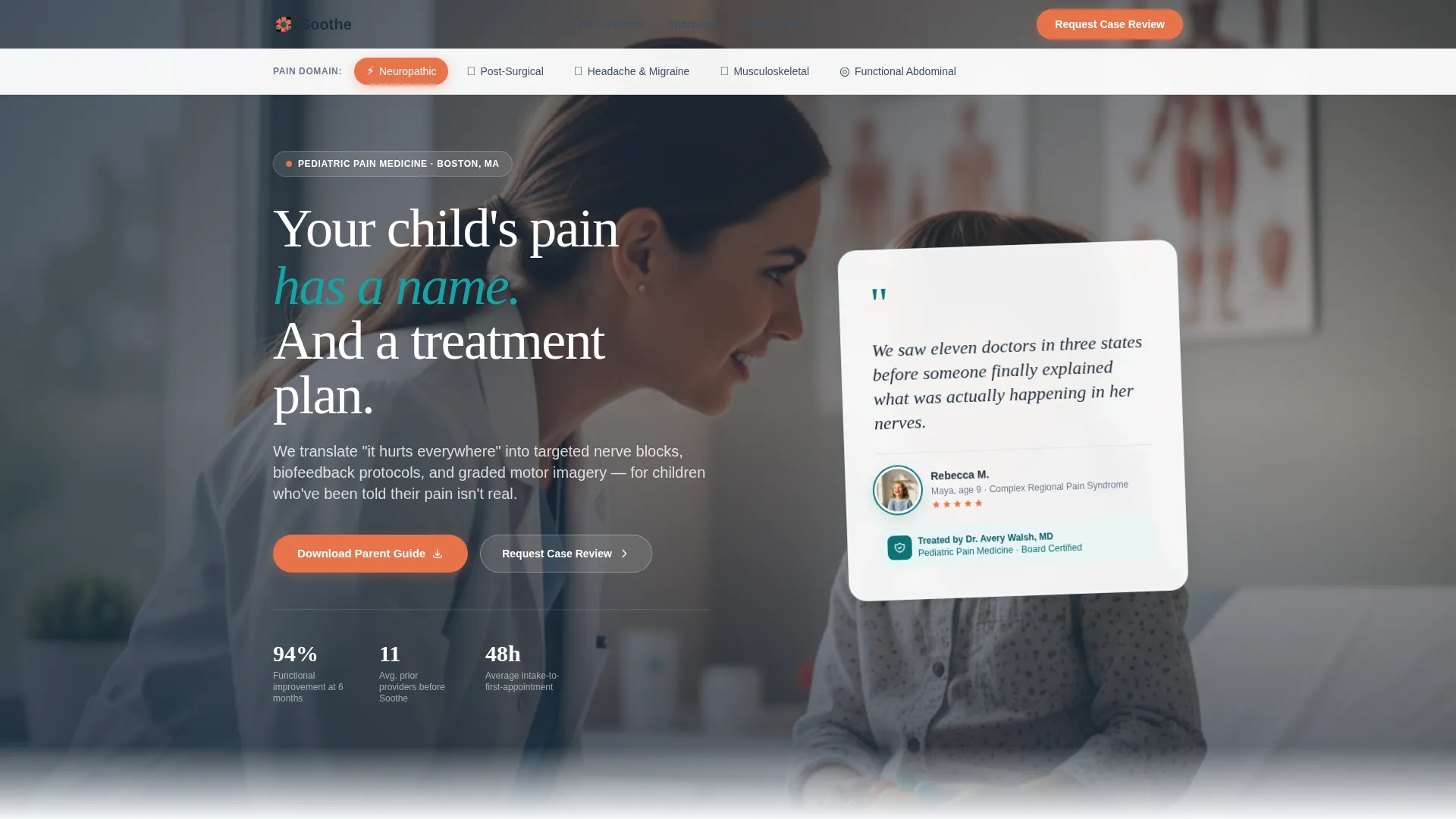
- A floating testimonial card hero with serif quote typography, a circular child photo slot, and parent attribution details
- Five specialist panel sections covering Neuropathic, Post-Surgical, Headache and Migraine, Musculoskeletal, and Functional Abdominal pain domains
- A dual call-to-action section with a condition selector for downloadable parent guides and a short intake form for case review requests
Feature list
This template ships with a tightly scoped set of interactive and structural features drawn directly from the clinic's conversion needs.
Pinned Anchor Navigation
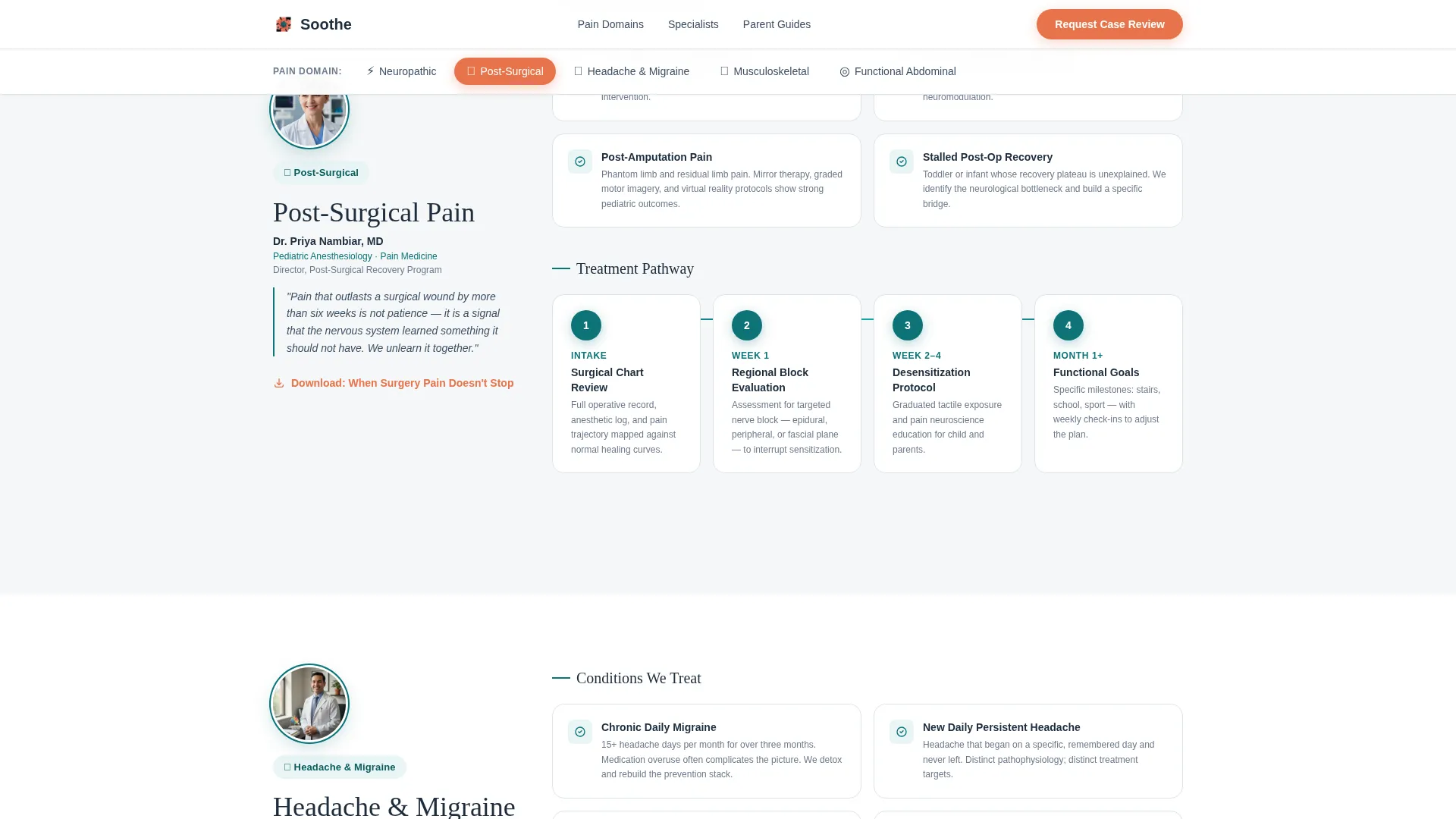
The pain domain nav pins to the top of the viewport after the user scrolls past the hero. Each spoke label corresponds to one of the five specialist sections. The active state highlights in warm coral so parents always know where they are on the page.
Testimonial Card Hero
The header opens with an oversized floating card component. It holds a parent quote in large serif type, the child's age and condition, a family first name, and a circular photo slot intended for a real post-treatment child photo. A subtle card shadow gives it physical presence.
Expert Panel Domain Sections
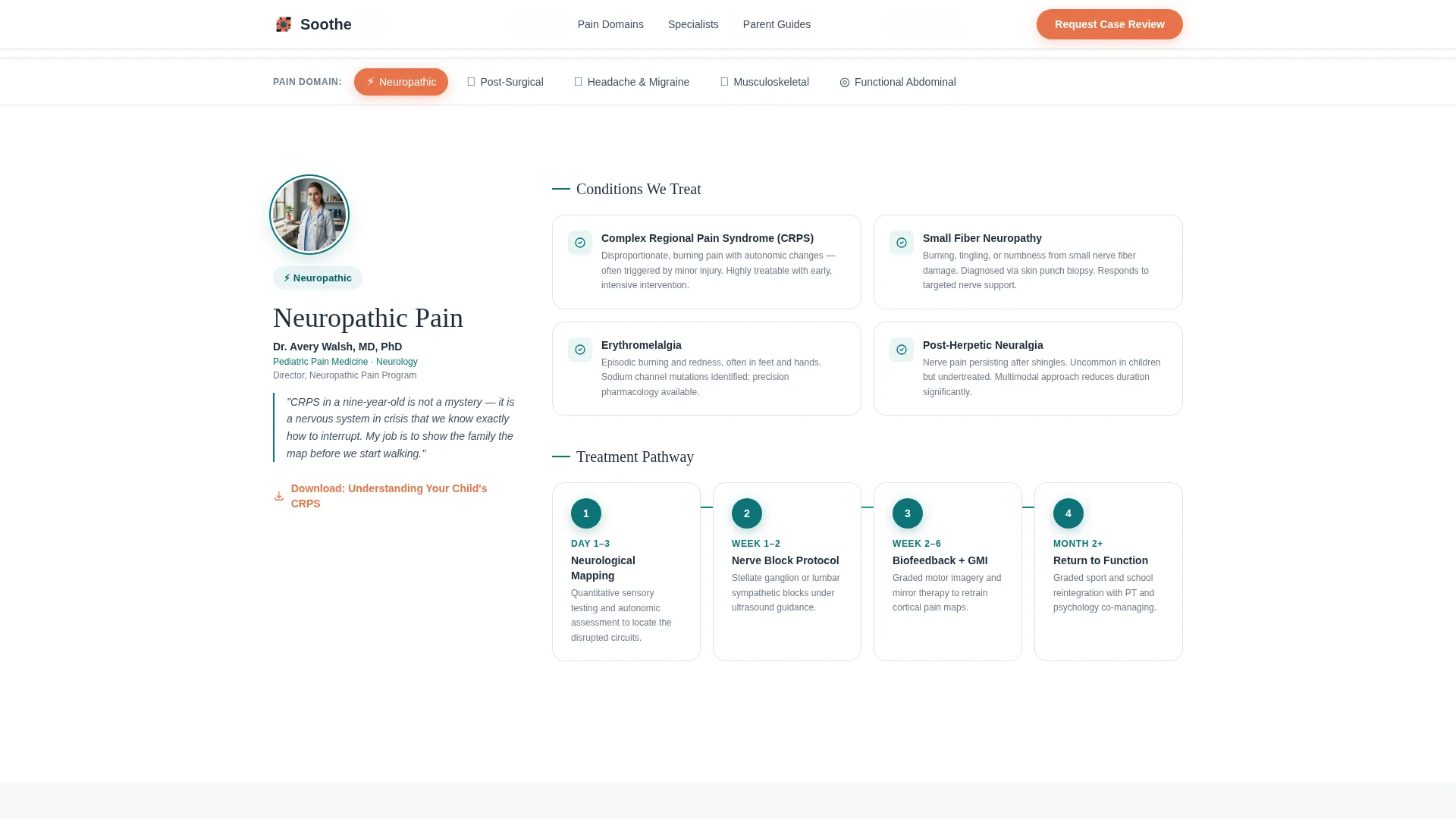
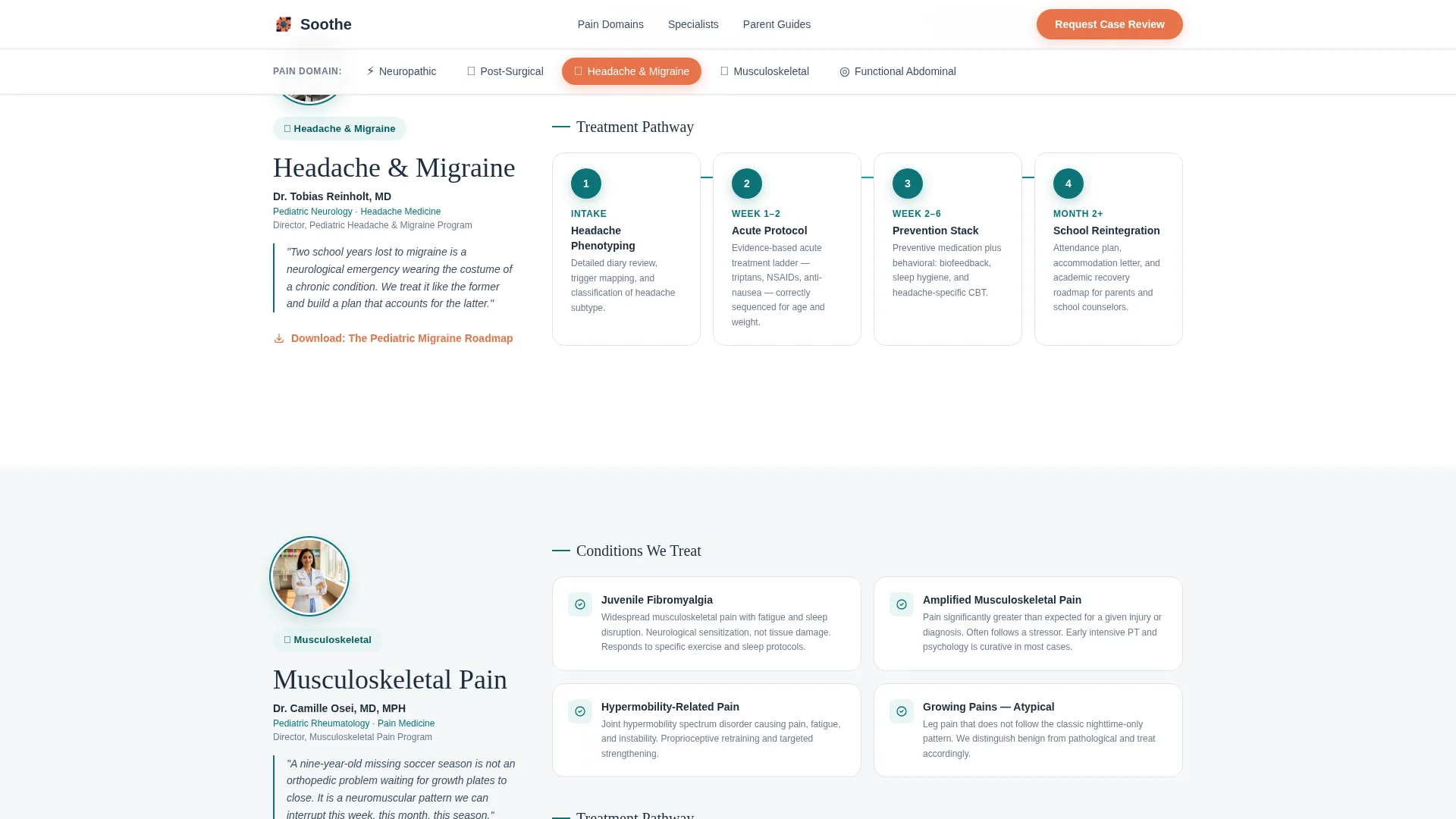
Each of the five pain domain sections opens with a specialist portrait, credentials block, and a sixty-word philosophy statement written in the specialist's own voice. The section then expands into condition explainers and treatment pathway diagrams.
Condition Selector and Guide Download
The primary conversion component lets a parent choose their child's pain domain from a dropdown. The selector dynamically serves the matching downloadable parent guide, such as a CRPS-specific PDF. The form requires only a first name and email address.
Case Review Intake Form
A secondary conversion path sits deeper in the page. It is a short intake form asking for the child's age, pain duration, and referring diagnosis. It is designed to feel like a first conversation, not a bureaucratic hurdle.
Scrolling Testimonial Columns
A social proof section uses vertically scrolling testimonial columns. Each entry includes a parent quote, the child's age, and the relevant pain condition. The scroll animation runs on the client side for smooth, continuous motion.
Page sections overview
| Section | Purpose |
|---|---|
| Hero Testimonial Card | Opens with a parent quote and floating card to establish immediate emotional trust |
| Pain Domains Nav | Pinned anchor navigation with five spoke labels that stay visible during scroll |
| Neuropathic Panel | Specialist portrait, credentials, philosophy, and condition explainer for nerve-based pain |
| Post-Surgical Panel | Domain section covering recovery stalls and post-operative pain pathways |
| Headache and Migraine Panel | Specialist-led section for chronic headache and migraine conditions in children |
| Musculoskeletal Panel | Covers joint, muscle, and movement-related pain with treatment pathway diagrams |
| Functional Abdominal Panel | Addresses functional abdominal pain with clinical explainers and parent guides |
| Testimonial Columns | Scrolling social proof with parent quotes, child ages, and pain condition labels |
| Download and Review calls to action | Dual conversion block with condition selector, guide download, and intake form |
| Footer | Linear single-row footer with clinic contact and navigation links |
Design & branding system
The visual identity follows a Corporate Precision theme. It balances clinical authority with the warmth parents need when researching care for a child in pain.
- Color palette: deep teal (#0D7377) as the primary anchor, ward-light gray (#F4F7F8) for section backgrounds, charcoal (#1E2D3D) for body text and credentials, and warm coral (#E8734A) reserved for buttons, interactive elements, and the active anchor nav state
- Typography pairing: Fraunces serif for headlines and pull quotes to carry emotional weight, DM Sans for body text and form labels to maintain clinical readability
Mobile & speed optimization
The template is built desktop-first but fully responsive, reflecting how parents actually use it. Late-night research on a phone is a real use case this layout accounts for.
- Staggered reveal animations and the scrolling testimonial columns run on the client side, while static structural sections use server components to keep initial load lean
- The pinned anchor nav collapses cleanly on smaller screens so the five pain domain labels remain accessible without crowding the viewport
How this template helps you convert
The conversion architecture works in two stages: earn trust first, then ask for something.
- The hero testimonial card and specialist panels lead with real clinical language so parents recognize their child's situation before they ever see a form. Recognition converts faster than persuasion.
- Two conversion paths serve different levels of readiness. The guide download asks for minimal information and rewards parents with a condition-specific PDF. The case review form sits deeper in the page for parents who are ready to take the next clinical step.
Other information about this template
This template is part of a broader set of specialty clinic templates designed for high-stakes healthcare contexts. A few additional details worth noting before you customize it.
- The template style is Hub and Spoke with Anchor Navigation, which means each pain domain section is a self-contained spoke that can be updated independently
- Animation fidelity is high throughout: staggered section reveals, floating card entrance effects, and scrolling testimonial columns are all included in the build
- The footer uses a Linear Single-Row pattern, keeping the page visually clean at the close without adding a heavy multi-column footer structure
- This template is categorized under Health and Medical, specifically the Pain Management and Pediatric Pain Clinic niche, making it a precise fit for specialty pediatric practices
Theme
Corporate Precision
Creative direction
Expert Panel
Color system
Teal Catalyst
Style
Hub & Spoke (Anchor Nav)
Direction
Content/Resource
Page Sections
Pinned Anchor Navigation with Active States
Floating Testimonial Card Hero
Expert Panel Specialist Sections
Condition Selector and Parent Guide Download
Short Case Review Intake Form
Scrolling Testimonial Columns
Related questions
Can I customize the five pain domain sections independently?
How does the condition selector for the parent guide download work?
Is the case review intake form separate from the guide download form?
Does the anchor nav stay visible while scrolling through the page?
What photo style does the testimonial card hero expect?