Crop & Grain Farming Directory Website Template
The Sorghum landing page template is built for dryland grain operations that sell at scale. It leads with a four-number stats wall, moves through regenerative practice data, supply chain logistics, and end-use case studies, then closes with a supply proposal form. The design uses a utilitarian Forest Trust palette built for procurement directors who need facts first.
by Rocket studio
Quick summary
This is a single-column flow landing page for a sorghum farm selling to grain traders, feedlot managers, and CPG procurement officers. It opens with oversized proof metrics, walks through the grain's journey from soil to delivery, and ends with a dual call-to-action for supply proposals and crop sheet downloads. Every section earns trust before asking for a conversation.
Who this template is for
This template is built for grain operations that sell business-to-business and need to prove scale, reliability, and logistics clarity before a procurement director picks up the phone.
- Sorghum farmers and grain managers targeting feed, food-grade, ethanol, or export buyers
- Agricultural marketing teams building a direct sourcing channel to replace broker-only pipelines
- Crop and grain farming operations with auditable regenerative practice data to share
What problem this template solves
Most grain farm pages are built for consumers, not buyers. A procurement officer needs volume specs, logistics routes, and delivery history before they will even open a proposal. This template closes that gap by presenting the operation as a verified supply partner from the first scroll.
- Procurement teams waste time requesting basic spec information that should already be visible
- Buyer trust is lost when a farm's web presence looks like a hobby site instead of a commercial operation
- Without a structured intake form, volume inquiries arrive with no qualifying detail and stall in follow-up
What you get with this template
You get a fully structured, single-page layout designed around the grain buyer's decision sequence. Every section maps to a real procurement checkpoint, from soil practice data to freight lane access to end-use volume examples.
- A hero stats wall with four oversized proof numbers and an amber pulse animation on load
- Regenerative practice metrics, supply chain logistics, and segmented end-use case studies with buyer quotes
- A sticky call-to-action bar, a supply proposal form, and a gated crop sheet download path
Feature list
This template is organized into five content sections, each with a focused visual treatment and a clear purpose in the buyer's evaluation journey.
Hero Stats Wall with Amber Pulse
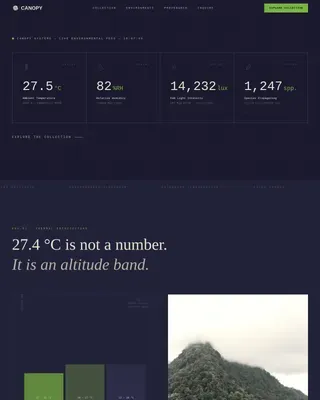
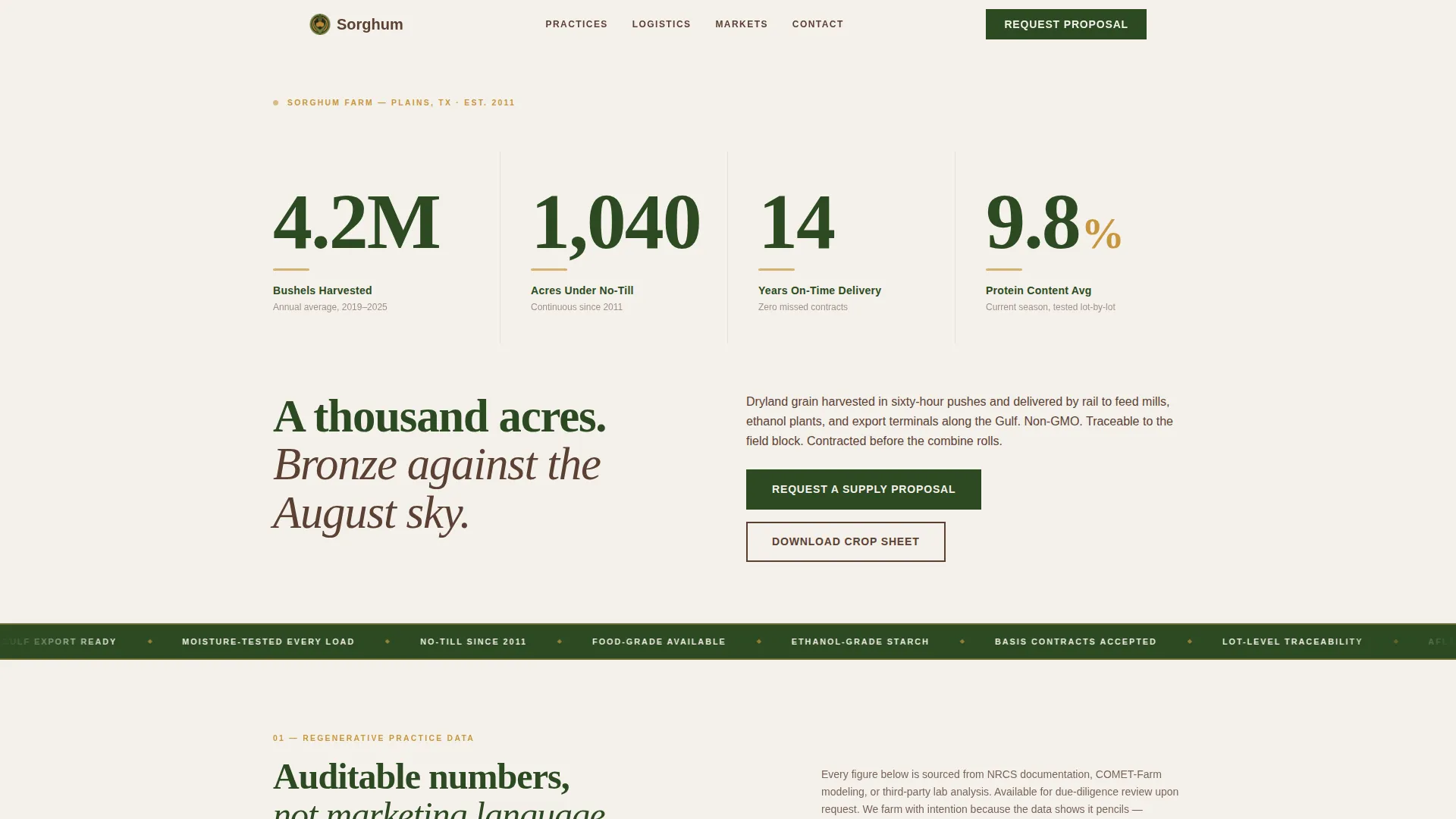
Four oversized numbers sit on a clean invoice white background, each one a proof point for a procurement director: annual bushels harvested, acres under continuous no-till management, years of unbroken delivery commitments, and the farm's current protein-content average. Numbers are set in a heavy display typeface in loam green with amber underlines that pulse once on page load, mimicking a futures ticker refreshing.
Regenerative Practice Metrics Section
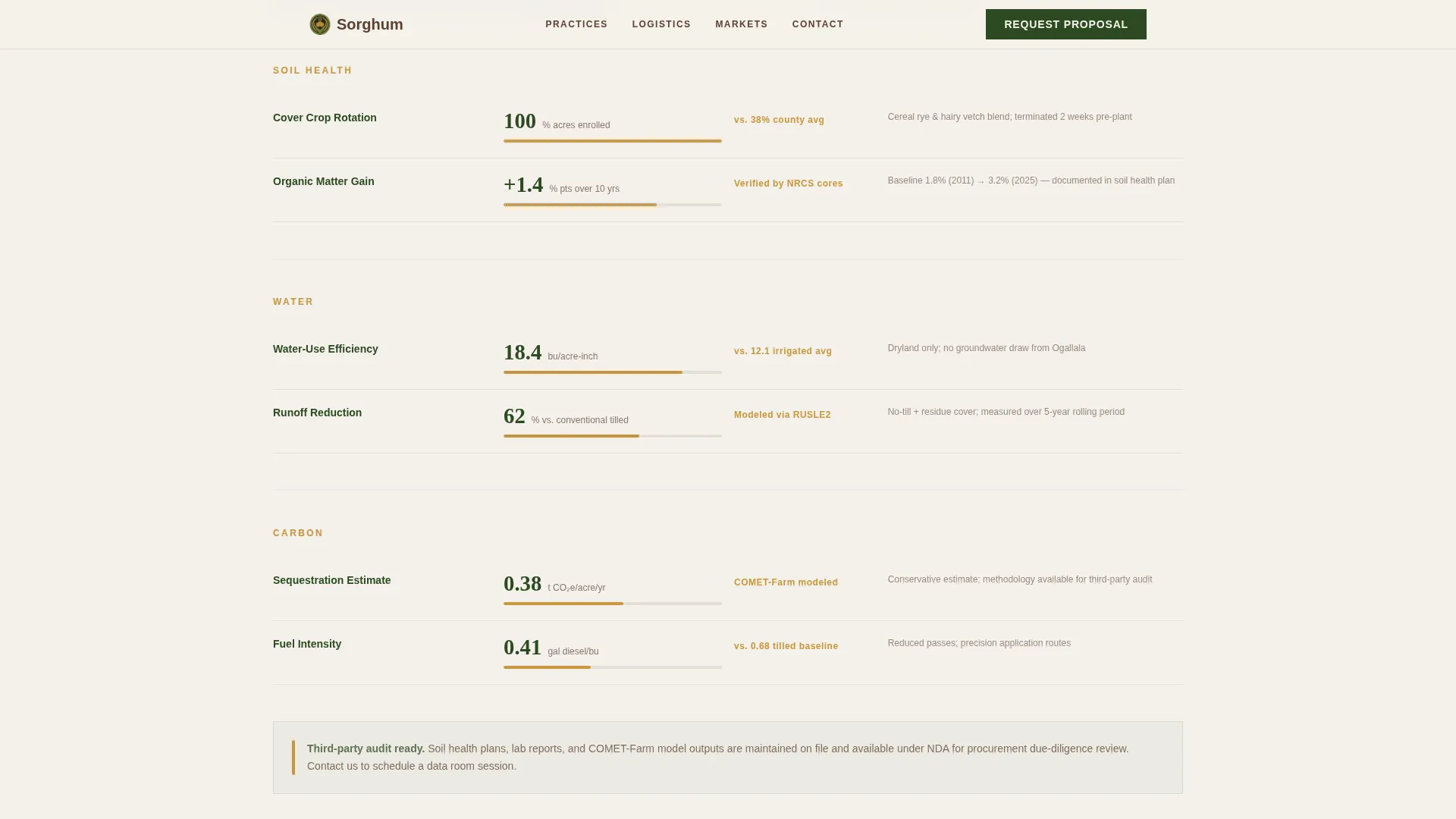
This section presents cover crop rotation data, water-use efficiency figures, and carbon sequestration estimates as auditable data points rather than marketing language. The layout treats environmental performance as a supply chain credential, giving CPG procurement officers the sustainability documentation they need to move an ingredient through internal approval.
Supply Chain and Logistics Display
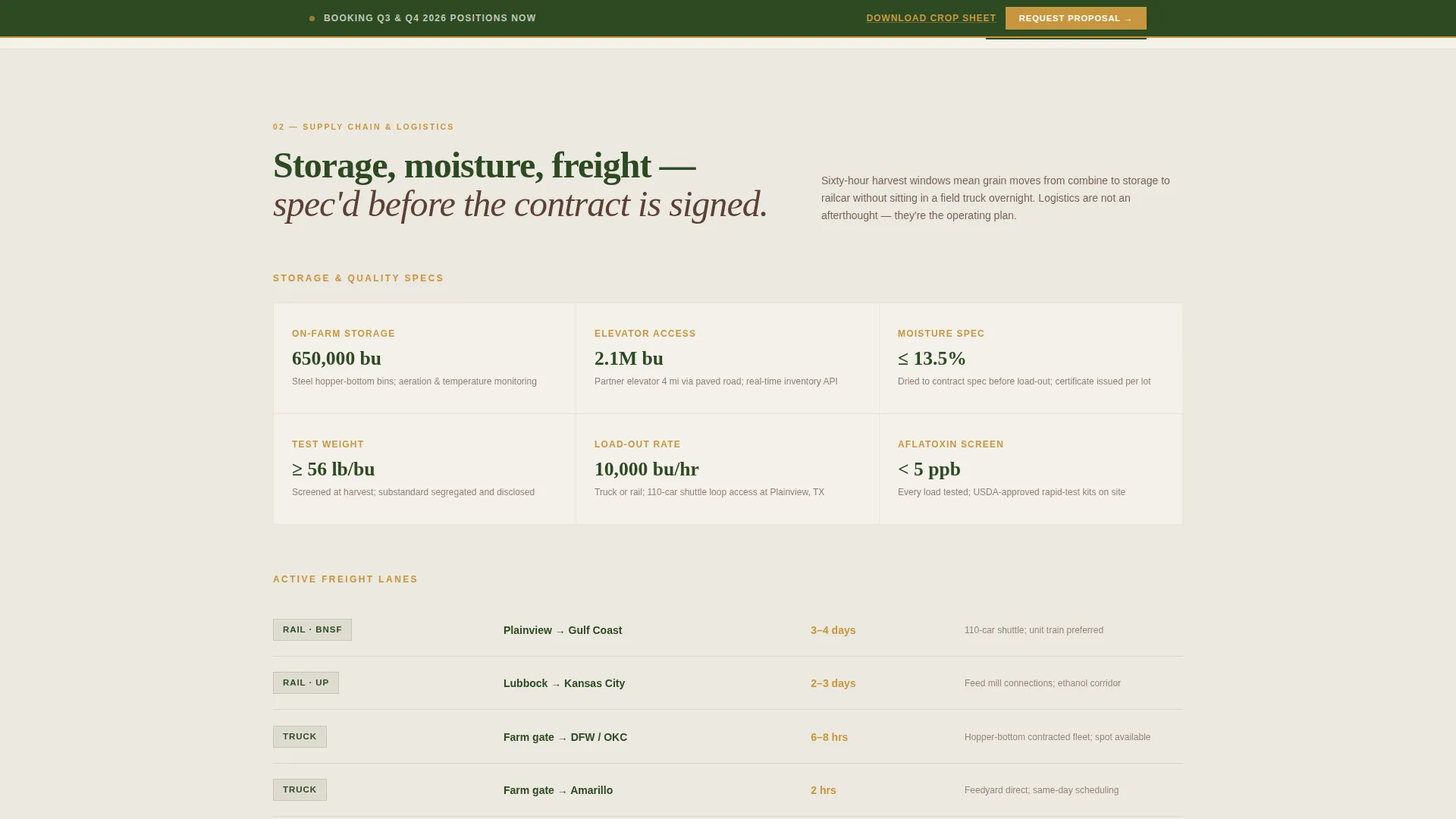
Storage capacity, moisture-management specifications, and a freight lane map showing rail and truck routes to major Gulf Coast delivery points are laid out here. This section answers the logistics questions a grain trader asks before committing to a basis contract, without requiring a phone call to get the answers.
End-Use Case Studies by Industry
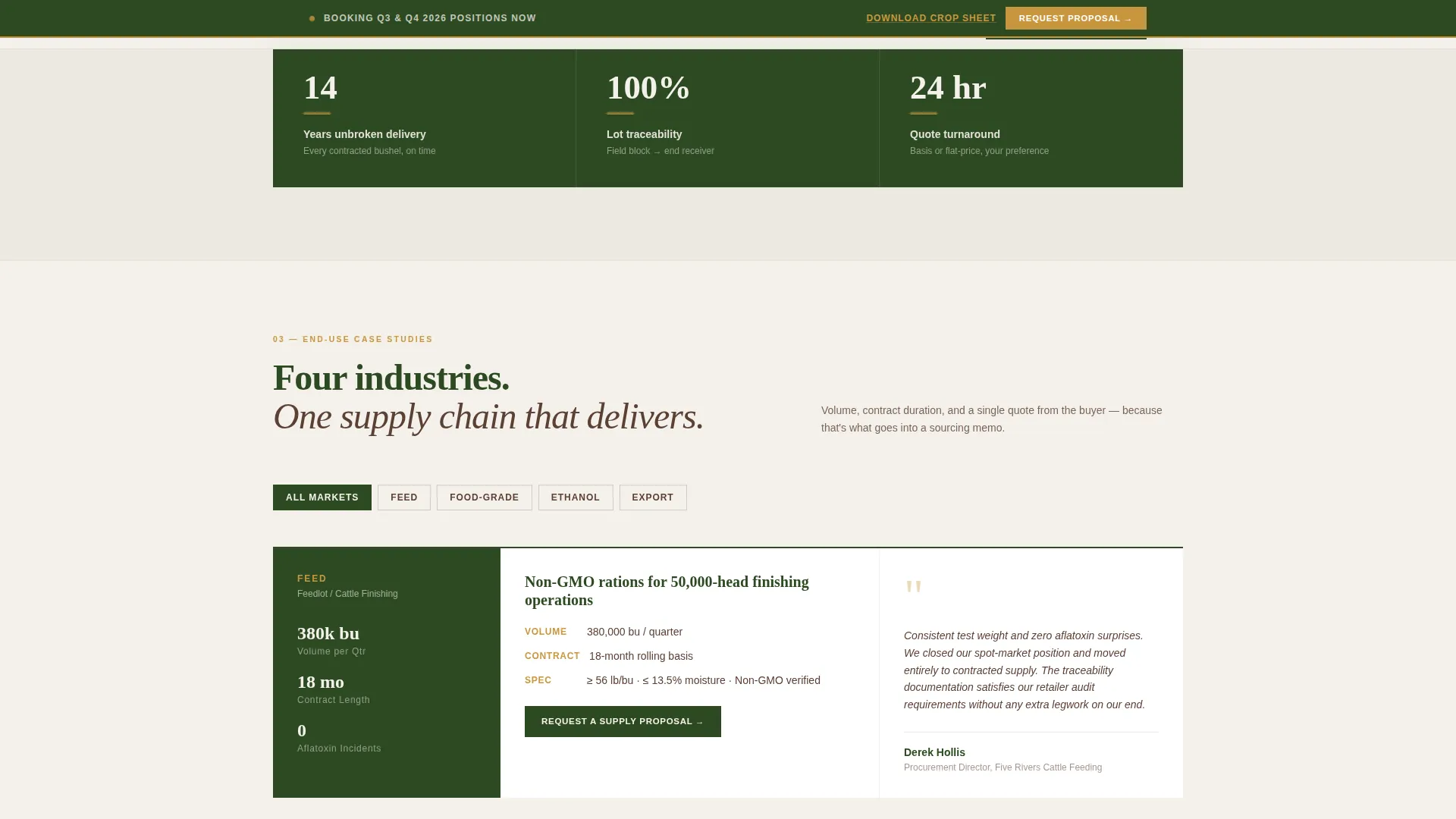
Four industry segments are covered: feed, food-grade, ethanol, and export. Each case study shows volume, contract duration, and a single quote from a real buyer. The segmented structure lets a feedlot manager or a CPG buyer jump directly to the example that matches their category without reading irrelevant content.
Dual Call-to-Action with Sticky Bar
The primary call to action is "Request a Supply Proposal," anchored at the bottom of each case study and repeated in a sticky bar that appears after the second scroll fold. The form collects company name, quarterly volume needs, intended end use via dropdown, and preferred delivery window. A secondary path, "Download Our Crop Sheet," gates a current-season quality spec PDF behind just an email address and company name.
Page sections overview
| Section | Purpose |
|---|---|
| Hero Stats Wall | Display four key proof metrics with amber pulse animation |
| Regenerative Practice Metrics | Present soil, water, and carbon data as auditable supply credentials |
| Supply Chain Logistics | Show storage specs, moisture controls, and Gulf freight routes |
| End-Use Case Studies | Segment buyer proof by feed, food-grade, ethanol, and export |
| Supply Proposal Form | Qualify inbound volume inquiries with structured intake fields |
| Crop Sheet Download | Gate spec PDF behind email to support pre-call internal approvals |
| Footer | Single-row linear footer with contact and navigation essentials |
Design & branding system
The visual identity follows a Service Utility theme. It feels like a county extension office that actually delivers results: practical, grounded, and built for working professionals who trust systems over aesthetics.
- Forest Trust color system: loam green (#2D4A22) for headers and dividers, mature grain head amber (#C8963E) for figures and interactive elements, weathered fence-post brown (#5C4033) for body text, and invoice white (#F4F1EB) for backgrounds
- Typography pairing: Fraunces for display numbers and section headings to give the stats wall a confident, utilitarian presence; DM Sans for body text to keep reading fast and clear
- Animations are medium in intensity: amber pulse on load, scroll-triggered reveals, spotlight card effects, and a marquee element to carry volume or logistics data across the viewport
Mobile & speed optimization
The template is designed desktop-first, matching where procurement directors typically work. It also maintains a solid mobile experience for buyers reviewing specs between meetings or on a job site.
- Single-column flow means the content stacks cleanly on smaller screens without restructuring
- Server components handle static sections to minimize JavaScript load and keep the page responsive
- Sticky call-to-action bar and form dropdowns are built to function reliably across device sizes
How this template helps you convert
Every section is ordered to match how a procurement officer evaluates a new supply source. The page does not ask for a commitment before it has earned one.
- The stats wall answers the first question every buyer has: does this operation have the volume and consistency to be a real partner? It answers that before a single paragraph is read.
- The case studies segmented by industry let a feed buyer or a CPG officer self-identify and read proof that directly matches their use case, which shortens the trust-building cycle significantly.
- The dual call-to-action path gives buyers two ways to move forward: a full proposal request for buyers ready to talk, and a crop sheet download for buyers still in internal approval, so neither group leaves empty-handed.
Other information about this template
This template is built for the grain and crop farming niche within the Agriculture and Environment category. It is a strong fit for any dryland sorghum operation that moves product at commercial scale and needs a web presence that matches the professionalism of its logistics network.
- The Movement and Cause creative direction means the scroll tells a story: from soil biology through harvest logistics to end-use application, building confidence at every fold
- The Partnership and Business-to-Business landing page direction ensures every element serves the sourcing decision, not a general audience
- The Stats and Metrics header concept is the core differentiator: a procurement director screenshots those four numbers and drops them into a sourcing memo before making the first call
- The template is localized for United States operations, using bushels and acres for volume units and Gulf Coast logistics as the primary delivery reference
- It is well suited for non-GMO sorghum producers, gluten-free grain ingredient suppliers, and operations with certifiable regenerative agriculture practices to promote
Theme
Service Utility
Creative direction
Movement & Cause
Color system
Forest Trust
Style
Single Column Flow
Direction
Partnership/B2B
Page Sections
Stats Wall with Animated Proof Numbers
Regenerative Practice Data Display
Supply Chain and Freight Lane Section
Segmented End-use Case Studies
Dual Call-to-action with Sticky Bar
Service Utility Visual Identity
Related questions
Can I update the stats wall numbers to match my farm's actual figures?
Does the template include both the supply proposal form and the crop sheet download?
Is this template suitable for a sorghum operation selling into multiple industries?
How does the sticky call-to-action bar work?
Can this template support a desktop-first audience while still working on mobile?