Autism Support Nonprofit Landing Page Template
Spectrum is a warm, editorial-style landing page template built for autism support organizations. It guides parents, self-advocates, and allies from their first scroll to a meaningful next step. With a watercolor-inspired visual identity, an illustrated hero, and a three-step progressive form, this template turns a moment of overwhelm into a clear, compassionate path forward.
by Rocket studio
Quick summary
Spectrum is a single-page, editorial-style template for autism support nonprofits. It pairs Risograph-inspired illustrations and a picture-book color palette with two built-in conversion paths: a three-step "Find Your Family's Path" form and a mid-scroll lead magnet offering a free illustrated PDF guide called "The First 90 Days." Every design decision is built to feel like belonging, not charity.
Who this template is for
This template is made for disability and inclusion nonprofits that support autistic individuals and their families. It is especially well-suited for organizations that serve people in the earliest, most uncertain moments after a diagnosis.
- Autism support organizations looking for a warm, trust-first lead generation page
- Nonprofit teams serving parents, adult self-advocates, siblings, and allied professionals
- Cause-led organizations that want editorial storytelling paired with clear conversion paths
What problem this template solves
When a family hears the word "autism" for the first time, they often search for help from a phone in a waiting room. Most pages they land on feel clinical, overwhelming, or impersonal. This template solves that problem directly.
- It replaces cold, institutional design with a warm editorial voice that meets visitors emotionally
- It structures information so visitors feel seen before they are ever asked to fill out a form
- It removes friction from lead capture by breaking the ask into three gentle, progressive steps
What you get with this template
You get a fully designed, single-page layout built around a movement-and-cause creative direction. The page flows from intimate storytelling to community-scale impact, then invites the visitor to act.
- An illustrated hero section, five distinct content sections, and a footer layout based on the Arc Browser Split pattern
- Two conversion paths: a three-step progressive form and a mid-scroll email capture for a free PDF guide
- GSAP scroll-triggered animations, parallax blobs, cursor-reactive elements, and staggered entrance sequences throughout
Feature list
A brief overview of the core capabilities built into this template.
Illustrated Hero with Editorial Headline
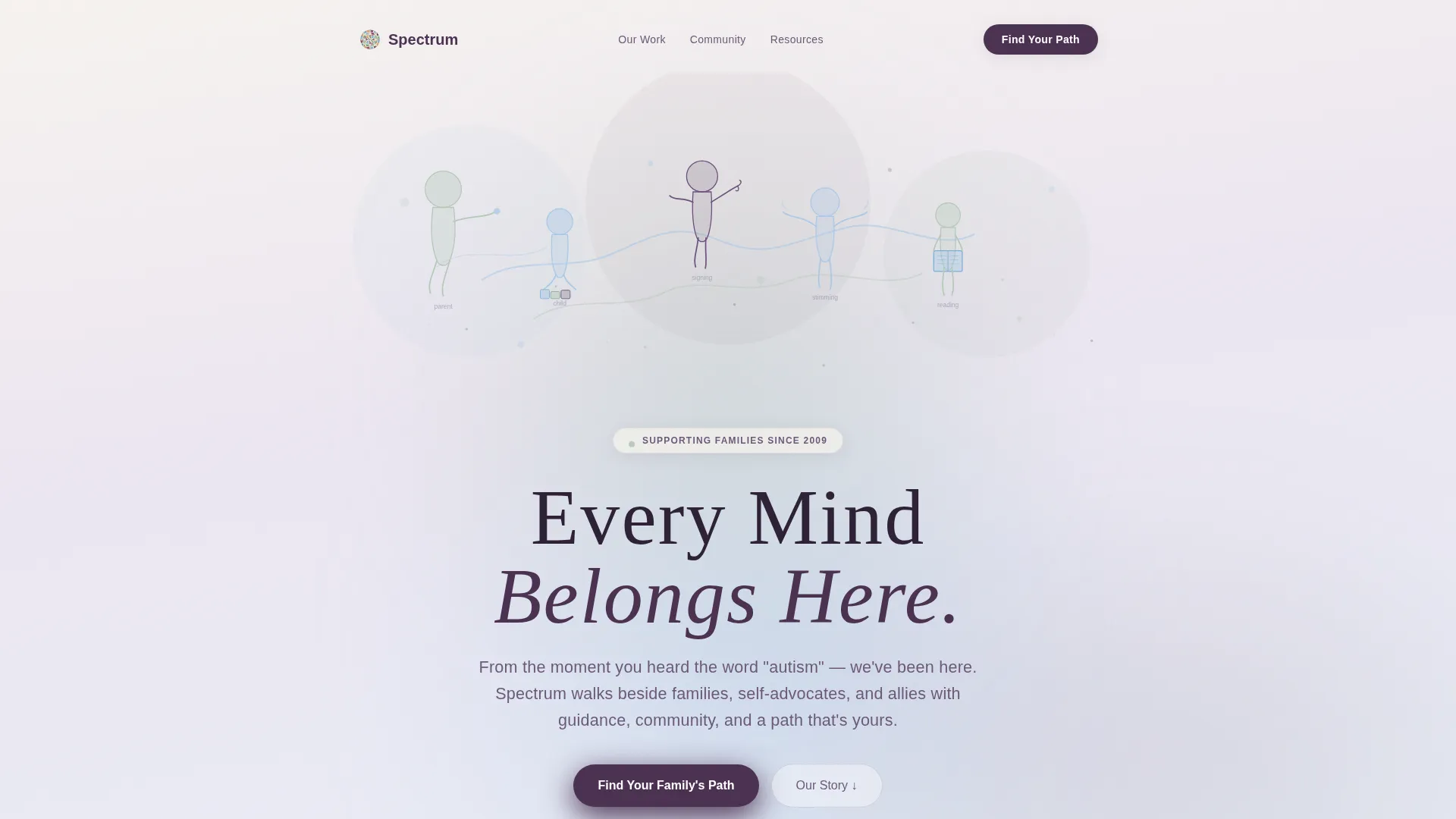
The header opens with a full-viewport, hand-drawn family constellation illustration in sky blue and sage. Deep plum serif type carries the headline "Every Mind Belongs Here," letterspaced generously and positioned like a book title beneath the art.
Three-Step Progressive Lead Form
The primary conversion path breaks the ask into three comfortable stages. Visitors first identify their relationship to autism, then choose what they need most right now, and finally share their name and email. An FAQ-style accordion supports the form interaction.
Mid-Scroll Lead Magnet Section
After the editorial storytelling has built trust, a dedicated section offers "The First 90 Days," a free illustrated PDF guide, in exchange for just an email address. The placement is intentional: the page earns the click before making the ask.
Editorial Vignette Panels
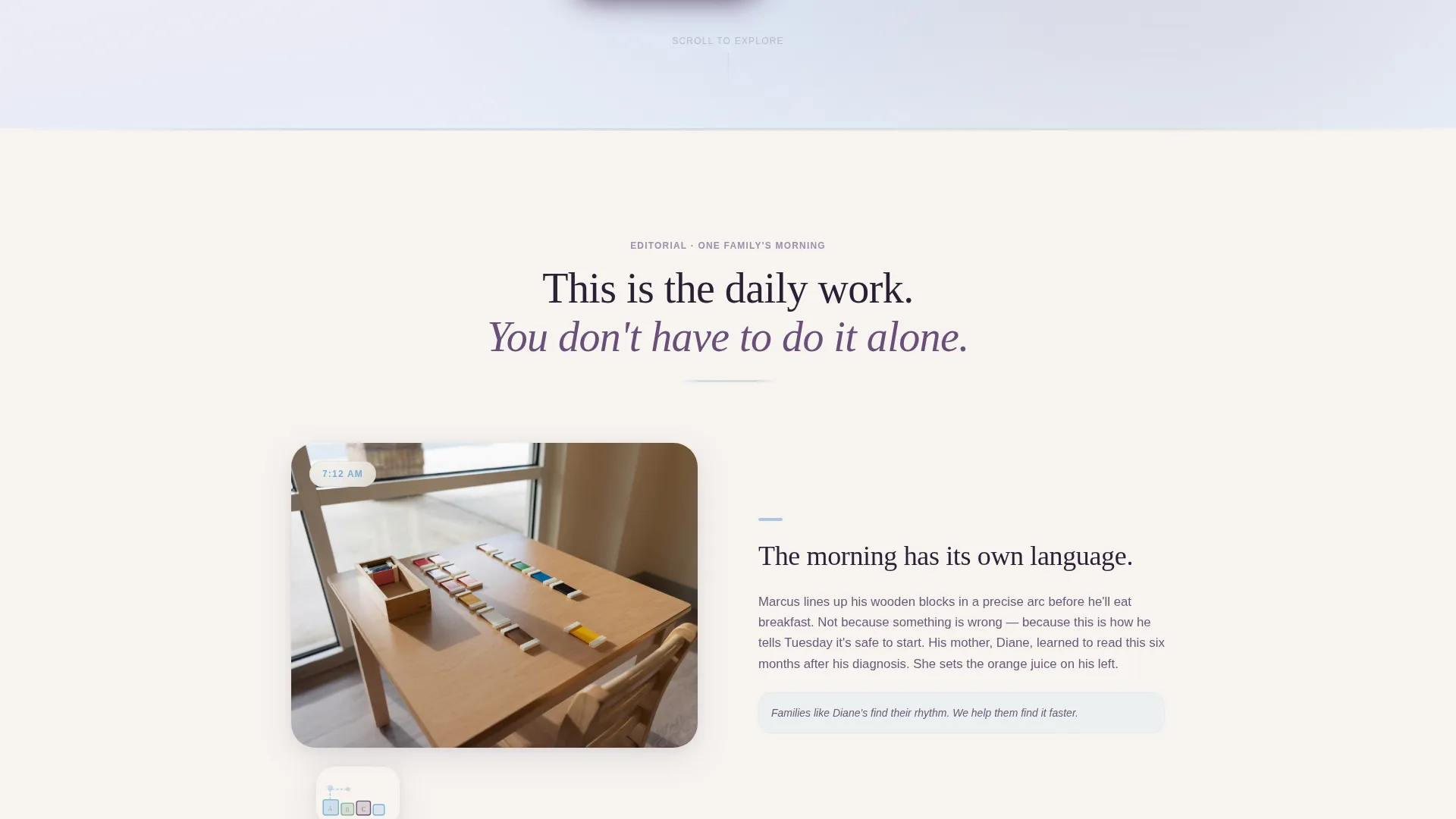
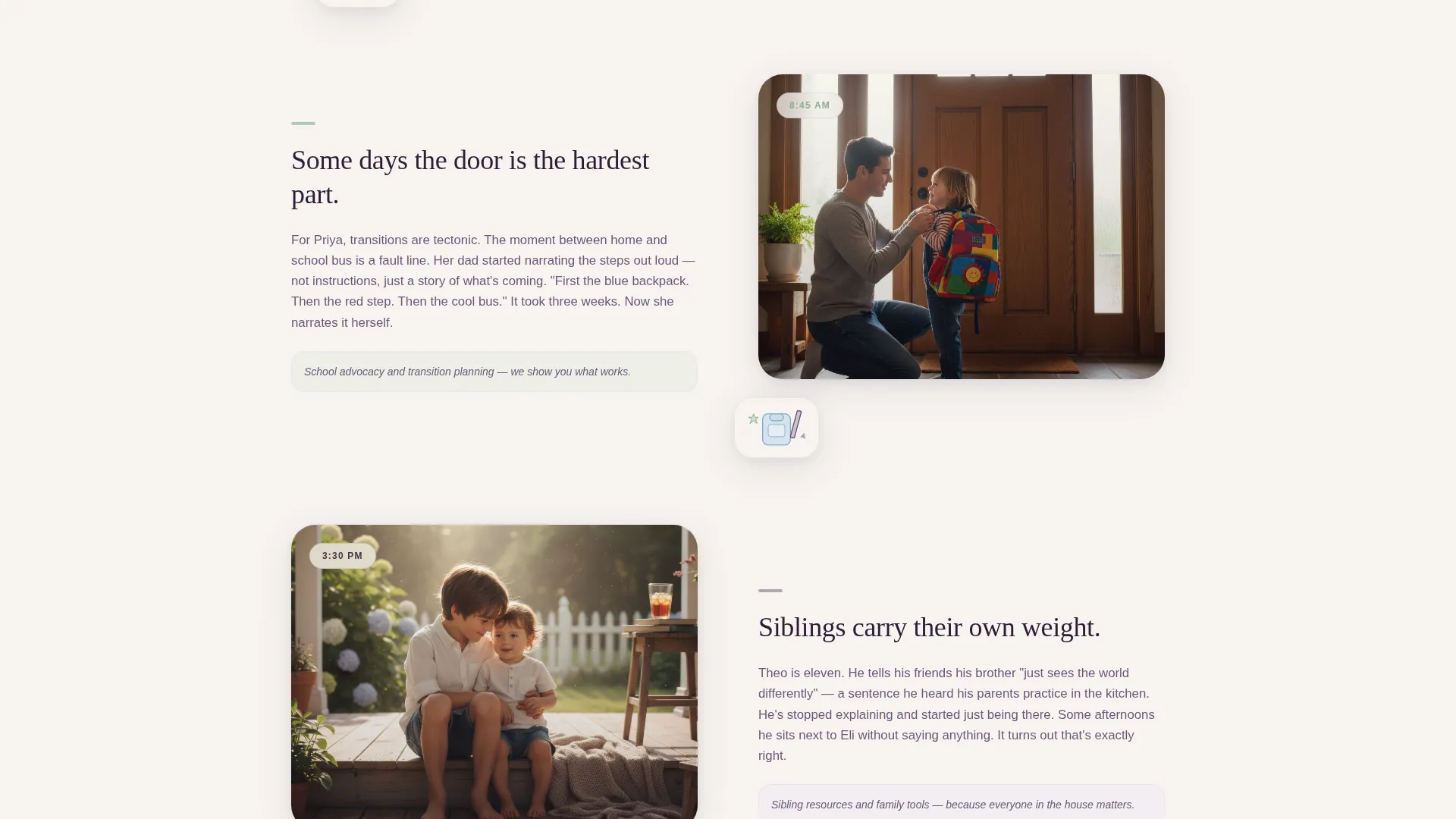
Alternating story panels walk visitors through a family's morning routine using spot-art SVG illustrations. The read-then-do rhythm keeps visitors engaged and moves them naturally toward the conversion sections below.
Community Infographics and Advocacy Timeline
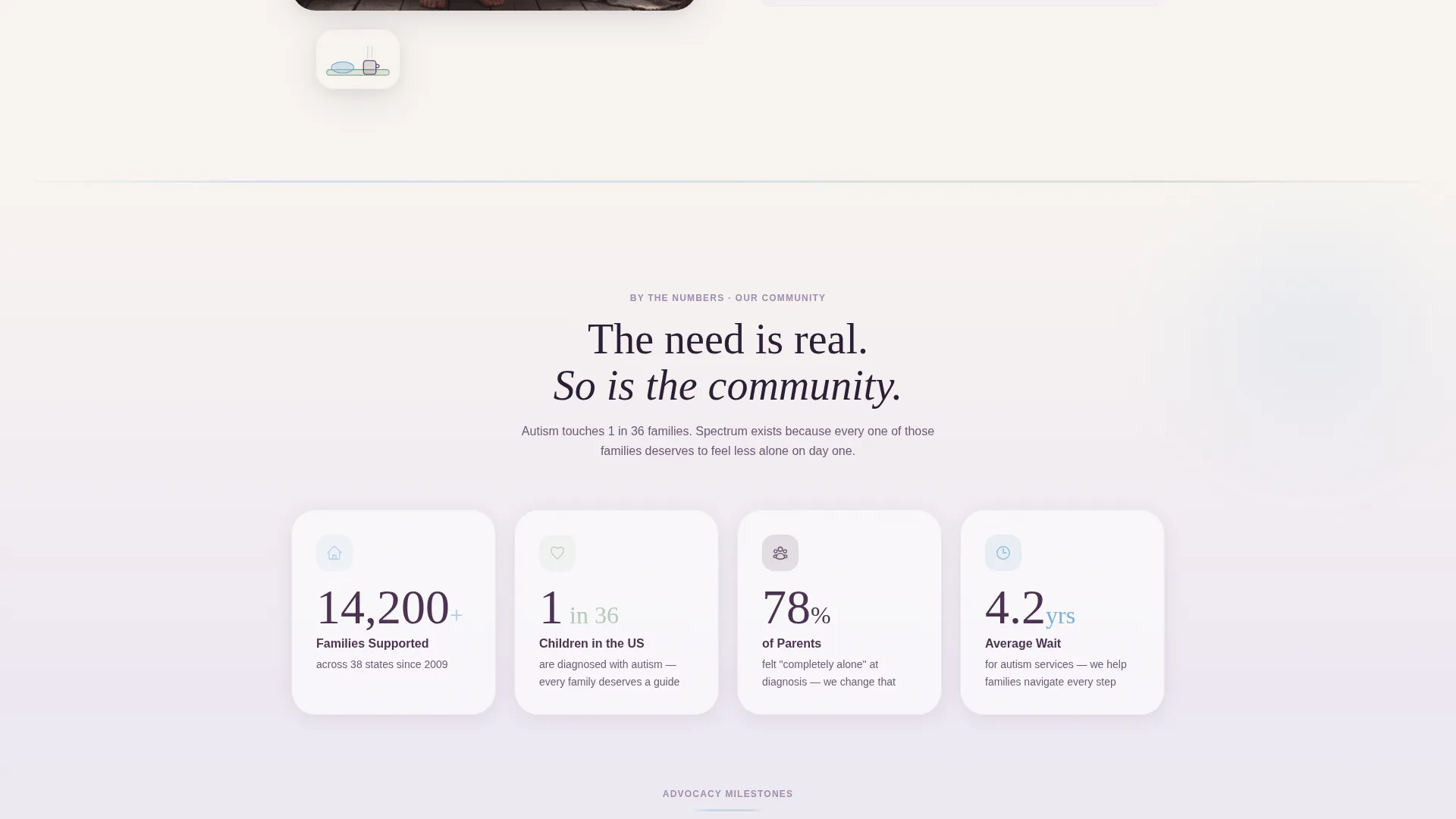
Statistics are rendered as gentle, watercolor-style infographics. An advocacy milestones section uses a hand-drawn timeline to shift the narrative from one family's story to collective community impact.
Magazine-Style Testimonial Pull-Quotes
Parent testimonials are formatted as editorial pull-quotes with a first name and the child's age at diagnosis. This format builds social proof without feeling transactional or anonymous.
Page sections overview
| Section | Purpose |
|---|---|
| Hero Illustration | Introduce brand identity and headline |
| Editorial Vignette Panels | Build emotional connection through storytelling |
| Community Infographics | Show collective impact with gentle data visuals |
| First 90 Days Magnet | Capture emails via free illustrated PDF offer |
| Testimonials and Path Finder | Reinforce trust and drive primary form conversion |
| Footer Arc Split | Provide navigation, tagline, and closing links |
Design & branding system
The visual identity follows a Family First theme using the Cloud Canvas color system. Every color choice is warm, soft, and intentional, deliberately distancing the design from anything clinical or institutional.
- Color palette: warm white (#F7F4F0) background, deep plum (#4A3050) headlines and calls to action, sky blue (#A8C8E8) dividers and pull-quotes, muted sage (#B5C9B7) on cards and resource tiles
- Typography: Fraunces serif for headlines to carry warmth and slight imperfection, DM Sans for body text to maintain readability
- Visual style: Risograph-inspired illustration with visible grain, soft overlapping shapes, and a hand-drawn, textured quality throughout
Mobile & speed optimization
This template is built with a mobile-first priority. Parents often search for support from a phone while sitting in a pediatrician's waiting room, and the layout accounts for that reality.
- Static page sections use server components to keep initial load lean and responsive
- Interactive elements including animations and the progressive form are handled by client components to avoid blocking the first render
- Scroll-triggered reveals and staggered entrance sequences are designed to feel smooth on smaller screens without overwhelming the experience
How this template helps you convert
The page is structured so that trust is built before any ask is made. Conversion is a natural outcome of emotional engagement, not a hard interruption.
- The editorial storytelling sections establish empathy and credibility first, so visitors feel understood by the time they reach either conversion point
- The three-step progressive form reduces friction by asking only one thing at a time, making the primary conversion path feel like a conversation rather than a form
- The mid-scroll PDF offer provides a low-commitment secondary path that captures leads from visitors who are not yet ready for the full form
Other information about this template
Spectrum is a template built for the intersection of editorial design and cause-led lead generation. It is especially relevant for organizations in the disability and inclusion nonprofit space.
- Template style: Editorial and magazine, with a watercolor and Risograph visual language
- Creative direction: Movement and Cause, scrolling from the intimate to the collective
- Header concept: Custom full-viewport illustration, not a photograph or stock image
- Animation level: High, using GSAP entrance animations, parallax blobs, and cursor-reactive elements
- The footer uses the Arc Browser Split pattern with logo and tagline on the left, navigation links on the right
- Localization: English (United States), with no currency references included
Theme
Family First
Creative direction
Movement & Cause
Color system
Cloud Canvas
Style
Editorial/Magazine
Direction
Lead Generation
Page Sections
Illustrated Hero with Editorial Headline
Three-step Progressive Lead Form
Mid-scroll PDF Lead Magnet
Editorial Vignette Story Panels
Community Infographics and Timeline
Magazine Pull-quote Testimonials
Related questions
Who is this landing page template designed for?
What are the two conversion paths included in this template?
Can this template serve adult self-advocates, not just parents?
What animation and interaction features are built into this template?
Does this template include real illustrations or placeholder art?