Gothic Revival Architecture Advanced Booking Website Template
Spire is a Gothic Revival architecture landing page template built for specialist practices working at the intersection of medieval craft and modern building standards. It combines a self-drawing animated façade, an expandable masonry project grid, a scoped commission configurator, and a pattern book sales anchor into one richly designed, desktop-first editorial page.
by Rocket studio
Quick summary
Spire is a single-page template designed for a Gothic Revival architecture practice. It opens with an animated ink elevation, moves through an interactive project grid, and closes with a direct deposit checkout and a physical pattern book sale. Every section is tuned for high-value clients who already understand the craft and are ready to commission.
Who this template is for
This template suits architecture practices and heritage consultants whose work lives in carved stone and pointed arches rather than glass curtain walls. It is built for client conversations that begin with a brief worth hundreds of thousands of pounds.
- Heritage trust directors managing chapel and ecclesiastical building restoration
- University chancellors commissioning new collegiate halls that match historic campus fabric
- Private collectors converting derelict railway churches or other ecclesiastical buildings into residences
What problem this template solves
Most architecture portfolio pages treat every project equally, which flattens the distinction that makes a specialist practice valuable. A Gothic Revival practice needs a page that communicates deep material knowledge before a single word is read.
- Generic portfolio layouts fail to convey the scholarly weight that heritage clients expect
- No clear path from interest to commission means high-intent visitors leave without acting
- Showcasing ornamental complexity alongside engineering rigour requires layout logic most templates ignore
What you get with this template
You get a fully structured, single-page editorial layout that guides a visitor from first impression to commission deposit without asking them to navigate away. The design vocabulary matches the practice it represents: thick parchment backgrounds, deep ink typography, and gold used only where light would naturally fall.
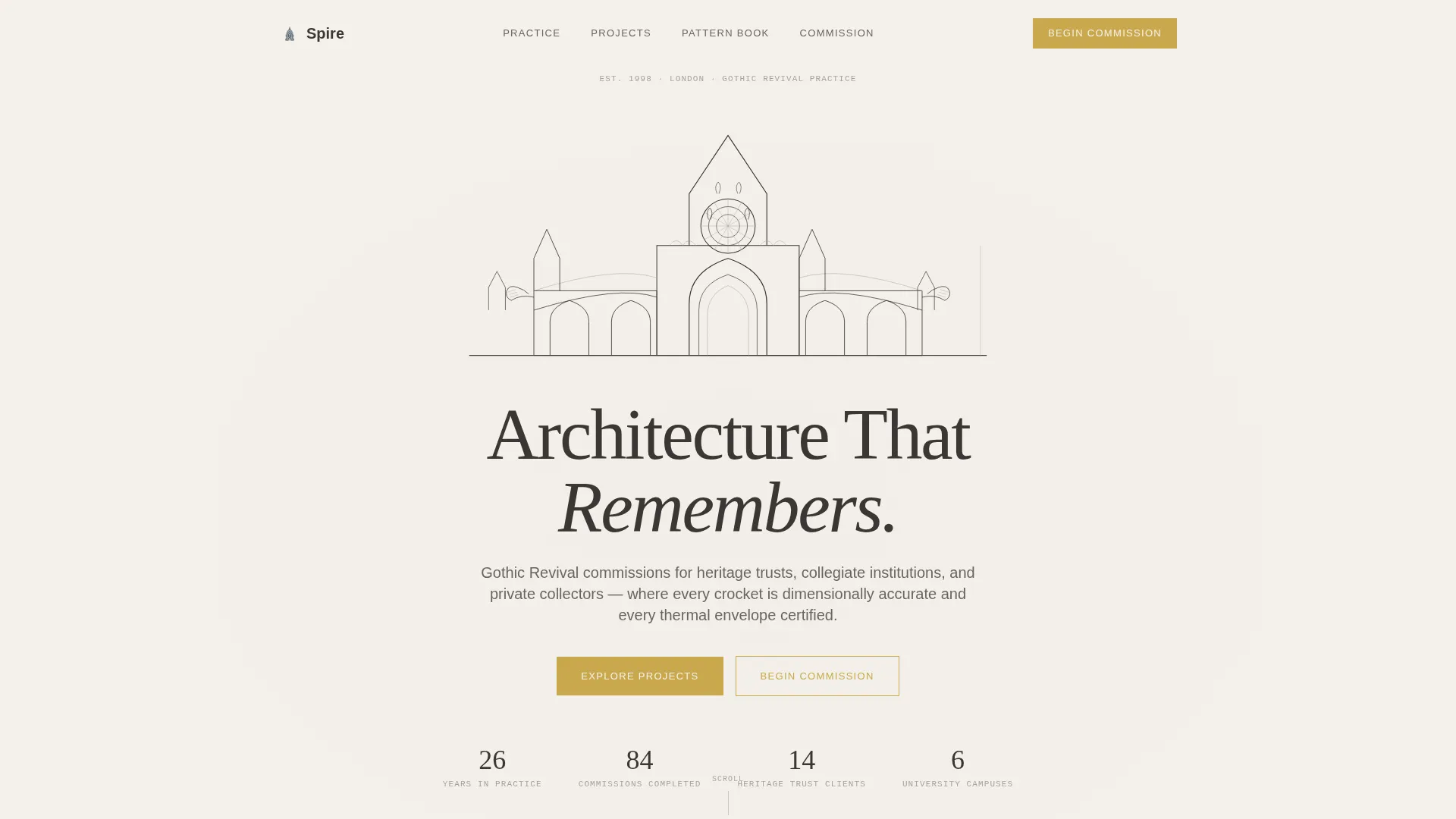
- Animated SVG hero that constructs a Gothic façade line by line in real time
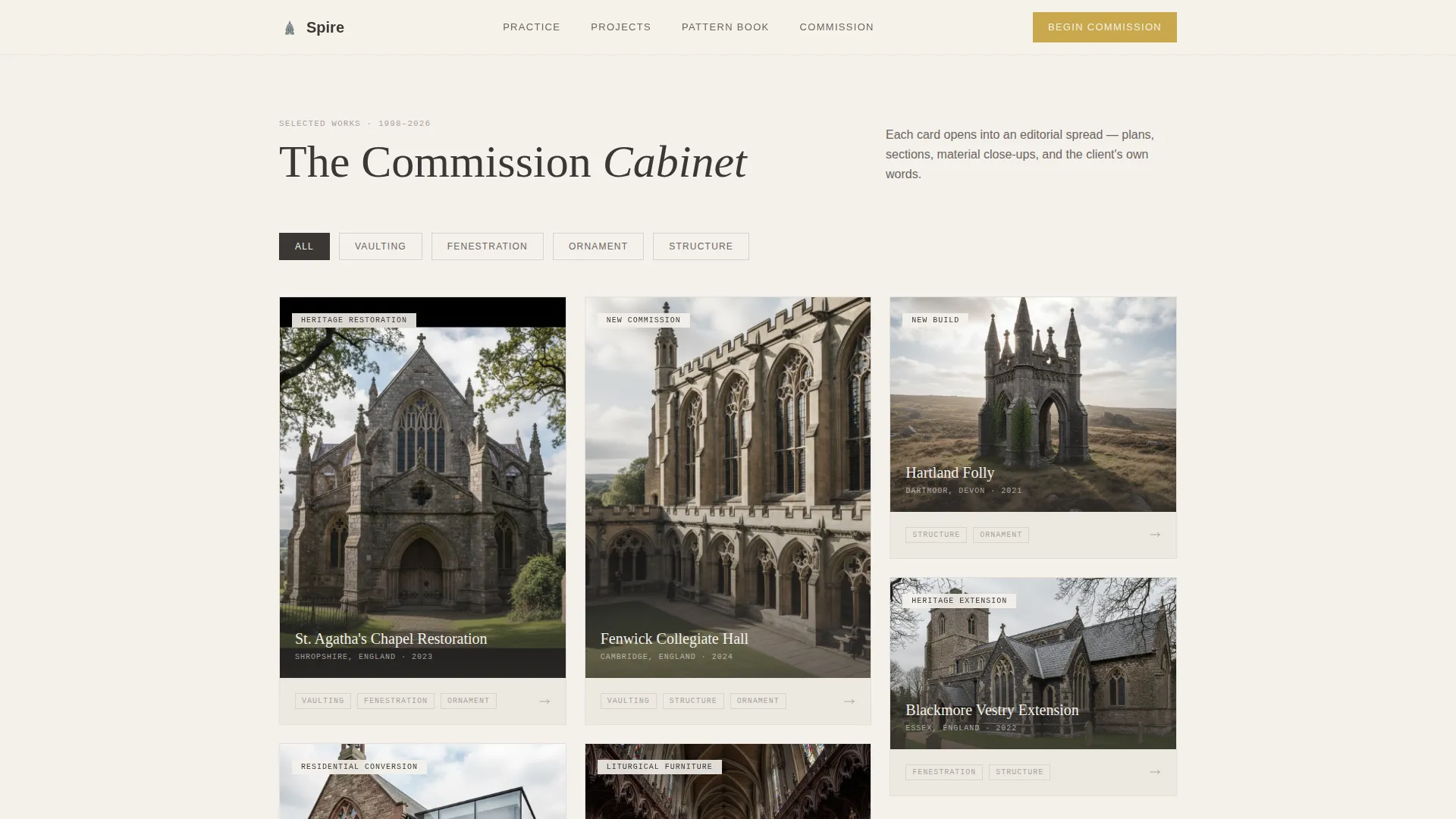
- Expandable masonry project grid with layered editorial spreads inside each card
- Commission configurator modal and a footer-anchored physical pattern book purchase button
Feature list
A paragraph introducing the features: Each component below is drawn directly from the template brief. Nothing here is speculative. Every feature serves the page's core purpose of converting a serious heritage client into a paying one.
Self-Drawing Animated Hero Elevation
An SVG path animation builds a full Gothic façade from scratch as the page loads. Buttresses rise, rose windows spiral outward, and gargoyle profiles emerge last with crosshatched detail. The headline "Architecture That Remembers." appears below the completed drawing in a quiet serif typeface.
Expandable Masonry Project Grid
The project grid works like a navigable cabinet of commissions. Clicking a card expands it in place into a layered editorial spread containing plans, section drawings, material close-ups, and a client testimonial. Visitors tab through visual chapters without ever leaving the page.
Element-Type Cross-Reference Filter
Scrolling deeper, the grid reshuffles by building element: vaulting, fenestration, ornament, and structure. This allows visitors to compare the same detail type across different projects, the way a scholar flips between plates in a pattern book.
Scoped Commission Configurator
Each project card carries a "Commission This Style" button that opens a modal configurator. The buyer selects building type, approximate square footage, ornamental density (restrained, moderate, or exuberant), and preferred stone region. The flow ends in a project deposit checkout with no ambiguity.
Pattern Book Sales Anchor
A secondary conversion path sits in the footer. An "Order the Pattern Book" button allows visitors to purchase the practice's published hardcover pattern book for £85. It provides an accessible entry point for clients not yet ready to commission.
Editorial Typography System
Display text uses Fraunces, body copy uses DM Sans, and technical specifications use IBM Plex Mono. Together they create the layered reading hierarchy of a printed architectural monograph, with each typeface carrying a distinct register of meaning.
Page sections overview
| Section | Purpose |
|---|---|
| Animated Hero | Draws Gothic façade SVG and introduces headline |
| Projects Grid | Expandable masonry cards for each commission type |
| Cross-Reference Explorer | Filters grid by building element across all projects |
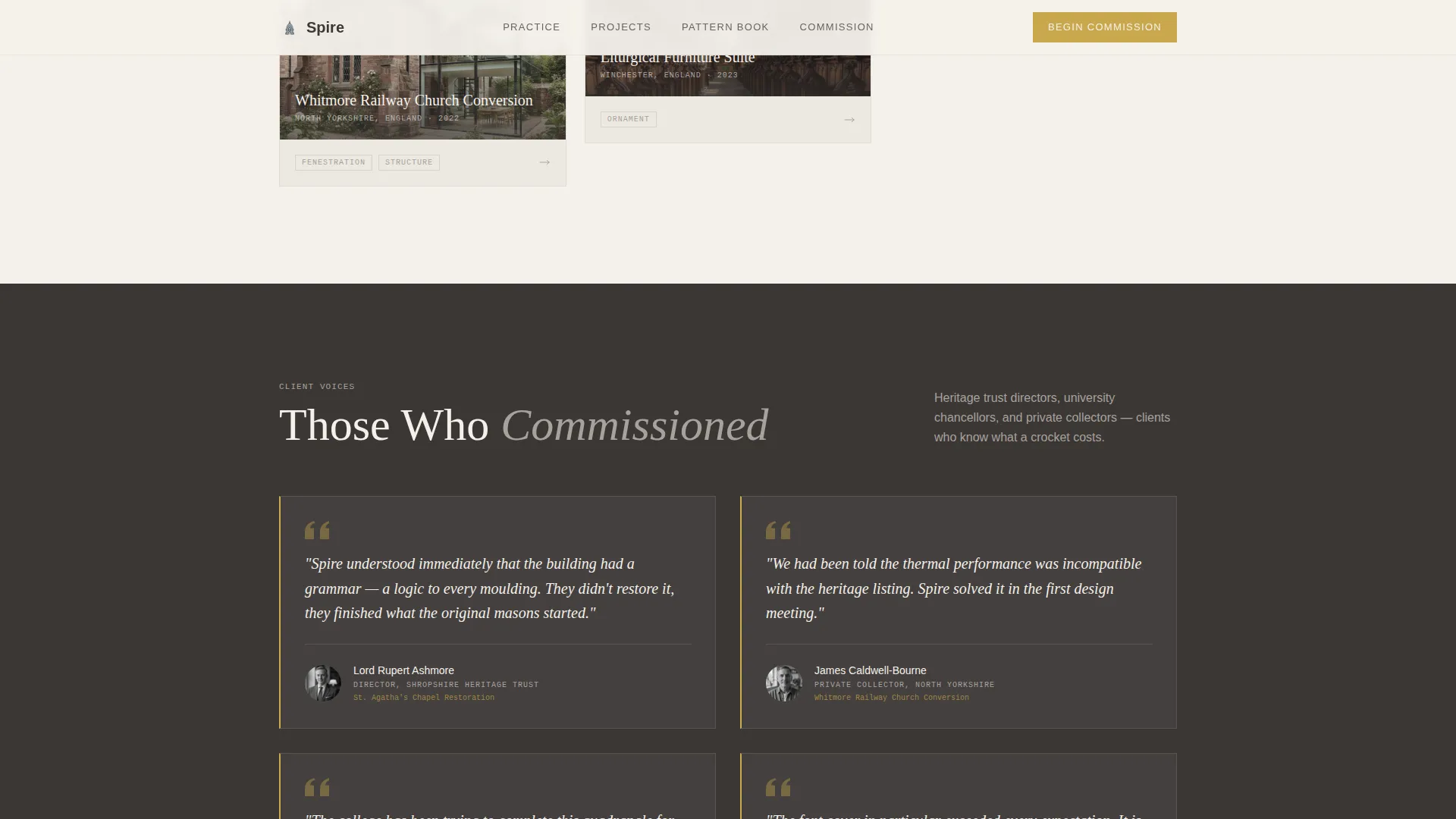
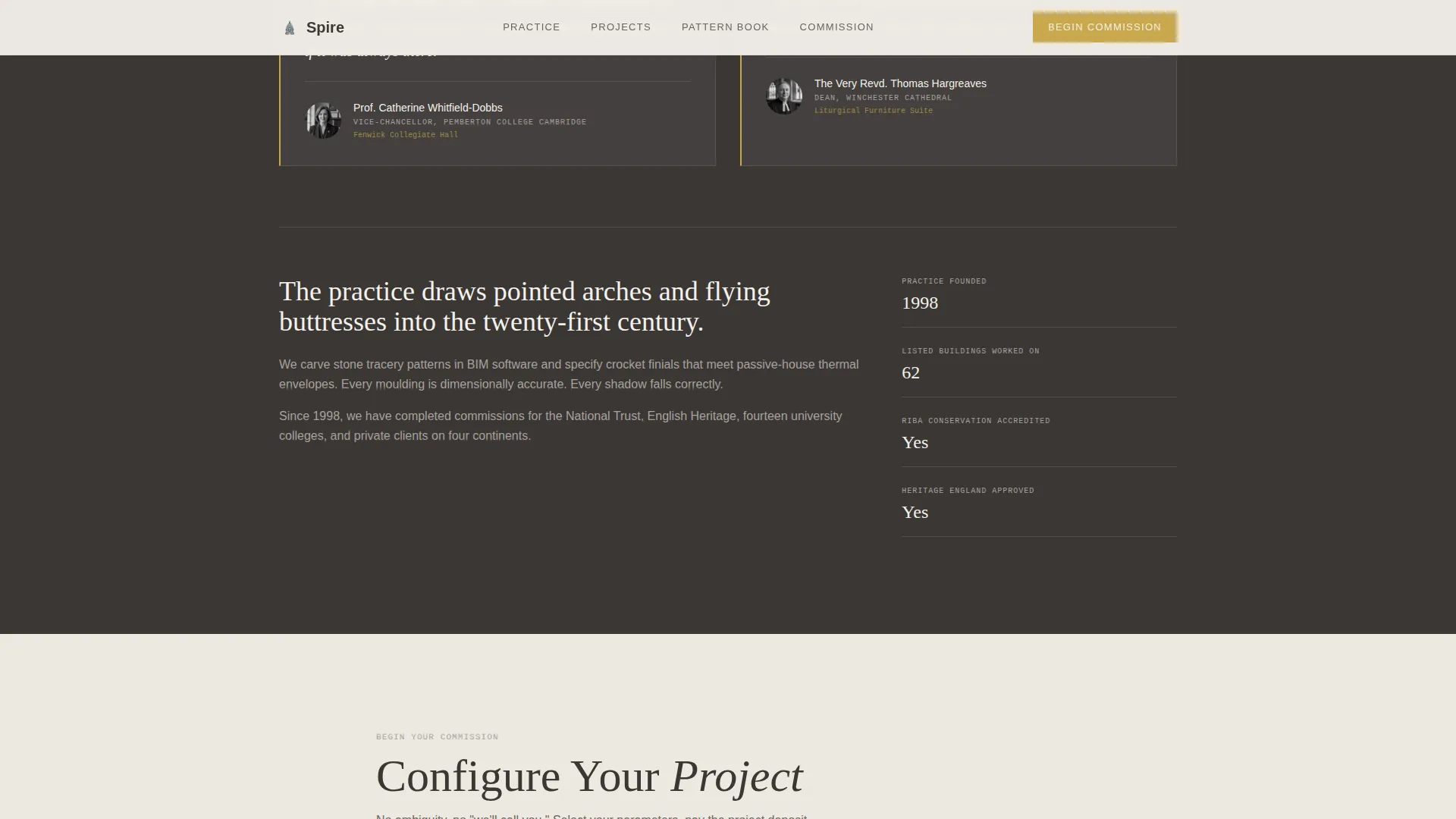
| Client Testimonials | Named quotes from trust directors and chancellors |
| Commission Configurator | Scoped modal leading to project deposit checkout |
| Pattern Book Footer | £85 hardcover purchase anchor and practice navigation |
Design & branding system
The visual language is built around an Editorial Magazine theme using a Cloud Canvas colour palette. Every colour choice has a material reference: the page feels like a heavy-paper monograph left open on a refectory table.
- Parchment white (#F4F1EB) for backgrounds, overcast stone (#A8A29E) for secondary text, and cathedral shadow (#3B3735) for primary text and deep surfaces
- Illuminated-manuscript gold (#C9A84C) reserved for hover states, selected cards, and purchase buttons only
- Fraunces for display headings, DM Sans for body paragraphs, and IBM Plex Mono for dimensions and specifications
Mobile & speed optimization
The template is designed desktop-first, reflecting how heritage trust directors and university chancellors typically review monograph-weight material on large screens. Mobile responsiveness is built in so the page remains usable across devices.
- Server Components handle the static project grid to keep initial load lean
- Client Components are scoped to interactive elements: card expansion, filter reshuffling, and the configurator modal
- Scroll-linked reveal animations and grayscale hover transitions are applied progressively without blocking the reading experience
How this template helps you convert
The page removes every friction point between a high-intent visitor and a committed commission. Two conversion paths run in parallel so no serious buyer leaves empty-handed.
- The "Commission This Style" configurator collects building type, square footage, ornamental density, and stone region before routing the visitor to a deposit checkout, ending the conversation with a clear financial commitment.
- The £85 pattern book purchase in the footer gives first-time visitors a tangible, low-risk entry into the practice's world, creating a relationship that often leads to a full commission later.
Other information about this template
This template is localised for the United Kingdom market. Pricing displays in GBP (pounds sterling), dates follow the DD/MM/YYYY format, and the copy register matches formal British architectural professional communication. The footer follows an Arc Browser Split layout: practice logo and tagline on the left, navigation links on the right, with social icons rendered in illuminated gold.
- The page uses high animation density: SVG path drawing on load, scroll-linked section reveals, and grayscale-to-colour card hover transitions
- Social proof is embedded structurally, with named client testimonials carrying institution titles and project metrics such as square footage restored
- The template suits a Gothic Revival architect presenting work to clients with restoration or new-build commission budgets in the six-figure range
Theme
Editorial Magazine
Creative direction
Interactive Explorer
Color system
Cloud Canvas
Style
Masonry/Pinterest
Direction
Direct Sales
Page Sections
Self-drawing Animated Hero Elevation
Expandable Masonry Project Grid
Element-type Cross-reference Filter
Scoped Commission Configurator
Pattern Book Sales Footer
Three-typeface Editorial System
Related questions
Can I add more project types to the masonry grid?
How does the commission configurator work?
Is the pattern book sale built into the template?
Is this template suitable for a practice based outside the United Kingdom?
What typefaces does the template use?